There was an error with your log in

Arctic Backcountry Skiing

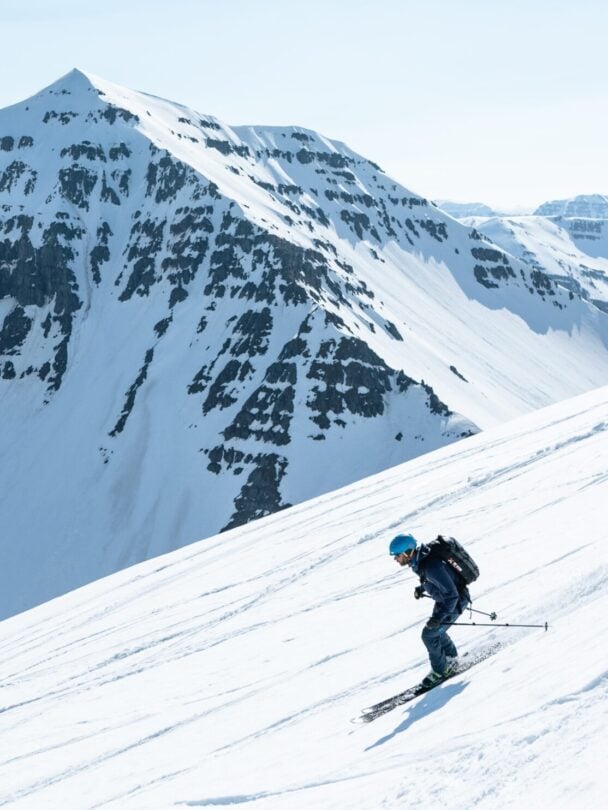
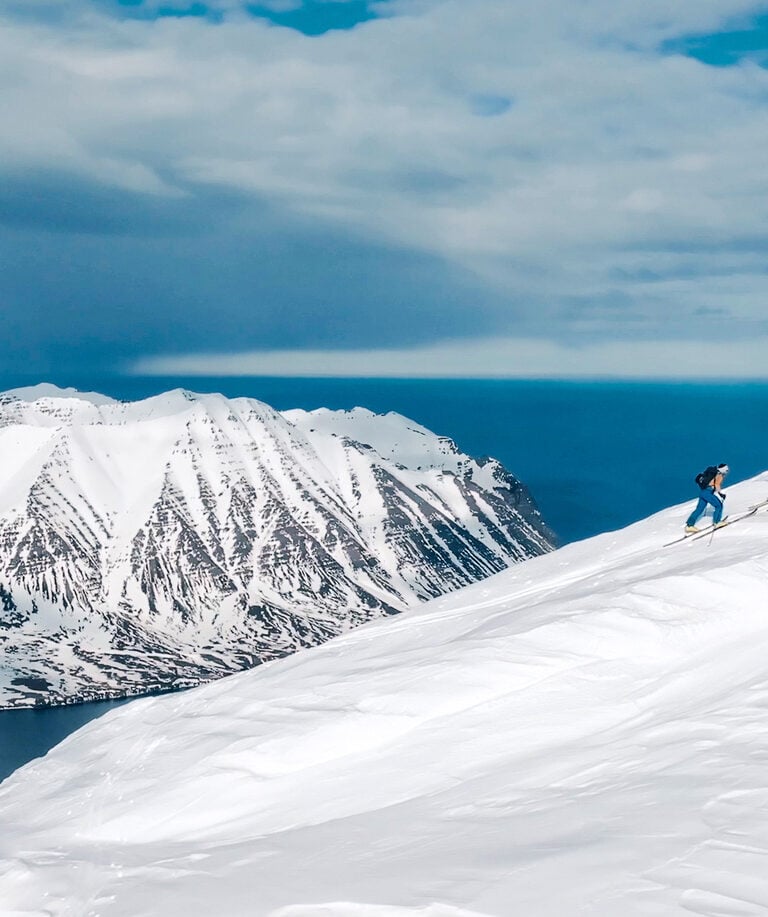
Sea-to-summit lines, a sailboat for a base camp, and spring light that hangs around long after dinner. Welcome to Arctic skiing.
Arctic Backcountry Skiing Brochure
Download for sharing and offline access to full adventure itineraries, important information, FAQs, guides info and more.
Brochure sent, check your inbox
If you have questions or need help with planning a trip, schedule a call with one of our adventure experts.

Ski the top of the map, north of the ski season

Every run starts at sea level

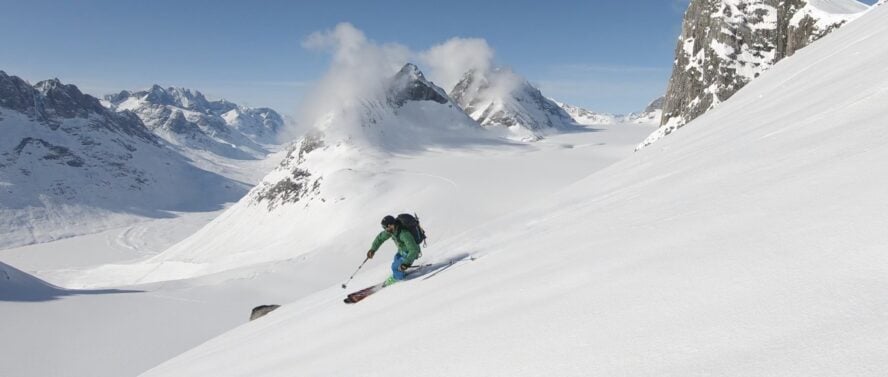
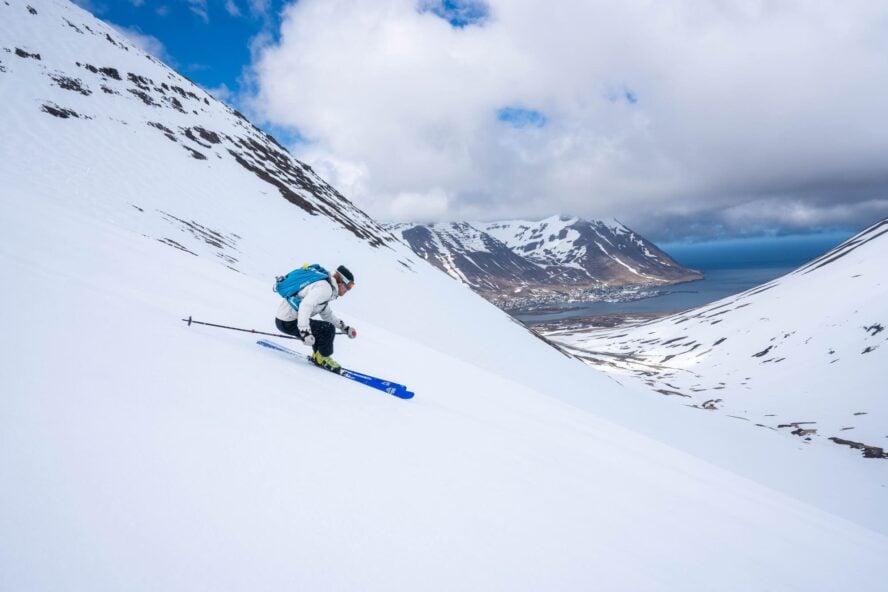
Arctic peaks aren’t tall on paper. Most top out between 700 and 1,800 m (2,300 to 5,900 ft). The catch is that you start from the waterline, so a 1,200 m (3,900 ft) summit gives you every one of those meters on the way down. Few mountain ranges hand you that much vertical without a lift.

A few things set Arctic backcountry skiing apart:

    • The season runs late. Touring here hits its stride in March and keeps going into June, long after most of the Alps has turned to slush.
    • The light keeps going too. Spring days stretch fast this far north, and on the late Svalbard departures the sun doesn’t set at all.
    • You’ll have the place to yourself. No lift lines, no tracked-out bowls, and often no other skiers in the whole fjord.
lines arctic skiing

A week on a ski & sail boat

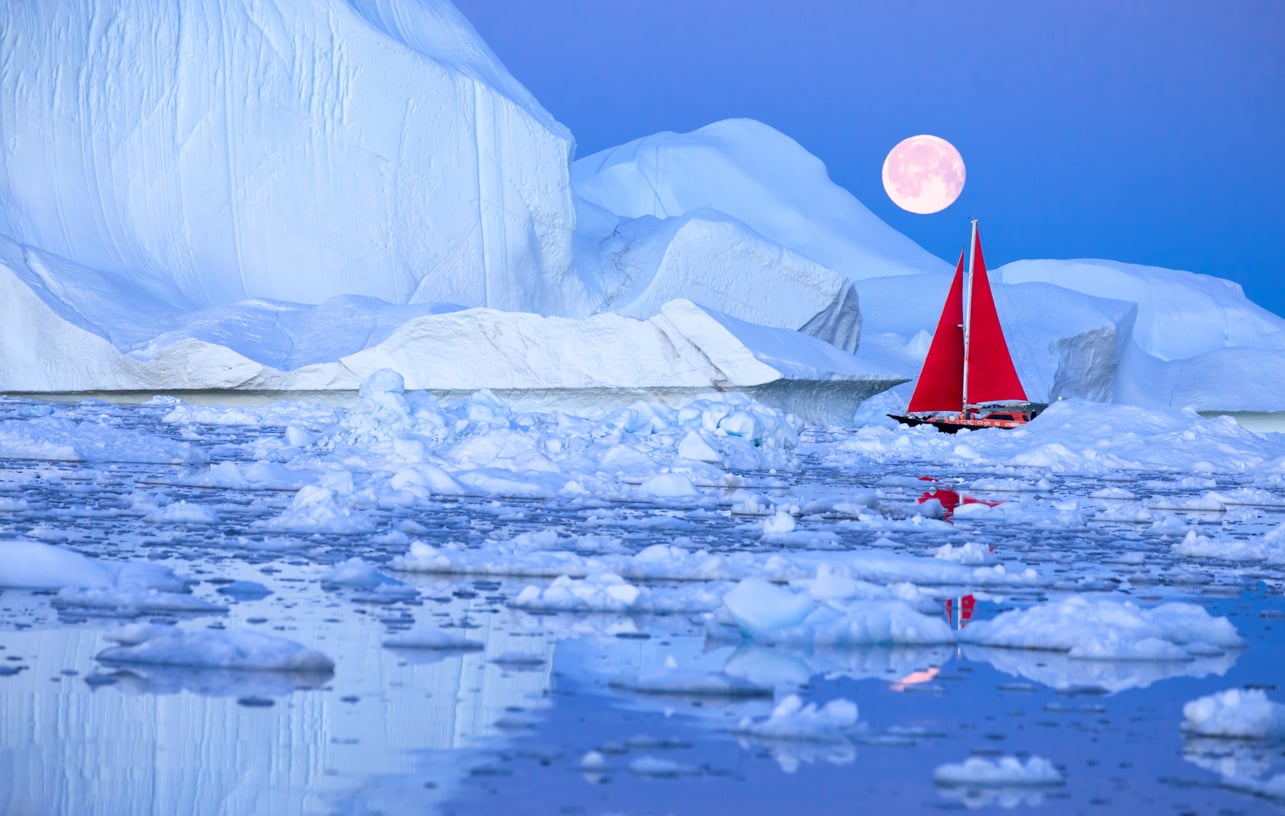
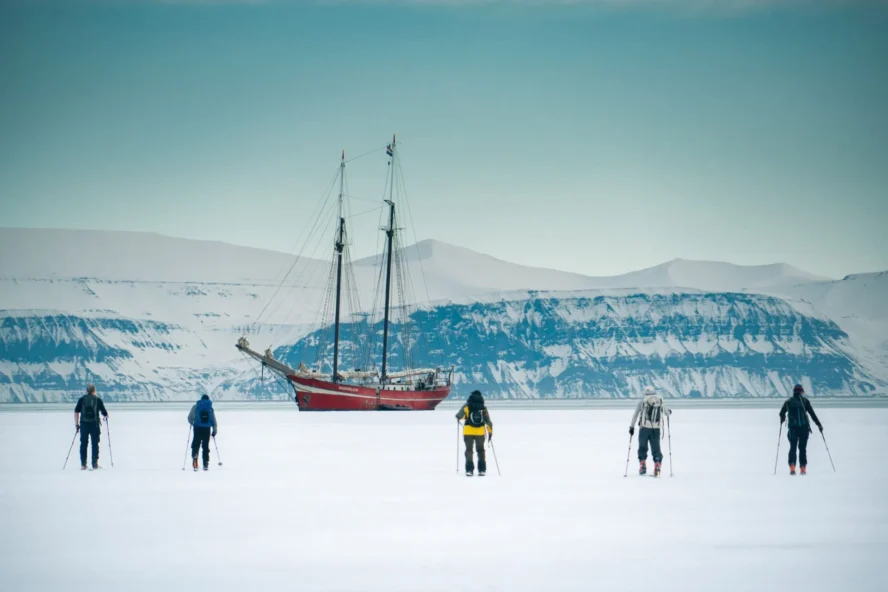
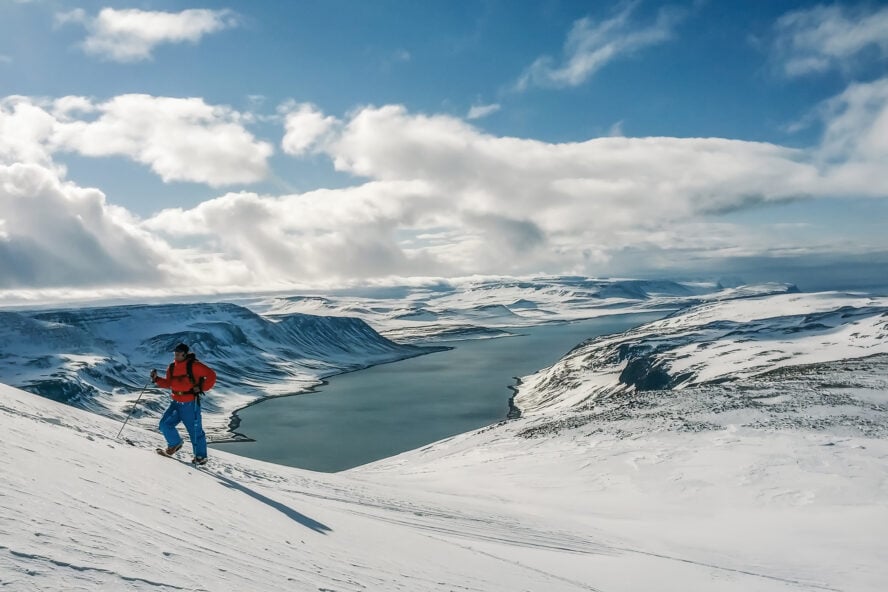
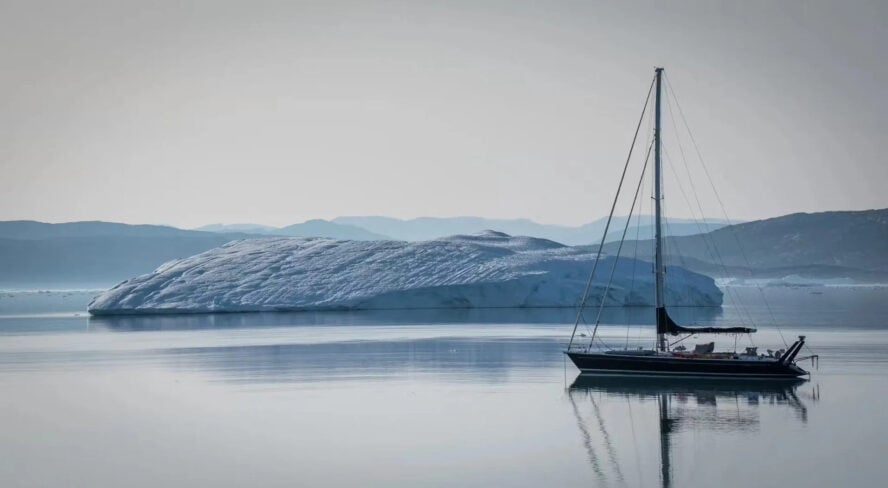
Most of the Arctic ski trips here use a sailboat as a floating base camp, and it changes how the week works. The boat moves to fresh terrain while you sleep or eat, so you’re never driving to a trailhead.

Morning: Breakfast at anchor, then a dinghy ride to the shore and skins on at the waterline.

Midday: Climb 1,000 to 1,500 m over four to eight hours, summit, and ski fjord-side slopes back down toward the boat.

Evening: Drying gear by the heater, a chef-cooked dinner, and a short passage (often about an hour or two) to the next anchorage.

Boats range from a 16 m sloop for four guests to wooden tall ships carrying up to 12. Either way, you don’t need to know a thing about sailing. The skipper and crew run the boat.

red sailboat in greenland

Svalbard, at 78° north

Svalbard is where the map runs out of towns. Spitsbergen’s west coast is a maze of glaciers and fjords, and from Longyearbyen the boat is usually across Isfjorden and at the first tour within about an hour. The skiing is glaciated, wide open, and mostly moderate in angle, with steeper lines for those who want them.

The wildlife is part of the deal. Walrus, reindeer, Arctic foxes, and seabirds turn up often, and polar bears are rare but real, so guides carry deterrents by law whenever you leave the settlement. On May and June departures, the midnight sun means you can tour at 10 p.m. if you still have the legs.

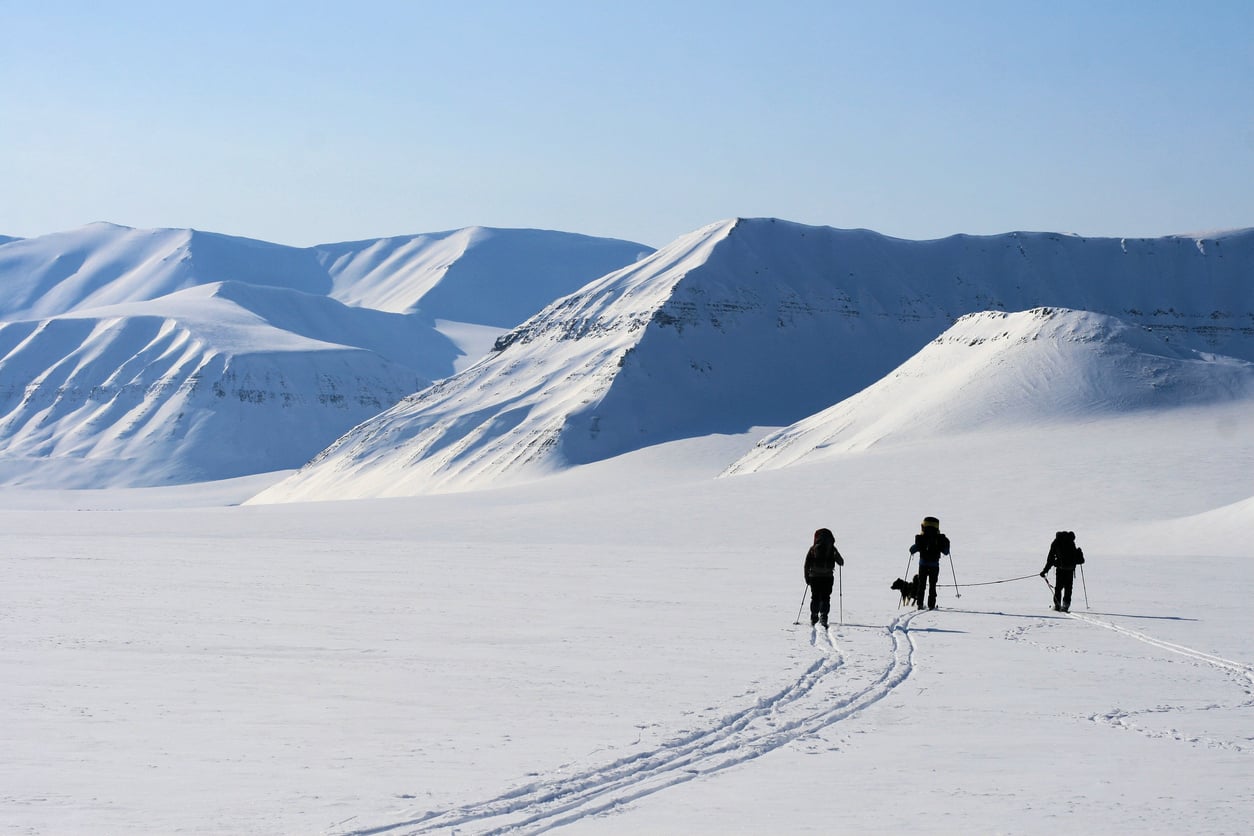
A skier enjoying the view over the snowy peaks and valleys in Svalbard

Pick your season as much as your spot

The Arctic ski calendar runs in a wave that moves north with the light. Roughly:

    • Finnish Lapland: December to March, for quiet forest and fell touring
    • Lofoten, Bodø, and the Lyngen Alps: February to April, with deep snow and fjords on every side
    • Iceland: March to April, with ski-to-the-sea runs and hot pools after
    • Greenland: April to May, when the days lengthen and the fjords open
    • Svalbard: April to early June, the last word in late-season skiing

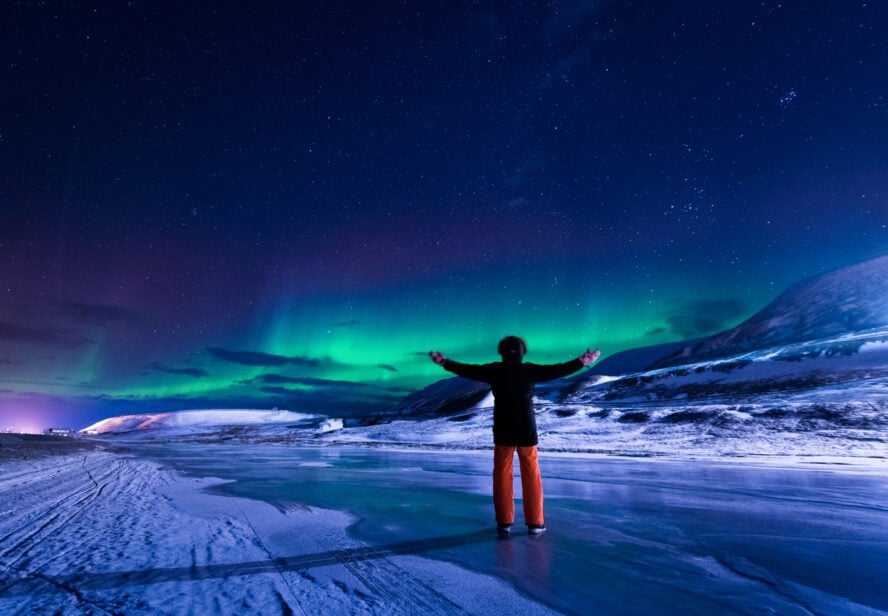
Later in the season usually means longer days and corn snow. Earlier means colder powder and a better shot at northern lights.

Bodo ski tour, Lofoten sail

How big do you want your days?

These trips cover a real spread, so it’s worth matching the trip to your legs before you match it to the scenery.

    • Wilderness touring: Long, gentle days through Lapland forest and fells, sometimes pulling a sled. You need to have skied before, but not in the backcountry.
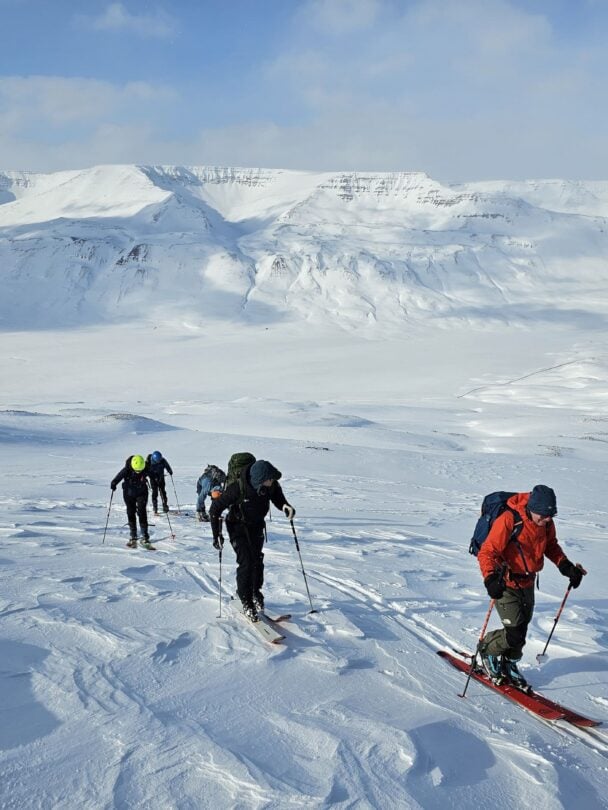
    • Classic Arctic touring: Most ski & sail and lodge trips. Expect 800 to 1,500 m of climbing a day and comfort on black runs.
    • Big-mountain days: Some Greenland and Jotunheimen routes push toward 1,800 m a day, with glaciers and steeper descents.
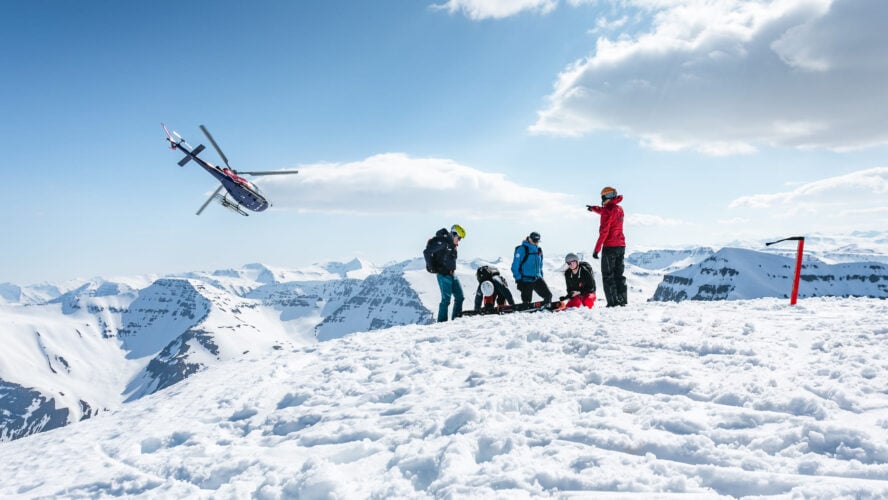
    • Heli days: The helicopter does the climbing, so strong intermediate off-piste skiers can rack up serious vertical.

Every trip page lists its daily climbing and terrain, so you’ll know what you’re signing up for.

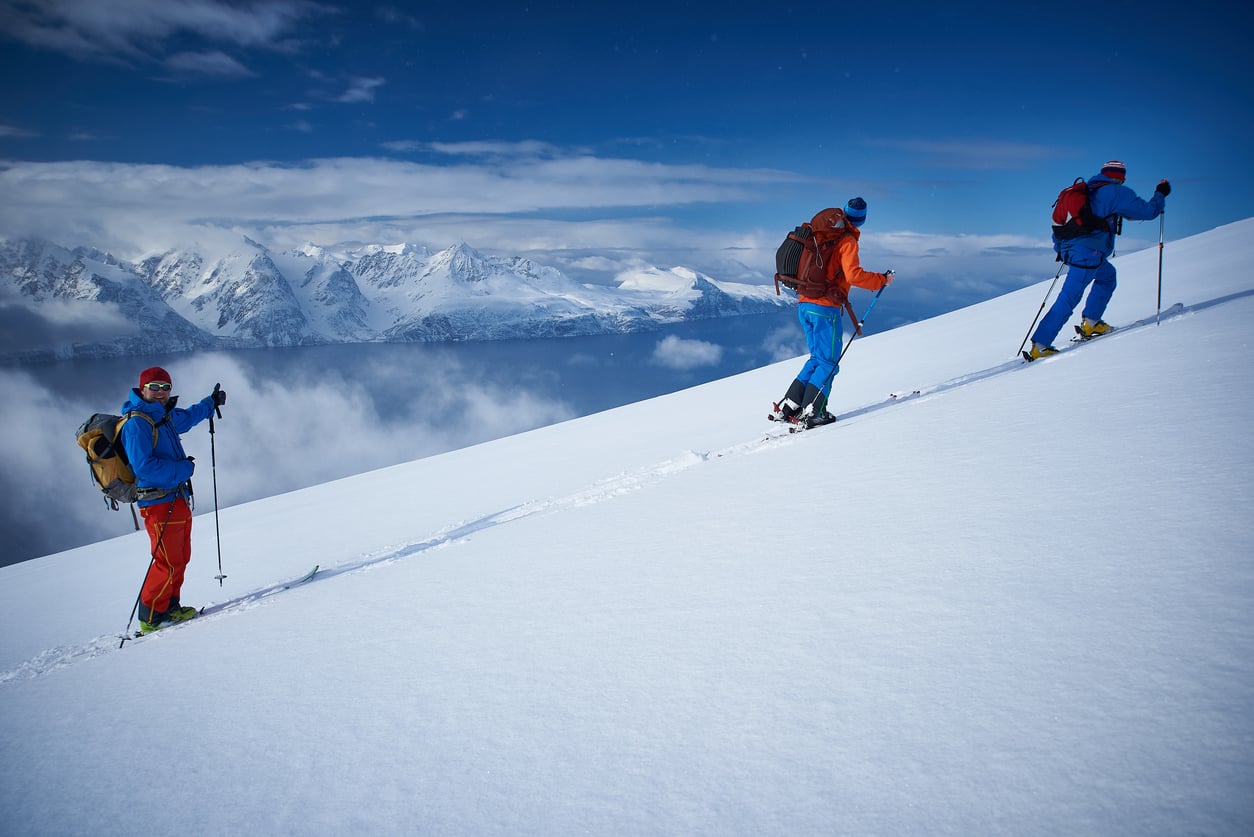
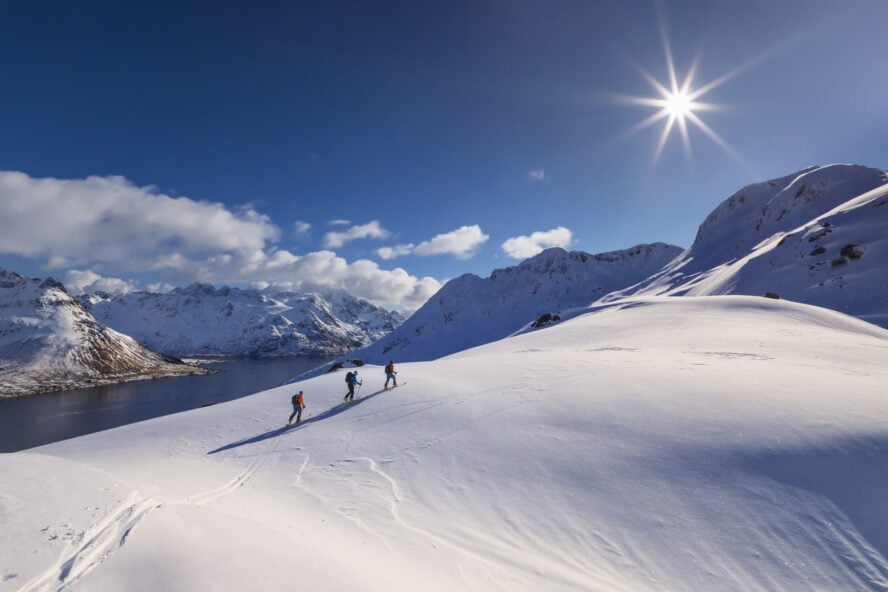
lyngen alps and arctic skiing
What do people think of Arctic Backcountry Skiing?
Betsy E.

Tom Wolfe coordinated a fabulous ski and sail trip to Svalbard. It was an amazing trip that took into consideration the goals and capabilities of each of the guests, while keeping safety top of mind. Tom is not only a professional guide, he’s a really nice guy too. I look forward to skiing with him (and the other guides) again in the future.
Louise Lumley

Fabulous crew, lovely people, great food, fun and accommodating. Excellent well appointed boat with unbelievably experienced skipper.

Bob Hall

Romain is exceptional in his knowledge and disposition, He read our group perfectly and pushed jus hard enough!

Teresa Cezanne

Ronny and Jonas were great guides with profound knowledge of the enviroment. I felt safe.

Load more reviews

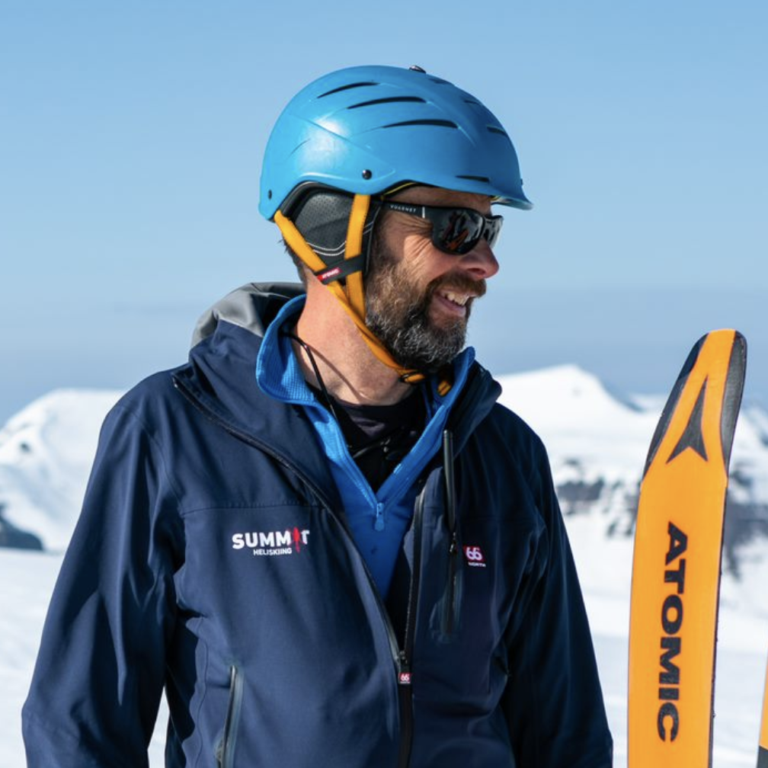
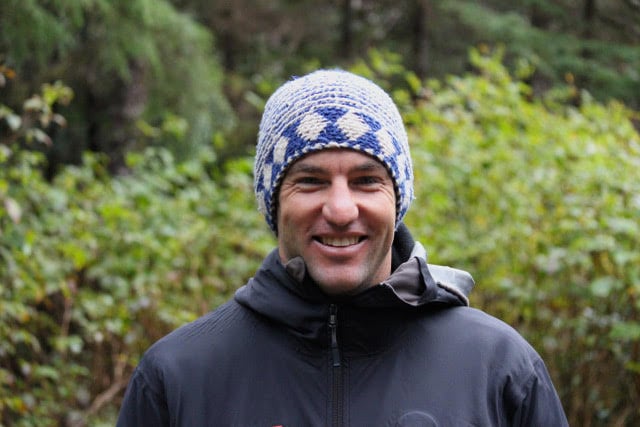
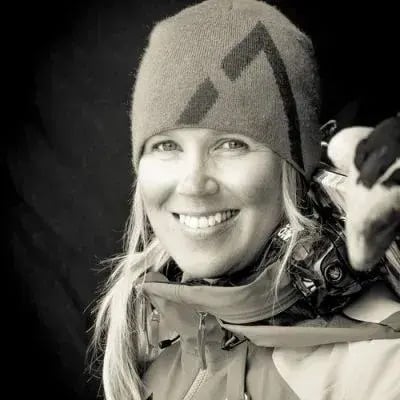
Meet the guides in the area

5
Tom
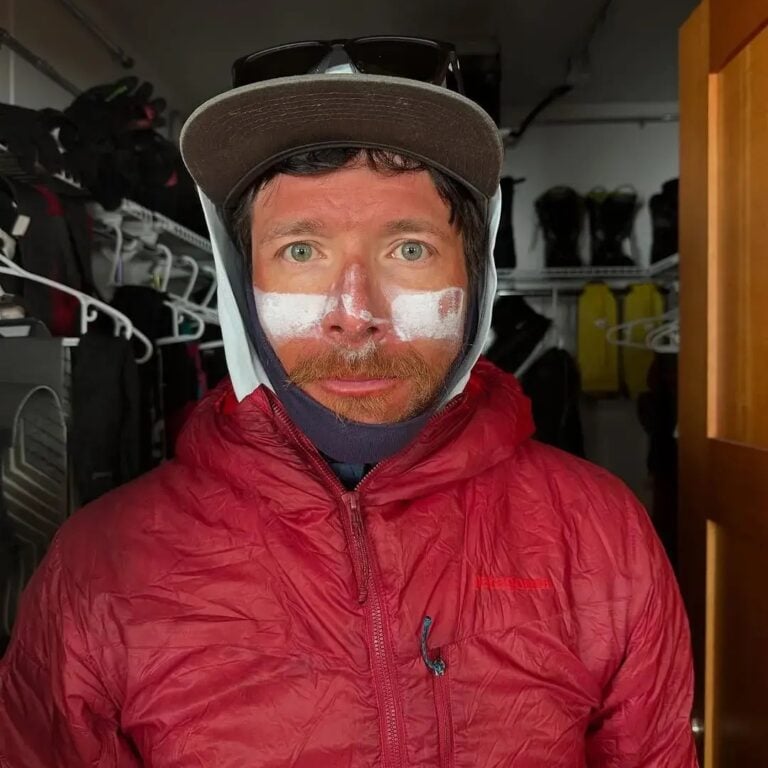
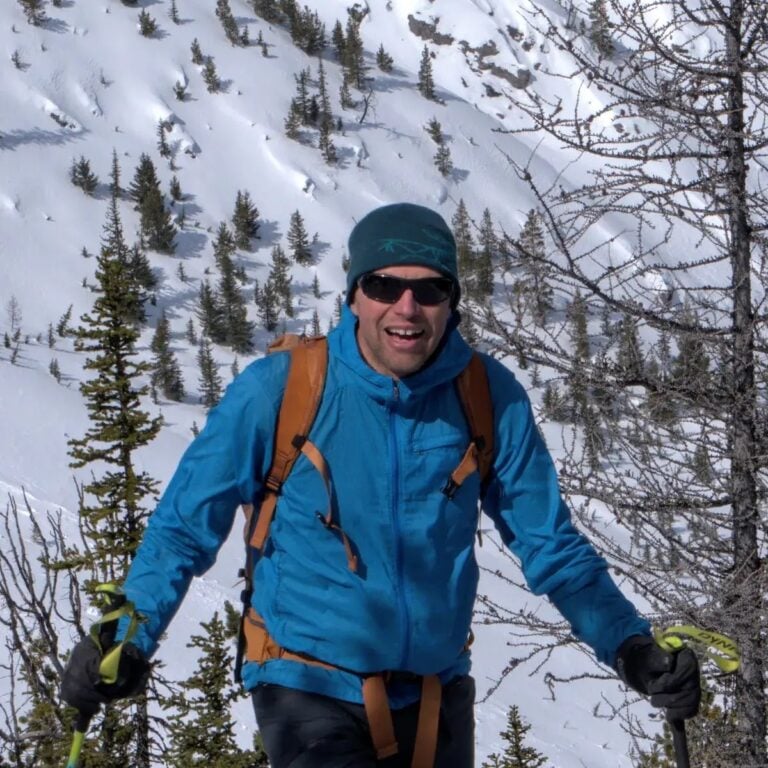
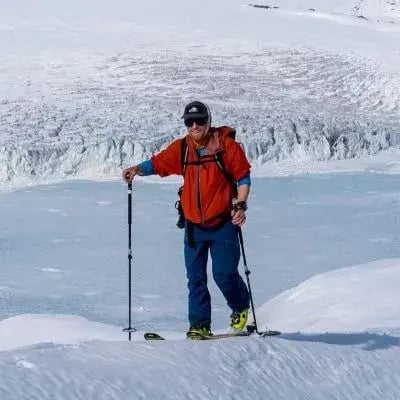
Tom is an ACMG/IFMGA-certified mountain guide who’s been guiding since moving to Canmore in 1995, the place he calls home. His winters consist of a mix of ski guiding at lodges, heli-ski operations, and remote backcountry destinations throughout western Canada. During the warmer months, Tom spends his days on water. He is a certified Paddle Canada Moving Water Canoe Instructor and Wilderness Canoe Guide.
5
Andreas
Originally from the mountains of Austria, Andreas is thoroughly at home in winter wilderness. He is a trained glaciologist and certified Svalbard guide (SGO) with a deep passion for ski touring and ice climbing—and Svalbard in particular, which he eventually decided to make his permanent home. His knowledge of Arctic terrain, snow conditions, and polar bear safety means you're always in expert hands, while his calm, steady presence and natural hospitality make you feel at ease from the moment you arrive. Andreas doesn't just find the best lines down the mountain; he tracks down the best snow to go with them.
5
Angela
Angela’s enthusiasm for sharing new experiences with her guests is ever-present. She has been guiding water-based expeditions for over 15 years, and she’s guided sea kayaking expeditions in Iceland, Greenland, Palawan, Papua New Guinea, Indonesia, Antarctica, South Georgia, The Falkland Islands, Alaska, Svalbard, Myanmar, Kamchatka… She has also led ski touring trips throughout British Columbia. Angela has a passion for multi-day expeditions around the globe.
5
Paul
Paul travels the world year-round. He spends the winter season ski touring, mountaineering, freeriding, heliskiing, ice climbing and snowshoeing across the world, and during the summer he guides for mountaineering, sport climbing, bouldering, trekking and biking.
5
Christian
Christian has dual Canadian and Swiss citizenship. In his former life he completed a degree in Engineering Physics and worked for an engineering firm in Switzerland. It was there that he decided to change courses dramatically and become a mountain guide. He returned to Canada 10 years ago to pursue this dream and hasn’t looked back. Today, Christian is a fully certified Mountain Guide (ACMG/IFMGA).
Lionel Lemonchois, mountain guide
5
Lionel
A professional racer-skipper and exceptional boat preparer, Lionel’s carrier spans solo oceanic races, non-stop around the world races, and many more. He is also certified as an offshore commercial yacht master, contributing significant skills in both crew management, safety and medical emergency chapters. Lionel is dedicated to sharing his passion for sailing and nature.
Brian Farquharson, mountain guide
5
Brian
Brian is a professional mountain and climbing guide, a ski teacher, an Arctic Guide and RYA sailing teacher that has been running Ski & Sail tours for 15 years. In the last 23 years, he has become the lead guide for some amazing companies including the BBC, Pioneer Productions London, Amazon Prime and the top heliskiing operations worldwide. When he’s not leading tours, he tours Europe lecturing about avalanche awareness and rescue!
5
Heather
Heather is a lifelong ski enthusiast and a recently certified ACMG Ski Guide. She is drawn to long glacier approaches, sunlit summits, and steep, deep powder turns. She has worked in the ski industry since 2007, primarily in ski patrol and snow safety roles. In the off-season, she works as a journeyman millwright and backcountry lodge cook.
Andres Scherrer, mountain guide
5
Andres
Andres has made his dream a profession—he has been a qualified IFMGA mountain guide for 13 years! Sponsored by Mammut, he carries numerous expeditions all around the world and continuously discovers new terrain around Iceland, Norway, Japan and Alaska. When he’s not skiing, he works as a profiler for the Snow and Avalanche Research Institute in Davos and gives avalanche courses for all levels of skiers every year.
5
Chris
Chris left a comfy university position for the vagaries of guiding a number of years ago. Research expeditions, tour guide engagements or private adventures have lured him to the Arctic and Antarctic at least for some time of each year ever since 1985. He holds degrees in Geography, Geology and Cultural Anthropology and a Ph.D.
5
Drew
Drew is an ACMG-certified ski and trekking guide rooted in British Columbia, with decades of experience in remote terrain across the Canadian Rockies, Yukon, Arctic, and East Greenland. An avalanche forecaster for Avalanche Canada and a seasoned expedition leader, he’s known for calm judgment, technical skill, and a love of telemark skiing. Drew and his wife, Emelie, co-own Diana Lake Lodge, a backcountry base for alpine touring, hiking, and quiet wilderness connection near Kootenay National Park.
5
Conrad
Conrad began climbing and skiing in 1994 and has been guiding professionally since 1997. He leads climbing, skiing, and paddling trips across Alberta, British Columbia, the Yukon, and Northwest Territories, with occasional international expeditions. He is a certified ACMG guide and a member of the Parks Canada Visitor Safety team, where he contributes to avalanche forecasting, highway avalanche control, and mountain rescue operations in Banff, Yoho, and Kootenay National Parks.
5
Phil
Phil studied biology at Imperial College London and earned a PhD in plant pathology before working as a field guide for the British Antarctic Survey. He has led climbing and skiing expeditions across Antarctica, the Himalaya, the Andes, East Greenland, the Caucasus, and Canada, and served as Vice President of the Alpine Club (2006–07). A freelance photographer, polar guide, expedition leader, and lecturer, Phil lives in England near the Peak District National Park.
5
Konrad
Konrad was born and raised in Obergurgl, Austria, where he trained as an IFMGA/UIAGM Mountain Guide and has been guiding since 1996. He has spent most of his winters in Canada heliskiing, including many years with CMH as Lodge Manager at the Adamants and with Selkirk Tangiers. Summers take him guiding across the Alps, Nepal, Africa, and South America. He now lives in Revelstoke with his wife Kristen and their two children, Eve and Rio.
5
Leifur
Leifur is one of Iceland’s most experienced guides, with 35 years of experience. During his mountain guide career he has guided Mt Everest, as well as all other 7 continental peaks and ski expeditions to both the North- and the South pole. Leifur is the first person in the world to finish a double Adventure Grand Slam—climbing the 7 summits and reaching both poles twice! Leifur has been a key figure in Icelandic tourism and guiding, pioneering ski tours on the Troll Peninsula and helping establish guide training systems. A geologist by degree, he is the former director of Iceland’s National Avalanche Forecast Center and a past instructor for the Canadian Avalanche Association.
5
Matt
Finding out what’s around the corner or at the top of the next mountain has taken Matt to some of the remotest places on the planet. He’s been organizing and guiding custom adventures for guests all over the world, for over a decade. Matt has been to Antarctica, Fiji, Norway, Papua New Guinea, Russia, Kyrgyzstan, Greenland, Iceland, Kamchatka, Alaska, and Northern Canada. He has a genuine passion for adventure, a wicked sense of humor and a love of life.
5
Emelie
Emelie is an ACMG Ski and Hiking Guide and a skier at heart, with experience across the Canadian Rockies, British Columbia’s Columbia and Coast Mountains, the European Alps, the Caucasus, the Pamirs, and the High Arctic, including Iceland and Svalbard. Born and raised in Sweden, she moved to Canada in 2004 for BC powder and never looked back. Emelie lives in Revelstoke, BC.
5
Andrea
Andrea has always considered the mountains his true home—a boundless place that demands authenticity and offers freedom. He cannot pinpoint the exact moment his journey into the mountains began; it started in early childhood, guided by his parents and grandparents. First came hiking, then skiing, followed by rock climbing, and eventually the ice of frozen waterfalls, winter terrain, and high alpine environments. He has been a certified Mountain Guide since 2014.
5
Joel
Residing in Nelson, BC with his wife and two boys, Joel spends the winter guiding ski trips. With over thirty years of backcountry experience, including two decades of guiding, he never tires of grabbing his skis or splitboard and heading out of a day in the mountains.
5
Massimo
Massimo has been a Mountain Guide since 2003 and a passionate mountaineer since childhood. His love for winter and skiing has led him to scale countless peaks in the Alps, where he has honed his skills and expertise. As a guide, he loves sharing his knowledge and passion for mountaineering, inspiring others to embrace the beauty of the mountains. Today, his love for snow and ice takes him to the polar regions, where he is on a relentless quest for the perfect excursion.
5
Even
Meet Even, your expert guide and part owner at Breogfjell. Hailing from Sogndal, Even is your go-to professional for ski guiding, climbing, and glacier expeditions across Norway. Renowned for his passion, professionalism, and robust skiing skills, Even is an integral member of the alpine mountain rescue and Red Cross avalanche groups. With aspirations to become an IFMGA Mountain guide, he brings a wealth of experience and dedication to ensure your adventure is not only thrilling but also safe and memorable.
5
Gjert
Gjert is part owner and a devoted full-time mountain guide at Breogfjell. Based in Sogndal, Gjert focuses on guiding and courses, primarily within the local region. With a wealth of experience, he is unwaveringly committed to prioritizing safety. Renowned for his kindness, Gjert is beloved by everyone he encounters. As a respected member of the alpine mountain rescue and Red Cross avalanche groups, he proudly holds the prestigious certification of an IFMGA Guide. Join Gjert for an adventure where expertise meets genuine warmth and care.
5
Sara
Sara competed in alpine skiing during her childhood and teenage years, up until she switched to coaching for her ski club. She earned diplomas as a ski instructor and coach and headed to Austria to work as a ski instructor for one winter. In order to become self-sufficient in skiing on glaciers and off piste, Sara gained mountaineering education and was soon guiding others in the mountains.
5
Ólafur
Ólafur or “Óli” is an experienced ski guide that has been leading groups all over Iceland and Greenland for decades. Óli is a man of many talents—between running the luxury hotel Kleif and operating “Inside the Volcano”, he always makes sure to reserve some time for his passions of heliskiing and rock climbing. Óli is just a good companion to have around!
5
Clement
Clement is a French-born mountain guide driven by a deep passion for polar regions, with Svalbard as his natural arena. He holds advanced certification in avalanche safety and snow forecasting, which means he reads a slope the way most people read a map—quickly, accurately, and with serious consequences in mind. Off the mountain, you'll find a warm, deeply curious explorer who is as interested in the Arctic environment as he is in the skiing it offers. Clement's combination of technical expertise and genuine love for this part of the world makes every day out with him feel like time well spent.

Frequently Asked Questions about backcountry skiing in the Arctic

  • Yes. Every trip is led by a professional ski guide who knows the area’s terrain, snow, and weather well. Depending on the region, that means IFMGA/UIAGM, ACMG, or Icelandic AIMG certification. Groups stay small, usually four to eight skiers per guide, so the guide can choose slopes that suit the group. On ski & sail trips, a skipper and crew run the boat, so your guide can focus on the skiing.

  • It depends on the trip. Your guide, accommodation (a boat cabin, lodge, or huts), and most meals are usually covered. What’s typically not included:

      • Flights to the starting point, such as Longyearbyen, Tromsø, Nuuk, or Akureyri
      • Touring and avalanche gear, unless the trip says otherwise (heli trips often include skis and airbag packs)
      • Alcohol and travel insurance that covers off-piste skiing

    Check the individual trip page for the exact list.

  • For most of these trips, you should be comfortable on black runs and have some touring under your belt. A typical day is 800 to 1,500 m of climbing over four to eight hours, several days in a row. At the easier end, the Lapland trips ask for solid fitness but no backcountry experience, and heli days suit strong intermediate off-piste skiers. At the harder end, some Greenland routes push toward 1,800 m a day. The difficulty rating on each trip page tells you where it sits, so be honest with yourself when you pick one.

  • None at all. A professional skipper and crew handle the sailing, anchoring, and dinghy runs to shore. You’re welcome to help with the sails if you’re curious, but it’s never expected. All you need to bring is the skiing.

  • Most people are fine. Passages between anchorages are usually short, often an hour or two, and much of the sailing happens in sheltered fjords. You spend the nights at anchor, not at sea. If you’re prone to motion sickness, pack wristbands or tablets and mention it to the crew. They’ll know which spots on deck help most.

  • Colder than the Alps in spring, but rarely brutal. In the Lyngen Alps, April temperatures at sea level hover around -4 to 2°C. Greenland and Svalbard run colder, especially in April and with wind. Daylight grows fast: by late April, evenings stay bright, and from May Svalbard has the midnight sun. Early-season trips in Lofoten and Finland trade some daylight for a better chance of northern lights.

Get in touch
We’re happy to answer any of your questions. Send us an inquiry or talk to one of our adventure planners free of charge.

Articles & webinars

Need help finding a perfect adventure?
We're happy to answer any of your questions. Send us an inquiry or talk to one of our adventure planners free of charge.
Saved to bucket list
Removed from bucket list

Choose a currency

  • USD - $
    US Dollar
  • EUR - €
    Euro
  • AUD - AU$
    Australian Dollar
  • CAD - CA$
    Canadian Dollar
  • GBP - £
    British Pound Sterling
  • CHF - CHF
    Swiss Franc
  • JPY - ¥
    Japanese Yen
  • SGD - S$
    Singapore Dollar
  • HKD - HK$
    Hong Kong Dollar
  • DKK - Dkr
    Danish Krone
  • NOK - Nkr
    Norwegian Krone
  • NZD - NZ$
    New Zealand Dollar