00:00
Cold open
Smári:
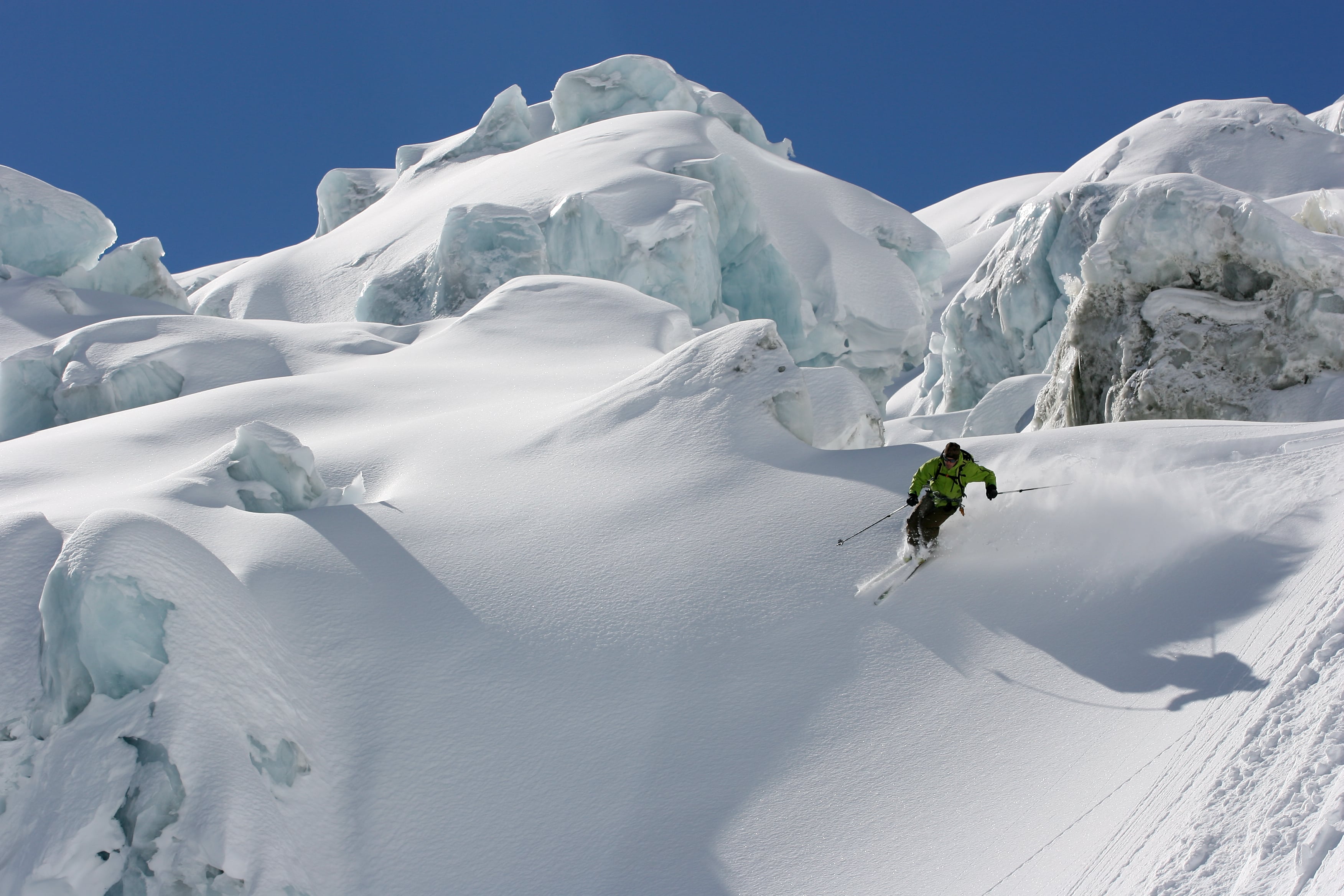
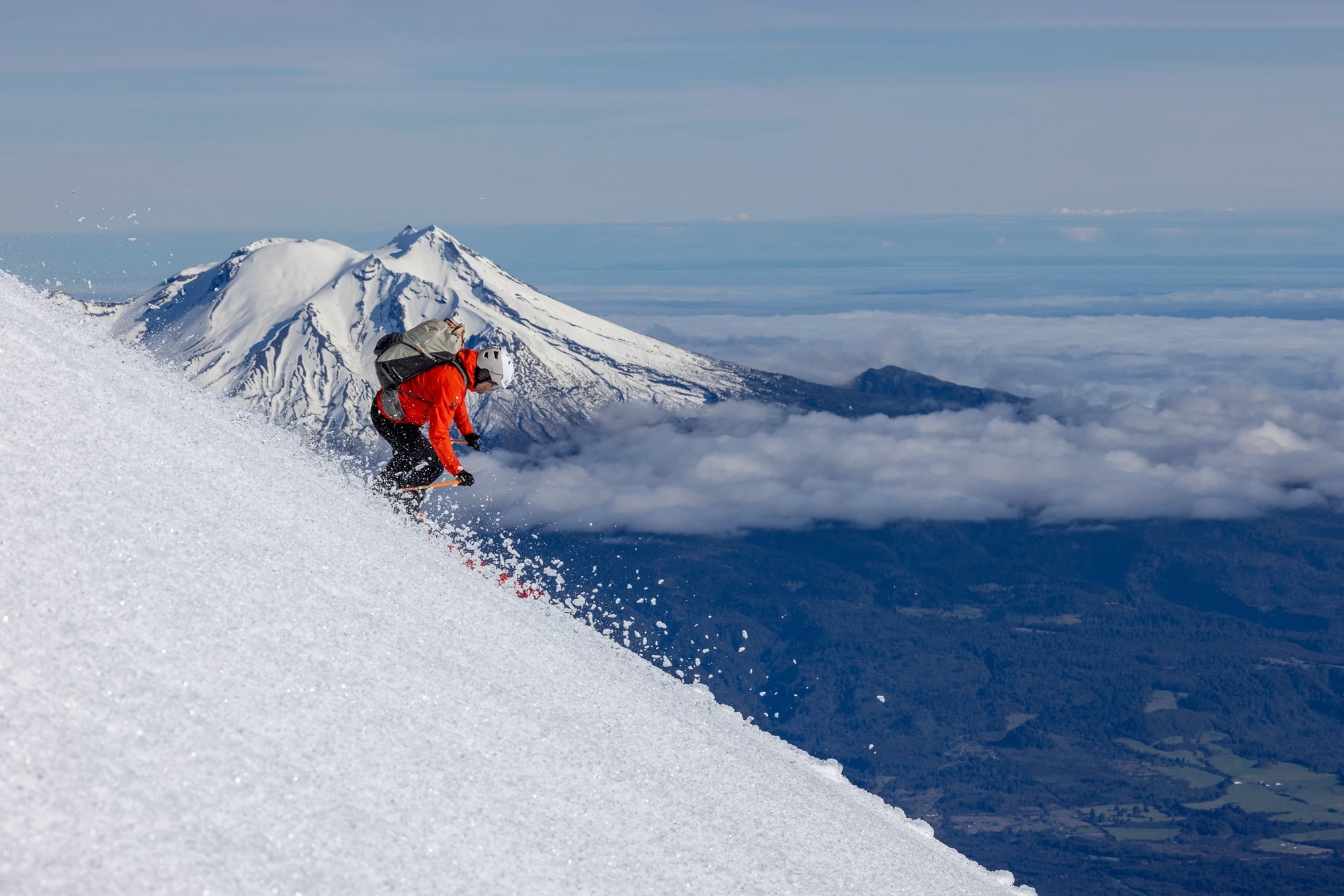
Skiing, it's just so good here. I think that's the main reason. Sometimes you're skinning in your T-shirt because the sun is out, and you're standing on the top of a mountain looking at the Arctic Ocean, imagining the North Pole is just around the corner, and then just skiing down all the way to the ocean.
Ólöf:
It's the last wilderness, because there's no road accessibility ever. It's forbidden. It's a nature reserve. So people that go with us skiing there, they're certain not to see any cars, any motorized vehicles. It's just them, and the snow and the Arctic fox.
Back to chapters
00:40
Meet Ólöf and Smári: Sóti Summits and the cradle of Icelandic skiing
Viktor:
I'm excited about learning about Iceland. It looks like something good is going on. We have Ólöf and Smári. So Ólöf is an owner of a guiding company in Iceland, so I'm curious to learn about that and why Iceland is becoming a hot destination for skiing. And then Smári, if I understand correctly, you are one of the first guides and also running a bunch of initiatives about skiing in Iceland.
But maybe first if you want to do a quick intro.
Ólöf:
Yeah. So my company, Sóti Summits, was actually founded around the idea of skiing. Here in Fljótin, in the region where we are, we're at the tip of the Troll Peninsula, just about 40 kilometers from the Arctic Circle, and this is sometimes called the cradle of Icelandic skiing because the first ski competition was held here in 1905 in one of our home runs, actually.
I think they basically just took their handmade skis up a hill and then tried not to die on the way down. That's how it was. My husband and I bought this old dilapidated school building in 2015. My father-in-law was a big skier in Iceland. He competed in the Innsbruck Olympics at the time, and all of my children have skied competitively, as has my husband.
So we actually found this place and thought about it as a ski destination. I myself was the director general for Icelandic Tourism for 10 years, and when I was sort of backing out of that position, it was a question of what we wanted to do, and we wanted to do something fun. And this area, which is the area of my mother's family also, my grandfather was born on the farm next door.
It's such a beautiful area for skiing. It is the hub of backcountry and heli skiing in Iceland, and also my family roots. And the fact that in the summertime you can do hiking, you can do mountain biking. There are beautiful sea kayaking routes along the coastline.
So this is an area that has a year-round offer. But mainly we located here because of the skiing opportunities at the beginning.
Back to chapters
02:53
Why Iceland ski touring is booming: guides and the IFMGA path
Viktor:
So there is a long tradition of skiing in Iceland, but why is everybody talking about it now? What happened in the last 10–15 years that Iceland is becoming so popular for skiing?
Smári:
As you said, people have been skiing in Iceland for a very long time. But as an industry, it began maybe 15 years ago or so when we got our first certified IFMGA guide, which started offering ski tours in Iceland. And then shortly after the Association of Icelandic Mountain Guides was formed, they started to create education for different types of guiding, like glacier guiding, mountain guiding, and ski guiding.
And that was built with the help of a very good guide from Canada, Colin Zacharias. So we now have good education for ski guides. But I started guiding even before I started the education like most people did in Iceland, because we didn't have a formal education. So I started guiding with skis around 2012 and have been doing so ever since.
Viktor:
That makes sense because now with the help of guides, it's becoming more accessible.
So Iceland ski guides are part of the IFMGA, and there's official training now for IFMGA guides in Iceland, or do you have to travel to Europe to finish the training?
Smári:
Yeah, you have to go to Europe to finish the training because we are not part of the IFMGA system. But we collaborate with the Swedish organization and the Canadian one.
Viktor:
And how many official ski guides are in Iceland now?
Smári:
So there are only five that have gone through the Icelandic education.
Ólöf:
We're very proud of the fact that we have four of those five guides working for us, and we have tried to at least follow, if not support the building up of the professionalism of the mountain guiding force in Iceland, and I truly believe that it adds something to the experience of coming to a place when you have a local guide who has grown up in the mountains and who also, of course, has the professional credentials, but knows these nooks and crannies, knows the hills, has skied the lines.
Like Smári, for example, who is from this area.
Viktor:
Yeah, for sure. Definitely if you can find somebody who is local, who knows everything, you know, and who lived there, that's the best experience for people. But yeah, I mean, guiding is definitely going to open up backcountry skiing as an amazing sport, but without a guide it's dangerous.
You don't know the snowpack. So I think more guides in Iceland will definitely open up the market even more.
Smári:
Yeah, definitely. And also, if I may add, when I travel for skiing, even if I am a professional, I always hire a local guide. He knows the runs.
Viktor:
And you've been skiing in Iceland all your life.
Were you born in Iceland?
Smári:
Yeah, so I was born in Iceland and I was so lucky that my parents both skied, I started skiing before I started walking, on my father's back.
Viktor:
And when did you start backcountry skiing?
Smári:
When I moved to Norway to study, and that was in 2003. So I've been ski touring for more than 20 years.
Viktor:
And then you tried to bring that concept back to Iceland.
Smári:
Icelanders are kind of crazy when it comes to hobbies. During COVID, everyone was buying bicycles and ski touring equipment. And then we had a phase where everyone was buying Nordic skis. It started to boom a little bit after 2010 or something like that.
And then we had another big boom during COVID when everyone had to have the equipment. So yeah, it's actually getting to be quite a big sport, even though not everyone is that committed to it. Maybe they do one or two tours per year. But then there are also people that do it whenever they can.
Back to chapters
06:52
The season: why spring, and world-class corn snow
Viktor:
Maybe you want to tell us a little bit about the season. You said it's typically focused on spring skiing, not so much on fresh snow. So I'm curious why the weather isn't great earlier in the season and you wait for better weather in spring?
Smári:
Yeah. There are a few factors that come into that, and one is the light.
We have really short days in January, for example, but we still ski then, but the season hasn't really started for guiding. Also, the weather is usually quite harsh in January, February. In March it starts to get a little better. And then when you get into April and May, you have the long days and the weather's usually calmer.
Also, Iceland is kind of known for being quite windy, so it's not that common that we get really good powder because of that. But we do have world-class corn snow in the spring.
Viktor:
Nice.
I didn't know about the concept of skiing late in the spring until maybe 10–15 years ago. And in the US I met some people who only ski in spring because it's safe, the snow is stable.
Corn snow, if you get it right, can be amazing. So yeah, that's nice. I would be curious to see on the map, maybe you can show us, you know, some areas where you typically go.
Back to chapters
08:25
The terrain: a map tour of the Troll Peninsula
Smári:
Yeah. This is the Troll Peninsula.
Viktor:
Okay, I see. So it's all the way north. Oh, nice. Okay.
Smári:
Yeah, it's the northern part. This is where we have the biggest concentration of mountains with good skiing, and you can see that if I zoom in a little bit, we have the interior, then we also have the coastline, so we can ski all the way down to the sea.
Viktor:
And how do you do it? How do you access these runs? Do you use boats, like similar to Norway, or is it mainly roads?
Smári:
In the Troll Peninsula, we use cars to get there. There's roadside skiing almost anywhere, unless you do a heli-ski. But then we also have the boats. If I zoom out a little bit, then we go to this area.
Viktor:
Oh, okay.
Back to chapters
09:10
Hornstrandir: the last wilderness, skiing from a boat
Ólöf:
If I can jump in, that area, the one he's showing now, is a very special area in Iceland. It's like the last wilderness because there's no road accessibility ever.
It's forbidden. It's a reserve, a nature reserve. So people that go with us skiing there, they're certain not to see any cars, any motorized vehicles, and it's just them and the snow and the Arctic fox. So it's a beautiful, beautiful place.
Viktor:
And you can guide ski groups there.
Ólöf:
It's a protected area, not quite a national park, but it's protected by law.
But yes, you can do boat skiing. The boat is then the accommodation, so there are no hotels or anything like that there. So you do sort of sea to summit skinning and then skiing down and meeting your boat in the next fjord.
Viktor:
Nice. And what is the typical elevation? How long are the runs? I see something like 500 meters, 800 meters maybe.
Smári:
Yeah. So in this area, in the boat, it's kind of like that, from sea level to 500, 600, and then you might do maybe two, even three runs during the day. But the runs in the Troll are longer. Here we have peaks up to, as you can see, 1,100, 1,200, 1,300.
Viktor:
Okay. 1,400 meters. Nice.
Back to chapters
10:26
The lodge: seven rooms, three-course dinners, a geothermal pool
Ólöf:
We offer the tours in Troll Peninsula, and those are lodge based, which is where Smári and I are now.
And then we offer tours in the Hornstrandir Nature Reserve, and those are the main places for backcountry skiing and those adventures. So when we travel to the nature reserve, we utilize a traditional oak boat called Örkin, or The Ark, which then serves as accommodation or hotel and as the transportation.
And we take groups up there in the springtime also because, you know, then it's very necessary that the weather conditions are stable. And here in Troll Peninsula, we can have a longer season, but then we have the lodge here, our hub lodge, with a higher level of service.
You have a pool, you have a sauna, a geothermal pool, you have the relaxation that comes with that. It's less of a rugged adventure than Hornstrandir, and more of a holistic experience with a lot of great skiing. So this is one of the rooms at the hotel, and you can see that outside of the room there's a view towards the Arctic Ocean on one side.
So we offer rooms with mountain views and with ocean views. So these are heli skiers, as you can see from the red flag post over there, and you can see the tops, the rugged tops of the Troll Peninsula behind them.
Viktor:
That looks pretty good in terms of terrain. How big is the lodge?
Ólöf:
We have seven rooms.
Normally, we have like 12, max 14 guests with two guides, which is the perfect size because it gives this ambience because we are in the middle of nowhere, as you might see from the views from the windows. We're not in a town. We are a self-sufficient lodge. We serve three-course dinners every evening.
We have excellent chefs and have had really good reviews on our food. We make our own lunch packs for people to take into the mountains with them, and it makes for a really good sort of group experience, and you can just see the friendships being forged in the evening sometimes in our living rooms.
Here you can again see the view towards the Arctic Ocean of an evening. And in the morning it's beautiful to look towards the mountains and contemplate the upcoming day. And then, of course, at the end of the day there is the pool, which is sort of a classical pool in Iceland, built in the '70s. You can see the hot tub in the background.
You can see the door to the sauna. But you can also see people floating, and that's what we offer as a relaxation and wellness experience after a long day in the mountains. We offer aquatic stretches and floating experiences where you sense the weightlessness in the thermal waters.
Viktor:
So the water in the pool is natural water from the thermal-
Ólöf:
Yeah.
Viktor:
Geothermal springs. Yeah. Okay, nice. Very good.
Ólöf:
And then we often try to welcome people home with a live fire as they come back from their home run. And here you can see a few skiing photos, backcountry skiing here. Yeah, that's our Sara, one of our guides. Again, a view from the pool, and this is the morning view from the breakfast window.
This is inland in the Troll Peninsula, seen from the helicopter. And here you can see the views as you start skiing down, just views directly to the sea.
Viktor:
Yeah, everybody talks about it. You can ski all the way down to the ocean. Yeah, that's nice.
Ólöf:
Yeah. Just running through these photos and maybe ending with this one.
Viktor:
Very similar to Canadian lodges. It's the same concept. People typically go for a week, and then they spend a week from Saturday to Saturday. But okay, this is a little bit more accessible, so I guess you can do shorter trips.
Ólöf:
Yeah.
Viktor:
What does a typical day look like at the lodge?
Smári:
So the typical day would start, of course, with a breakfast, and then a meeting with the guide, with the group, going over the day depending on the forecast and the conditions.
Then skinning out, doing preferably two runs, and then coming back, relaxing at the pool with a beer, and then the three-course dinner.
Viktor:
When do you typically come back? 4:00, 5:00?
Smári:
Yeah, something like that.
Ólöf:
If you'd like to see some photos from the Hornstrandir tours, I can show you them. That's from the boat tours.
Back to chapters
14:47
The boat: Örkin, sea-to-summit days, and Ísafjörður logistics
Viktor:
Yeah, let's open up that map again, so we can see where we are. This is Troll.
Smári:
The lodge is here, and then the boat tours are around here.
The pickup is here in Ísafjörður. We'll take the boat over here. There will be some skiing and we skin up, ski down on the other side. The boat's waiting here, and then there's dinner on board, maybe a few beers and talks. And then that experience is just something else.
Viktor:
Can you show us what the boat looks like?
Ólöf:
Yeah. Here you can see where the boat is. So it's a converted fishing boat built in 1975 and used as a fishing boat until 2017 when the current owner changed it into a comfortable expedition boat, you could say. And you can see the stillness in the fjord, because here you are in the middle of the fjords.
So this is one of the places in Iceland where you don't have a lot of wind. So we have activities after skiing that include standup paddle boards, where you can go and play around. You take the dinghy on shore with your skis, and sometimes there's snow all the way down, and sometimes you have to walk a couple of meters to get to the snow line.
And then you just skin up from the fjord. You can see how they're skinning up this tight valley there.
Viktor:
Yeah, it looks amazing.
Ólöf:
Just running through the photos, and here they are on top, and you can see that there's a difference in the landscape from the Troll Peninsula. You see the mountains are a bit flatter.
This is a tiny bit older landscape geologically, but it's still this rugged fjord landscape with a lot of fjords where you have excellent ski lines down to the sea.
Viktor:
Yeah, that looks very good. Very nice.
Ólöf:
Yeah, sort of on top of the world, taking the skis, skinning up, and here you can see the boat in the background.
Sometimes you meet the Arctic fox while skiing, which is the only indigenous mammal in Iceland, so it's the only wild mammal.
Viktor:
You don't have any polar bears and things like that?
Ólöf:
No. We have the occasional polar bear, but they don't live in Iceland. They just get maybe stuck on an ice floe.
Viktor:
Okay.
Ólöf:
Because there are no motorized vehicles, and because it's very peaceful in the Hornstrandir Reserve, the foxes are very curious, so they're not that afraid. So you often have nice encounters with them. There we can again see the boat and the skiers. So you can see the steepness of it.
Viktor:
This guy is ready to ski something steep it looks like.
Ólöf:
Yeah. So what happens is that you stay on the boat, you ski into a fjord, you skin up, and then you ski down another valley, and the boat meets you there. So here you can see the inside fully equipped kitchen where you can serve very nice meals. Here is the living room and the seating area, the communal area in the evenings.
At the bottom, there's a line showing the size of it. And here you can see the setup there. So we align these itineraries with the flight schedules to Ísafjörður, 'cause Ísafjörður is also a bit off the beaten track. It's the main town in the Westfjords, so there's about 3–4,000 people that live there, so there's all services there.
But we align with the domestic flights there, so we start on a Sunday and set out then, and then we come back to Ísafjörður on Friday. So it means that our travelers, they can travel over the weekend, so they only need to take this one week off work, if you will. And there's a lot of leeway for them then to have an extra night in Reykjavík before they leave or however they want to plan that.
But it's always a six-day tour. Unless somebody charters the boat for a private tour, then of course there's more adaptability to that.
Back to chapters
18:51
Weather, flat light, and how many ski days to expect
Viktor:
That sounds great. Okay. I think we get a good idea of, you know, these two areas and what the skiing looks like. Maybe we can talk a little bit about the weather and the skiing.
Smári:
Yeah. As I said earlier, the weather starts to get a little bit more cooperative in the spring. Of course, we can have bad weather days, fewer at least than in the high winter.
Viktor:
Do you need full visibility or if it's cloud cover and flat light, can you still ski?
Smári:
Yeah. That's a bit of a challenge sometimes 'cause we don't have any trees for reference.
Viktor:
Yeah, I just came back from a trip in Alaska and it's a challenge over there.
Unless it's like a perfect bluebird day, it's really hard to ski because there is nothing, you know, just all snow and then the flat light, it's not great. But
it looks like you have some couloirs and rocky terrain.
Smári:
Yeah, definitely. If we don't have that, the guide always skis first, so at least the customers have tracks for reference.
Viktor:
But pretty much on average you will go and ski every day out of seven days, or maybe skip one day if it's really bad weather.
Smári:
Yeah. Of course, if the weather is really bad, we don't go out, but if it's possible, we'll do it, and sometimes it might just be a short tour if the weather's like that.
Viktor:
On average, if you go for a week, how many days can you expect to ski?
Smári:
Usually all of them.
Viktor:
Okay.
Smári:
If you just plan your day accordingly, you can get a few runs. You have a quite long window for skiing.
Viktor:
Okay. So you're just following the sun and trying to find the good snow, yeah.
Smári:
Yeah. Even in April, maybe parts of May, we do get the night freeze that, you know, of course makes the season longer because it's not melting like 24 hours a day.
So it stiffens up during the night and softens up in the day. I would say the average temperature is just around zero, I guess.
Back to chapters
20:48
Après-ski and the Icelandic pool tradition
Ólöf:
As Smári mentioned, like a typical day, when you come back in the afternoon, we would have some après-ski, maybe light a fire as was shown in one of our photos, and just generally have sort of a nice bantering session talking about the excellent skiing they had during the day.
And that is then followed by a visit to the pool. So the Icelandic pools are actually a tradition, and they were recently designated as an intangible heritage by UNESCO because throughout the ages they have been a place of meeting and talking. And it was even said that during our civil war, for example, it was a really great place to have a parley if you were arguing with your neighbor or having a battle or something because, you know, naked in a hot spring, it's not really easy to conceal a weapon.
So it was sort of a place where you could sit down and have a talk without being endangered, even if you were enemies. So we have a long tradition of the pools where you sit and relax, and that sort of normally covers the time until dinner. So normally the skiing covers the main day, and then there's some R&R at the end of the day.
Back to chapters
21:57
The food
Viktor:
You mentioned you have a good chef at the lodge. What's the typical food in Iceland?
Ólöf:
So we have an emphasis on fish, but of course we also utilize the Icelandic lamb quite a lot. And then of course there's the normal fare because of course we have a poultry industry. We also cater for vegetarians. If there are any special needs, we cater for that also. We bake our own fresh bread for the packed lunches in the mountains, and in the mornings we have a breakfast buffet. And then upon return there are light snacks for the après-ski, and then there's a three-course meal every evening.
So there's a starter, maybe some cured Arctic char from the nearby river, followed by lamb, followed by a nice dessert. So that's the typical vibe. It's really nice food, you know, and I can say that because I'm very proud of my chefs.
Viktor:
Nice. That sounds great. Yeah, lately I've been organizing, I'm at the age when all of my friends are a little bit spoiled and they like skiing and everything, but they also like good food, nice wine or beer, whatever.
So we have to find out ways to go to these ski destinations, but at least have some comfort. So this sounds pretty good.
Ólöf:
Yeah. So as I say, the pool provides the wellness and the food provides the wellbeing also.
Back to chapters
23:19
Why Iceland: skiing to the Arctic Ocean
Viktor:
It looks very wild to me. It feels like in winter it's not too crowded, so it feels like a proper wilderness compared to Chamonix, where I am and it's always people everywhere climbing, skiing, running.
But this feels like a really nice little bit isolated place.
Smári:
It's just so good here. I think that's the main reason. Sometimes you're skinning in your T-shirt because the sun is out and it's nice, and then you're standing on the top of a mountain and you're just looking at the Arctic Ocean, and then just skiing down all the way to the ocean. For me, nothing beats that.
Viktor:
It's on my radar to go to northern Norway and Iceland and do that. People get super excited when they see these photos of the ocean, and you can ski all the way down to the boat.
Ólöf:
Just maybe to emphasize what Smári says, the skiing here is just so good and the views are so good on a beautiful day.
I think that's also special about Iceland. It is the lack of trees because, you know, as you could see from the photos, you can see the landscapes. You can even see the curve of the earth almost when you're skiing down to the sea. And I think that because it is not so full of people, both the Troll Peninsula and the Hornstrandir Nature Reserve, I think it also gives you this feeling of being alone in the world, you know.
I remember skinning up in the Hornstrandir Reserve many years ago and then just coming across some old fox tracks, and you were sort of just alone there with the fox tracks and just so connected to nature. And for me, that would be this extraordinary thing about skiing in Iceland because you are connected to nature.
You're just such a part of it, and you can also feel how that also rules your experience. You just have to play with whatever comes along, weather-wise or nature-wise or whatever, and it's just a beautiful feeling.
Back to chapters
25:19
Wrap-up
Viktor:
I think we covered pretty much everything. I think we can wrap up. Thanks so much for doing this with us, and let's see if we can get some more people to come to you and stay with you and ski with you.
Smári:
Looking forward to it. We welcome them.
Back to chapters