About 7 years ago, I quit a boring banking life and crossed the Atlantic with my wife and 3 kids on our own sailboat. Later, I met Lionel, now my partner and co-founder. He has won La Route du Rhum and sailed around the world 5 times, but his dream was Arctic waters.
Today, we take no more than 6 guests at a time on a Greenland expedition to the east coast. It’s by far the most remote coast on the island. Sailing in Greenland here means you’re basically alone with the ice.
And that ice is bigger than you think. It’s more than 3,000 m (9,840 ft) thick in places, and so heavy that it has pressed the land below sea level.
Now imagine what happens when a piece of it breaks off.
Stick with me, and I’ll tell you where it ends up.
Why I Choose the East Coast for Every Greenland Expedition
The most remote coast in Greenland
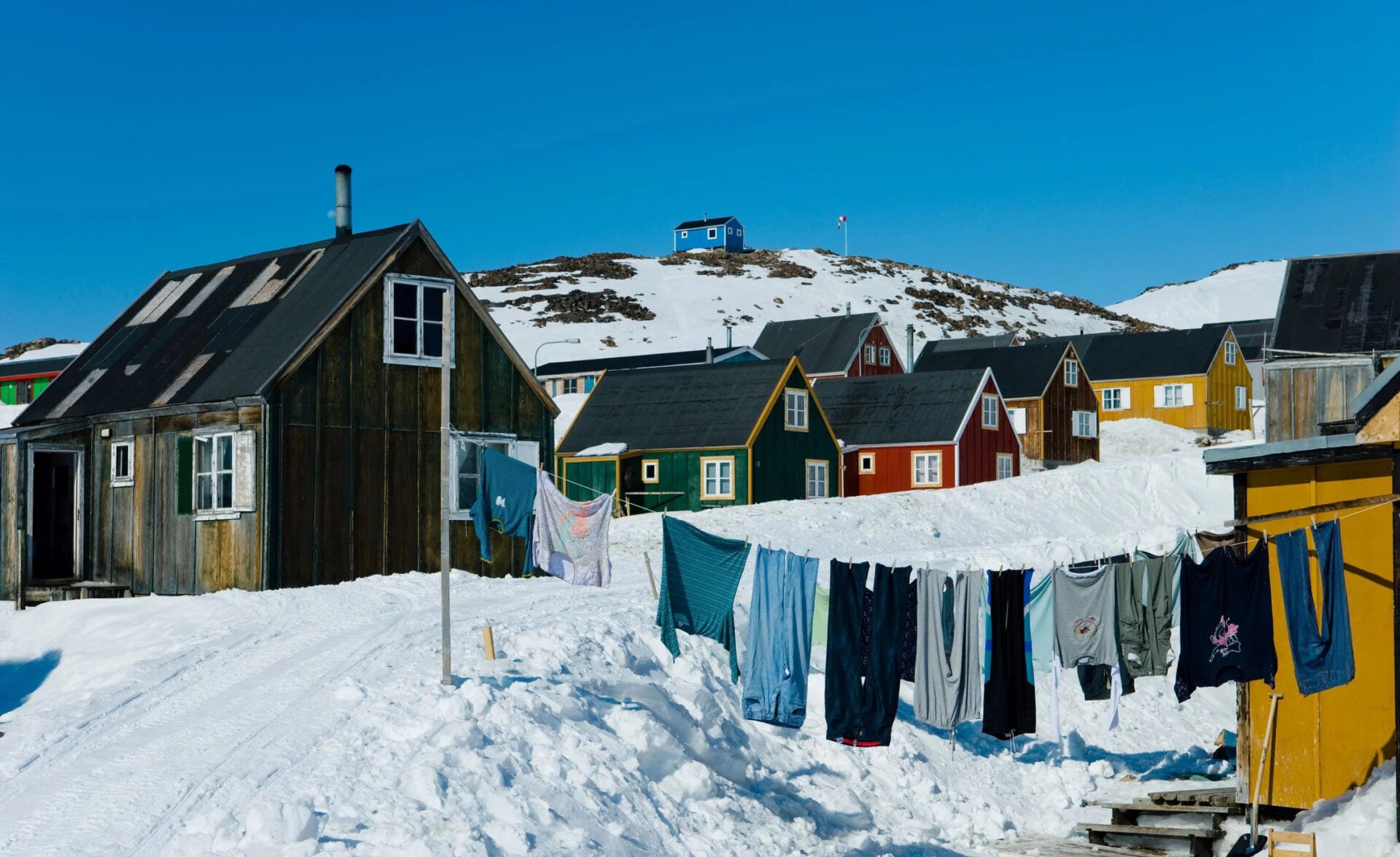
On the east side of Greenland, you’re basically alone. Only about 2,900 people live along the entire east coast. There’s no big supermarket, and there’s none of the infrastructure we’re used to in Europe or North America.
The west coast is far more visited. Large cruise ships call there, and it’s still a fantastic area. But in the east, it’s nature and yourself.
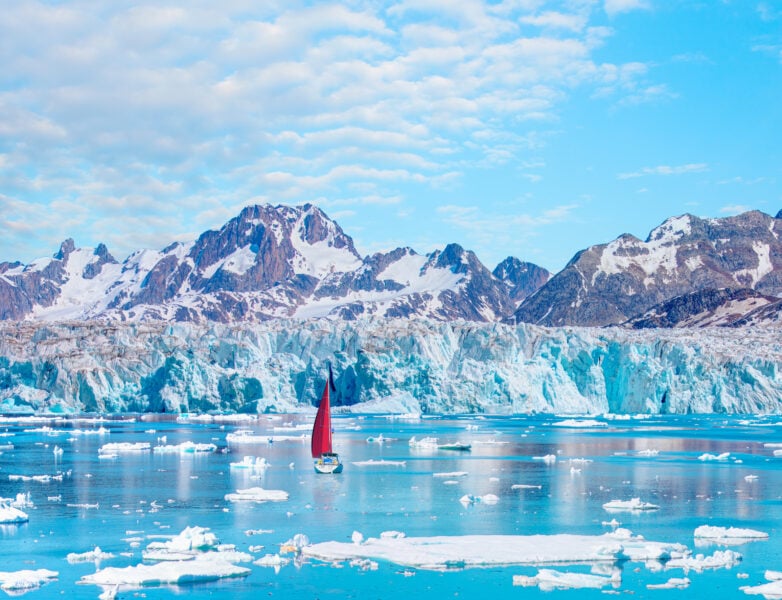
The glaciers add to that feeling. Here they reach up to 80 m (260 ft) in height and 3 to 4 km (2 to 2.5 mi) in length. They constantly calve icebergs into the sea.
Why we base ourselves at Kulusuk
Our base is Kulusuk, just below the Arctic Circle at latitude 64 to 65 North. The ice behaves there.
Drift ice can block the coast early in summer. In one recent season, Scoresbysund, a fjord in the northeast, wasn’t accessible until early August. Some boats got trapped, and that’s not a nice place to be in those temperatures.
By mid-July, the ice bank around Kulusuk is basically gone. So we’re certain we can sail the area. That certainty is why I build each Greenland expedition around this base.
Glaciers, Fjords and Icebergs on the East Coast
Sermilik and Ammassalik, our two fjord systems
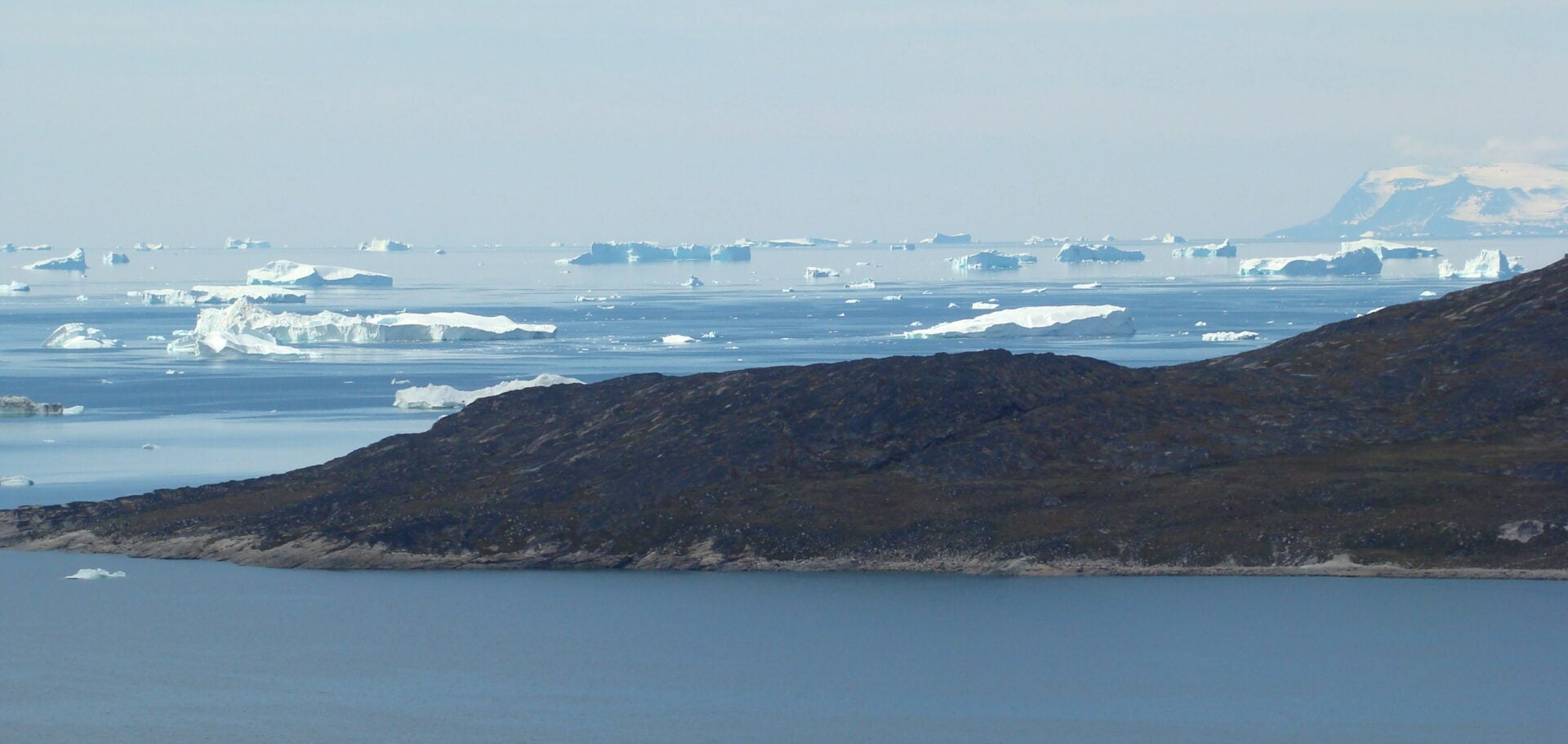
Two main fjord systems anchor our plans. One is the Ammassalik Fjord, and the other is Sermilik Fjord. Sermilik roughly translates to “place of glaciers,” and every fjord here ends in a sizable glacier.
The Greenland fjords are peaceful. Because they sit well inland, the swell doesn’t reach them.
Our trips are 10-day sorties, and the exact route depends on drifting ice and weather. We sail only 2 to 3 hours a day. However, we land and explore at least a couple of times daily.

Calm anchorages for non-sailors
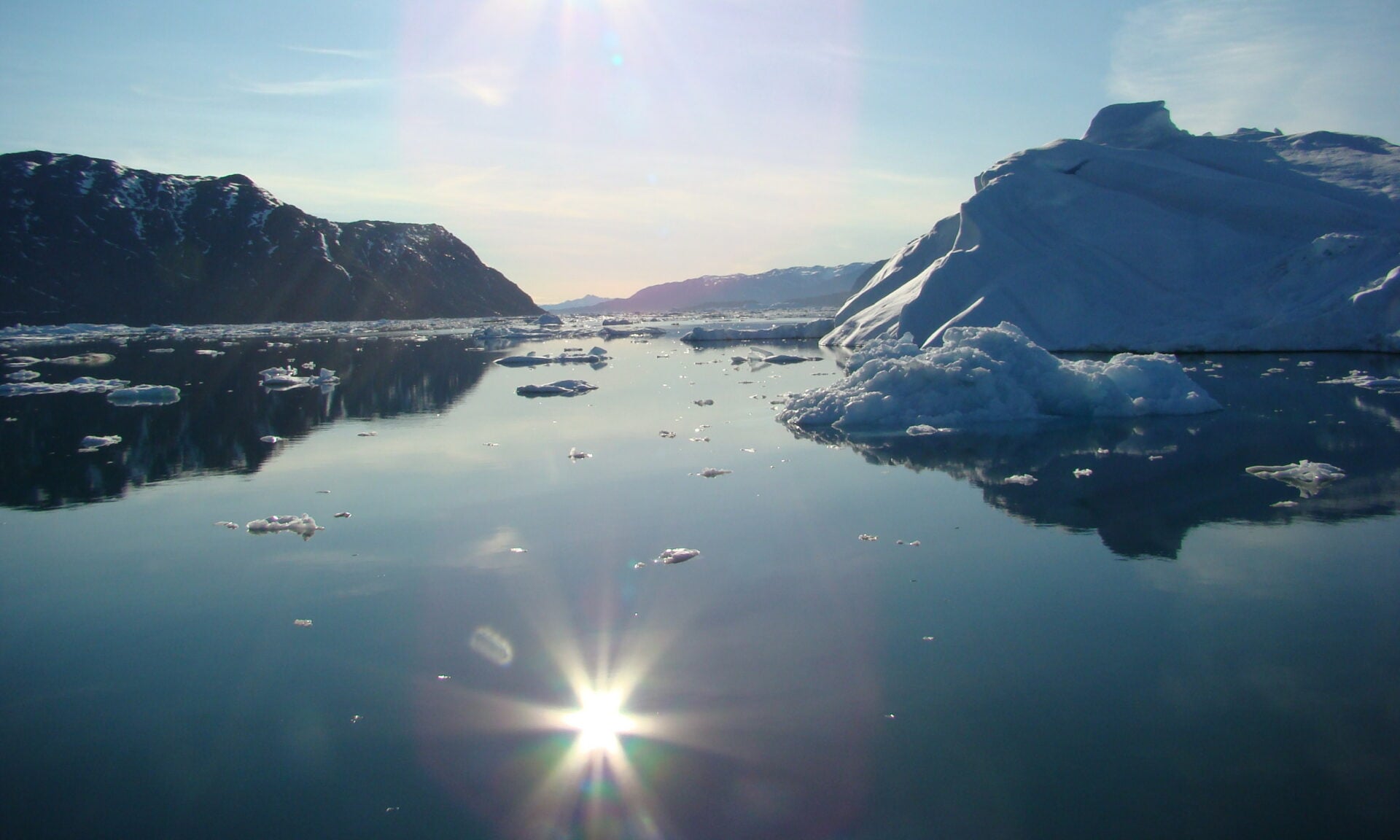
I don’t assume my guests are born sailors. So we make the trips as comfortable as possible. For the night, we always anchor on a lee shore, protected from wind and waves.
That’s easy in these fjords. If the wind blows from the north, west or south, there’s always a lee shore where we can tuck in.
How thick is the ice in Greenland, and how big are the icebergs?
Greenland’s ice sheet is more than 3,000 m (9,840 ft) thick in places, and covers roughly 80% of the island. The icebergs that calve off it can stand 70 to 90 m (230 to 295 ft) tall. Below the surface, they reach 300 to 400 m (985 to 1,310 ft) deep.
Where all that ice goes
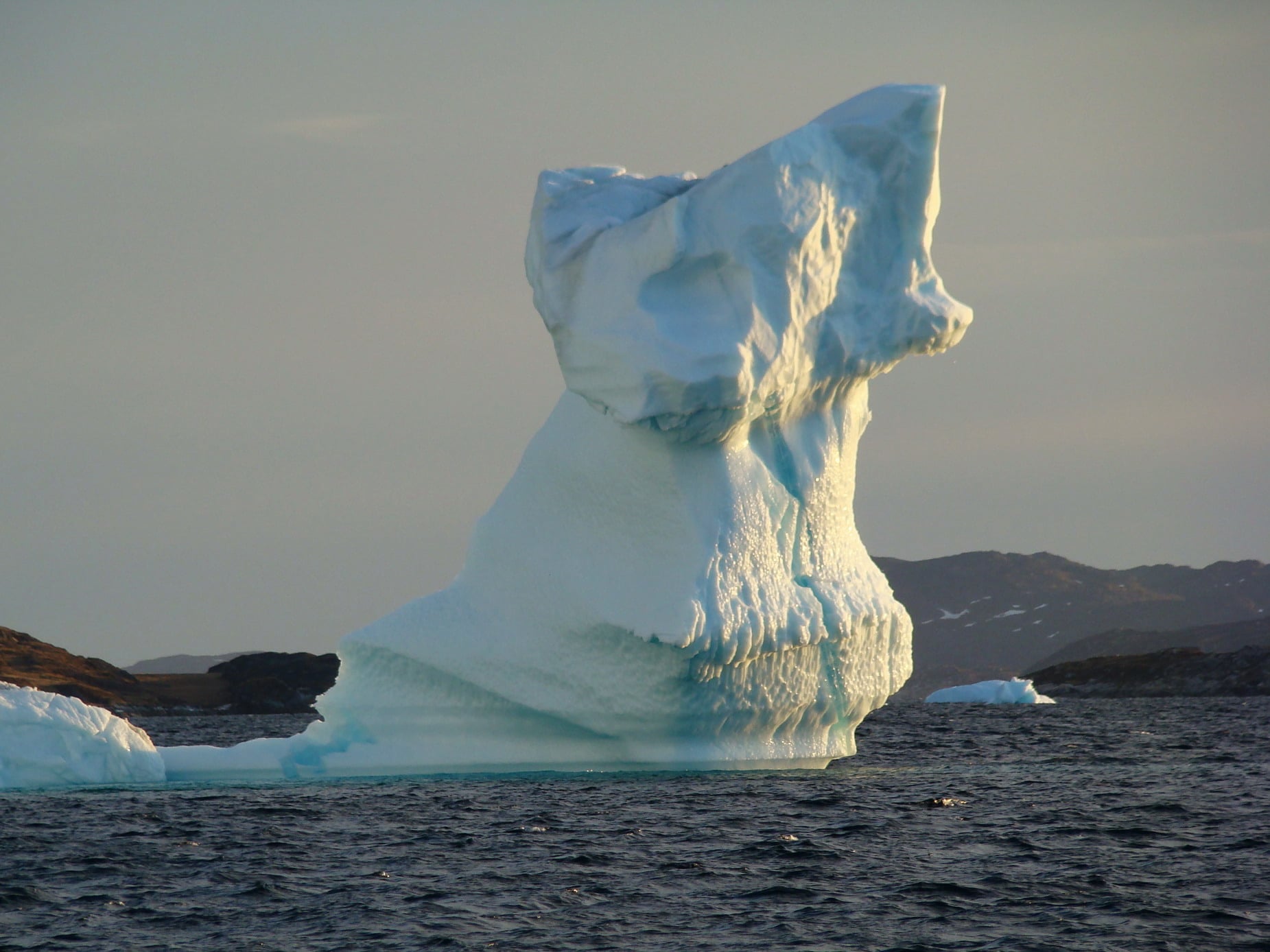
That ice holds enough water to raise sea levels by about 7.4 m (24 ft) if it all melted.
When a piece breaks off, the iceberg starts drifting south with the currents. Many reach the waters off Newfoundland after a couple of years, and a rare few have even turned up near Bermuda. In warmer water, they can melt within weeks.
Getting close to the ice
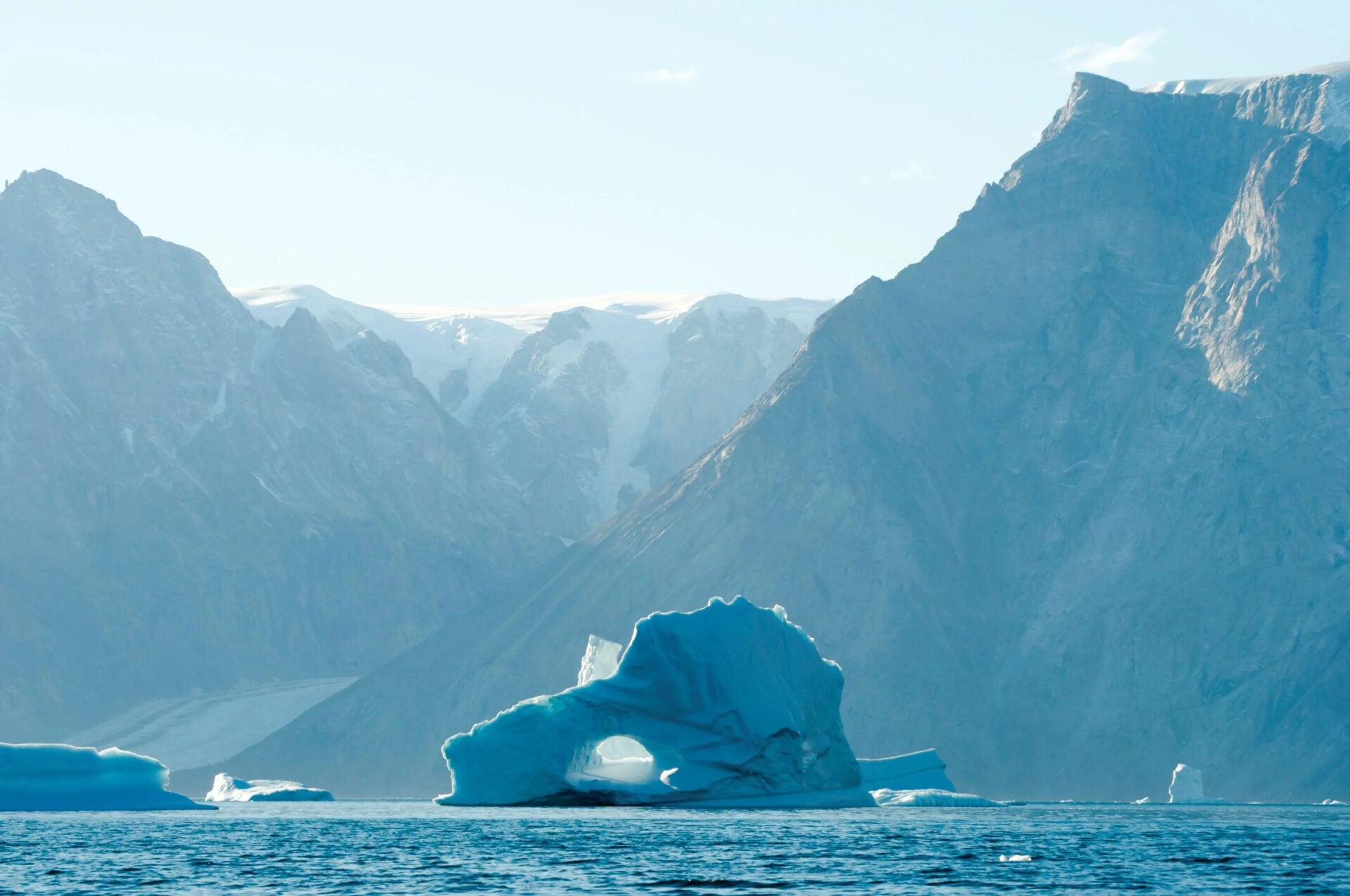
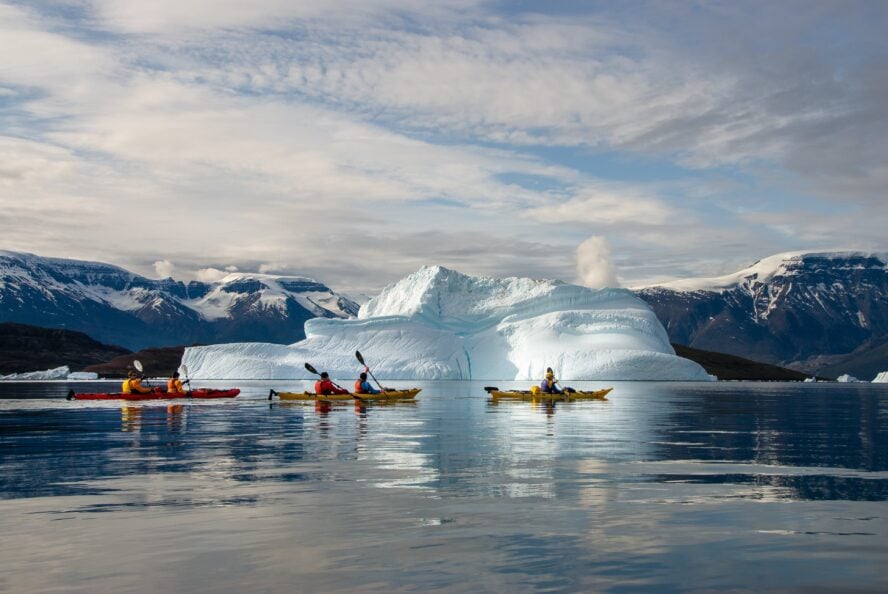
Greenland icebergs look different from every angle. That’s why the dinghy matters so much to me. We anchor in a fjord at a safe distance, then take a short ride to see the ice up close.
You can touch the icebergs.
If the guide says one is safe and stable, you can even step onto it.
In Svalbard, Lionel stood on the ice while holding the dinghy steady, and you can do the same kind of thing here.
A Greenland Expedition Under Sail vs. a Cruise
How is a sailing expedition different from a Greenland cruise?
On our boat, up to 6 guests and 3 crew share the water, so it stays intimate and flexible. We sail without engine noise, anchor close to shore and land as many times a day as we wish.
On a large cruise ship, you often see nature through glass.
Why a sailboat opens up the Arctic
We use our sailboat to get to places we couldn’t reach otherwise. Svalbard is a perfect example, with no roads between its settlements and Longyearbyen as its main town. Getting around mostly means a sailboat or a large ship.
A sailboat also lets us sail, anchor and disembark where we want. And we don’t disturb the local wildlife or nature. That’s a big part of our philosophy.
A crew and guides who know the boat
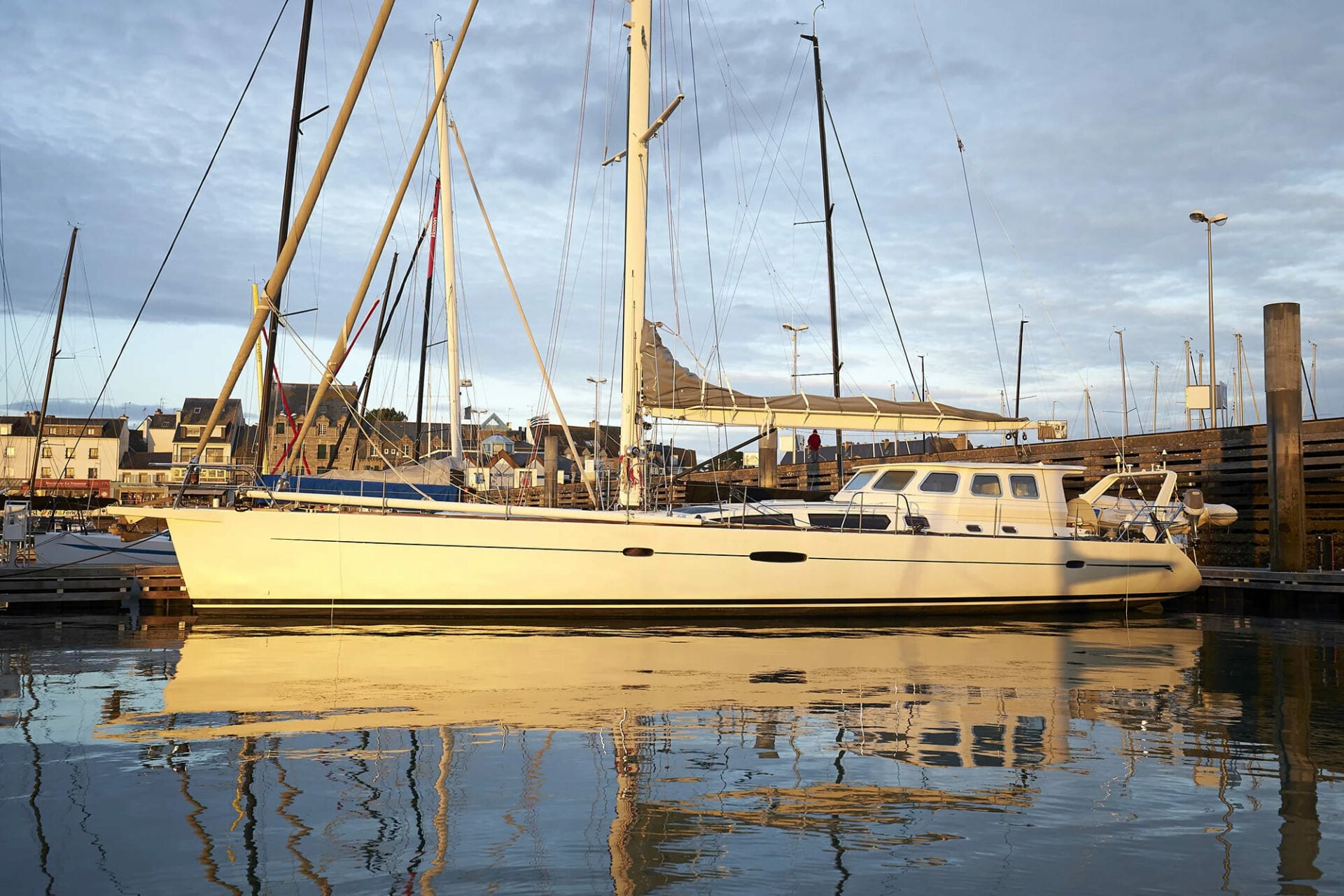
Exploring the Arctic safely and comfortably takes a combination of skills. You need an experienced crew and guides, a boat prepared for cold water, and strict safety protocols. Those protocols cover how we behave on board and how we behave around nature.
Lionel is a safe sailor, and also a great companion with plenty of stories.
Behind the boat sits a land-based team, including me. These journeys are complex to organize, from flights and permits to gear and temperatures. So before any trip, we organize a Zoom call with the crew and guides, and the project becomes much more tangible for our guests.
We speak many languages natively so you can always count on us to answer your questions about the trip.
Where we’ve sailed before
We spent almost 3 months sailing around Iceland, from mid-June to the end of August, with perpetual daylight. The next winter, we ski-toured from the boat in northern Norway, above latitude 69. In May, we moved to Svalbard, which is about 900 km (560 mi) from the North Pole.
We skied there until mid-June. Then the drifting ice started to melt and open the fjords and passages, and we switched to sailing and exploring. Each year, we try to discover a new territory in the Arctic.
No engine, no noise
One of my best memories is from Iceland. There was little wind, so we went below for lunch. The sails were up and the boat was drifting.
I went upstairs to get some butter from the external fridge. And there it was, a huge whale. We spent the next 2 hours with whales around the boat.
They were there because we were undisturbed. The engines were off. We’re not enthusiastic about motorboats, because we want to be silent and not see nature through the glass of a large cruise ship.
Why flexibility matters
In Iceland, we once circled a small bird islet less than 100 m (330 ft) from shore. We spent over an hour taking pictures. Then we dropped the dinghy and got even closer.
A sailboat lets us stop as many times as we wish during the day. Greenland sailing here is about frequent landings, not distance. And we always try to approach wildlife without disrupting it.
Whales, Narwhals and Bears on the East Coast
Humpbacks, sperm whales and the chance of a blue
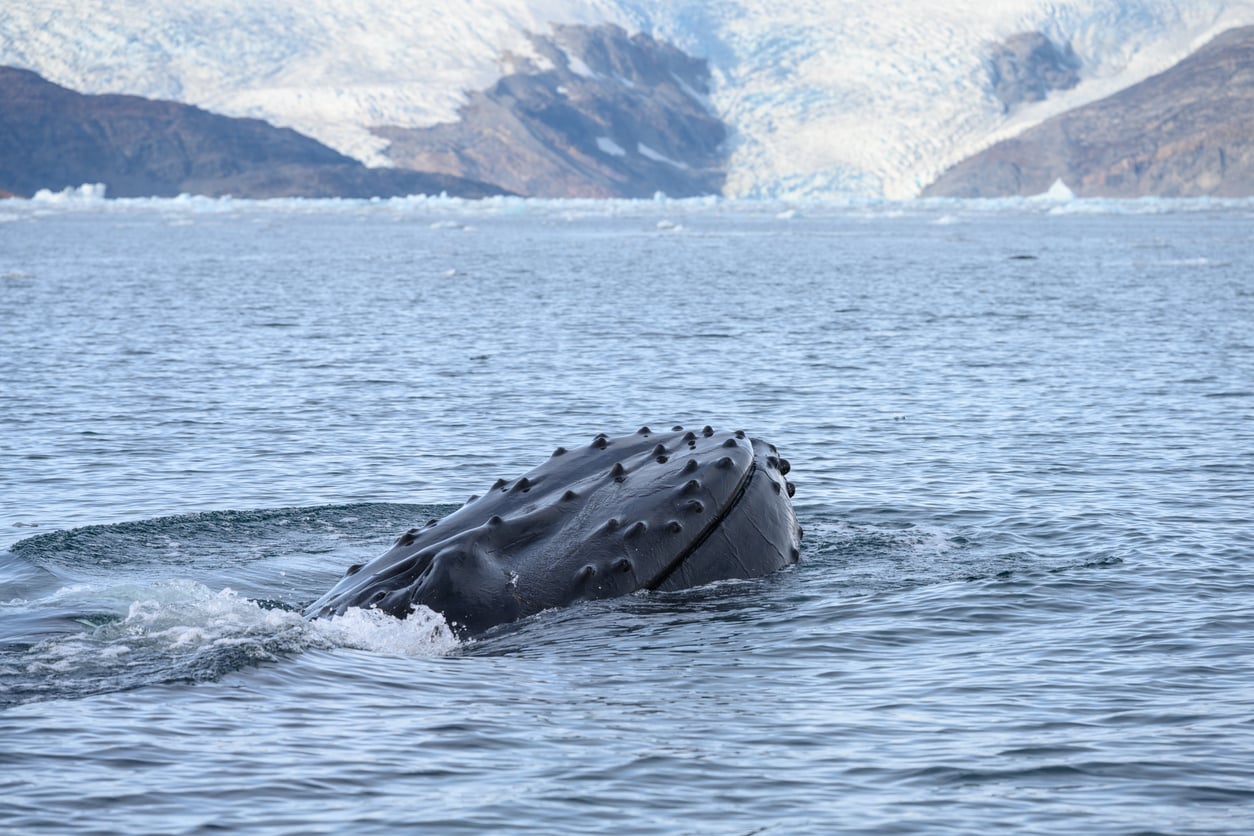
Greenland wildlife is first of all marine life. The whale species here differ from the ones we meet in Svalbard and Iceland, and from those on the west coast. Mostly you’ll see humpback and sperm whales, and with luck, a blue whale.
One of the fjords is a gathering point for whales and walruses. Under sail, I’ve watched 3 or 4 whales blowing around us. One surfaced only a couple of meters (about 6 ft) from our hull.
No engine means no noise, and that’s how we get so close, sometimes unintentionally. The whales are undisturbed, and that’s why they stay near the boat.
Is there a chance to see polar bears in Greenland?
Yes, but it’s not guaranteed. On the east coast, licensed Inuit hunters take bears under a yearly quota, and the hunt pauses in August and September.
So the bears are shyer here, and a sighting is rarer than in Svalbard, though it’s not impossible.
Bears here versus Svalbard
Svalbard has a few hundred resident bears and about 2,900 inhabitants. Nobody hunts them there, so they aren’t shy at all. We have very specific training for our guides and protocols for when we land ashore.
Carrying a rifle is compulsory in Svalbard because of the bears. It isn’t compulsory in Greenland, but we bring our own anyway. It’s strictly for protection, and we’re not hunting.
Narwhals, Arctic foxes and birds
Narwhals are very special to see. A male is about 3 m (10 ft) long, not counting the tusk. They move in sizable groups, sometimes over 100.
On land, the Arctic fox is common. It’s smaller than foxes in Europe or North America, and it’s white in winter, brown or gray in summer. It isn’t very shy, so your chances of a sighting are good.
At least 200 bird species have been spotted in Greenland. About 15 to 20 of them are local.
When can you see the Northern Lights in Greenland?
Guests often ask about northern lights Greenland chances in July, and honestly, it’s very unlikely before mid-August.
After that, we have good chances, and we’ve photographed the aurora from our deck in August. So if the lights matter to you, aim for the end of the season.
Life Onboard and Ashore on a Greenland Expedition
What are the best things to do in East Greenland?
Land often. We visit glaciers and icebergs by dinghy, hike the tundra, watch whales and walruses, and go fishing with Lionel. Because there’s 1 Arctic nature guide for up to 6 people, you can spend hours with them.
How the days unfold
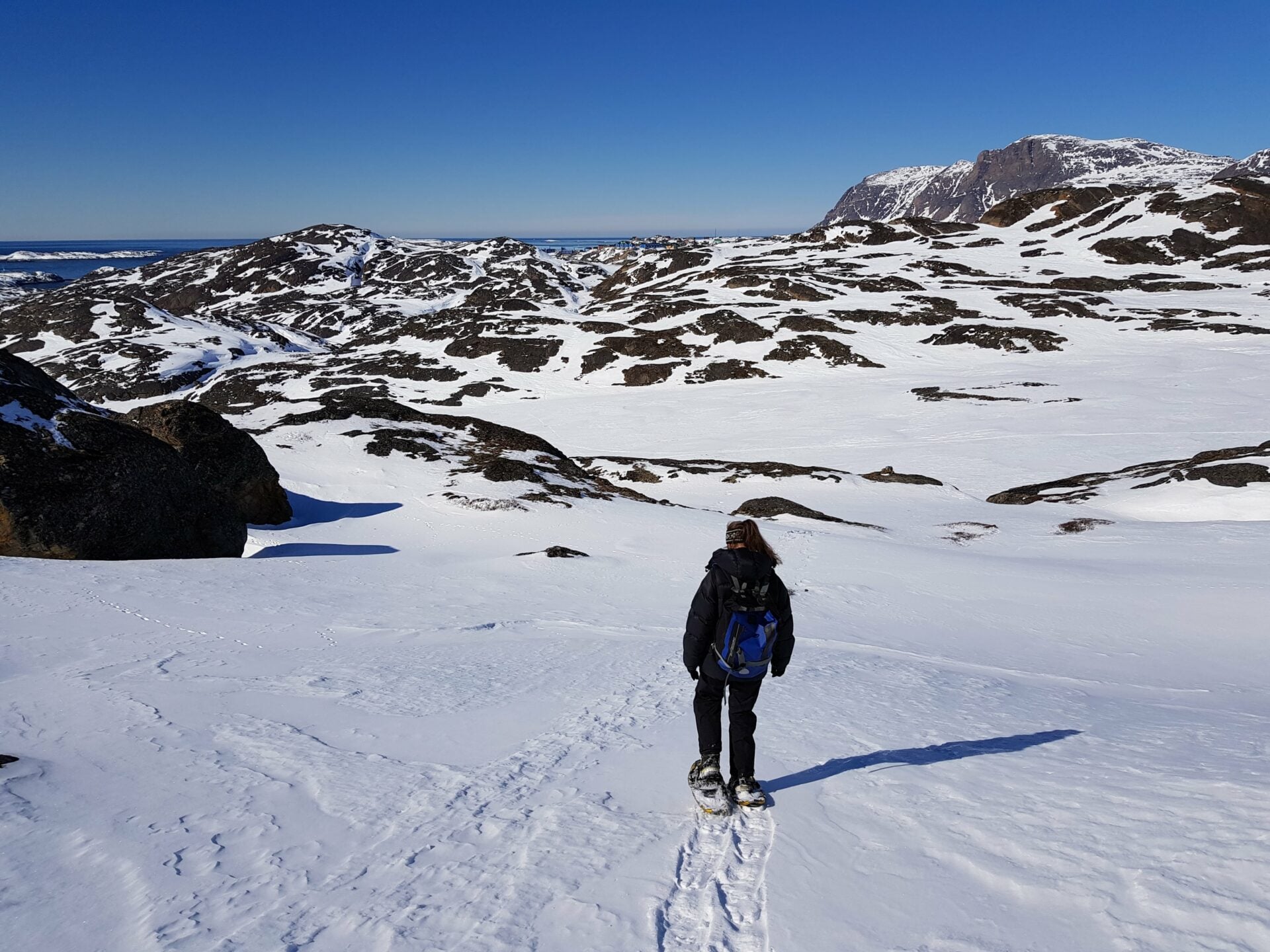
Our days follow the weather and the animals. We sail for a few hours, then land to hike or visit a glacier. Lionel loves fishing, so he’ll happily take you out in the dinghy to find good fishing grounds.
You’re welcome to join the sailing, but it’s not compulsory. Taking the helm with Lionel is very enjoyable. However, you can also just rest and watch the scenery.
Guides, hikes, and a very cold swim
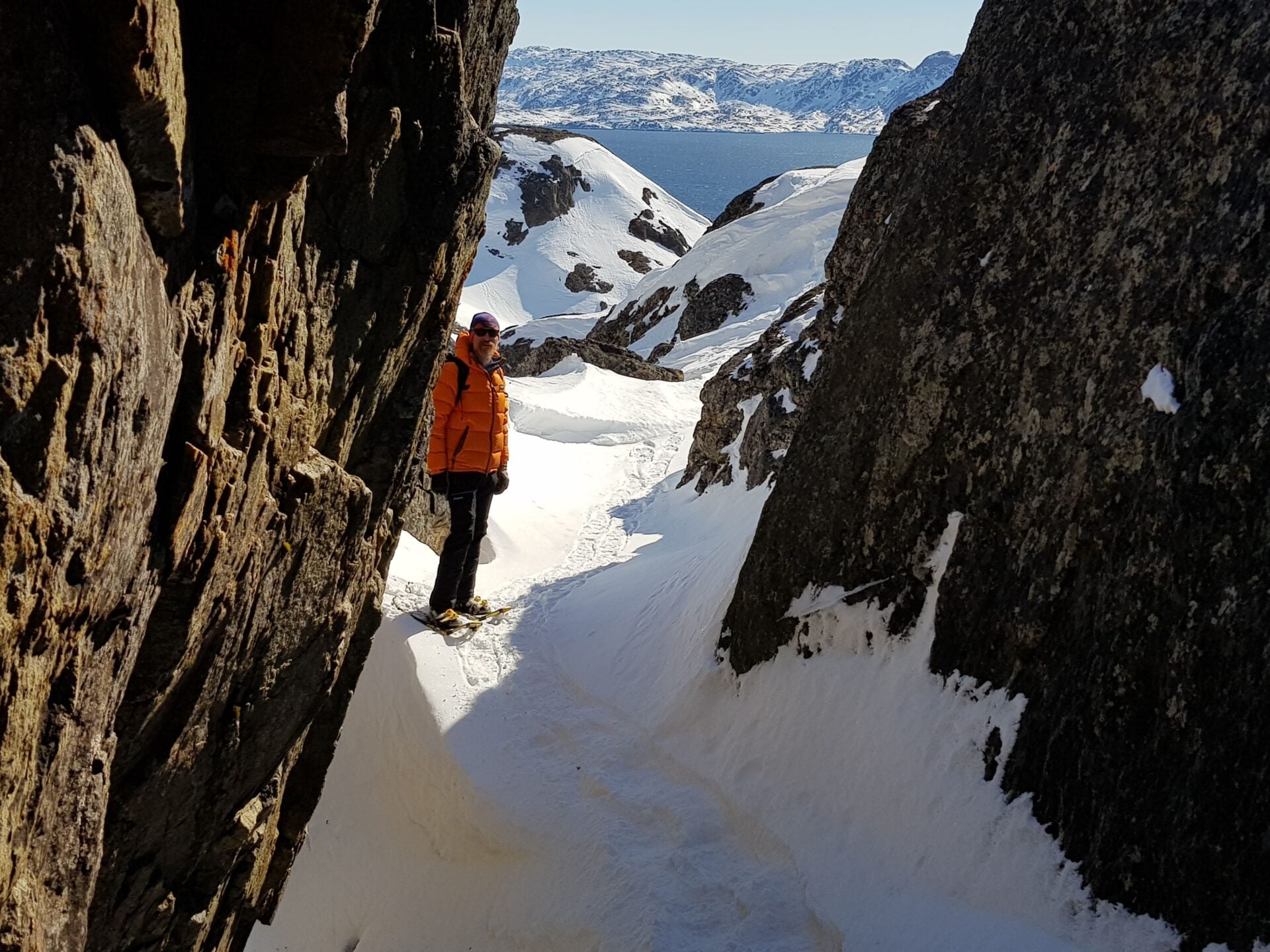
These guides are young, local, and fluent in English. They know the area well. Since it’s not 1 guide for 50, you won’t be rushed.
If you fancy a swim, the water sits around 0°C (32°F). Luz, our cook and first mate, swims for 5 to 10 minutes every day. You don’t have to join, but we’ll help you test the waters.
Food onboard
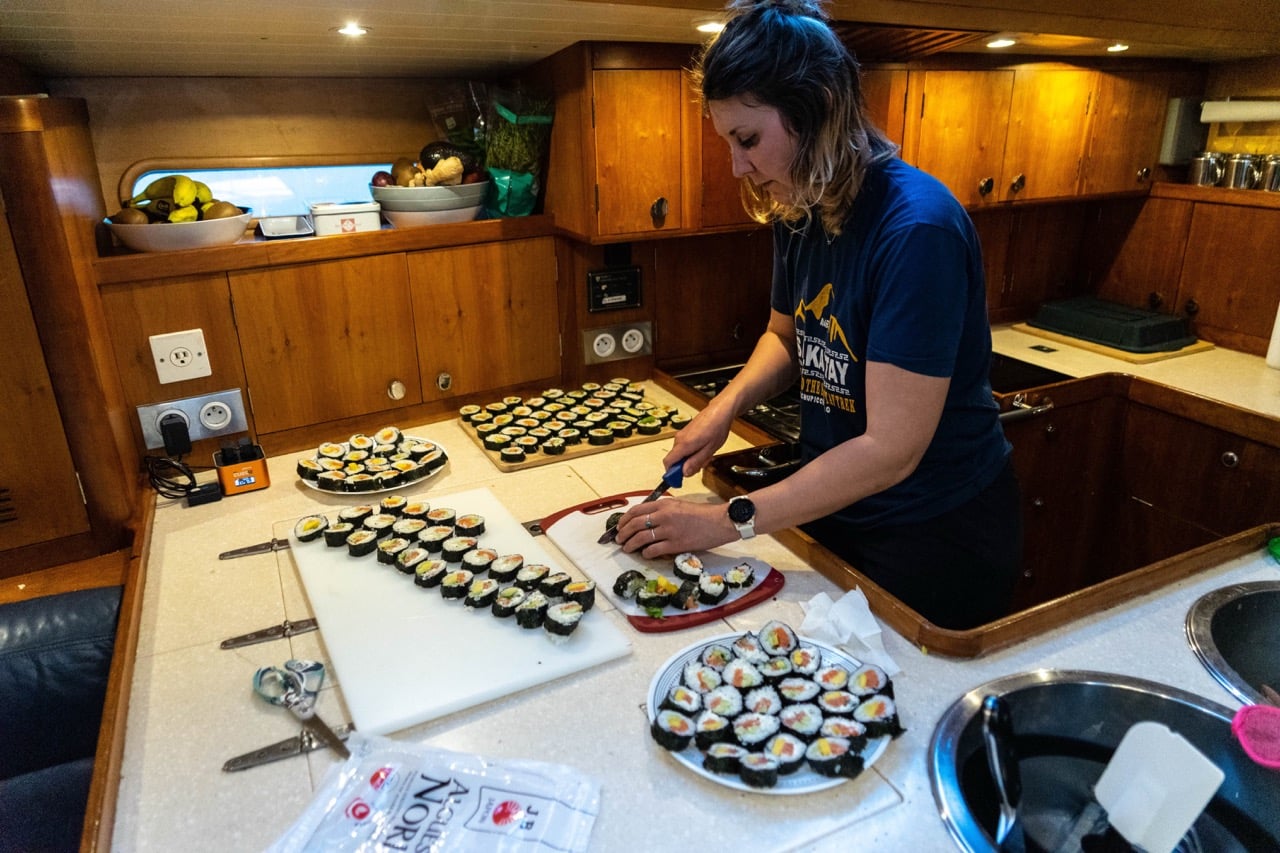
Food is a bonus. Our cook prepares a full breakfast and 3-course lunches and dinners. We mix our own cuisine with local dishes.
The breakfast is big enough to get you ready for a hike or a good day of sailing. We buy from local suppliers whenever we can. Leaving something behind is part of the project for us.
Cabins and spaces to relax
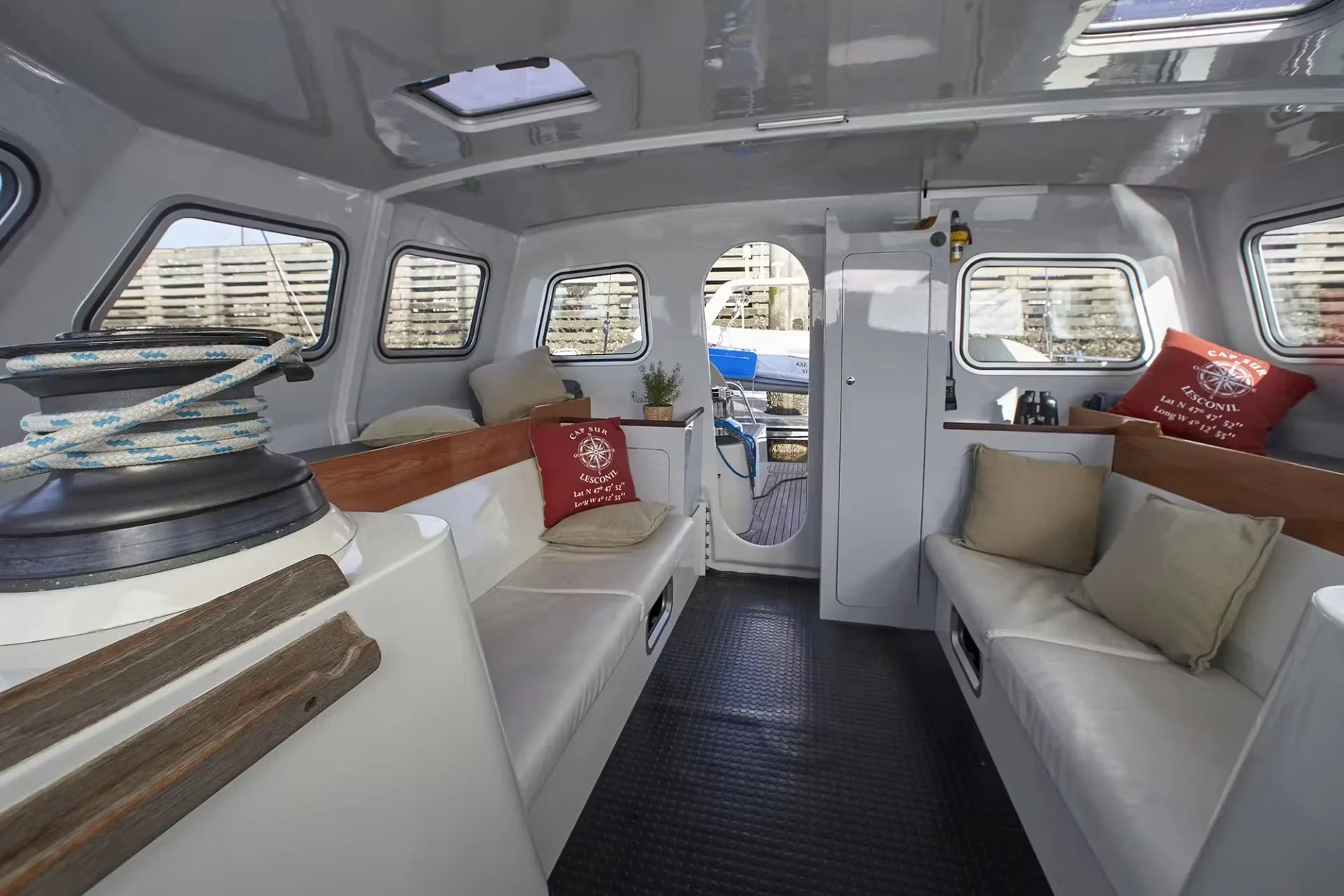
Each double cabin has its own heating, head, shower, power socket and lighting. The boat stays around 18°C (64°F), so you dress normally onboard. There’s also a reading area on the starboard side of the cockpit, where 2 people can sit and read.
Then there’s the wheelhouse, which we built ourselves. It has a 360-degree view, a coffee and tea machine and space for 7 or 8 people. Two bunks mean you can spend a night there if you fancy it.
Timing Your Greenland Expedition
When is the best time to sail in Greenland?
Mid-July until early September is the window. By mid-July, the ice bank near Kulusuk is gone, so we’re certain we can sail the area.
Before that, the risk of not getting through the ice is very high, which is why we don’t start earlier.
How the ice shapes every plan
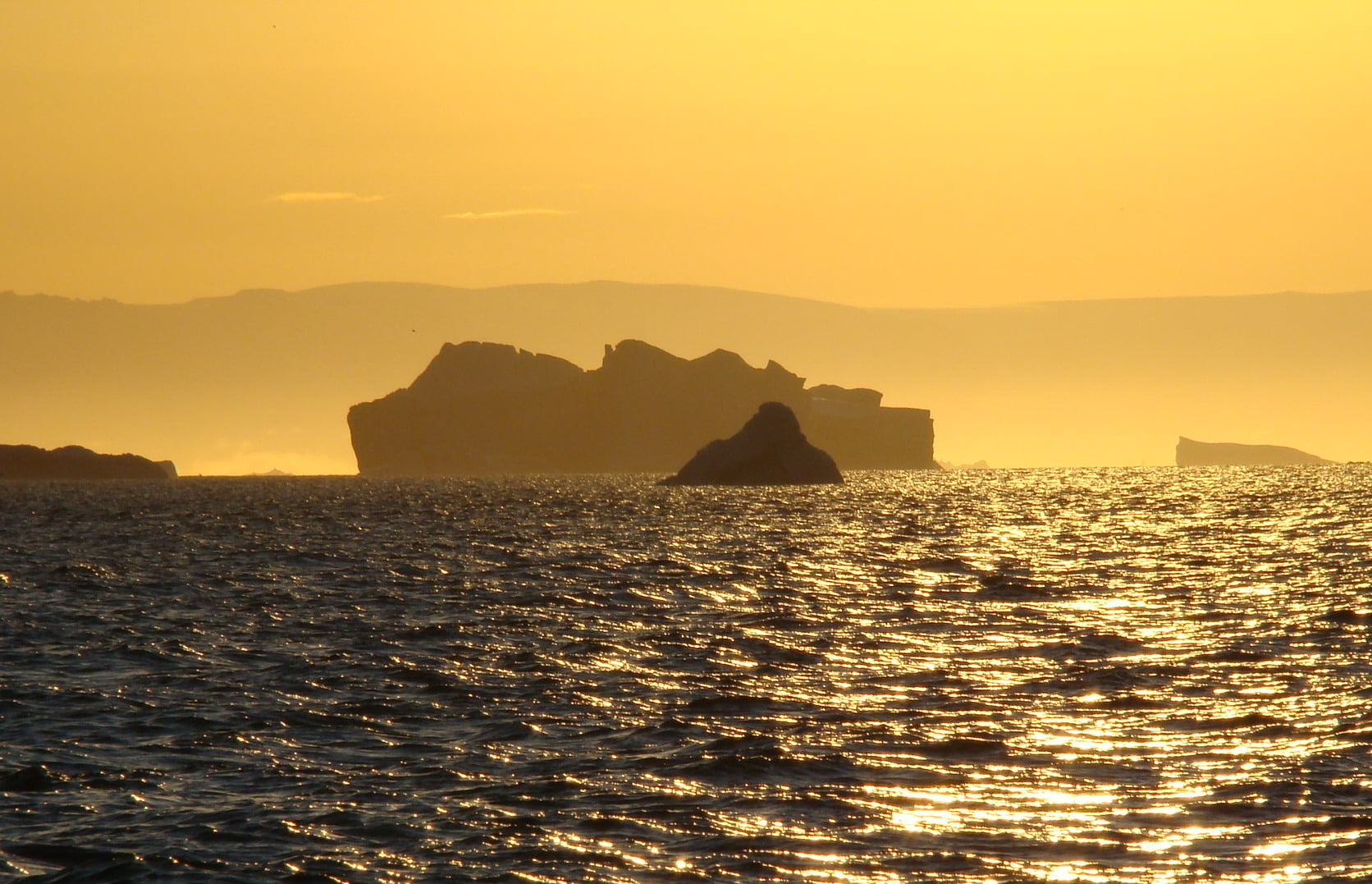
Every Arctic sailing expedition I plan starts with the ice. The drift ice and weather decide where we go, not the calendar.
We also get daily advice from a local guiding company that sits on the board of the local search and rescue.
What is the weather like in East Greenland in summer?
Expect 0 to 10°C (32 to 50°F), with no great fluctuations. The weather is very variable, so rain or snow, sun, wind and overcast can all show up in one day. It’s a drier coast than the west, with about 6 days of rain a month in summer.
What to pack
Treat it like late spring hiking, with some wind chill when we’re sailing. For a Greenland expedition, bring your normal hiking gear and slightly taller boots that cover the ankle. The ground is damp because the glaciers constantly melt, and the terrain doesn’t drain easily.
You don’t need ice axes or crampons. Pack a second or third set of inner layers, since you might return from a hike and want dry layers to go fishing. We have washing and drying machines onboard, and we’ll send a full packing list.
Is a Greenland Expedition Right for You?
Is a Greenland expedition worth it?
If you want remoteness, solitude and wild nature, yes. With a maximum of 6 guests, we land as many times a day as we wish, so the trip stays flexible. And in most trips, our crew have been invited to guests’ homes afterward, because of the connection that forms.
Do you need sailing experience for a Greenland sailing trip?
No, you don’t need to bring any sailing experience. You’re welcome to take the helm and maneuver with Lionel, but you can also just read, rest and watch the scenery.
Fitness isn’t a requirement either, and we set the pace together with your group.
Fitness, age and getting around the boat
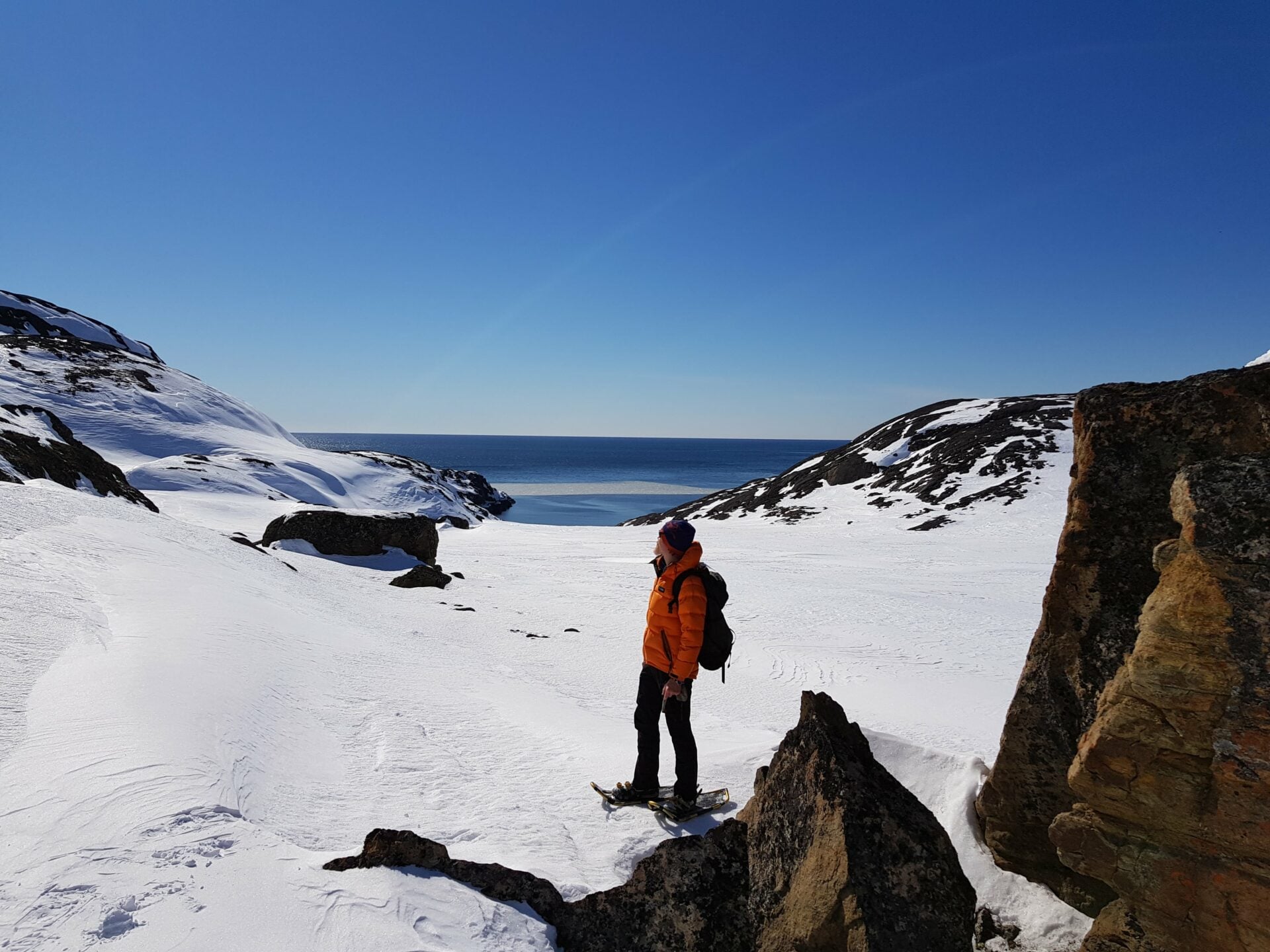
On every Greenland expedition, we decide the plan with each group. Some want to focus on hiking and long walks, while others prefer more time on the boat for wildlife and glaciers. We’ve had guests in their 80s who had great fun.
I wouldn’t bring children under 5 or 6, though even that isn’t a hard limit. Moving around is easy, since there are no steep stairs. The dinghy also comes level with a platform at the back, so you just step in.
Greenland has limited healthcare, so you do need to be in good health to join.
Planning Your Greenland Expedition
Getting to Kulusuk
For a Greenland expedition, most travelers fly via Reykjavík, with regular flights several times a week in summer. We schedule departures around arrivals, so you may not need to arrive days early.
Kulusuk’s airstrip is basic, and there’s no taxi service. So we pick you up by dinghy with our guides. We typically embark in the afternoon and disembark in the morning, coordinated with flights.
Money and what’s included
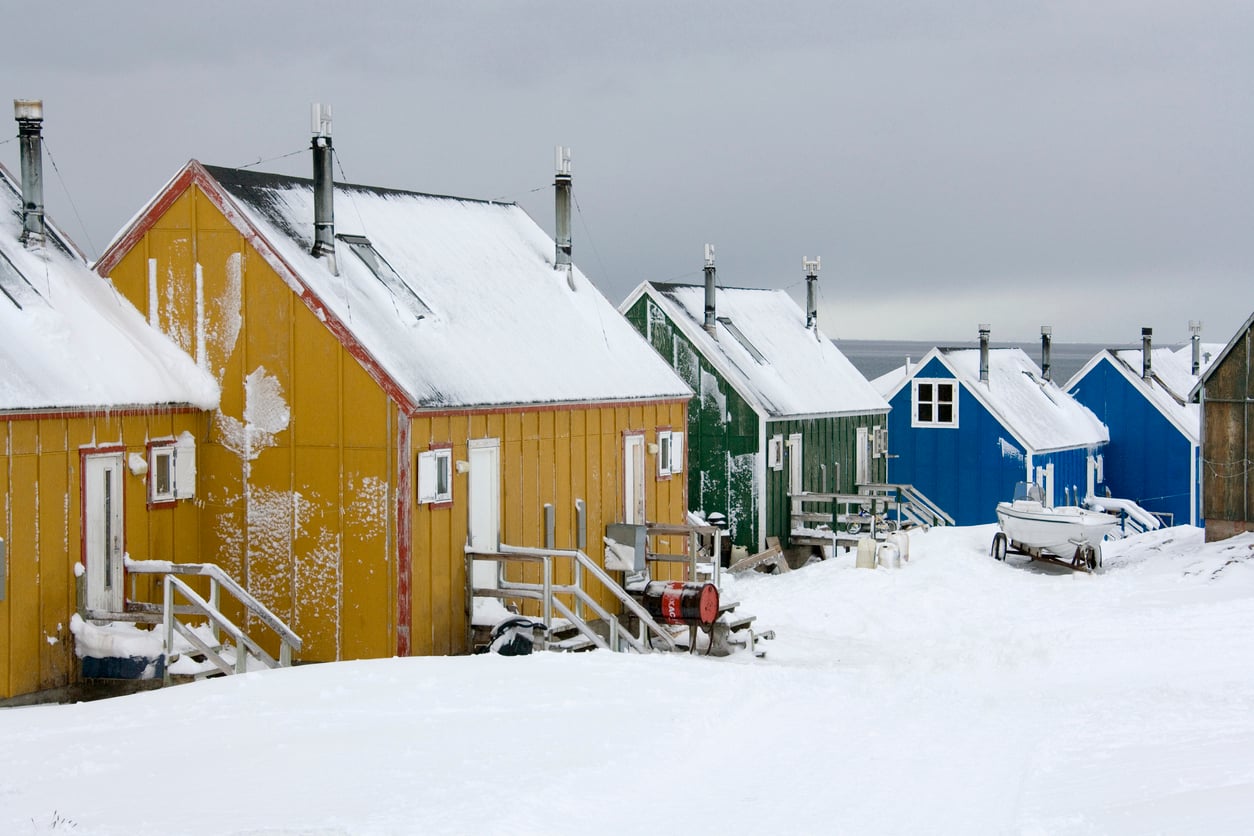
Greenland uses Danish kroner, but cards are accepted everywhere. You won’t find much to spend on anyway, because there are no stores or shops out here. We’re autonomous onboard, with food, wine, beer, coffee and tea included.
Bring your own energy bars or gels, plus any medication. Everything else is on the boat. Once you confirm, we’ll also ask about dietary requirements, so the crew knows before you arrive.
Safety on a remote coast
Safety is paramount here, and it begins with the boat, the crew and the guides. Every guest gets a briefing that’s not too long, but long enough. When we embark and disembark the dinghy, everyone wears safety devices.
We stay in regular contact with the coast guards and search and rescue operations wherever we work. Onboard, we also carry satellite communication systems.
Bottom Line: Why I Sail the East Coast
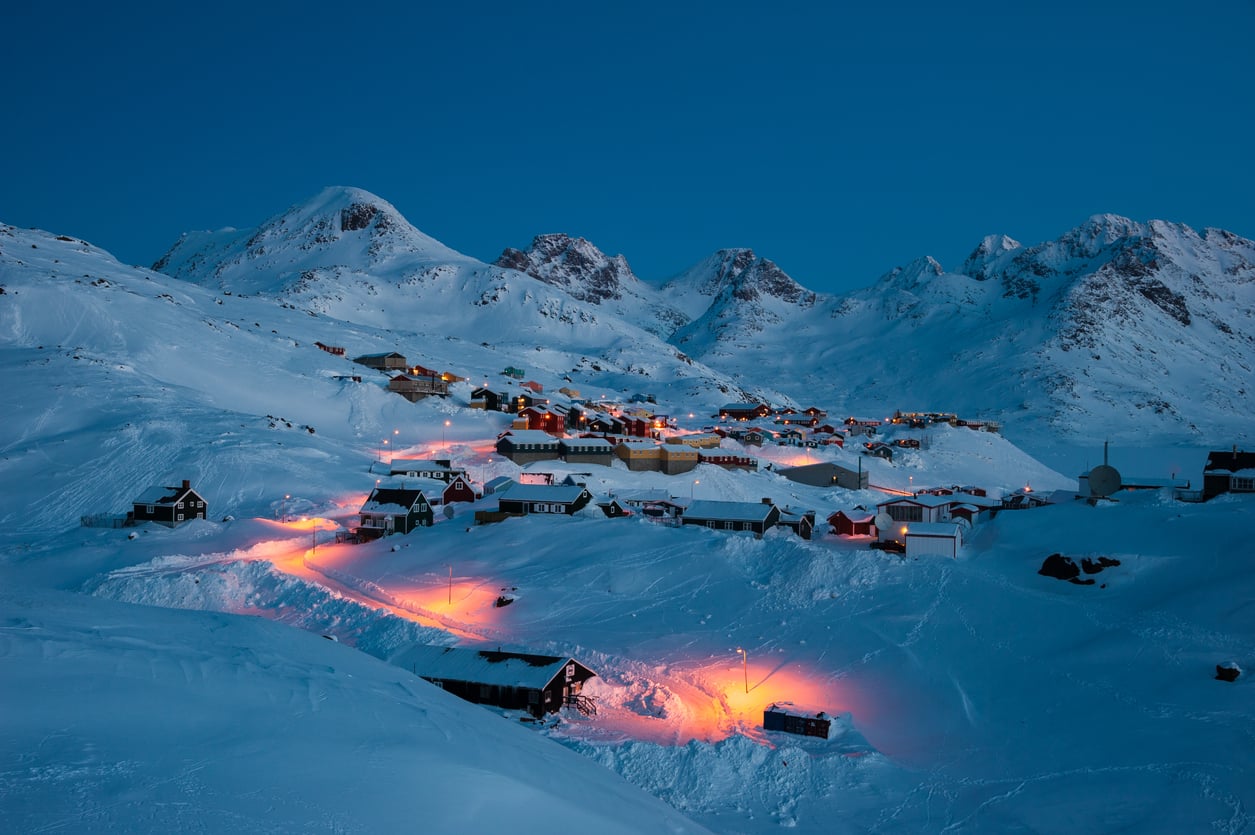
To sum it up, a Greenland expedition on the east coast offers remoteness, huge glaciers and marine life you won’t find on the west side or in Svalbard. A sailboat lets us reach it silently, anchor close and land whenever we want. And Kulusuk, with its ice-free window from mid-July, keeps the whole plan safe.
If that sounds like your kind of trip, ask us anything, from flights to packing. We’ll go through it with you before departure. I hope we can really pass on the dream and share it.
At the start, I asked you to imagine a piece of that ice breaking off. Now you know how far it travels, and how fast it disappears.