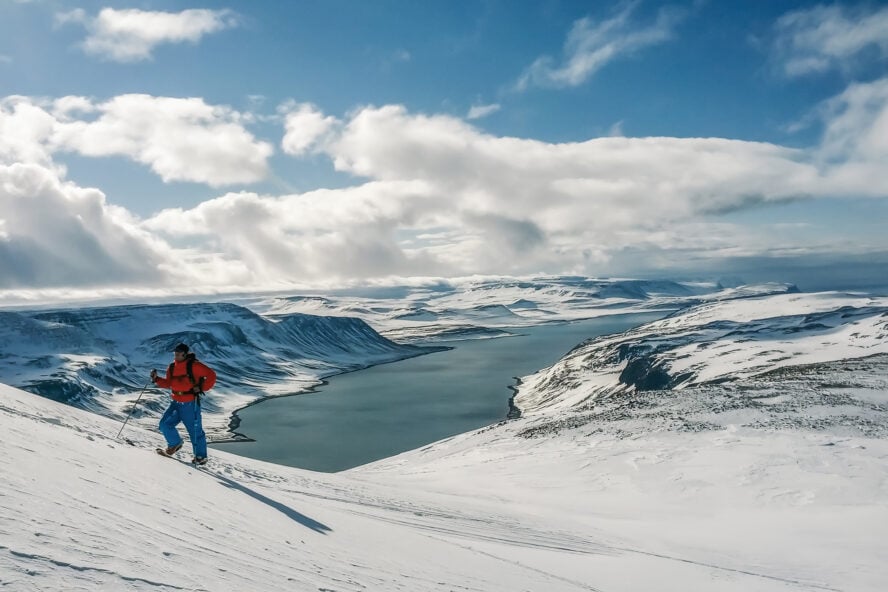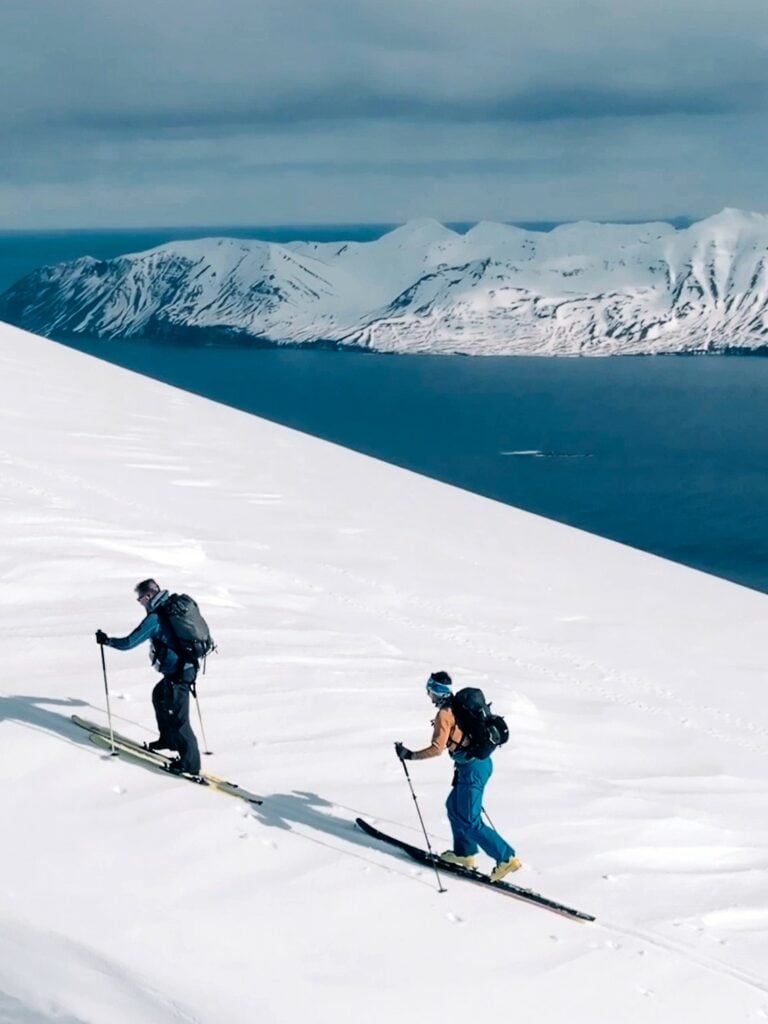

My lodge sits in Fljótin, at the tip of the Troll Peninsula, about 40 km (25 mi) from the Arctic Circle. People call this the cradle of Icelandic skiing, and it earned that name honestly. The first ski competition in the country was held here in 1905, on one of the same slopes we ski today, back when people carried their handmade skis up the hill and mostly just tried not to die on the way down.
I did not plan to end up running a ski lodge. My husband and I bought an old, half-falling-down school building here in 2015, back when I was still 10 years into a career as director general for Icelandic tourism. But skiing had always been in the family. His father competed in the Innsbruck Olympics, my husband raced competitively, and our children have too.
There is another layer to it that I think about often. This land is also my mother’s family’s land. My grandfather was born on the farm next door, so in a strange way, I did not just move here, I came back to it.
That history is part of why I know things about this coastline that don’t make it into the brochures, like which fjords stay calm when everywhere else is howling, and which slopes hold corn snow three weeks after everyone else has given up on the season.
Consider the rest of this article your shortcut to a decade of trial and error.
Why Everyone Is Suddenly Talking About Backcountry Skiing Iceland
Icelanders have skied for generations, but the guiding industry is young. It really began about 15 years ago, when we got our first IFMGA-certified guide offering ski tours here.
Not long after, the Association of Icelandic Mountain Guides formed, and started building real education pathways for mountain guiding, glacier guiding, and ski guiding, with help from a Canadian guide named Colin Zacharias.
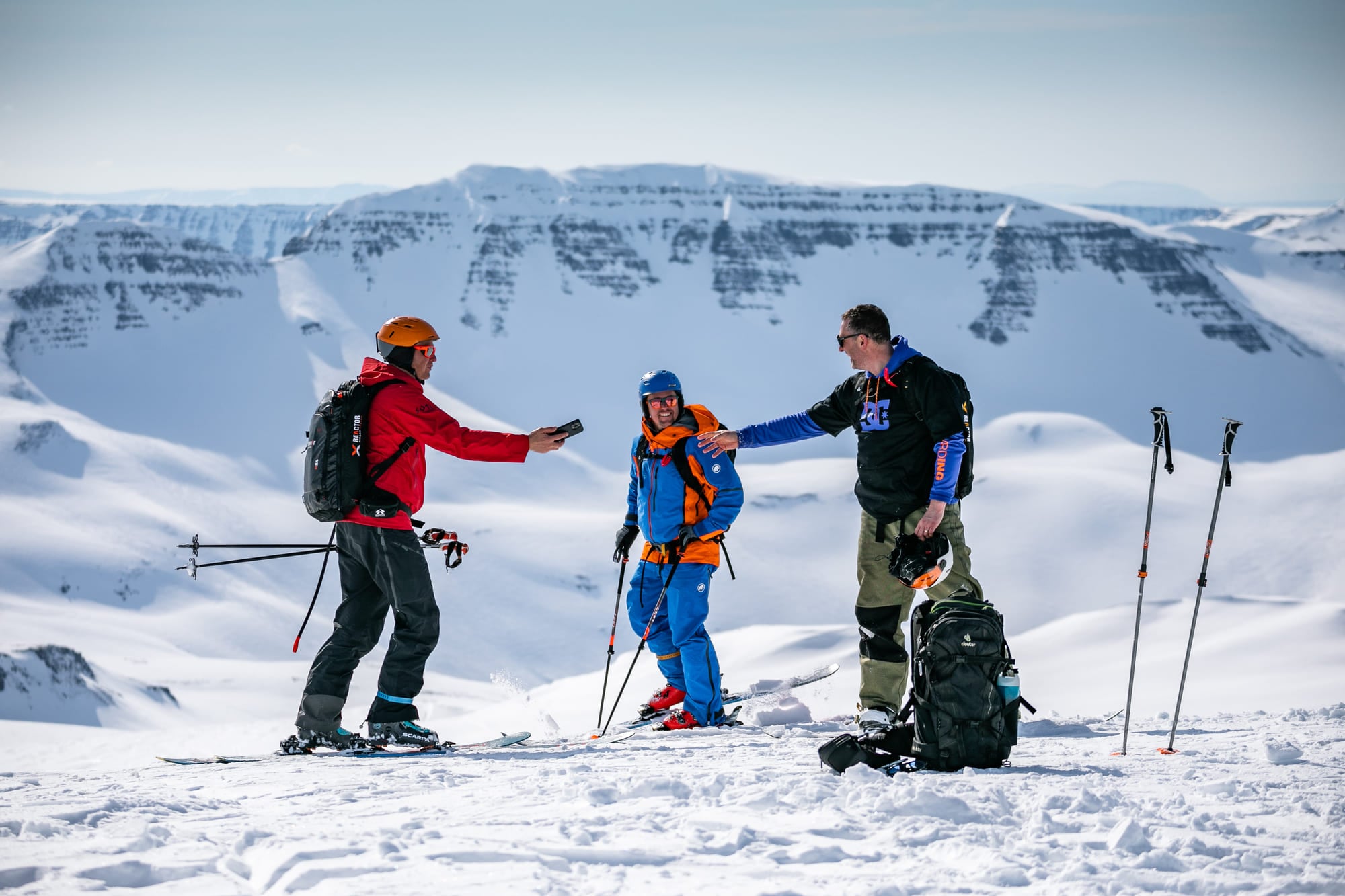
We are very proud that four of the five guides who have gone through that Icelandic education work with us. One of them is Smári, who started guiding here around 2012, before any formal program existed, the way most guides in Iceland did back then.
He grew up in this region, learned to ski before he learned to walk, quite literally, on his father’s back, and later spent years ski touring in Norway before bringing that experience home.
I think that matters more than people realize. A guide with proper credentials is one thing.
A guide who also grew up in these mountains, who knows the nooks and crannies, who has skied the lines himself, that’s a different level of trust. Smári is exactly that kind of guide, and skiing with someone local changes the whole experience of backcountry skiing Iceland.
Ski touring Iceland, then and now
Icelanders, I’ll admit, are a little intense about hobbies. During COVID, everyone bought bicycles, then touring skis, then Nordic skis. The sport had already been building since around 2010, but that period pushed it further.
Not everyone who owns the gear is out every weekend. Some people tour once or twice a season. Others go whenever the window opens.
Either way, it’s become a real part of Icelandic outdoor life, not just something visitors do.
When Is the Best Time to Go Backcountry Skiing Iceland?
People are often surprised that our ski season isn’t built around deep winter powder days. A few things explain that.
January brings very short daylight hours, and the weather tends to be harsh. February isn’t much easier. By March, conditions start to soften.
April and May bring long daylight, calmer weather, and a phenomenon locals wait all year for: corn snow.
Iceland is windy enough that fresh powder doesn’t stick around the way it does elsewhere. What we get instead, consistently, is world-class spring corn.
The snow stiffens overnight in the freeze, then softens through the day as the sun works on it. Average temperatures hover right around freezing during this window, which is exactly what keeps that cycle going. If you ask me when to plan a ski season Iceland trip, I’ll always point you toward spring.
Reading flat light without trees
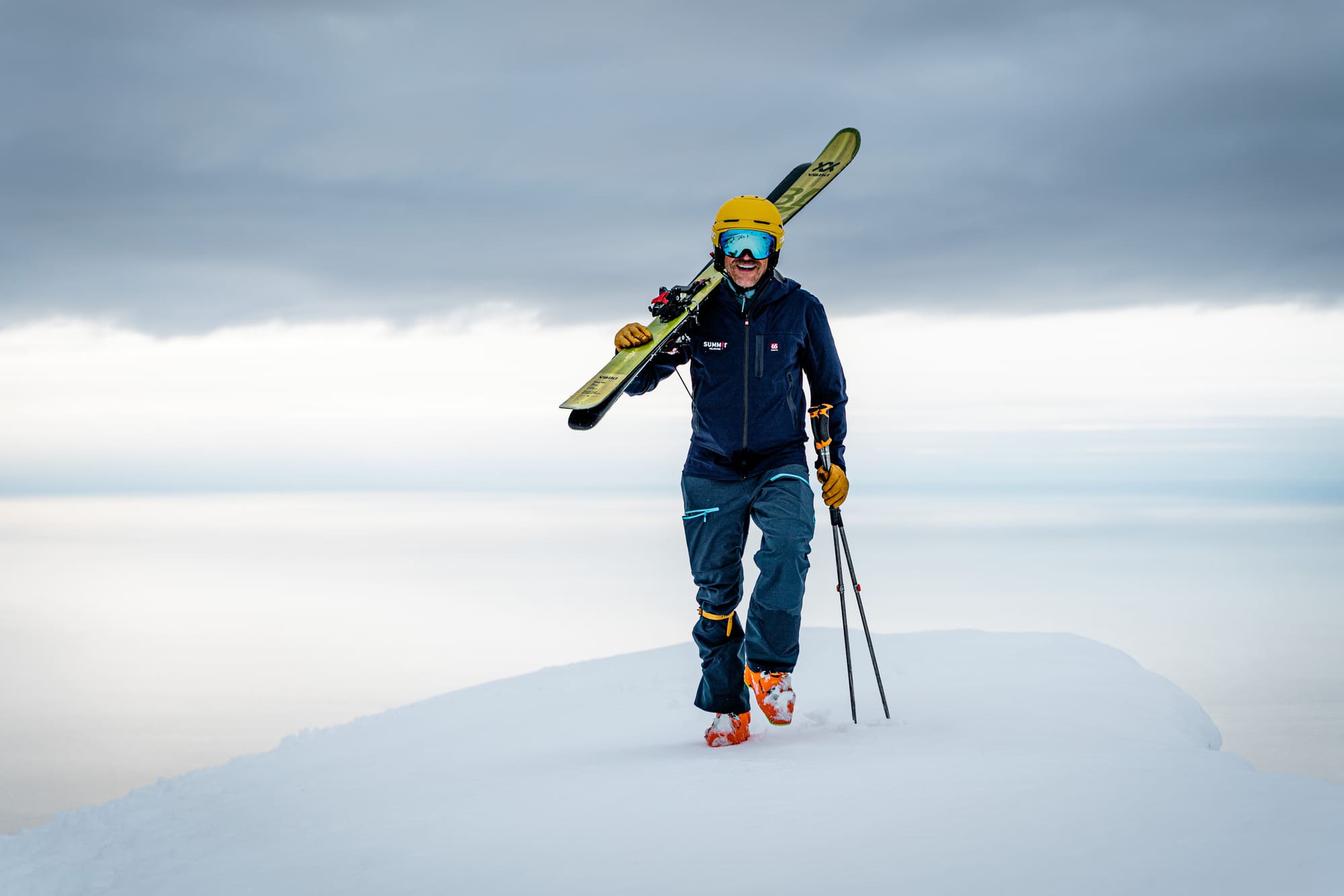
One challenge in this landscape, since we have no trees for reference, is flat light under cloud cover. Smári and the other guides handle it by skiing the line first, so guests have visible tracks to follow.
It’s a small thing, but it matters a lot when the terrain is all snow, sky, and rock with nothing in between to give you scale.
Where to Ski in Iceland: Troll Peninsula Backcountry Skiing
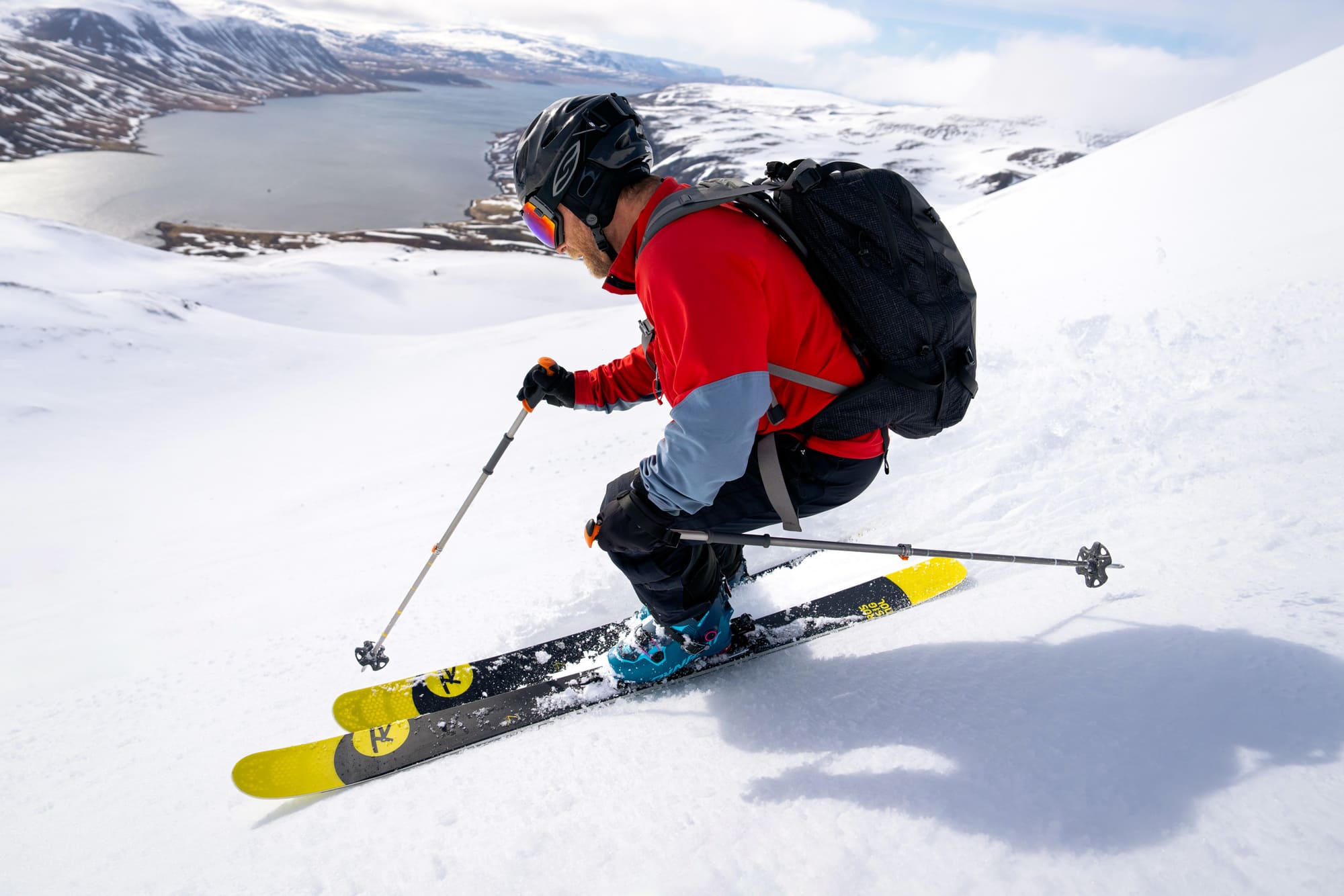
We run two very different programs, and I think of them as two different moods of the same landscape.
This program is lodge-based, and it’s where Smári and I are usually found. You access it by car. There’s roadside skiing nearly everywhere here, unless you’re doing a heli ski day, and peaks reach 1,100 to 1,300 m (3,600 to 4,265 ft).
The runs are long, and the terrain ranges from open bowls to couloirs and rocky lines, depending on what the guide reads that morning.
We have seven rooms at the lodge, and we cap groups around 12 to 14 guests with two guides. That size matters.
We’re genuinely in the middle of nowhere, not in a town, and a self-sufficient lodge like ours works best when the group stays intimate enough that friendships actually form over the week.
A typical day at the lodge
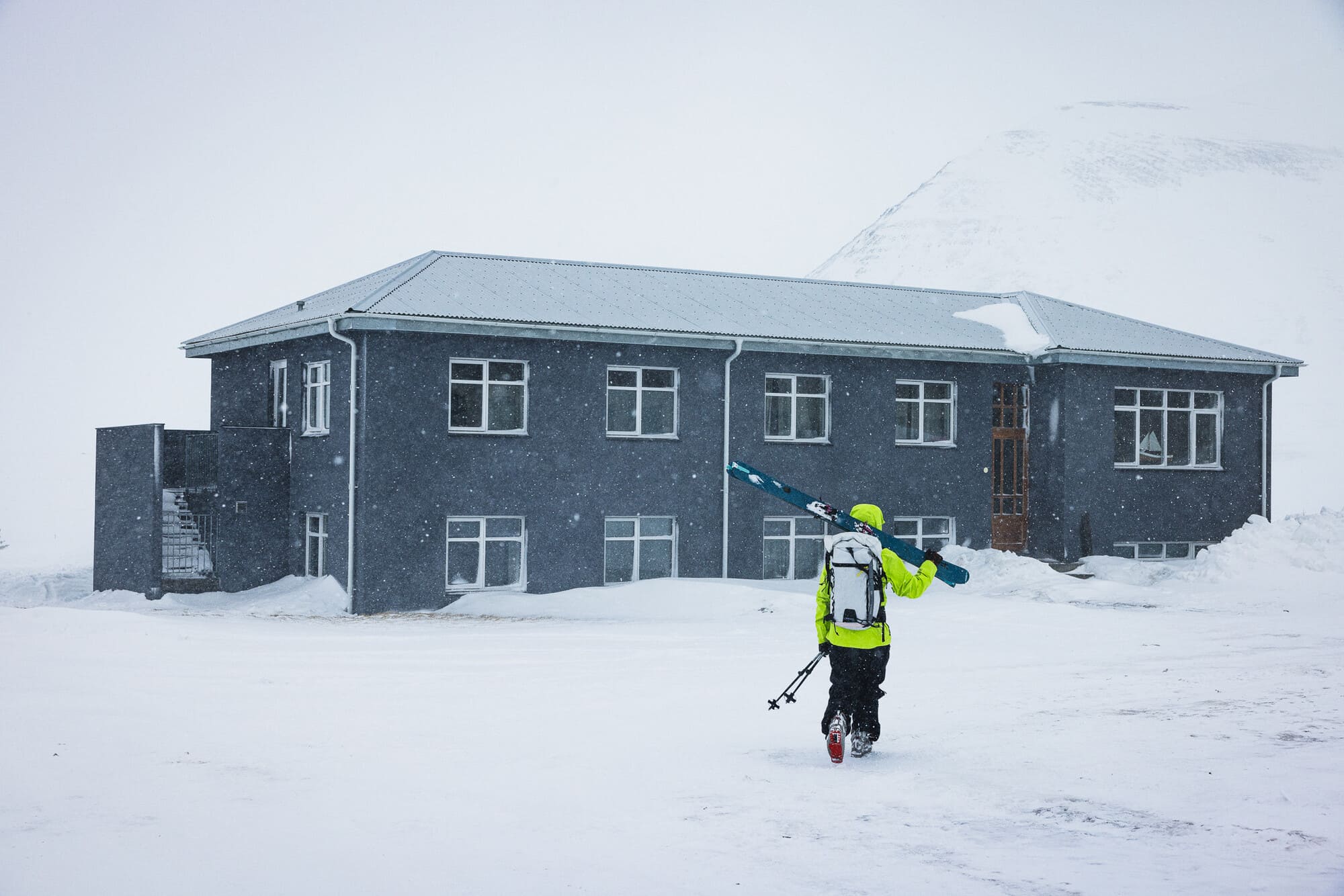
Mornings start with breakfast, then a briefing with the guide on forecast and conditions. We skin out, aim for two runs, and come back to the lodge by late afternoon, usually 4 or 5 pm.
Then it’s the pool, maybe a beer, then a three-course dinner. On a full week, guests ski nearly every day. If weather turns bad, we might shorten a tour rather than cancel it outright.
Skiing in the Arctic Circle by helicopter
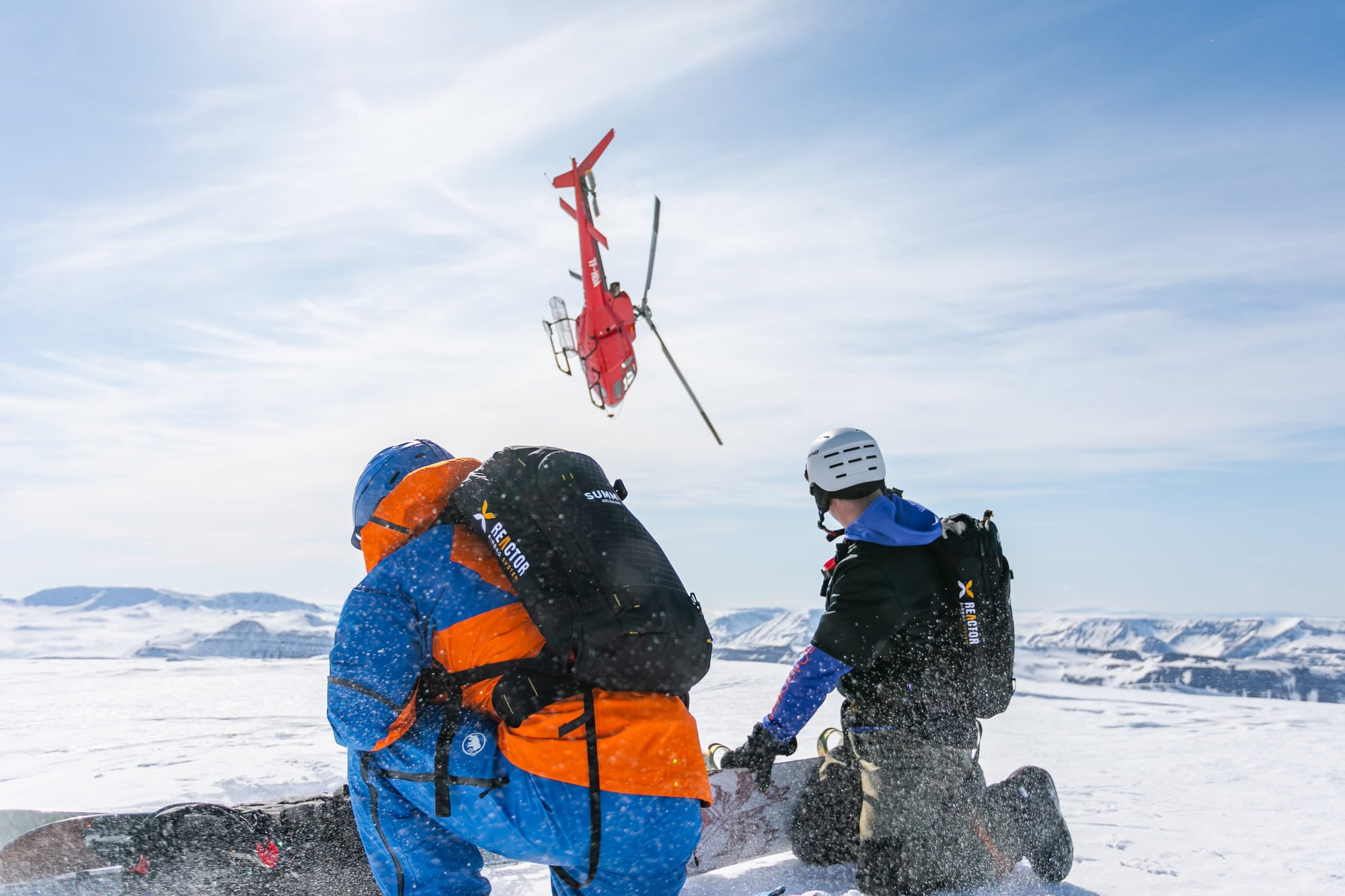
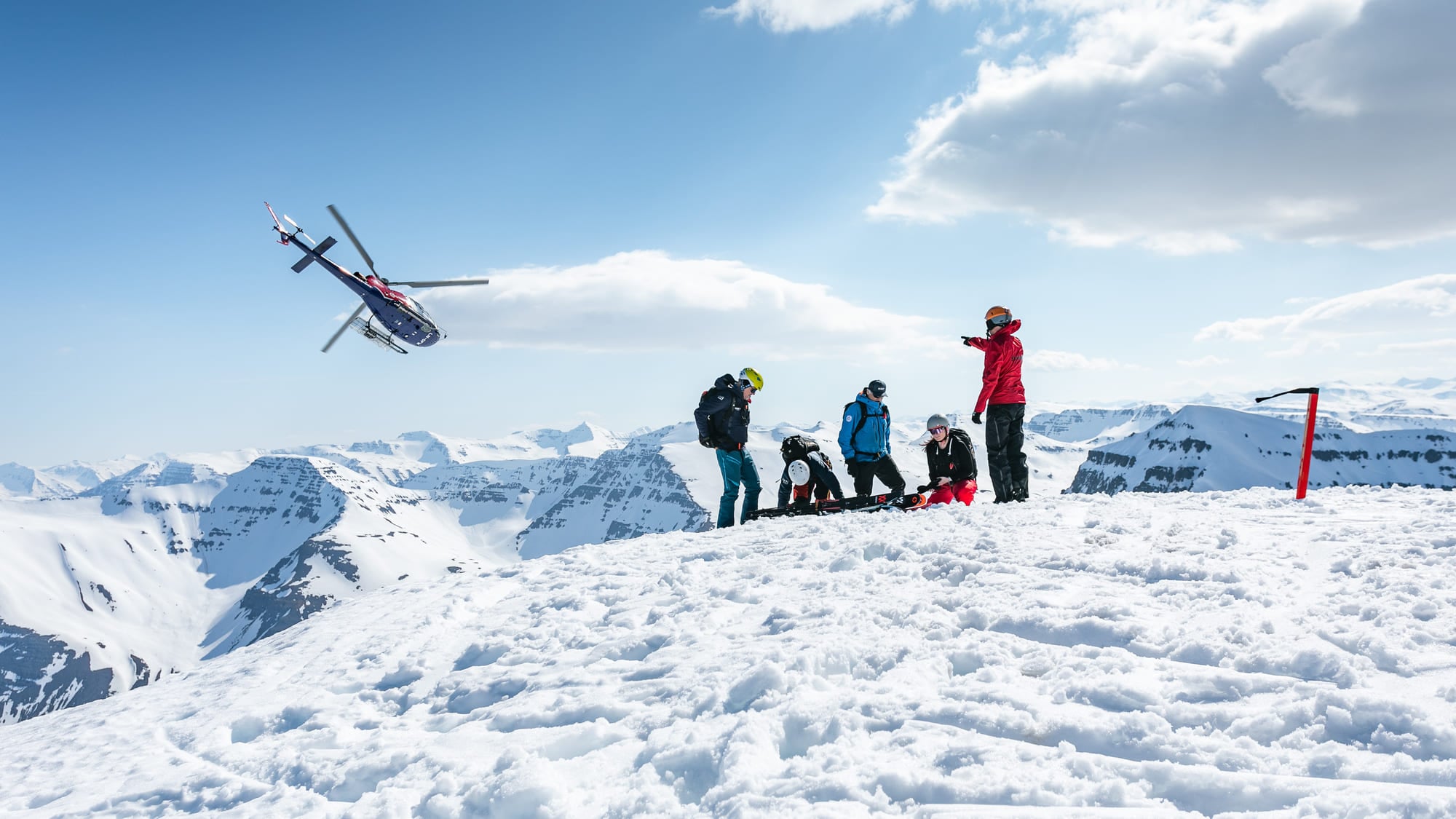
For guests who want more vertical in less time, heli skiing Iceland is also based out of our region. The Troll Peninsula is the hub for both backcountry and heli skiing here, and the same terrain that makes it good for touring, big peaks, long relief, easy road access, makes it just as good from a helicopter.
Flying in means you can reach terrain that would otherwise take a full day of skinning, then link several long descents in the time it takes to do one on foot.
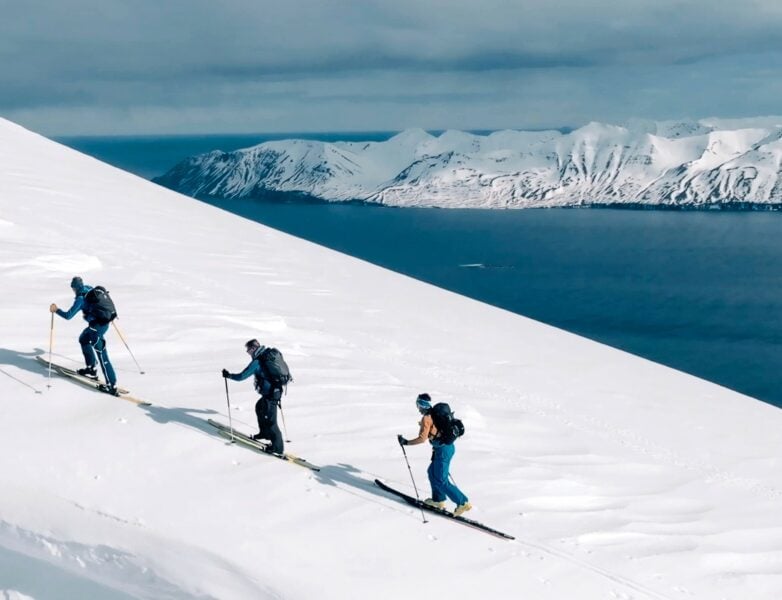
Hornstrandir: The Last Wilderness
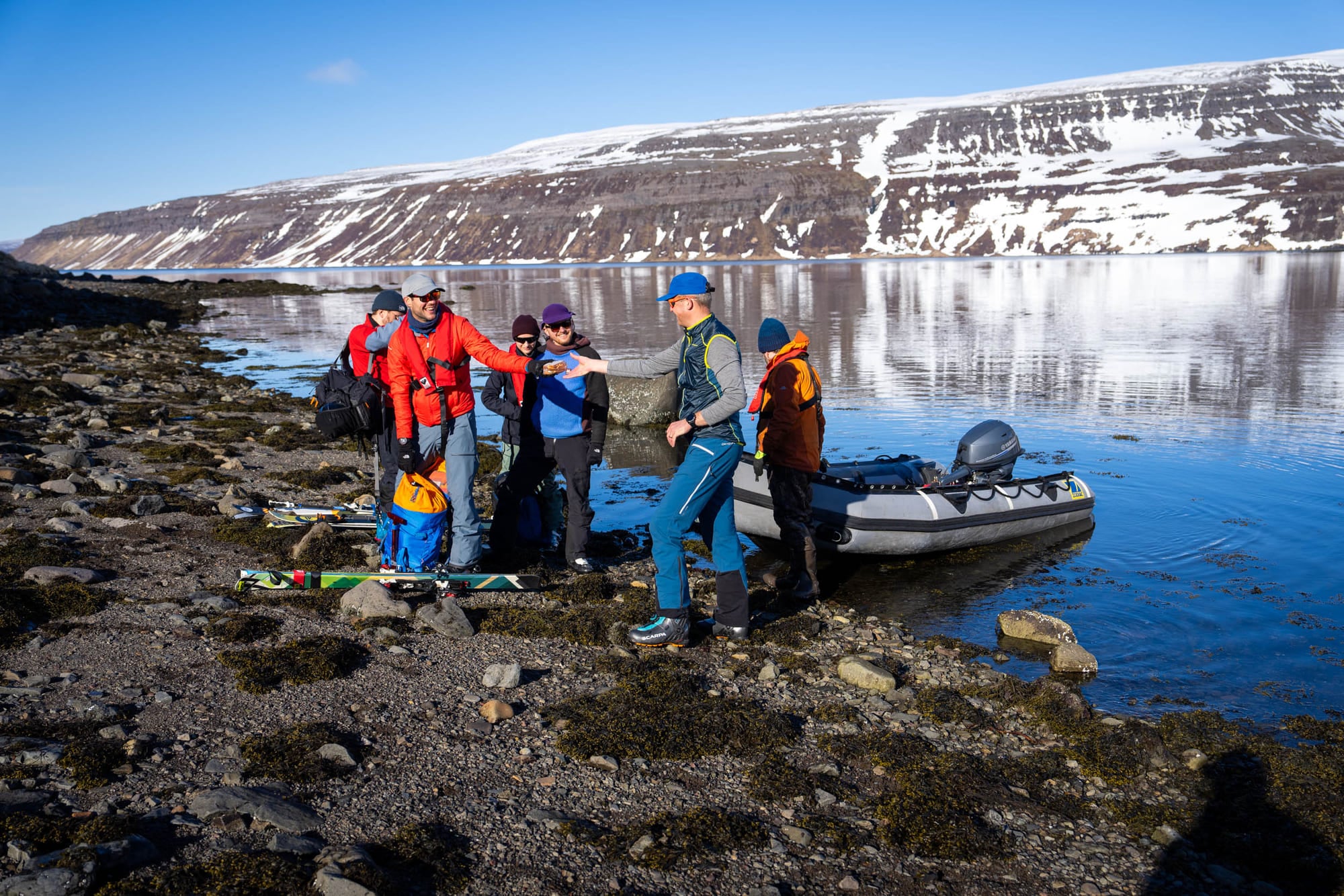
If the Troll Peninsula is the more accessible mood, Hornstrandir is the wild one.
There are no roads into Hornstrandir. There never will be. It’s protected by law as a nature reserve, not quite a national park, but close.
Anyone skiing there is guaranteed not to see a single car or motorized vehicle. It’s just you, the snow, and the Arctic fox, which happens to be the only wild mammal native to Iceland. We do occasionally get a polar bear that’s drifted in on sea ice, but they don’t live here.
Because there’s so little human presence and so little noise, the foxes are unusually curious. I remember skinning up in Hornstrandir years ago and coming across old fox tracks in the snow.
I was completely alone out there except for that trail. That feeling, being so small and so connected to something wild at the same time, is what I’d call the heart of backcountry skiing Iceland.
How to get to Hornstrandir Nature Reserve
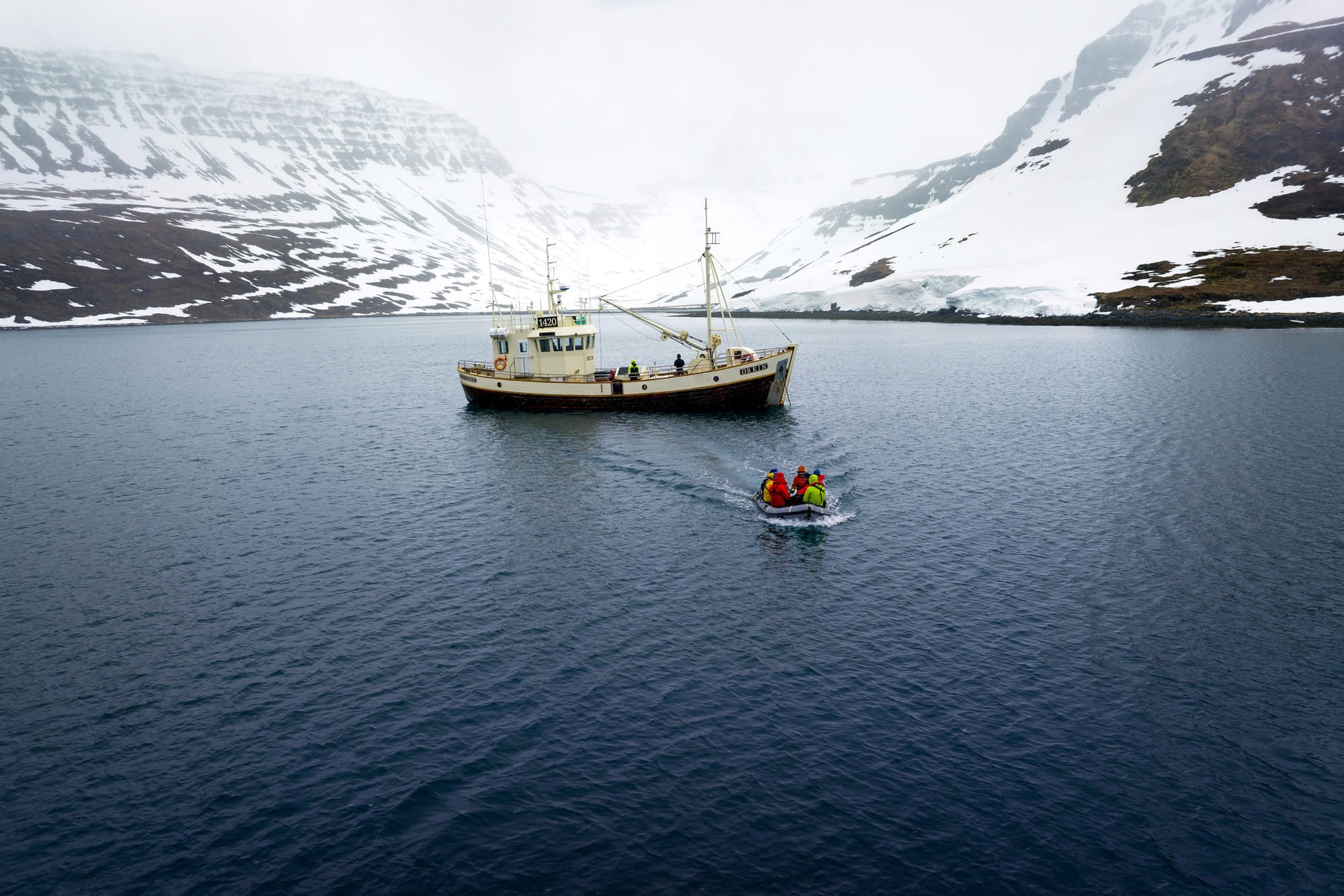
You don’t drive to Hornstrandir. You sail. We use a converted oak fishing boat called Örkin, “The Ark,” built in 1975 and used for fishing until 2017.
That’s when the current owner turned her into a comfortable expedition boat. She’s 45 m (148 ft) long, with a full kitchen and a communal living area where everyone gathers in the evening.
The route starts and ends in Ísafjörður, the main town in the Westfjords, home to roughly 3,000 to 4,000 people and full domestic flight service. We align our schedule with those flights, departing on a Sunday and returning to Ísafjörður the following Friday.
That means guests only need to take one full week off work. Some add an extra night in Reykjavík on either end. It’s always a six-day tour, unless a group charters the boat privately, in which case the schedule opens up.
Skiing from the boat
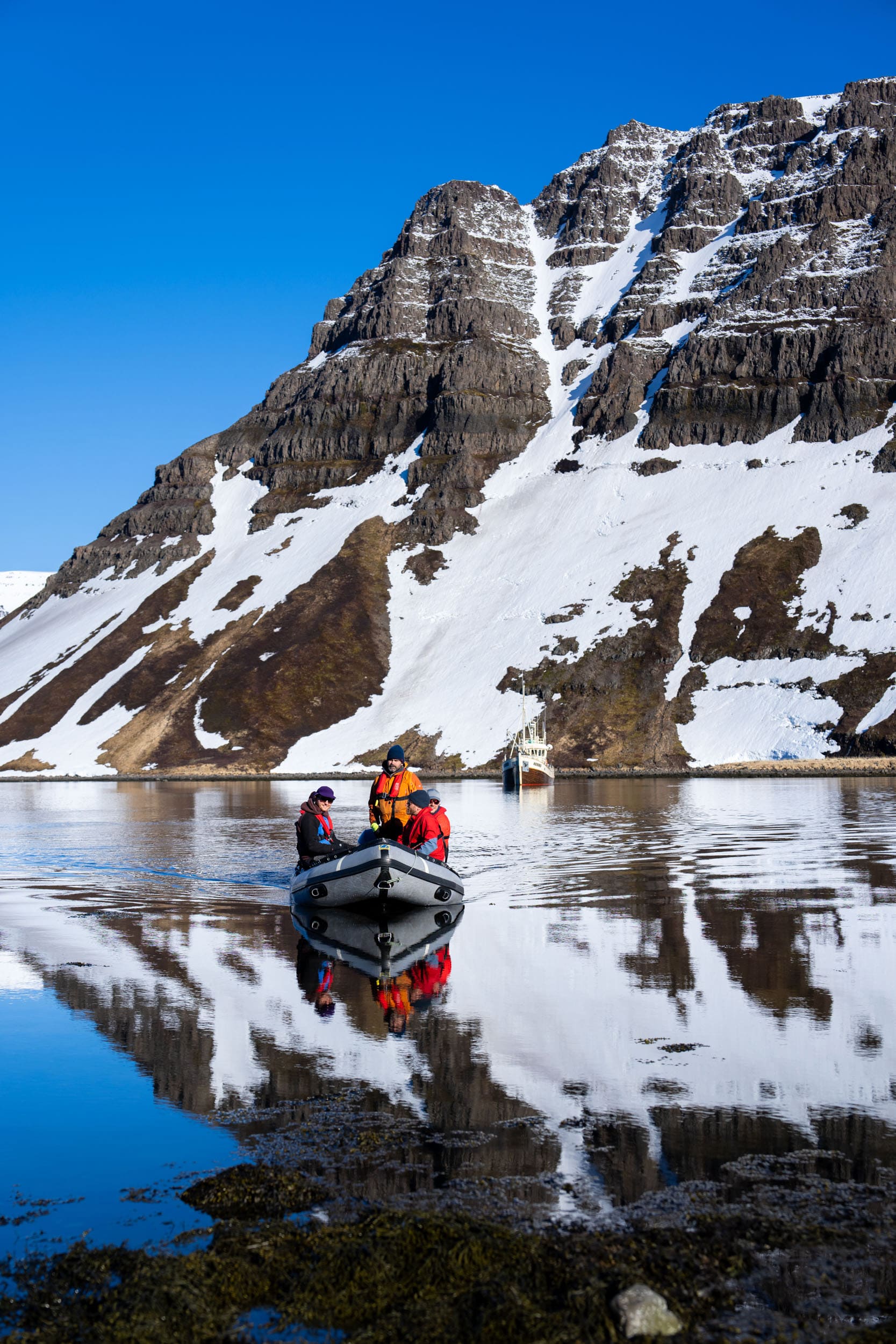
Once you’re out on the water, the rhythm is simple. The boat carries you into a fjord, often somewhere calm enough that you barely feel any wind, which is unusual for this coastline.
You skin up from sea level, sometimes taking a dinghy to shore first if the snowline hasn’t reached the water yet, and sometimes walking just a few meters before you’re on snow. You ski down into the next valley, and the boat is waiting for you there.
Runs here go from sea level to around 500 to 600 m (1,640 to 1,970 ft), and most days bring two or three of them.
The landscape itself is a little older and flatter than the Troll Peninsula geologically, the mountains rounder rather than jagged, but it’s still deeply cut with fjords, and the ski lines running straight down to the water are some of the most striking I know.
After skiing, we often bring out the standup paddleboards while the boat sits at anchor, and dinner happens right there onboard, with a few beers and the kind of talk that only happens after a good day in the mountains.
There’s nothing else quite like eating dinner on a boat tucked into a fjord you skied into that same afternoon.
Summit to Sea Skiing: The Detail Everyone Asks About
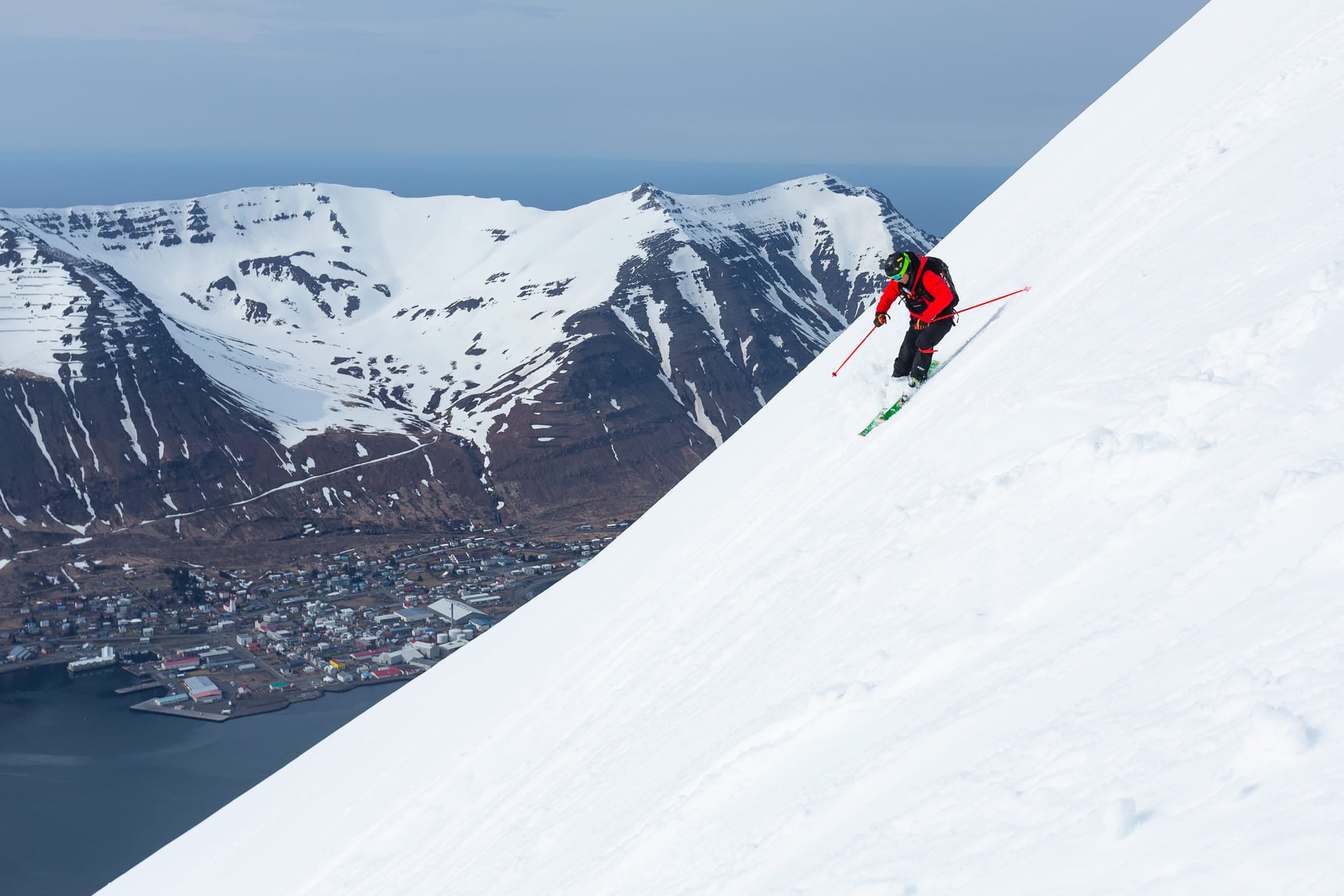
This is the thing people always want to talk about, and honestly, it’s the thing I’d want to talk about too.
It means exactly what it sounds like. You climb from the water, or close to it, all the way to a summit, then ski back down until your skis are nearly in the ocean.
There’s a version of this in the Troll Peninsula, where peaks push past 1,300 m (4,265 ft) before dropping to the coast, and a version of it in Hornstrandir, where the descents are shorter but land you literally at the fjord’s edge.
Smári describes it better than I can. Sometimes you’re skinning in a T-shirt because the sun is that strong, standing on a summit looking out at the Arctic Ocean, half convincing yourself the North Pole is just past the horizon.
Then you ski all the way down to the sea. He says nothing beats that feeling, and having watched hundreds of guests come down that last stretch, I believe him every time.
What makes this terrain different
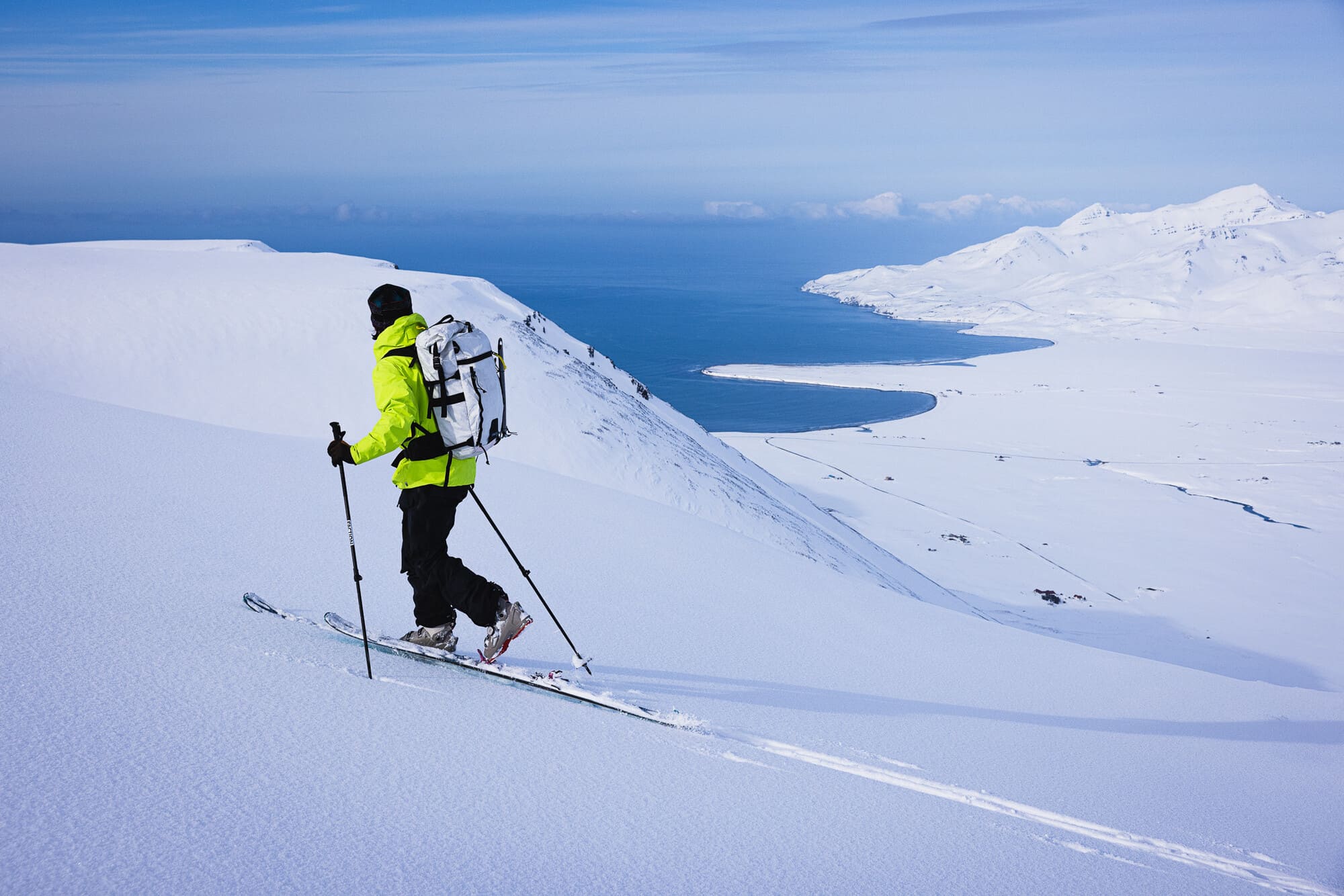
Part of what makes this terrain so visually dramatic is the complete absence of trees. You can see the whole shape of the land as you descend, sometimes even the curve of the earth on the way down toward the water.
Because neither the Troll Peninsula nor Hornstrandir is heavily visited, there’s also a real sense of solitude in it, something close to feeling alone in the world, which is exactly what draws people to backcountry skiing Iceland in the first place.
Is There Skiing in Iceland Beyond the Slopes?
Skiing is why most people find us, but the region works year-round. In summer, the same valleys open up for hiking and mountain biking.
There are sea kayaking routes along the coastline that are honestly some of the best I’ve paddled. So while backcountry skiing Iceland is what built my lodge, it’s not the only reason to come north.
But most guests are here for the ski day, and once that’s done, the day isn’t actually over. It just changes shape.
Après-Ski, Icelandic Pools, and the Food That Waits for You
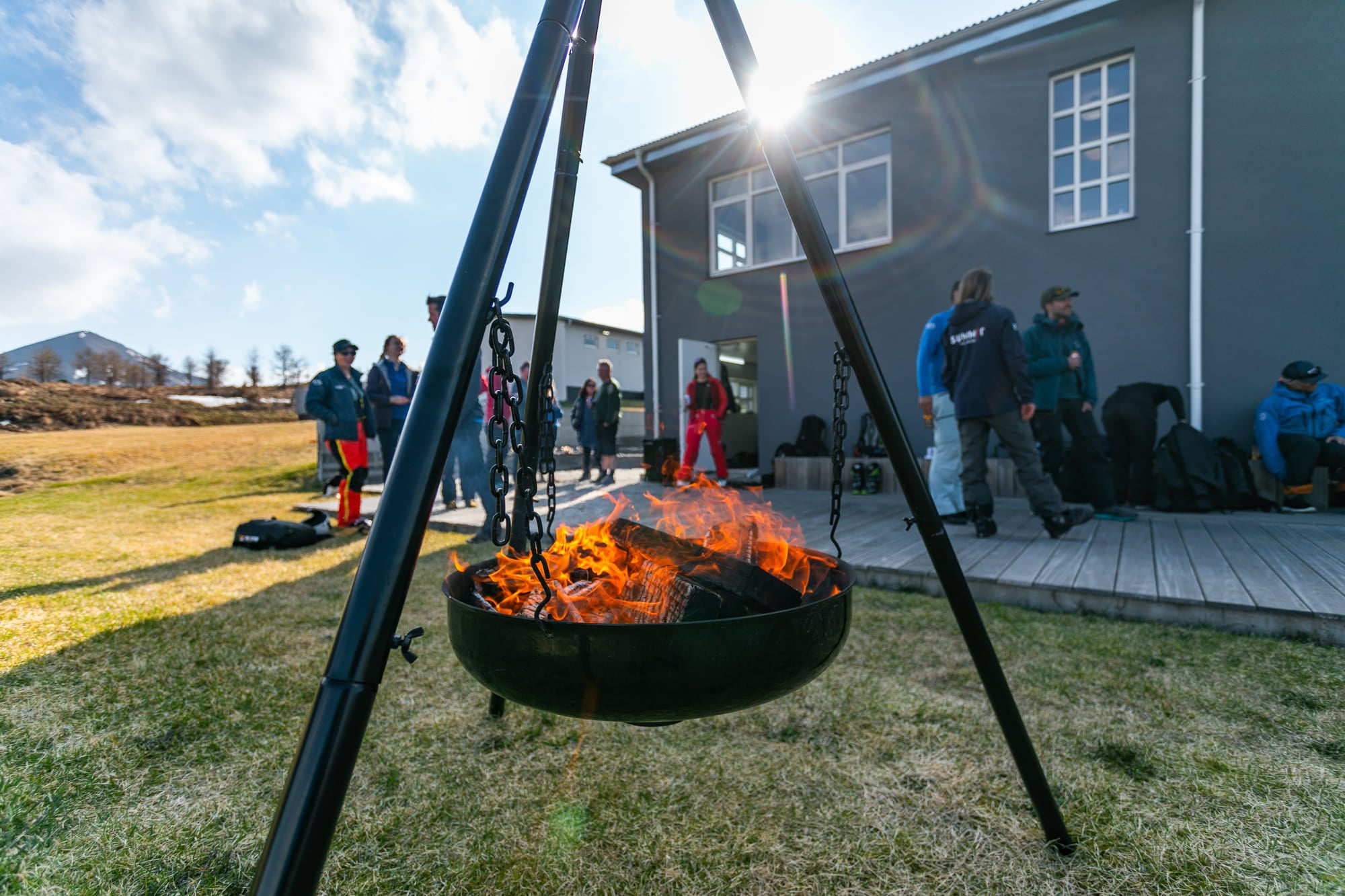
The skiing is the main event, but I’d be lying if I said the evenings weren’t part of why people keep coming back.
After skinning back into the lodge, we usually light a fire and swap stories about the day’s skiing, then head to the pool before dinner. That’s the classic après-ski rhythm at our Iceland ski lodge: fire, pool, food.
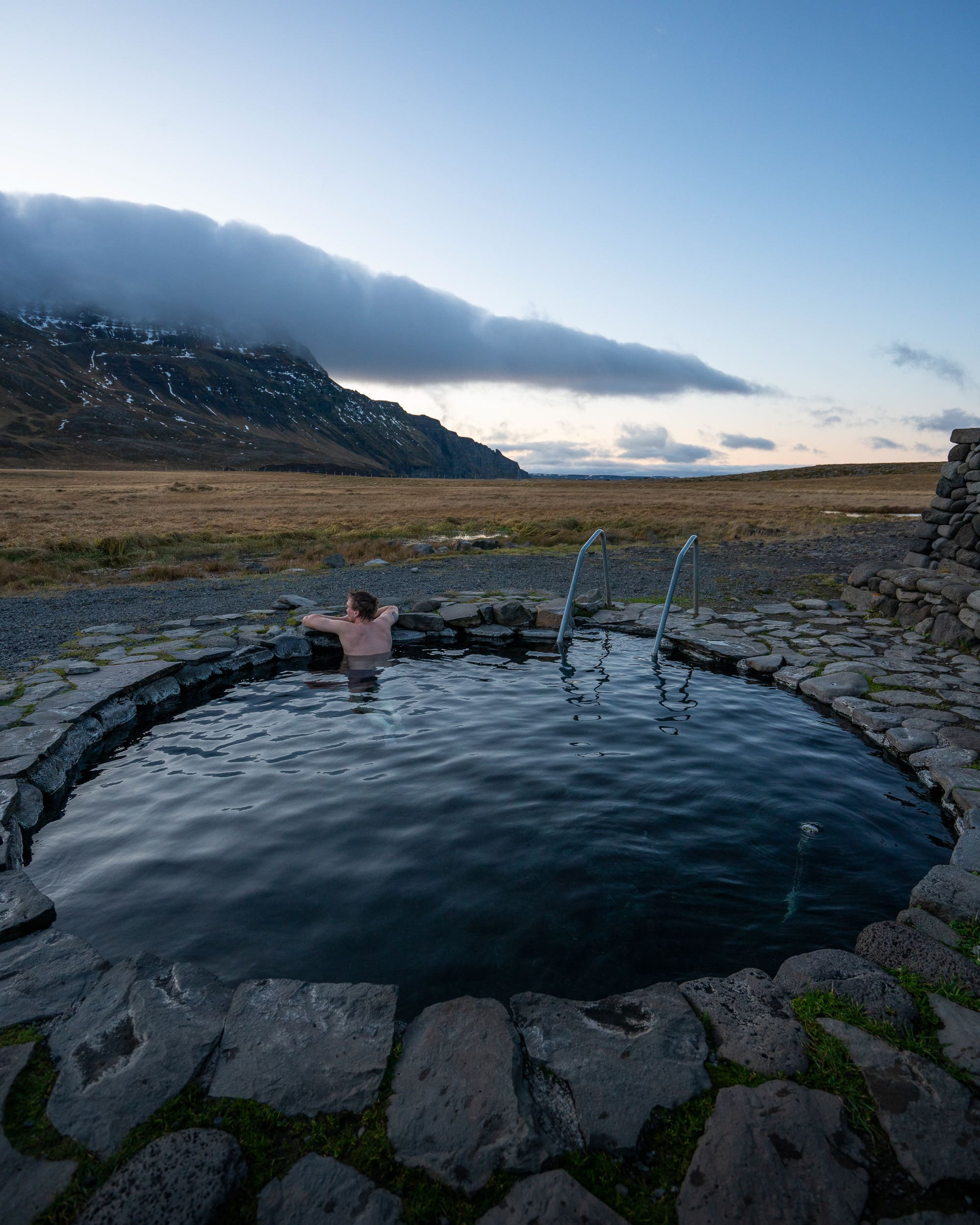
These pools are older than people expect, and they were recently recognized by UNESCO as an intangible heritage. For generations, they’ve been a place to meet and talk.
It was even said that during the days of our civil war, a hot pool was a safe place to negotiate with an enemy, because it’s genuinely hard to conceal a weapon while sitting naked in a hot spring.
I love that story. It says a lot about how central these pools are here, not just for relaxing.
What’s on the table
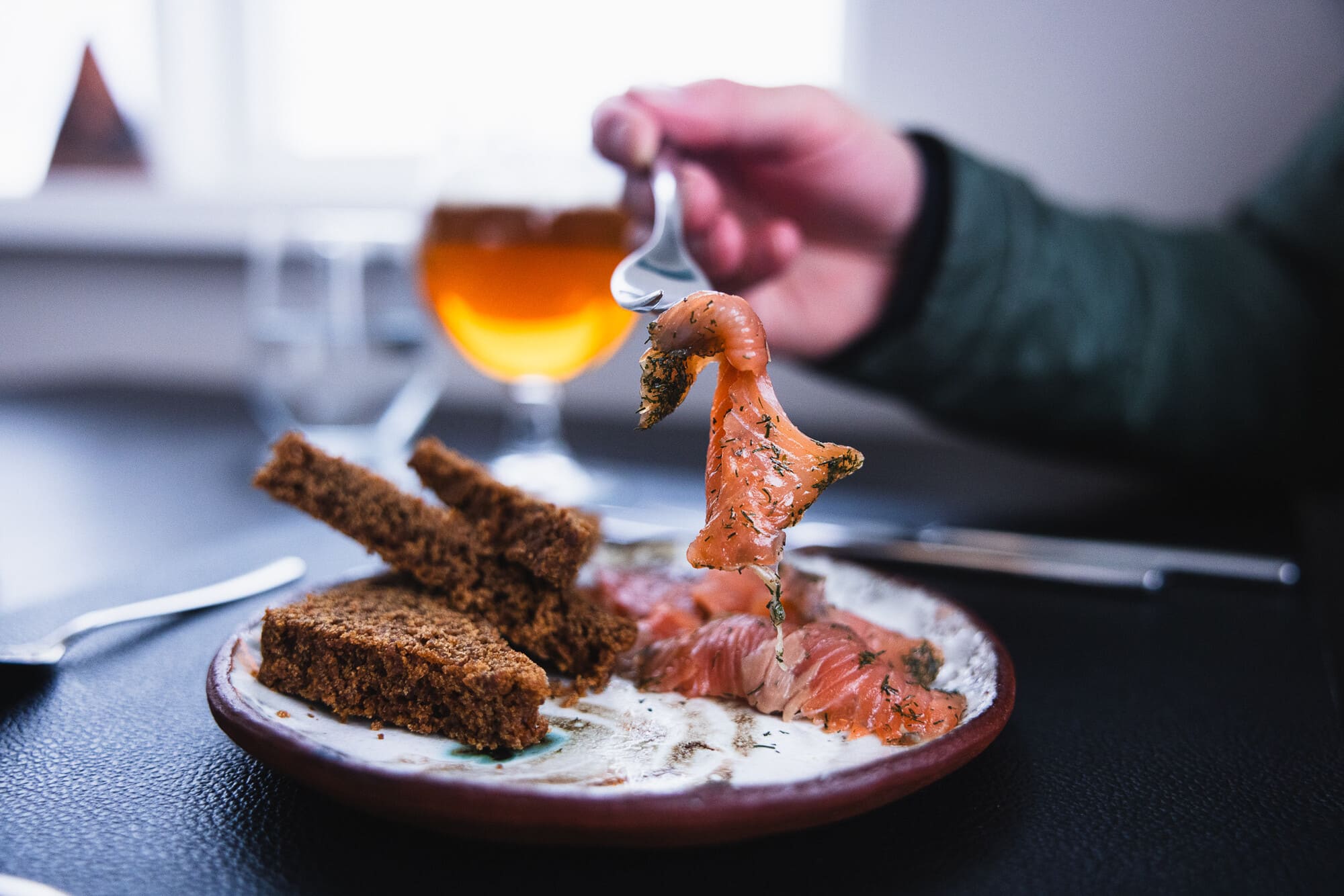
We put real emphasis on fish and on Icelandic lamb, plus poultry for anyone who wants something lighter, and a proper vegetarian option whenever it’s needed. If a guest has other dietary needs, we cater for that too.
Mornings start with a full breakfast buffet before anyone heads into the mountains, and we bake our own bread fresh for the packed lunches guests carry with them all day.
When the group skins back in during the afternoon, there are light snacks waiting alongside the après-ski, something to hold you over before the main event.
Dinner is a proper three-course meal every evening: a starter, often cured Arctic char from a nearby river, followed by lamb, then a nice dessert to close things out. I’m proud of our chefs, and I’ll say plainly that the food matters as much to most guests as the skiing does by the end of the week.
The pool gives people the wellness. The food gives them the wellbeing. Together, that’s what carries a group from one ski day into the next.
Why I Still Do This
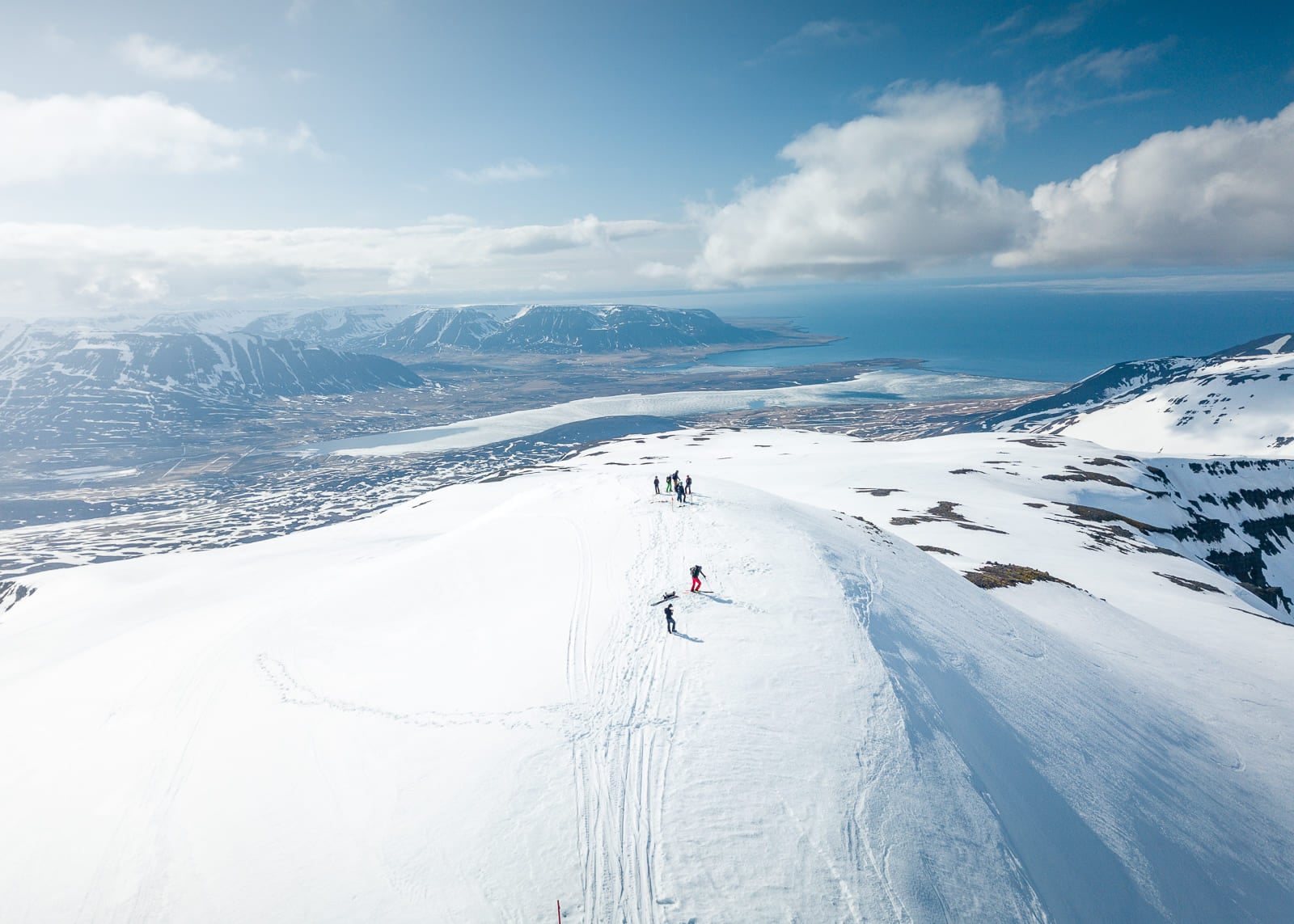
After years of running this lodge, what stays with me isn’t a single run or a single guest. It’s the pattern.
Someone arrives a little nervous about the flat light or the lack of trees or the idea of sleeping on a boat in a fjord. A week later, they’re describing sea to summit skiing to their friends before they’ve even landed home.
Backcountry skiing Iceland gave me a reason to come back to my mother’s family’s land and build something with my husband and our children around it.
I still feel it every time I stand at the top of a run above the Troll Peninsula, looking toward the Arctic Ocean, or every time I hear the quiet in Hornstrandir broken only by fox tracks in the snow.
If you’re weighing whether backcountry skiing Iceland is worth the trip north, I’d tell you what I tell every guest who asks: come in the spring, bring an open mind about the wind, and trust that the corn snow, the fjords, and the pools waiting at the end of the day will make the case better than I ever could.
If that sounds like your kind of week, I’d be glad to show you around myself.