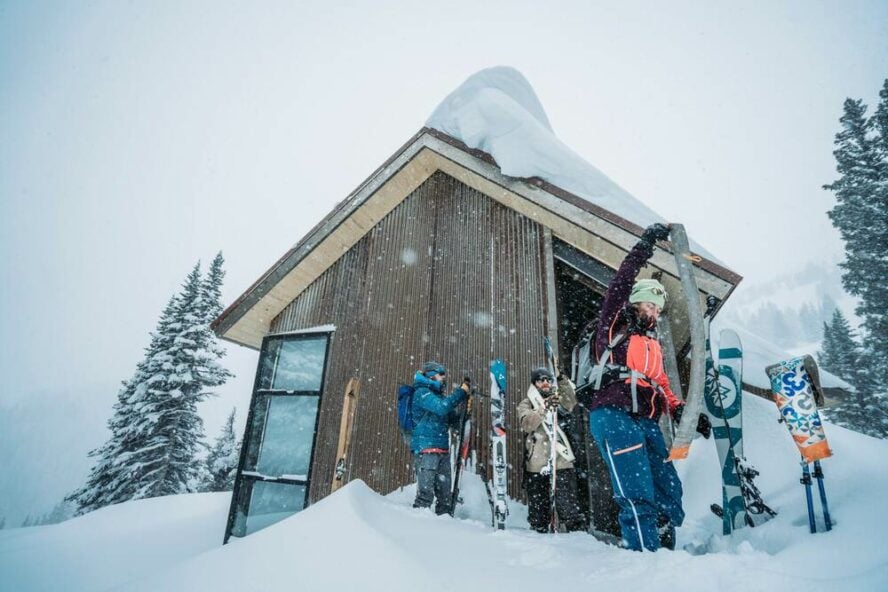

The best places for backcountry skiing start in unlikely spots. One starts at a harbor in Arctic Norway, where your hut is a sailboat and the skipper moves it while you sleep. Another starts on a helicopter pad in British Columbia. A third starts at the foot of a Chilean volcano, in August.
That’s the appeal. Leave the resort boundary, and a ski trip becomes about where you wake up. However, it also gets harder to choose. Ski touring vacations range from a long lodge weekend with a sauna to a 7-day glacier crossing that skiers have been making since 1911.
So we picked 8 trips and sorted them from the most approachable to the most demanding. Every one comes with a certified guide. One of them can see about 11 m (36 ft) of snow in 3 months. Another has enough daylight to start a tour after dinner. And on one morning in the Alps, you won’t know which country you’re skiing in until breakfast.
Your Guide to the Best Places for Backcountry Skiing
Ranking the best places for backcountry skiing is a joyful kind of impossible. Snow doesn’t care about borders, and a perfect week in Japan won’t help a skier who wants a hut in the Rockies. So we didn’t rank by prestige.
Instead, we sorted by difficulty, using each adventure’s own rating. That way, you can match a trip to the day you want. What made the cut is simple: certified guides, small groups, and terrain that rewards the trip it takes to reach it.
Best places for backcountry skiing by difficulty
Easy:
- Purcell Mountain Lodge, British Columbia: Top choice for mixed-ability groups
Moderate:
- Chamonix, France, Italy, and Switzerland: Top choice for lift-served big-mountain days
- Wapta Icefields, Canada: Top choice for a glacier traverse in a long weekend
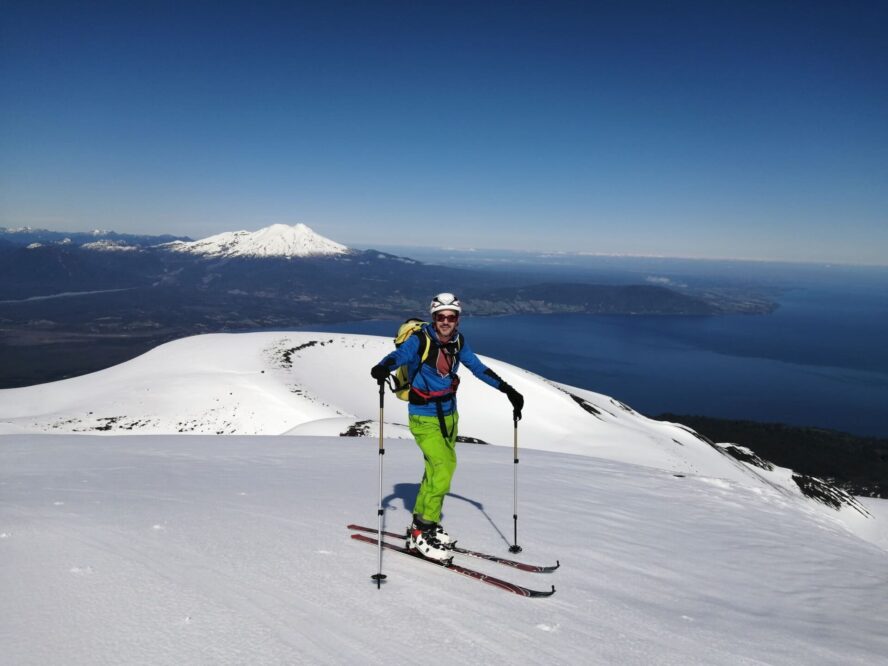
- Volcanoes of Chile: Top choice for skiing volcanoes
- Lyngen Alps, Norway: Top choice for a floating basecamp
Challenging:
- Svalbard, Norway: Top choice for midnight-sun expeditions
- Haute Route, France and Switzerland: Top choice for the classic traverse
- Hakuba and Myoko, Japan: Top choice for deep powder and big vertical
1. Purcell Mountain Lodge, British Columbia
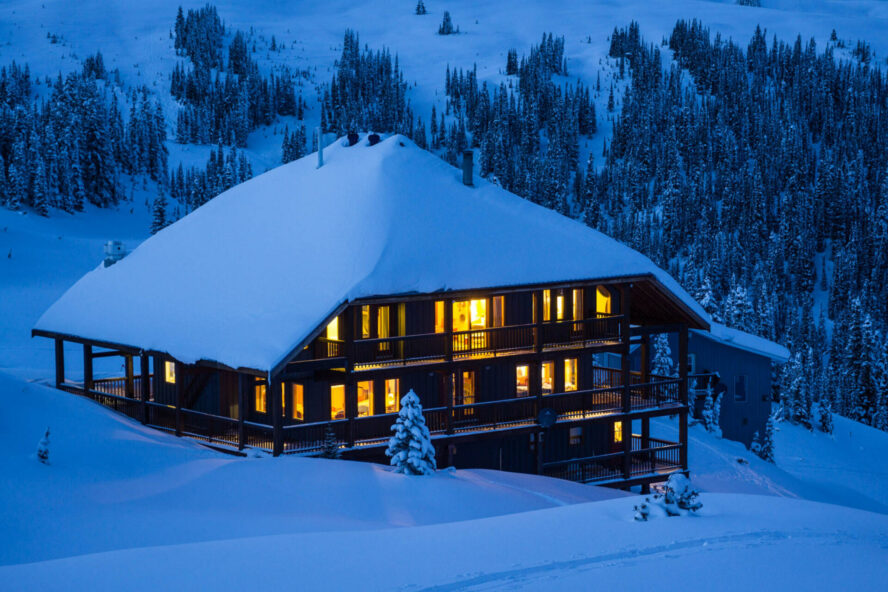
There’s no better way to start a ski trip than a helicopter ride. At Purcell Mountain Lodge, the flight from Golden sets you down at 7,200 ft (2,195 m). Views stretch toward Rogers Pass. Better still, you skip the approach entirely. Instead of skinning for hours with a loaded pack, you drop your bags, grab a coffee, and meet your guide.
What makes this one of the best places for backcountry skiing for mixed groups is the daily menu. Each morning at breakfast, the guides lay out a few options. Some are gentle, rolling tours through meadows and trees. Others head for steeper bowls and bigger terrain. Because everyone picks their own level, a strong skier and a backcountry newcomer can share the same table at night.
Then there’s the lodge itself. A classically trained chef cooks 3 courses every evening. After 5 to 7 hours on snow, a sauna waits, and rooms come with queen beds and private patios. For a skiing vacation that never asks you to carry a tent, it’s hard to beat. Just remember the helicopter’s rules: soft bags only, and heli evacuation insurance is mandatory.
There is an added bonus offered at no other lodge I know, of a heli-bump to a nearby peak to access the beautiful powder bowls.
Purcell Mountain Lodge, British Columbia - Good to Know
Easy to Challenging
Very good fitness and experienced resort skiing. Backcountry experience is preferable, not mandatory. Tours run 5 to 7 hours.
4 to 5 days
Rolling meadows, tree skiing, and open powder bowls
Customizable by day, with no fixed vertical
Mixed groups that want a guide to set the pace and comfort at night
December through March
2. Chamonix Valley, France
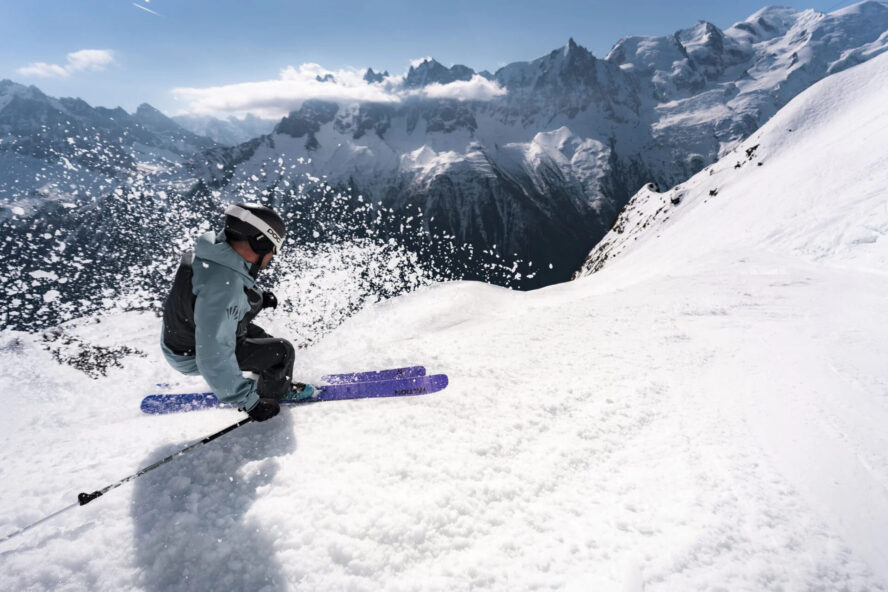
On the wildcard day, you don’t know where you’re skiing until breakfast. Your guides read the snow that morning, then choose France, Italy, or Switzerland. From Chamonix, all 3 sit within reach of one valley, so the snow decides which one wins.
This isn’t a touring trip. Days are lift-served, so the effort comes from the terrain, not from long climbs. You ride up Les Grands Montets for steep, open runs. Then you ski the Vallée Blanche, about 20 km (12 mi) of glacier past seracs and crevasse fields. Meanwhile, the Mont Blanc tunnel takes you to Courmayeur for Italian tree skiing and powder laps. A long lunch follows, because you’re in Italy.
You need to be an advanced off-piste skier, because the terrain is steep, variable, and glaciated. In return, IFMGA guides handle the route-finding, and a quiver of premium skis lets you swap models as the snow changes. A fitting clinic on the first day matches you to the right pair. If you hold an Ikon Pass, it can cover the lift days. You still bring your own transceiver, shovel, and probe, unless you arrange rentals.
Think of the plan as a menu, not a mandate.
57hours in Freeride Ski Week in the Alps With Locals
Chamonix Valley, France - Good to Know
Moderate to Challenging (advanced off-piste skiing required)
Great fitness and advanced off-piste experience on steep, variable, glaciated terrain. No glacier experience needed.
5 days of skiing (7 days with lodging added)
Lift-served freeride, glaciers, steep variable snow, and tree skiing across 3 countries
Lifts do the climbing, so the effort comes from terrain and 5 full days back to back
Advanced skiers who want local guides and big terrain without skinning
January through March.
3. Wapta Icefields, Canada
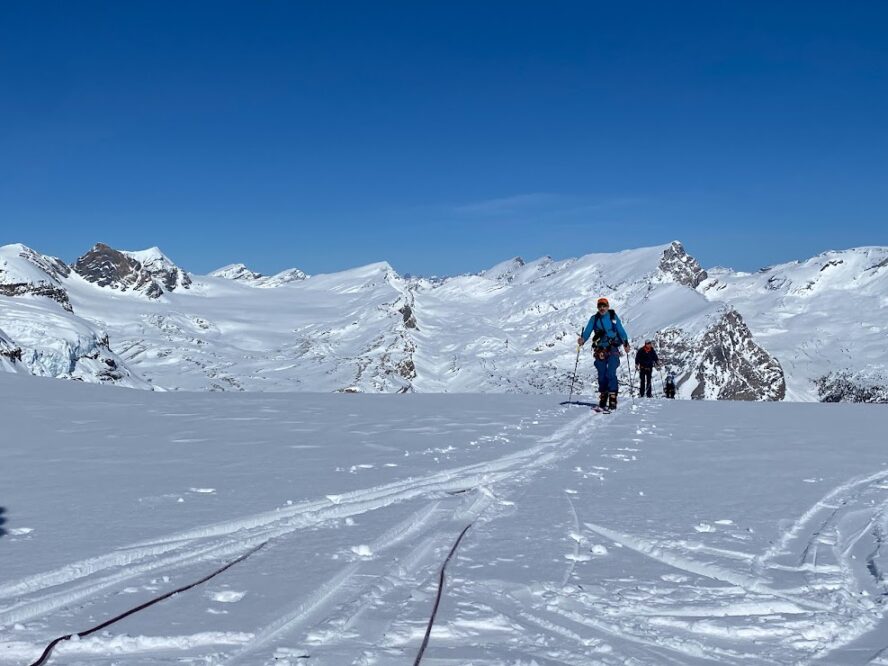
The Wapta Traverse sounds bigger than it is, in the best way. Bow, Balfour, and Scott Duncan are the 3 huts that make it work. The 4-day version sleeps in all of them. That makes the Wapta one of the best places for backcountry skiing when you only have a long weekend.
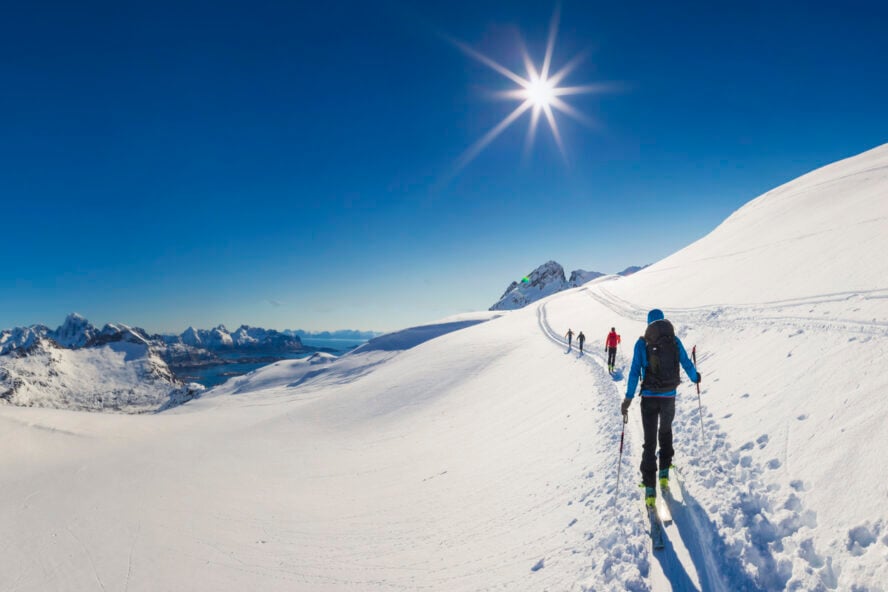
Traverse skiing means you never return to the same bed. Each day you pack up, skin across the icefield, and ski toward a new hut. Bow Hut sits below the Bow Glacier with shared bunks and a communal kitchen. Balfour is more remote and rugged. Scott Duncan perches above the icefields with views in every direction. The crux is the Balfour High Col, the most exhilarating section of the route. If conditions allow, you can add a summit of Mt. Balfour at 3,285 m (10,778 ft).
Still, expect real work. You’re on your feet 5 to 7 hours a day. That covers 10 to 15 km (6 to 10 mi) or more, with about 700 m (2,300 ft) of vertical. The finish depends on conditions. You exit either by the Bath Glacier, with sweeping views, or by Sherbrooke Lake, with flowing turns toward the highway. Your guide handles permits, hut fees, and food from lunch on the first day to lunch on the last. You’ll need to bring a vehicle for the shuttle, though, or carpool. A signed ACMG waiver is part of checkout.
I had an excellent time on the Wapta with Jeff and Jason learning how to safely ascend glaciated peaks.
Wapta Icefields, Canada - Good to Know
Moderate to Challenging
Great physical shape, plus backcountry and ski mountaineering experience. Expect 5 to 7 hours a day with up to 45 lb (20 kg) on your back.
3 to 4 days
Glaciated icefields, a high col, and hut-to-hut travel with optional peaks
About 700 m (2,300 ft) of vertical, with huts near 7,200 ft (2,195 m)
Skiers with backcountry and ski mountaineering experience who want an iconic route without a full week
February through April
4. Volcanoes of Chile
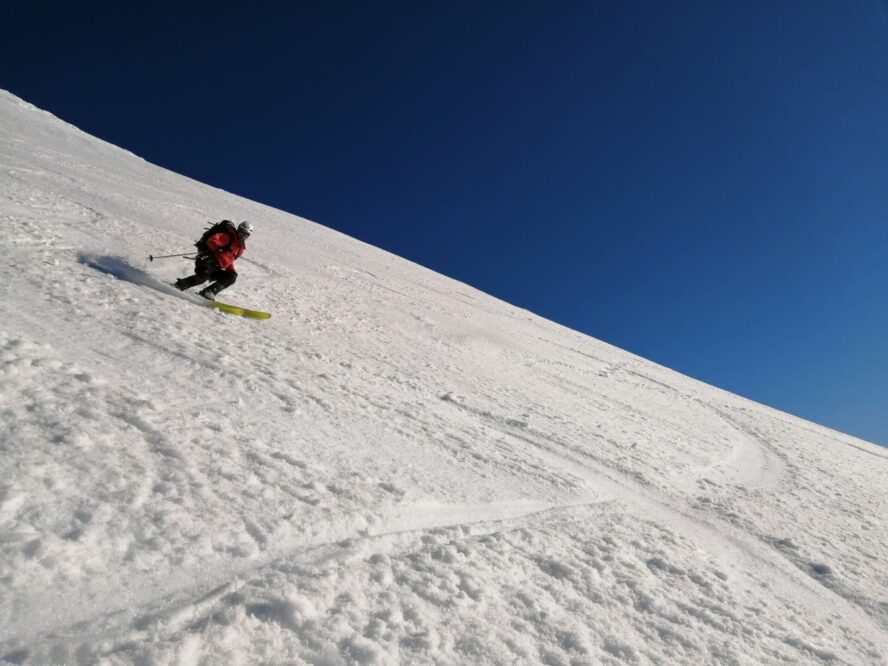
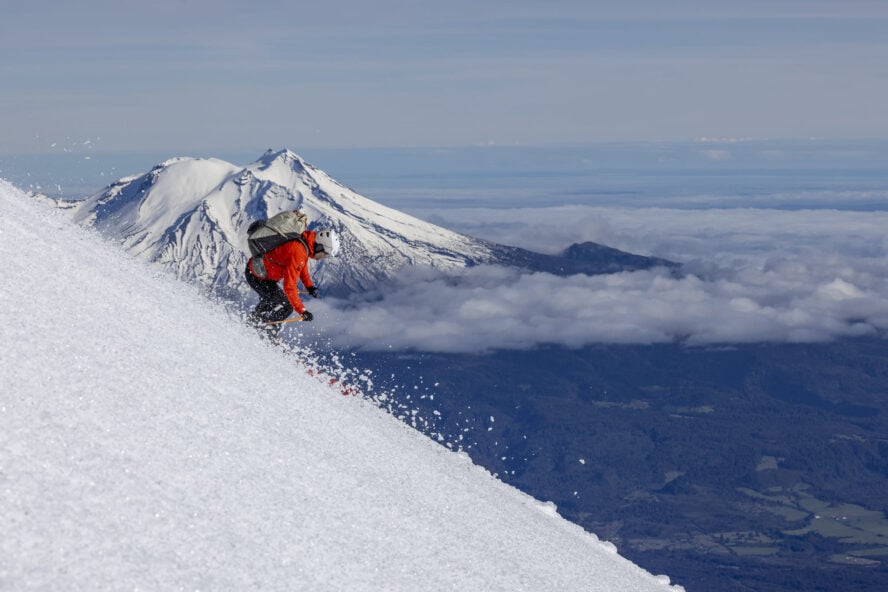
The volcanoes got to the Andes long before skis did. Over 9 days, you climb 5 of them: Lonquimay, Llaima, Villarrica, Mocho, and Osorno. Then you ski each one straight back down.
Each volcano has its own personality. For example, Lonquimay is the warm-up, a moderate climb with a descent that punches above its grade. Llaima, inside Conguillío National Park, asks for more with a demanding traverse. Villarrica is one of Chile’s most active volcanoes, with a visible crater. Mocho is the quiet one, with glaciers, rugged terrain, and a night in a mountain refuge. Finally, Osorno closes the trip with panoramic views over lakes and forests.
This is a serious ski mountaineering week. Expect 900 to 1,600 m (2,950 to 5,250 ft) of climbing a day. Between summits, you trade skins for hot springs and a bed in a hotel or lodge in Malalcahuello or Pucón. However, plan on buying most meals yourself, since only breakfasts are included. The season runs from August to October, which makes this the one trip here that follows winter south.
It’s a serious ski mountaineering itinerary dressed up in some of the best scenery South America has to offer.
Volcanoes of Chile - Good to Know
Moderate to Challenging
Good fitness and prior backcountry experience. Expert-level skiing isn’t required, but ski mountaineering experience is strongly recommended.
9 days
Volcanic cones, crater rims, ash fields, glacier remnants, and one night in a mountain refuge
900 to 1,600 m (2,950 to 5,250 ft) of gain per day
Skiers with prior backcountry experience and good fitness. Ski mountaineering experience is strongly recommended.
August through October
5. Lyngen Alps, Norway
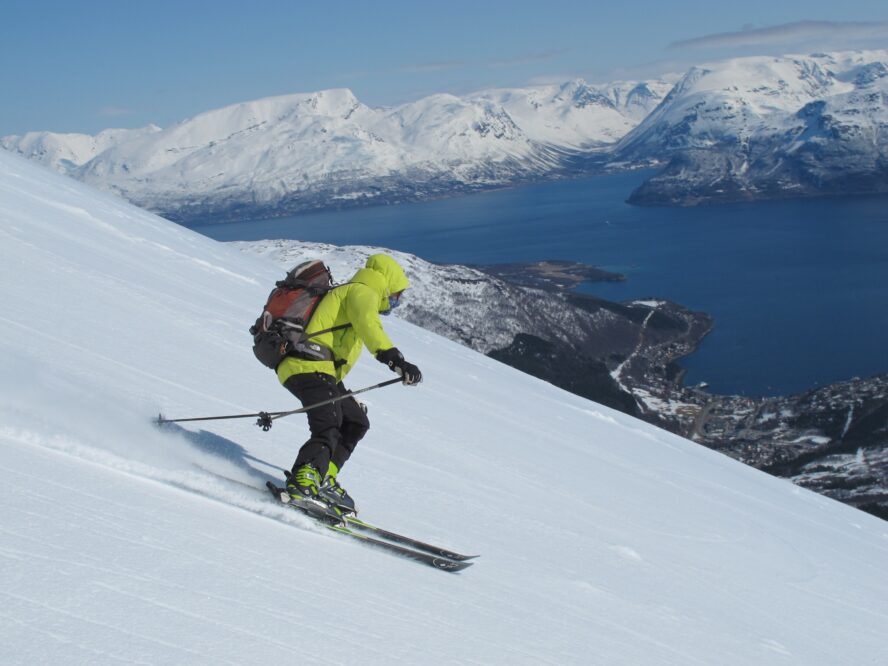
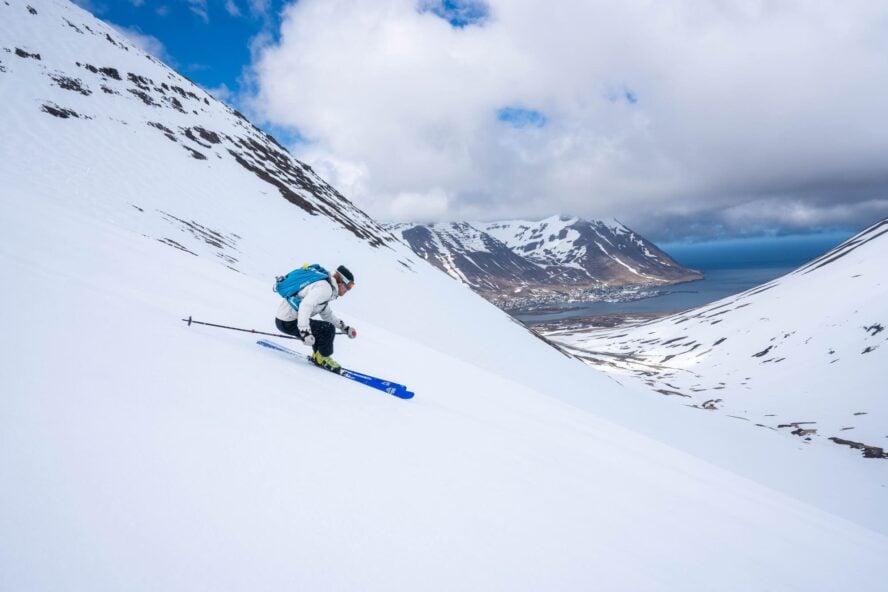
In the Lyngen Alps, every climb starts at sea level. That means every meter you gain is a meter you ski back down toward the water. The peninsula has 124 snow-covered peaks up to 1,800 m (5,905 ft) and around 140 glaciers. Sleeping on a boat is the best way to reach them. Few of the best places for backcountry skiing put the sea this close to your skis.
The setup is simple. A skipper moves the sailboat overnight, so you wake up beneath a new set of peaks. After that, a dinghy takes you ashore. Then you skin for 4 to 8 hours. Ascents run 4 to 9 km (2.5 to 5.6 mi) and top out between 800 and 1,500 m (2,625 to 4,921 ft). Slopes mostly sit between 25 and 30 degrees, with steeper lines up to 40 degrees for anyone who wants them. Back on board, a chef serves après-ski snacks and a 3-course dinner.
Most dates suit intermediate to advanced skiers. A dedicated first-timers itinerary exists for strong resort skiers who’ve never toured. Conditions are milder than you’d guess at this latitude, with temperatures around 0°C (32°F) thanks to the fjords. You bring your own skis and safety gear. However, you can rent it a 5-minute walk from the Tromsø harbor.
Experiencing the remote peaks and waters by sailboat is, in my opinion, the ultimate form of freedom.
Vartan Ibranyan, sailor and skier behind Sail and Ski in the Remote Lyngen Alps
Lyngen Alps, Norway - Good to Know
Intermediate to advanced, with a first-timers itinerary
Intermediate to advanced backcountry skiers who are comfortable on black resort runs. Tours run 4 to 8 hours.
8 days (6 ski days)
Glacier plateaus and slopes of mostly 25 to 30 degrees above the fjords, with steeper lines for those who want them.
Summits between 800 and 1,500 m (2,625 to 4,921 ft), all climbed from sea level
Skiers who want a boat basecamp. No sailing experience is needed.
Late March through early May
6. Svalbard, Norway
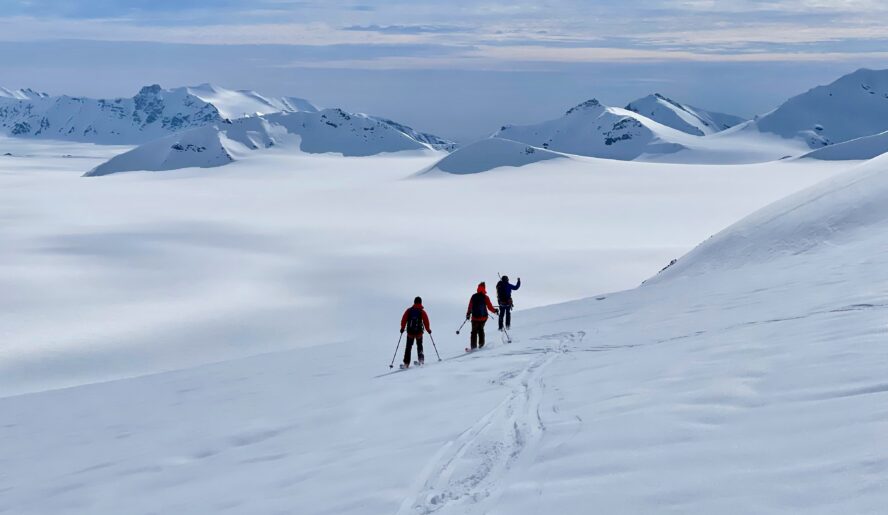
Almost 60% of Svalbard is covered by glaciers, and the archipelago sits about midway between Norway and the North Pole. Because polar bears live here, your guides follow polar bear protocols every time you step ashore, although sightings are rare. Most skiers will only ever see this place on a map. Even though it’s among the best places for backcountry skiing, it’s also one of the most remote.
The skiing is big and clean. You climb 1,100 to 1,500 m (3,609 to 4,921 ft) a day on glaciated peaks. That covers 10 to 20 km (6 to 12 mi). Then you ski back down toward the boat. During the week, snow can shift from dry Arctic powder to spring corn. By late April, there’s enough daylight to start a tour after dinner.
At night, the boat does the work of a hut. A professional skipper and a chef look after you on board, and groups stay small at 4 to 6 guests. Longyearbyen, where you board, claims the northernmost pub, church, and museum on Earth. Because of the terrain, you need excellent fitness and confidence on black runs and glaciated ground. Sailing experience, however, isn’t required.
Fabulous crew, lovely people, great food, fun and accommodating. Excellent well appointed boat with unbelievably experienced skipper.
Louise Lumley in Ski & Sail Svalbard on a Small Sailboat: Under the Midnight Sun
Svalbard, Norway - Good to Know
Challenging
Intermediate to advanced backcountry skiers with excellent fitness, comfortable on black resort runs
8 days (6 ski days)
Glaciated peaks with variable snow, reached by dinghy from the boat
1,100 to 1,500 m (3,609 to 4,921 ft) of gain per day
Fit skiers with backcountry experience who want an Arctic expedition
April through June
7. Haute Route, France and Switzerland
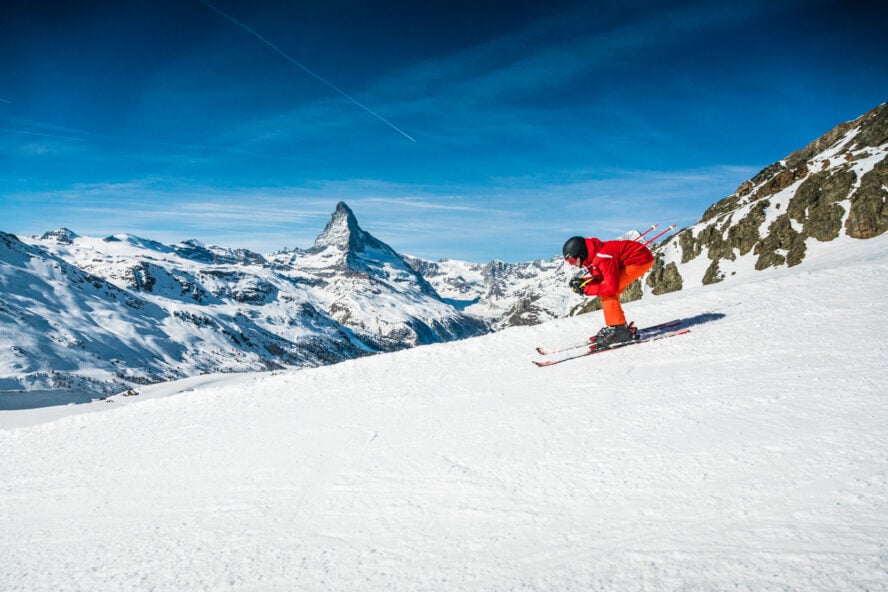
Skiers have been crossing from Chamonix to Zermatt since 1911. That makes this Haute Route ski tour a true classic, and 7 days is all it takes to ski it. Almost every day brings a new glacier, a new col, and a new hut.
The most technical moment is the Col des Ecandies, a 200 m (656 ft) bootpack. It pays off with one of the best descents of the week, about 1,600 m (5,249 ft) down toward Champex. Later, you climb Rosablanche at 3,336 m (10,945 ft). A day after that, you reach Cabane des Dix, which many people call their favorite hut on the route. Next you stand on Pigne d’Arolla, the roof of the route at 3,790 m (12,434 ft).
Then comes the day the whole week has been building toward. You cross 3 cols and 7 glaciers over 29 km (18 mi). That’s 1,400 m (4,593 ft) of climbing and 3,200 m (10,499 ft) of descent. Meanwhile, the Matterhorn stays in view for most of the way into Zermatt.
Because of the pace, prep matters here. You need at least 20 days of powder skiing, great fitness, and previous touring experience. Every day brings 3 to 6 hours of skinning with a loaded pack. In return, huts, lift tickets, transportation, and 5 breakfasts, 6 lunches, and 4 dinners are covered.
Rescue insurance is mandatory for skiing in Switzerland, and dinners in Verbier and Zermatt are on you. Not many of the best places for backcountry skiing ask this much, and few give back more.
Excellent guide service. From the moment of booking to the end of the course, the staff and guides were helpful, enthusiastic, patient, and very knowledgeable.
Adam Newsome in the 7-day traverse from Chamonix to Zermatt
Haute Route, France and Switzerland - Good to Know
Challenging
Great fitness, previous ski touring experience, and at least 20 days of powder skiing. Expect 3 to 6 hours of skinning a day for 7 days.
7 days
Glaciers, high cols, a 200 m (656 ft) bootpack, and hut-to-hut travel with some lift access
Up to 1,400 m (4,593 ft) of gain and 3,200 m (10,499 ft) of descent on the biggest day
Experienced ski tourers with at least 20 days of powder skiing
April
8. Hakuba and Myoko, Japan
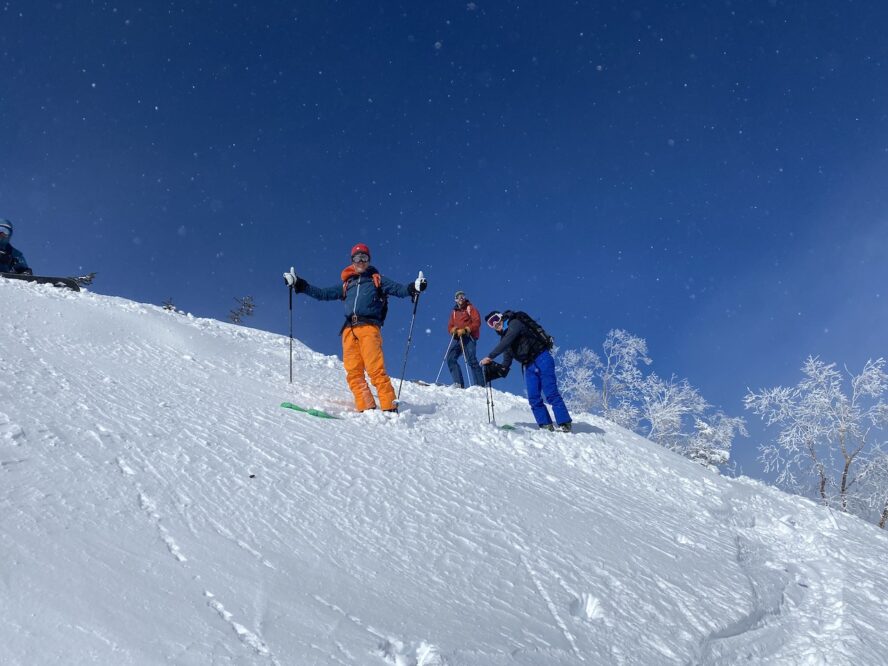
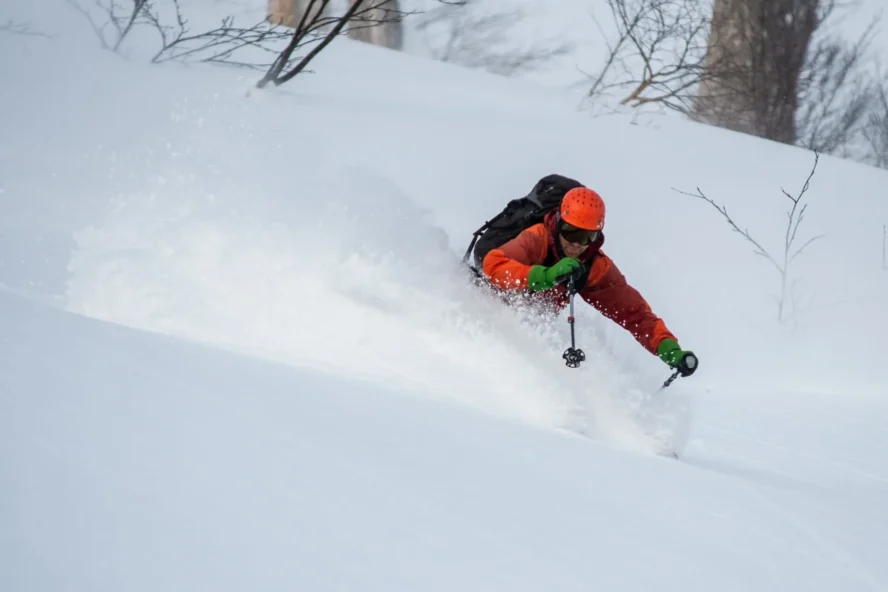
Cold air from Siberia crosses the Sea of Japan, picks up moisture, and drops it on Honshu. As a result, Hakuba and Myoko can see about 11 m (36 ft) of snow between December and February. That’s why the region ranks among the best places for backcountry skiing for powder lovers.
Your guide, who has led trips here every season since 2018, uses the Hakuba Valley’s 10 resorts as a shortcut. Lifts cut out the long valley approaches, but you still skin 1,000 to 1,400 m (3,300 to 4,600 ft) a day. The terrain includes steep faces, spines, couloirs, and birch forests that stay skiable when visibility shuts down.
Off the mountain, the reward is just as good. In Myoko you stay in a lodge with an onsen, and in Hakuba you stay in a private chalet. Your guide has handpicked restaurants in Hakuba and books them well in advance. This trip isn’t for first-timers, though. The snow is bottomless, with no firm base, and it’s demanding in a way that surprises even experienced resort skiers. Prior backcountry experience is a firm requirement, and a signed ACMG waiver is part of checkout.
Will has a great knowledge of the area, was able to bring us to amazing snow every day (despite not having Japow snow forecast/conditions everyday), and navigated all the different hills and connections to different lifts in between creatively.
Mellissa N. in Backcountry Skiing in Hakuba & Myoko: Ski JaPOW!
Hakuba and Myoko, Japan - Good to Know
Challenging
Advanced to expert skiers and riders with prior backcountry experience. Expect 6 to 7 hours a day and 1,000 to 1,400 m (3,300 to 4,600 ft) of climbing.
9 days (7 guided ski days)
Lift-assisted touring on steep faces, spines, couloirs, and birch forest
1,000 to 1,400 m (3,300 to 4,600 ft) of skinning per day, with up to 3,200 m (10,500 ft) of descent
Advanced skiers and riders with prior backcountry experience
January through March
Good-to-Know Info for the Best Places for Backcountry Skiing
Planning one of the best places for backcountry skiing takes more prep than a resort week. Because fitness, gear, and timing change a lot from trip to trip, here’s what to sort out before you book.
What is the difference between backcountry skiing, ski touring, off-piste, and freeride?
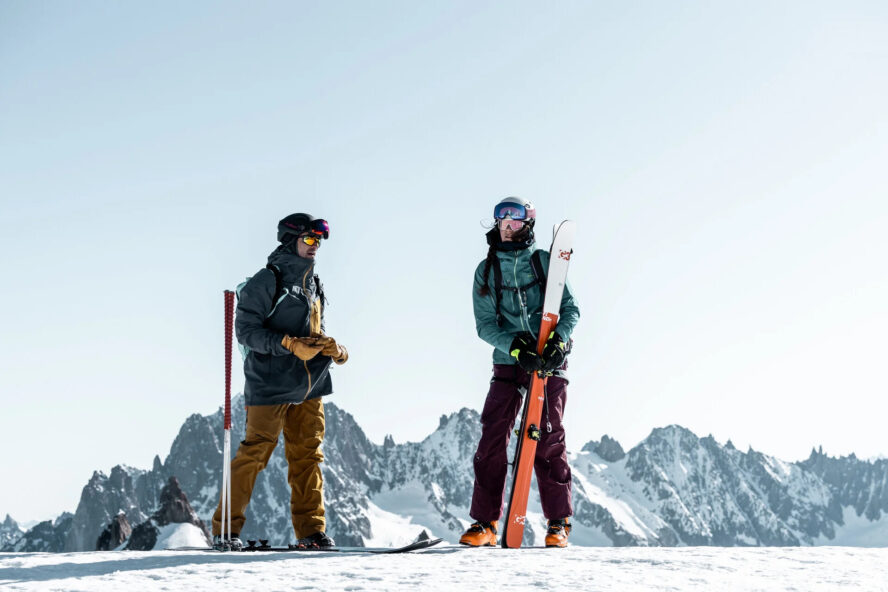
The terms overlap, but they aren’t the same. Backcountry skiing is the umbrella term for skiing outside resort boundaries, on terrain that isn’t patrolled or groomed. Ski touring is the human-powered version, where you climb on skins and then ski down. Off-piste is the European word for any skiing away from marked, groomed runs, even when a lift is close by.
Freeride describes skiing natural, ungroomed terrain with the focus on the descent, usually with lifts doing the climbing. Ski mountaineering, meanwhile, adds tools like an ice axe and crampons to reach summits.
On this list, Chamonix is lift-served freeride, while Hakuba and Myoko are lift-assisted touring. Purcell, the Wapta, Lyngen, Svalbard, and the Haute Route are ski touring. Chile, finally, leans toward ski mountaineering.
Is backcountry skiing hard?
It depends on the trip, but it’s always more physical than a resort day. Purcell Mountain Lodge sits at the gentle end, because guides offer everything from mellow meadows to steeper bowls. Chamonix demands advanced off-piste skills, although lifts do the climbing.
At the other end, the Haute Route and Svalbard demand over 1,000 m (3,300 ft) of climbing, day after day. Can you hike 1,000 m (3,300 ft) uphill with a daypack and still feel good the next morning? Then you’re in range for most of the touring trips here.

Do you need a guide for backcountry skiing?
For these ski touring trips, yes, and every trip on this list comes with one. Guides hold certifications such as IFMGA/UIAGM or ACMG, they read the snowpack, and they choose the terrain each morning. On the more advanced trips, you’re also expected to know how to use a transceiver, shovel, and probe.
Beginners should start with Purcell Mountain Lodge or the Lyngen first-timers itinerary. Both are built for people who are new to the backcountry.
What gear do you need for backcountry skiing?
For most backcountry skiing tours, you need touring skis or a splitboard, skins, touring boots, and poles. You also need an avalanche kit with a 3-antenna transceiver, a shovel, and a probe of 2.4 m (7.9 ft) or longer. Ski crampons are often mandatory. Glacier routes like the Haute Route and Svalbard add a harness, locking carabiners, and sometimes a light ice axe.
You don’t have to own it all. Most trips point you to rental shops, and Chamonix includes a quiver of skis. Helicopter trips like Purcell have their own rule: soft bags only, up to 35 lb (13.5 kg).
What is a ski traverse?
A ski traverse is a route that takes you from one place to another over several days. You usually sleep in a different hut each night. The Wapta icefields and the Haute Route are the 2 classics on this list. You carry what you need in a pack and ski a new section each day.
At the end, you finish somewhere different from where you began. Because of that, traverses suit skiers who like momentum and don’t mind simple beds.
When is the best time for backcountry skiing?
It depends on where you’re headed, because winter moves around the planet.
Japan runs from January to March, with January and February as peak season, and Chamonix runs the same months. Wapta follows from February to April, and the Haute Route runs in April. Purcell Mountain Lodge, meanwhile, opens from December to March.
Lyngen runs from late March to early May, and Svalbard follows from April into June. Chile closes the loop from August to October, while the northern hemisphere waits for snow. Plan around the destination, not your own calendar.
The Best Places for Backcountry Skiing Are Waiting
The best places for backcountry skiing all ask the same question first: when can you go? January belongs to Japan. April belongs to the Alps and the Arctic. August belongs to a Chilean volcano.
So pick your month, then pick a backcountry skiing adventure that makes your legs a little nervous. That’s usually the right one.