
You board a plane at home in shorts and a T-shirt. Two days later, you are stepping into ski boots while it snows sideways, somewhere south of everywhere you know. That switch, from sweating through summer to lining up a fresh pow line, never gets old for me.
I have guided mountains for about 20 years now, all over the world. The Alps every year. Japan every year. But Patagonia is the trip that still catches me off guard, every single time I go back.
There’s a classic surf documentary called The Endless Summer, about two guys chasing warm weather around the entire planet, always one flight ahead of winter. I do the opposite. Every year, I chase winter down to Patagonia, the one place it still shows up on schedule.
Most people have no idea that skiing there is even possible. Fewer still know what it actually looks like: volcanoes rising straight out of lakes, old fixed-grip lifts hauling you into terrain that most resorts would fence off, a hut that sleeps 36 people standing nearly empty while a storm rolls in outside.
Backcountry skiing in Patagonia has become one of the trips I look forward to most, and it keeps surprising me even after several trips down there.
By the end of this, you will know things about Patagonia almost nobody does.
Where Backcountry Skiing in Patagonia Actually Happens
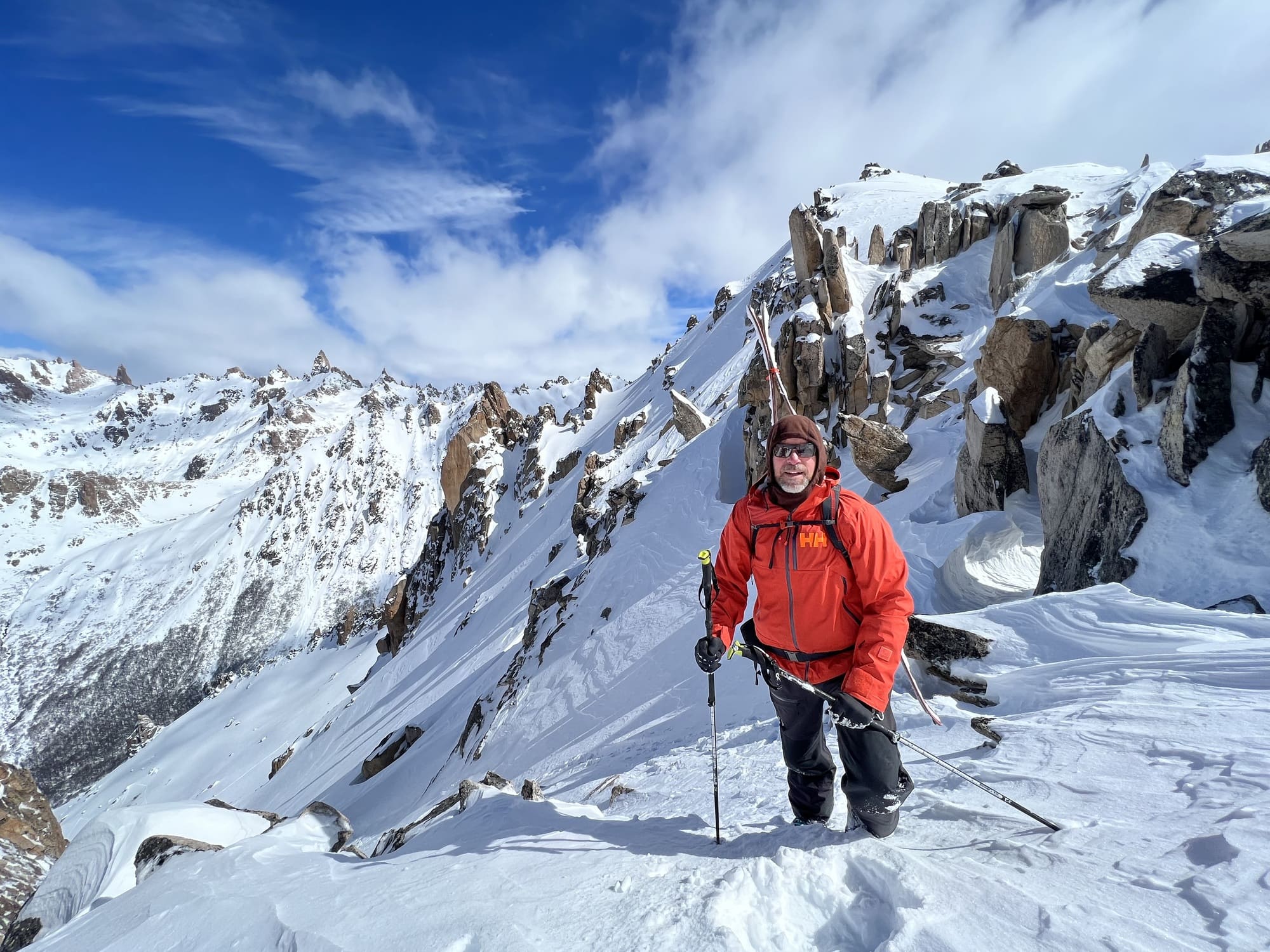
I got into guiding after a civil engineering degree, of all things. I worked for a company that designed and installed bridges, and it did not take long to realize I did not want to sit in an office every day. Once I found out mountain guiding was an actual career, I never looked back, and I have been an IFMGA-certified mountain guide for most of the 20 years since.
My home base is Squamish, British Columbia, with rock climbing right outside my front door and solid alpine skiing at Whistler close by. People hear Patagonia and picture Fitz Roy. That massive ice cap near El Chaltén is real, but it is a climbing zone, not where we go for skiing in Patagonia.
The mountains further south are also harder to reach from the west side, and winter weather there turns rough fast. The skiing zone sits further north instead, in what is called the Lakes District. This stretch of northern Patagonia straddles Argentina and Chile, with Bariloche as the main hub on the Argentinian side.
Santiago sits well north of this zone, and Buenos Aires is off to the east.
Everything we care about for skiing happens in between.
What the terrain actually looks like
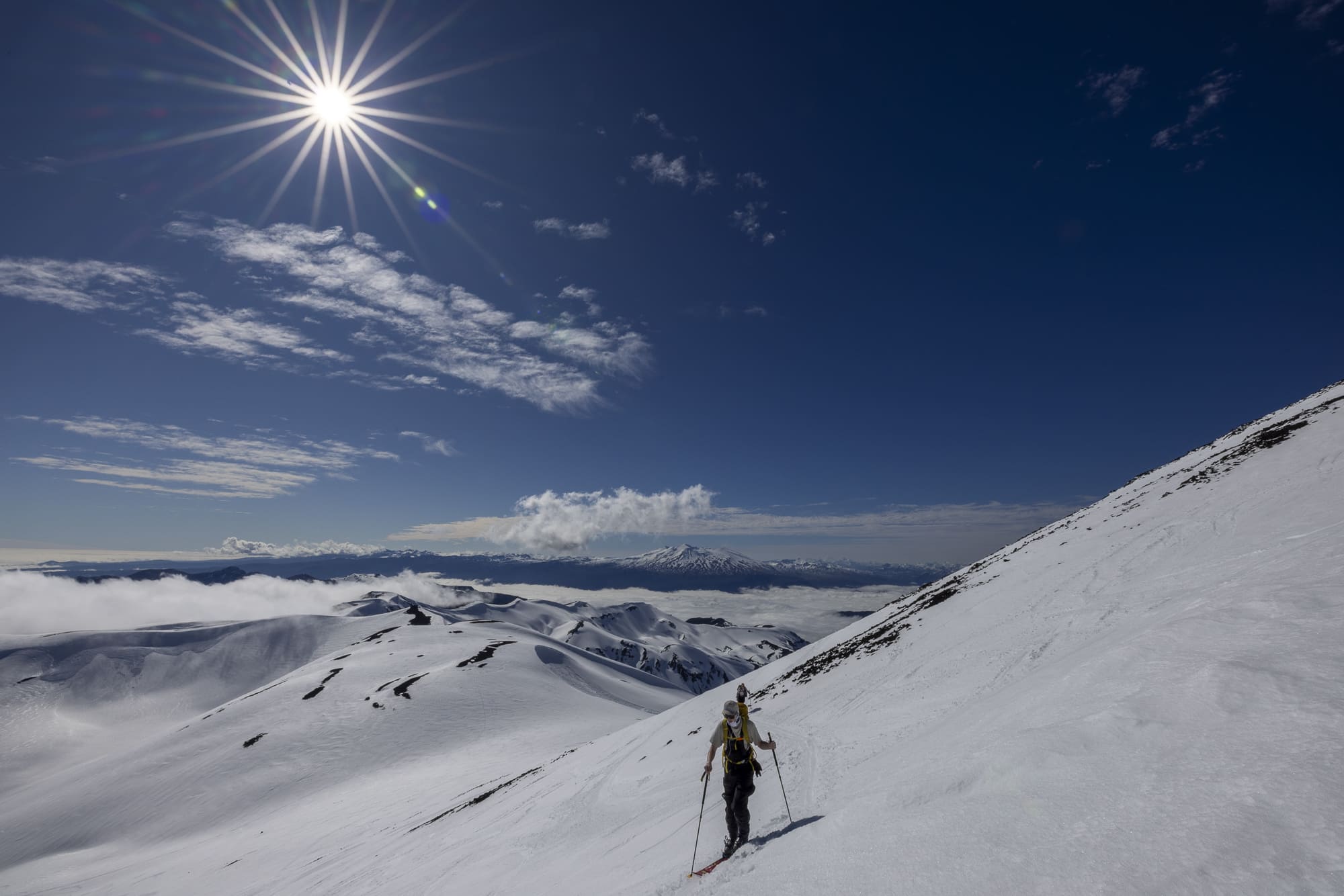
The mountains here are volcanic, and they rise straight out of lakes. I always tell people it is a little like the Dolomites, just bigger. You get above the snow line and it is all white. Drop below that line, though, and you are staring at bare dirt around the base of the volcano.
We generally ski peaks in the 2,800 to 3,000 m (9,186 to 9,843 ft) range. Some iconic volcanoes go higher, like Tronador at around 4,000 m (13,123 ft), but that is not typical. I keep things lower on purpose. Further north near Santiago, you can get higher terrain, but that zone gets busier and altitude becomes a real factor.
I would rather show up and ski hard all day, no gasping for air required.
When Is the Best Time to Ski in Patagonia?
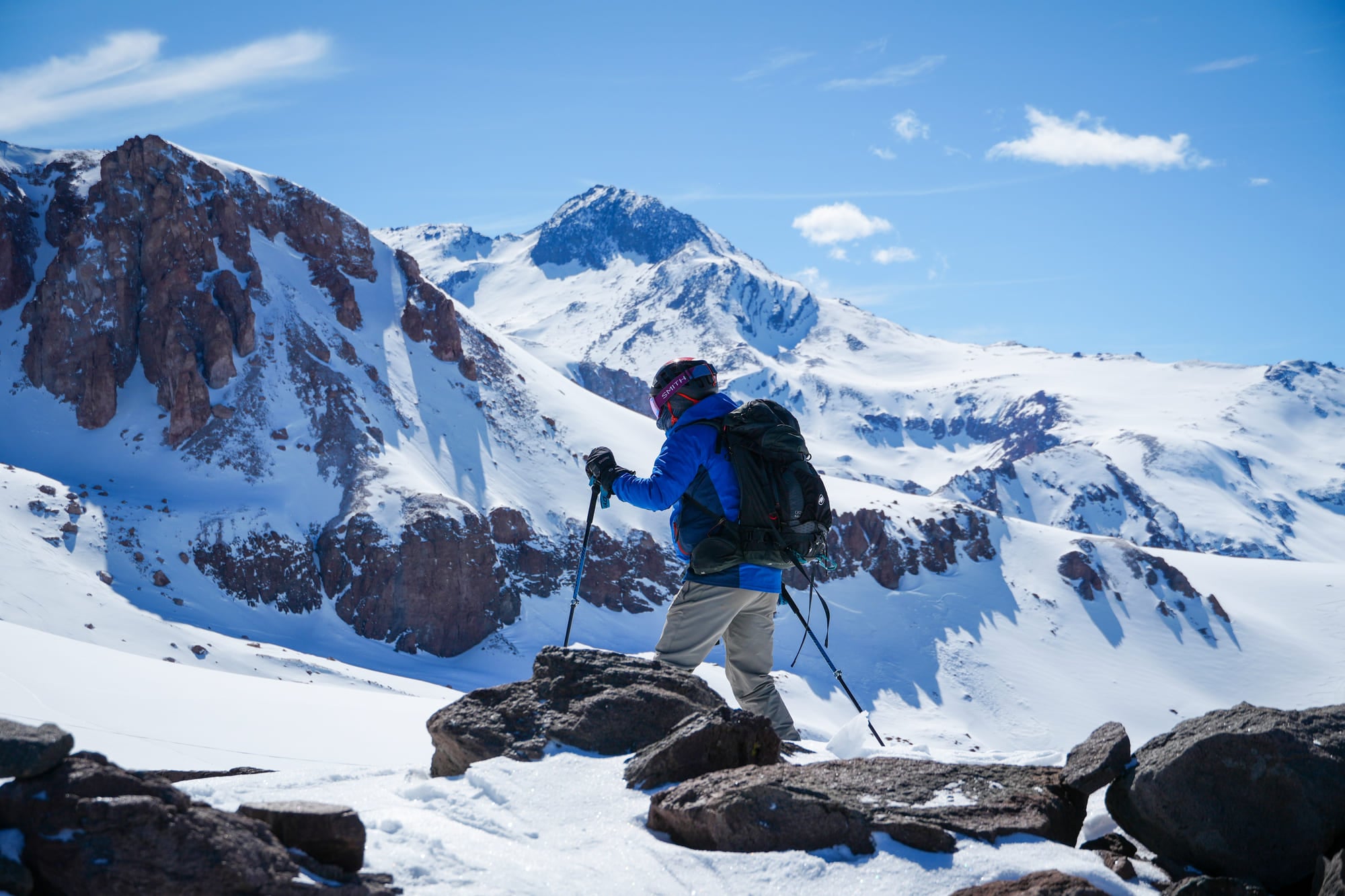
Patagonia’s ski season runs from late June through September. It compresses into a shorter window than most Northern Hemisphere ranges. The bigger, higher mountains start opening in late June, and you can be skiing there by July.
But the best part of the season, the stretch where conditions are most reliable, runs from August into mid-September. That is when I run my trips, generally late August into early September. If you are thinking in Northern Hemisphere terms, that window lines up with March for us.
What makes Patagonia’s ski season so short?
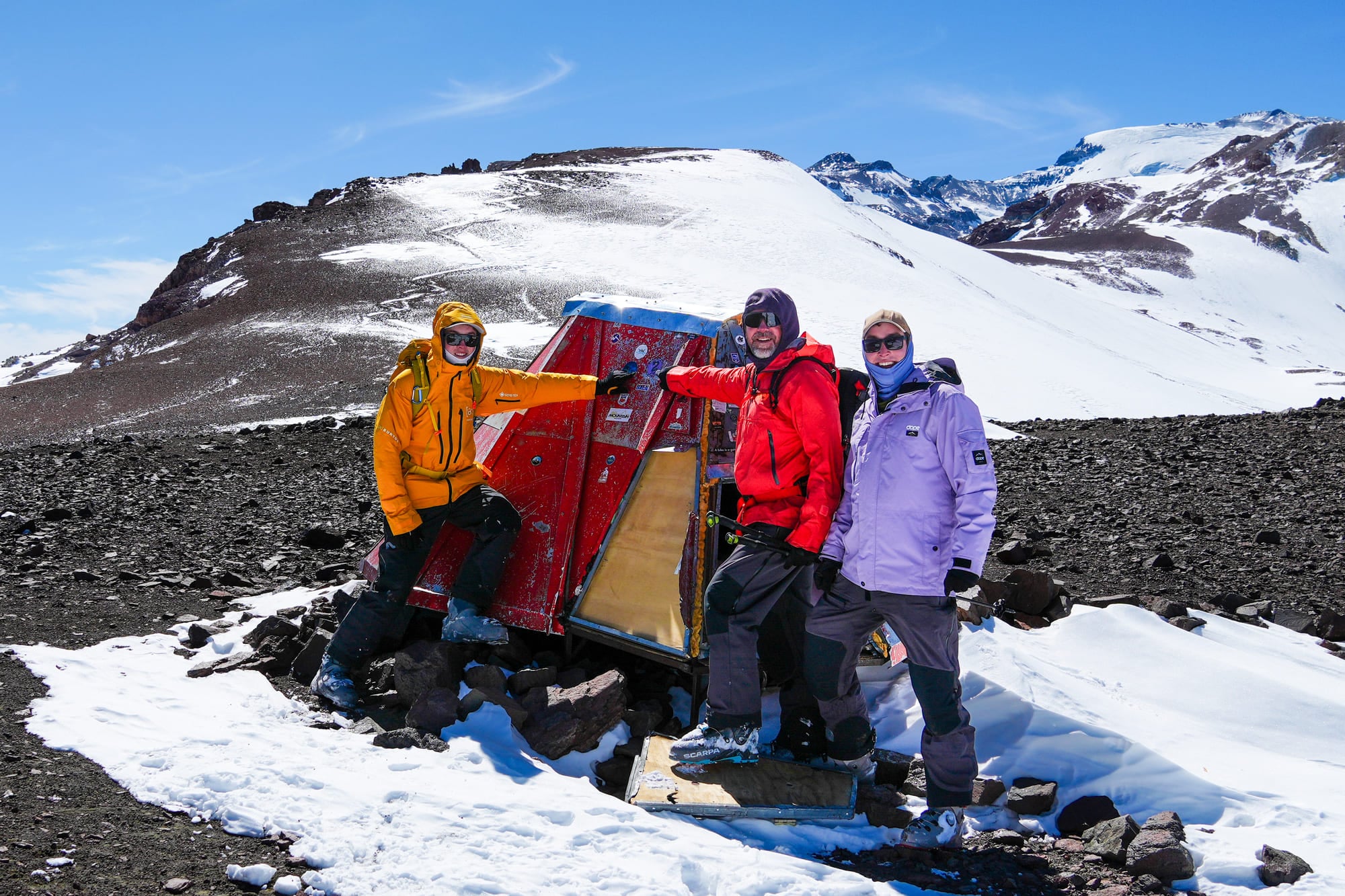
Patagonia gets big mountains and great snow, but the window to enjoy both is narrow. Show up too early, and there is not enough base yet. Show up too late, and the spring warmth turns everything to rain and slush. That squeeze is part of what makes the Patagonia ski season feel so different from a typical multi-month winter.
The Andes are the reason the whole region divides the way it does. All the snow and moisture come off the west side. The east side sits in a rain shadow, which keeps it a little cooler and considerably drier. On one side of that range you have desert, and on the other, you have jungle.
It is a striking place to fly over on the approach.

How Do You Access Backcountry Terrain in Patagonia?
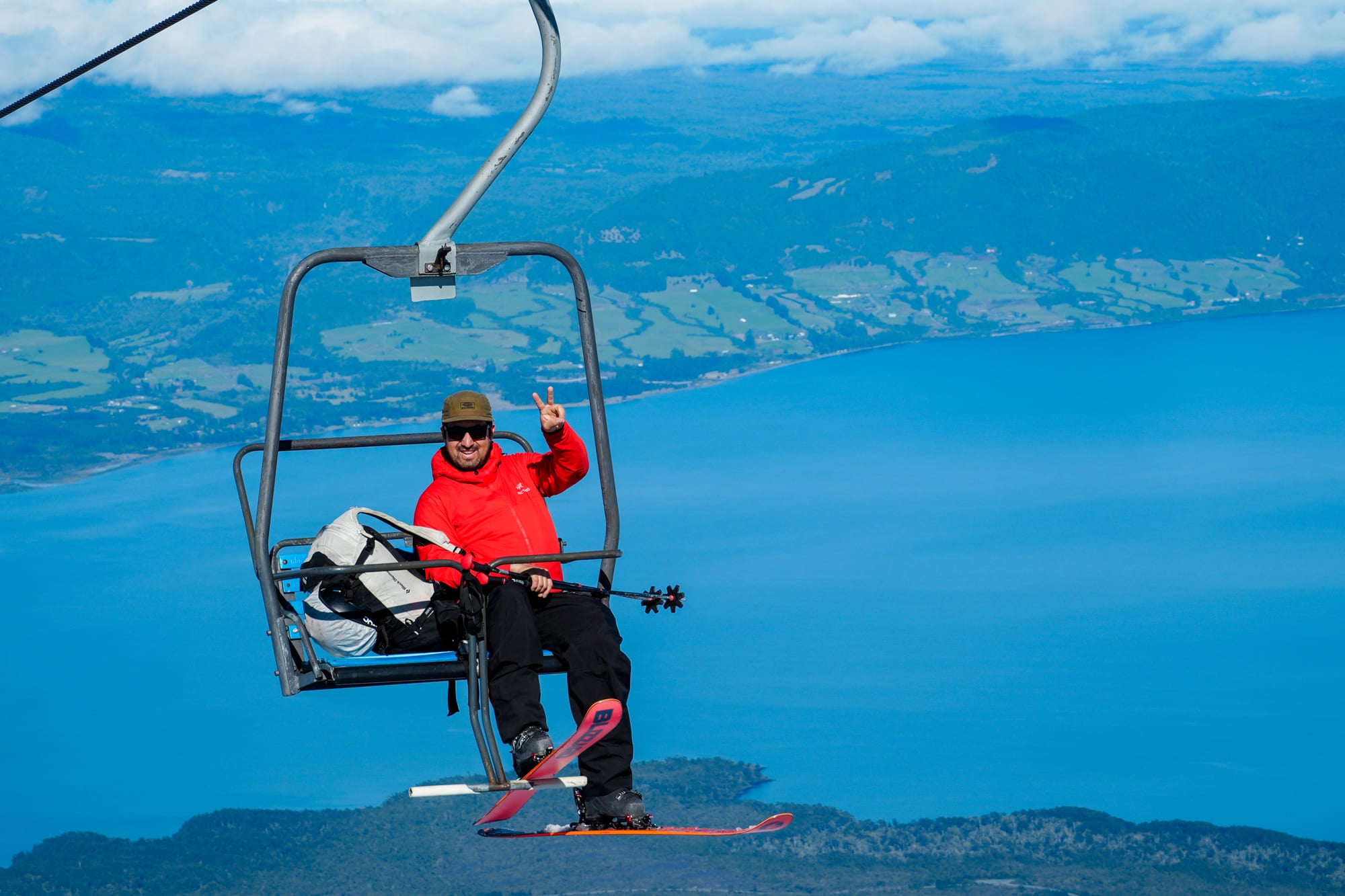
This part surprises people. You are not hiking for hours from a valley floor. We drive up from the lakes on switchback roads, gaining around 1,500 m (4,921 ft) of elevation. That gets us to the parking lot at the base of the lifts, where we ride old-school, fixed-grip lifts straight up into terrain that opens into the backcountry.
If the resort skiing is firing, we will usually lap it first. When it is genuinely that good, there is no reason to skip it just because it is inbounds. Once we have had our fill, or the backcountry is calling, we head out.
A day of ski touring Patagonia, broken down
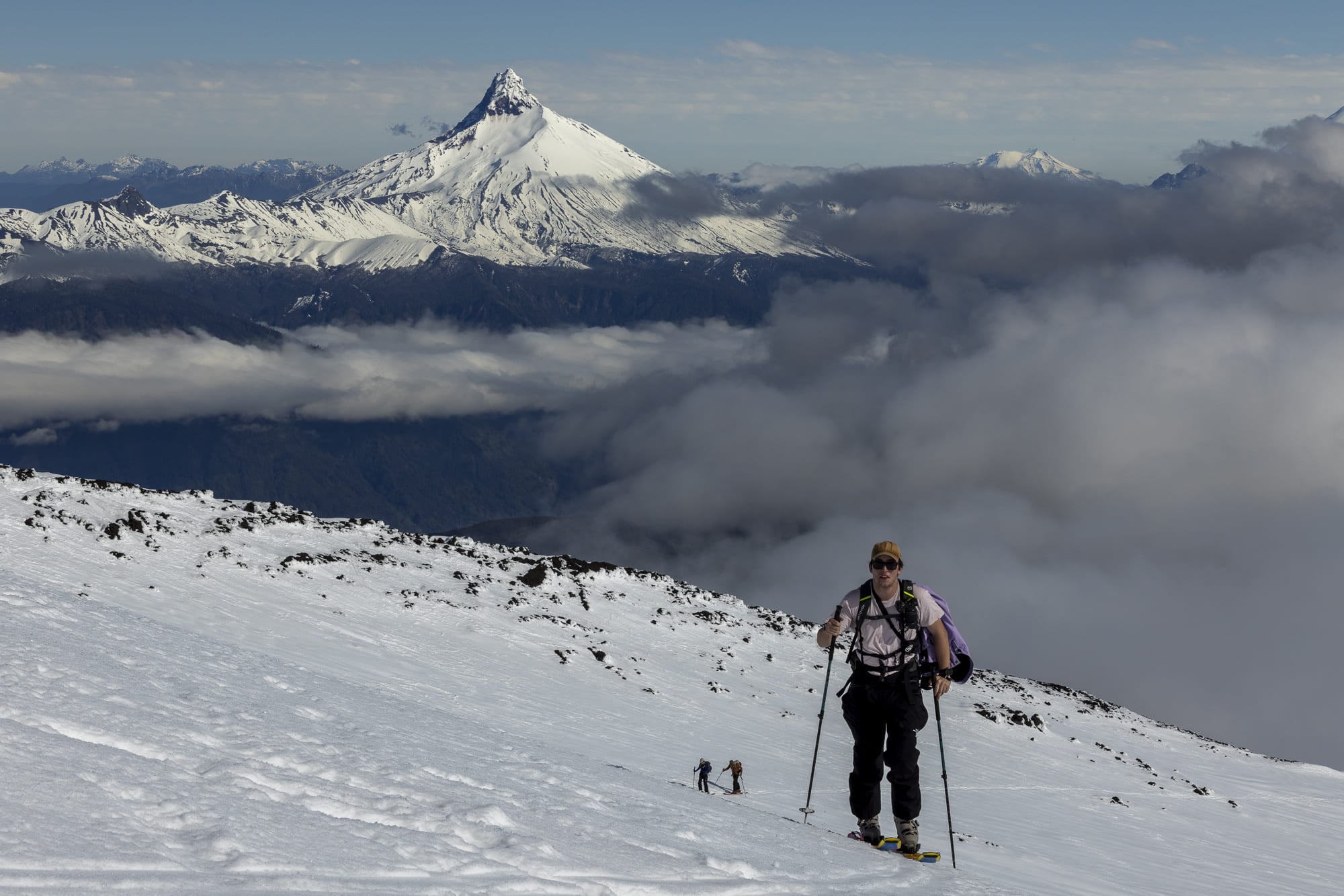
Once we are touring, the uphill side of the day runs somewhere between 600 and 1,200 m (1,969 and 3,937 ft). It depends on conditions, and on whether we are skinning or boot packing. The descents typically run about double that, closer to 1,000 m up (3,281 ft) and 2,000 m down (6,562 ft) on a strong day. We lean hard on the lift system to stack vertical efficiently.
That ratio changes how a day feels. You are not grinding uphill for hours to earn one long run. You are lapping efficiently, banking vertical, and getting into genuinely wild terrain, all without burning your whole day just accessing it.
That efficiency is a big part of why backcountry skiing in Patagonia works so well as a short, focused trip.
The Range of Terrain You Can Actually Ski
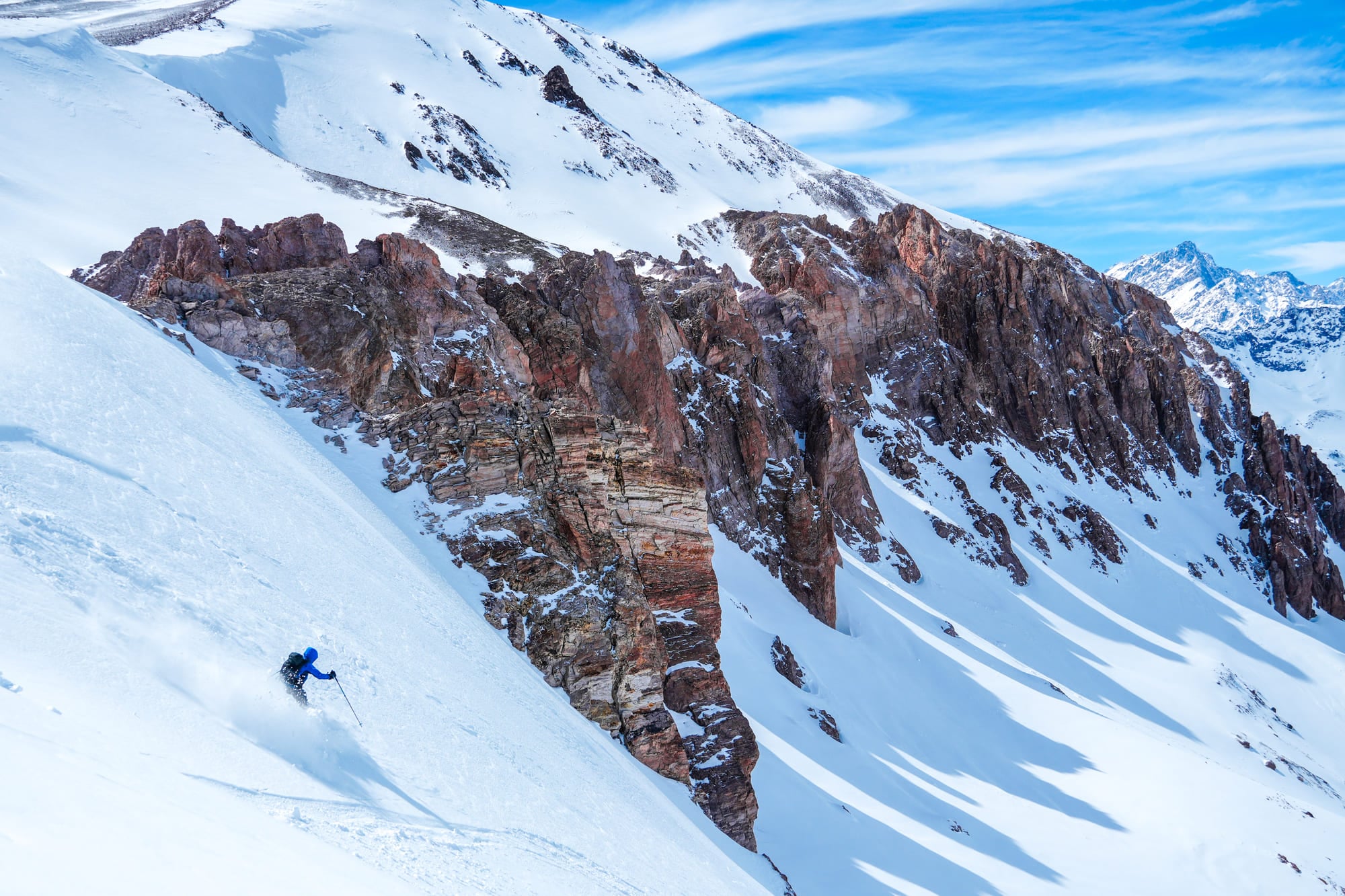
People always ask if Patagonia has anything steep, and it absolutely does. Last season we spent time in terrain running 45 to 50 degrees, narrow lines that would satisfy anyone chasing couloirs. It’s there if you want it.
But that is only one slice of what is available. On the volcanoes, you are picking your line and your aspect, and the terrain can be fairly uniform there since it is one consistent cone. Step off the volcanoes into the other ranges nearby, though, and you find spines, chutes, and a lot more variation.
Both styles are worth skiing, and having both within a short drive of each other is part of what makes backcountry skiing in Patagonia so special.
Skiing out of Cerro Catedral, Bariloche
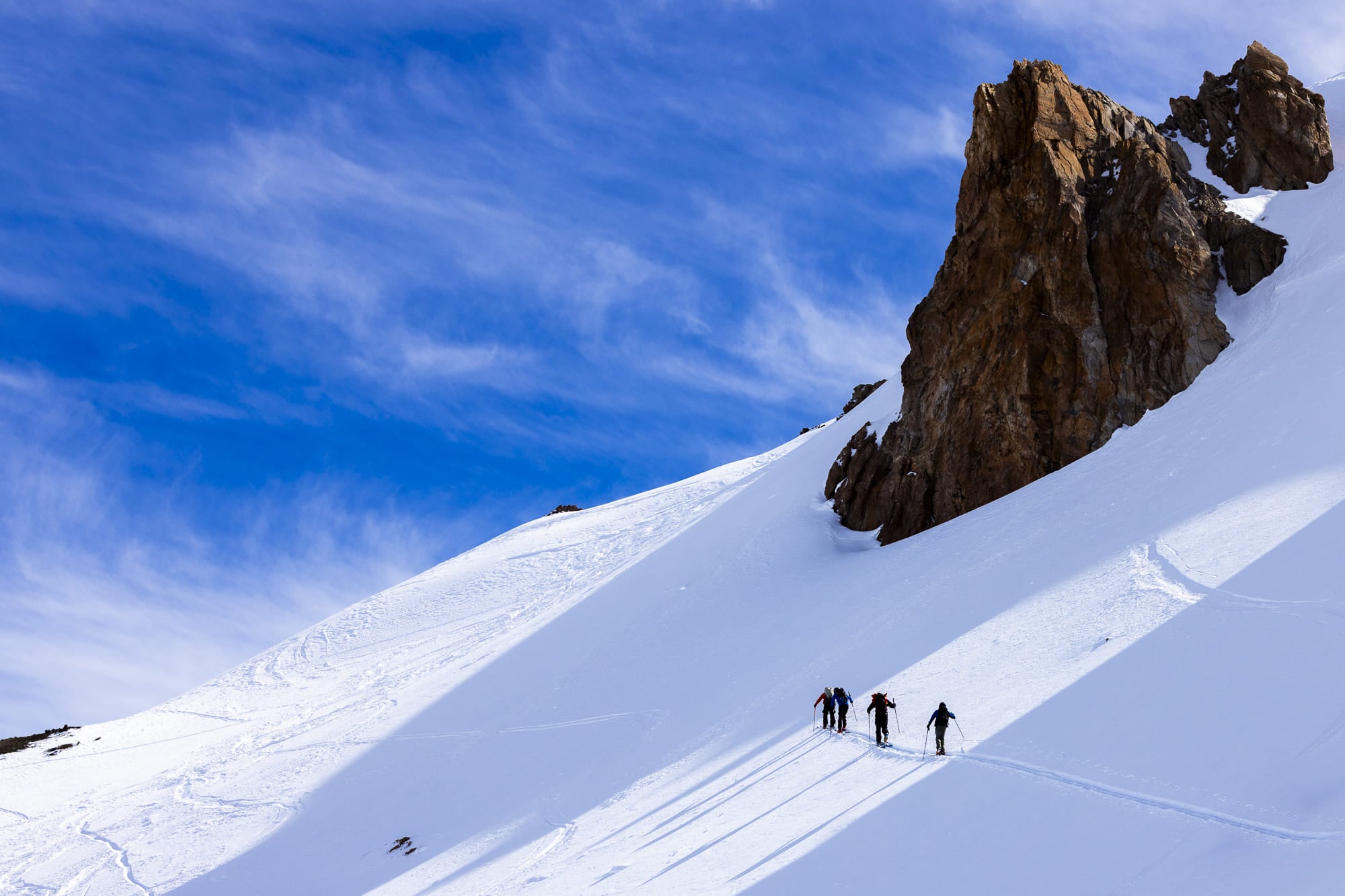
Cerro Catedral is the big, modern resort on the Argentinian side. It is our main base for that half of the trip. From the top of the lifts, you skin a short distance into the backcountry, not far at all.
Some people boot pack it instead. Either way, you are dropping into real lines within minutes of leaving the lift line.
We will drop behind a ridge, ski a line, then climb back up to grab another that puts us back inbounds. Nearly all of this terrain is day-trippable straight from the resort. That means serious backcountry skiing in Patagonia without sacrificing a hot lunch or a warm bed at night.
The hut option: Frey and beyond
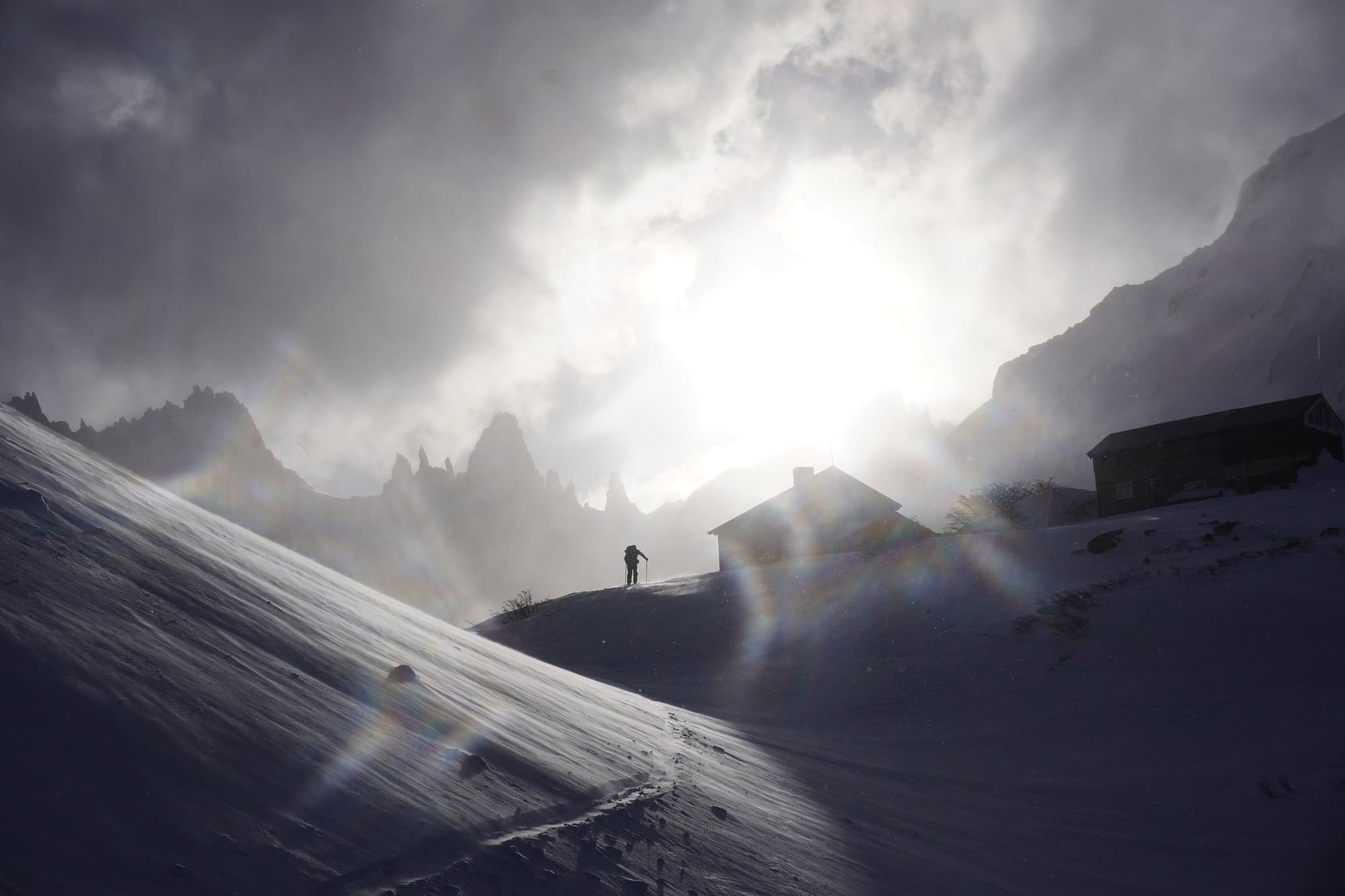
Frey Hut sits above Bariloche and is famous among climbers. It books out a full year in advance for summer, but winter is a different story. Far fewer people know it as a base for hut to hut skiing in Patagonia. The terrain around it, spine lines and open bowls, is excellent.
It runs like a European-style refugio, fully catered with food and a bed waiting for you. It is not quite as polished as its European counterparts, though. It’s more crowded, and the food is fine rather than memorable. Still, it beats carrying your own supplies on your back.
One trip, we bailed out of a hotel and moved into a different, more bare-bones hut early. A major storm was about to shut down the ski hill for avalanche control, so timing mattered, and reading that call correctly is exactly the kind of judgment an IFMGA certification is built around.
That hut usually sleeps 36 people, and we had it almost to ourselves, with only about 8 of us there. Watching the storm roll in from inside, with the whole place essentially empty, was one of the best nights of that trip.

Crossing Into Chile: Antillanca and the Volcano Zone
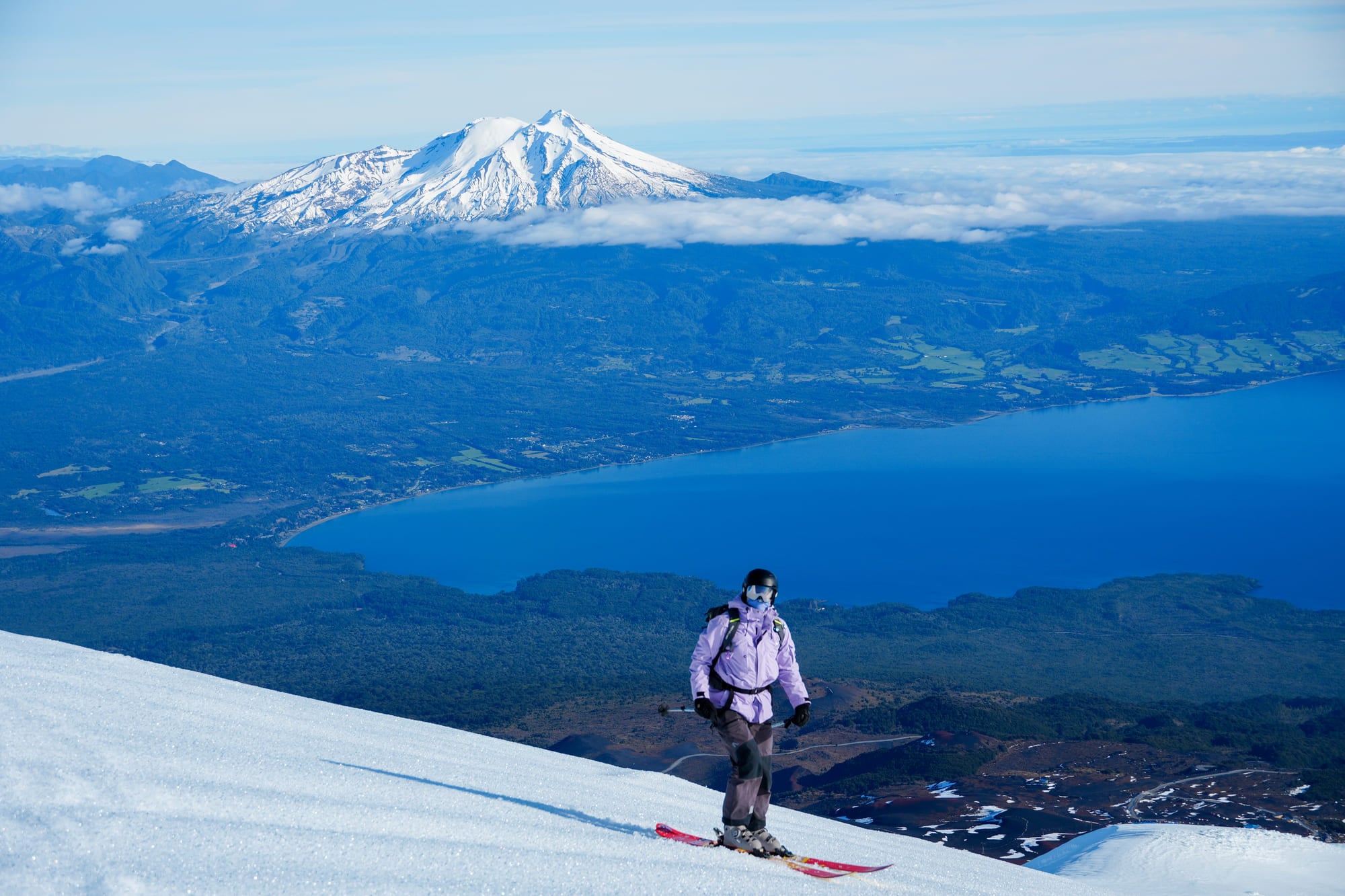
The Chilean side opens up a completely different kind of day. Around Antillanca, you can hire mules to carry your gear roughly an hour and a half up to a hut set just above the treeline. From there, you can ski inside the volcano itself, on a glacier at Puyehue, before riding the mules back down at the end of the day.
It sounds old-fashioned, and it is, in the best way. You spend the day fully focused on the mountain instead of hauling a loaded pack. The terrain up there, glacier travel inside an active volcanic cone, is not something you find on most backcountry skiing in Patagonia itineraries, let alone anywhere else.
Cerro Bayo: the hill almost nobody skis
A friend of mine, a mountain guide based in Bariloche, tipped me off about Cerro Bayo. It is an older resort with older lifts. Mostly Argentinian and Chilean locals show up, and I never once saw anyone from the Northern Hemisphere there.
That tells you something. Backcountry skiing in Patagonia is still under the radar outside this small circle of guides and locals.
The terrain is what people call slack country. You ride the lifts up, traverse out of bounds, ski down, then traverse back in and lap the lift again. It became my favorite stop on that entire backcountry skiing in Patagonia trip.
We actually skied it on our final morning, packed the car, and drove two hours straight to the airport in Bariloche. We made our flight with almost no room to spare. That is how good it was.
The drive between Antillanca and Cerro Bayo runs about two hours in one stretch, and Bariloche backcountry skiing pairs naturally with a Chile-side loop like this. Linking both zones inside a single trip is entirely doable.

Where You Stay Says a Lot About Patagonia
Hotels down here are not just a place to sleep. In Bariloche, we stayed somewhere with a rooftop sauna and hot pools, directly across from an old cemetery you could actually walk through. Some of the tombs had fallen open over the years, and it was strange and memorable in equal measure.
On the Chilean side, the Puyehue Hotel might be the most unusual place I have ever stayed. It is built like an old estate, with 15 swimming pools at different temperatures scattered around the property. Not all of them are heated, and a couple are genuinely cold.
There is even a bowling alley inside, with views out the back that have no business being attached to a bowling alley. It doesn’t feel like a hotel at all.
The food, especially in Argentina
Argentina might be the best place I’ve ever traveled purely for the food. Asado, Argentine barbecue, is everywhere, and it earns its reputation completely. We landed in Bariloche once, checked into our hotel, and the smell of barbecue hit us the second we stepped outside.
Nobody said a word. We just turned and followed it. We ended up eating at that same spot nearly every night of the trip.
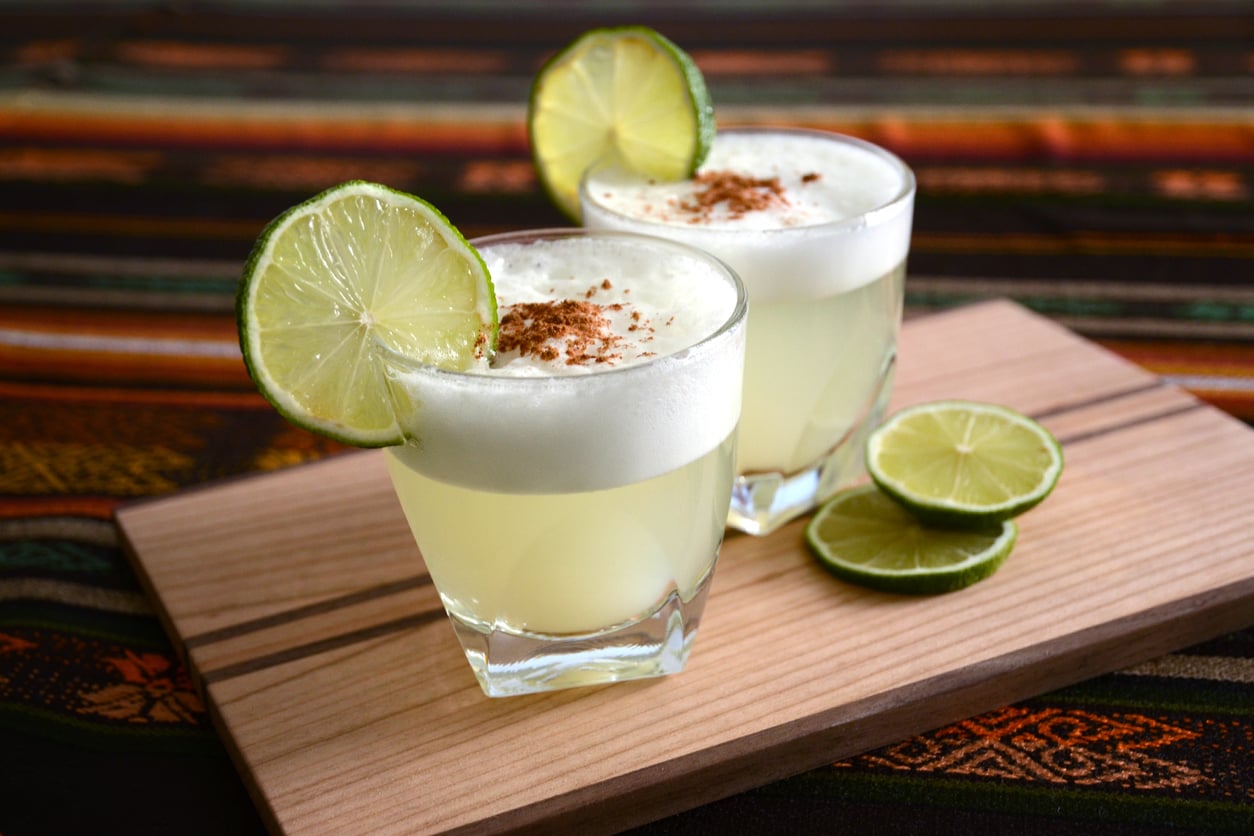
Chile does not quite match that bar, though it is still good. What Chile does have is pisco sours, and we made a habit of one every single day after touring wrapped up. There are worse ways to end a day in the mountains.
One trip, we had to carry over a kilogram of cash into the backcountry huts. Argentina was dealing with a currency inflation issue at the time, and we were not confident every hut would take US dollars. So we traded on the street instead. It felt like something out of another era entirely.
Wildlife You Might Run Into
Patagonia has its own cast of characters up in the mountains.
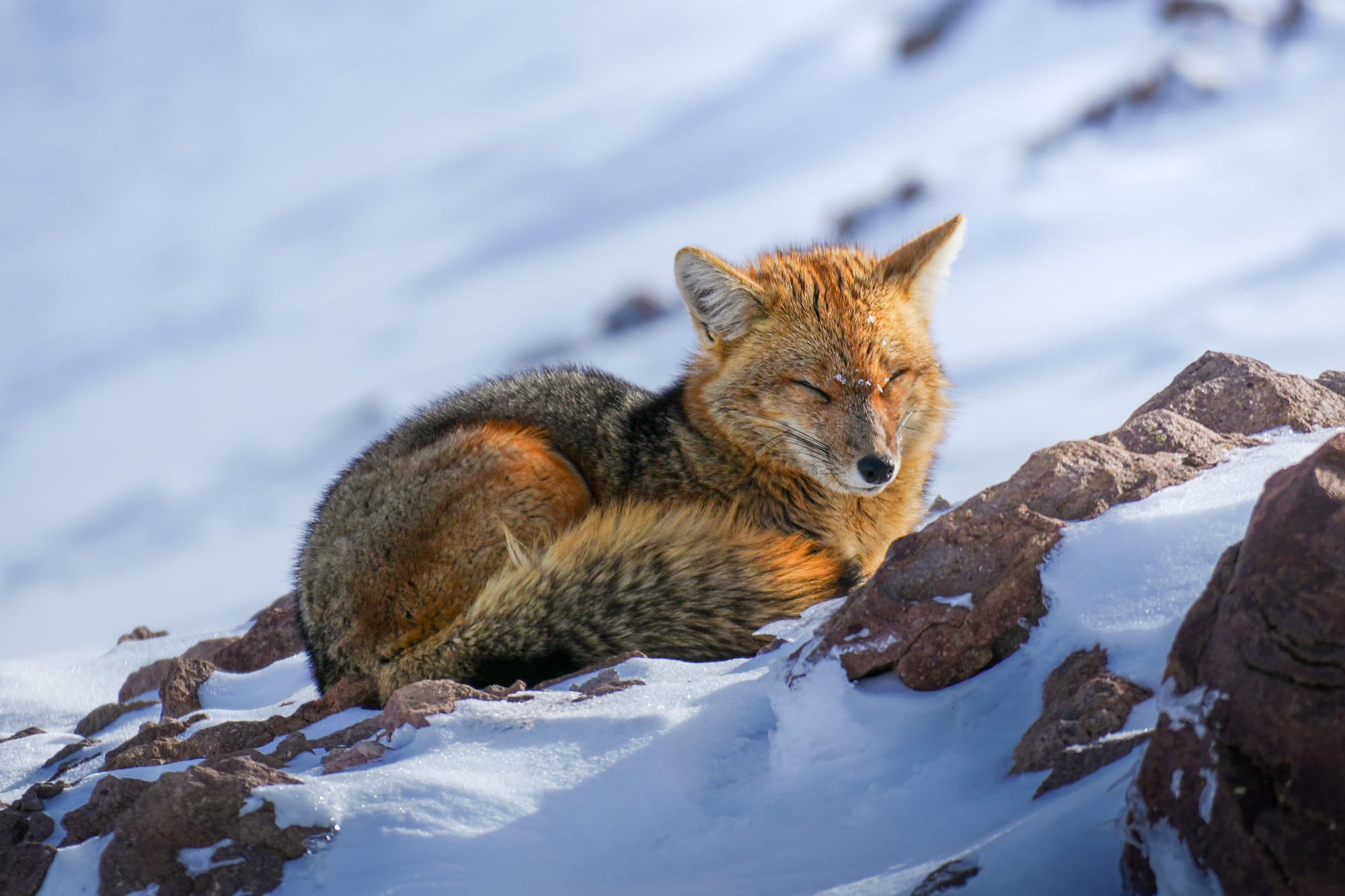
A small fox lived near the top of one of the lifts, and every evening after skiers cleared out, it would work the lift line looking for scraps. We also spotted condors a handful of times, these enormous birds that are far less rare up there than I expected going in.
Neither sighting was staged or guaranteed. That is part of what makes backcountry skiing in Patagonia feel wild in a way a lot of ski destinations do not anymore.

Getting There and What to Expect
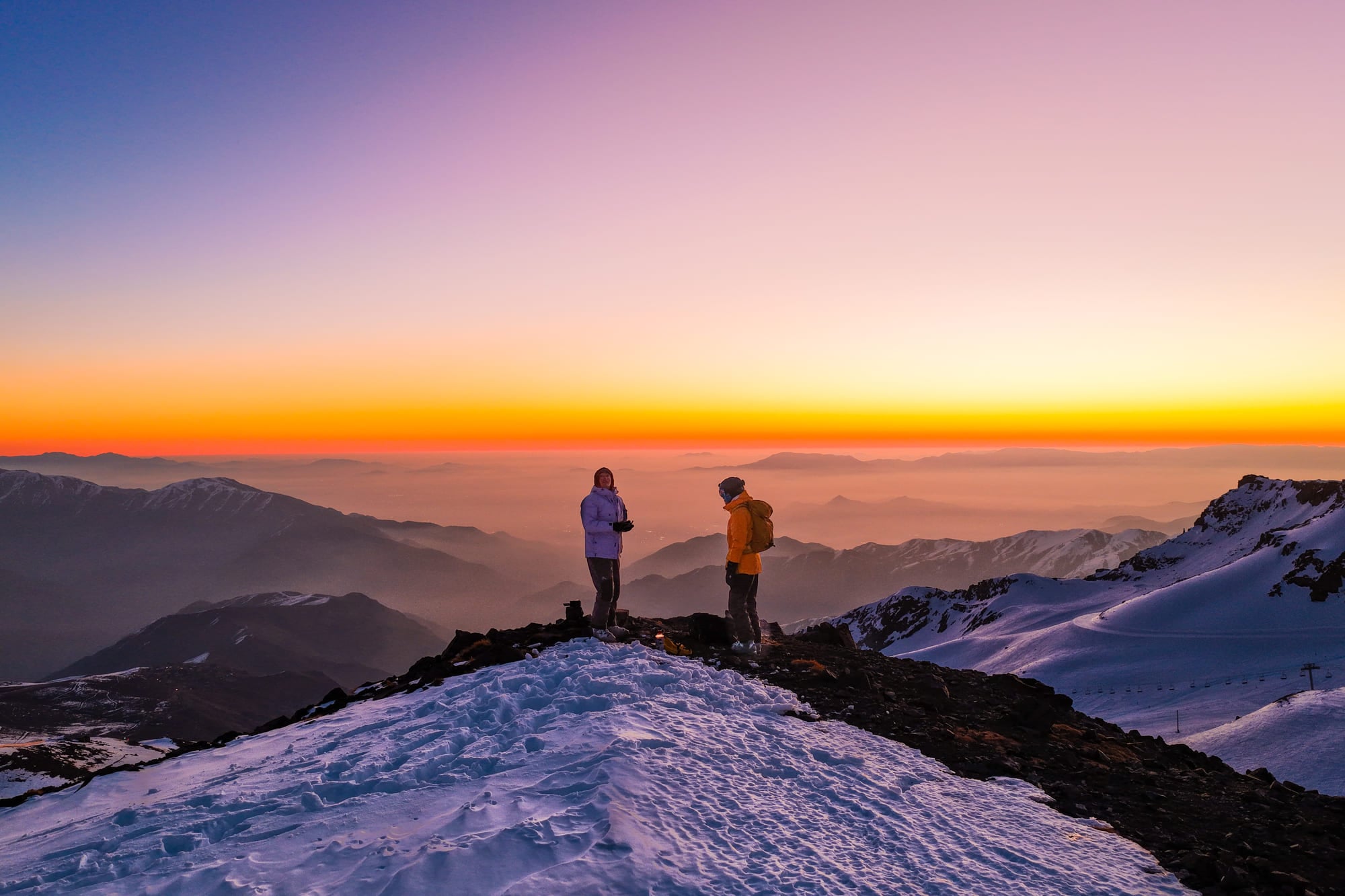
Getting yourself into position for backcountry skiing in Patagonia means flying into Bariloche, Argentina. Some itineraries add a border crossing into Chile. Aim for that late August to early September window I talked about earlier, and build the rest of your trip around it.
Terrain ranges from approachable, mellow bowls to committing 45 to 50 degree couloirs. There is a fit whether you are newer to touring or chasing something steep. You will move between resort-based lodging in Bariloche and backcountry huts like Frey, depending on the itinerary and weather. Bring a sleeping bag for hut nights, and be ready for cash-based transactions in more remote areas.
None of that logistics really captures what pulls me back to backcountry skiing in Patagonia, though. It is the volcanoes rising straight out of lakes, the empty resort at Cerro Bayo, the storm rolling in over a nearly empty hut. It is landing in the middle of your own summer and stepping directly into someone else’s winter, no adjustment period required.
I keep telling people to go ski in the summer. It still surprises me how few of them actually do.
Maybe you’ll be different. Somewhere between the volcanoes and the pisco sours, you’ll stop asking why anyone would ski in Patagonia and start asking why you haven’t yet.