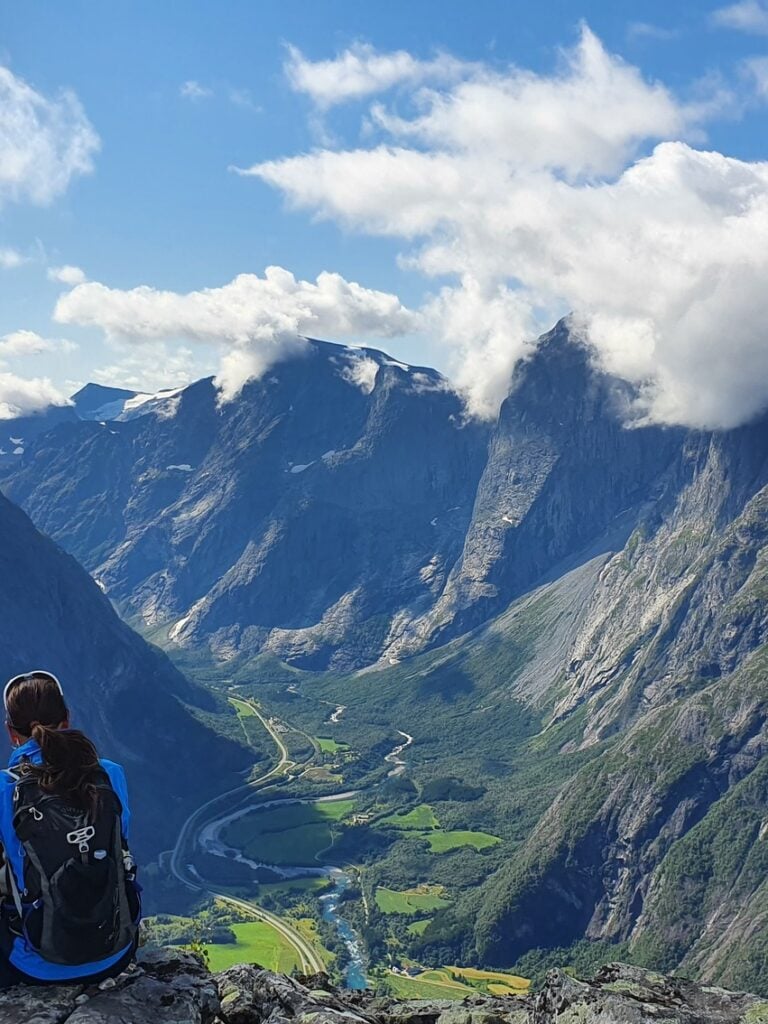

Most people who visit Norway go to Bergen. Smart choice, beautiful city, absolutely worth it. But there is another Norway, quieter and wilder, sitting just far enough off the tourist trail to feel like a secret.
Molde is where I ended up 14 years ago, by accident, in the wrong shoes, with no idea what I was walking into. The mountains here have a habit of catching people off guard, getting under their skin, and refusing to let go. Ask me how I know.
I am a yoga teacher and hiking retreat guide based here now, originally from Estonia, and I have spent many years learning exactly what this place gives to people who slow down long enough to receive it. Morning yoga to prepare the body. Long days on the trails. Restorative sessions in the evening to undo what the mountain did. A rhythm of movement and rest that makes a week here feel like a month, in the best possible way.
While guiding in these mountains, I have learned which trails most visitors never find, which summit has the lake worth jumping into, why the hike everyone skips is the one worth doing, and how a week of moving and resting in the right rhythm can feel like it lasts a month. 14 years in, and these mountains still surprise me.
What follows is 14 years of insider knowledge about a corner of Norway that most travelers never even consider. You are already ahead of the crowd.
Why Molde Makes the Perfect Norway Yoga Retreat Base
A city most travelers skip, and why that matters
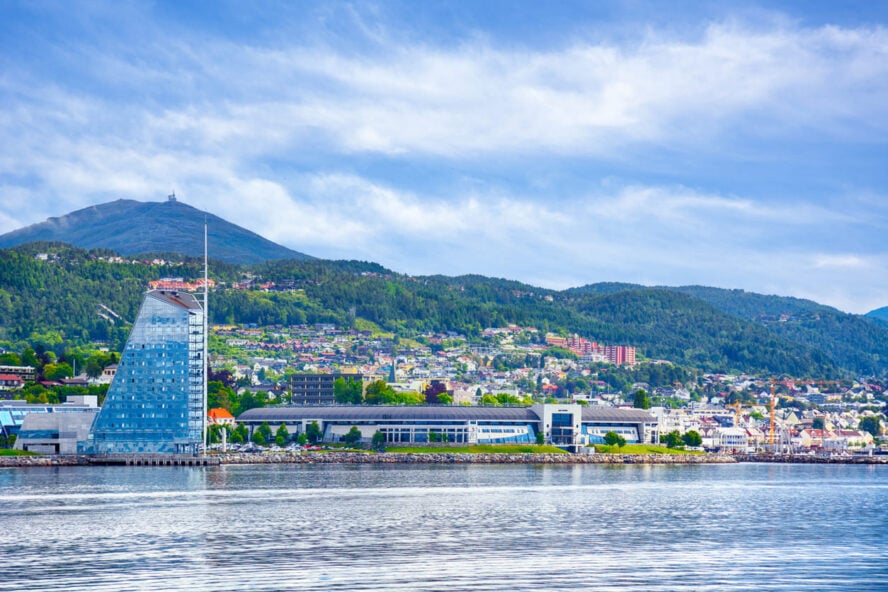
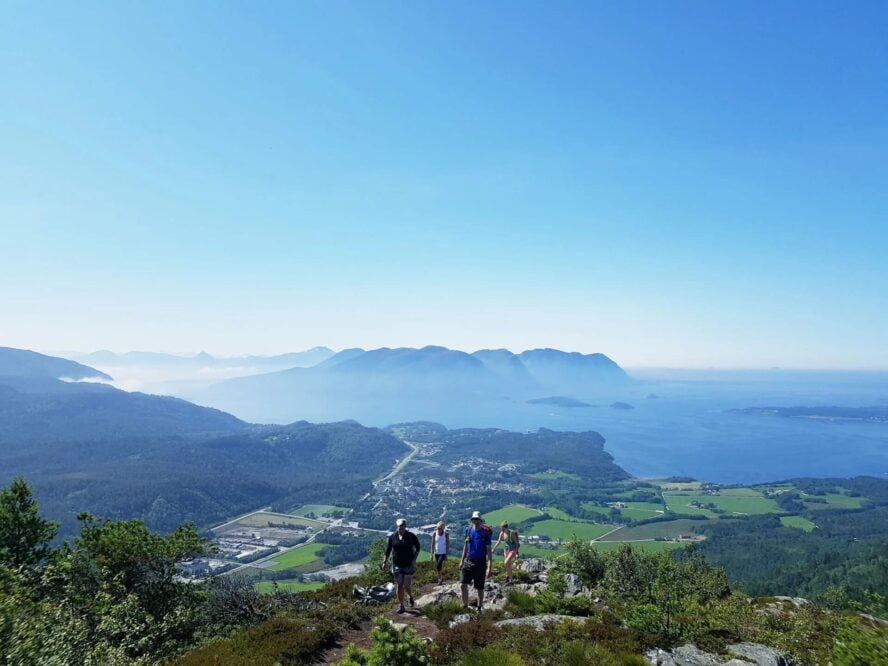
From the city center, you can walk roughly 3 mi (5 km) uphill through forest and reach the summit of Varden, with its panoramic sweep over the fjord and the jagged peaks beyond. My front door is about 1.2 mi (2 km) from that trailhead. In winter, skis go on at the doorstep. Every Norwegian, the joke goes, owns at least five pairs of skis. After 14 years here, I have managed three pairs and a snowboard, which feels like acceptable progress.
The city itself is peaceful in a genuine way. Roses bloom here into October and November, earning Molde its nickname, the city of roses. Every summer, an international jazz festival fills the streets. Otherwise, the place belongs to the mountains and the water, which is exactly the right balance for a yoga retreat.
The landscape that shaped everything
Norway stretches roughly 1,087 mi (1,750 km) from south to north, and most of the country borders the Atlantic. Here in the west, every valley faces water. The fjords were carved by glaciers during the last ice age. When the ice retreated, the sea filled those deep valleys, and the result is what you see from almost every summit here: still water below, rock above, the two meeting in a way that feels almost designed.
Norway this far north means summers of extraordinary light. May and June are the brightest months, when the sky barely darkens at all. The hotels have dark curtains, but an eye mask is worth packing anyway. So is the willingness to stay up too late just to watch the light.
What Are the Best Hiking Trails in Norway Near Molde?
Sjurvarden: the Atlantic Road from above
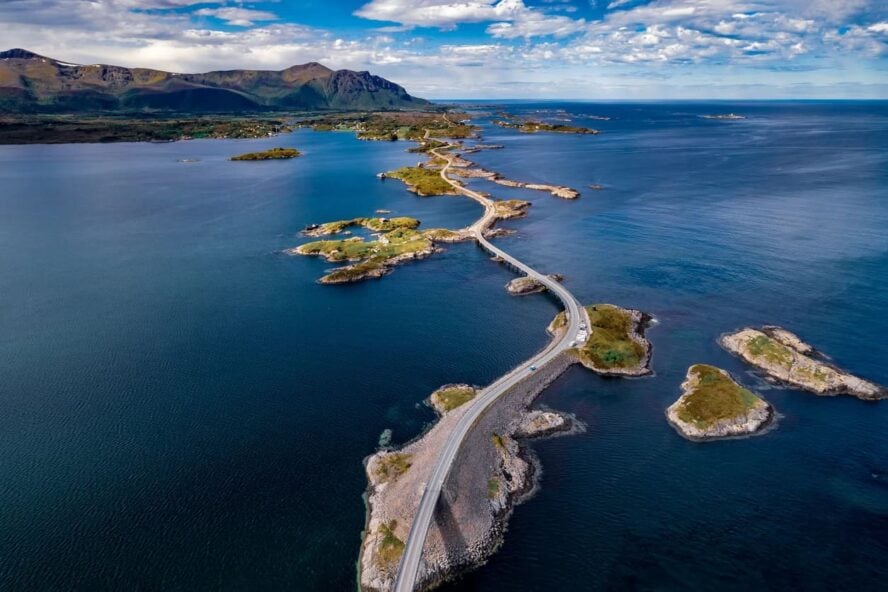
Most people drive the Atlantic Road. It cuts across seven small islands through the open Atlantic, connected by bridges that look like they belong in a film. Both James Bond and Mission Impossible have used it as a backdrop, and from a car window it is undeniably dramatic. But driving it and seeing it from above are two completely different experiences.
One thing worth knowing: Sjurvarden is a genuine local secret. No tourist buses, no crowds. The only visitors you will find on this trail are locals and the occasional small group I bring here. That is not an accident. I intend to keep it that way.
The Sjurvarden hike is roughly 4 to 5 mi (6 to 8 km) depending on the route, and it ends at a viewpoint where the road, the islands, and the ocean spread out below you. Halfway up there is an old stone shelter, built to protect hikers from sudden weather.

A volunteer yoga teacher from Canada once came on this retreat and fell so completely in love with that stone house that he decided to sleep there overnight. That story has more chapters to it, all of them worth hearing. I save the full version for the trail.
The hike adapts well to different paces. People who want to push can loop over two summits. Those who prefer something steadier can aim for one top or turn around at the shelter. The view is generous regardless of how far you go.
Troll Church: caves, waterfalls, and a narrow passage
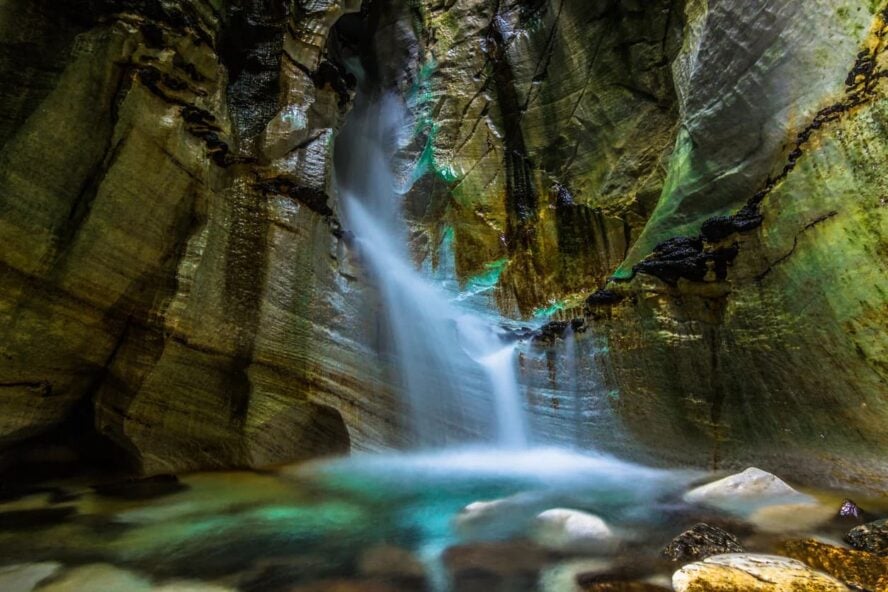
The name is misleading. There is no church. What you find instead is a series of limestone caves set into a steep mountain, threaded through with ice-cold water and lit by the strange filtered light that comes through rock. The trail begins in what I always call a Troll forest: ancient, moss-covered trunks, twisted roots, deep quiet. You walk alongside moving water almost the entire way, and the sound of it carries you up.
One cave is so narrow that a full waterfall pours through it. You can walk back out the way you came, or climb out through a small hole in the rock. The other cave is a little more forgiving, with a ladder to help you in and better light. Both are cold, both are extraordinary, and both require a willingness to get slightly wet and completely absorbed.
With smaller groups on this Norway yoga retreat, I sometimes continue past the caves and over the mountain ridge. The views up there stretch far beyond what the lower trail shows. I always lay out every option before we leave in the morning. Nobody gets pushed into anything, and nobody gets surprised.
Litlefjellet: minimal effort, maximum outcome
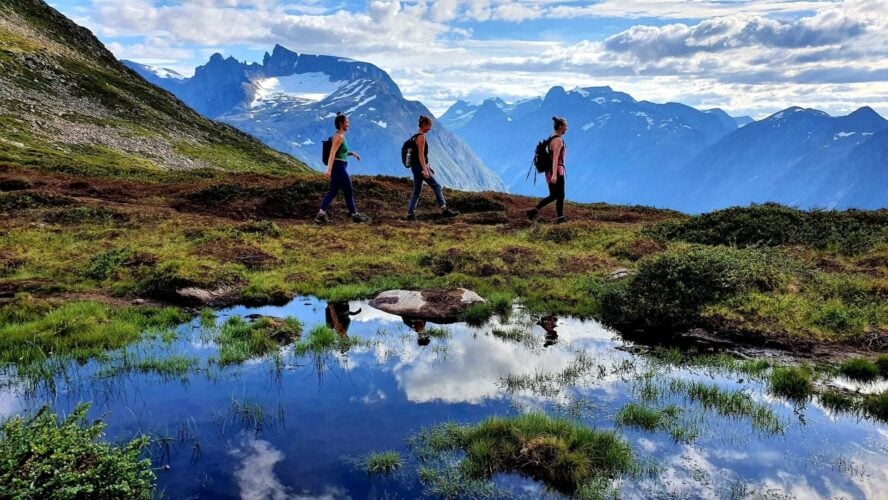
Short and steep, about 20 minutes of real climbing, and at the top you are standing in front of the Troll Wall with nothing between you and those rugged peaks. My granddaughter walked this trail when she was eight years old without any difficulty. That is not to say it requires no effort, just that the effort and the reward are in rare balance here.
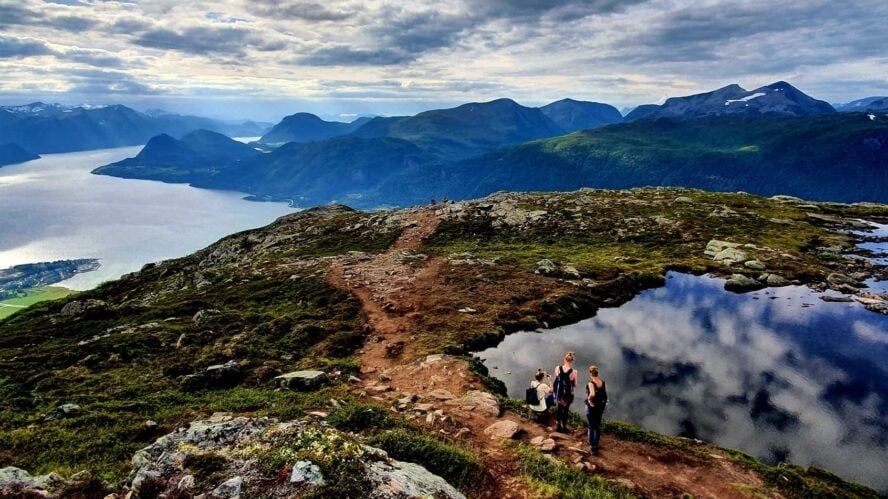
The summit has small mountain lakes that sit completely still. When I lead meditation sessions up there, I describe the mind working toward that same quality: quiet, reflecting only what is actually present. It is easier to understand stillness when you are looking at it.
The Troll Ladder
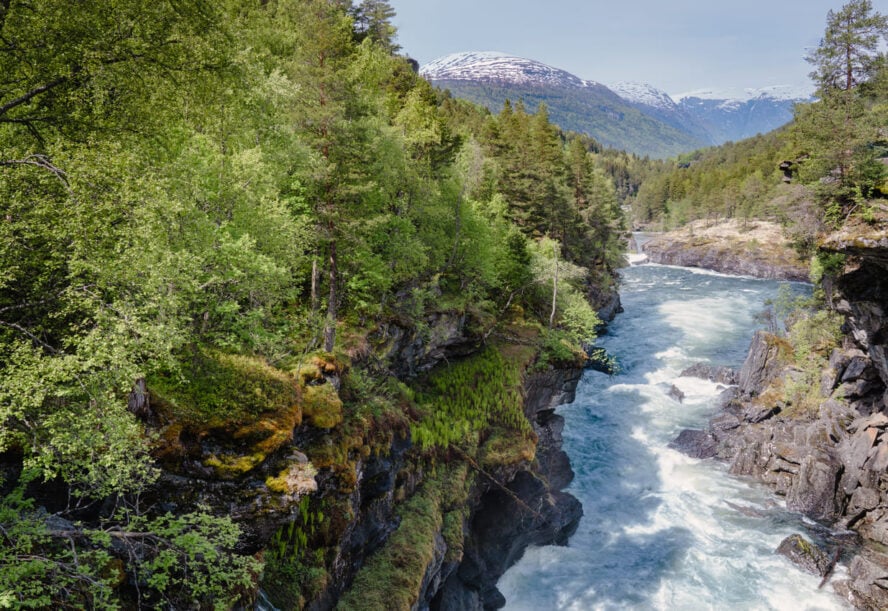
If there is one experience near Molde I take every group to, it is Kløvstigen and the Trollstigen road. This is not a quick detour. It involves a 30-minute ferry ride and about 1.5 to 2 hours of driving one way, which tells you everything about how far into the mountains you are going.
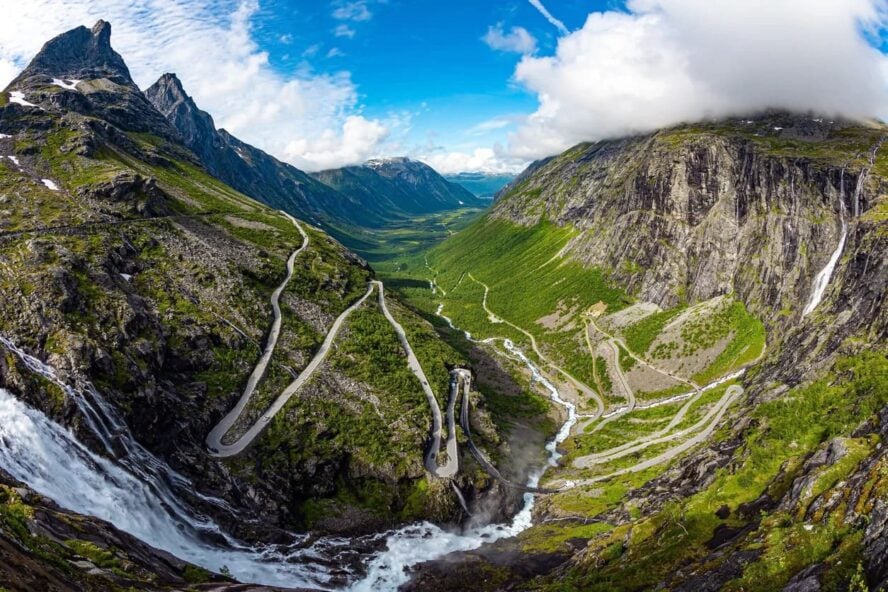
Trollstigen, the Troll Ladder, is a serpentine road of eleven hairpin bends climbing straight up the mountain face, waterfalls cascading alongside. Most people drive it. A few hike it. I prefer to walk.
A bridge from 1930 crosses one of the falls, and inside the small cafe at the top are old photographs documenting how the road was built entirely without machinery. Every pin in the railing has a worker’s name stamped into it. Most names are nearly impossible for non-Norwegians to pronounce, which is part of the fun.
Where is the Troll Wall in Norway?
Trollveggen, the Troll Wall, stands in the Romsdalen valley in Møre og Romsdal county, about an hour’s drive from Molde. It is the tallest vertical rock face in Europe, roughly 3,600 ft (1,100 m) from base to summit. Most visitors stop at the road pullout and look straight up. The wall is impressive from there, and the jagged peaks above it look almost too dramatic to be real.
Most visitors stop at the road pullout and look straight up. From Litlefjellet, directly across the valley, you get the full picture: the wall rising 3,600 ft (1,100 m) from the valley floor, the jagged Trolltindane peaks above, and the Romsdalen valley spread below you. That is the view worth hiking for.
How Yoga and Hiking Work Together on a Norway yoga retreat
Morning sessions that prepare the body for the mountain
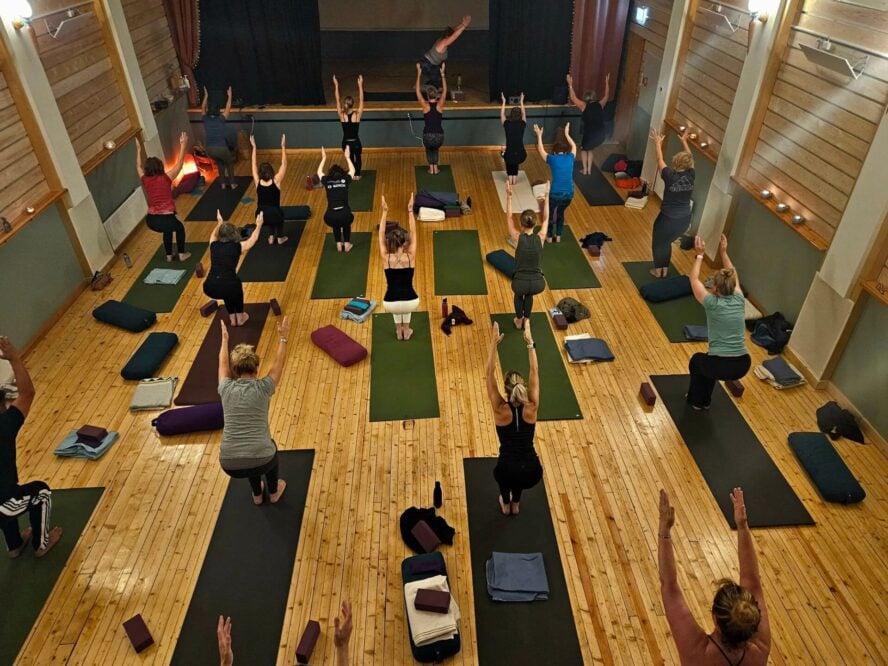
Every day of the Norway yoga retreat begins with movement before the trail. Vinyasa yoga and pranayama breathing exercises, designed to wake up the joints, open the hips, and bring some warmth into the spine. The goal is not to tire anyone out before the hike. It is to prepare the body so that climbing and descending feel natural rather than shocking.
Most guests arrive from cities. Long days outdoors are not their default mode, and the body notices. The morning yoga sessions bridge that gap. For those who already practice regularly, it is a chance to deepen and refine. For complete beginners, it is simply a place to start. The only instruction I consistently give is this: listen to your body, not to me. I offer options. What you do with them is yours.
The story behind mountain-top meditation
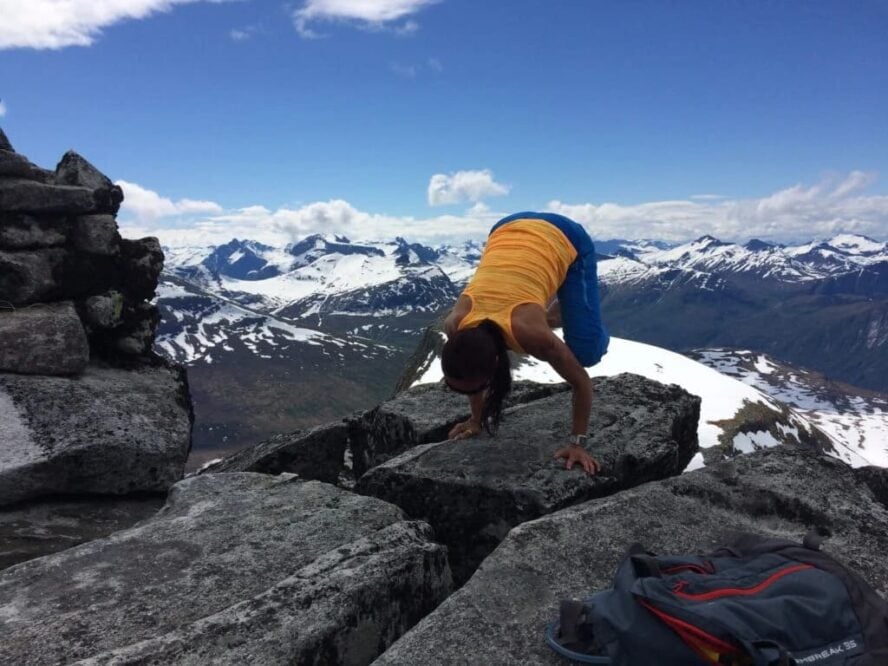
One afternoon on a solo hike to Jendemsfjellet, a summit close to Molde with views that genuinely stop you in place, I set up my camera and filmed a short meditation. The light was good, the lake below was still, and it felt worth sharing. The video went up on YouTube. Nobody watched it. Or so I thought.
Then a message arrived from a woman in India. She had been meditating along with the video, she said, and could not quite believe the place in it was real. It looked like a painting. She eventually booked a flight, joined a retreat, and on the first day asked specifically to go to that summit.
Standing there, she said almost nothing for a long time. She did not need to.
That is the kind of moment this Norway yoga retreat is built around. Not the Instagram version of it. The actual standing-in-a-place-that-changes-you version.
Restorative yoga when the day is done
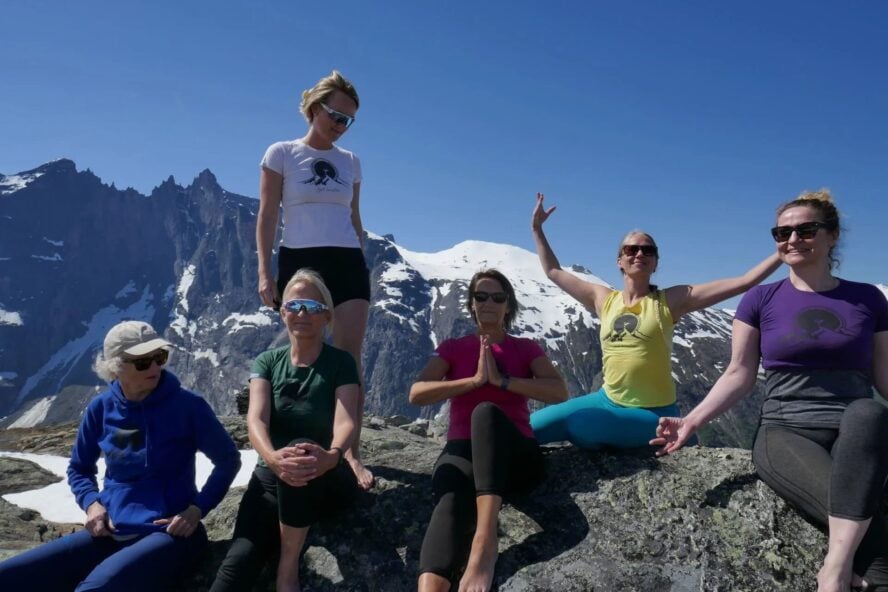
At the end of each hiking day, we do restorative yoga. This is where the body gets to undo what the trail did to it. Shoulders pull forward under a pack all day. Hips tighten on long climbs. Lower back and knees feel the descents. Restorative practice uses props, blocks, straps, eye pillows, and blankets, to allow the muscles to release completely rather than simply stop working.

People fall asleep during these sessions regularly. That is not a problem. It means the nervous system is finally receiving the rest it was asking for. For anyone looking for yoga holidays in Norway, the difference is exactly this: a week that challenges the body and actually restores it too.
When to go hiking in Norway
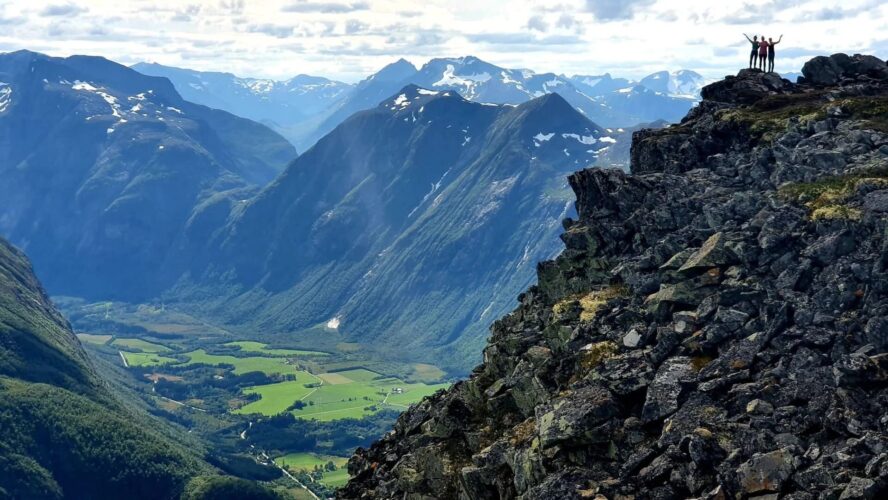
May through September is the sweet spot for a Norway trekking tour from Molde. May and early June are arguably the most beautiful months: snow still covers the highest peaks, everything below is intensely green, and every tree and flower is in full bloom. The contrast between the white summits and the valley colors is something else entirely. August is my next choice for reliable weather.
The hillsides fill with wildflowers, and berries appear on every trail: blueberries, strawberries, whatever is in season. Guests are strongly encouraged to stop and eat as many as they can manage.
Norwegian mountain weather moves fast, and clarity about this matters. A morning that starts in sunshine can turn to fog and rain by midday. This is not unusual, and it is not a reason to stay on flat ground.
The right layers make it manageable, and the reward for pushing through a grey stretch is something a clear day cannot offer. When the sky opens up after an hour of fog and suddenly you have that view over the fjords and mountains, the appreciation is something else entirely. The contrast earns it.
What to wear hiking in Norway
Layering is the whole system
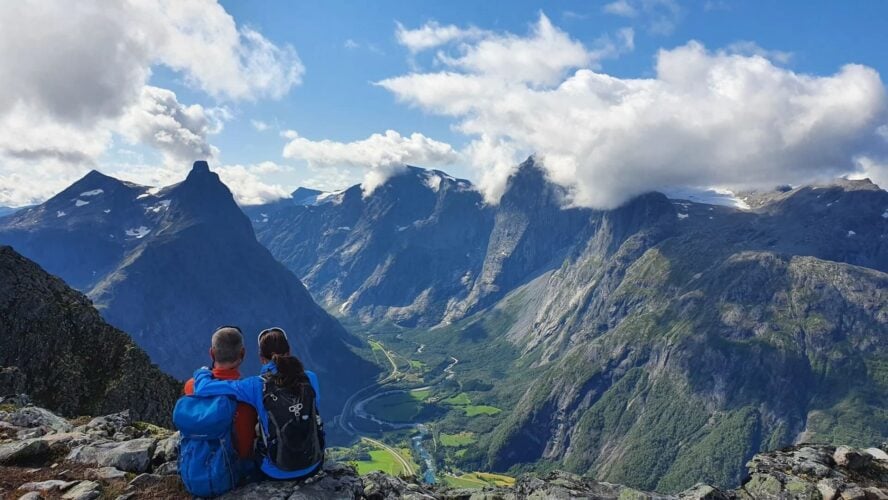
After 14 years on these trails, the gear mistakes all look the same. Someone arrives in a single heavy jacket that cannot be packed away when they overheat on the climb. Someone else wears cotton, which stays wet. The Norwegian approach is worth learning: everything is light, everything compresses, and there are always at least three layers.
Start with a base layer that wicks and dries quickly, either synthetic or merino wool. Over that, a warm mid-layer for the summit and the stops. Over that, a wind and waterproof shell that can go into the top of the pack when the sun comes out. You will cycle through this combination many times in a single day, which is normal and expected.
Boots, packs, and a few things people forget
Hiking boots must be broken in before the retreat begins. New boots on long trails produce blisters, and blisters change the entire experience. Lightweight, water-resistant, good grip, quick-drying: those are the four qualities worth prioritizing. A daypack of around 13 to 19 L (20 to 30 L) is sufficient for layers, lunch, water, and personal items.
Hiking poles are worth bringing for anyone with knee concerns or uneven balance, especially on descents. A sleep mask is worth packing for the midnight light.
A swim kit is worth packing because the cold mountain lakes are one of the best things on offer, and nobody who has jumped into one has ever wished they had not. The water is cold. The feeling afterward is very much worth it.
Most guests end up hiking in their yoga pants on warmer days, with waterproof trousers ready to layer over the top when the weather turns. It is a practical system and saves packing space.
Where to stay in Norway for hiking
The Norway yoga retreat is based at two 4-star hotels in the center of Molde, close to each other and close to the fjord. Both offer single and double rooms. Single rooms are compact with private bathrooms. Double rooms work well for guests traveling with a partner, friend, or family member who want more space.
Breakfast is a generous buffet, and each morning I provide a box so guests can build their own trail lunch from whatever appeals to them. There is always more than enough. Norwegian seafood features heavily at dinner, and it is among the best in the world. The vegetarian options are equally considered, reflecting the yogic philosophy running through the retreat.
Getting between the hotels and the trailheads is handled. There is no need for a car, and the town is easily walkable. The city park has a beautiful wooden-floored outdoor space where, when the first real sun of the season arrives, nobody wants to practice yoga indoors anymore.
Who comes on a Norway yoga retreat
What kind of trails to expect
These are not walking paths. The trails here are rocky, uneven, and completely wild. No gravel, no asphalt, no safety fences. You will use your hands to pull yourself up in places. You will get dirty. Some sections will give you a small tickle of nerves, and that is entirely normal.
People with a slight fear of heights manage well. Those with moderate or strong fear of heights should consider that before booking. There is an important difference between walking and hiking, and this is a hiking retreat.
Age range, group dynamics, and what actually matters
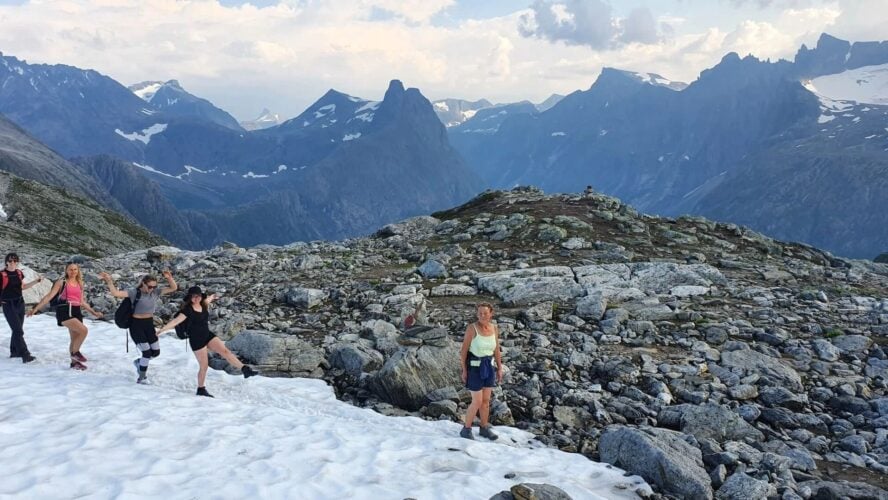
Guests on this Norway yoga retreat have ranged from 20 to 73 years old. Most fall between 35 and 55. About 95 percent are women, though men are genuinely welcome, and the only real requirement is an open mind.
Fitness level is secondary. Prior yoga experience is not required. What matters is the willingness to try, to be present, and to keep moving even when the trail asks more than expected.
About 90 percent of guests travel solo. At the start of every retreat, I ask everyone to sign a self-responsibility declaration. It covers mindful hiking and one rule I care about especially: no apologizing for your natural walking pace. You move at the speed you move. That is enough.
On the trail, groups divide naturally. People who want to cover ground quickly go ahead. I stay with the slower group. At certain junctions, the two groups split completely and meet again at the summit. No one is held back, and no one is left behind. It is a simple system and it has worked every time.
The friendships that outlast the Norway yoga retreat
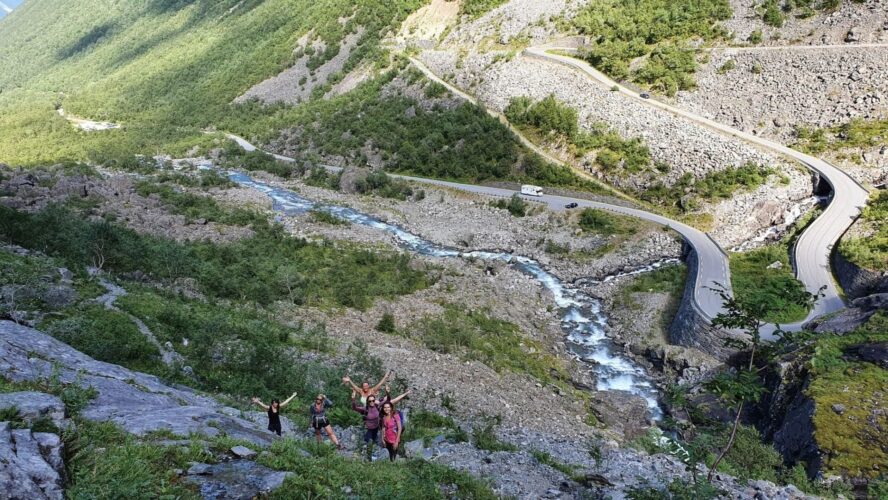
Three women came from London once, all strangers before the Norway yoga retreat. They kept in touch afterward, traveled to new countries together, and started hiking regularly. That group photo from 2018 still comes to mind when I think about what this kind of trip can actually do.
There was also the woman from coastal Thailand who came on a retreat and, after it ended, stayed in contact for years. When she invited me to visit, I went, and we hiked together near her home. That is not something you plan. It is just what happens when people spend real time together in places that ask something of them.
The summit books on Norwegian mountains have a tradition behind them. At the top of almost every peak, there is a small metal box with a pen and a register inside. Every person who completes the climb adds their name.
One guest, a woman visiting from America, signed the book and looked up with complete sincerity: “I am so glad Norway wants my autograph.” It is still one of the best things I have heard on a mountain top.
Molde might steal your heart too
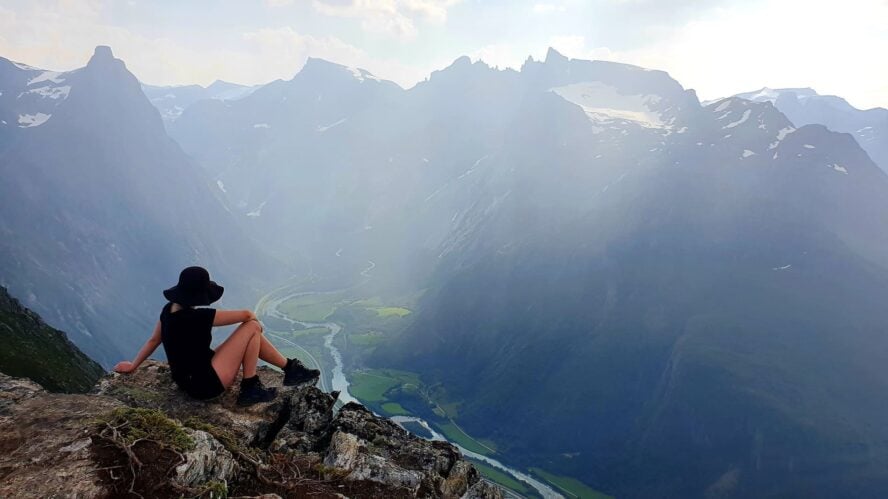
What stays with people after walking holidays in Norway is not usually what they expected. Not the summit photo, though that is a good one. It’s the quiet on the way up. The cold shock of the mountain lake. The sensation at the end of a restorative session when the body finally, fully releases. The moment when the fog breaks and the fjord opens below you and something shifts that is genuinely hard to name.
These mountains do not ease you in. They ask for presence. Yoga is what makes it land differently: it prepares the body in the morning and restores it in the evening, so everything in between goes deeper than it otherwise would. Most guests arrive tired and overscheduled. They leave quieter, in the best possible sense.
Most people go to Bergen. Some find Molde. A few make it all the way to the Lofoten Islands. The Norwegians have a word, friluftsliv, for the kind of joy that only comes from being outside in nature. Molde is where I finally understood what it meant.