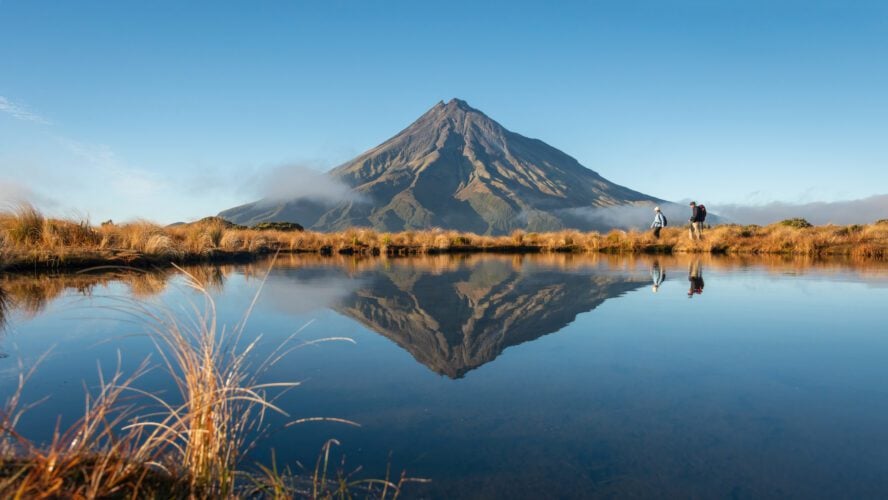
I grew up hiking in New Zealand, which means I learned early that the land here doesn’t ease you in.
One moment you’re walking through soft farmland light, the next you’re swallowed by rainforest, and an hour later you’re stepping across a cold river beneath peaks streaked with ice.
I learned most of that the hard way, usually soaked to the knees, watching the weather turn while someone asked if this was “normal” for New Zealand. The changes come fast, and they don’t ask if you’re ready.
Weather rolls in off the ocean without warning, valleys funnel wind and rain, and forests feel so old they seem to breathe on their own.
Hiking New Zealand isn’t about chasing views. It’s about learning how to move with a landscape that’s still very much alive.
The first real lesson New Zealand teaches you usually comes early, somewhere between the car park and the first river crossing, when you realize this place is going to set the rules, whether you like it or not.
Understanding Aotearoa: Hiking Through Living History
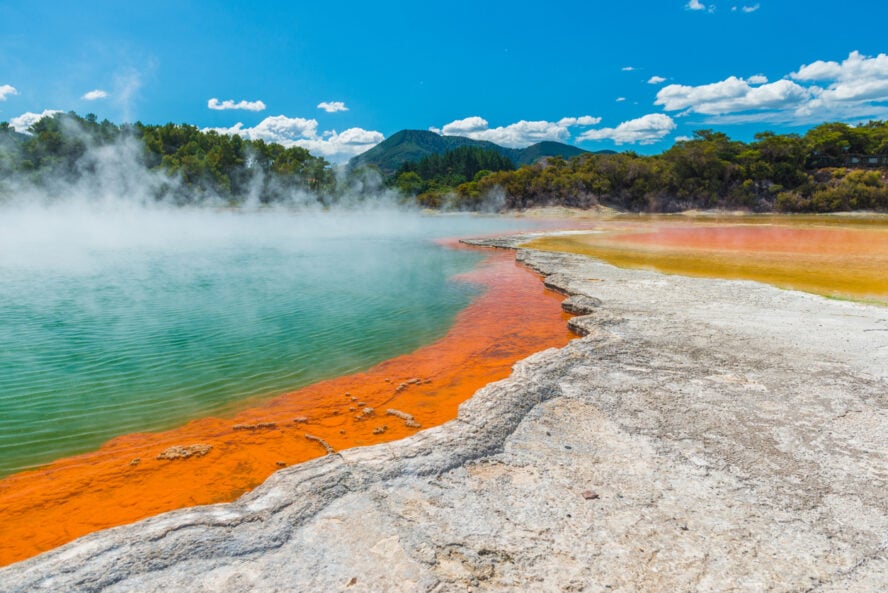
Hiking in New Zealand means walking through a landscape that carries names, stories, and meaning far older than the tracks themselves. Many of the places hikers know by their English names also have Māori names that describe the land in a more literal, grounded way.
Aotearoa, the Māori name for New Zealand, translates to “the land of the long white cloud,” a reference to the cloud formations Polynesian navigators used to locate land long before maps existed.
You’ll see this dual naming across the country, from Aoraki Mount Cook to Te Waipounamu, the Māori name for the South Island, meaning “the waters of greenstone.”

Understanding these names changes how you experience the walk.
Mountains stop feeling like static backdrops.
Rivers feel less like obstacles and more like living systems that deserve patience and respect.
When guiding, I often see people slow down once they realize they’re not just passing through scenery, but through a place with deep roots and ongoing cultural significance.
Where Is the Best Hiking in New Zealand?
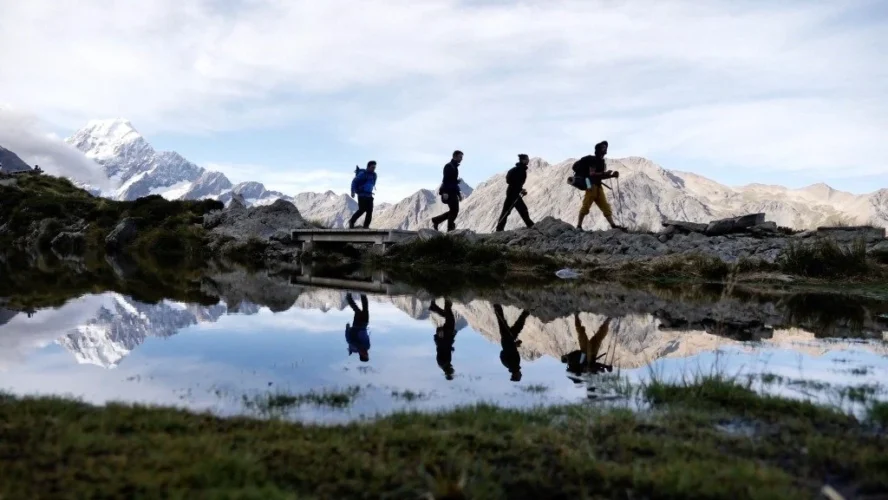
People often ask me where the best hiking in New Zealand is, and the honest answer is that it depends on what kind of experience you’re after. But for first-time visitors, the South Island tends to deliver the strongest sense of contrast.
The Southern Alps run the length of the island, forming what we call the Main Divide. When I’m planning trips, I always start by asking which side of the Divide we’ll be on that day, because that single choice often matters more than the exact track.
Two Landscapes Shaped by the Same Mountains
West of that divide is wet, rugged, and densely forested. East of it is drier, more open, and defined by wide valleys and big glaciated peaks. That sharp transition is one of the things that makes hiking New Zealand so distinctive.
On the West Coast, you’re moving through lush rainforest, limestone gorges, and river valleys where the bush presses in close. Fox and Franz Josef glaciers descend right into the forest here, a sight that catches almost everyone off guard the first time they see it.


Cross the divide, and everything opens up.
Braided rivers spread across valley floors, tussock grasslands roll toward the horizon, and peaks rise sharply behind them. Places like Aoraki Mount Cook, Mount Aspiring, and Arthur’s Pass sit right in this meeting zone, which is why they’re some of my favorite areas to guide.
The biggest mistake people make is trying to cover too much ground. Hiking New Zealand rewards depth over distance. Pick a region, give it time, and let the landscape unfold naturally.
Once you understand the lay of the land, choosing the right tracks becomes much easier.
What Are the Best Hiking Trails in New Zealand?
New Zealand has thousands of tracks, and while the Great Walks get most of the attention, the real character of New Zealand hiking trails reveals itself once you spend time on the ground, moving between coast, forest, and high alpine terrain.
Some of the most memorable days I’ve had guiding have been on lesser-known routes that don’t show up on every itinerary.
In no specific order, here are my favorite hiking destinations in New Zealand:
1) Abel Tasman National Park
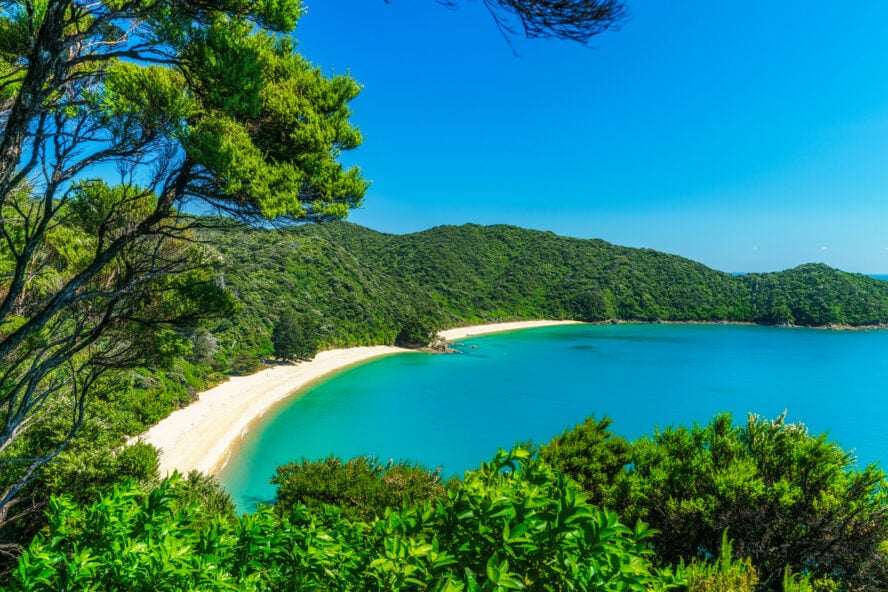
Abel Tasman is often where people begin, and for good reason. It’s one of the more approachable places for hiking in New Zealand, thanks to water taxis that let you choose which sections of the coastal track you want to walk.
The trail moves from bay to bay, climbing gently over headlands and crossing tidal estuaries.
Golden sand beaches line the route, and it’s one of the few places in the South Island where you’ll regularly kick your boots off and walk barefoot through the sand.
Tides shape the day here, sometimes rising five to seven meters, which adds a natural rhythm to the walk and reminds you not everything runs on a fixed schedule.
2) Paparoa National Park
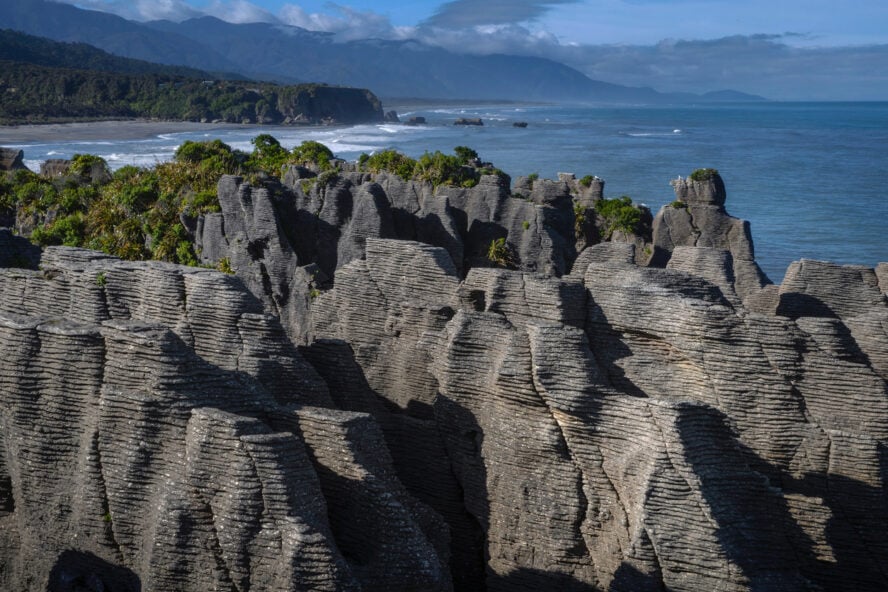
Paparoa feels like stepping back in time. Dense rainforest, deep limestone canyons, and clear rivers dominate the landscape. Hiking up the Fox River toward the Ballroom Overhang is a true tramping experience, complete with river crossings and camping beneath a massive rock shelter.
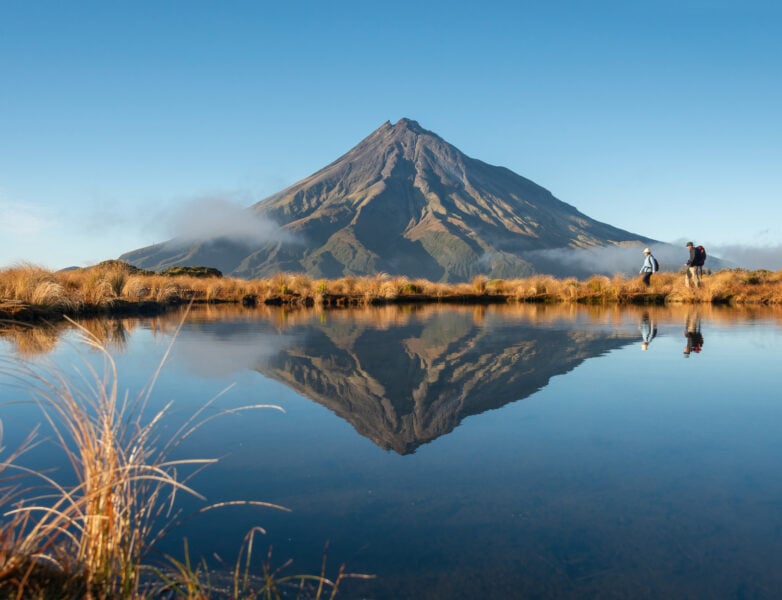
Nights under the Ballroom Overhang are some of the quietest I know, where the rain drums on stone and everyone falls asleep a little earlier than planned.
Travel here is slow and immersive, and it highlights why hiking New Zealand has such a strong backcountry culture built around patience and self-reliance.
3) Arthur’s Pass National Park
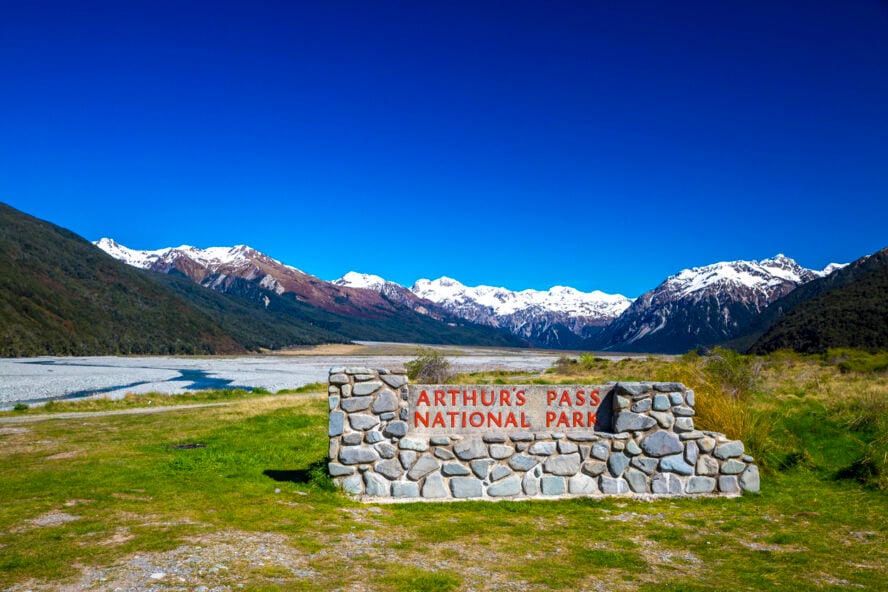
Arthur’s Pass marks a shift into more rugged terrain. Routes like the Edwards to Hawdon crossing take you up river valleys, over alpine passes, and into untracked sections that demand careful decision-making.
This is where you start to feel the full weight of the environment. Birdlife like whio, kea, and rock wren appear, huts sit high above valleys, and days feel earned rather than rushed.
I still stop mid-stride when I hear a kea nearby, because they’re as curious about you as you are about them.
4) Aoraki Mount Cook National Park
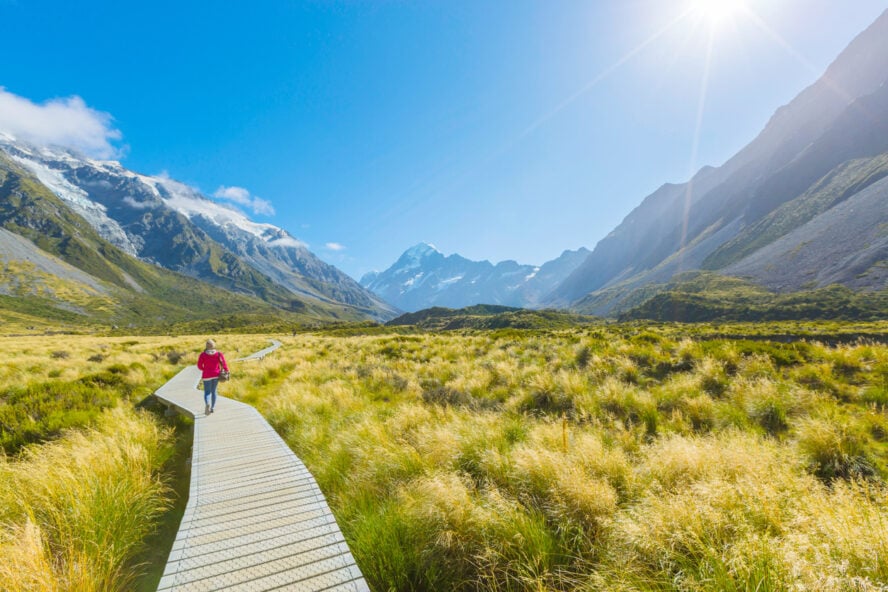
Aoraki Mount Cook delivers scale. Even straightforward day walks feel dramatic when framed by New Zealand’s highest peaks.
The Hooker Valley offers an accessible introduction, while climbing toward Mueller Hut provides a classic alpine experience with glaciers and serrated ridgelines in every direction.
Here, hiking New Zealand feels closely tied to ice, weather, and the constant reshaping of the land.
5) Fiordland National Park
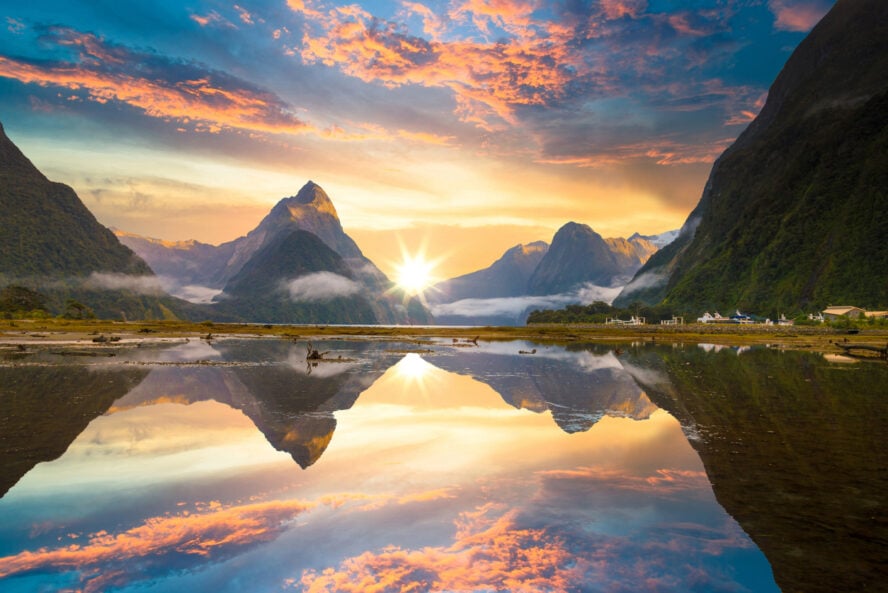
Fiordland often feels like the final chapter for many visitors.
Milford Sound, the Routeburn Track, and surrounding day hikes offer scenery that borders on overwhelming. Rain is common, but it transforms the place, sending waterfalls cascading down sheer rock walls and bringing the landscape to life.
It’s a place that teaches you to embrace conditions rather than fight them.
Why Hiking New Zealand Feels Different Underfoot
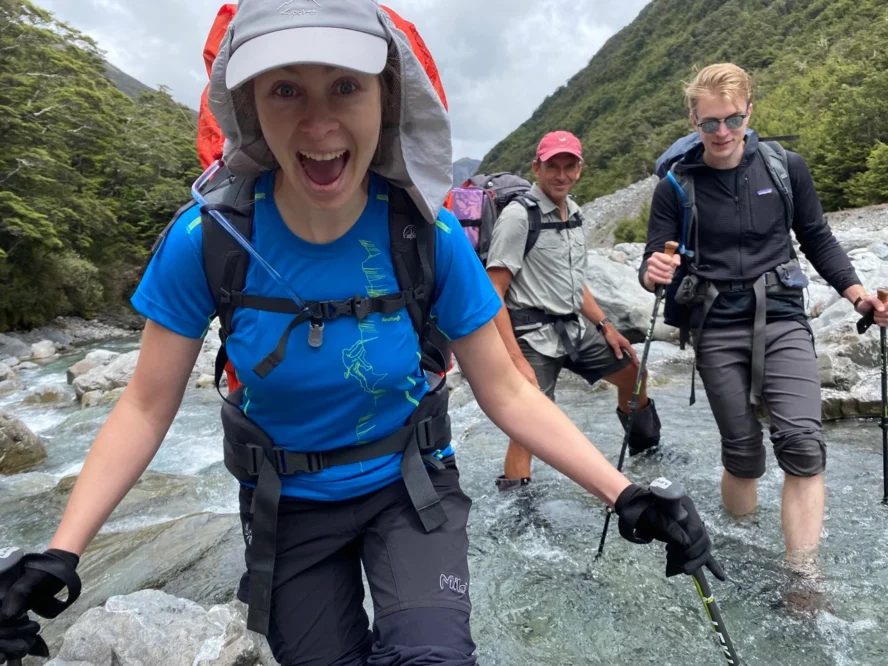
Hiking New Zealand isn’t about altitude. It’s about conditions.
You’re rarely far from the ocean, which means weather systems move quickly and rivers can rise fast. Tracks can be muddy, uneven, and slow going, even when well maintained.
Roughly a third of the country is public conservation land, and the extensive hut network allows you to travel deep into it without carrying everything on your back. Spending nights in huts is central to any New Zealand hiking trip.
Huts range from tiny bivvies to large Great Walk huts, but they all share the same spirit. When you arrive, everyone is on equal footing, sharing space, food, and stories. Some of my best trail advice has come from strangers leaning against a hut bench, passing around a battered map by headlamp light.
What to Wear Hiking in New Zealand
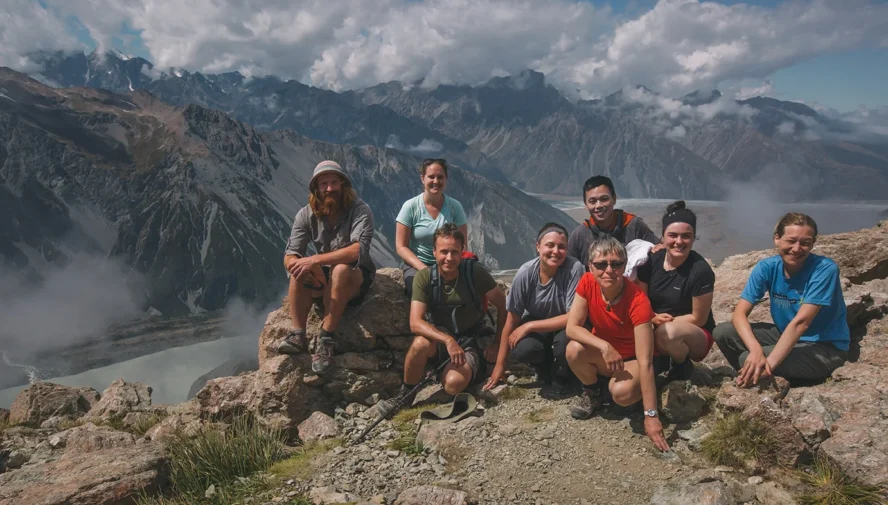
Preparation matters here, especially when it comes to clothing.
Weather can change quickly, particularly in the mountains, and staying comfortable is closely tied to staying safe.
A layered system works best. A solid base layer, something warm like a fleece or light puffy, and a waterproof shell are essential. Quick-drying pants outperform jeans every time, and wool socks are worth the investment.
A warm hat and gloves live in my pack year-round. You may not need them often, but when conditions turn, they can make all the difference when hiking New Zealand.
Do I Need Hiking Boots for New Zealand?
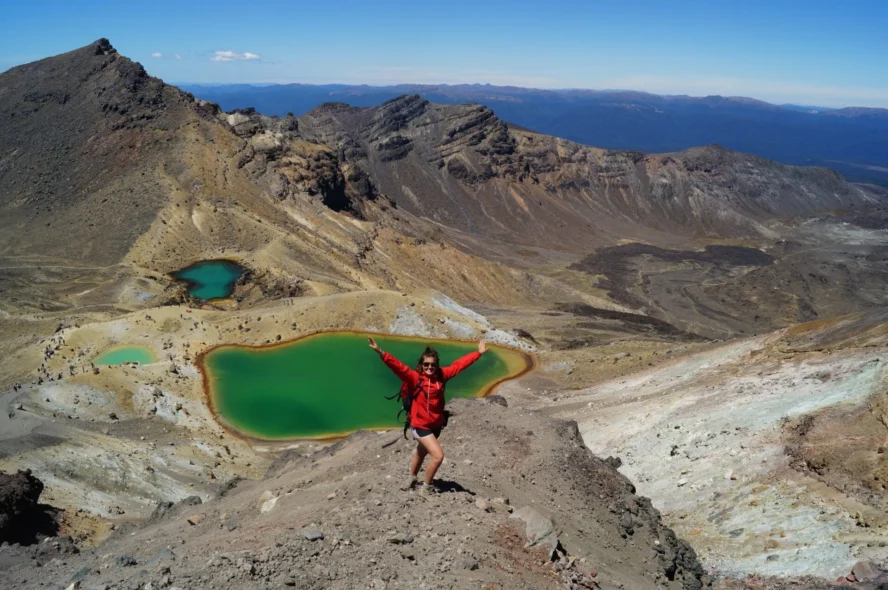
This question comes up constantly, and for most people, the answer is yes.
Many tracks involve mud, roots, rocks, and frequent river crossings. A sturdy pair of hiking boots with ankle support gives you confidence and stability, particularly if you’re carrying an overnight pack.
Trail shoes can work on maintained tracks and shorter day walks, but once you head into the backcountry, boots are the safer option. Wet boots are part of life here, and when they fit well, they’re rarely the problem people fear.
Good gear helps, but smart decisions matter even more.
Planning and Staying Safe on the Track
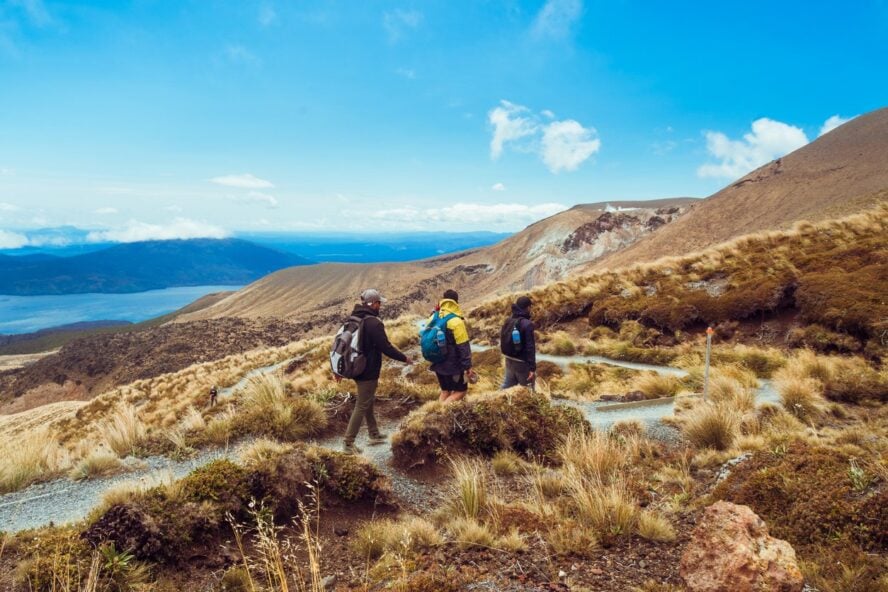
New Zealand is welcoming, but it doesn’t reward complacency.
Always check the forecast, talk to locals or Department of Conservation staff, and be realistic about your abilities.
Rivers deserve special respect.
If water levels are high or heavy rain is forecast, waiting or turning back is often the smartest call. Carrying a personal locator beacon on more serious routes is a wise move, as cell coverage drops quickly once you leave the road.
Flexibility is one of the most important skills you can have when hiking New Zealand. Turning back from a river crossing has never felt like a failure to me, just part of staying around long enough to enjoy the next trip.
Why This Style of Hiking Stays With You
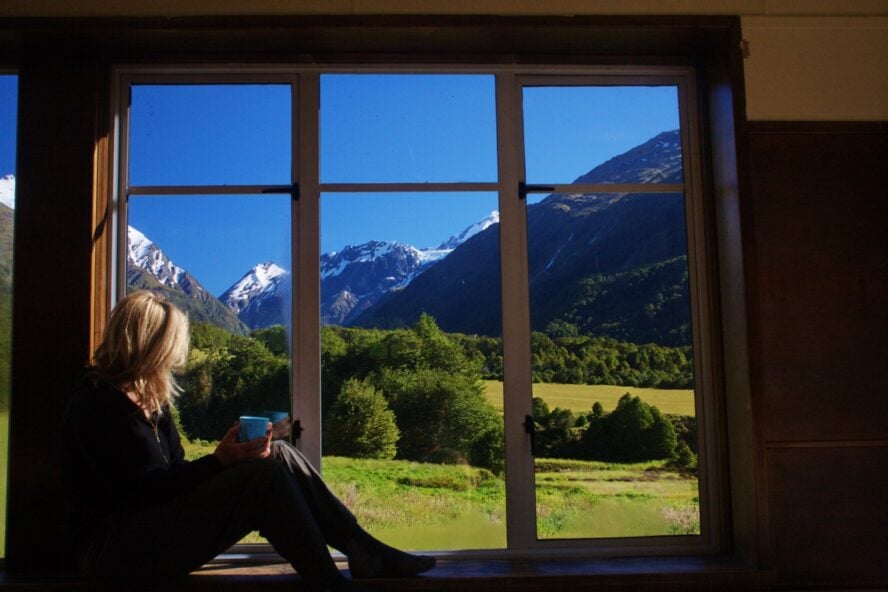
There’s often a quiet moment late in the day, when packs come off and the stove goes on, where you realize how far removed you are from everything else.
Maybe it’s mist lifting off a valley.
Steam rising from a river as evening settles in.
Boots loosened, wet socks drying by the fire, and that deep, tired calm that only comes after a full day on the track.
Hiking New Zealand sharpens your awareness while slowing you down at the same time. You’re moving through landscapes shaped by tectonics, ice, and water, and that perspective sticks. It’s not about ticking off lists or racing between highlights.
That’s why so many people return for more.
Whether it’s your first or fifth experience, New Zealand hiking trips have a way of meeting you where you are. If you come prepared, stay flexible, and walk with respect, you’ll often find yourself planning the next journey before the current one has even ended.