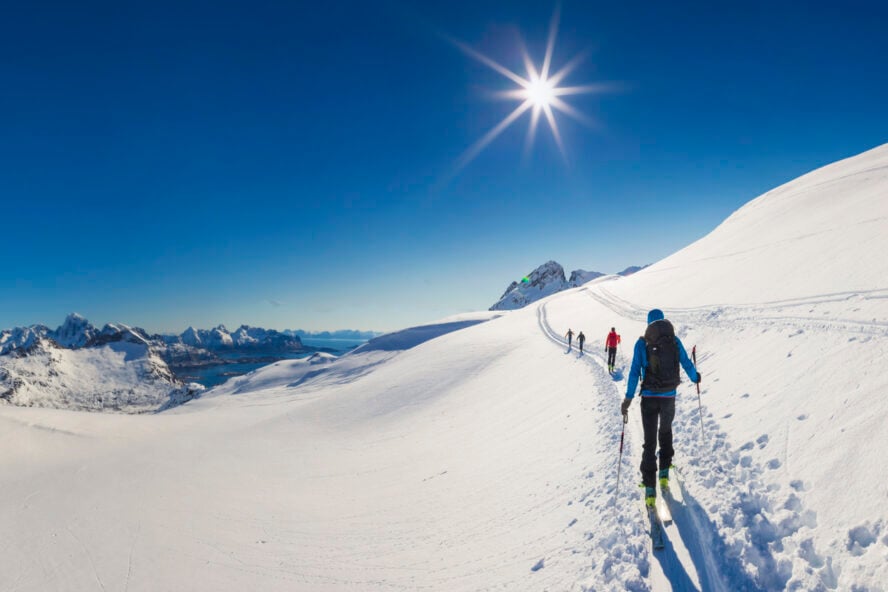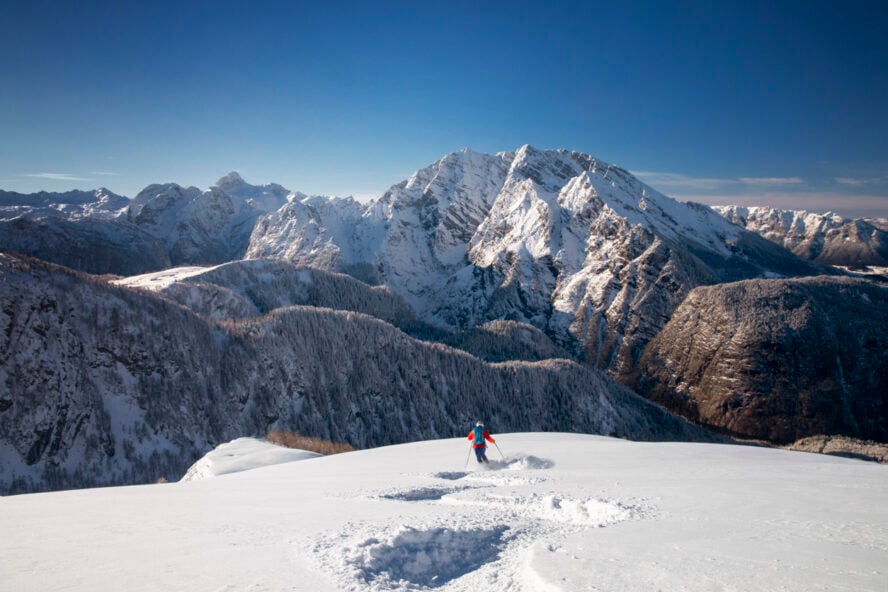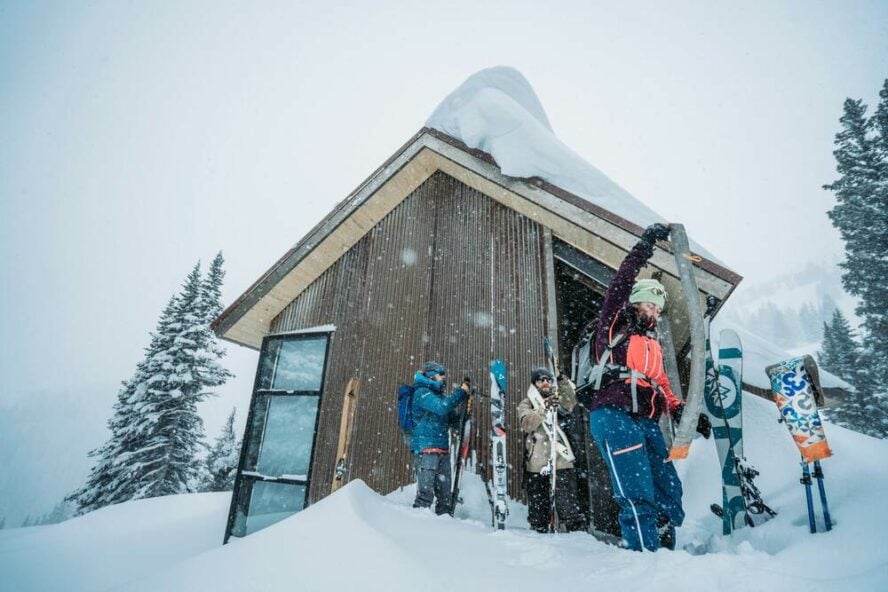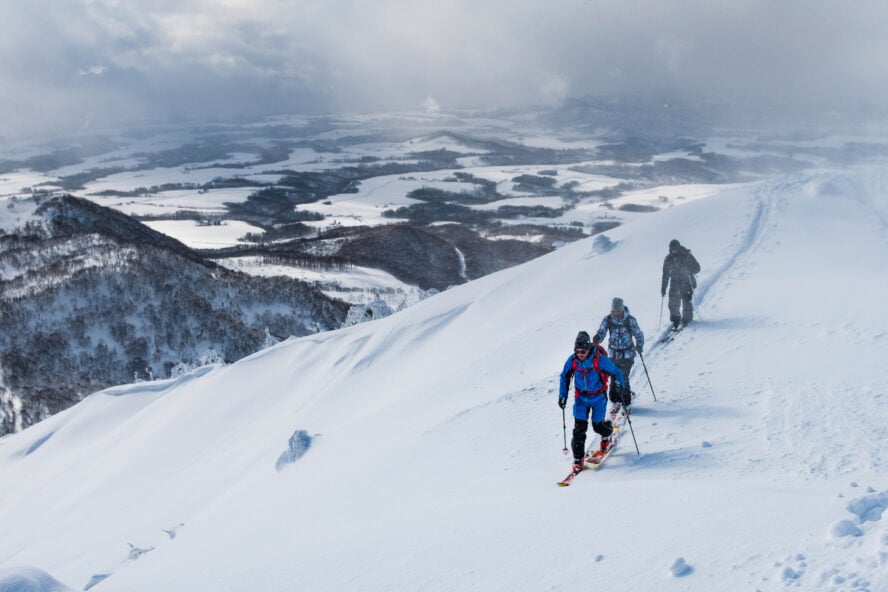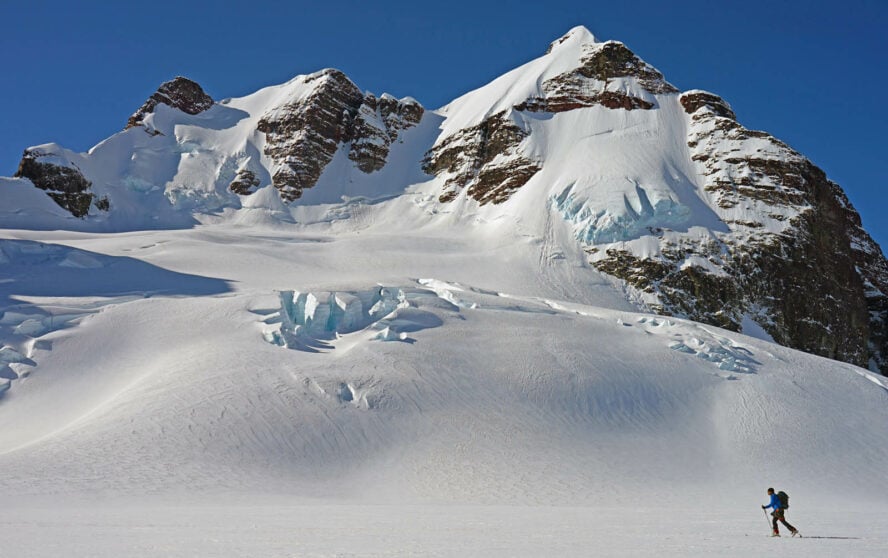

Most people don’t plan a ski trip to Georgia—and that’s usually why the ones who end up here talk about it long after the season ends. The first time I went ski touring in Georgia, what surprised me wasn’t just the snow, but how quickly everything else fell away: the crowds, the noise, the pressure to perform. Days felt longer. Decisions felt simpler.
I’ve spent years ski touring across Georgia, especially in the remote Racha region, guiding people with very different backgrounds and expectations. Some arrived cautious, others curious—but nearly everyone left saying the same thing: this felt different. Not harder, not extreme—just more real.
I want to show you what ski touring in Georgia actually feels like from the inside: the snow, the terrain, the rhythm of multi-day trips, and the small moments that quietly change how you think about skiing.
Why Ski Touring in Georgia Is So Different
I’ve spent a lot of time ski touring in the Alps. I love them.
But ski touring in Georgia plays by a completely different set of rules.
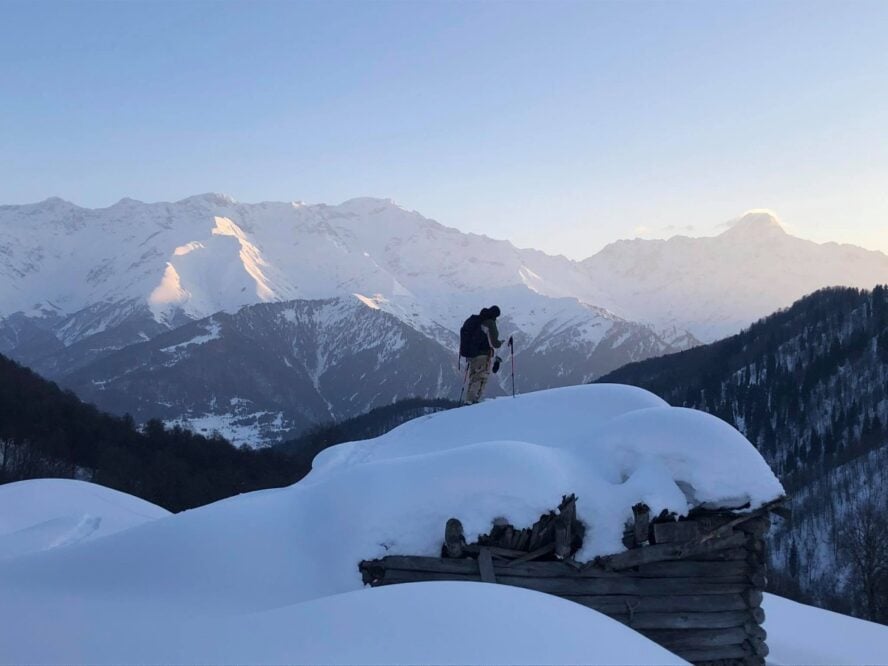
In most places in Europe, even when you’re touring, you’re still operating around infrastructure—lifts, huts, roads, tracks from other groups. In Georgia, especially in regions like Racha, once you leave the village, there’s nothing. No signage. No safety net. No quick way out if conditions change.
And that changes the mindset immediately.
When you’re ski touring in Georgia, you move slower. You plan better. You talk more with your group. Decisions carry more weight, but they also feel more intentional. You’re not chasing laps, you’re building days.
I always say this to guests on the first approach: “We’re not here to rush. The mountains aren’t going anywhere.”


The Snow: Why It’s Better Than People Expect
People often assume ski touring Georgia means sketchy snow or unpredictable conditions. That’s exactly what I expected before my first season here.
The reality surprised me.
Georgia sits in a really unique position climatically. The Black Sea pushes massive amounts of moisture into the western and central parts of the country, while the eastern side stays much drier and more continental. In places like Racha and Goderdzi, that means deep snowfall followed by cold temperatures that preserve snow quality exceptionally well.
Some winters, especially in the trees, the powder is ridiculous.
I remember one week where we had planned a big alpine objective. But the storms just wouldn’t stop. Visibility was bad up high, so we stayed lower and skied trees for five straight days. Nobody complained. Not once. By the end of the week, people were saying it was the best skiing they’d had all season.
Tree skiing is one of the biggest secrets of Georgia. The forests are old, widely spaced, and perfect for storm days. Snow stacks up and stays good for a long time. When conditions line up to ski Georgia like this, it’s hard to beat.
Terrain: What Ski Touring Georgia Really Looks Like
Starting Zones and Low-Angle Terrain
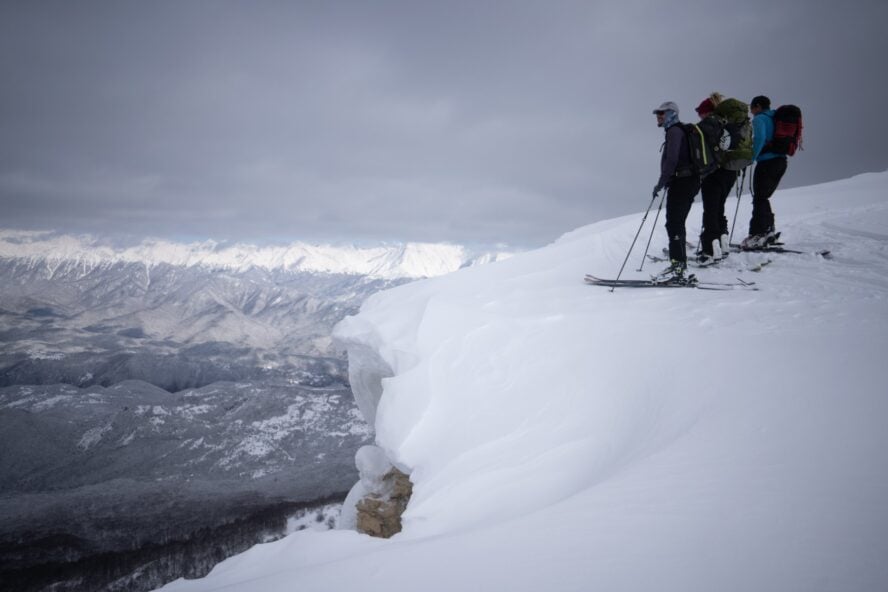
Most of our ski touring routes start on relatively low-angle slopes. That’s intentional. Early in a trip, I want to see how people move: how they skin, how they transition, how they communicate.
Low-angle terrain in Georgia is anything but boring. On powder days, these slopes are playful, fast, and forgiving. I’ve had guests tell me later that some of their favorite turns of the whole trip were on terrain they would’ve ignored back home.
It’s also where we talk a lot about avalanche safety. We stop. We dig. We observe. Ski touring in Georgia isn’t about blindly following a guide—it’s about understanding why we’re making decisions.
Classic Multi-Day Routes in Racha
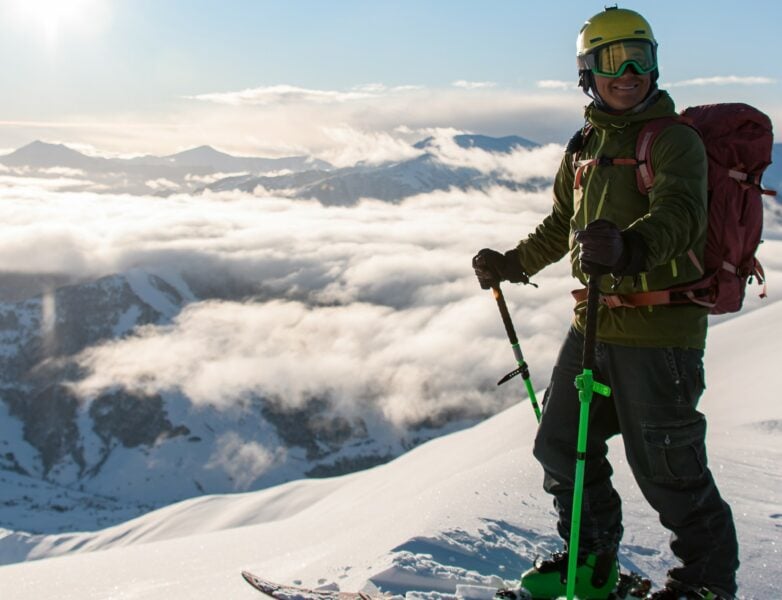
One of our most classic ski touring routes in Georgia starts around 1,300 m (4,265 ft) in a small town in Upper Racha. From there, we skin through forests, past old chapels, and slowly into alpine terrain.
After a full day, we reach a high basin beneath Mount Lagora, where we usually spend the night. We set up tents or use shelters, cook together, and talk about the day.
The next morning, depending on conditions and the group, we push higher—sometimes close to 3,000 m (9,842 ft). The final section can get steep, around 40–45 degrees. Not everyone goes to the top, and that’s completely fine.
I always tell people: “There’s no summit bonus here.” Some of the best skiing in Georgia is lower down, on soft, rolling slopes with perfect snow and no pressure.
Alpine Basins and “Secret” Zones
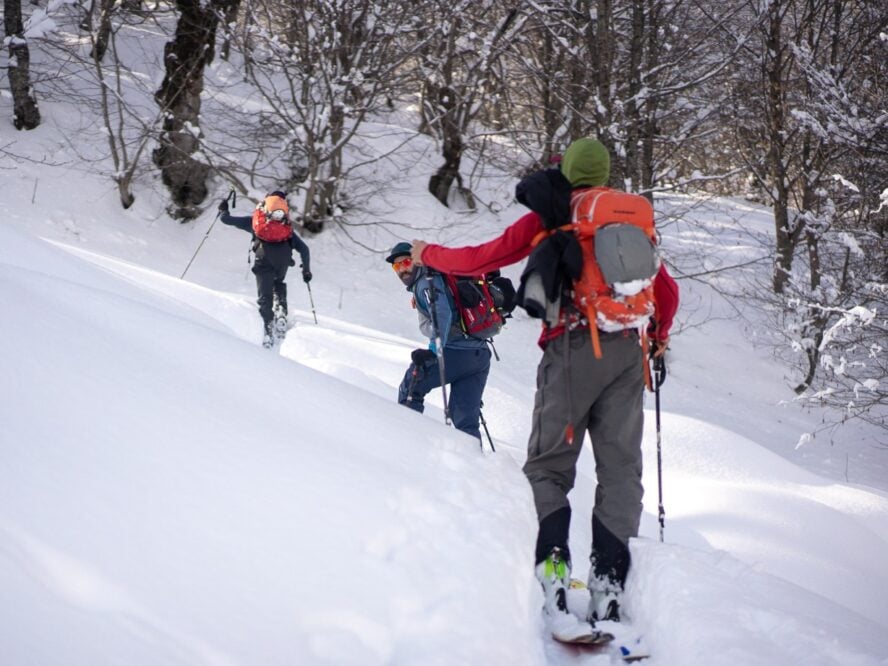
There are areas we don’t advertise or name publicly. Not because they’re dangerous, but because they’re special.
These zones combine old-growth forest with massive alpine basins. You skin up once and suddenly have a dozen line options in front of you. Steep, mellow, long, short—it’s all there.
What I love most is that groups don’t need to split. Strong skiers can push themselves. Others can take safer or more playful lines. Everyone meets at the bottom with the same grin.
That flexibility is one of the biggest advantages of ski touring in Georgia.
Steeper Objectives for Experienced Tourers
For those who want something more serious, Georgia absolutely delivers.
One of my favorite zones is a massive 600-meter (1,968 ft) vertical wall we call the Spine Wall. Just getting there takes a full day of touring. The face itself is filled with spines, couloirs, and variations that seem endless.
It’s not for everyone. And that’s the point.
While ski touring Georgia, even next to terrain like this, you can find quiet, low-angle slopes with incredible snow. No one is ever forced into something they don’t want to ski.
Ski Touring Georgia on Skis or Splitboards
I want to be clear about this: splitboarders thrive here.
I’ve guided mixed groups for years—skiers and splitboarders together—and Georgia is one of the most splitboard-friendly places I’ve worked. Long descents, minimal flat exits, and consistent snow make a huge difference.
What matters more than your setup while ski touring in Georgia is your attitude.
Most people arrive solo. By the third or fourth day, the group feels like a small expedition team. You cook together, manage gear together, and make decisions together. That kind of dynamic rarely happens on single-day tours.
Why We Use a Base Camp and Night-Touring Model
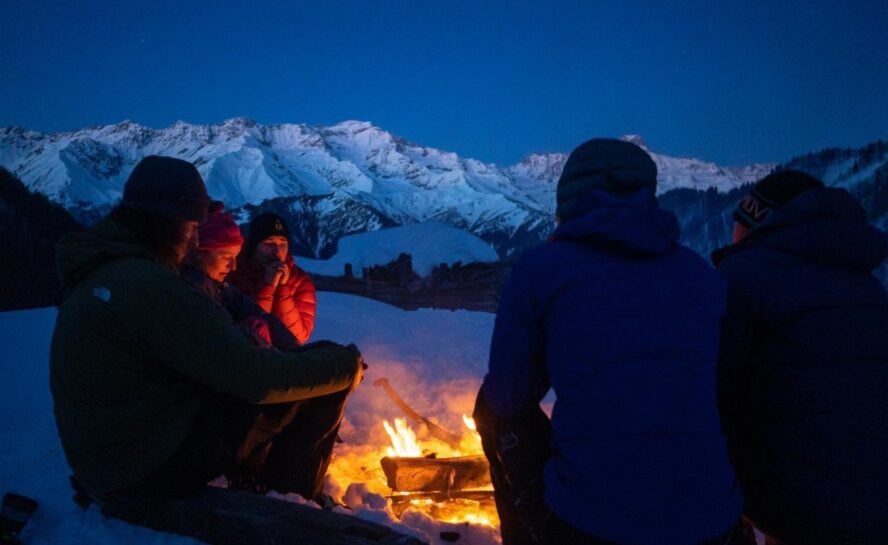
Early on, we realized that many objectives for ski touring Georgia were simply too big for classic day trips. You’d spend all your energy just getting in and out.
So we built a different system: base camps with warm communal tents or shelters, snowmobile-supported logistics, and multi-day routes that keep us close to the terrain.
This setup makes winter camping accessible, even for people who’ve never done it before. When you arrive at camp, food is ready. There’s a warm space to dry gear. You don’t have to think about survival—you can focus on skiing Georgia.
For experienced tourers, it means saving energy for bigger lines. For newer ski tourers, it removes the intimidation without removing the adventure.
Avalanche Safety and Learning on the Go
While ski touring Georgia, every trip starts with avalanche safety—not just theory, but observation.
I want to see how people assess terrain, how they communicate, and how comfortable they are speaking up. Georgia’s snowpack can be complex, especially during rapid weather shifts, so education is part of every day.
We talk constantly about why we choose one slope and not another. Why we turn around. Why patience matters.
By the end of the trip, most guests tell me they feel more confident, not only as skiers, but as decision-makers.
Who Ski Touring Georgia Is Really For
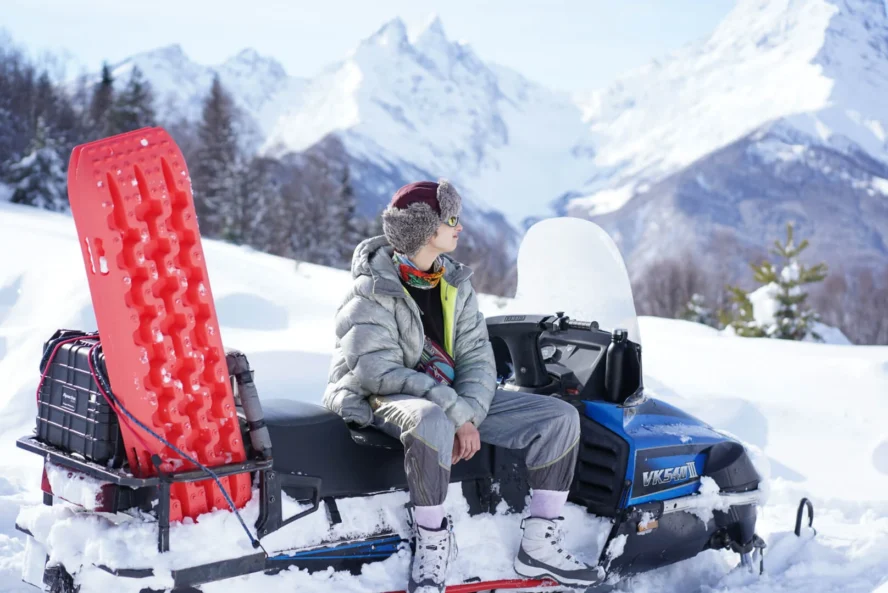
People often ask me if they need to be experts.
My honest answer: no, but you need the right mindset.
Ski touring Georgia is ideal for intermediate to advanced skiers and splitboarders, people curious about multi-day touring, riders who value experience over ego, and travelers who care more about connection than comfort.
If you’re looking for quick laps and chic après bars, this probably isn’t your place. But if you want to wake up in the mountains, drink hot coffee in the snow, and earn every turn, you’ll feel at home here.
Getting There and Basic Logistics
Georgia is easier to reach than most people expect. There are direct flights from many European cities to Tbilisi.
Once you arrive, we handle everything: transport, food, accommodation, and logistics. Getting to Racha takes time, but that’s part of the experience. When you arrive, life slows down immediately.
After trips, we often finish in Tbilisi’s sulfur baths. It’s a pretty good way to ease back into everyday life.
What Actually Matters Gear-Wise
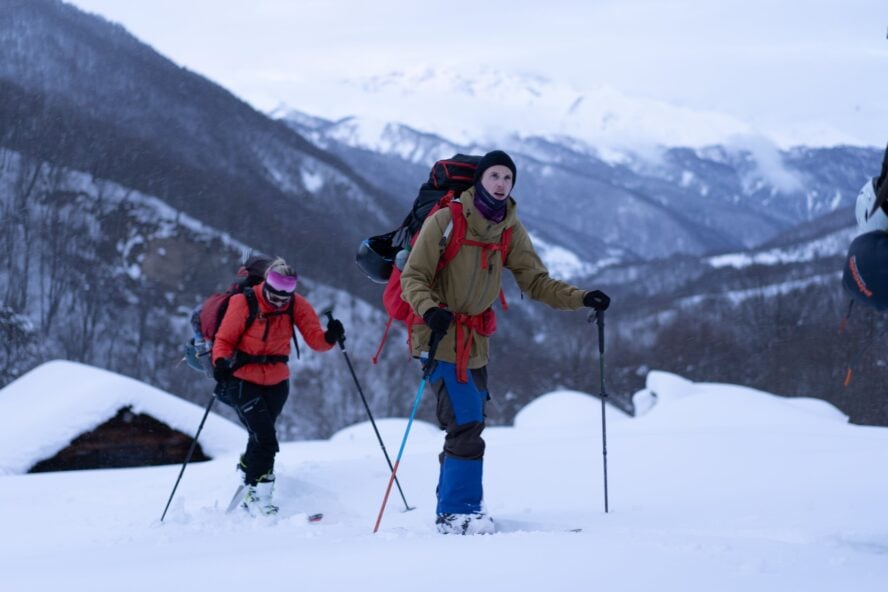
We provide avalanche gear when needed and help with rentals.
What I always emphasize:
- Proper layering (wool over synthetic)
- Keeping gear dry
- Bringing spare parts for bindings or skins
- Understanding that comfort equals safety
One of my personal fears early on was drying boot liners. Turns out, the solution is simple: put them in your sleeping bag. You wake up warm, and your liners wake up dry.
That kind of knowledge only comes from spending time out there. And we pass it on so guests don’t have to learn the hard way.
The Cultural Side of Ski Touring Georgia
Georgia isn’t just about snow.
It’s wine made the same way for 8,000 years. It’s food meant to be shared (khachapuri is mandatory). It’s people who will invite you into their homes without hesitation.
For me, ski touring in Georgia works because it connects skiing with a place. You’re not just passing through—you’re participating.
Why I Keep Coming Back
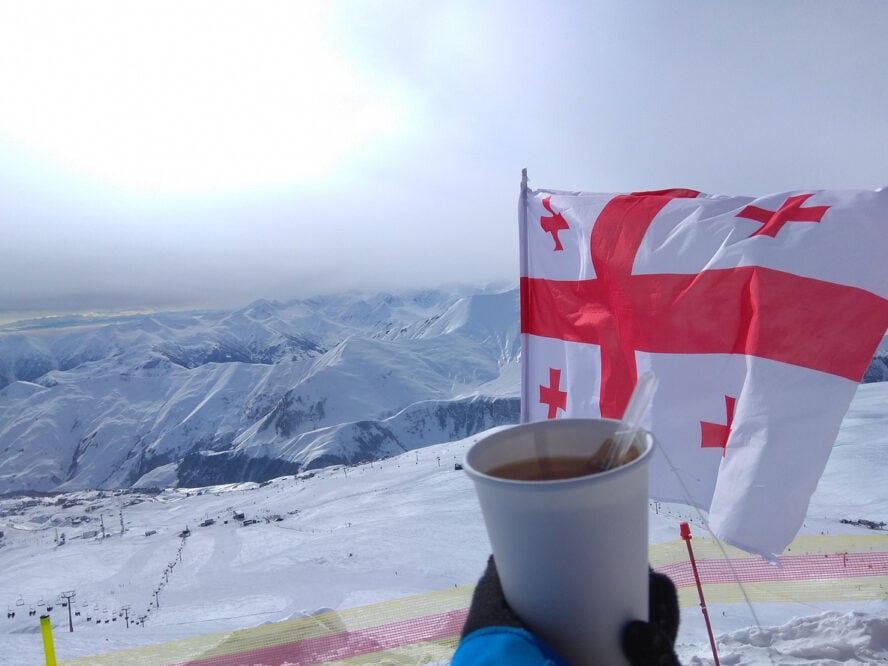
After all these years, what keeps pulling me back isn’t just the snow.
It’s the rhythm. The quiet. The way groups slowly come together. Ski touring Georgia reminds me why I started skiing in the first place: not to collect lines, but to have experiences that stay with you.
Every time I leave, I immediately start thinking about the next winter.
That’s how I know I’m exactly where I’m supposed to be.