


The first time I really understood what hiking the Pacific Crest Trail meant, it wasn’t on a map or in some perfectly edited highlight reel where everyone looks clean and cheerful all the time.
It hit me in the small stuff. Crawling out of my tent into cold morning air. Firing up my stove with stiff fingers. That first sip of coffee that tasted like a reward because I’d actually earned it. My legs complaining for the first few miles, and then, almost like flipping a switch, settling into the rhythm like they remembered what they were made for.
For us as guides, hiking the Pacific Crest Trail isn’t just a long hike. It’s a full reset. A way of stepping out of the noise and back into something quieter, wilder, and more real. All you really do is wake up, shoulder your pack, and follow the dirt north until something inside you clicks.
And then one day, somewhere between Mexico and Canada, it happens: you realize you’re not just hiking anymore…You’re becoming someone else.
What is the Pacific Crest Trail?
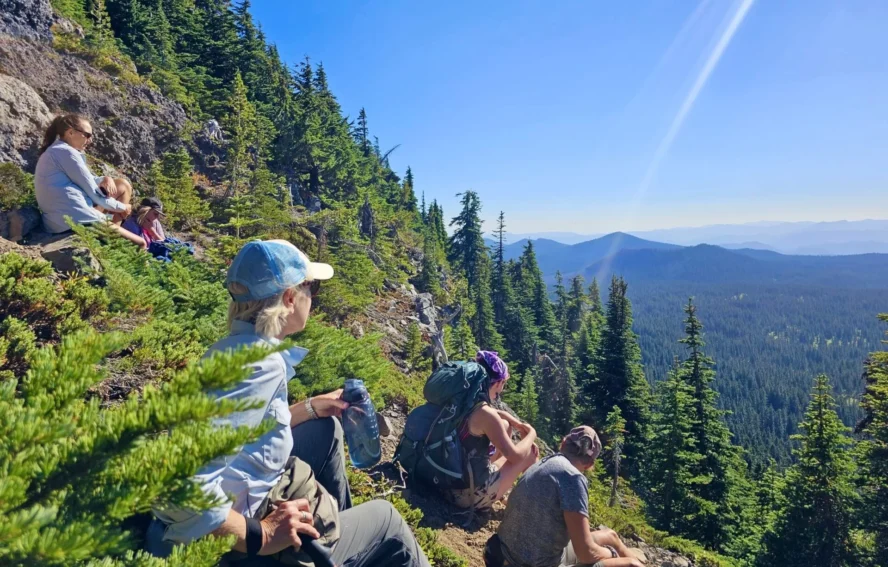
The Pacific Crest Trail, or PCT, is a long-distance hiking trail that runs along the western United States, stretching through California, Oregon, and Washington. It’s famous for its diversity: desert, high mountains, volcanic terrain, forests, alpine lakes, and ridgelines that make you stop mid-step just to stare.
What makes the PCT different from a lot of other adventures is that you don’t just visit these landscapes. You live in them. You walk through them day after day until they stop feeling like scenery and start feeling like home.

That’s why hiking the Pacific Crest Trail becomes so personal for people. It’s not a checklist. It’s a whole season of your life.
And if you’re the type who likes to learn through stories before you commit, there’s even the occasional movie about hiking the Pacific Crest Trail that captures pieces of that emotional arc, even if nothing really compares to being out there yourself.
Where does the Pacific Crest Trail start and end
The PCT starts just over the border into Mexico and ends at the border into Canada.
Northbound, you begin in Southern California’s desert terrain and slowly work your way into higher, colder, more rugged mountain environments. By the time you reach Washington, it feels like the trail has saved some of its wildest, most remote country for last.
When people ask me what it feels like, I tell them this: hiking the Pacific Crest Trail is like watching the West Coast unfold in slow motion, one step at a time. You don’t just cross states, you cross seasons.
For us guides, that’s the part we never get tired of, because somewhere along the way, the trail starts feeling less like a challenge and more like home.
How long is the Pacific Crest Trail
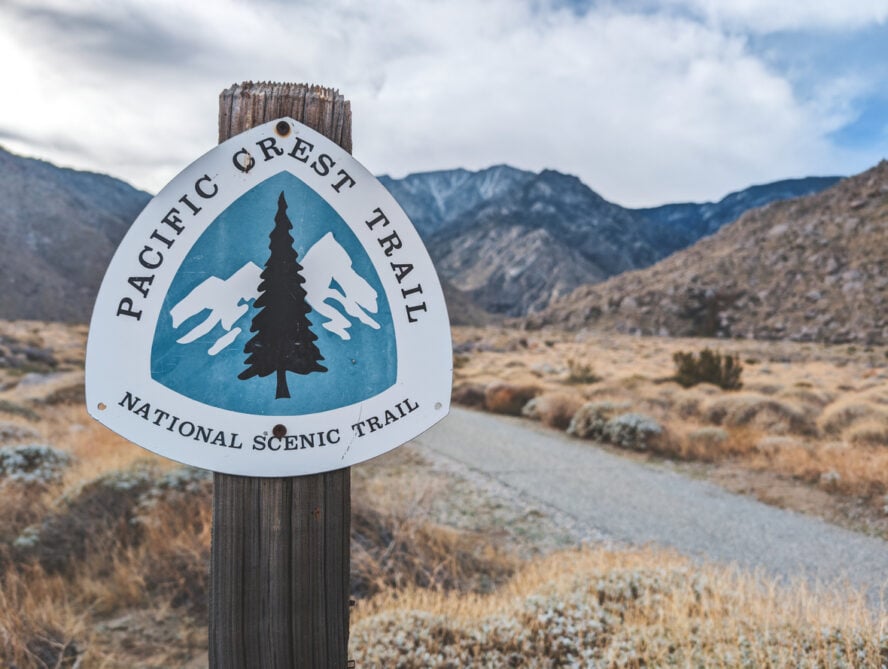
The Pacific Crest Trail is roughly 2,600 mi (4,184 km) long.
That number is big enough to make your brain freeze for a second, and honestly, it should. This isn’t a casual walk. It’s a commitment. It’s the kind of distance that changes you, mostly because it forces you to show up every day whether you feel like it or not.
The other number I always keep in mind is elevation gain. Over the full trail, you’re looking at more than 400,000 ft (121,920 m) of climbing. That’s a lot of uphill, and it adds up in ways people don’t always expect.
If you’re serious about hiking the Pacific Crest Trail, it helps to respect both numbers: the miles and the climb.
How many miles is the Pacific Crest Trail
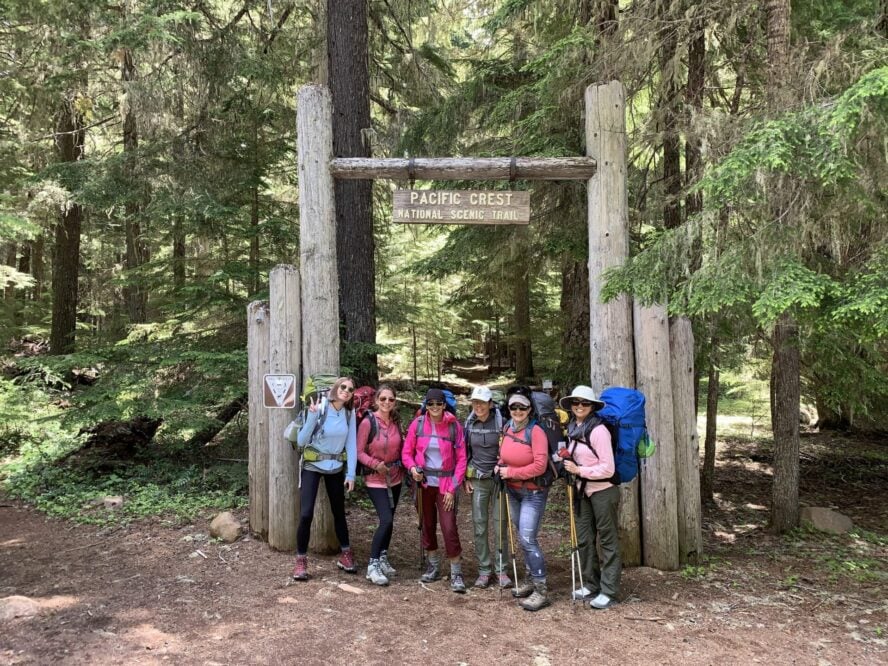
The PCT is about 2,600 mi (4,184 km) from end to end.
That mileage is the baseline. It’s the number you plan around. It’s the number that makes people either light up with excitement or stare into the distance like they’ve just been asked to climb the moon.
Why the mileage doesn’t tell the whole story
Even though the PCT is “about 2,600 miles,” your actual mileage on trail might be more.
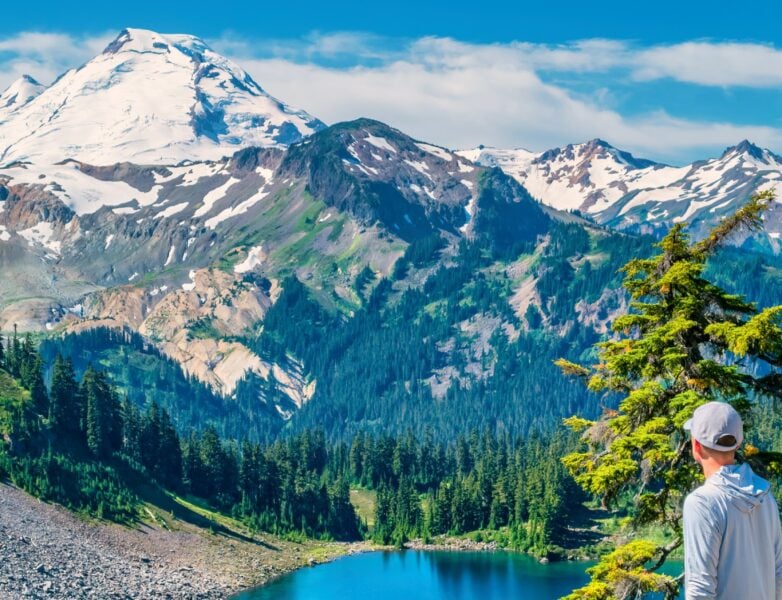
That’s because the PCT is full of side trips and little detours that become some of the best memories of the entire hike. People climb nearby peaks. They wander to lakes. They take a viewpoint spur just because it’s there.
The trail is a line, but the experience spreads out beyond it.
Honestly, some of my favorite moments on the PCT have happened on miles that “don’t count” on paper.
How long does the Pacific Crest Trail take
Most hikers take about five to six months to thru-hike the Pacific Crest Trail.
That timeline depends on your pace, your rest days, snowpack, wildfires, and how much time you spend enjoying the places you worked so hard to reach. But as a rough breakdown, here’s how it often plays out:
Southern California takes about one month. Central California, including the Sierra Nevada, is about another month. Northern California to the Oregon border is often another month. So California alone can take around three months.
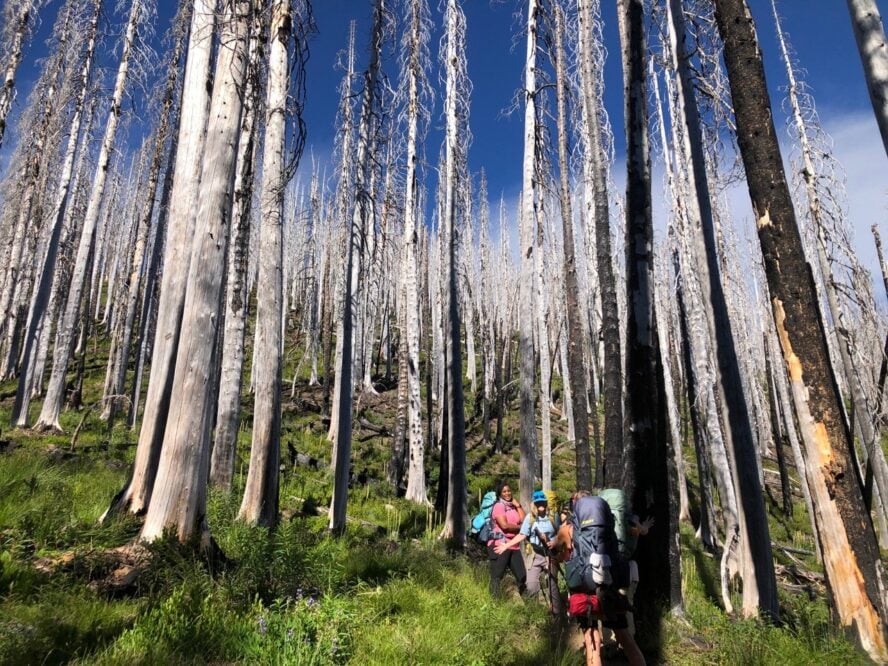
Oregon and Washington often go faster, partly because the trail tread can be smoother and partly because by then you’ve built your trail legs. But Washington can also slow you down again. It’s remote, rugged, and if you’re hiking northbound, you’re usually keeping an eye on early snowfall.
This is why hiking the Pacific Crest Trail is as much about timing as it is about fitness. You’re not just hiking a route, you’re hiking a season.
How to hike the Pacific Crest Trail
If I had to sum up how to hike the PCT, I’d say this: you hike it one day at a time, but you plan it like a long-term project.
The PCT is absolutely doable for regular people. But it’s not something you can “wing” for 2,600 mi (4,184 km). The biggest difference between a successful thru-hike and a rough one usually comes down to preparation and flexibility.
Start by understanding the trail in sections
The PCT looks like one line on a map, but it feels like multiple different worlds stitched together. Each section has its own personality, its own challenges, and its own kind of magic.
The PCT in 5 chapters
Southern California
Southern California is hot, exposed, and mentally challenging in a way people don’t always expect. There’s limited shade, water can be scarce, and the wind can be intense. It’s also where you build your rhythm. You learn how to walk all day. You learn what you actually need. You start to get your trail legs.
Central California
Central California, the Sierra Nevada, is often the most beautiful section. It’s also the most physically demanding. You spend long stretches above 7,000 ft (2,134 m), and you cross multiple mountain passes above 11,000 ft (3,353 m). In heavy snow years, the trail can be buried, and instead of hiking dirt, you’re hiking across snow.
Northern California
Northern California is where motivation can get tested. The big vistas fade in and out, you’ve been hiking for months, and wildfire season can become a real factor. Smoke, closures, reroutes, and the mental fatigue of constant adjustment can wear people down.
Oregon
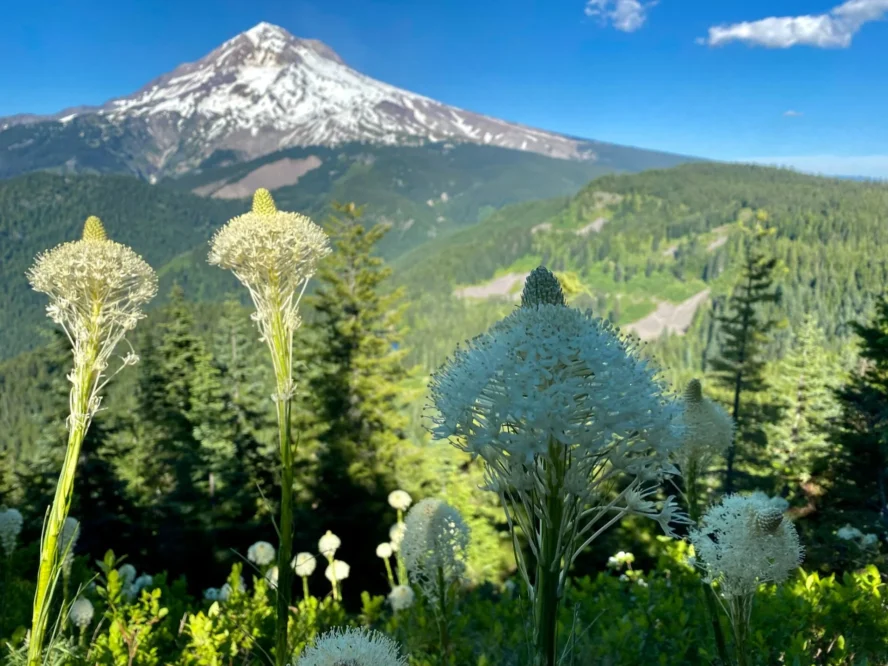
Oregon often feels like a reset. It’s a new state, new scenery, and often faster miles. Summer in Oregon also surprises people. It’s not constant rain. It can be sunny almost every day, and the trail moves through volcano country, big forests, and classic Cascade landscapes. If you’ve been daydreaming about hiking the Pacific Crest Trail, Oregon is where things start to feel easy.
Washington
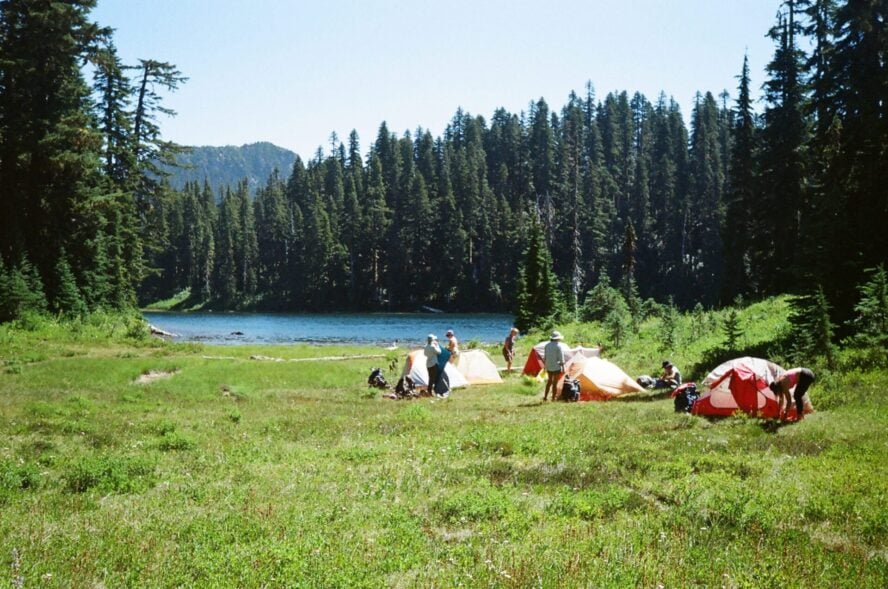
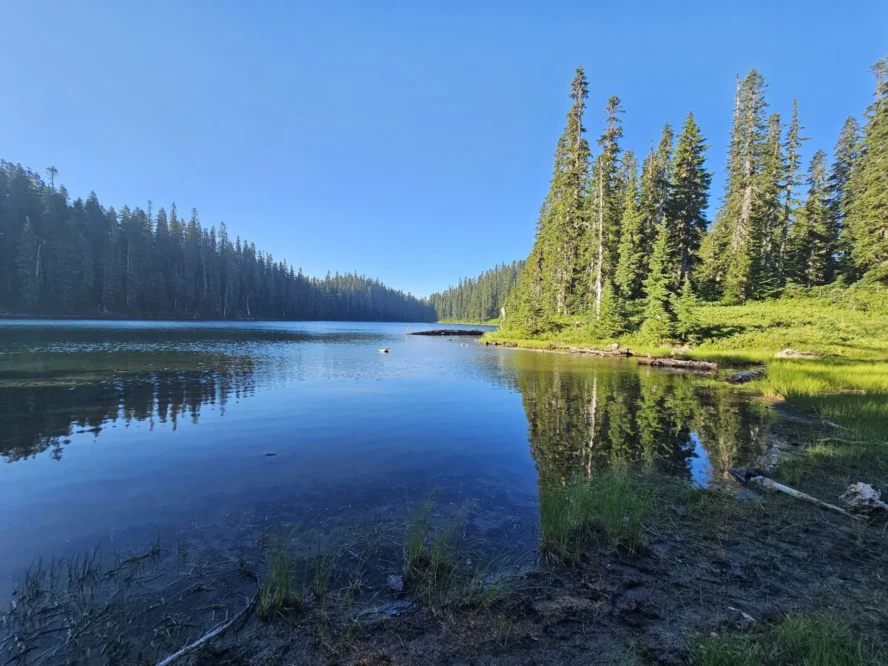
Washington is remote and rugged. It’s full of ridgelines, alpine meadows, and deep wilderness that feels like the trail’s final gift. Places like Indian Heaven Wilderness are packed with lakes and wildflowers, and the North Cascades feel like the kind of landscape you earn.
When people talk about hiking the Pacific Crest Trail like it’s a spiritual experience, this is why. You’re not just moving through scenery. You’re moving through entire worlds.
Keep your gear light enough to enjoy the hike
I’ve watched so many people make the same mistake at the beginning: packing like they’re afraid of being uncomfortable for even one second.
The truth is, you will be uncomfortable sometimes. The goal isn’t to eliminate discomfort. The goal is to avoid carrying extra weight that turns every climb into a punishment.
On a multi-day trip, many hikers carry around 30–40 lb (14–18 kg). Thru-hikers often aim for lighter than that, because doing 4,184 km (2,600 mi) with a heavy pack adds up fast.
If you’re preparing for hiking the Pacific Crest Trail, my best advice is to load your pack and walk with it before you ever step onto the trail. Don’t wait until day one to find out your hip belt rubs or your shoulders go numb.
For us, the goal is always the same: carry less, smile more, and actually enjoy the miles. I’ve never once finished a long day and wished I’d packed more stuff.

Treat food like fuel and morale
Food is one of the most underestimated parts of long-distance hiking.
Yes, you need calories. But you also need something to look forward to. Some hikers skip stoves to save weight, which means months of cold meals. Cold ramen, bars, snacks, and rehydrated meals that never really get hot. It works, but it can wear on you mentally.
I always tell people to bring food they actually enjoy. Variety matters. And if you want to change your diet, do it before you start. The PCT is not the place for major experiments.
If you’re serious about hiking the Pacific Crest Trail, food planning is part of your mental health plan, not just your calorie math. For us, a good meal at the end of a long day can turn a rough afternoon into the best night of the trip.
Learn the logistics, because you can’t carry it all
One of the biggest surprises for new hikers is how much of the PCT is logistics. Even early sections are far too long to carry all your food at once. You need resupply points, and you need a plan for how you’ll get to them.
That plan can be simple, but it has to exist.
This is one of the reasons hiking the Pacific Crest Trail feels so satisfying. You’re not just hiking. You’re solving a moving puzzle every day: water, food, weather, energy, and time.
Respect weather, wildfires, and wildlife
You can’t talk about the PCT without talking about weather and wildfires.
Weather changes quickly in the mountains. Snow can reshape the Sierra. Early snowfall can shut down Washington. You need layers, you need good judgment, and you need the ability to adapt.
Wildfires have become a major reality on the trail, especially in Northern California. Closures happen. Smoke happens. Air quality becomes a real hazard. Flexibility isn’t optional anymore.
Wildlife is part of the backcountry too. Black bears exist, especially from the Sierra north through Oregon and Washington. You probably won’t see one, but you still need to store food properly. Mountain lions are around in Oregon, but encounters are rare. The best system is still the buddy system, staying aware, and respecting the fact that you’re in their home.
Bathroom skills are part of the job
Everybody wonders about this, and nobody wants to bring it up.
Most of the PCT still uses the cat hole method. You carry a small trowel, walk 50–100 ft (15–30 m) off trail, stay about 200 ft (61 m) away from water sources, and dig a hole about 6 in (15 cm) deep.
It’s not glamorous, but it becomes normal fast. And if you’re going to spend months in the backcountry, learning how to do it properly is part of being a good trail citizen.
Train by walking, then walking more
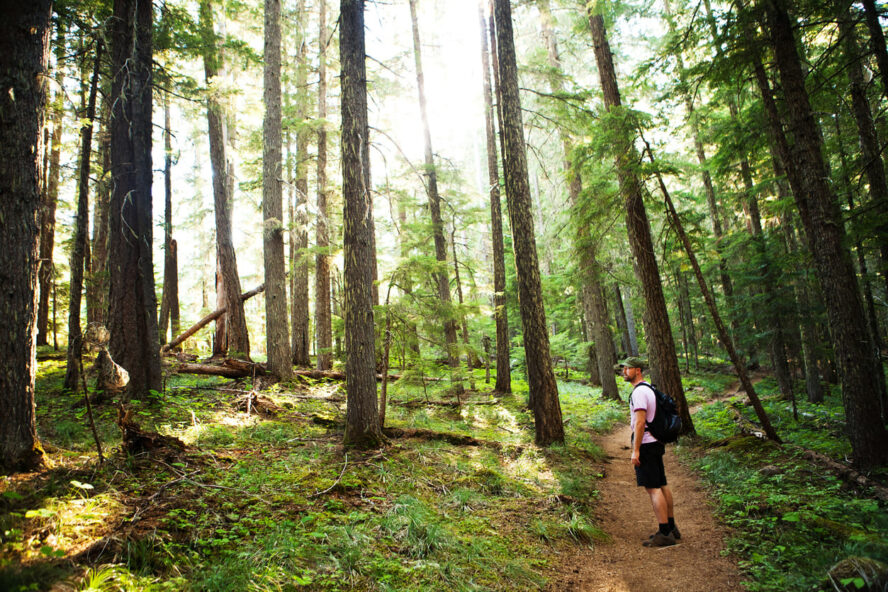
The best training for the PCT is walking.
Start with day hikes if you can. If you can’t hike, walk around your neighborhood. Build up to longer distances. Then add your pack. Load it fully and do a 10 mi (16 km) walk with it. You’ll learn more from that one walk than you will from hours of gear videos.
Strength training helps too, especially for climbs. Squats, deadlifts, kettlebell swings, glute bridges, and stair training all make a difference.
If you want to enjoy hiking the Pacific Crest Trail, the goal is to arrive with a body that can handle repeated effort, day after day, without falling apart. And trust me, once your legs catch up, the whole trail starts to feel lighter.
Why the PCT Feels Like a Reset Button
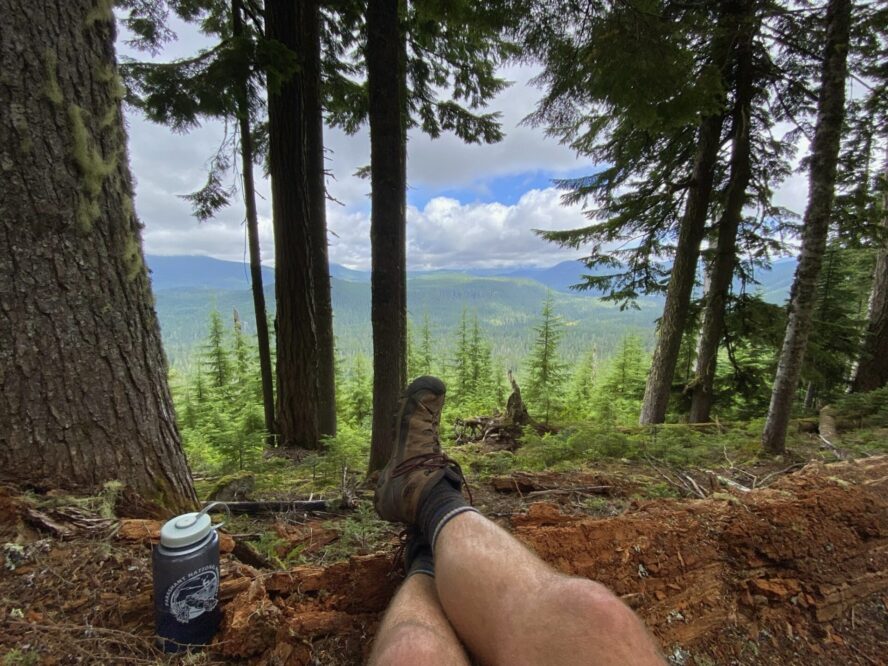
Here’s the part I can’t fully explain unless you’ve felt it. When you backpack for long enough, you stop living in a climate-controlled bubble. You stop being distracted every second. You start paying attention again.
And somewhere out there, you’ll find yourself lying in the grass, looking up at the sky, smelling wildflowers, listening to wind move through the trees, and thinking, “so this is what I’ve been missing.” That’s why hiking the Pacific Crest Trail becomes such a big deal for people. It’s not just a trail. It’s a reset.
And whether you’re here for Pacific Crest Trail hiking on a shorter section or you’re dreaming about thru hiking the Pacific Crest Trail from Mexico to Canada, the core of it stays the same: you don’t have to race it.
You don’t have to push yourself past your limits every day. You can go at your own pace. You can slow down. You can say hi to the squirrels. You can lay in the grass and just exist for a minute. The trail will still be there tomorrow.
And if you stick with it long enough, somewhere between Mexico and Canada, you’ll realize the trail didn’t just take you north. It quietly turned you into someone new.


