
There are few routes in the Alps that carry the weight of history quite like the Haute Route. Guiding the mtb Haute Route feels like stepping straight into that legacy, only moving through it in a completely modern way.
When I stand in Chamonix and look up at Mont Blanc, I think about the alpinists who came here in the 19th century with little more than curiosity and nerve. They wanted to climb these peaks, link them, understand them.
In 1911, mountain guides crossed this terrain on wooden skis, carving what would become the legendary Haute Route ski tour. No modern gear. No safety net. Just instinct and commitment.
Today, we follow that same spine from Chamonix to Zermatt. But we do it on e-mtbs, riding our own version of the mtb Haute Route. The mountains are still immense. The valleys still remote. The effort still real. What changes is how we move through it. Seven days. High passes. Raw singletrack. Mont Blanc behind us, the Matterhorn ahead.
And once you understand what it really takes to ride this line, you’ll never look at the Alps the same way again.
What is the Haute Route
The Haute Route is a high alpine traverse that connects Chamonix in France with Zermatt in Switzerland. When people refer to the Haute Route, they often mean the classic ski or hiking version, but the concept is always the same: travel high across the Alps from valley to valley.
Originally, it was a mountaineering objective. In summer, climbers linked major peaks between Mont Blanc and the Matterhorn. In winter, ski mountaineers crossed glaciers and high passes. Today, hikers follow the walker’s Haute Route, tracing a demanding path between the same iconic towns.
Our version keeps that spirit.
This is how we ride it
We cross multiple valleys, high passes, and remote ridgelines. We move from French-speaking regions into Swiss-German territory. The culture shifts as we go. So does the landscape. Forest singletrack gives way to alpine meadows. Meadows turn into rocky high-altitude terrain. Every day feels slightly different.
But instead of following a traditional hiking or ski line, we’ve designed the route around our favorite trails for the mtb Haute Route. Over the years, we explored constantly. Sometimes we found dead ends. Sometimes completely non-rideable terrain. But eventually, we built something special.
About 85 percent of this route is singletrack. It is not just a connection between two famous towns. It is a curated alpine riding experience that defines the mtb Haute Route.
How long is the Haute Route
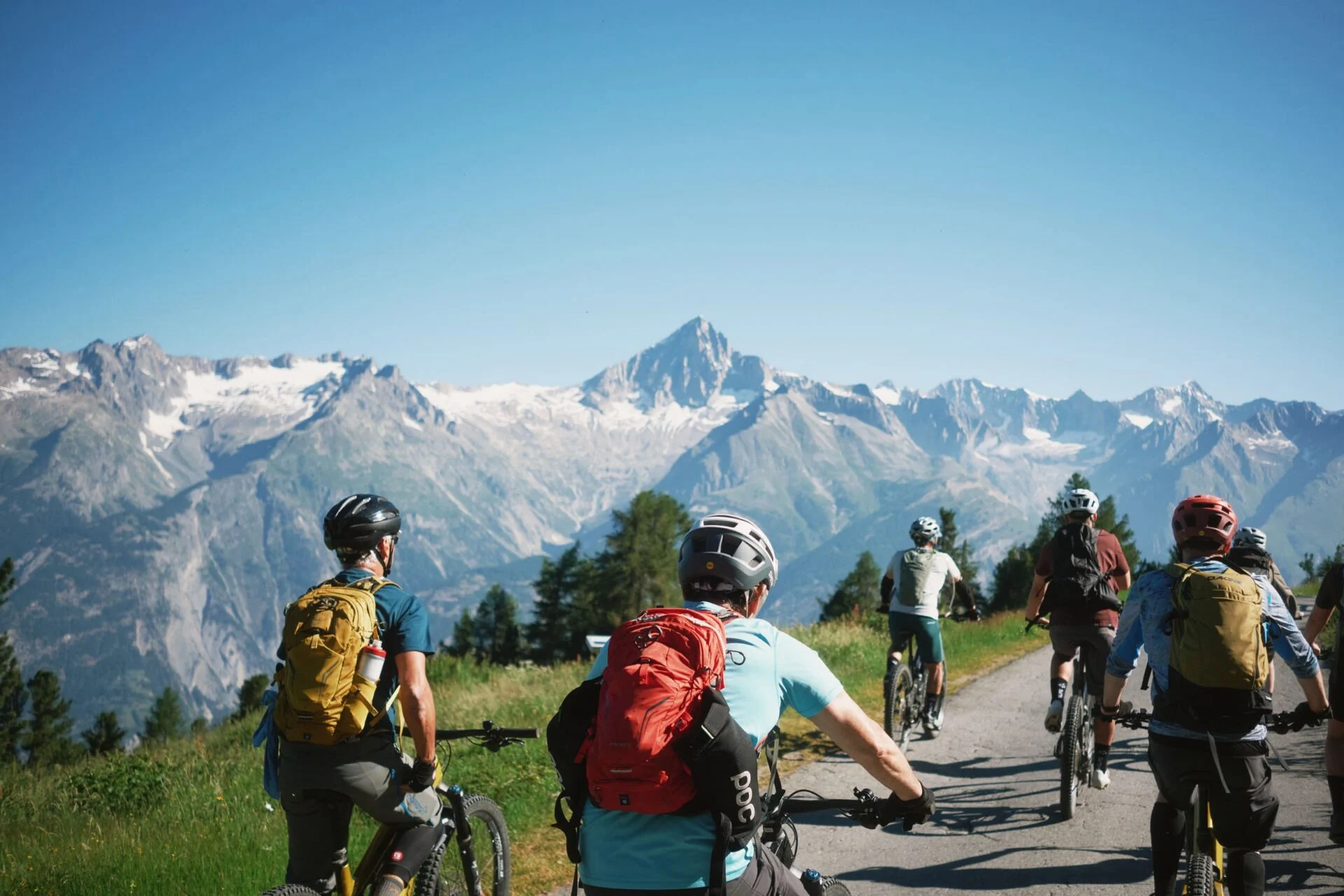
On our e-mtb traverse, we cover roughly 280 km (175 mi) over seven days.
Each day averages around 45 km (28 mi), with about 2,200 m (7,200 ft) of climbing and descending. In total, we move through approximately 12,000 m (39,000 ft) of elevation gain and loss across the week.

We ride for four to six hours per day. Some days feel longer because of technical terrain. Others feel surprisingly smooth and flowy.
The numbers matter, of course. But what I notice more is the rhythm of the mtb Haute Route.
Wake up. Look at the peaks. Ride. Climb steadily. Descend with focus. Meet the support van for lunch. Recharge batteries. Keep moving. Arrive in a new valley.
It simply becomes this beautiful daily cycle.
Why e-mtbs make the Haute Route possible
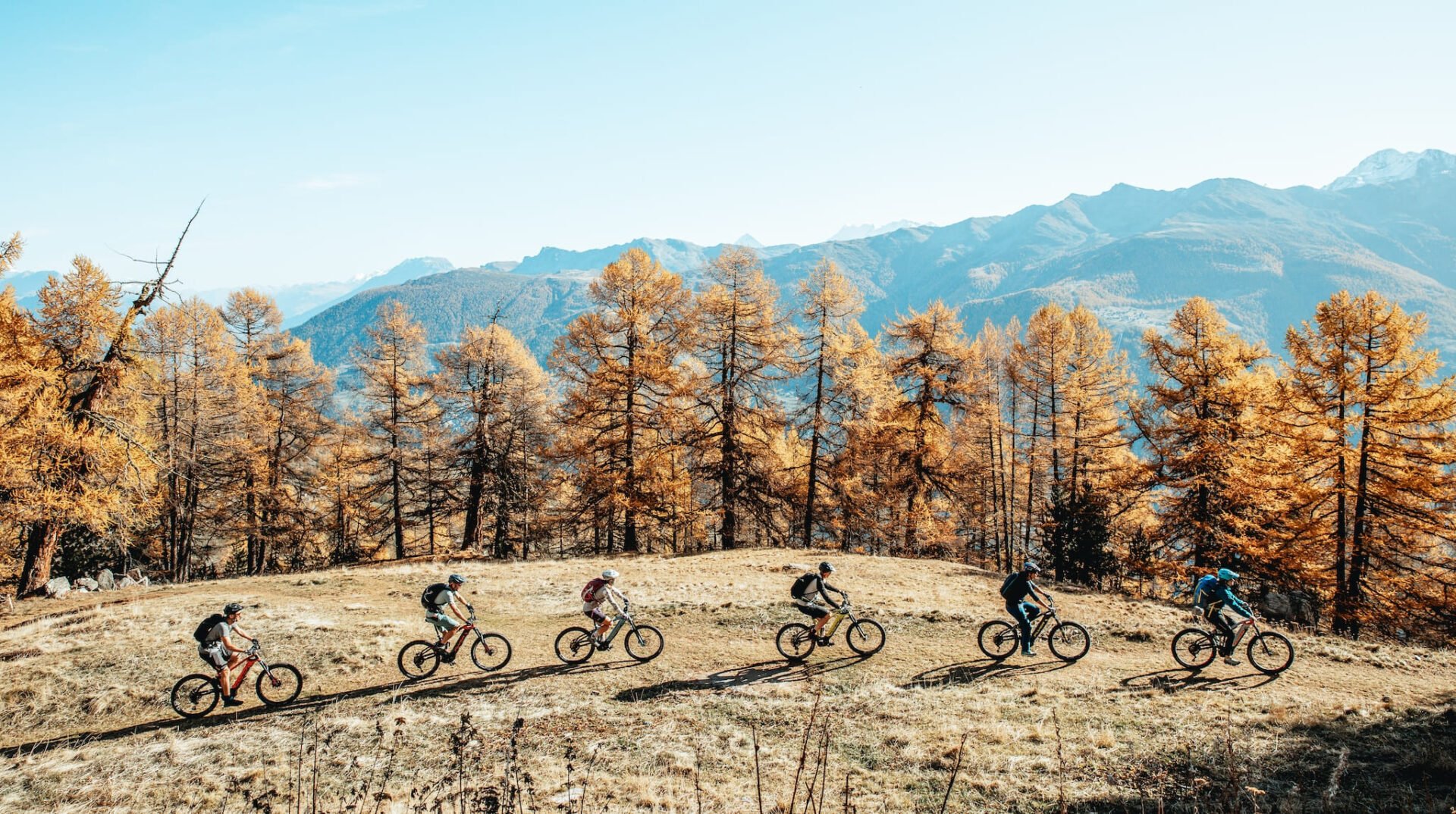
In the Alps, e-bikes are not about making things easy. They are about making things possible.
Without motor assistance, linking this much elevation day after day would push most riders deep into exhaustion. With e-mtbs and double batteries, we can manage the climbs intelligently on the mtb Haute Route.
We use turbo mode on steep sections. We stay mostly in tour mode. Some riders choose eco for more of a workout. The goal is not to burn out on the uphill. It is to arrive at the descent with energy and focus.
Because the descents here deserve your full attention.
We ride proper alpine terrain. Roots, rocks, tight switchbacks, exposed ridgelines. The e-bike allows us to access higher passes without compromising the quality of the riding.
For me, it is the perfect balance of effort, adventure, and enjoyment that makes this ride so unique.
From forest singletrack to high alpine passes
We start in Chamonix, at the beginning of what many call the Haute Route Chamonix Zermatt. I always recommend arriving a couple of days early. Not just for logistics or jet lag, but because the village itself carries so much history. You feel the alpinism in the air.
On day one of the mtb Haute Route, we fit the bikes properly and ease into the ride. Very quickly, we gain elevation and overlook glaciers with Mont Blanc dominating the skyline.
Crossing into Haute Route Switzerland feels almost symbolic. Sometimes the only sign is a cattle fence. But culturally and geographically, we are shifting.
We pass through Verbier, which is home for me. In winter, it hosts the Freeride World Tour finals. In summer, it has become a true e-mtb playground. From there, we head into quieter valleys where cows outnumber people.
Some ridgelines are narrow and exposed. If someone has vertigo, we always have alternatives. Guiding is about reading the group, adjusting, and making sure everyone feels safe and challenged in the right way.
Climbing into the high alpine
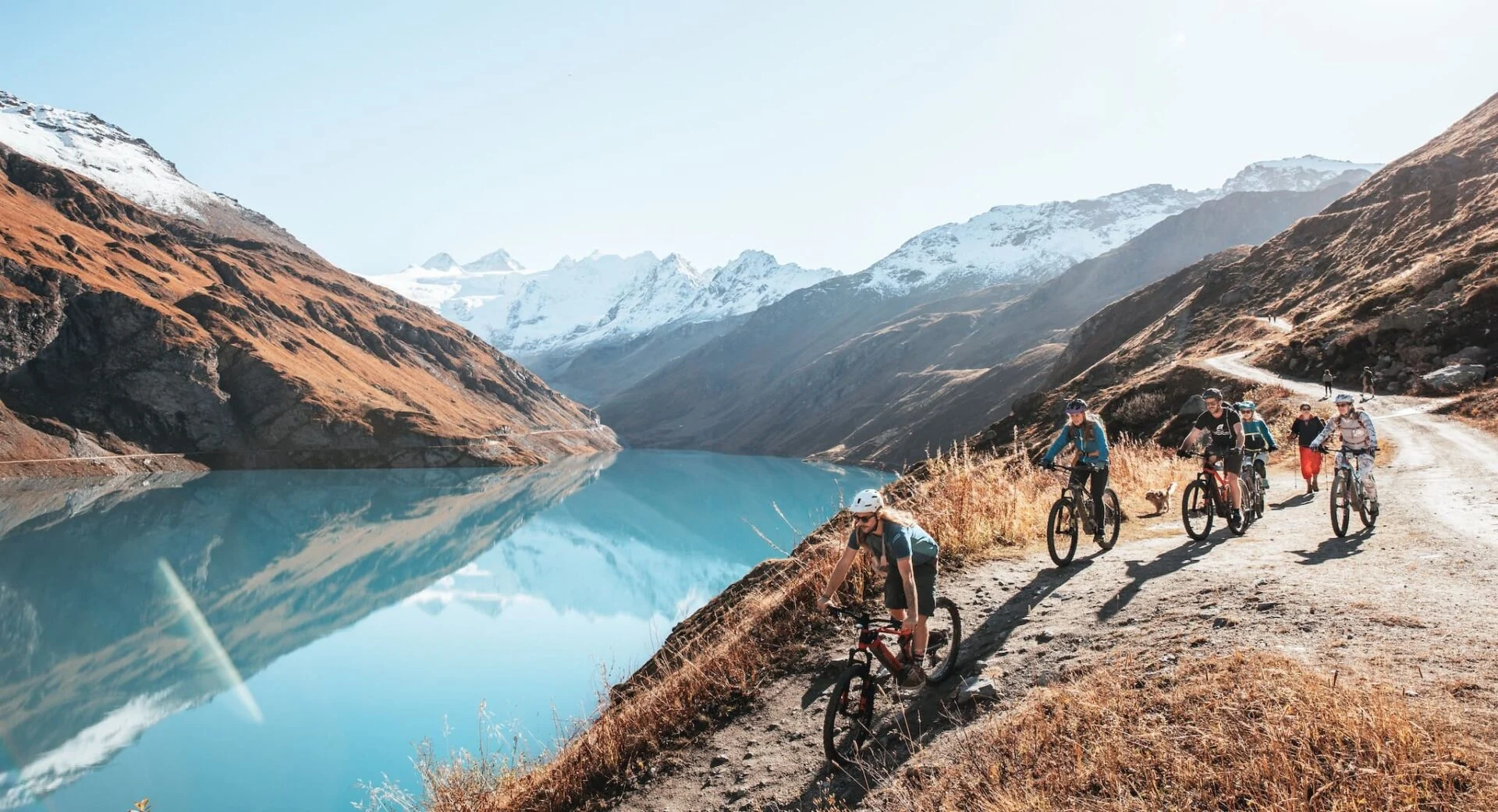
One of the most memorable days brings us close to 3,000 m (9,840 ft). The climb is full of tight switchbacks and technical moves that surprise people. With modern motors, you clear obstacles you never thought possible on the mtb Haute Route.
Near the top, the landscape changes completely. It becomes rocky and wind-swept. Often there is still snow. You feel the elements up there.
And then comes the descent.
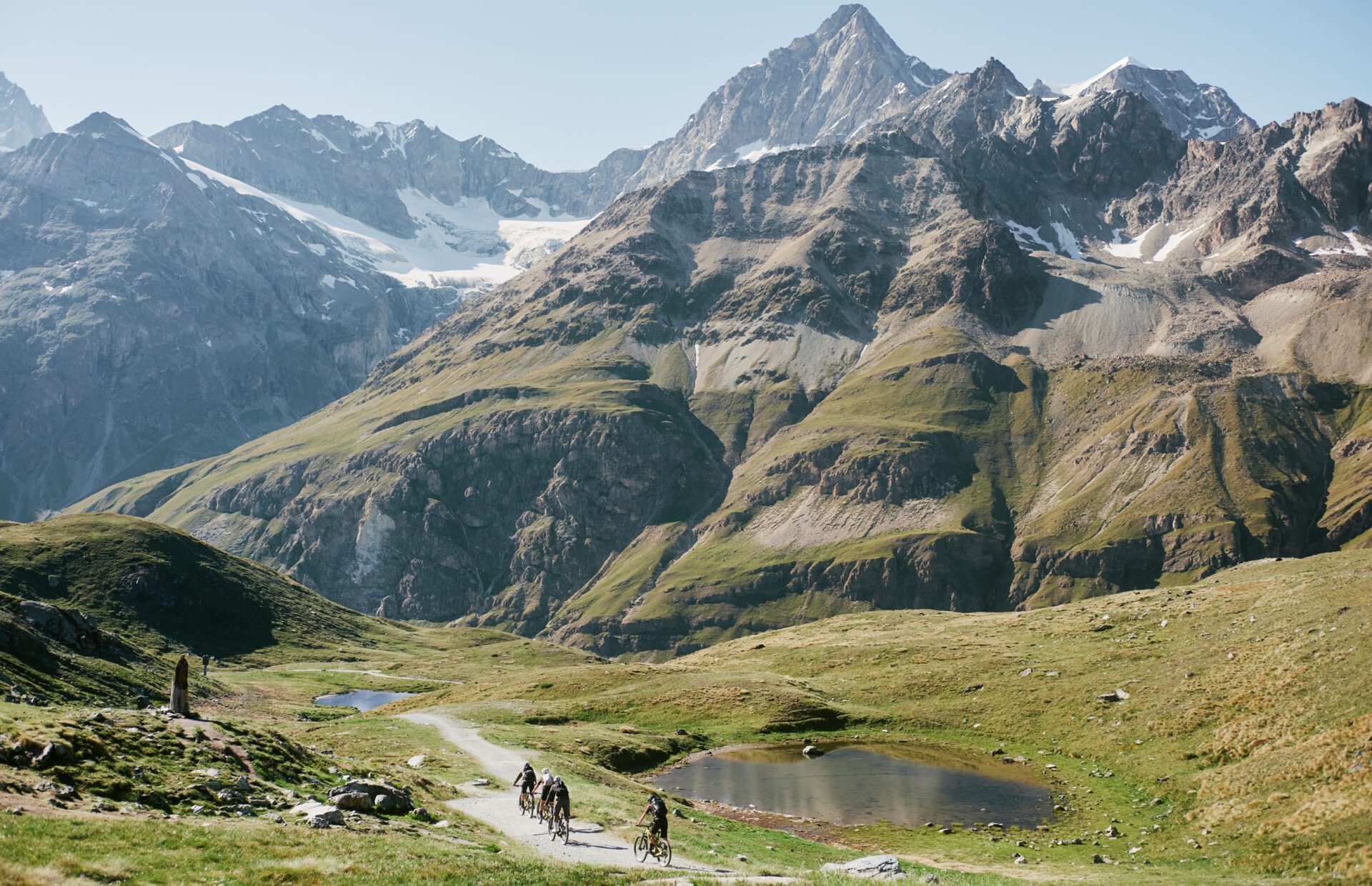
One of my favorites drops toward a small alpine lake. After a long climb, it feels like riding into paradise. Flowing sections, technical bits, and that sense of having earned every turn.
If the bike cannot ride a section, we use the walking mode. The motor assists as we push. It is practical, efficient, and part of the alpine experience that defines the mtb Haute Route.
What riding 85 percent singletrack really feels like
When I say that 85 percent of this route is singletrack, I mean proper singletrack. Not wide gravel roads. Not endless 4×4 tracks.
These are narrow alpine trails that weave through forests, cut across steep meadows, and traverse rocky slopes high above the valleys. You are constantly engaged. Your eyes are scanning ahead. Your body is active.
There is something deeply satisfying about that level of focus.
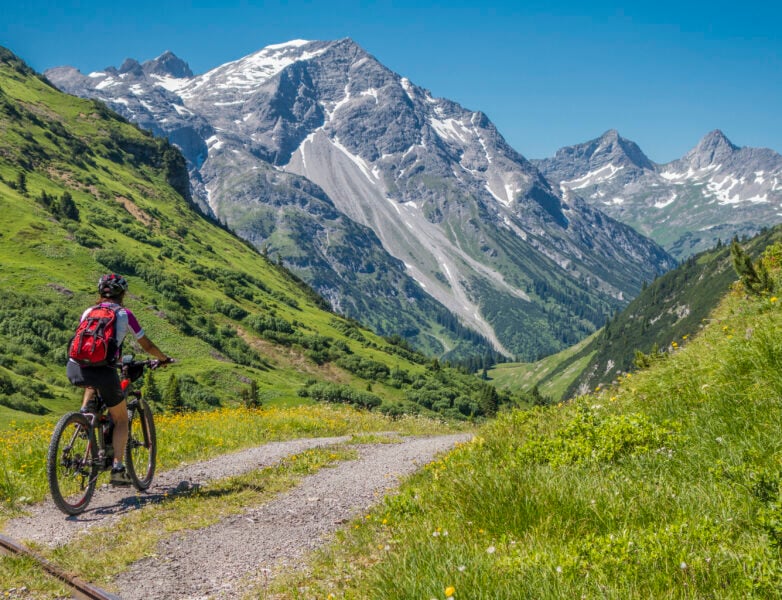
In the forest, the trails are often rooty and technical. The trees close in around you. It feels intimate. In the meadows, the views open completely. You can see across entire valleys to the peaks you crossed the day before.
Up high, the trails become rockier. The terrain is more exposed. The wind is stronger. You feel smaller. But you also feel very alive.
This constant change keeps the week interesting. No two days feel the same on the mtb Haute Route.
The group dynamic: strangers to teammates
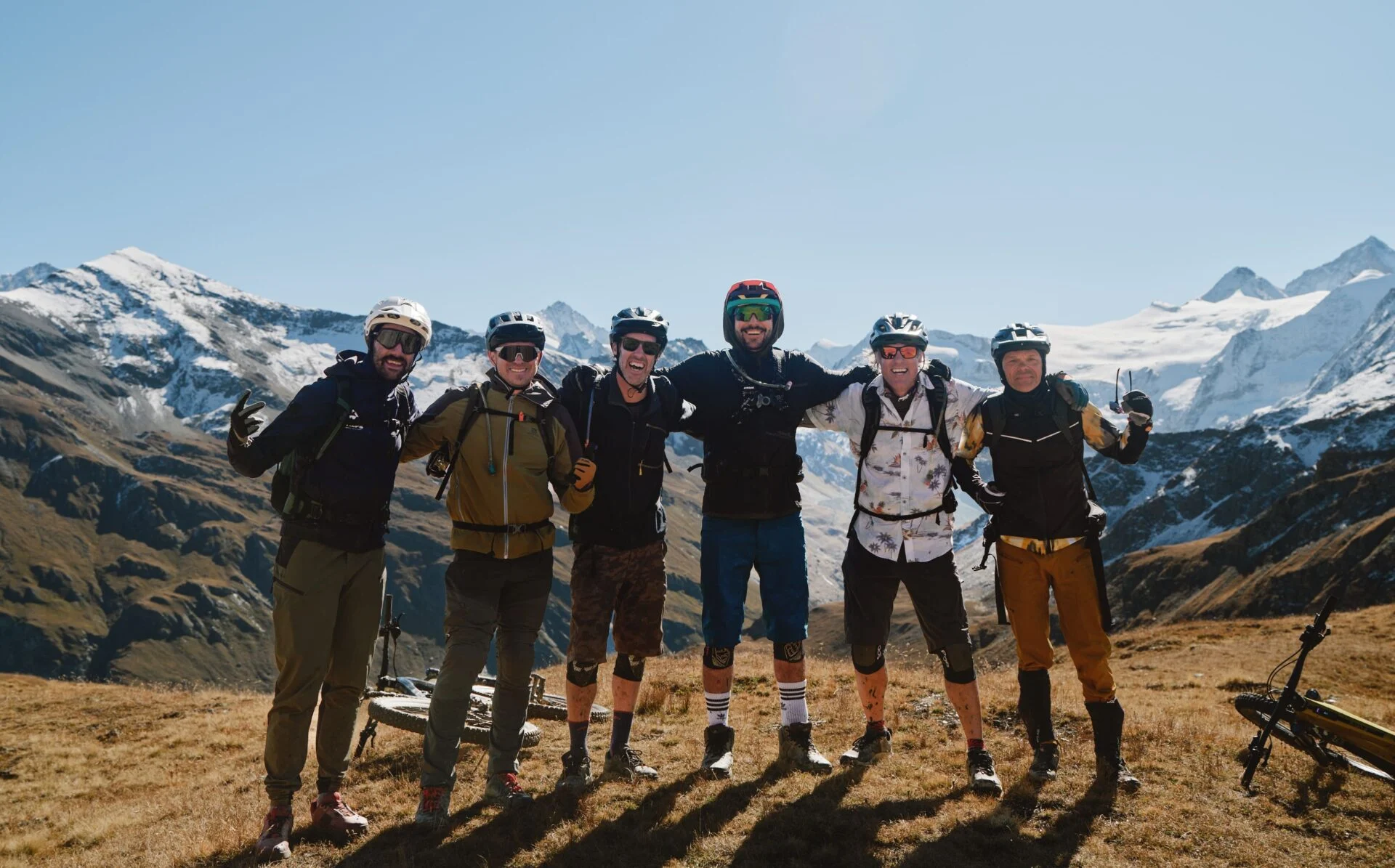
One of my favorite parts of guiding this traverse is watching the group transform on the mtb Haute Route. On day one, everyone is a little focused inward. Adjusting to the bike. Feeling the altitude. Wondering how their legs will respond. By day three or four, something shifts.
People start waiting for each other at trail junctions without being asked. Someone shares snacks. Someone else helps fix a minor mechanical. The conversations at dinner get longer.
When you climb 2,200 m (7,200 ft) together in one day, you build something.
There will always be moments of doubt during a week like this. A tough climb. A sudden weather change. A section that feels intimidating. And when you go through that as a group, it creates a bond.
By the time we see the Matterhorn, it rarely feels like individuals finishing a trip. It feels like a small team arriving together after completing the mtb Haute Route.
How difficult is the Haute Route?
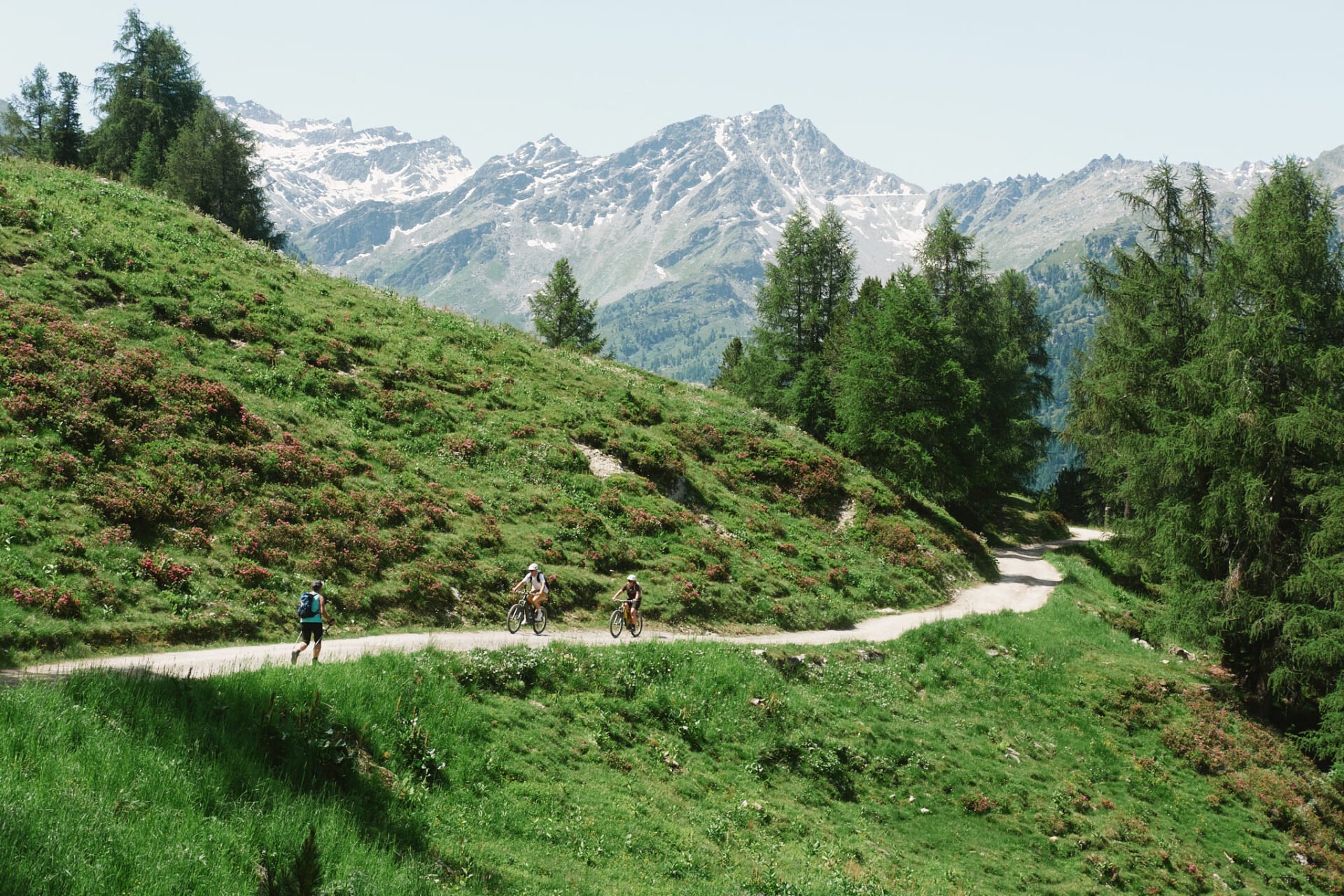
I would describe the mtb Haute Route as moderate to challenging.
You need solid mountain biking experience, ideally five years or more. You should feel comfortable on singletrack, managing rocks, roots, and narrow trails. Exposure exists in certain sections, so confidence and self-awareness are important.
The most important skill is knowing your limits.
Walking a short section is never a failure. It is smart decision-making.

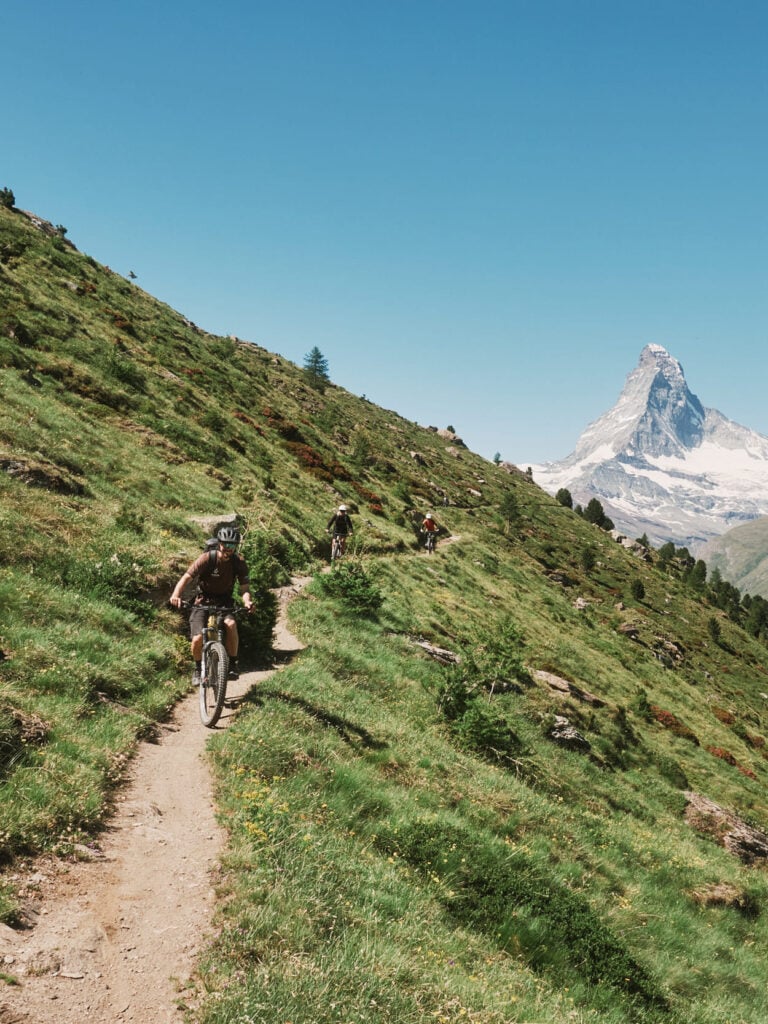
Physically, if you train two to three times per week and feel good after demanding workouts, you will likely be prepared. The cumulative effect of seven consecutive days is real. Spending time on your saddle before the trip makes a big difference.
Weather can also add complexity. We can experience sun, mud, storms, or even snowfall in August. We adapt daily. Trail conditions always guide our decisions.
Because we know this terrain intimately, we can adjust routes and still keep the riding flowy and rewarding on the e-mtb Haute Route.
Weather, unpredictability, and why I love it
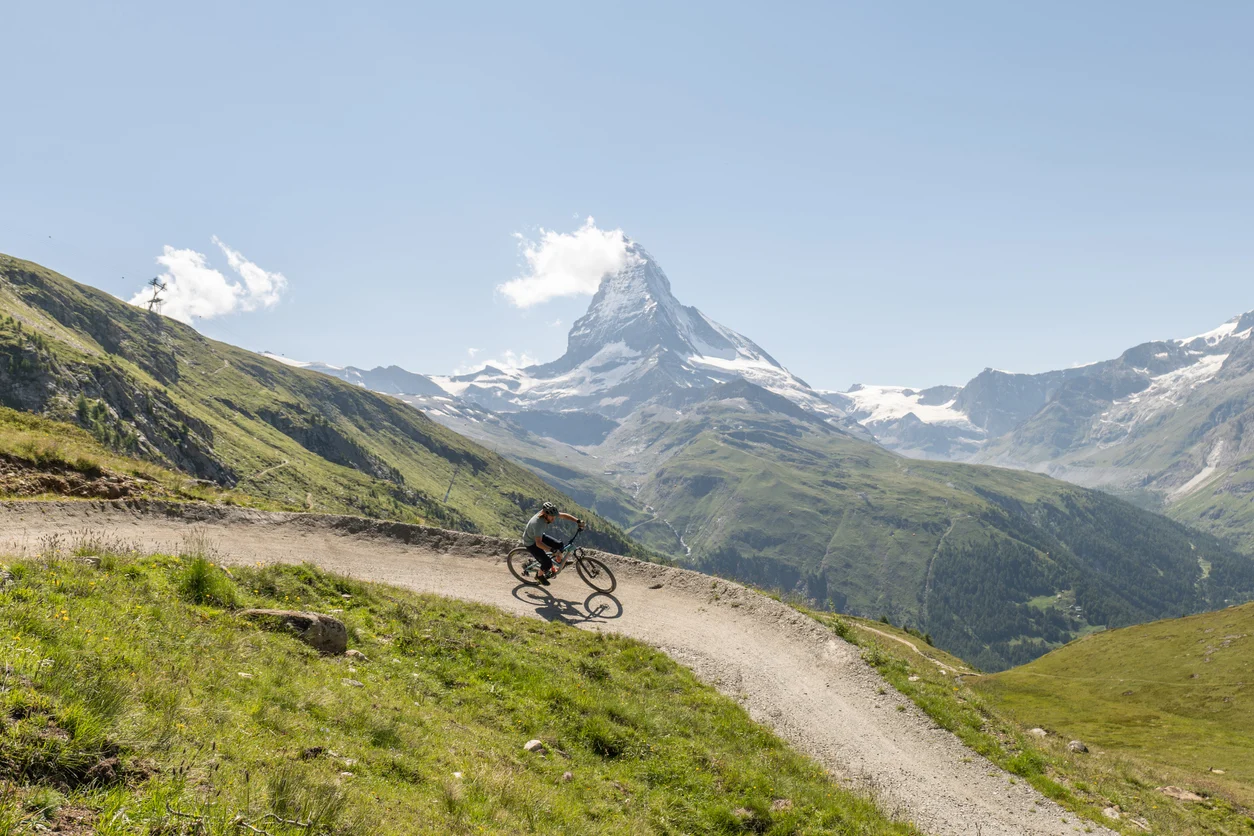
The Alps have their own personality.
You can wake up to blue skies and finish the day in mist. You can ride in short sleeves one afternoon and pull on a down jacket the next morning at altitude. Sometimes it even snows in August near 3,000 m (9,840 ft).
For me, that unpredictability is part of the beauty.
Last season, we had a massive snowfall late in spring. Before the first tour, we had to clear fallen trees from some of our favorite trails. It was intense. But while searching for alternatives, we discovered new lines that we now use regularly.
It keeps the route alive. It keeps us exploring. Every week is slightly different. Different light. Different trail conditions. Different energy in the group. I would honestly ride it every week of the summer and still find something new.
For riders who have completed other crossings, even something like the Haute Route Pyrenees, the scale and alpine character here feel distinctly different.
Where effort meets comfort
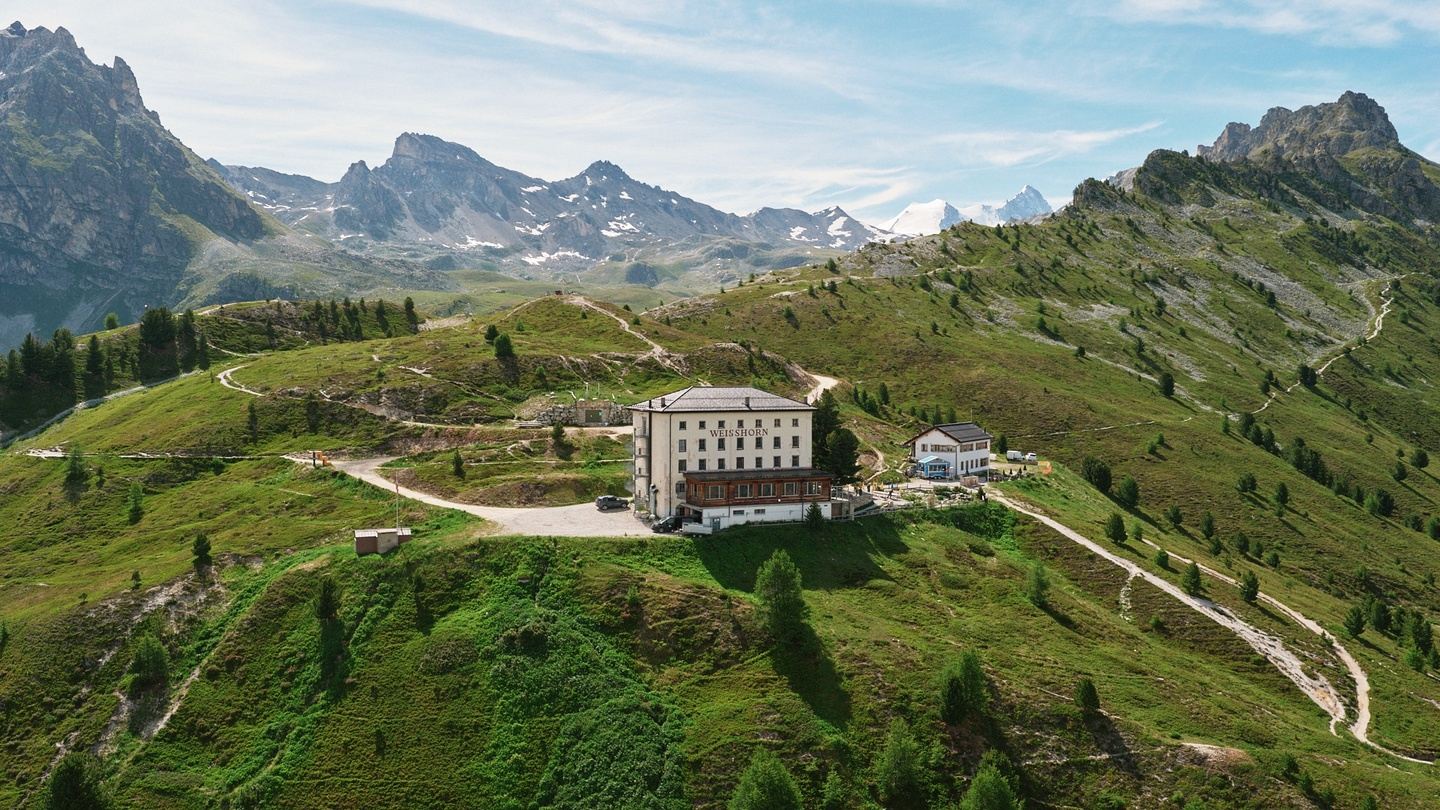
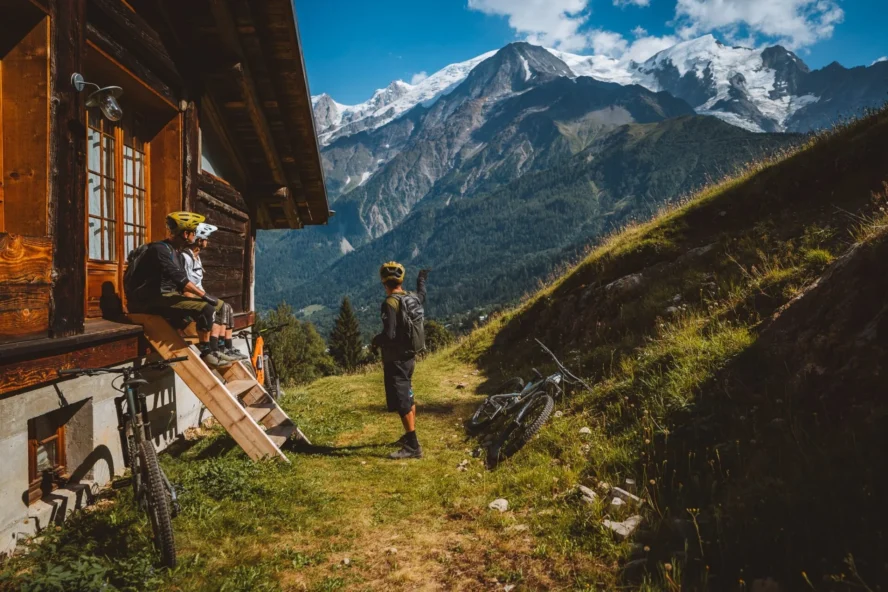
This traverse moves through eight valleys. That means the accommodation varies. Some nights we stay in old alpine buildings where you can feel the history in the walls. Thick wood beams. Local owners. Simple, authentic atmosphere.
Other nights are more luxurious. We usually have three to four spa evenings during the week. And after a long alpine day on the mtb Haute Route, that is not just a luxury. It is smart recovery. Sitting in a spa with your legs in warm water, looking out at the peaks you crossed earlier, gives you a different perspective. Your body relaxes. Your mind settles.
It is that balance between effort during the day and comfort at night that makes the week sustainable.
Food along the mtb Haute Route
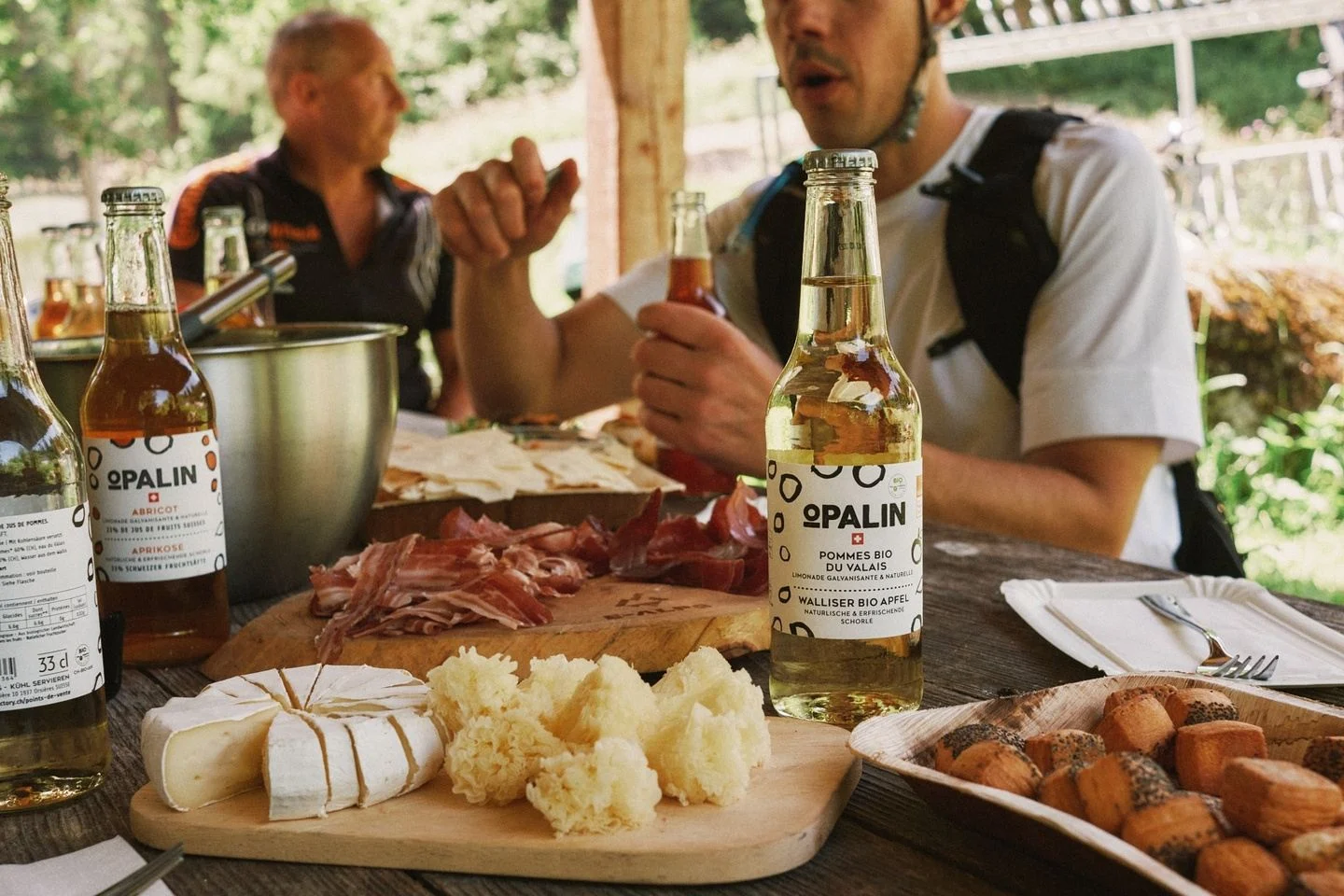
Food becomes part of the rhythm on the mtb Haute Route. After long climbs on an e-mtb and technical descents that demand focus, what you eat matters more than you think.
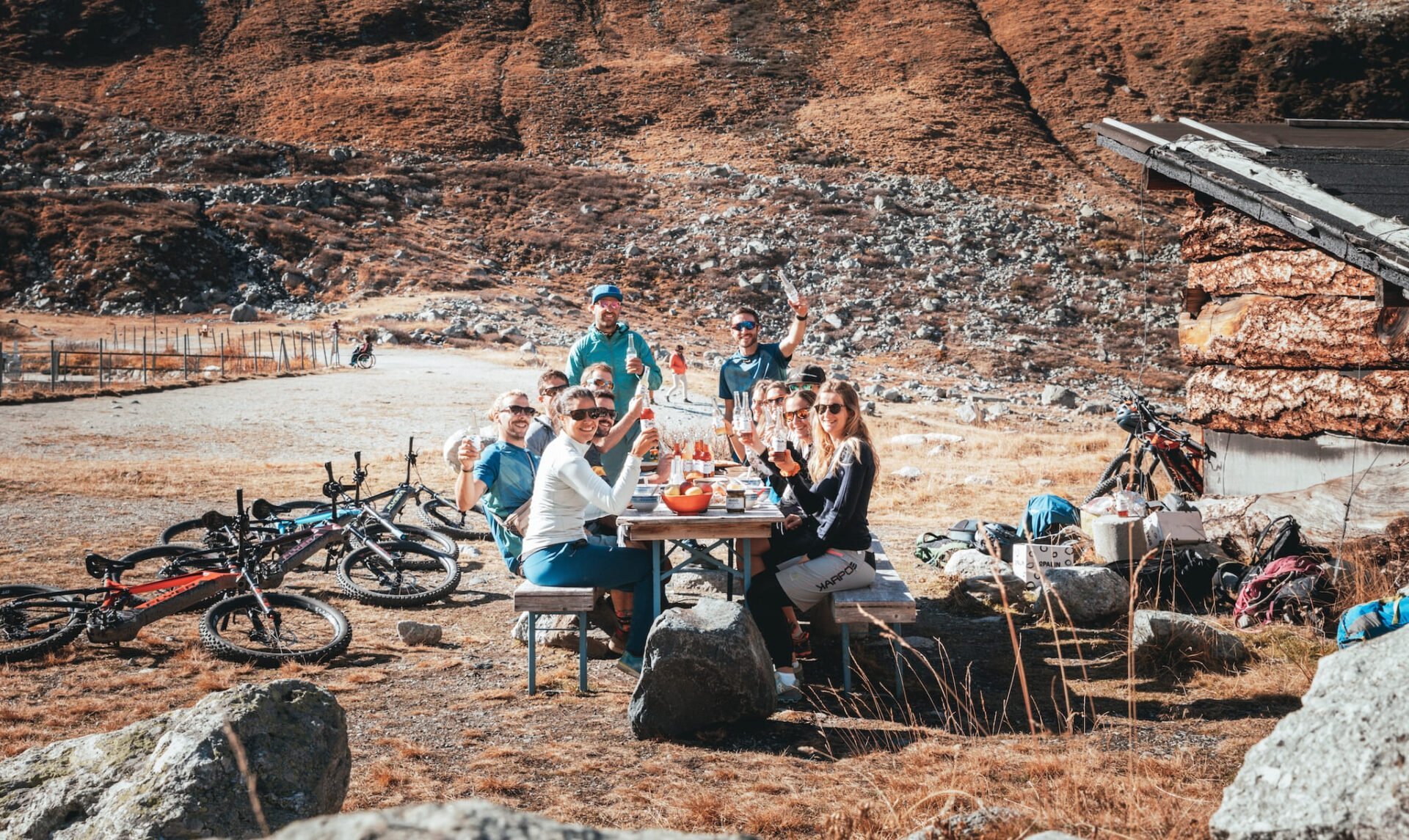
At lunch, we meet our support team somewhere high or tucked into a quiet valley.
The menu follows the mountains. If the wind is biting at altitude, there’s warm soup and something comforting. If the sun is strong, it’s fresh salads, local alpine cheeses, good bread, and seasonal fruit. Simple food that restores you without weighing you down.
In the evenings, we lean into alpine cuisine. Rösti, mountain vegetables, slow-cooked meats, and desserts you actually feel you’ve earned. You finish the day nourished, relaxed, and ready to do it all again.
The payoff beneath the Matterhorn
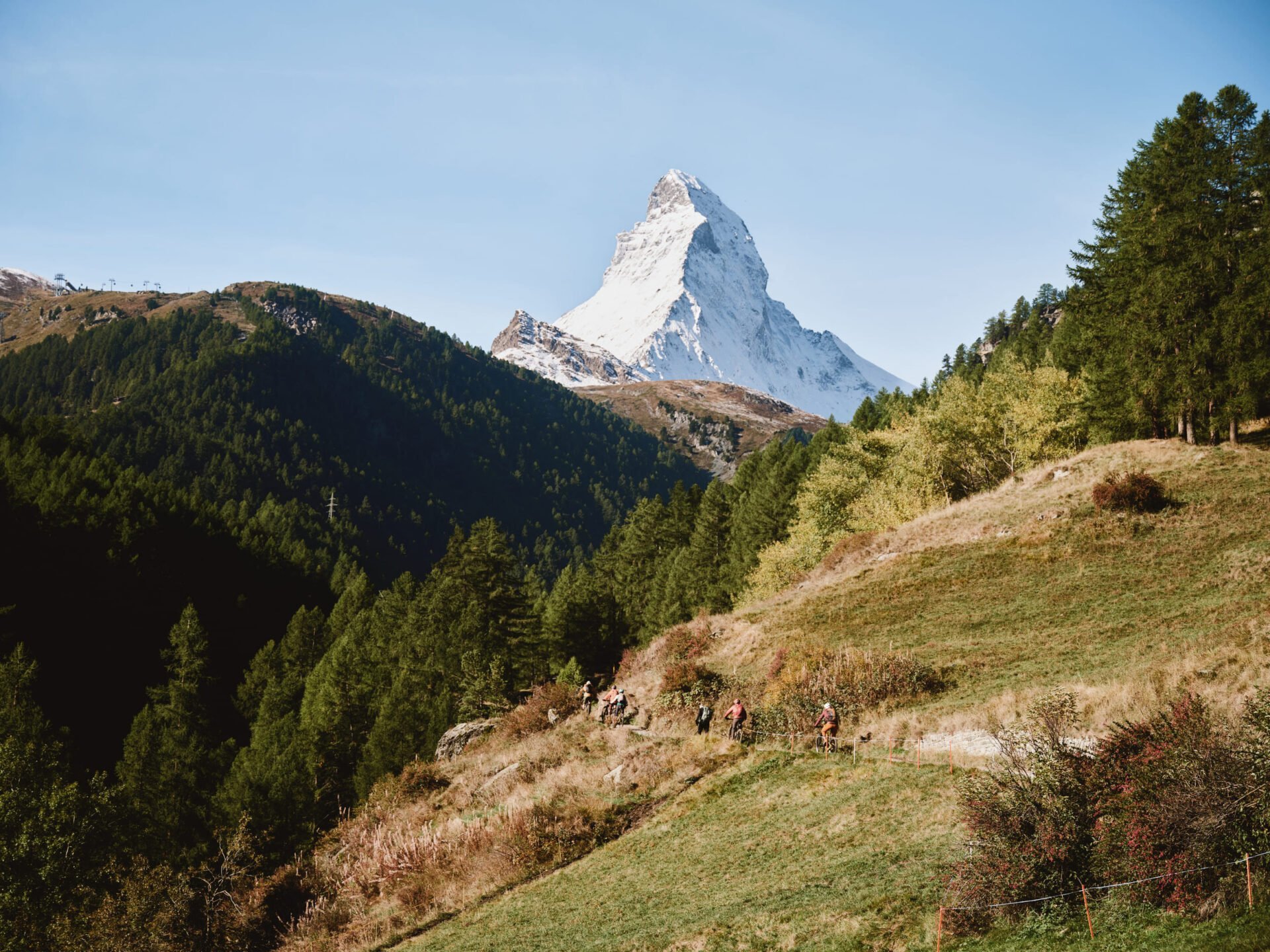
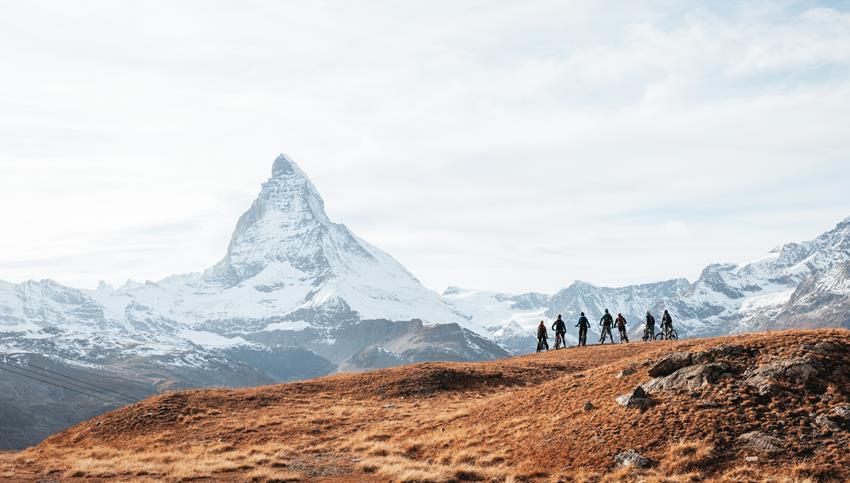
As we approach Zermatt, the terrain opens again. And then you see it.
It rises sharply above the village. More striking in real life than in any photo. After six days of riding through forests, meadows, and high passes, arriving here feels symbolic. You started under Mont Blanc. Now you stand beneath the Matterhorn.
There is always a moment of silence in the group when we first see it clearly. A quiet recognition of what we just did.
You can choose to ride more that morning. The trails around Zermatt are playful, with flow sections and even bike park options. Or you can simply walk through the village with a coffee and let the week sink in.
Both feel right.
Behind the scenes on the e-mtb Haute Route
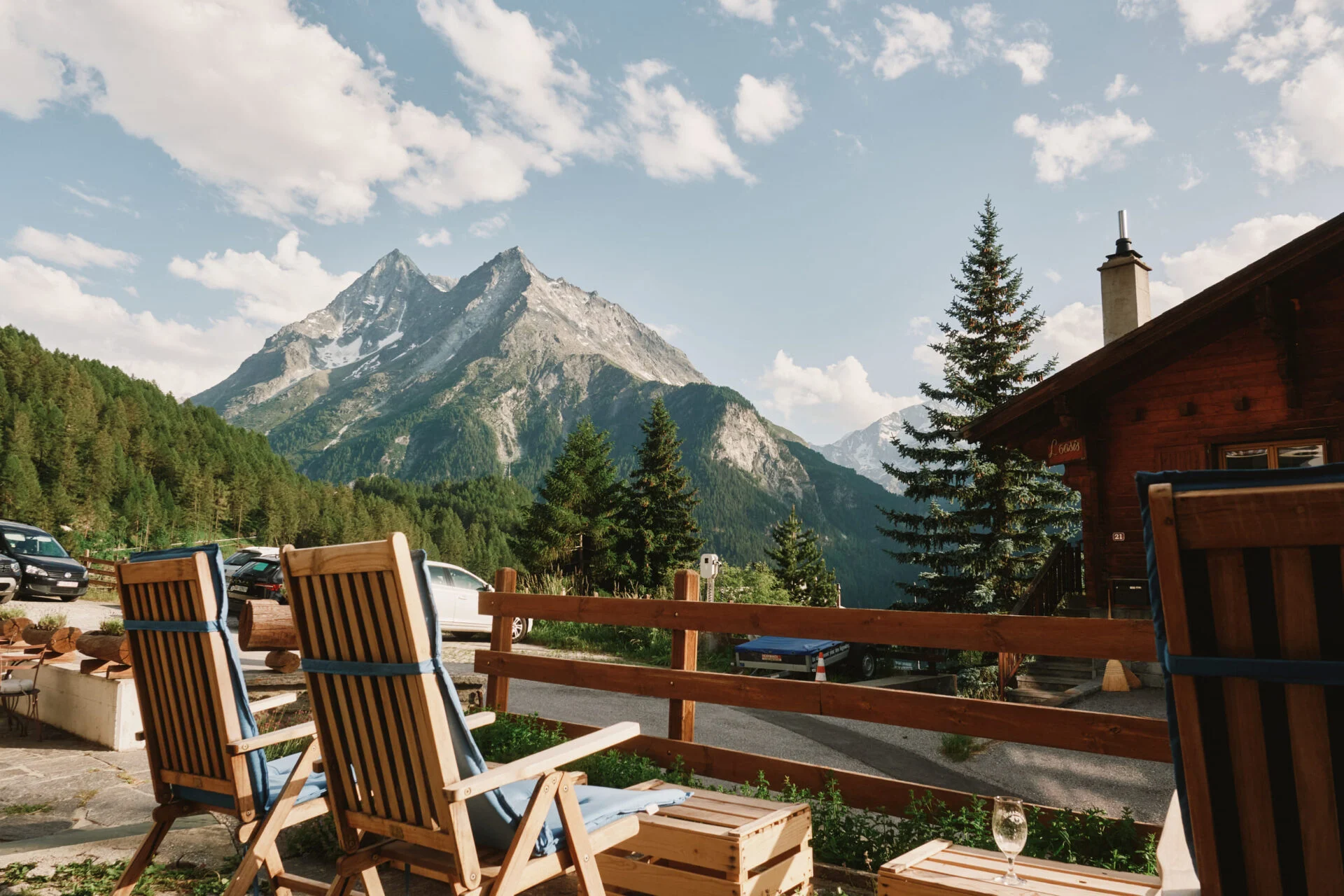
What makes this traverse feel so flowy is not just the riding. It is everything happening in the background.
We travel with a support van and one dedicated support staff member. Every day, they meet us at lunch with food prepared according to the weather and the season. If it is cold, there is warm soup. If it is hot, something fresh and light. That midday pause is a real reset.
We also swap batteries at lunch. Two batteries per day allow us to manage power intelligently without stress. We monitor usage, adjust modes, and make sure everyone is comfortable.
For groups of more than five riders, we guide with two guides. That gives us flexibility. We can split briefly if needed, adapt to different speeds, or adjust lines based on confidence levels.
From the outside, it looks simple. But it is carefully orchestrated so that you can just ride and enjoy the mountains.
Why this route never gets old
I have been guiding in Verbier for years. In winter, I work as a professional freeride skier. The mountains are not just where I work. They are where I think clearly. Where I reset. Where I feel most myself.
And still, this route never feels routine.
Maybe it’s the scale of it. The way the valleys stack one after another. Maybe it’s the history under your tires, knowing you’re tracing a line that alpinists and ski tourers once fought their way across. Or maybe it’s simply the rhythm of it all. Climb. Focus. Descend. Repeat.
The mtb Haute Route is not just 280 km (175 mi) and 12,000 m (39,000 ft) of elevation. It is seven days of moving through the high Alps with intention. It is earning every descent. It is arriving beneath the Matterhorn knowing you carried yourself across something real.
And the quiet truth is this: when we roll into Zermatt and look back at everything we’ve crossed, I’m not thinking about finishing.
I’m already thinking about the next time I get to guide it again.