
I started on Kilimanjaro as a porter in 1999. I had not planned it that way. My dream was to become a safari driver guide. But there were very few jobs around Moshi at the time, and porter work was what was available. It was considered a low-status job back then. No proper equipment, no fair treatment, no weighing of luggage at the gates.
Very few people wanted it. I took it anyway. And on my first climb, I noticed something: a lot of the guides were not very experienced. I saw the opportunity. I decided I would start slowly, but I was certain I would rise.
I trained with Kilimanjaro National Park and became a guide in 2006. When I was still a porter, I used to watch the tour leaders who came with foreign clients and I would think: I want to be one of them. I kept moving. Guide, then lead guide, then company owner.
The mountain I started on as a broke porter with no gear is the same mountain I have now summited roughly 300 times. Every single climb has been different. When I am up there, away from Moshi, away from everything, it genuinely feels like another world. I still love every moment of it.
This is what I tell people who are planning to hike Kilimanjaro: do not underestimate it. It is not the most technical mountain in the world, but it is not a walk in the park either.
What it is, done properly, is one of the most extraordinary things a person can do on this planet. Stick with me and I will make sure you are one of them.
Hiking Kilimanjaro: What Makes This Mountain Different
People know Kilimanjaro as Africa’s highest peak. What many do not realise is that it also rises alone, a single volcanic mass erupting straight out of the East African plains, with no range to lean on. That makes it the world’s highest freestanding mountain, nearly 5,000 meters (16,400 feet) of climb from flat ground to summit.
And unlike most mountains of that stature, it has three volcanic peaks, six distinct routes to the top, and five completely separate ecological zones stacked one on top of the other.
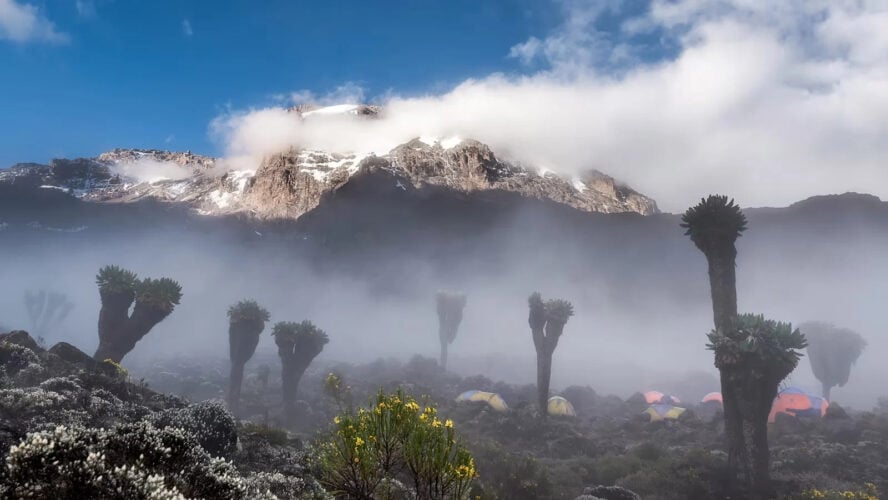
That variety is what makes hiking Kilimanjaro so compelling. You start in cultivated farmland and move through dense rainforest into heather and moorland. Above that comes the alpine desert, almost nothing alive, just rock and sky. And then the summit zone, the ice cap, the crater floor.
Five zones, one mountain
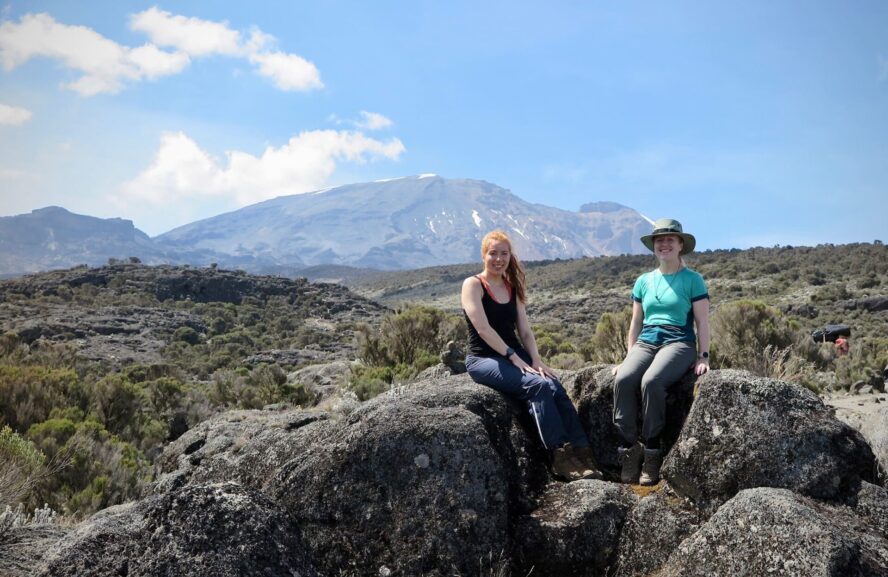
The southern and western flanks carry the densest forest. The eastern side is shorter and drier. Once you climb above the treeline, the heather gives way to moorland with elephant grass. Higher still, the alpine desert begins. By the time you are approaching the Kilimanjaro summit, you are in a landscape that feels genuinely lunar.

When there is snow in the early season, around June, it is white everywhere. The floating clouds sit below you. Later in the dry season, the permanent glaciers are visible from a distance, though they are retreating year by year. The crater vent is there too, the reminder that this mountain pushed itself up from the ocean floor not so long ago, in geological terms.
The people who run the mountain
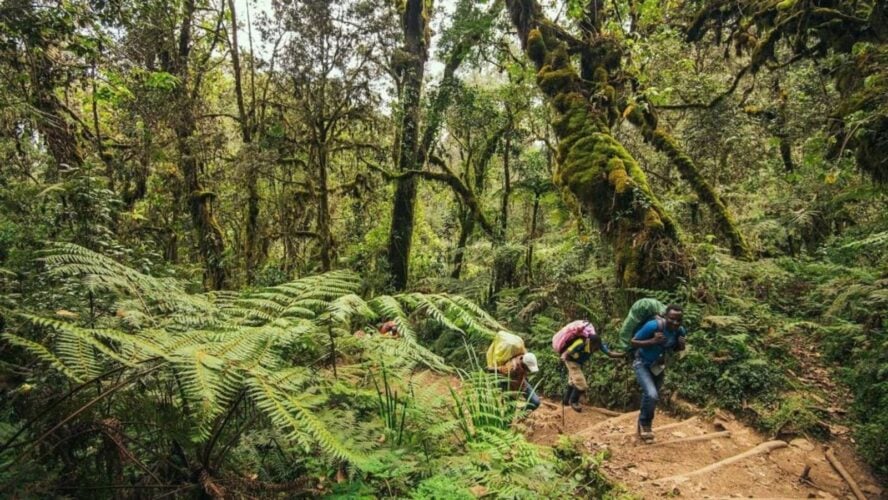
What separates trekking Kilimanjaro in Tanzania from almost any other big mountain experience is the crew. You are not moving self-supported. You are moving an entire operation up and down the mountain. Guides, Kilimanjaro porters, a cook, camp staff. It is like moving a village. That is not incidental. It is core to what Kilimanjaro is.
When climbers come back from mountains in the Alps or the Himalayas and then come here, the first thing they say is that this is different. It is the people. The care. The intention behind every part of the experience.
Tanzanian people put something into this mountain that you cannot get anywhere else.
How to Choose Your Kilimanjaro Route
There are six Kilimanjaro routes and each one is genuinely different. Here is how I break them down.
The two most popular: Machame and Lemosho
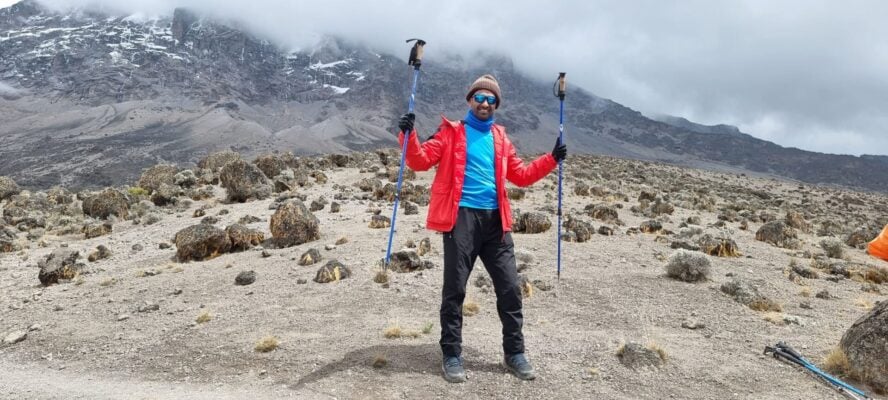
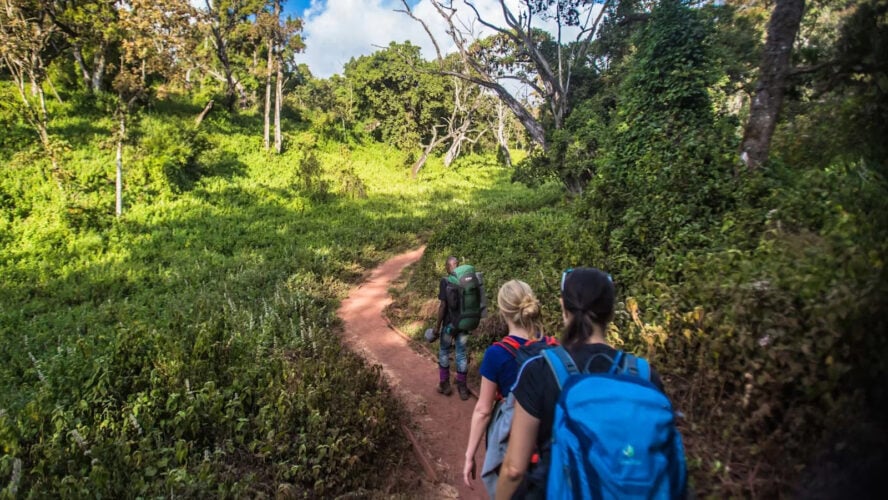
The Machame route is challenging from day one. The southern forest is dense and the first day can take six to seven hours depending on your pace. It is demanding, but the scenery on the southern approach is the best on the mountain.
The Kilimanjaro Lemosho route is my personal recommendation for most hikers. The first day is only three hours. You ease into the mountain, and the early days are gentle enough that your body has time to begin adjusting before the altitude becomes serious. The Lemosho route joins the Machame route partway up, and from that junction you can choose to continue south toward the Barranco Wall, or peel off onto the Northern Circuit.
The Kilimanjaro Northern Circuit: the route I love most
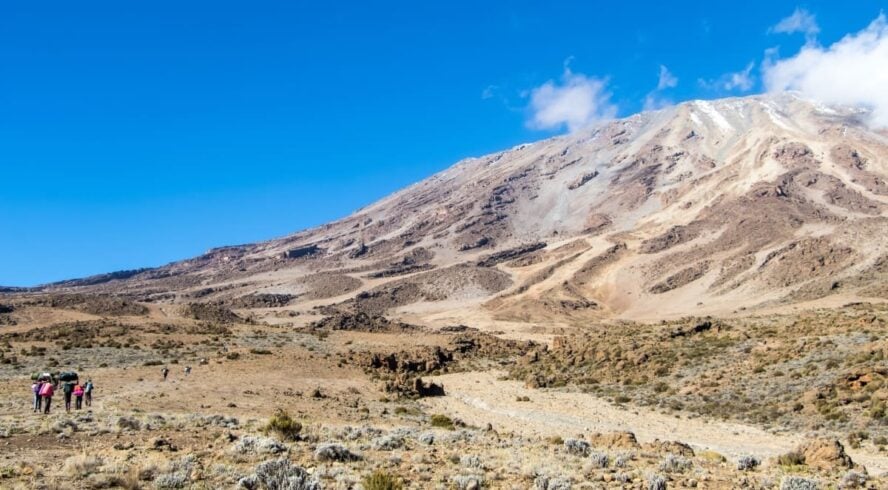
The Kilimanjaro Northern Circuit is the longest option, typically nine or ten days. It is also, in my opinion, the finest experience the mountain offers. You go all the way around the peak. You see Kilimanjaro from every face. On the Kenyan plains side, if it is clear, you can see all the way across the border.
There is a camp on this route that I love and that almost nobody talks about: Moir Hut. It sits away on its own, completely isolated. Very few groups pass through because the Northern Circuit is long and expensive, so most people take shorter routes. When you are at Moir Hut, you feel like the mountain belongs to you.
From there you join the Grand Traverse, which carries you around the northern face before the final push to the Kilimanjaro summit. It is a section that does not appear on anyone’s highlight reel, but it is the part of hiking Kilimanjaro I look forward to most every time. If you have the days and the budget, the Northern Circuit is the one. No question.
The shorter options
The Umbwe route is short and very steep. You need to be genuinely fit to attempt it.
The Marangu route uses huts instead of tents and was historically the most popular route on the mountain. It was the original route. Today it is the least busy of the main options, since most hikers now prefer the camping experience.
The Rongai route starts on the eastern side near the Kenyan border. It is the shortest camping route available. It has its uses, but the scenery is not as varied as the southern approaches.
How Hard Is Hiking Kilimanjaro
Anybody can hike Kilimanjaro. I mean that. Children do it. People with disabilities do it. Blind climbers have stood on the summit. It is not about athletic ability. It is about preparation, a good itinerary, a good team, and the right mindset going in.
What you need to accept before you arrive is that you will be tired. You will be at altitude. The combination of fatigue and thin air is real, and it compounds. If you go in expecting a casual walk, you will struggle. If you go in knowing it will be hard and you are ready for that, you will almost certainly make it.

The one section that gives people pause is the Barranco Wall. It involves some scrambling, using your hands on the rock, working up through a series of ledges.
There is a famous spot near the top called the Kissing Rock, where the wall comes so close you are practically pressed against it as you pass. It takes about 40 minutes in total but it’s not technical climbing. That is just attention and patience.
Summit night is the hardest part
Summit night is in a category of its own. You start between 11 pm and midnight from Barafu Camp, wearing almost everything you own. It is dark. It is steep. The altitude is serious. You are heading for Stella Point on the crater rim, and from Barafu that takes six to seven hours at a normal pace.
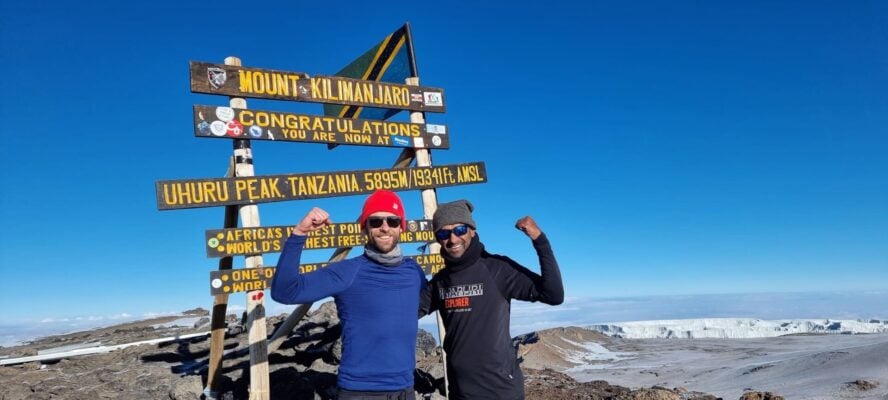
If your timing is right, you arrive at Stella Point around 5:30 am. The sun is coming up over the east. The horizon shifts through yellow into orange, and then the African sunrise comes. From there, it is another 45 minutes along the rim to Uhuru Peak, the true Kilimanjaro summit. Most groups are on top between 7 and 8 in the morning.
The descent from the summit back to Barafu takes two to three hours. Then you rest for an hour before continuing down to your next camp. Total time for summit night, start to finish: twelve to sixteen hours.
You will be exhausted, but you will also feel like a hero.
How Long Does It Take to Summit Kilimanjaro
The honest answer is: longer than you might think, and that is a good thing.
Shorter routes exist, four and five days on the mountain. I do not recommend them. Not because they are impossible, but because they do not give your body enough time to adjust. The Kilimanjaro altitude sickness risk goes up sharply on compressed itineraries, and the summit success rate goes down.
The routes I focus on are the eight-day Lemosho and the nine-day Northern Circuit. On those itineraries, you spend several consecutive days at similar elevation before pushing higher. At Moir Hut, Pofu Camp, and Lava Tower you are moving up and down small ridges without dramatically increasing your sleeping altitude.
That is the principle: climb high, sleep low, repeat.
A typical day on the mountain
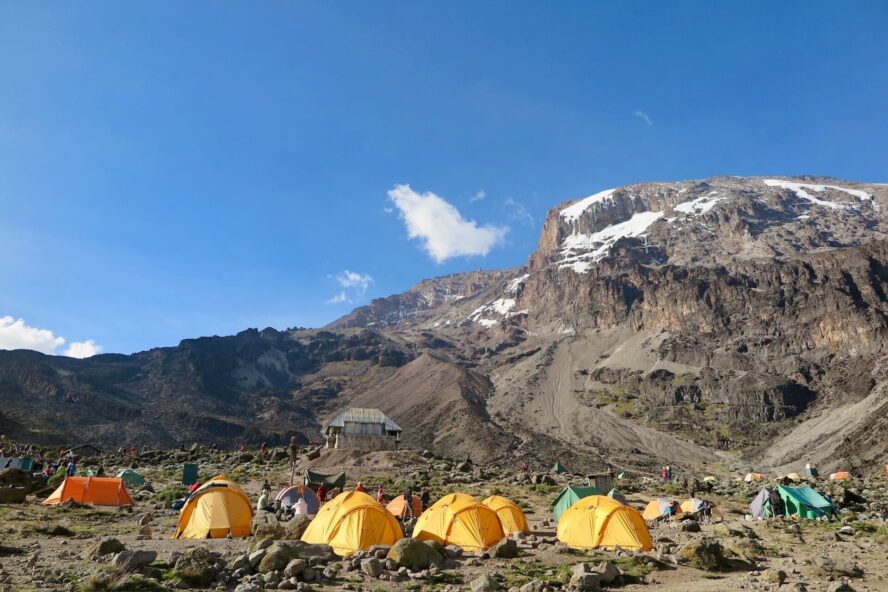
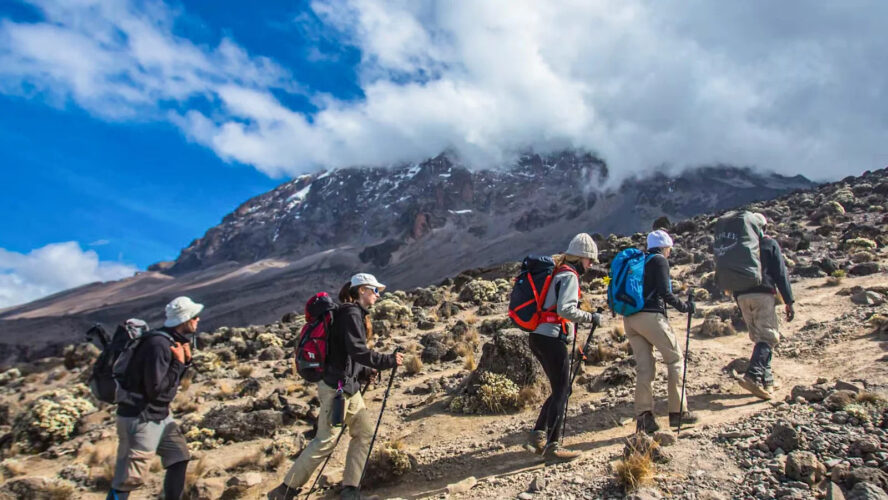
Most walking days are five to seven hours. Early starts are common because longer days need more daylight. On bigger days, wake-up can be as early as 4:30 am. A tea or coffee arrives at your tent. Breakfast follows, then you move.
The pace on hiking Kilimanjaro is deliberately slow. You will hear the Swahili phrase pole pole, meaning slowly slowly. This is not a suggestion. It is a survival strategy.
Kilimanjaro Altitude Sickness: What to Expect
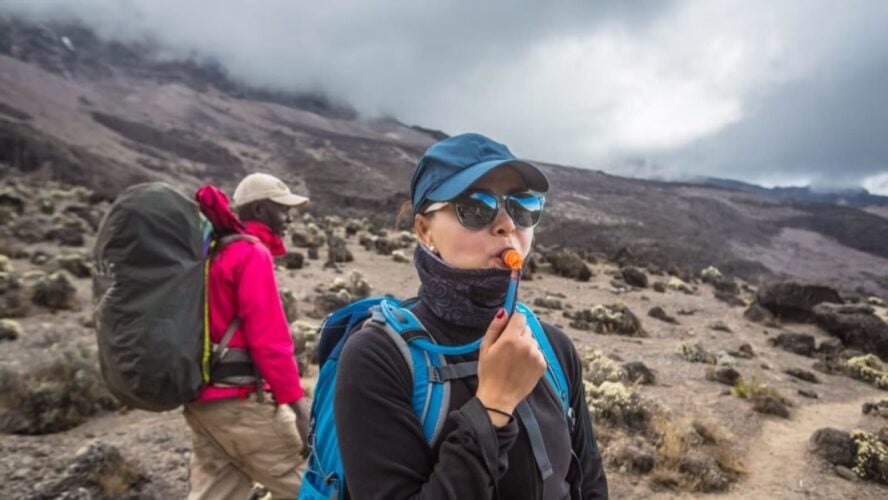
Everyone gets a briefing the night before the climb starts. Kilimanjaro altitude sickness is the main topic. The reason is simple: it does not discriminate. Experienced climbers get it. Guides get it. Porters get it. Being fit does not protect you.
Symptoms typically begin from around 3,000 meters (9,800 feet). A mild headache, stomach upset, difficulty breathing, fatigue. These are normal. They come and go. Most people move through them without intervention.
The serious conditions are HACE (high altitude cerebral edema, where fluid builds around the brain) and HAPE (high altitude pulmonary edema, fluid in the lungs). Both are life-threatening. Both require immediate descent.
Our guides are WFR certified and retrain every two years. If I see those signs, you are coming down. Summit second, safety first.
The most important thing you can do
Be transparent. Tell your guide the moment something feels wrong. The moment your body changes.
Do not push through symptoms without saying anything because you are worried about turning back. I would rather turn around a client and send them up on another day than ignore warning signs and create a crisis above 5,000 meters (16,400 feet).
How to Prepare to Climb Kilimanjaro
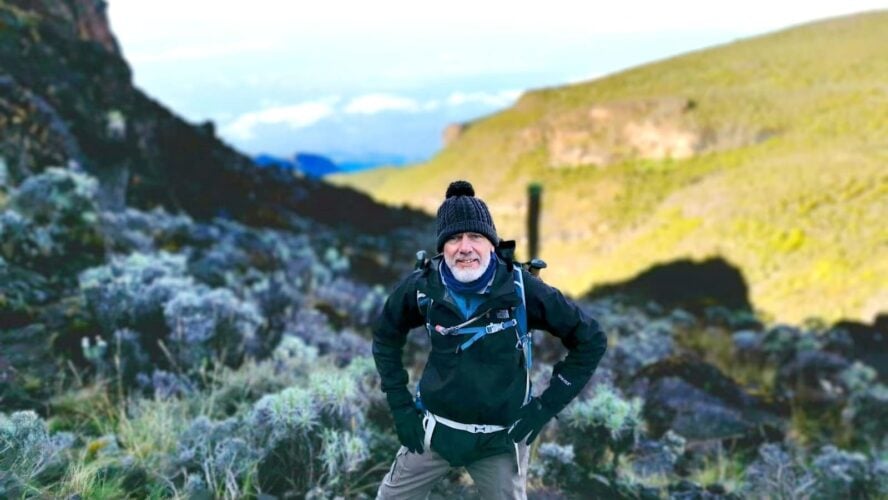
Start a minimum of one month out. The best preparation combines cardiovascular fitness with leg strength.
Running is one of the best options. If you can run five laps of a football pitch without stopping, you are in reasonable shape. Cycling works well too, opening the chest and building the leg muscles that will carry you up the mountain. Aim for around 10 kilometers (6 miles) per day in the weeks leading up to the trip. Swimming is a useful supplement.
The goal is not to become an athlete. The goal is to make sure your body is not under stress from basic physical exertion when altitude is already adding pressure. If your legs are exhausted by hour three, the altitude will feel worse. If your legs are managing fine, you have more reserves to work with.
Your mindset matters as much as your fitness
One other thing: arrive with a positive mind. Seriously. This sounds like advice that belongs on a motivational poster, but it matters. People who come to the mountain already expecting to fail, already catastrophizing the summit night, already dreading the cold, those climbers struggle.
People who accept the challenge, expect discomfort, and stay mentally present tend to do well. Anyone can do this. I have watched blind climbers reach the top. I have guided people with disabilities to Uhuru Peak.
The mountain is not the obstacle. Your mind is.
Gear to Bring When Hiking Kilimanjaro
You need proper gear from boots to hat. That is not marketing language. That is the reality of a mountain that moves through five climate zones in five days.
The most critical items
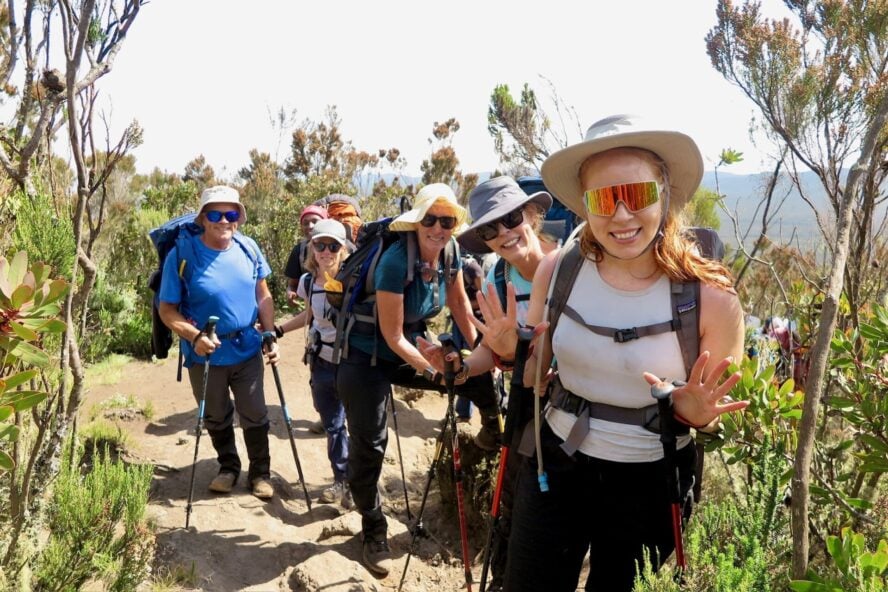
Start with your boots. They need to be waterproof, broken in, and ankle-supporting. Do not bring new boots onto this mountain. Your feet will tell you on day one whether you made a mistake, and by then it is too late to fix it.
Clothing works in layers. A moisture-wicking base layer, an insulating mid-layer, and a waterproof shell on top. On summit night, you wear almost all of it at once. The temperature at Barafu Camp drops hard after dark, and on the crater rim it can be brutal. Pack a sleeping bag rated to at least -10°C (14°F). Cold nights at high camp are not a mild inconvenience. They are a test.
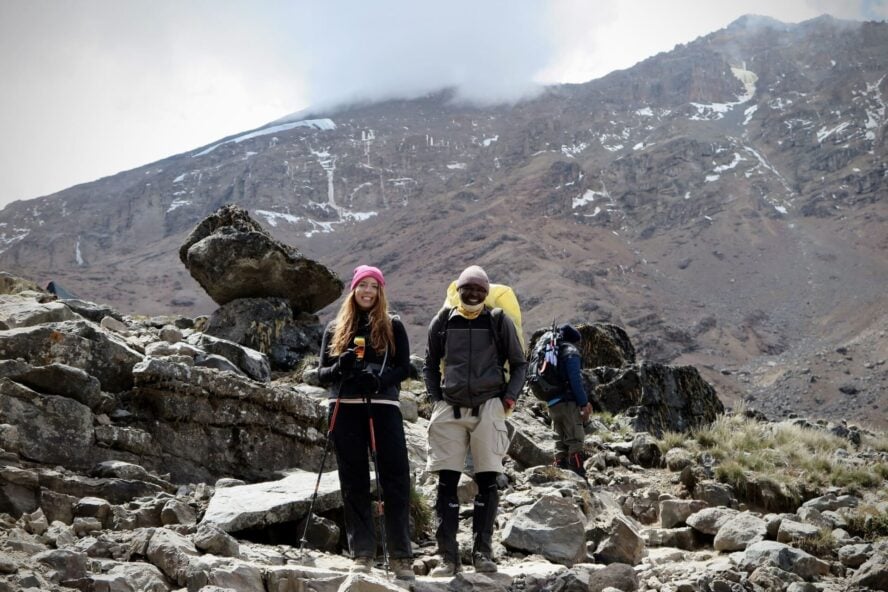
Trekking poles are worth bringing. They earn their place on the descent and on the Barranco Wall, where the scrambling puts stress on your knees and balance. A good headlamp with spare batteries is non-negotiable. Summit night starts around midnight and you will be climbing in the dark for hours. This is not a detail to cut corners on.
One thing people consistently underpack is sun protection. The equatorial sun at altitude is more intense than most hikers expect, and the glare off snow in early season makes it worse. Sunscreen, lip balm, and quality sunglasses are not optional extras. Bring them and use them from day one.
Kilimanjaro Porters: What Every Hiker Should Know
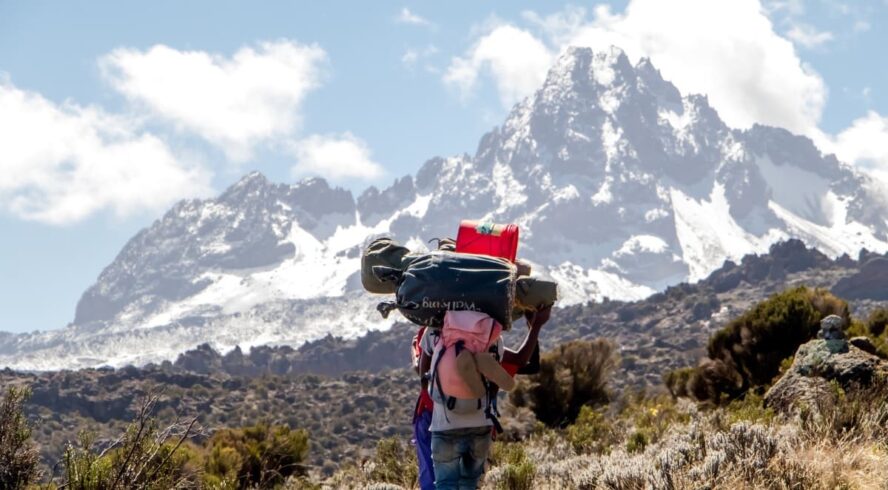
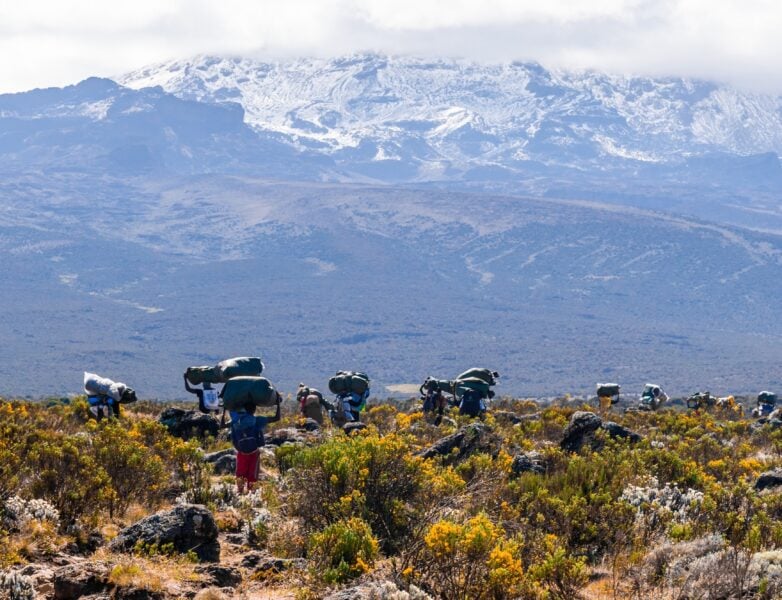
The Kilimanjaro porters are the reason the mountain works. Each porter carries up to 20 kg (44 lbs) of equipment. The porters move faster than you. They are at camp before you arrive, setting up your tent, preparing your meals, and breaking everything down the next morning.
This mountain is their income. It is how they pay school fees, rent, food, clothing. When you come to hike Kilimanjaro, you are directly supporting those families. I know this from the inside because I was a porter before I was a guide, so I know exactly what that work costs.
Why your choice of operator matters more than you think
I passed through some real humiliation in those early years. There was no fair treatment for porters back then, no regulation, nothing enforced. I have carried the memory of that experience into how I run my team today. Every crew member gets good meals, a proper place to sleep, and their salary paid on time. They have families waiting at home. They should not have to wait for their money.
The fact that porters from other companies now seek out work with us says more than any review ever could.
Not every operator runs things this way. Some charge clients very little and the porters absorb the cost in low wages and poor conditions. Choose your operator carefully. Ask whether they are certified with KPAP, the Kilimanjaro Porters Assistance Project, which exists specifically to enforce fair treatment of crew.
Most directors at other companies have never been guides or porters themselves. They do not know the mountain from the inside. That distance shows in how their crews are treated.
How much should you tip porters on Kilimanjaro
Tipping is expected and important. Suggested amounts shift over time, but as a baseline, most groups tip in USD. A general guide: roughly $20-$30 per day for the lead guide, $15-$20 per day for assistant guides, and $10-$15 per day for Kilimanjaro porters and the cook.
On an eight-day route with a full crew, this adds up to several hundred dollars. Budget for it before you arrive. It is not optional in any meaningful sense.
Distribute tips personally if you can, or make sure your lead guide distributes them fairly. Ask about this in advance. It matters.
When to Go: The Kilimanjaro Calendar
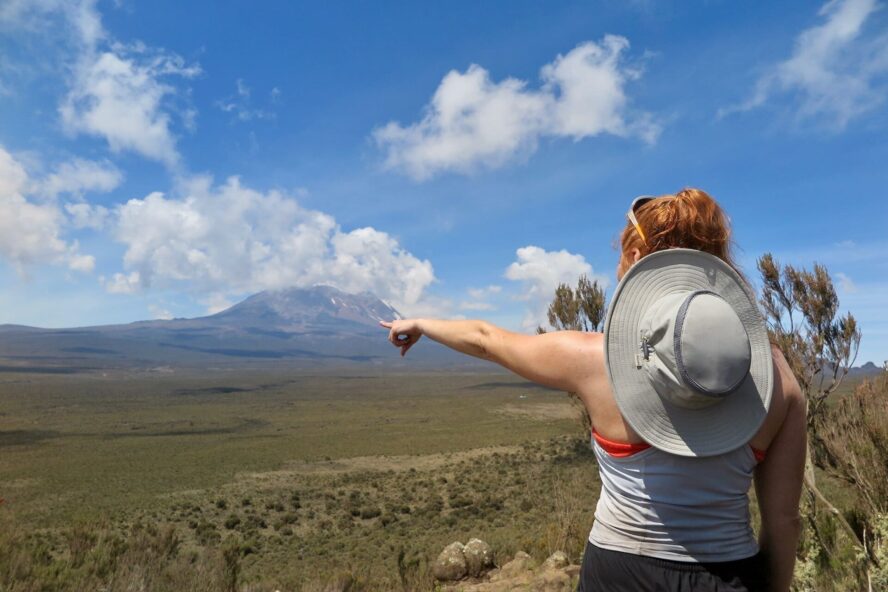
The main high seasons for hiking Kilimanjaro run from June through October and December through March. That’s the dry period on the mountain, the best visibility, the most stable conditions.
The busy months and the quiet ones
August and September are the busiest months. The Barranco Wall in peak season can feel like a traffic jam. If you want the summit without the crowd, June is quieter. October thins out toward the end as the season closes.
November is essentially off-season. Rains begin and views disappear. The same applies to April and May, which are the heaviest rain months and effectively a no-go for most hikers.
December has two distinct peaks. Christmas Eve on the Kilimanjaro summit is a real thing. Groups book specifically to be at Uhuru Peak on the 24th or 25th. New Year’s Eve is even busier. If you want to ring in the new year at 5,895 meters (19,341 feet), you will not be alone.
January through March offers a quieter window with reasonable conditions before the long rains return in April.
The Summit: A Sacred Place
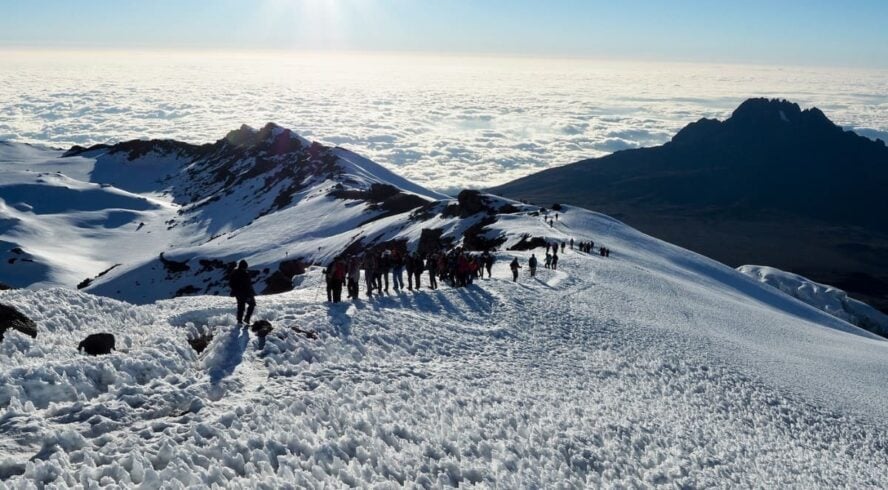
I always say the Kilimanjaro summit is sacred. I mean that honestly, not as a figure of speech.
Every time I reach Uhuru Peak, I step away from the group and I kneel down and pray. It has been that way since the very beginning. When I was still a young guide finding my feet, I would pray at the top to become a leader. Later, I prayed to one day own a company. I believed those prayers would be answered up there, close to the sky, away from everything below.
And they were. I am not a porter anymore. So when I go back now, I still kneel down. I am still talking to something I cannot fully name, but that I am certain is listening.
What people bring to the top
I have stood beside clients as they opened small containers and released the ashes of people they loved into the wind. There is always wind at the summit, and it takes the ashes immediately, carries them out over the crater, out over the clouds. I have seen people hold up photographs, faces of parents and children and partners who could not make the journey themselves.
Some bring flags. Some bring small chains or keepsakes pressed into their palm the whole way up. They say things quietly, things I do not listen to. Those moments belong to them.
There is something in the air at that altitude that is different from anything below. You feel close to something. I do not know exactly how to name it. But every person who stands there, regardless of where they come from or what they believe, feels it.
Once a visitor, always a visitor in Tanzania. You are welcome back.
And when you come, the mountain will still be there, a little changed maybe, the glaciers a little smaller, but the experience of hiking Kilimanjaro will be exactly what it was for me the first time I made that walk.
Something you carry with you for the rest of your life.