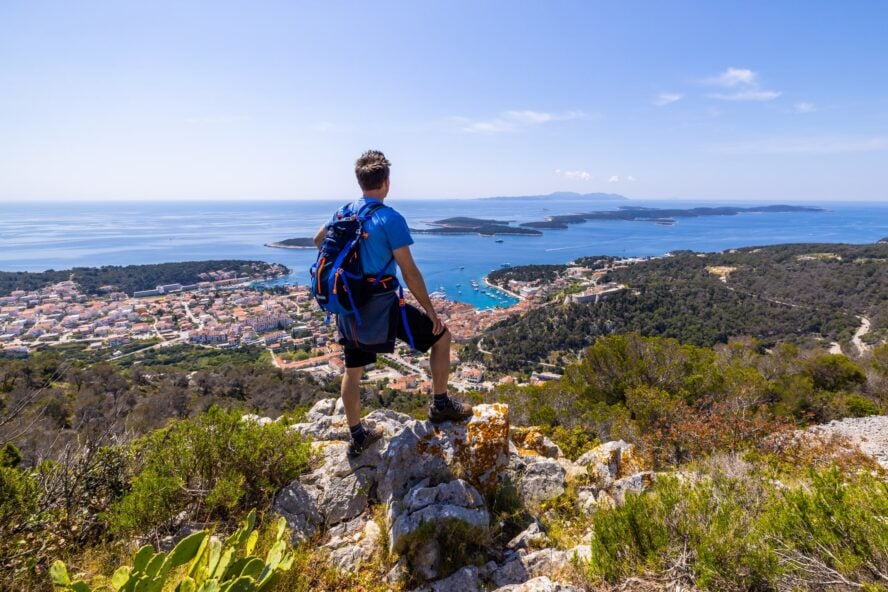

I sat behind a finance desk for years before I made the switch.
I was a windsurfer, a mountaineer, a climber long before I was anything else, so leaving the office was never really a risk. A friend of mine had made the same jump, trading a law degree for the outdoors, and together we started guiding sea kayaking trips along the Croatian coast. That was 12 years ago.
Sea kayaking wasn’t even the plan at first. We ran a wide range of activities in the early days. But kayaking in Croatia was just beginning to take off, and it became our core business almost by accident. 20 years ago, foreign visitors were the ones asking for it, long before locals had caught on.
I’ve since traveled 6 continents. Patagonia, New Zealand, all of it. And I keep coming back to the same conclusion: the most beautiful stretch of the Adriatic was a military secret for nearly five decades, sealed off from the entire world until 1992.
Most visitors flying into Split have no idea it exists. I’ve spent 12 years learning every cave and cove of it by kayak, and I still haven’t run out of new corners to show people. Let me take you there.
Why kayaking in Croatia works so well
Sea kayaking is meditation with a paddle in your hand. Not lake paddling, not a river trip, but open water, real swells, and a coastline that never repeats itself. For me, kayaking in Croatia specifically has that effect more than anywhere else I’ve paddled.
There’s no other activity that puts you this close to the water. You’re not standing on a boat deck looking down at the sea. You’re sitting right on it, moving at your own pace, reading every ripple. On a calm day, with the wind down and the water flat, you can hear waves hitting rock, birds overhead, your own breathing. Nothing else.
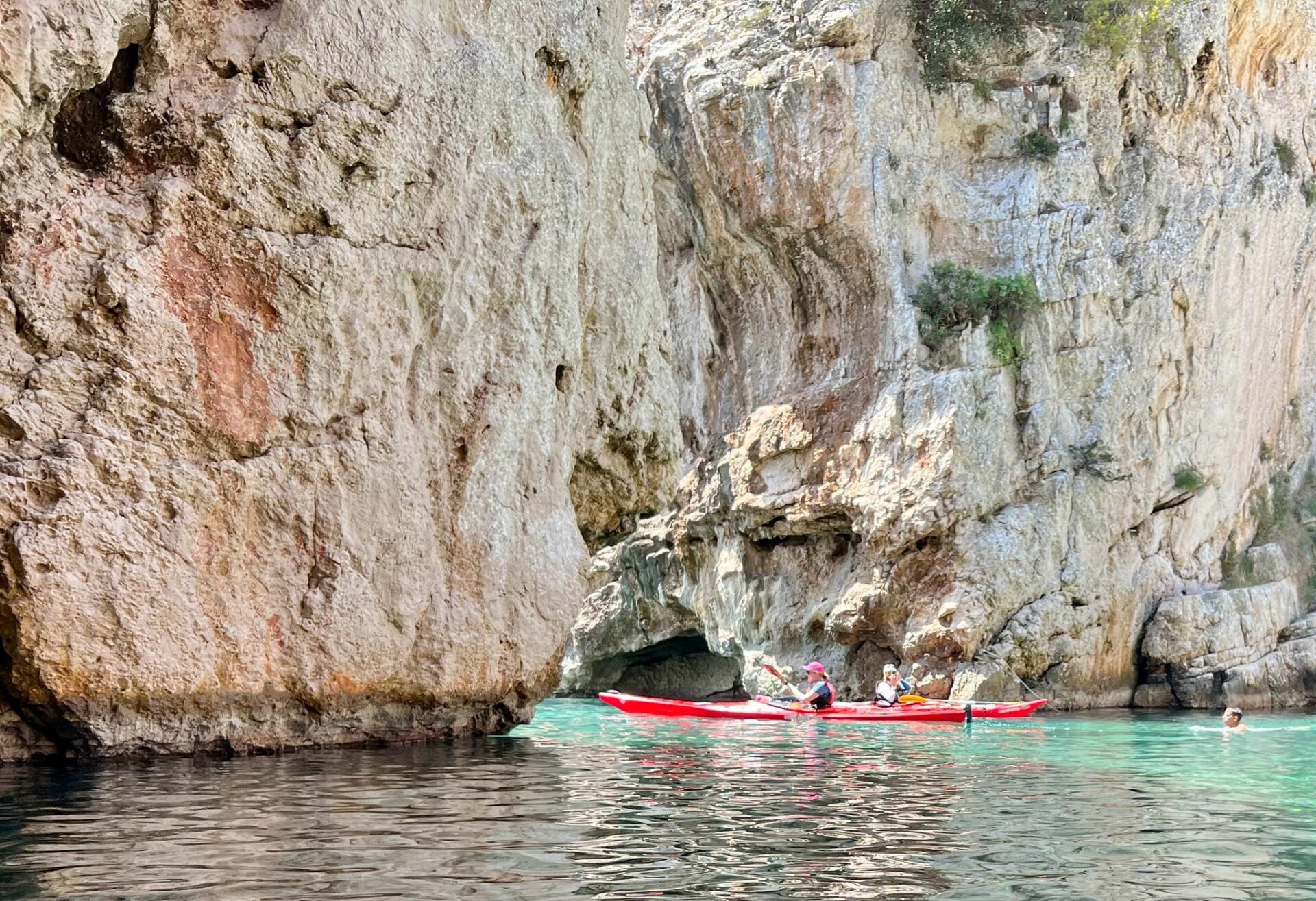
Sea kayaking also gets you into places boats can’t reach. Tiny beaches tucked behind headlands. Sea caves with entrances too narrow for anything with an engine. I always tell people that a kayak can take you far away from curious crowds, and on Adriatic sea kayaking trips, that’s the whole appeal.
What makes the Adriatic different
Croatia sits where Central Europe meets the Mediterranean, and that split defines the whole country. The coast historically leaned Italian, the inland north leaned Austrian, and the result is a country that feels like two cultures sharing one small footprint.
There’s a Croatian tourism phrase I actually agree with: a small country for a great holiday. You can drive from the far north to the far south in a matter of hours, yet the coastline holds more variety than places ten times the size.
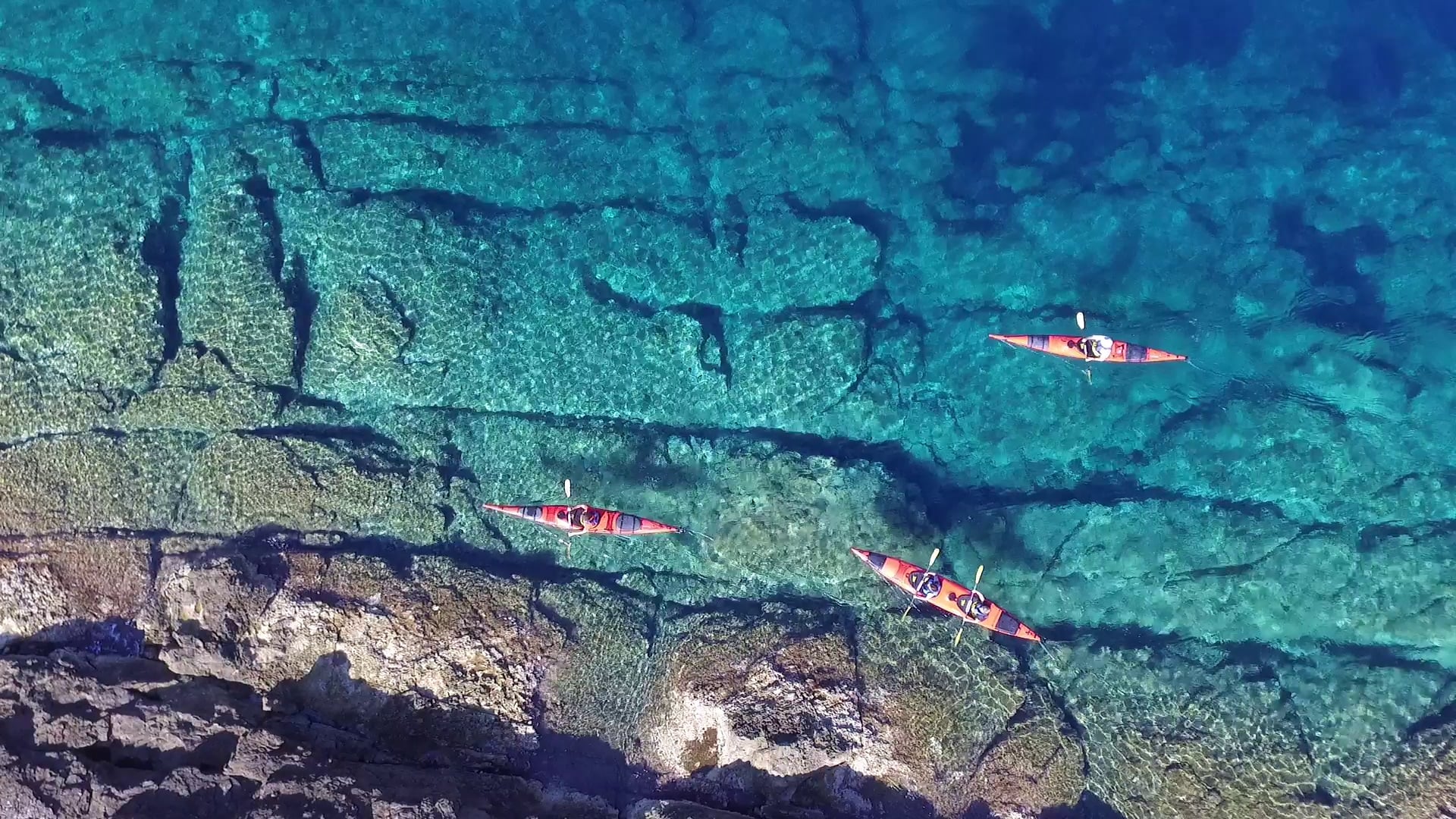
For paddling conditions specifically, the Adriatic is about as forgiving as it gets, which is a big part of why sea kayaking in Croatia suits both beginners and experienced paddlers.
Tidal range is only around 30 cm (1 ft), currents are mild, and storms are rare with good planning. The only real variable is wind, and once you understand it, you can work around almost anything the sea throws at you.
What is the best island in Croatia for kayaking?
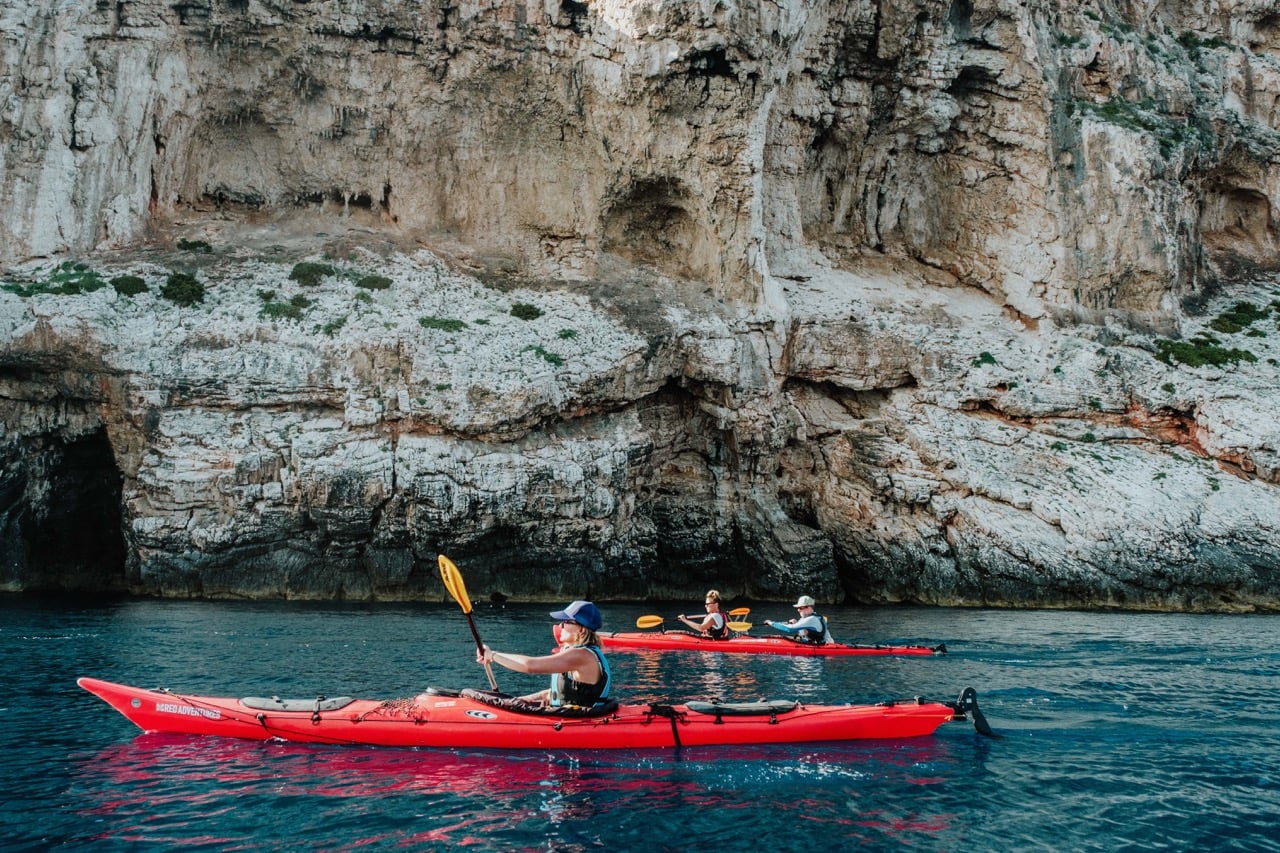
If you ask me where to go, I won’t hesitate. Vis island, Croatia is the answer.
Croatia has three main kayaking regions: Kvarner and northern Dalmatia, and the middle and southern Dalmatian coast, which I consider the strongest for kayaking in Croatia overall. That’s where the cliffs, caves, and hidden coves stack up one after another.
And within that region, Vis stands apart because it’s the most remote inhabited island in the country.
That isolation is exactly what preserved it.
A military zone turned paradise
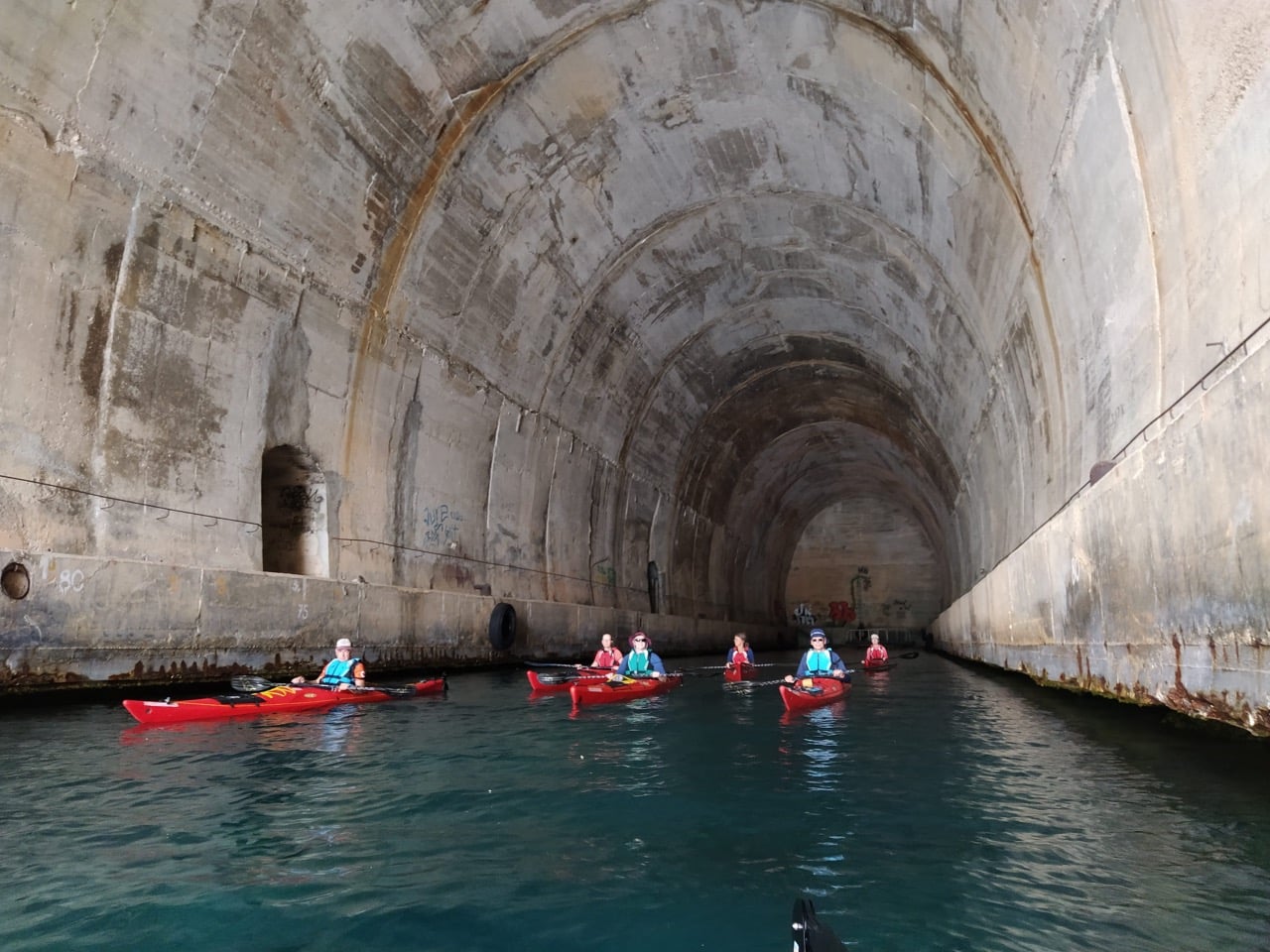
Vis island in Croatia was closed to the public from 1945 until 1992. The government made it a military zone, and for nearly five decades no tourists, domestic or international, set foot there.
That closure protected it from the development that reshaped so much of the coast. The stone houses you see today, most of them a century old, survived untouched. Locals still host visitors in their own homes rather than resort chains, which changes the entire feel of a stay there.
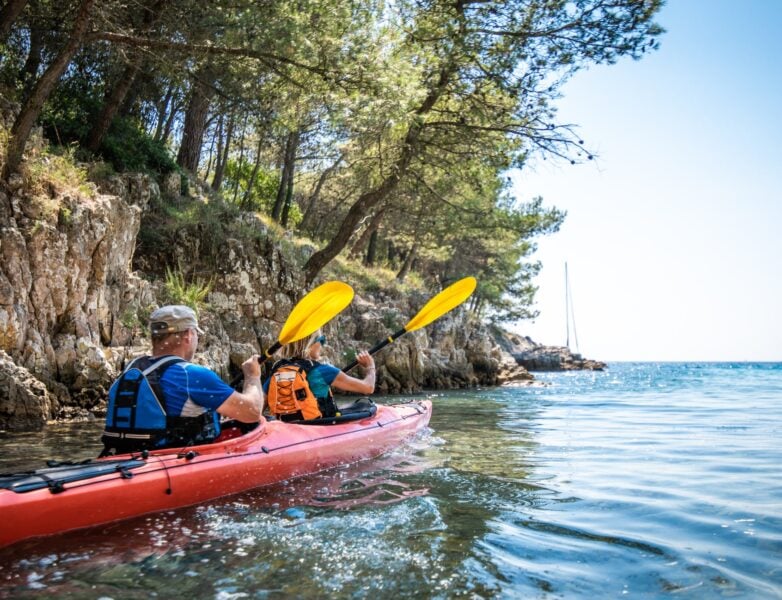
The island’s history runs far deeper than the 20th century, too. Greeks colonized it 2,400 years ago to produce wine and olive oil. Romans followed, then Slavic tribes in the 7th century, then a long parade of empires: Ottoman, Venetian, Austro-Hungarian, even British and French during the Napoleonic period, and Americans during World War II.
Whoever controlled Vis controlled the Adriatic, so it mattered strategically for a very long time.
Life on the island today
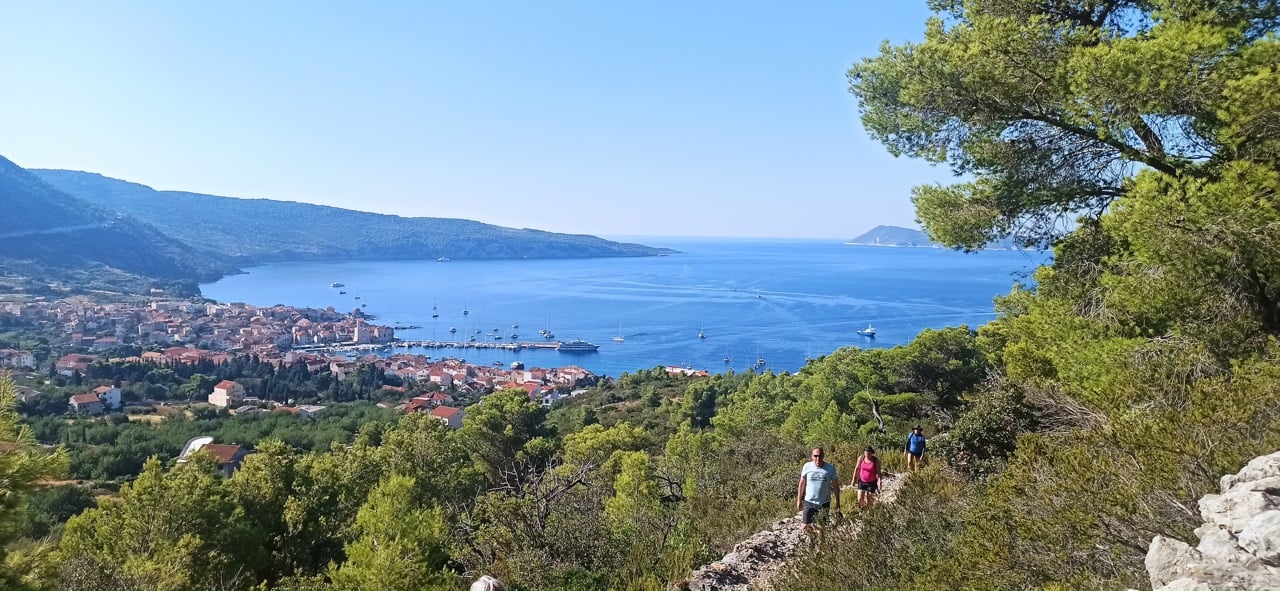
If I had to describe the local pace in one word, it would be pomalo. Take it easy.
People here work hard, tending vineyards, olive groves, fishing boats, but they do it slowly and sociably. Coffee takes an hour. Conversations happen on doorsteps. It’s the kind of rhythm you feel yourself slipping into by day two.
Komiža, the fishing town on the western side, used to run 7 fish factories. Most of that industry is gone now, but fishing families still sell straight to local restaurants, and the seafood on Vis is some of the best on the entire Croatian coast.
Sea caves and hidden beaches worth paddling to
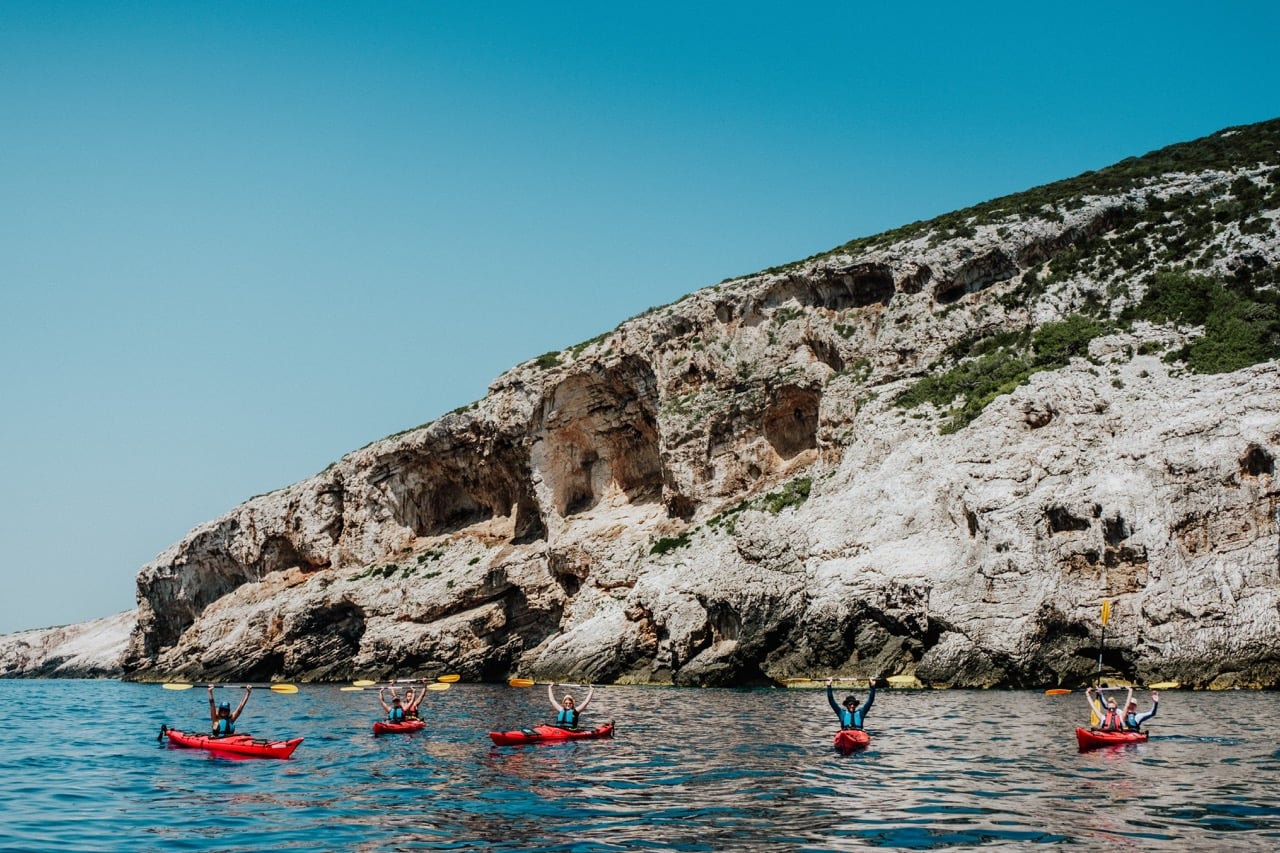
This is where kayaking in Croatia earns its reputation. The south and west coasts of Vis are riddled with sea caves, hidden coves, and pebble beaches that no road comes close to, carved out over centuries by waves hitting limestone cliffs. Some are wide enough to paddle straight into with a group, others barely fit a single kayak.
Blue Cave Croatia is the most famous stop on the island, and it earns the hype. But it’s really just the opening act for everything else this stretch of coastline hides.
Where is the Blue Cave in Croatia?
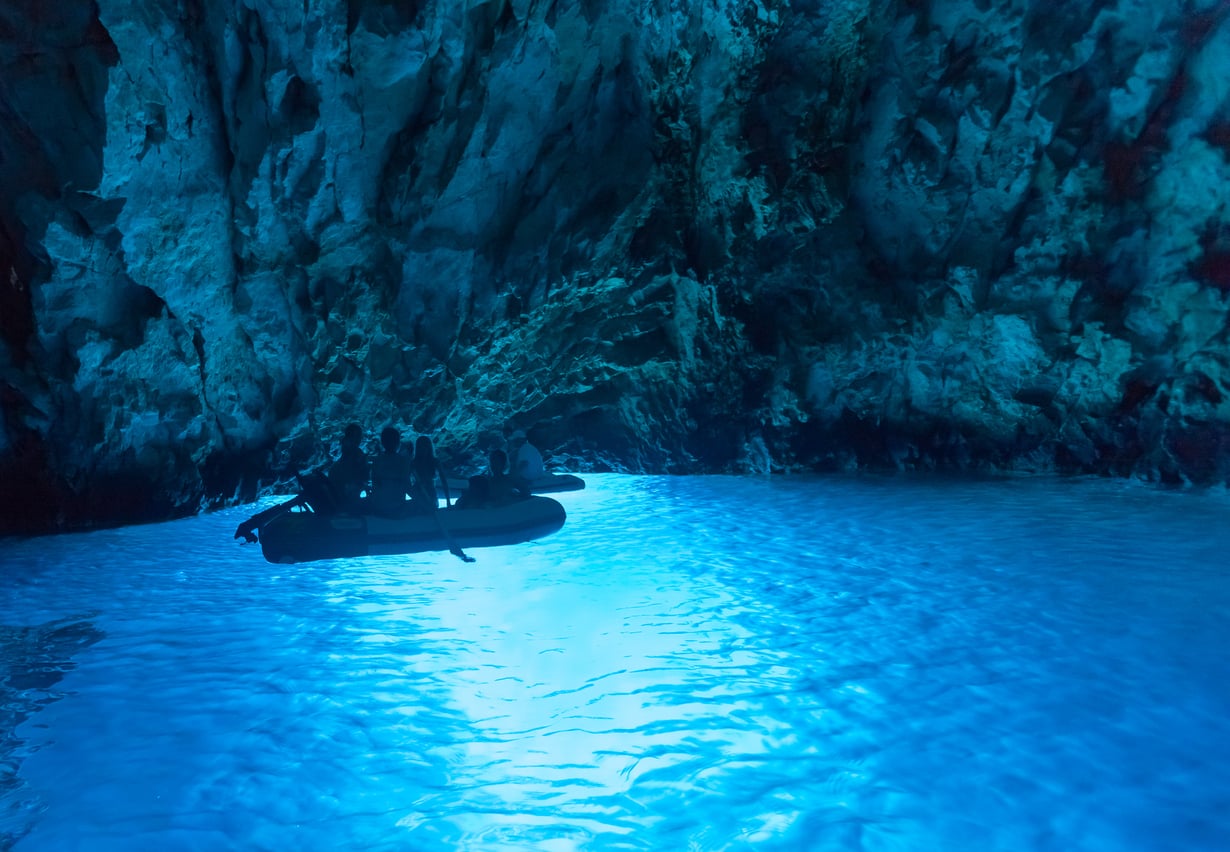
The Blue Cave sits on Biševo island, just off the southwest coast of Vis, and it’s reachable only by boat or kayak.
Sunlight enters only through an underwater opening, so the light that reaches the cave has already passed through the sea itself. The water glows an almost unnatural blue as a result. I used to swim there with my father on our sailboat before tourism arrived properly, spending entire days inside with a mask and snorkel.

When regulated tours started limiting visits to 15 minutes with groups of ten, I actually stopped going for years. I didn’t want the memory replaced. This year I finally went back in, and I’m glad I did. The color hasn’t changed at all.
Stiniva Bay and the south shore
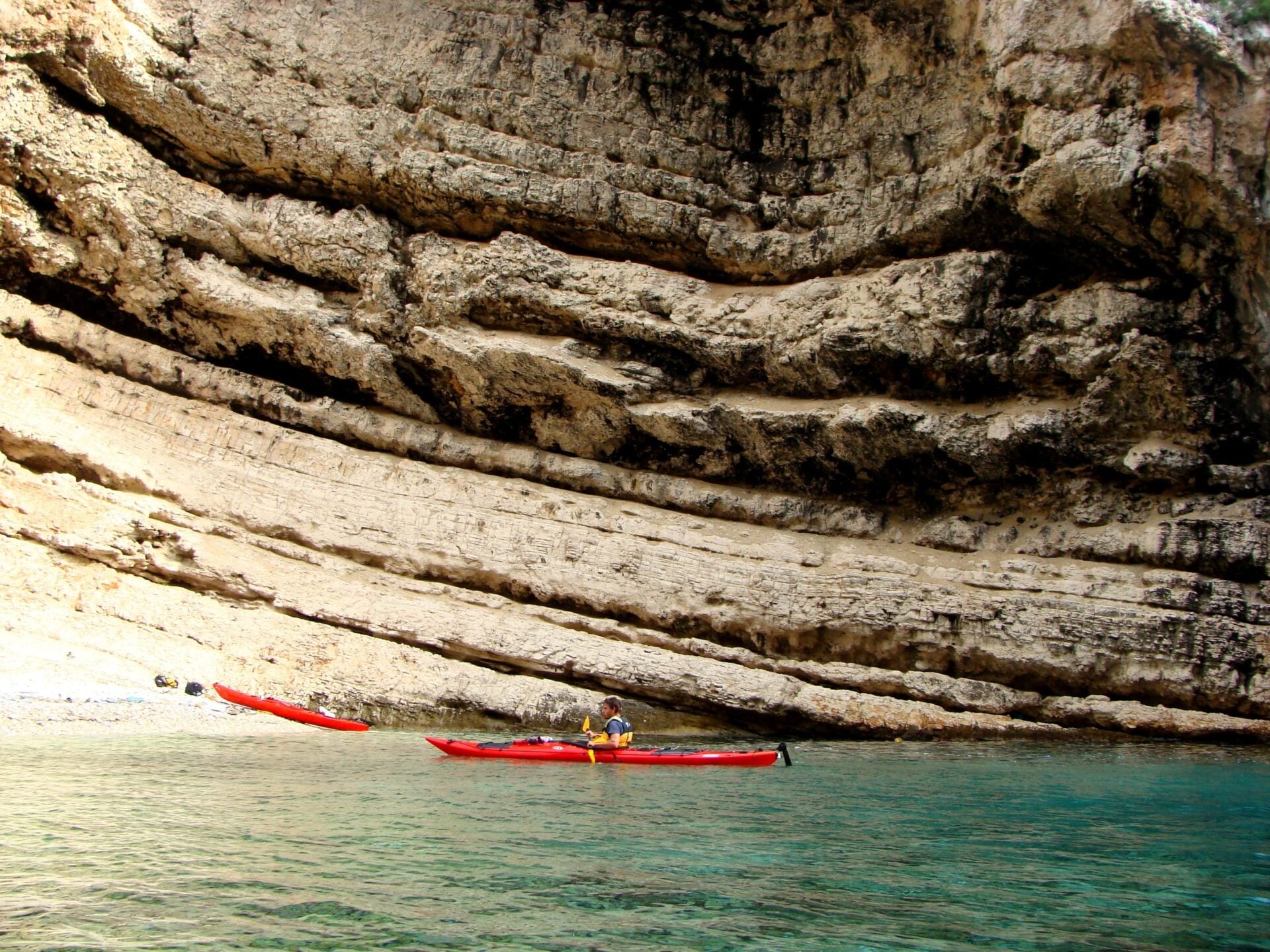
Stiniva Bay is regularly ranked among the best beaches in Europe, and once you see the rock formation, you understand why. It used to be a fully enclosed cave before the roof collapsed, leaving behind a narrow gap between towering cliffs that opens onto a pebble beach.
The south shore of Vis is my personal favorite stretch of the whole trip. Cliffs, sea caves, hidden coves, one after another, and even after doing this route more times than I can count, I still notice something new every single time.
There’s a cave locally nicknamed for its shape, resembling old-fashioned long underpants, and it’s only reachable by kayak or by swimming in. No trail leads there. That’s true for most of the best sea caves Croatia has to offer. If you can’t paddle to them, you don’t see them.
Biševo island and the Šipnjak seal cave
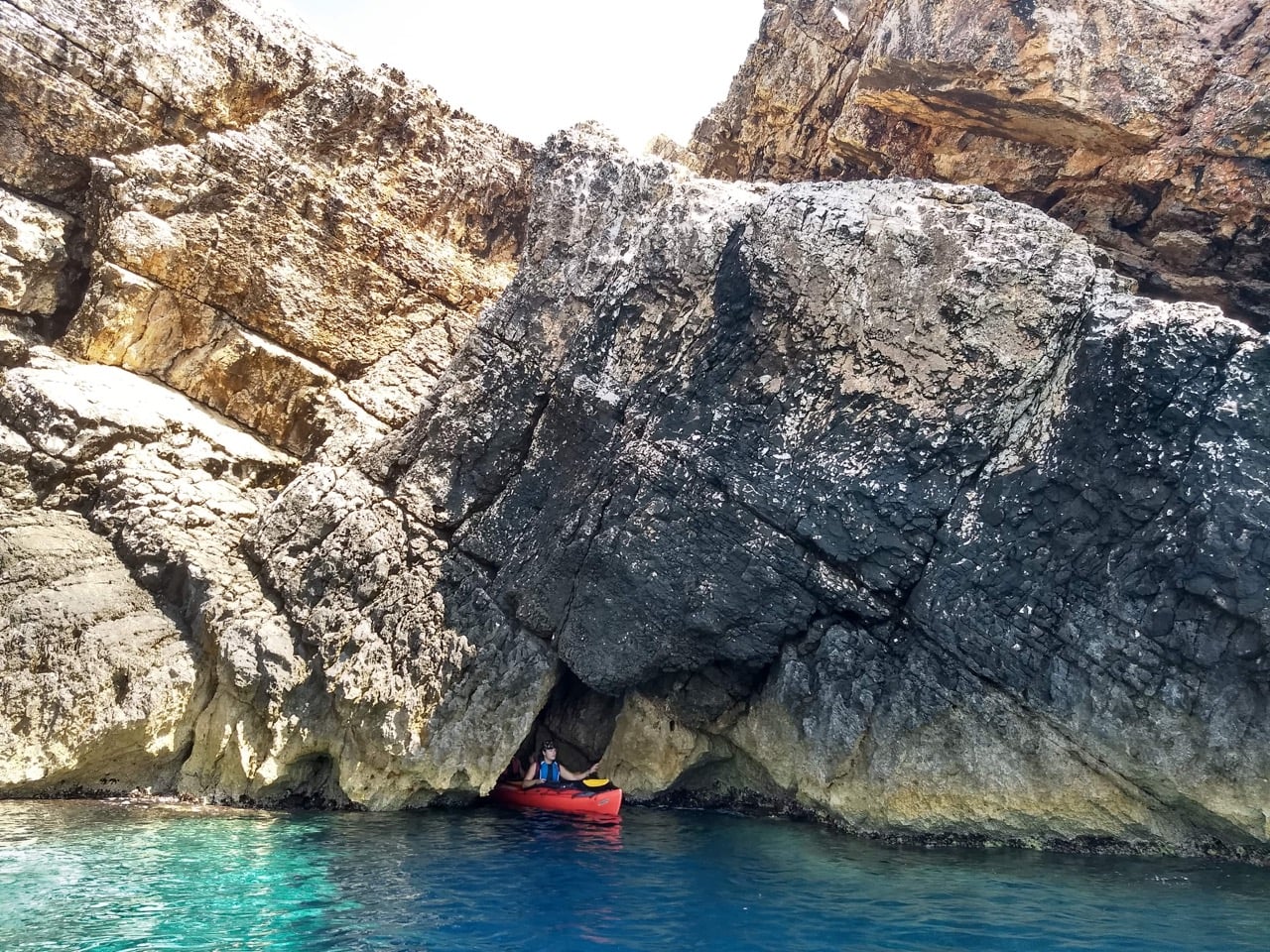
Just off the southeast coast of Vis sits Biševo island, home to only nine year-round residents.
During winter storms, the strait between Vis and Biševo can close entirely, cutting the island off from ferries and leaving residents without fresh supplies until conditions improve. It’s a genuinely isolated place, and that isolation is part of what makes paddling there feel special.
Beyond the Blue Cave, Biševo holds the Šipnjak cave, a 150 m (490 ft) passage that requires a headlamp to explore fully. Monk seals once lived inside, though the population was hunted to near extinction over the past century. We still spot them occasionally, a quiet reminder of what this coastline used to support.
What a Croatia kayaking tour actually looks like
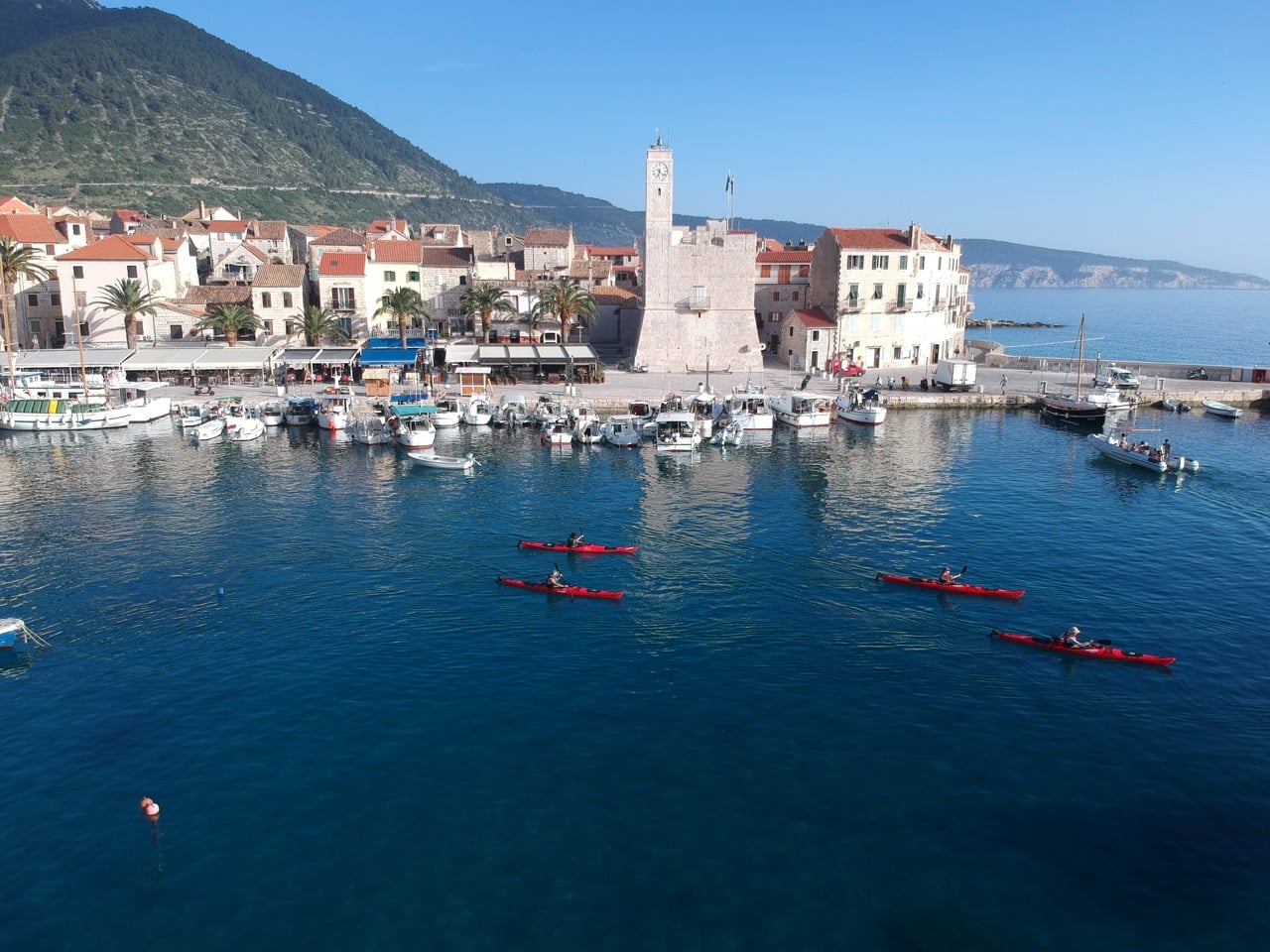
Kayaking in Croatia at its best follows a rhythm, not a checklist. Our program, which we call the Magic Island Tour, is the kayak tour Croatia guests tell me they remember longest.
It runs 6 days and covers roughly 90 km (56 mi) of paddling across Vis, Biševo, and Šćedro. 6 days is enough time to properly explore one island without rushing, and it’s the length I’d recommend to anyone planning their own Croatia kayaking tour.
We start in Split, a city built around a 1,700-year-old palace and easy to reach by direct flights from across Europe. Day one is an intro day: kayak fitting, a briefing, and a warm-up paddle out to the island of Čiovo, which gives everyone a small taste of what’s coming without the full commitment of Vis itself.
From there we ferry to Vis and base ourselves in Komiža Croatia for four nights. Each day follows a different stretch of coastline: the wild north shore with its Cold War-era naval tunnels, the cliffs and sea caves of the south shore, the beaches and islets of the east.
A typical day on the water
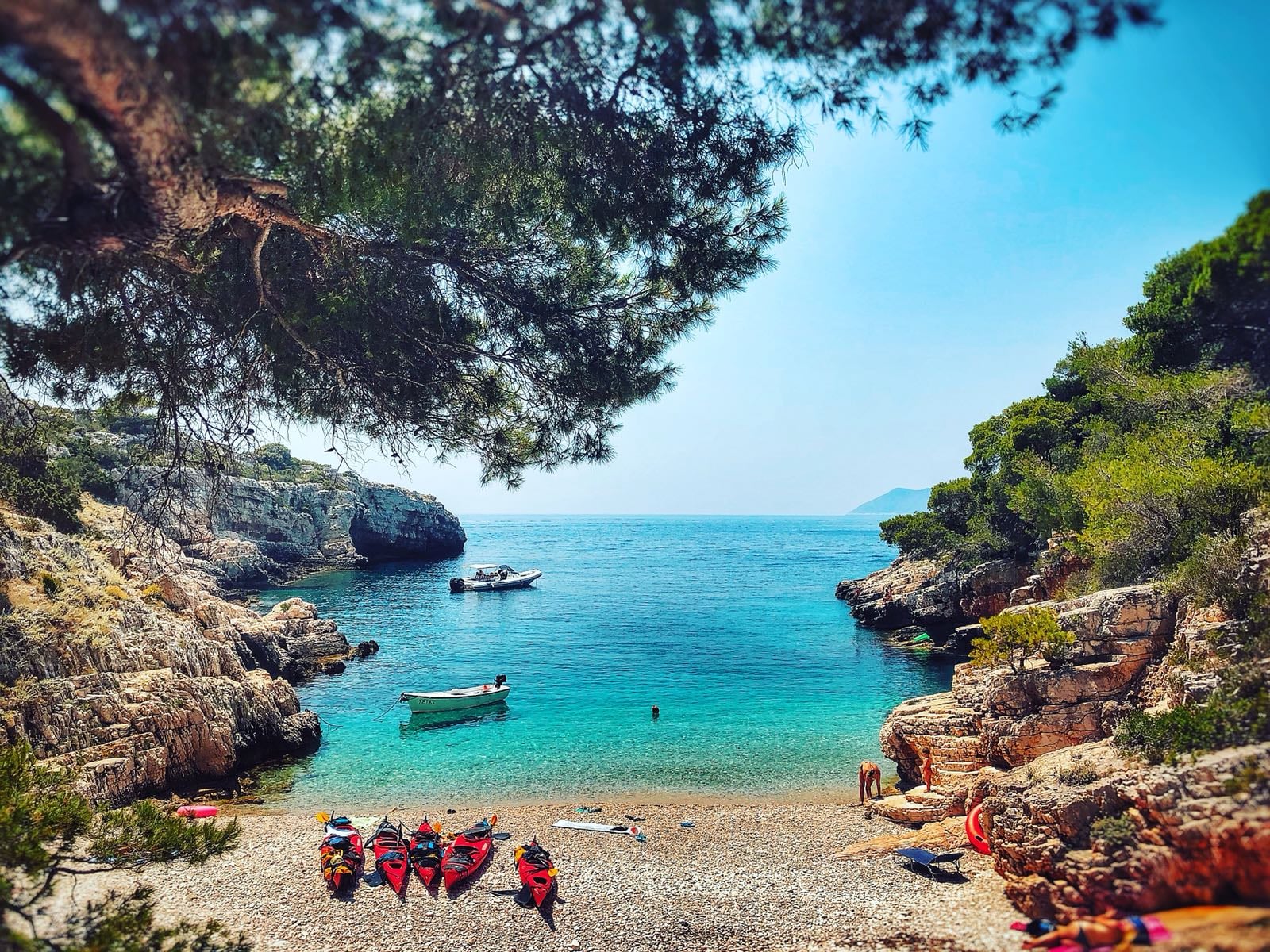
Mornings start early with breakfast built around whatever dietary needs the group has told us about in advance. We’re usually on the water by 9 or 10 am, paddling 5 to 6 hours with regular breaks for swimming, snorkeling, and lunch on a beach somewhere along the route.
Evenings belong to Komiža itself. It’s a small town, under 800 people in winter, and the energy on the street after a day of sea kayaking is something people remember as much as the paddling itself.
Is sea kayaking in Croatia good for beginners?
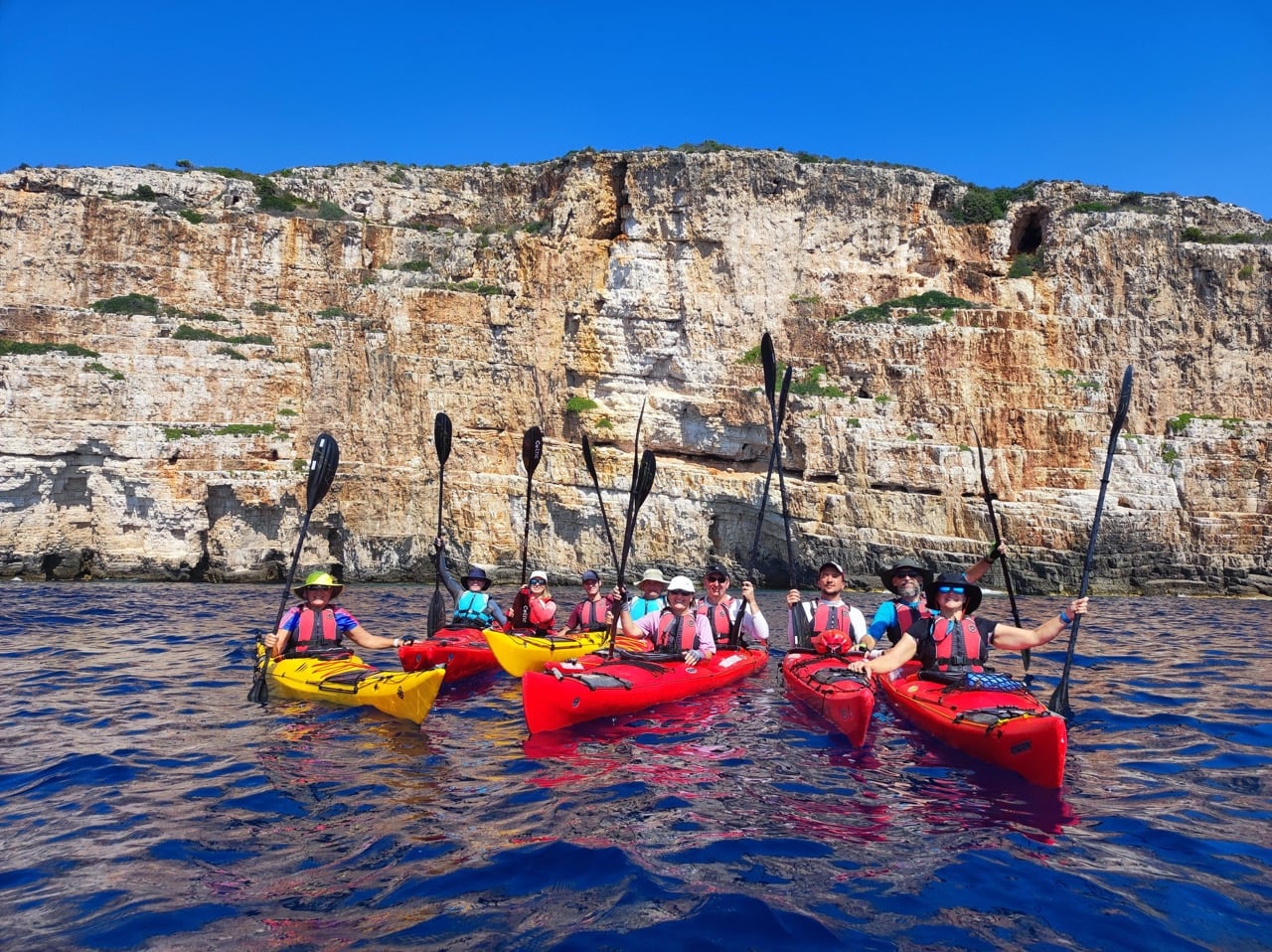
Kayaking in Croatia welcomes a wide range of ability levels, but the right season depends on your experience. Summer works well for beginners since conditions are the most stable and the water is warm enough to swim comfortably. If you have some previous paddling experience, I’d actually push you toward the shoulder season instead.
Reasonable fitness is enough. You don’t need technical sea kayaking skills. Couples or friends with mismatched experience levels can pair up in a double kayak, which is often faster than a single anyway thanks to its stability in open water.
When is the best time to visit Croatia for kayaking?
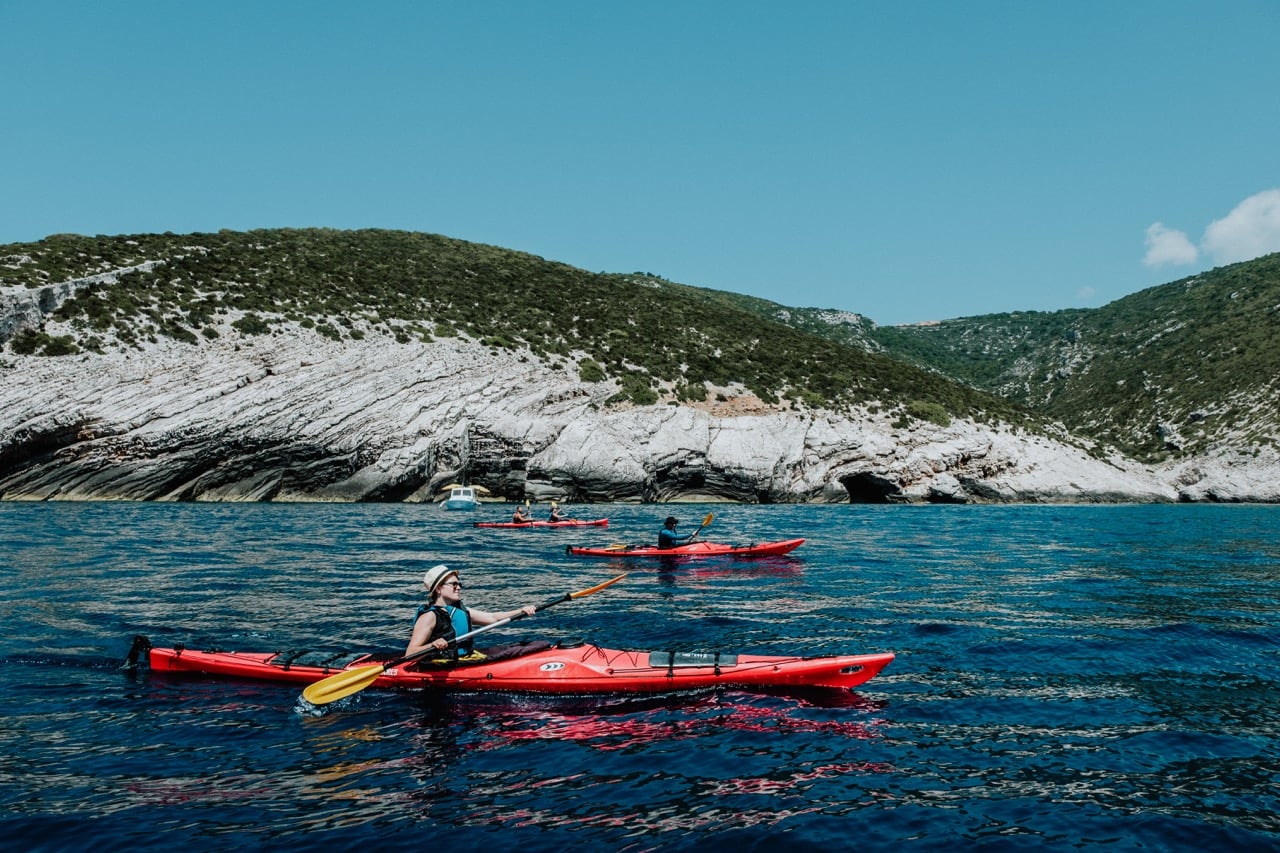
Summer is our peak season, and for good reason: hot weather, warm sea, long days. It’s also the busiest time for kayaking in Croatia, with more boats on the water and more people on the beaches.
If you ask me personally, I’d choose the shoulder season every time. May, June, September, and October give you nearly the same weather with a fraction of the crowds.
Why shoulder season wins for experienced paddlers
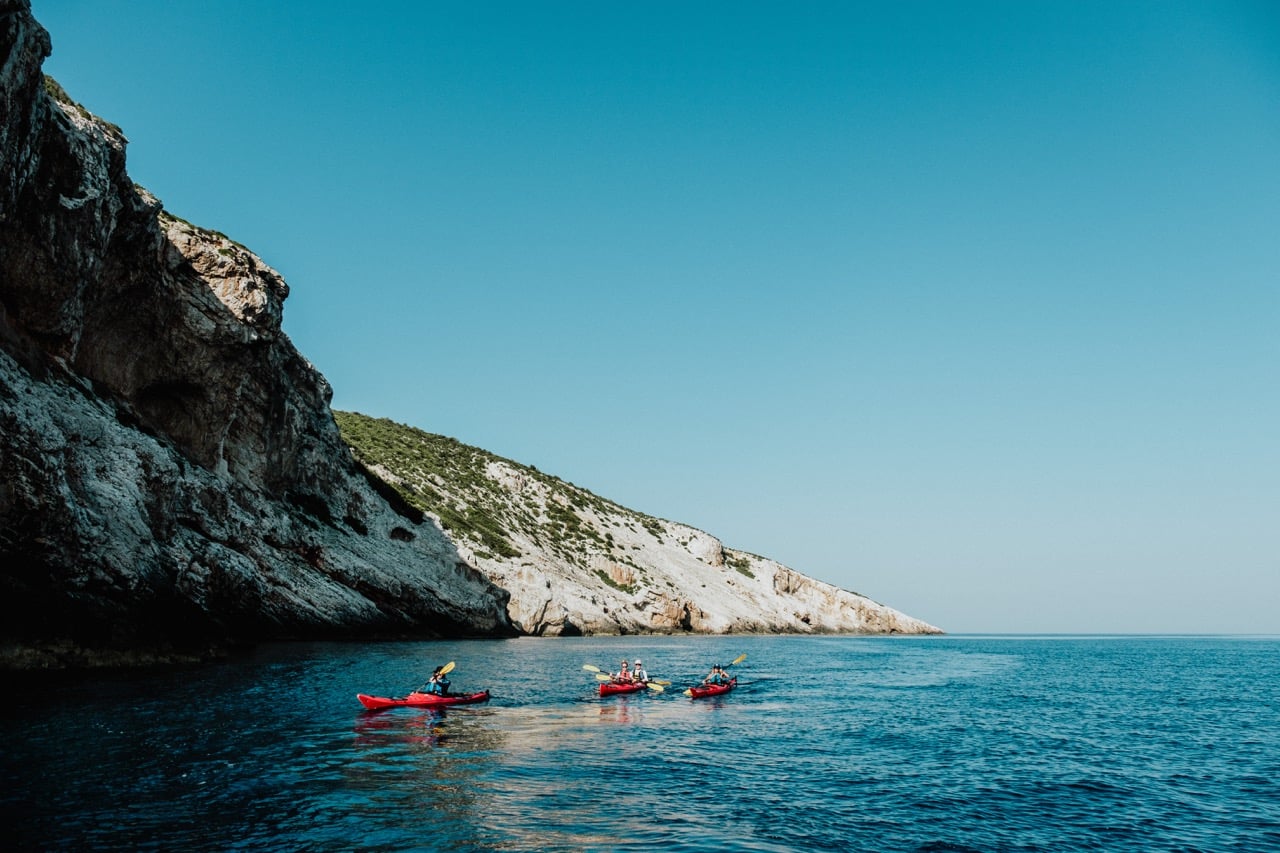
Sea temperatures stay swimmable well into October, and the light in early autumn across the Adriatic is something else entirely. For paddlers with more experience, I’d even stretch that window into March, April, and November.
If you’re escaping a Scandinavian winter, this matters even more. While you’re dealing with sub-zero temperatures at home, Croatia can still offer 15°C (59°F) and plenty of sunshine. That contrast alone is worth the flight for a lot of our northern European guests.
How to get to Vis island in Croatia?
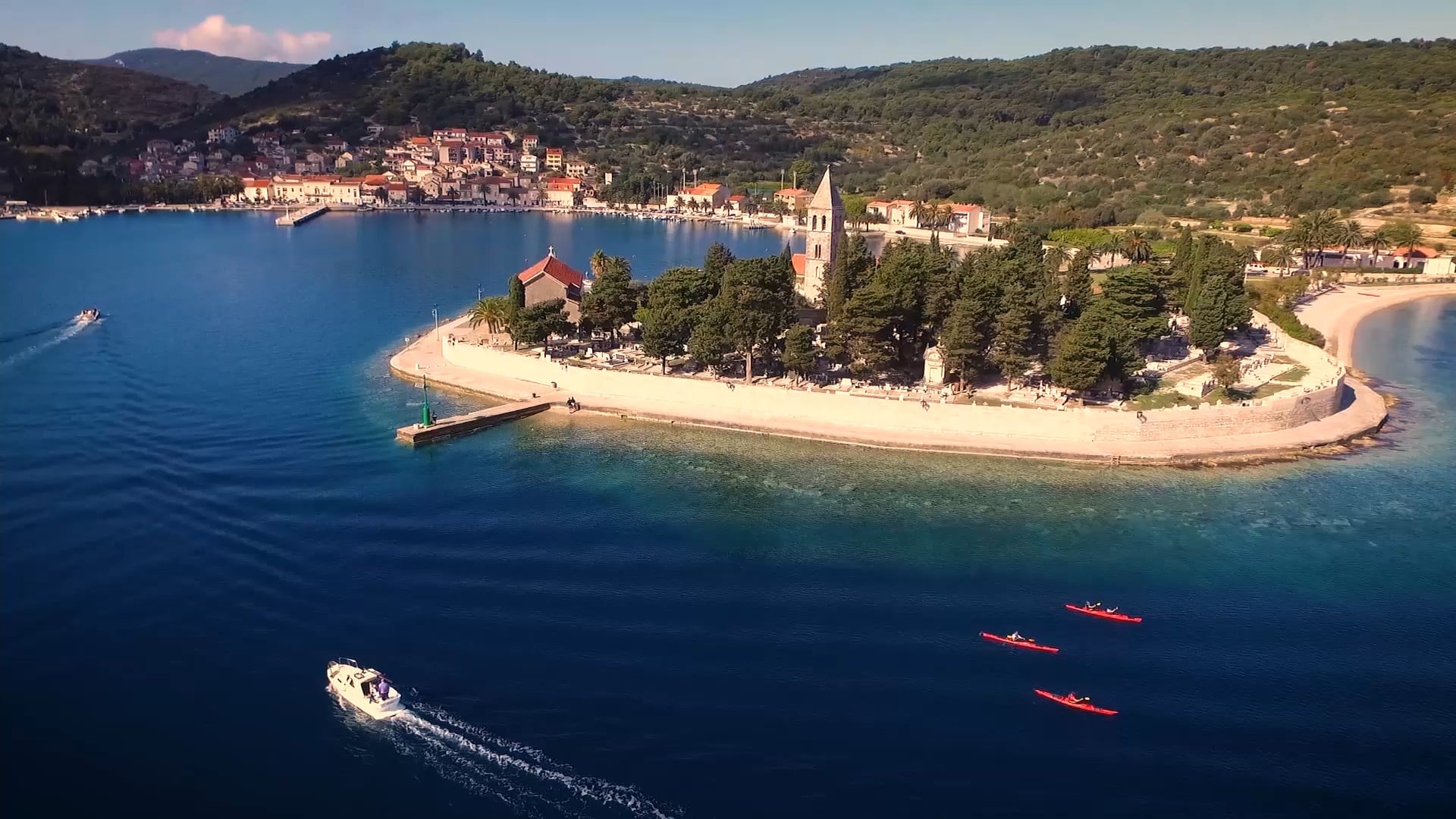
Split is the gateway for nearly every sea kayaking trip in this region, and it’s well connected by air to major European cities.
From Split, Vis is reached by ferry, a crossing of about two hours and twenty minutes. We handle the logistics from there: gear, transfers, and getting everyone into the right kayak for their size and experience level.
Accommodation is entirely local: family-run stone houses and guesthouses steps from the harbor in Komiža, refurbished for modern comfort but still built the old way, thick stone walls that keep interiors cool even in August heat. It’s a far more grounded way to experience a kayak Croatia trip than any resort could offer.
A place worth slowing down for
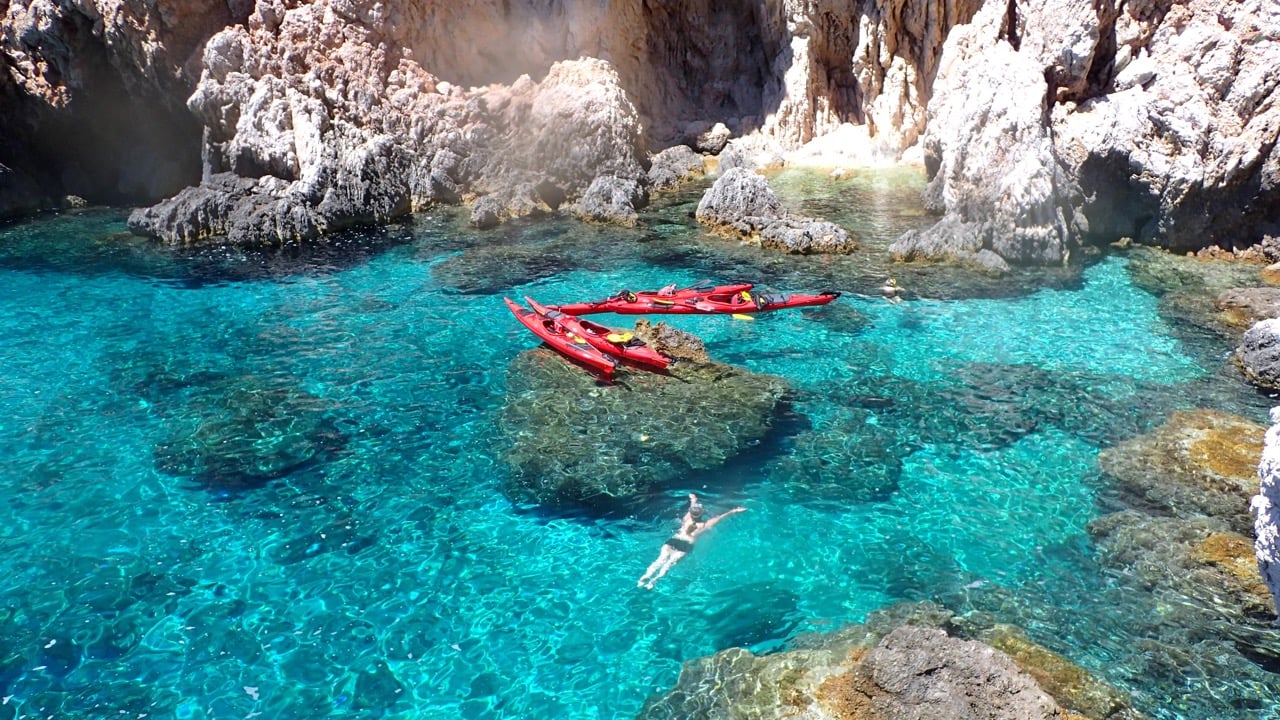
I’ve paddled this coastline more times than I can count, and it still gets to me every single time. Of all the Croatia Adriatic islands I’ve explored by kayak, Vis remains the one I measure everywhere else against.
Every run around the south shore of Vis shows me something I hadn’t noticed before, a new cave, a different color in the water, a stretch of cliff that catches light differently depending on the season. That’s rare after this many years of guiding.
I’ve been to a hundred countries across 6 continents, and I keep coming back to an island the world was locked out of for 47 years. That isolation is gone now, but you can still feel it the moment you round a headland and there’s nobody else there.
If you’re looking for the best sea kayaking Croatia has to offer, this is where I’d send you. Kayaking in Croatia gave me a reason to come home.
Paddle into Vis with me, and I think it’ll give you one too.