
There is a photograph of me on the summit of Mount Triglav. I am 8 years old, wearing a woolen jumper. No harness, no helmet. My father is standing next to me. That was my first time on Slovenia’s highest peak, and I have been coming back to these mountains ever since.
I am 56 years old now, with 20 years of guiding full-time and more than 30 years on the mountain rescue team. And still, every morning I wake up in Kranjska Gora and think: all of this is my playground.
Agatha Christie once stayed in Bohinj. A Slovenian journalist asked her if she was writing a new book there. She said no. Bohinj was too beautiful a place to put a murder in. I have thought about that line many times over the years. She understood something real about this country.
Most people fly into Ljubljana and head straight for Lake Bled. I understand, it’s beautiful. But if you want to know what hiking in Slovenia actually feels like, you have to go deeper. Here’s where I would start.
Hiking in Slovenia: Why These Mountains Are Different
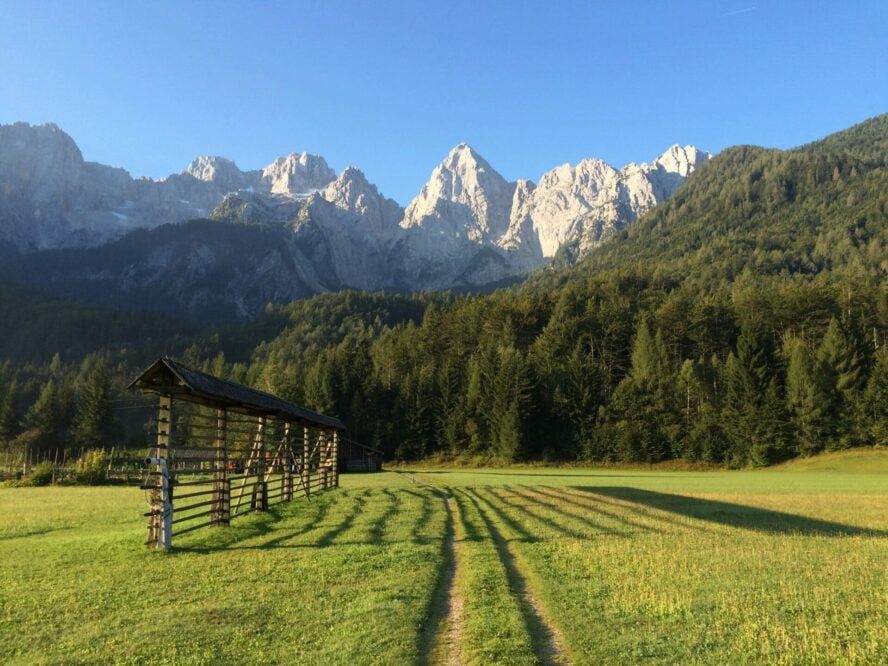
Slovenia is small. Two million people, squeezed between Austria, Italy, Hungary, and Croatia. You can drive across it in two hours. But inside that space, you have three separate mountain ranges, the Soča River, the Karst, and some of the densest forest cover in Europe. Nearly 85 percent of this country is forested. We rank fourth in Europe for tree cover, behind only Finland, Estonia, and Latvia.
The Julian Alps are the main event for anyone serious about hiking. The peaks are mostly limestone, pale and sharp, shaped by glaciers and centuries of weather. Fifteen of Slovenia’s highest summits are here, including Triglav at 2,864 m (9,396 ft). To the north and east, the Karawanks and the Kamnik-Savinja Alps add another dimension entirely: quieter, less visited, just as rewarding.
For Slovenians, outdoor sport is part of our DNA. We do not stop because of the weather. We do not stop because of age. I have guided people in their seventies up Triglav’s north face. I guided a group of guests, average age over 70, along the Soča. A little slower, but constantly moving. That is the spirit of hiking in Slovenia.
What mountains are in Slovenia?
Three ranges define the Slovenia mountains.
The Julian Alps in the northwest are the largest, anchored by Triglav National Park and the Soča Valley.
The Karawanks run along the Austrian border, less dramatic but deeply rewarding.
The Kamnik-Savinja Alps sit to the northeast and are the only high-alpine system entirely within Slovenian territory. Each range has its own character. I guide trips across all three.
The Best Hiking Trails in Slovenia
I run an 8-day program out of Kranjska Gora, including 6 guided hiking days. I have done this program more times than I can count, and it never gets boring, because the terrain is genuinely that varied. Here are the routes I return to again and again.
Slemenova Špica: the best introduction to Julian Alps hiking
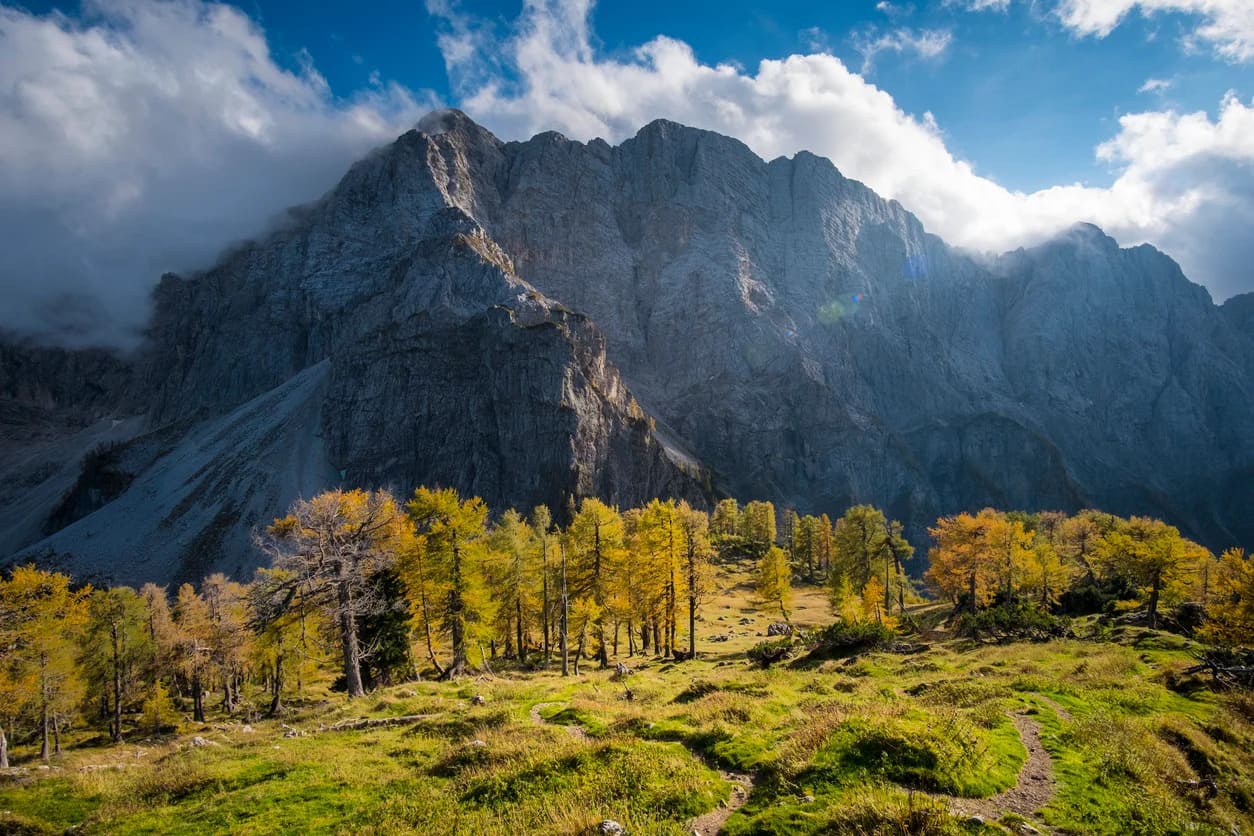
We start at Vršič Pass, the highest mountain pass you can drive in Slovenia, and hike to Slemenova Špica. From the summit, you see the entire Julian Alps laid out in front of you. I know every name on that horizon: Jalovec, Prisank, Špik, Rakova Špica, on and on. I tell my guests: to remember the names, you have to climb them. But the view from Slemenova will make you want to try.

The route is not technically demanding. Families with children from around 8 to 10 years old manage it comfortably. On the way down, we stop at Koča na Gozdu, a mountain hut where my sister has been the guardian for the last 25 years.
The food is proper Slovenian, and you can find it in many food & wine hiking tours in Slovenia: Carniola sausage with potatoes and cabbage, cheese dumplings, local wine. Worth every step.
What is the best hike in Slovenia?
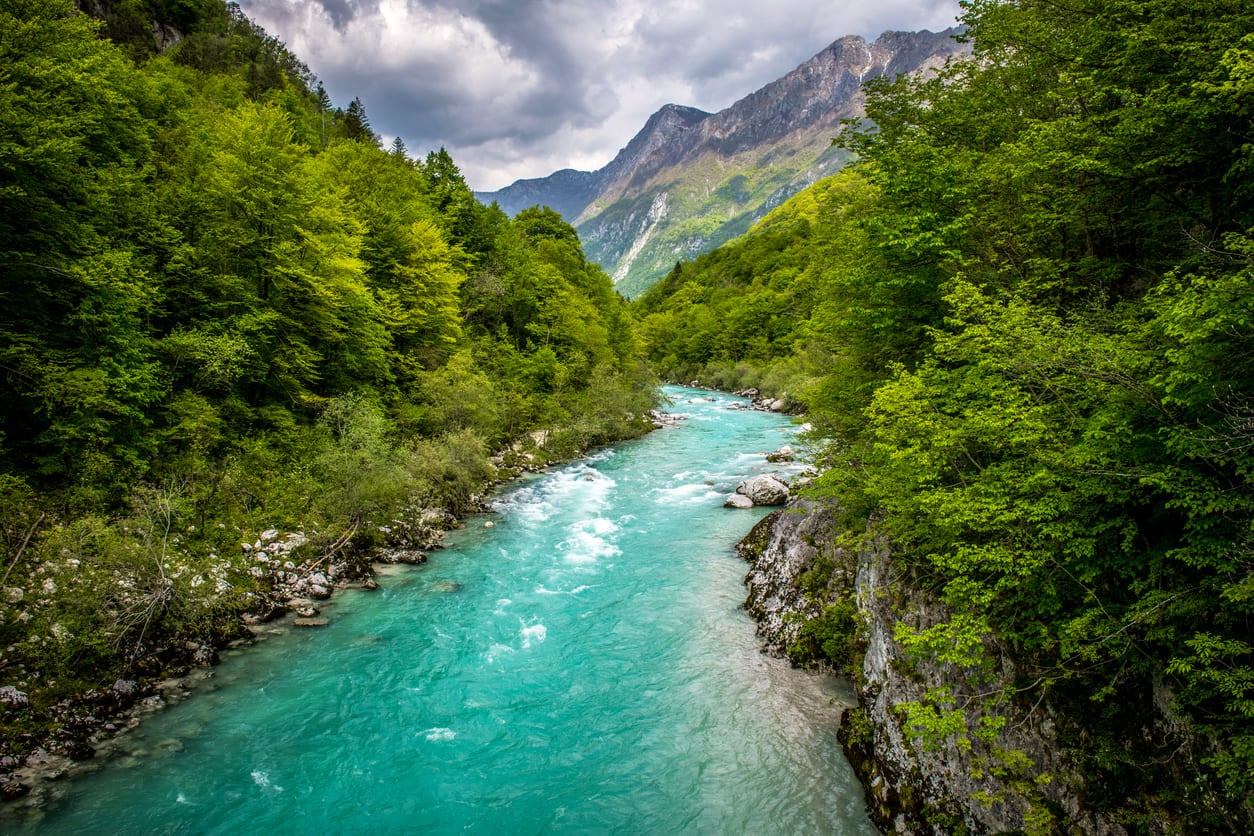
If I have to give one answer, it is the Soča River trail. We drive over Vršič Pass to the source of the Soča, then walk 24 to 26 km (15 to 16 mi) down to Bovec. The river is an extraordinary turquoise, the color of something from another planet.
It is UNESCO-protected, and when you spend a full day walking alongside it, you understand why. Swimming holes, suspension bridges, gorges, the endemic Soča trout visible in the clear water. All day, mostly downhill, through some of the most beautiful terrain in the Alps.
Soča Valley hiking: more than just a river
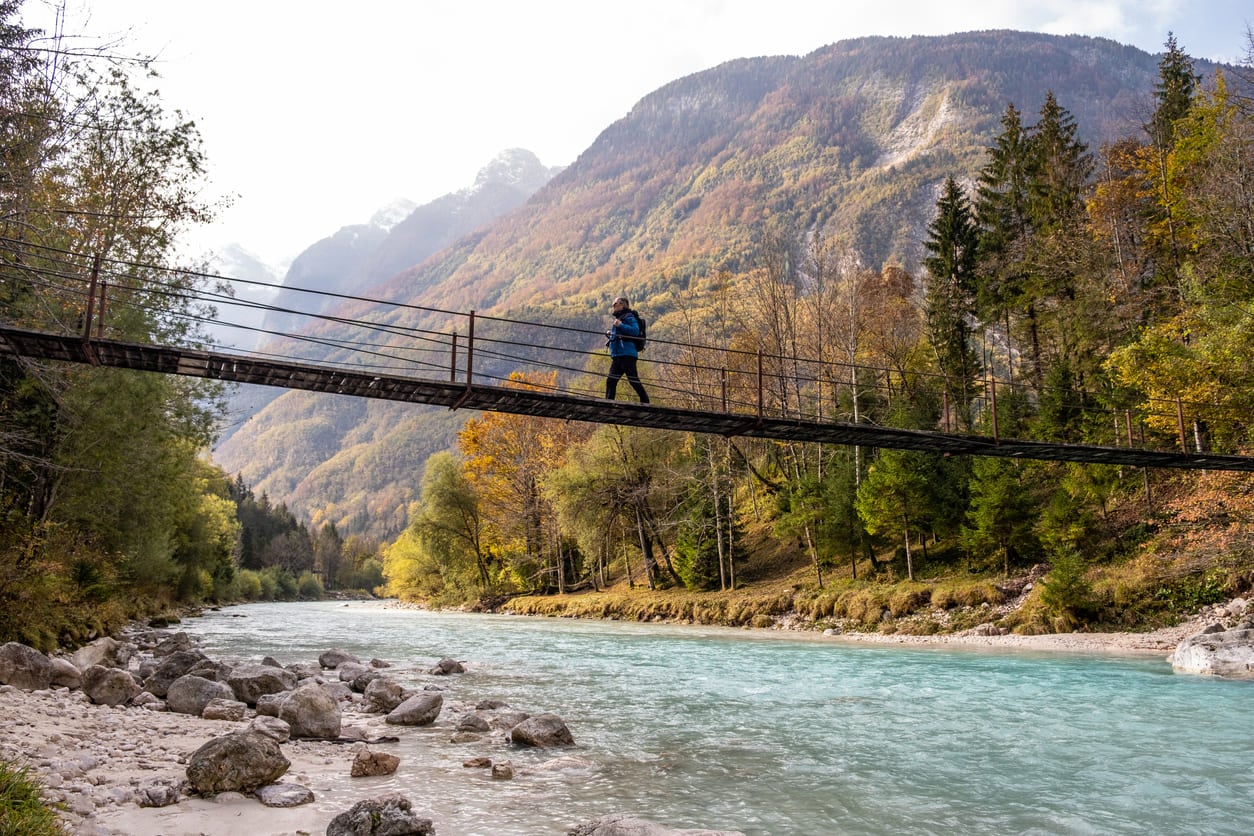
People come to the Soča Valley for the river. They stay for everything else. We also walk through the Martuljak gorge, past two spectacular waterfalls, and up to the high meadows above. On the Karawanks days, we climb peaks with views into Austria.
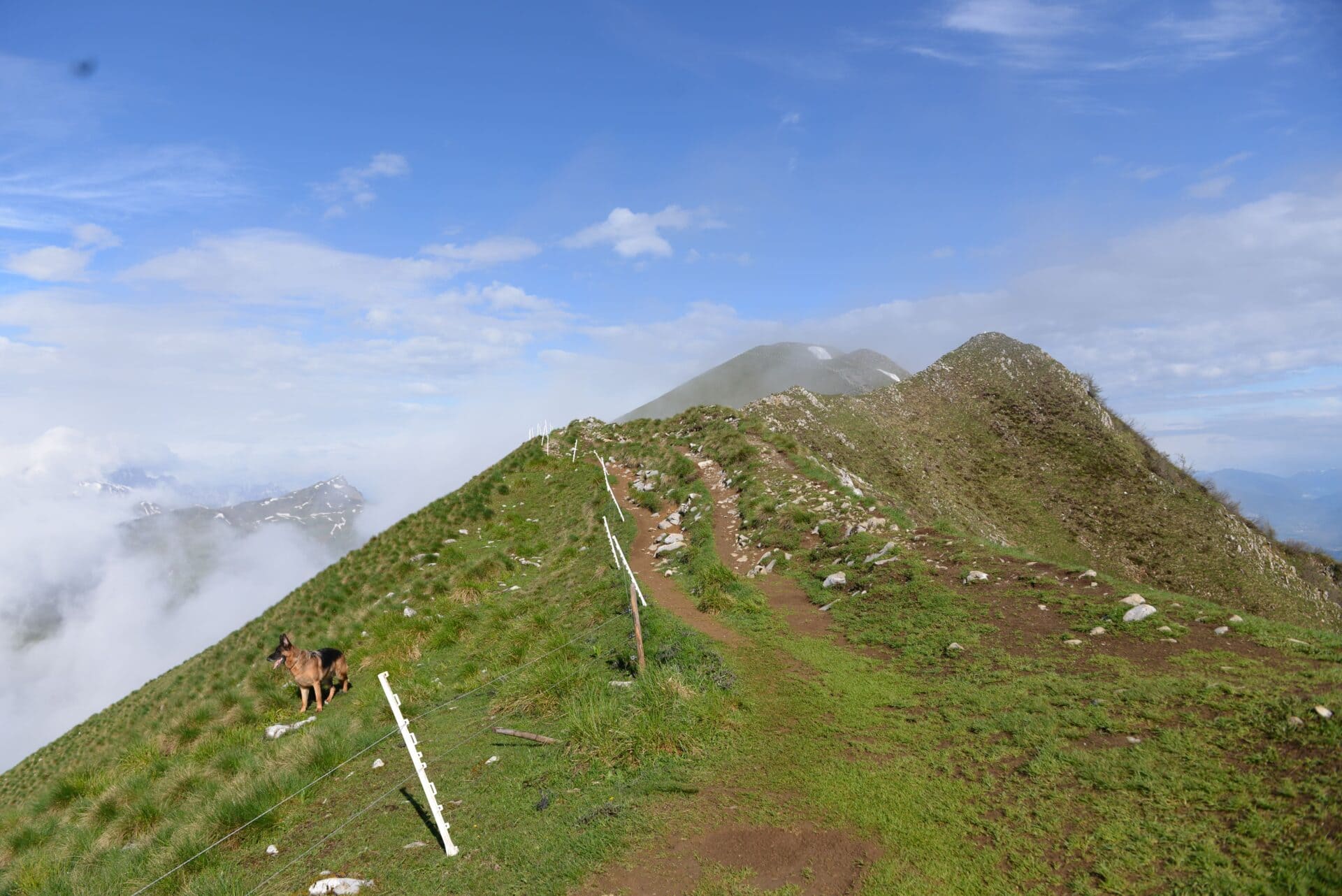
One ridge I love: stand on the crest and you can see all the way across the Julian Alps on one side, and down into Austrian valleys on the other. From Kranjska Gora to Austria is 11 km (7 mi). To Italy, 8 km (5 mi). The geography here is compressed and remarkable.
Triglav National Park hiking: the heart of it
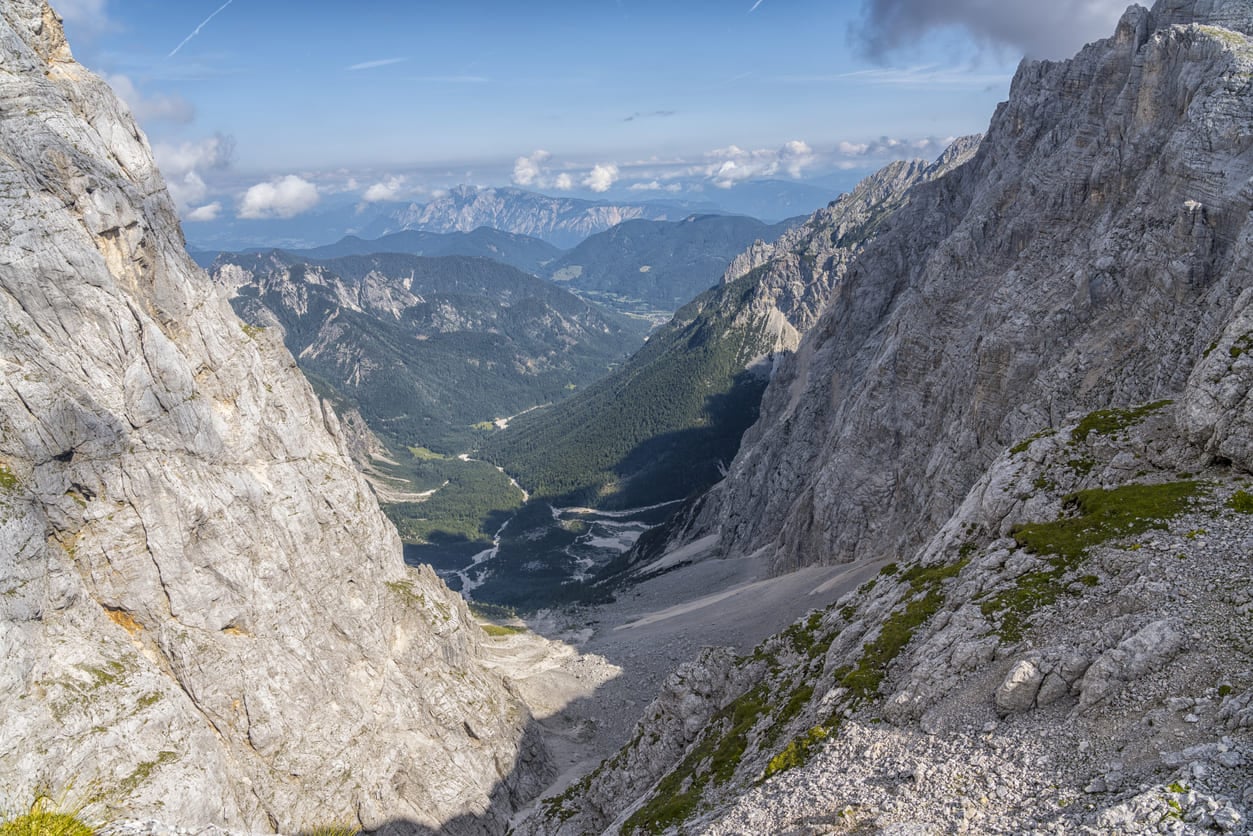
Triglav National Park was established around 100 years ago. Almost all of Slovenia’s Julian Alps lie within its boundaries, and the rules are serious: you cannot build new roads here, cannot construct new buildings. What exists can be repaired and maintained, nothing more. The result is one of the most intact mountain landscapes in the Alps.
Hiking in the park means sharing trail space with ibex, chamois, marmots, and red deer. Early mornings in the Karawanks, if you move quietly, you can see them before they see you. The wolves are back too, in small numbers. Five or six brown bears live in the Julian Alps. Mostly they keep to themselves.
What to do in Triglav National Park?
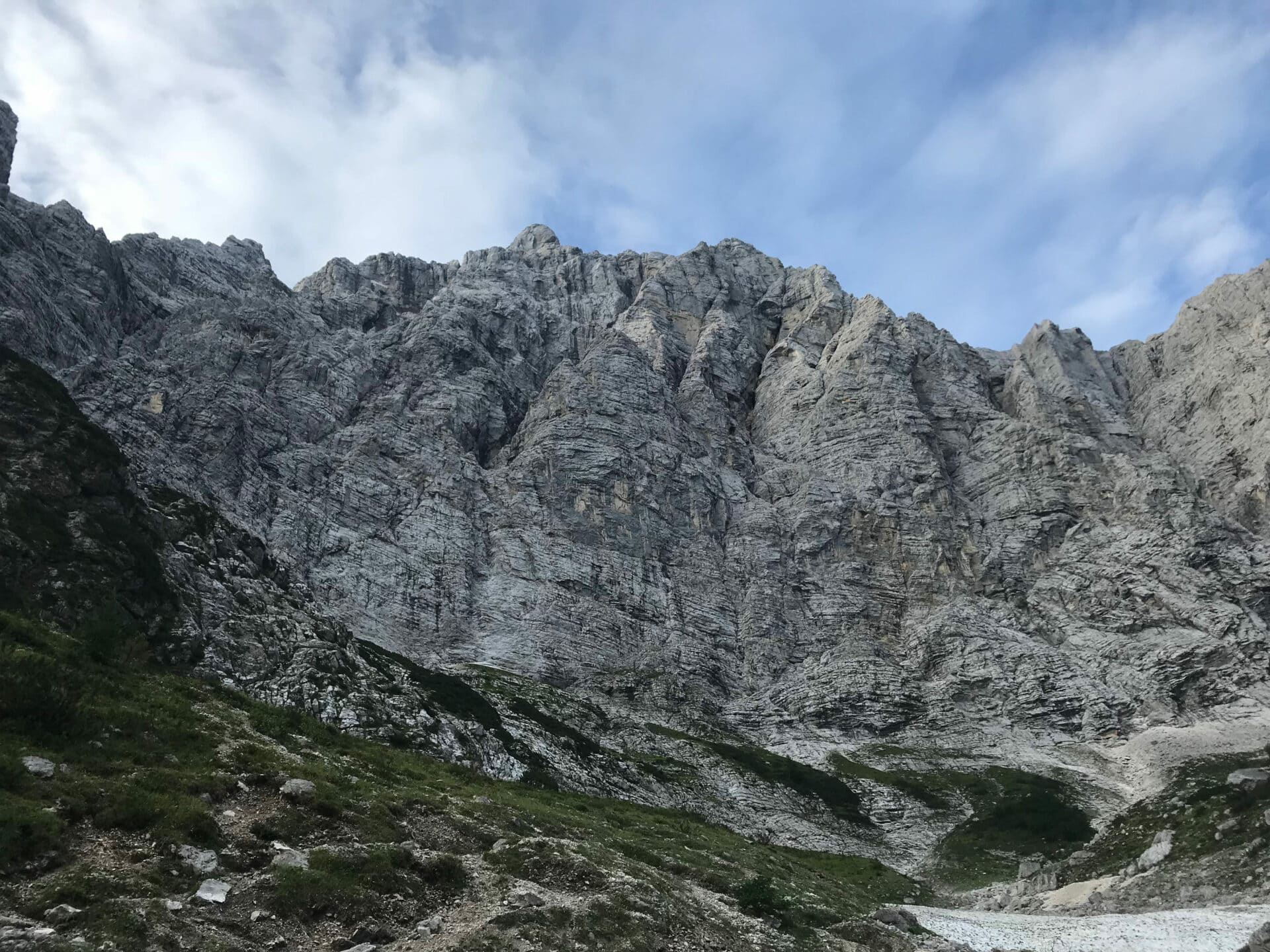
Hike to Triglav. If you are Slovenian, you are expected to climb it at least once in your life. If you are a visitor, it is simply one of the finest summit experiences in the Eastern Alps.
The standard route via Kredarica hut involves some scrambling and via ferrata sections on the final 350 m (1,148 ft). I did it first at age 8. I have since guided guests in their seventh decade to the summit. The mountain respects preparation and punishes shortcuts.

Beyond the summit, walk the Vrata Valley under the north face. Stop at the Pericnik waterfall, spectacular in any season but extraordinary in winter when it turns to ice.
Eat lunch at Aljaž Dom hut with the north face directly above you. Swim in the Soča if it is warm enough, usually around 15 to 16 degrees Celsius (59 to 61 degrees Fahrenheit), cold but refreshing on a hot day.
Long-Distance Slovenia Hiking Trails
The Slovenia hiking trail network runs to nearly 10,000 km (6,200 mi) of marked paths, from coastal walks at sea level to high-alpine traverses above 2,500 m (8,200 ft).
For multi-day trekking, the Slovenian Mountain Trail covers 599 km (372 mi) from Maribor across all three ranges, all the way to the Adriatic. The Juliana Trail circles the Julian Alps for 270 km (168 mi), mostly below the high peaks but with constant views upward.
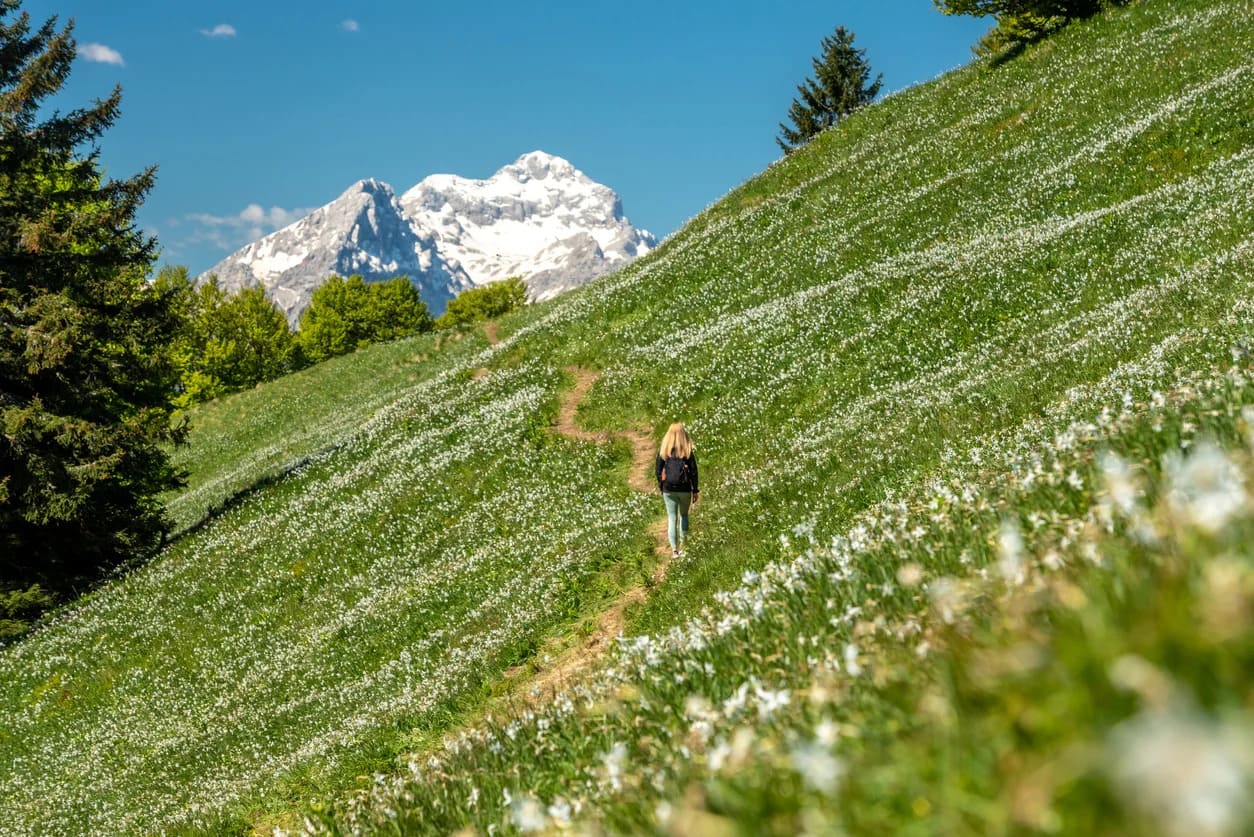
For day hiking, my personal shortlist: Slemenova Špica for views, the Soča trail for drama and distance, Mount Golica in late May for the narcissus fields that cover the entire slope, and the Martuljak gorge for something families can do without technical gear.
Hut to hut hiking Slovenia: the traditional way to travel
Hut to hut hiking in Slovenia is not a recent trend. Mountain huts have existed here for more than a century. The guiding profession in Kranjska Gora started over 130 years ago. In my hotel, there is a corner with photographs of those first guides. I am not old enough to be on the wall yet, but I know what it stands for.
The hut network across the Julian Alps and Karawanks is dense and well-maintained. Most serve hot food, local beer, and a warm bed. Capacity varies, so reservation matters in July and August.
For serious multi-day routes, the huts between Kredarica and the Triglav Seven Lakes Valley form one of the finest high-alpine traverses in the Eastern Alps.
Via ferrata Slovenia: a step beyond hiking
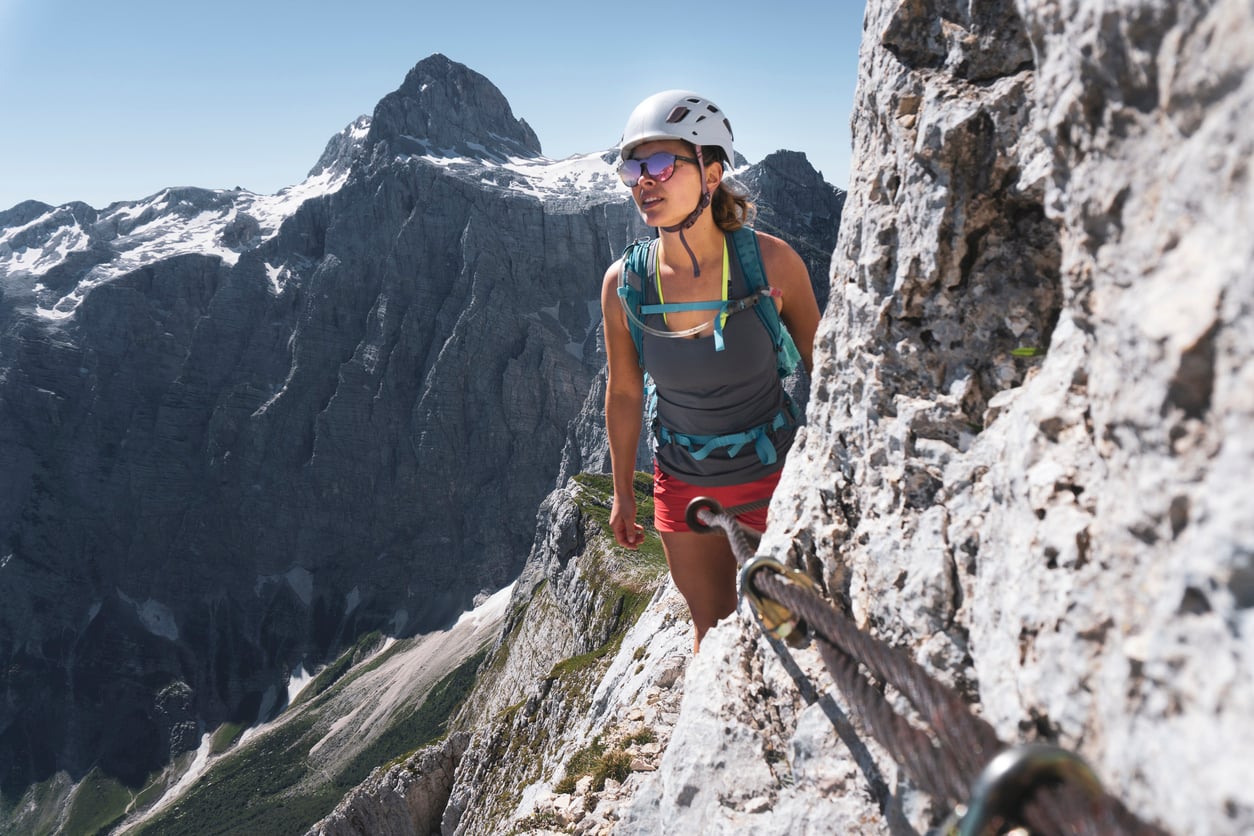
Via ferrata routes are woven through the Julian Alps wherever the terrain gets interesting. For kids especially, a via ferrata changes everything.
Long walks, they tolerate. A Tyrolean traverse across a cable above a gorge, they will talk about for years. I have guided children as young as five on protected routes near Kranjska Gora. The iron rungs and cables make difficult terrain accessible, but they do not remove the need for focus and good movement.
The most engaging via ferrata experience in the park is the final approach to Triglav itself. Exposed, long, and genuinely alpine. If that is too much, routes on Prisank and Jalovec offer serious climbing in a more manageable format.
Planning Your Hiking Trip to Slovenia
When is the best time for hiking in Slovenia?
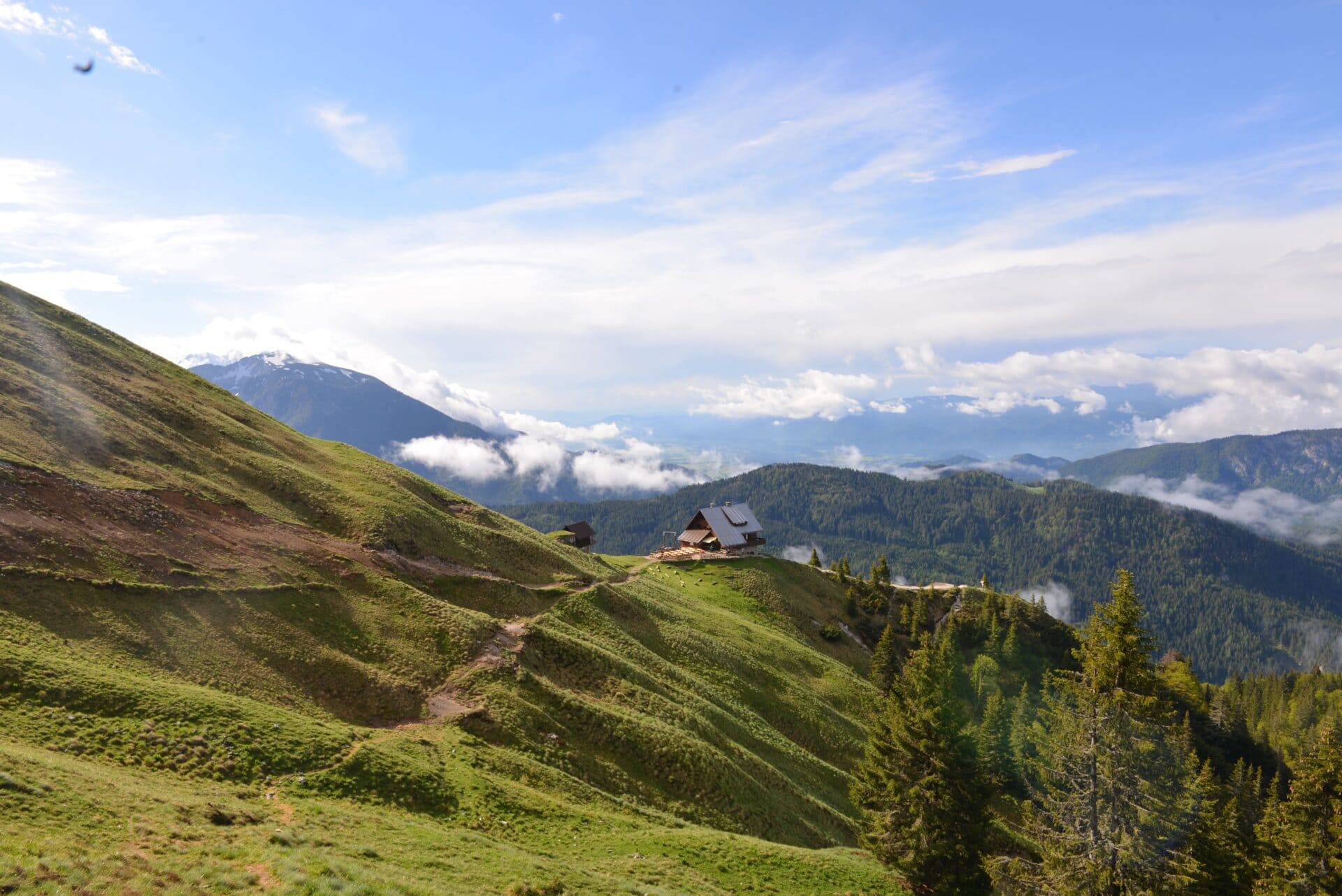
May to September is the main season. Late May is extraordinary if you want the narcissus flowers on Mount Golica. July and August are the busiest months, and also the most stable weather-wise.
September is my personal favorite: quieter trails, lower hut occupancy, golden morning light, and the larch trees starting to turn. October is still possible at lower elevations, and in winter we shift to snowshoes, crampons, and ice axes for the right terrain.
What you need to understand about Slovenian mountains: the weather can change fast. I have been a mountain rescuer for over 30 years, and I know exactly when it is time not to go up. If a storm is coming, we adjust. We have backup options.
One of the best is Postojna Cave, a karst system with an underground train and the famous cave-dwelling olm, an eyeless aquatic salamander that can live for more than 100 years. In the past, people thought they were baby dragons. I understand the confusion.
Is hiking in Slovenia suitable for beginners?
Yes, with the right guidance and route selection. The Soča River trail is long but almost entirely flat. The Martuljak gorge walk is suitable for families. Slemenova Špica is moderate, well-marked, and manageable for anyone in reasonable shape.
The marked trail system uses the Knafelc blaze: a white dot inside a red ring, on rocks and trees at regular intervals. You do not need navigation experience to follow them.
The high-alpine routes, Triglav especially, are different. Those require proper alpine boots, crampons in early season, and ideally a guide who knows when conditions are acceptable. Do not treat Triglav as a hill walk. It is a mountain, and it demands respect.
Do I need a guide for hiking in the Julian Alps?
For the standard marked valley trails, no. The network is excellent and well-signed. But for Triglav’s summit, the north face, technical via ferratas, or anything that involves snow and ice, an IFMGA-certified guide is not a luxury. It is what makes the difference between a safe summit and a call to the rescue team. I have been on both sides of that call. Trust me on this one.
A guide also gives you context. The Martuljak peaks, Prisank, Špik, Jalovec: I can name every summit on the horizon because I have climbed them. That knowledge changes what you see. Instead of a wall of rock, you start to read a landscape.
Can families with children hike in Slovenia?
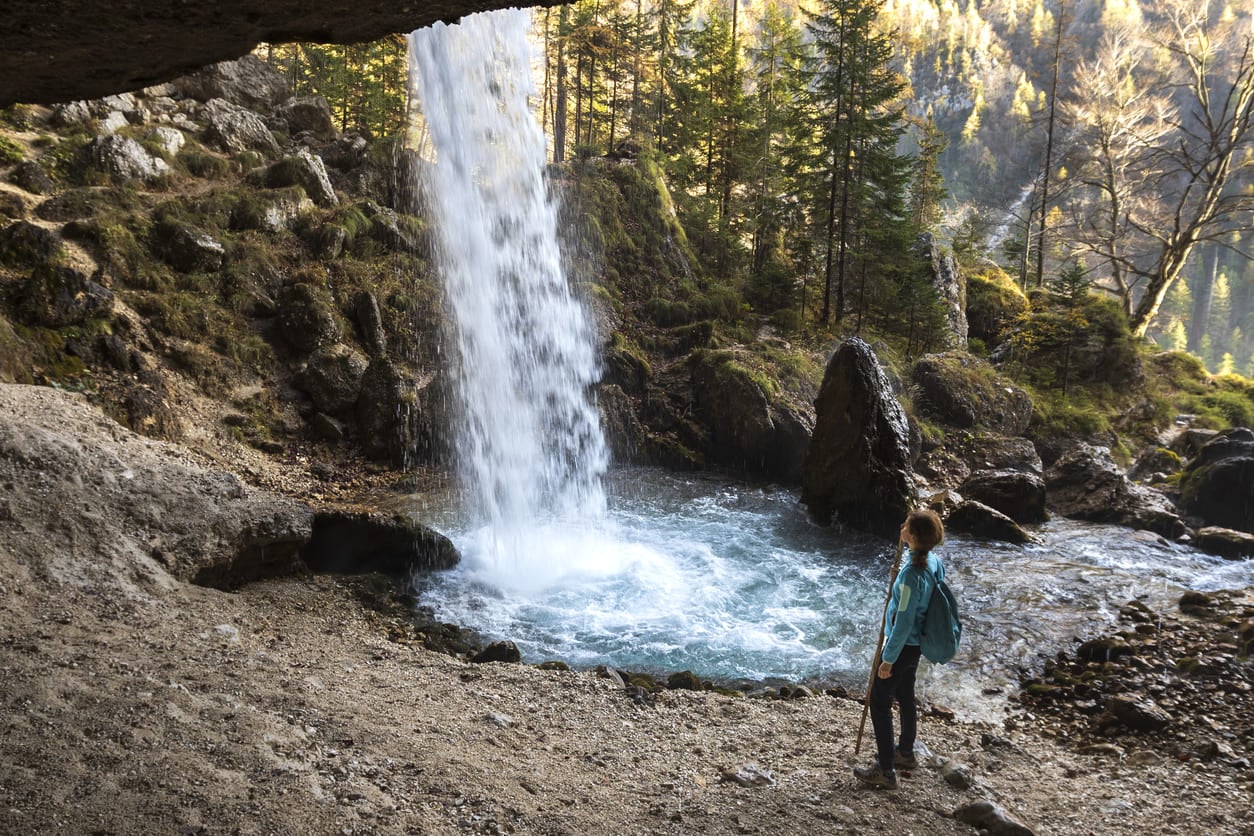
Absolutely. I started hiking at 8. My own children grew up on these trails. The Soča River walk is perfect for older kids. Slemenova Špica works for children from around 8 to 10.
For younger ones, the gorge walks, the Jasna Lake loop near Kranjska Gora, and the lower Vrata Valley paths are all manageable. Via ferrata sections, with the right equipment and guidance, add genuine excitement for kids who find long flat walks less compelling.
Where to Stay in Slovenia for Hiking
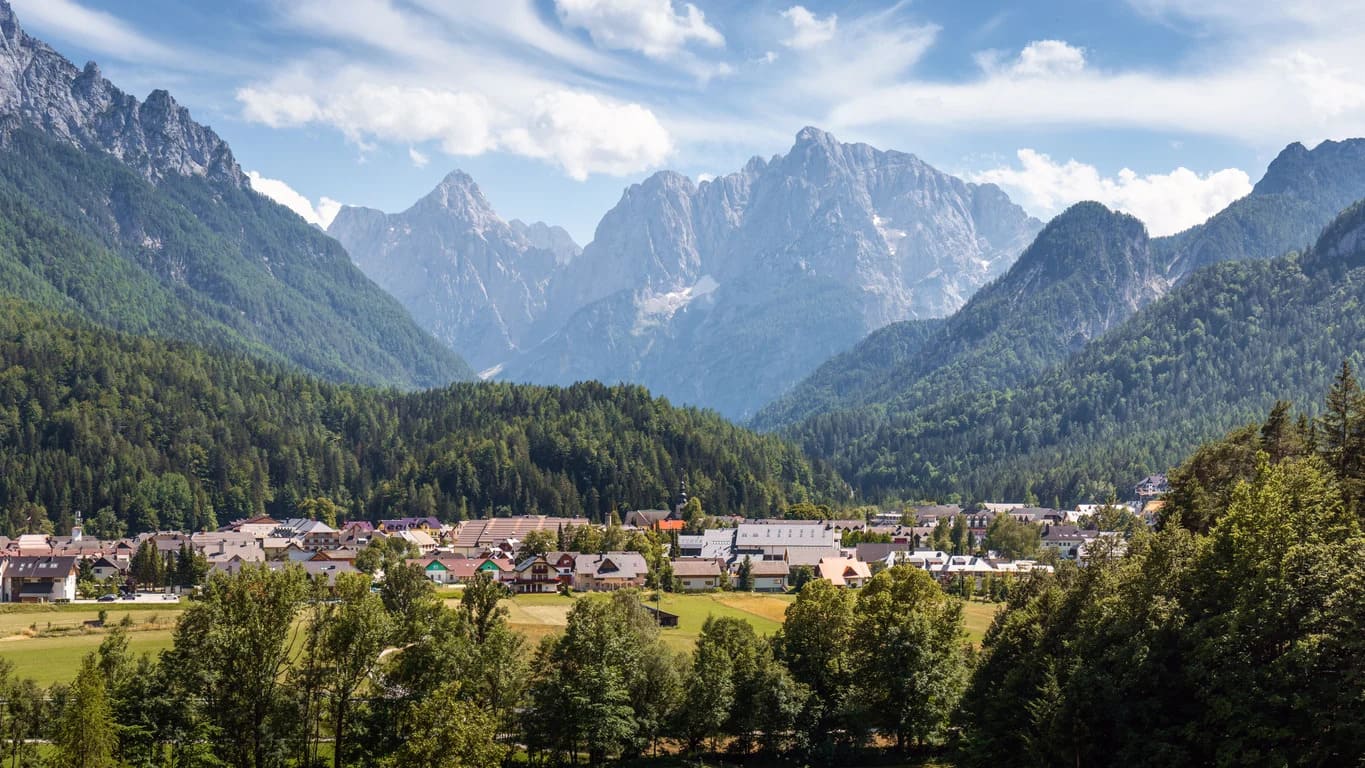
Kranjska Gora is my base and my recommendation. It sits just 11 km (7 mi) from Austria and 8 km (5 mi) from Italy, but it feels entirely Slovenian: small, mountain-focused, with excellent access to both the Julian Alps and the Karawanks.
From here, Vršič Pass is 15 minutes by car. The Vrata Valley is 20 minutes. You are within an hour’s drive of everything on the main hiking program.
For those who want to be closer to the Soča Valley, Bovec is the natural base. Lake Bohinj, less visited than Bled and arguably more beautiful, is another strong option for hikers focused on the southern Julian Alps.
All three towns have good accommodation, mountain hut access, and the kind of local restaurants where finishing a long day genuinely feels like a celebration.
Kranjska Gora hiking logistics
Ljubljana Airport is the easiest entry point, around one hour from Kranjska Gora by car. Venice, Klagenfurt in Austria, and Zagreb in Croatia are all within two and a half hours. Most guests arrive by rental car, which gives you the flexibility to reach trailheads that public transport does not serve.
For the Soča trail and longer days, we arrange transfer vehicles so you walk one direction and are collected at the end.
What to Bring for Hiking in Slovenia
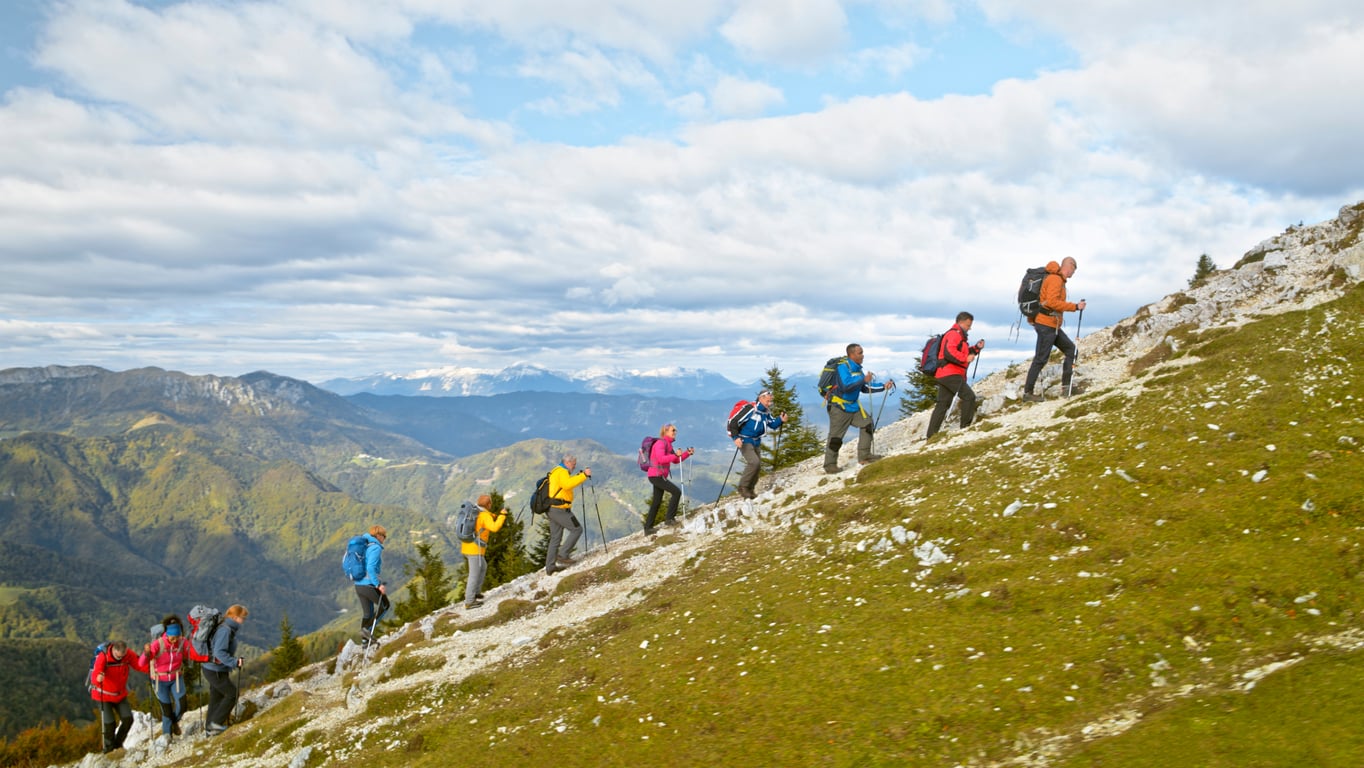
Boots with ankle support and Vibram soles. A 30 to 40 L (1.8 to 2.4 cu ft) pack. Three layers: merino or wool base, light fleece mid-layer, waterproof outer. Sunglasses and a hat, even in summer, because the reflection off limestone is brutal.
Walking poles, especially for the Soča trail’s long distances. A headlamp. A basic first aid kit. Enough food and water for a full day, because some trails have no huts mid-route.
My backpack always has a torch, a pen knife, a lighter, toilet paper, and wet wipes. They have never once left my pack. In the Julian Alps, phone coverage is generally reliable, but I carry a radio too. On a rescue, you want to reach the helicopter directly, not wait for a signal bar.
For winter hiking (and also for ice climbing in the Julian Alps), proper alpine crampons and an ice axe are non-negotiable on anything above the snow line. For flat road walking when conditions are icy, a simple rubber crampon with small spikes is enough. There is a difference, and it matters.
Come Hiking in Slovenia
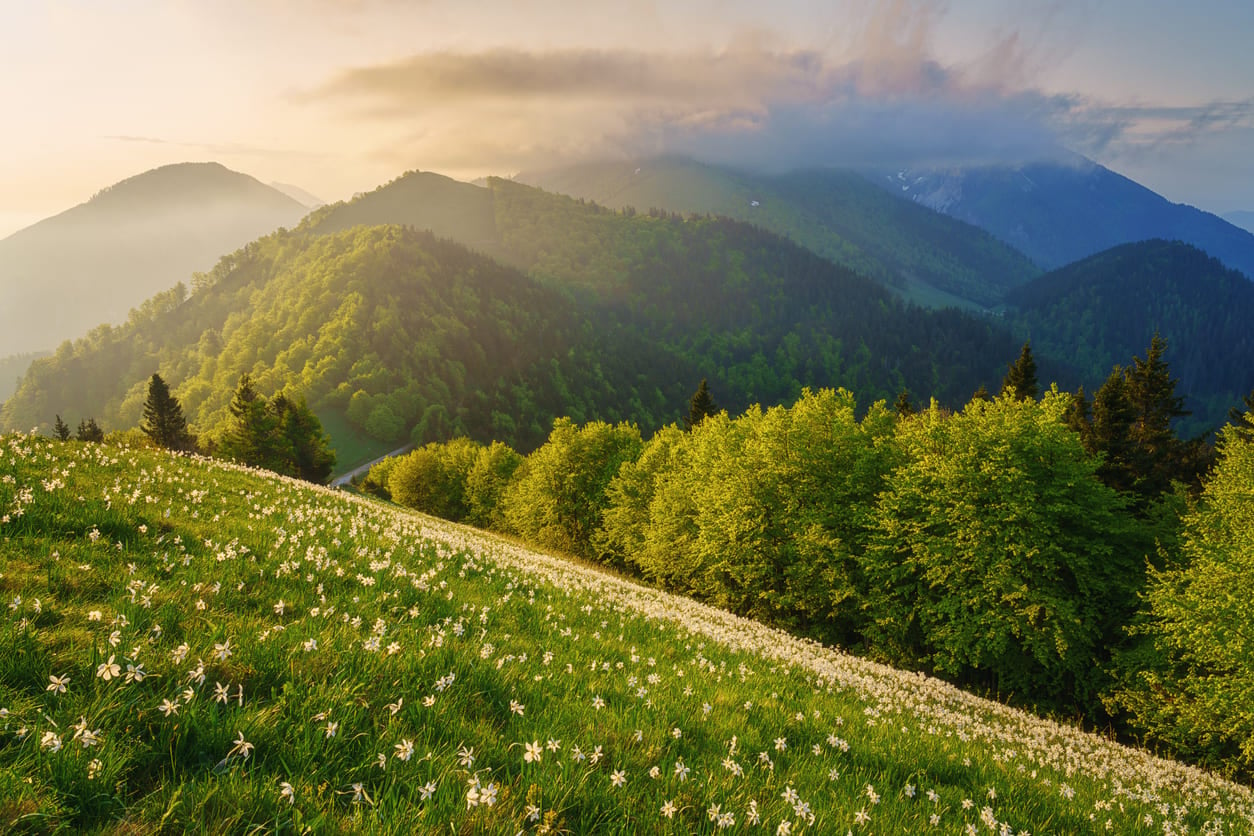
Hiking in Slovenia does not need a dramatic sales pitch. You arrive, you pull on your boots, you walk into the mountains, and the place does the work. The limestone turns pink at dusk. The marmots whistle from the rocks above the hut. The Soča runs a color that has no business existing in nature. You eat cheese dumplings at a wooden table with people you did not know a week ago.
I have been doing this for 20 years, and I still stop on the summit of Slemenova Špica and look at that view like it is the first time. Every single time. These Slovenia hiking trails are not famous the way the Dolomites are famous, or Chamonix, or Zermatt. They are better kept than that. And I have spent 20 years guiding people here, still half-hoping the secret holds.