
There was an error with your log in

Hiking in Madeira and the Azores

Madeira and the Azores keep showing up on every "best hiking in Europe" list, and honestly, the hype is justified. Levada trails through ancient forest, volcanic calderas, sea cliffs dropping into the Atlantic, nine wild islands to explore.
Come find out what everyone's talking about.

Hike the Atlantic's Most Spectacular Islands

Madeira or the Azores? Why not both

Madeira and the Azores share a flag and an ocean, and that’s roughly where the similarities end. Knowing the difference makes choosing easy, or makes you want to do both, which is also a perfectly valid life decision.

Madeira is compact, concentrated, and trail-dense in the best possible way. The levada network alone covers over 2,000 km of walking paths threading through laurel forest, along cliff edges, and past waterfalls tucked deep in the mountains. You could spend a full week here and not repeat a single trail.

The Azores is a whole archipelago, nine islands each with their own character, spread over 600 km of open Atlantic. São Miguel is the most popular entry point, with caldera hikes, steaming hot springs, and coastal trails all within easy reach. The outer islands — Flores, Pico, Faial, São Jorge — are where things get properly wild. Hiking here feels like the edge of the world, because geographically speaking, it kind of is.

The Hawaii of Europe — Except Almost Nobody Knows It Yet

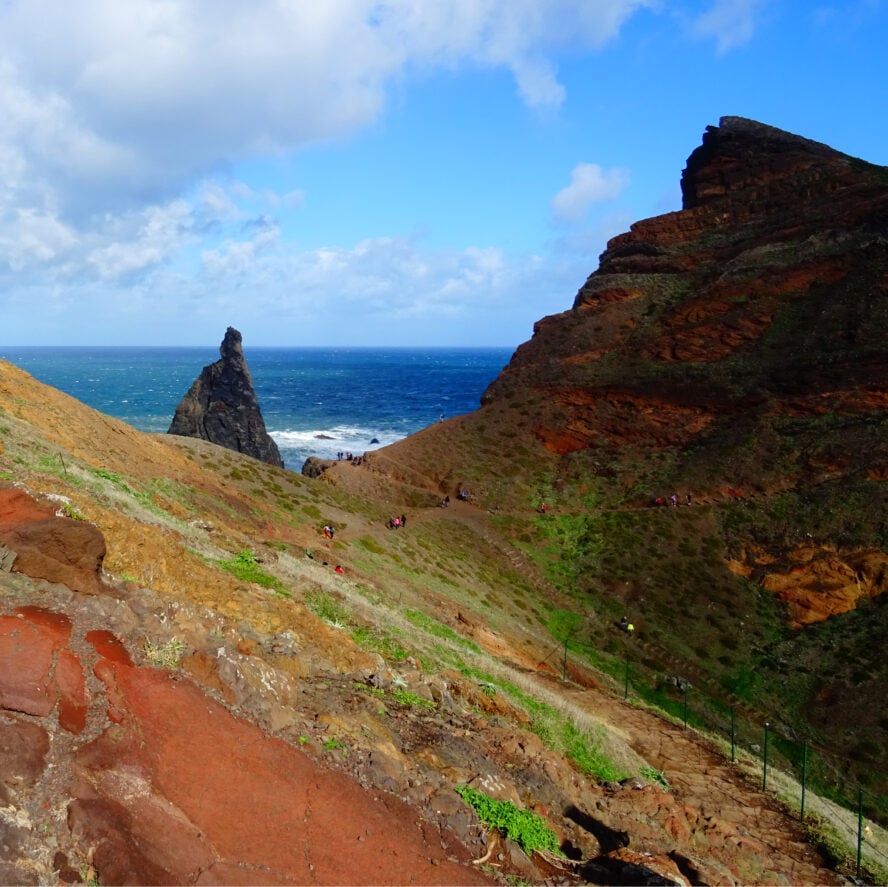
Dramatic sea cliffs, ancient volcanic forests, crater lakes, and trails that deliver views you’ll be talking about for years. Madeira is a single volcanic peak rising from the Atlantic, its interior laced with the legendary levada trails — centuries-old irrigation channels turned into some of the most atmospheric walking routes in Europe. The coastline drops hundreds of meters straight into the ocean. The laurel forest is older than most European nations. It’s a lot.

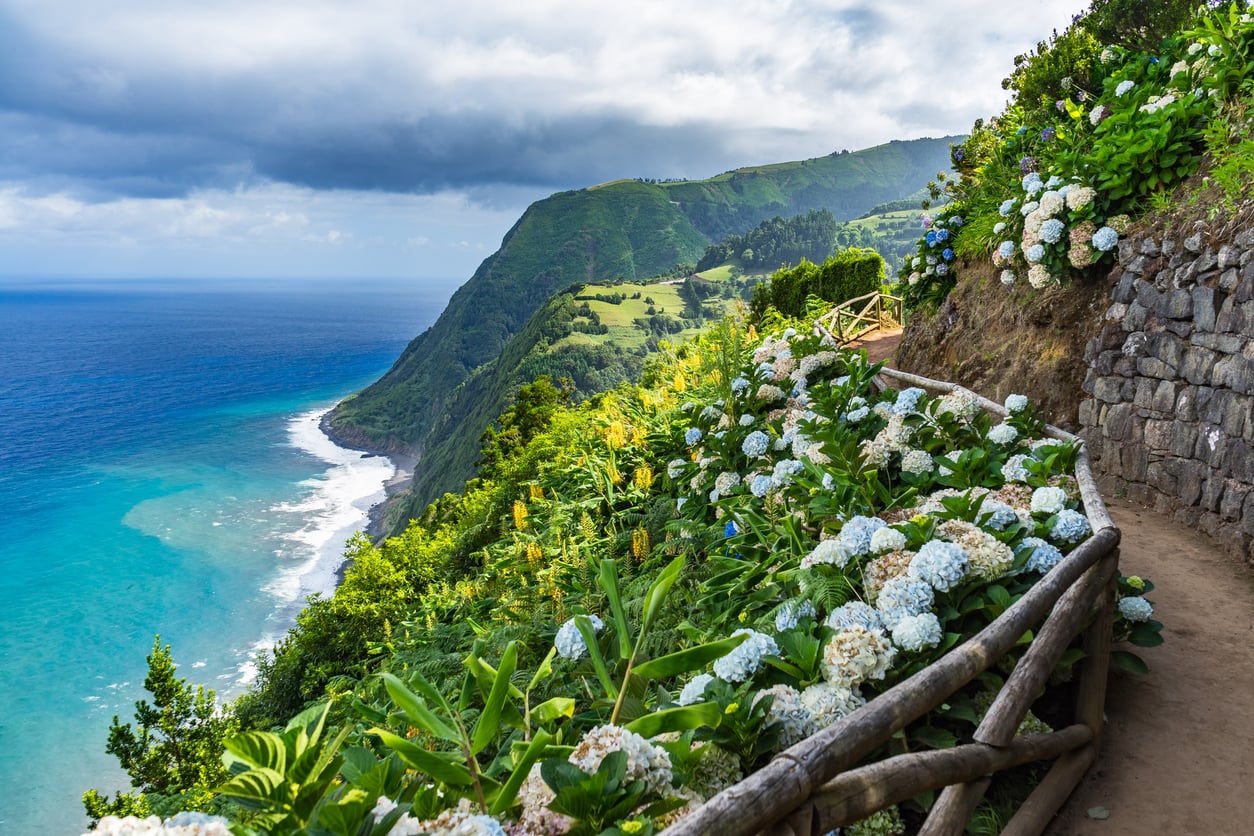
The Azores is not one island. It’s nine. Nine volcanic islands scattered across the mid-Atlantic, each with its own personality and its own trails. São Miguel has twin crater lakes inside calderas so vast they look photoshopped. Pico is a dormant volcano rising straight from the sea. Flores is blanketed in wild hydrangeas as far as the eye can see. Together they offer a variety of hiking that’s hard to match anywhere in Europe, with a fraction of the crowds you’d find in more obvious destinations.

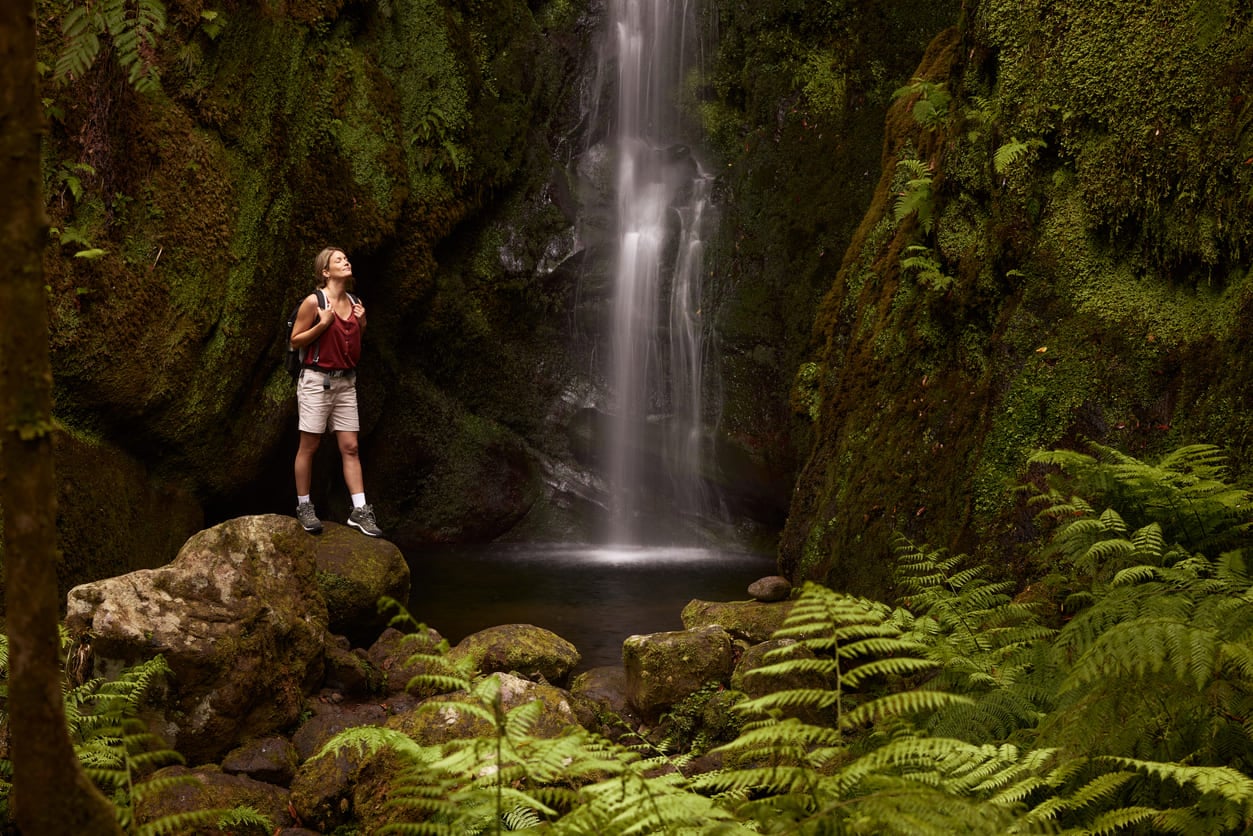
Woman near a waterfall in Madeira

These trails will make you work, and you’ll love it

Let’s be straight: Madeira and the Azores are hilly islands. Volcanic terrain means real elevation, uneven surfaces, and some paths that hug clifftops with nothing but ocean below. If you’re looking for a flat leisurely amble, these might not be your islands. If you’re up for trails that ask something of you and pay you back spectacularly, you’re in exactly the right place.

Moderate fitness is the sweet spot for most of these trips. You don’t need to be training for anything, but you should be comfortable with multi-hour days on your feet, the odd steep climb, and paths that don’t always behave. The payoff is views over cloud-filled valleys, sea cliffs vanishing into Atlantic haze, and crater lakes glowing an almost unreasonable shade of green. Each trip clearly lays out daily distances and difficulty so you can find your level before you commit.

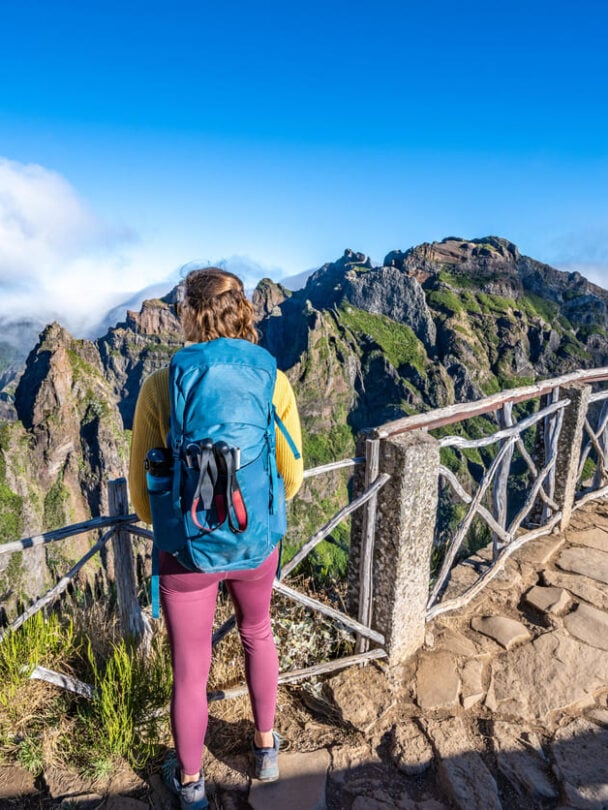
pico arieiro view

Guided or self-guided, we’ve got you

Some people want a local expert by their side, pointing out endemic species, sharing the history behind the levadas, and knowing exactly which viewpoint to hit at golden hour. If that’s you, the guided trips are built for exactly that. Expert local guides handle all the navigation and logistics, leaving you free to just look around and enjoy the fact that you’re here.

Others want to wake up and decide over breakfast whether today is a long trail day or a short one with a long lunch at the end. That’s what self-guided trips are for. Fully organized behind the scenes with accommodation, transfers, routes, and detailed trail notes, but zero group schedule and zero waiting around. Your pace, your call, your trip. Either way, the hard part is handled. You just hike.

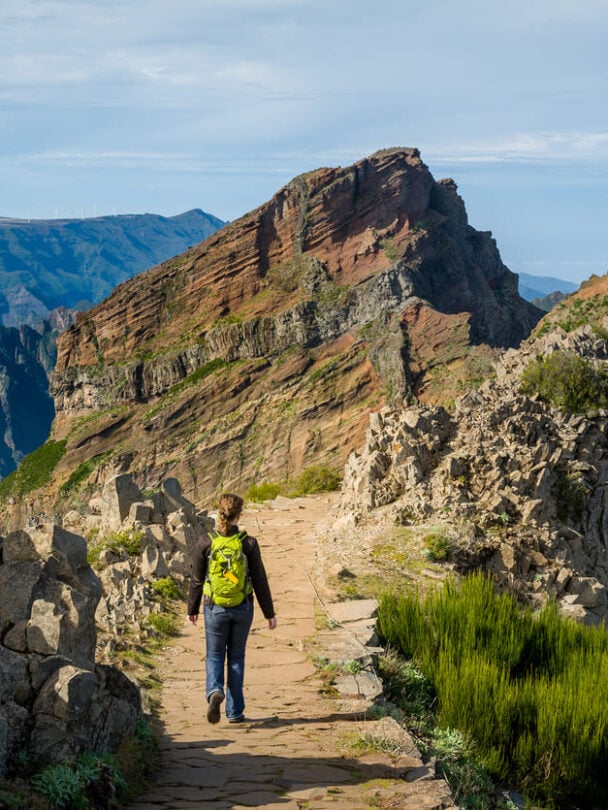
azores hiking path

No fuss, just hiking

Island hiking sounds idyllic until you start thinking about ferries, inter-island transfers, trailhead access, and finding accommodation in remote locations. That’s where these trips earn their keep. Accommodation, transfers, routes, and gear guidance are all sorted in advance by people who know these islands properly, not from a travel blog but from years of actually being here.

Guided trip? Your guide handles everything as it comes. Self-guided? Detailed trail notes and a pre-planned itinerary mean you always know where you’re going and where you’re sleeping. The islands deserve your full attention. These trips make sure nothing gets in the way of that.

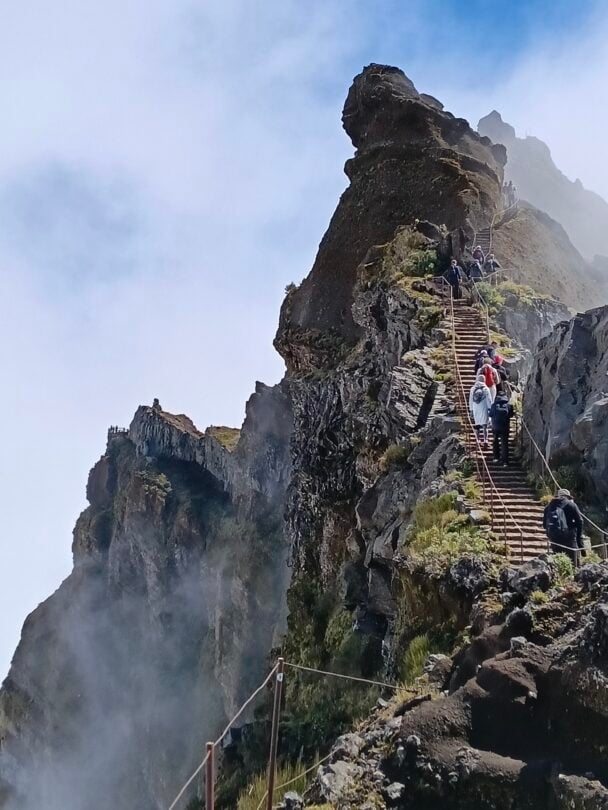
Hands up Madeira hiker
What do people think of Hiking in Madeira & the Azores?
Martha Schrader

One of our most memorable trips with our kids.

Bernard Everaere

Excellent organization that we have already experienced several times with pleasure, in France and in Europe.

Shahauna Siddiqui

Benny was amazing and he re-adjusted our hikes to suit our needs so we weren’t absolutely on the tourist track. He has deep knowledge of the area that added to the experience.

Frequently Asked Questions About Hiking in Madeira and the Azores

  • It depends on what kind of hiking experience you’re after.

    Madeira is one compact island with an extraordinary density of trails. The levada network alone could keep you busy for weeks, and the combination of sea cliffs, laurel forest, and mountain ridges makes it one of the most varied hiking destinations in Europe. Great if you want to go deep into one place.

    The Azores is an archipelago of nine islands, so the experience is broader and more exploratory. São Miguel is the natural starting point, with caldera hikes, geothermal hot springs, and coastal trails all within easy reach. The outer islands—Pico, Flores, Faial, São Jorge—are wilder and more remote. If you have the time, combining both destinations is absolutely worth it.

  • Both destinations pack a serious amount into a relatively small area. A few highlights worth knowing about before you go:

    Madeira

      • The levada trails are the island’s signature experience. Centuries-old irrigation channels turned walking routes, threading through laurel forest, along cliff edges, and past waterfalls. There’s nothing quite like them anywhere else in Europe.
      • Pico Ruivo is Madeira’s highest peak and on a clear day the views stretch across the entire island. Worth every step to get there.
      • Cabo Girão is one of the highest sea cliffs in the world. Stand on the glass viewing platform and look straight down 580 meters to the ocean.
      • Funchal’s Mercado dos Lavradores is the island’s main market, packed with exotic fruit, fresh fish, and local character. Go in the morning, try the passion fruit, buy too much.
      • Poncha is the local drink, made from aguardente, honey, and lemon. Have one after a long day on the trail. Have two if it was a really long day.

    The Azores

      • Sete Cidades on São Miguel is the postcard shot of the archipelago — twin lakes, one green, one blue, sitting inside a vast volcanic caldera. Non-negotiable.
      • Furnas is a geothermal valley where the ground steams and bubbles. The local specialty, cozido das Furnas, is a meat stew slow-cooked underground using volcanic heat. One of the more memorable meals you’ll have anywhere.
      • Mount Pico is Portugal’s highest peak, rising straight from the sea on its own island. Even if you don’t climb it, the view of it from neighboring islands is something else.
      • The outer islands—Flores, Faial, São Jorge—are where the Azores gets truly wild. Less visited, more dramatic, and well worth the extra ferry ride if you have the time.
  • You don’t need to be an athlete, but you do need a decent level of fitness. Both islands are volcanic, which means the terrain is hilly, paths can be uneven, and some routes involve real elevation gain and clifftop exposure. These are active hiking trips, not gentle walks.

    If you can comfortably handle several hours on your feet, manage some steep ascents, and walk on uneven surfaces without it being a problem, you’ll be well suited for most trips here. Each trip page clearly states daily distances, elevation, and difficulty level so you can find the right match before booking.

  • Madeira is genuinely one of the best year-round hiking destinations in Europe. The climate is mild and stable whatever the month. Spring brings wildflowers and lush trails. Autumn is quieter with excellent conditions. Even winter works, particularly in the south of the island.

    The Azores is best between May and October. The islands sit in the middle of the Atlantic and the weather can be changeable at any time of year—locals will tell you you can get four seasons in one day—but summer and early autumn give you the best chance of clear skies and calm conditions. Each trip page includes specific seasonal guidance for the islands it covers.

  • On guided trips, yes. A professional local guide leads every day, handling navigation, logistics, and everything that comes up on the ground. They know the trails, the weather patterns, the local history, and the spots you wouldn’t find on your own. It’s a genuinely different experience to hiking independently.

    On self-guided trips, there’s no guide walking with you, but you’re not on your own either. Routes are pre-planned, accommodation is booked, transfers are arranged, and you’ll have detailed trail notes for every day. Support is available if you need it. You’re independent, but looked after.

Get in touch
We’re happy to answer any of your questions. Send us an inquiry or talk to one of our adventure planners free of charge.

Articles

Need help finding a perfect adventure?
We're happy to answer any of your questions. Send us an inquiry or talk to one of our adventure planners free of charge.
Saved to bucket list
Removed from bucket list

Choose a currency

  • USD - $
    US Dollar
  • EUR - €
    Euro
  • AUD - AU$
    Australian Dollar
  • CAD - CA$
    Canadian Dollar
  • GBP - £
    British Pound Sterling
  • CHF - CHF
    Swiss Franc
  • JPY - ¥
    Japanese Yen
  • SGD - S$
    Singapore Dollar
  • HKD - HK$
    Hong Kong Dollar
  • DKK - Dkr
    Danish Krone
  • NOK - Nkr
    Norwegian Krone
  • NZD - NZ$
    New Zealand Dollar