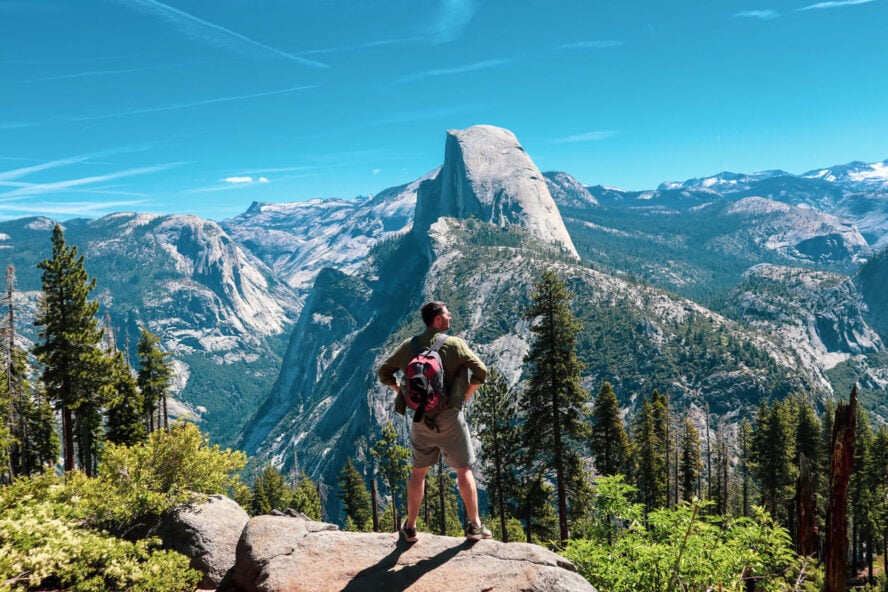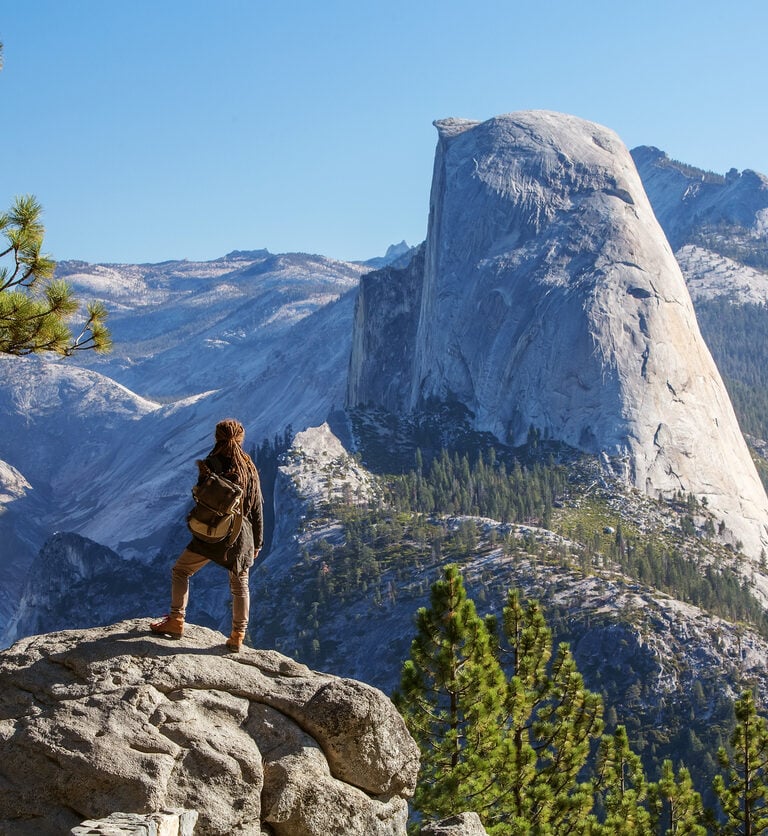
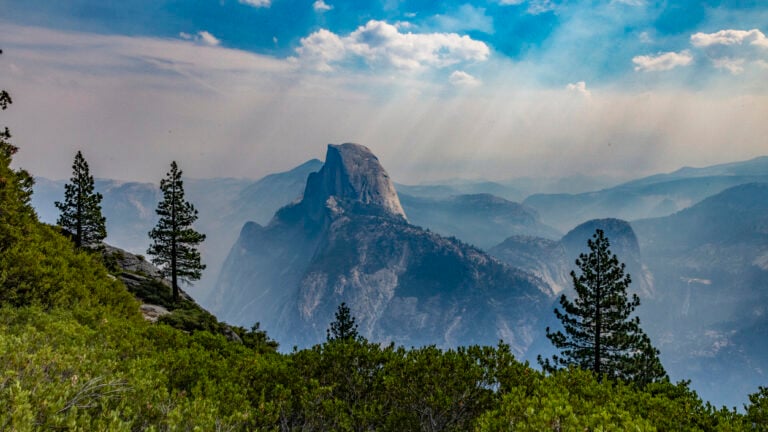
I fell in love with the outdoors on the Pacific Crest Trail, 2,650 miles (4,265 km) of desert, forest, and mountain running from Mexico to Canada. Somewhere out there, I realized nature was the best tool I had ever found for learning who I actually was. That is why I became a guide, and why hiking Half Dome is still, after all these years, the trip I love leading most.
I have taken people up who had never backpacked before, grandparents in their 60s, grandkids on their first big trip. Grown adults have cried at the summit, not from exhaustion, but from something closer to disbelief.
Half Dome asks a lot of you, then hands you back more than you expected.
This is everything I tell my own clients before they take on hiking Half Dome, the good, the hard, and the parts nobody mentions until they are standing at the base of the cables wondering what they got themselves into.
Where is the Half Dome hike?
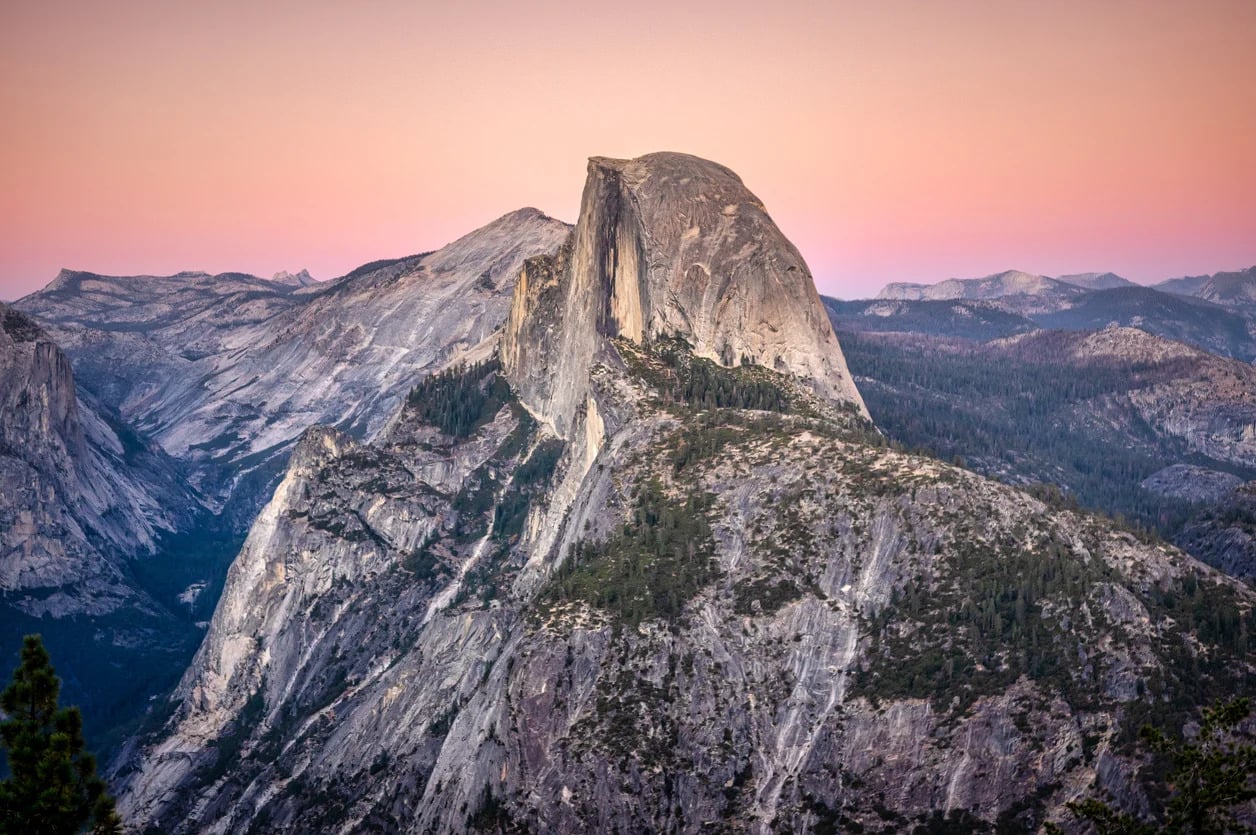
Half Dome sits at the eastern end of Yosemite Valley, inside Yosemite National Park in California’s Sierra Nevada. The range runs about 400 mi (644 km) north to south along the eastern edge of the state, and stays remarkably wild for a mountain range this close to nearly 40 million people.
I think that wildness is the whole story. Very few roads cross the range, and almost no towns sit above a certain elevation. You can see the dome from the valley floor long before you ever set foot on the trail, and it has a way of getting into your head early.
Why the dome looks the way it does
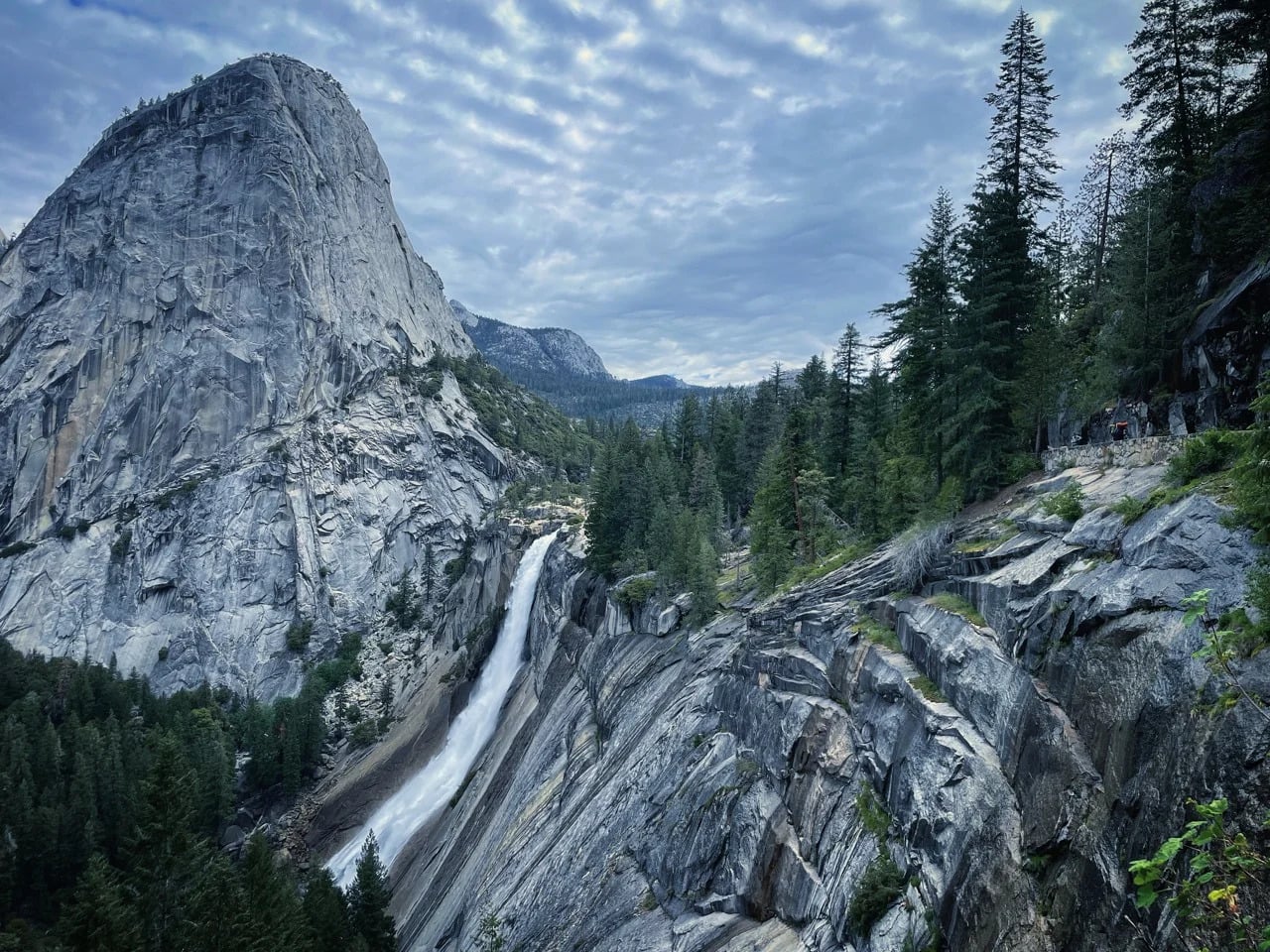
Half Dome started as granite that cooled underground millions of years ago. A glacier later carved through the valley and stripped away roughly 20 percent of the original dome, leaving the sheer face we see today.
Standing underneath it, you can actually feel that geological violence. This does not look like something water and ice made. It looks like something broken on purpose.
Hiking Half Dome: what to expect and prepare for
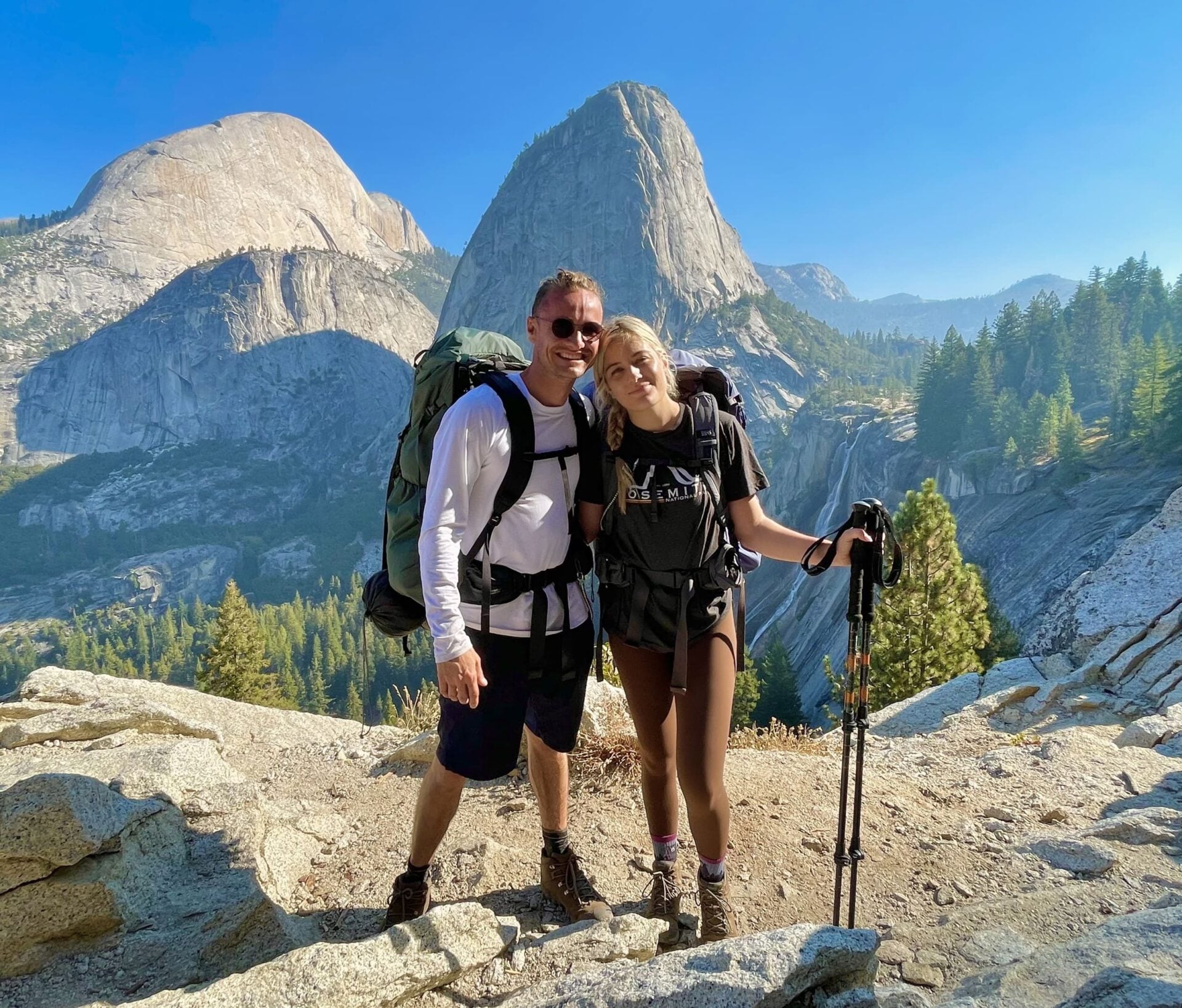
The classic approach starts at Happy Isles Trailhead in Yosemite Valley. I run this as a 4-day backpacking trip, which gives people time to acclimate, enjoy the valley, and tackle the dome without rushing. You could do the whole thing as one very long day hike, but I will get to why I almost never recommend that.
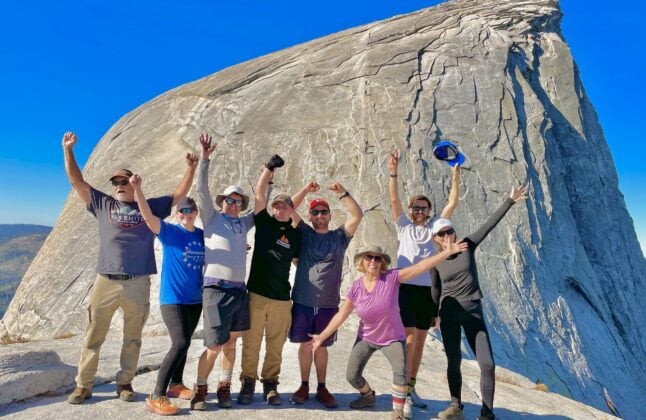
On day 1, we settle into the valley itself. I want my clients adjusting to the elevation and soaking in views of El Capitan and Yosemite Falls, the tallest waterfall in North America, before we ever start climbing. We camp that first night in the valley’s backpackers campground, which only permit holders can access.
The night before the climb feels different than you expect
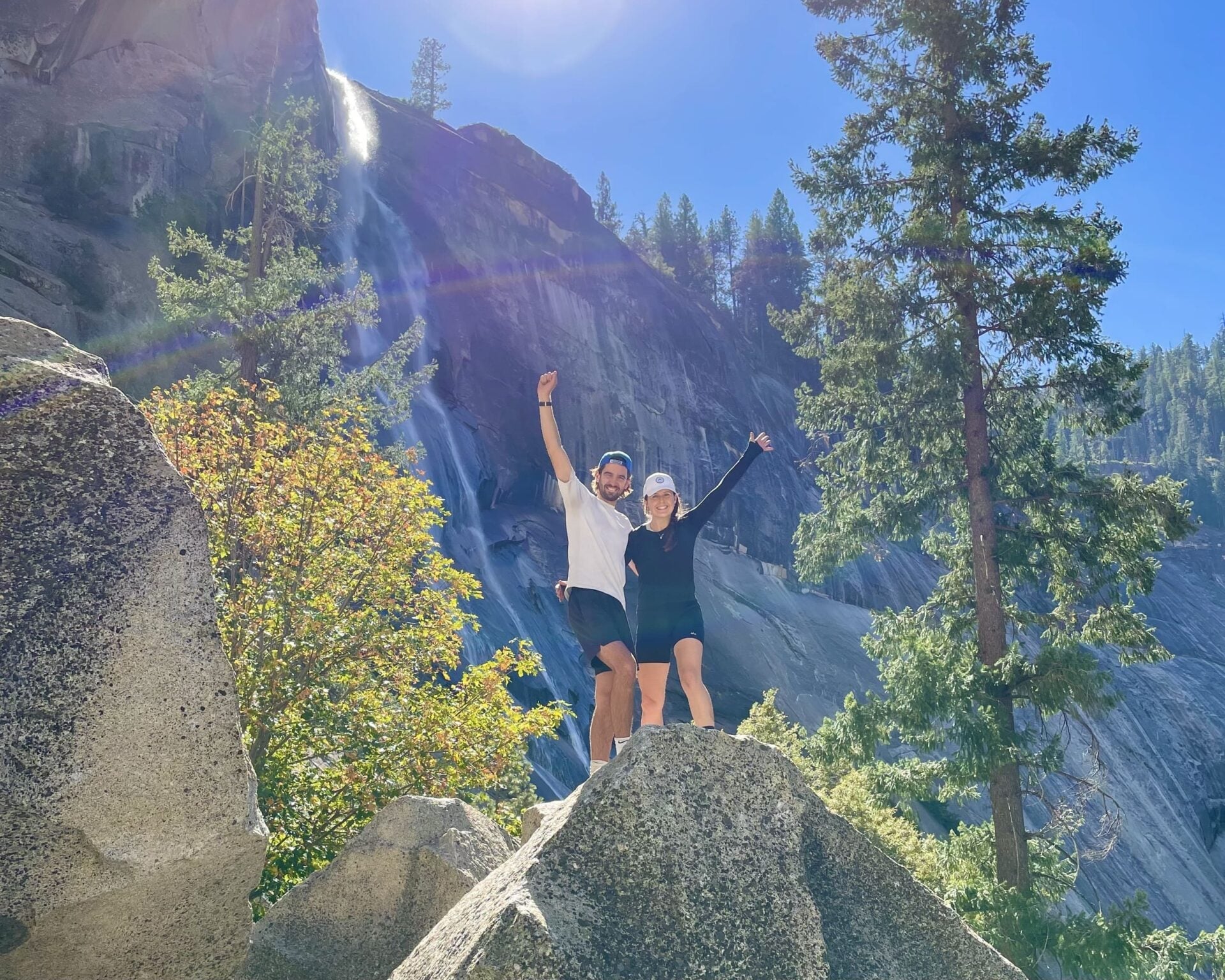
Once it gets dark, you start noticing little points of light high up on the valley walls, headlamps of climbers spending the night on the faces of El Capitan or Half Dome itself. You realize you are surrounded by people chasing the same kind of adventure you are, and it changes how you feel about the trip ahead.
Day 2 is when the real climbing begins. From camp, we hike to Happy Isles and start up the Mist Trail, a stretch of stone stairs carved directly into the mountain. About a mile in, you will hear the roar before you see anything. That is Vernal Fall.
How long is the Mist Trail hike in Yosemite?
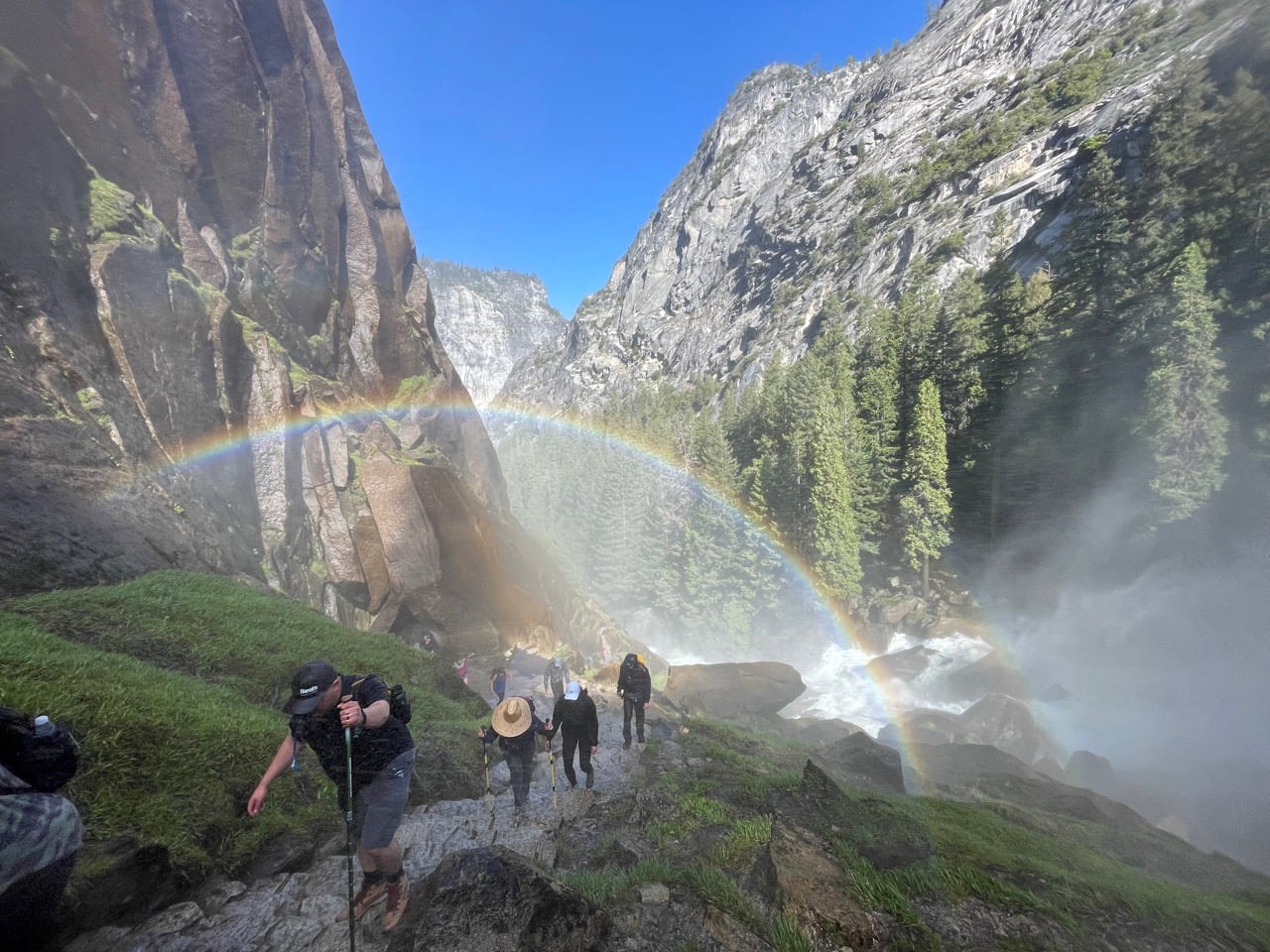
Yosemite Mist Trail length runs about 3 mi (4.8 km) round trip to Vernal Fall and back, or closer to 5.4 mi (8.7 km) round trip out to Nevada Fall. As part of the full hiking Half Dome route, you climb through it once on the way in.
In late spring, snowmelt sends so much water over Vernal Fall that the trail earns its name. You will get soaked. I tell people to either embrace it or throw on a rain jacket at the first sound of the falls, because there is no in between.
Past Nevada Fall, the trail eases into Little Yosemite Valley, where we camp the second night.
This is my favorite campsite on the route because Half Dome looms directly over it. In the evening, you can pick out tiny figures on the cable route, hikers making their final descent before dark, and you realize that will be you tomorrow.
What is the elevation gain of Half Dome?
From the valley floor to the summit, Half Dome elevation gain totals roughly 4,800 ft (1,463 m) over an 8.2 mi (13.2 km) approach via the Mist Trail, or 14 to 16 mi (22.5 to 25.7 km) round trip depending on your exact route. That is a significant day even before the final climb up the dome’s east face, which the National Park Service rates as extremely strenuous.

On day 3, we cover about 7 mi (11.3 km) from Little Yosemite Valley to the summit and back to camp. We start early, both to beat the crowds and to catch better light for photos. Since our full packs stay at camp, this day is a lighter carry, just water, food, layers, and the essentials.
The switchbacks before the reward
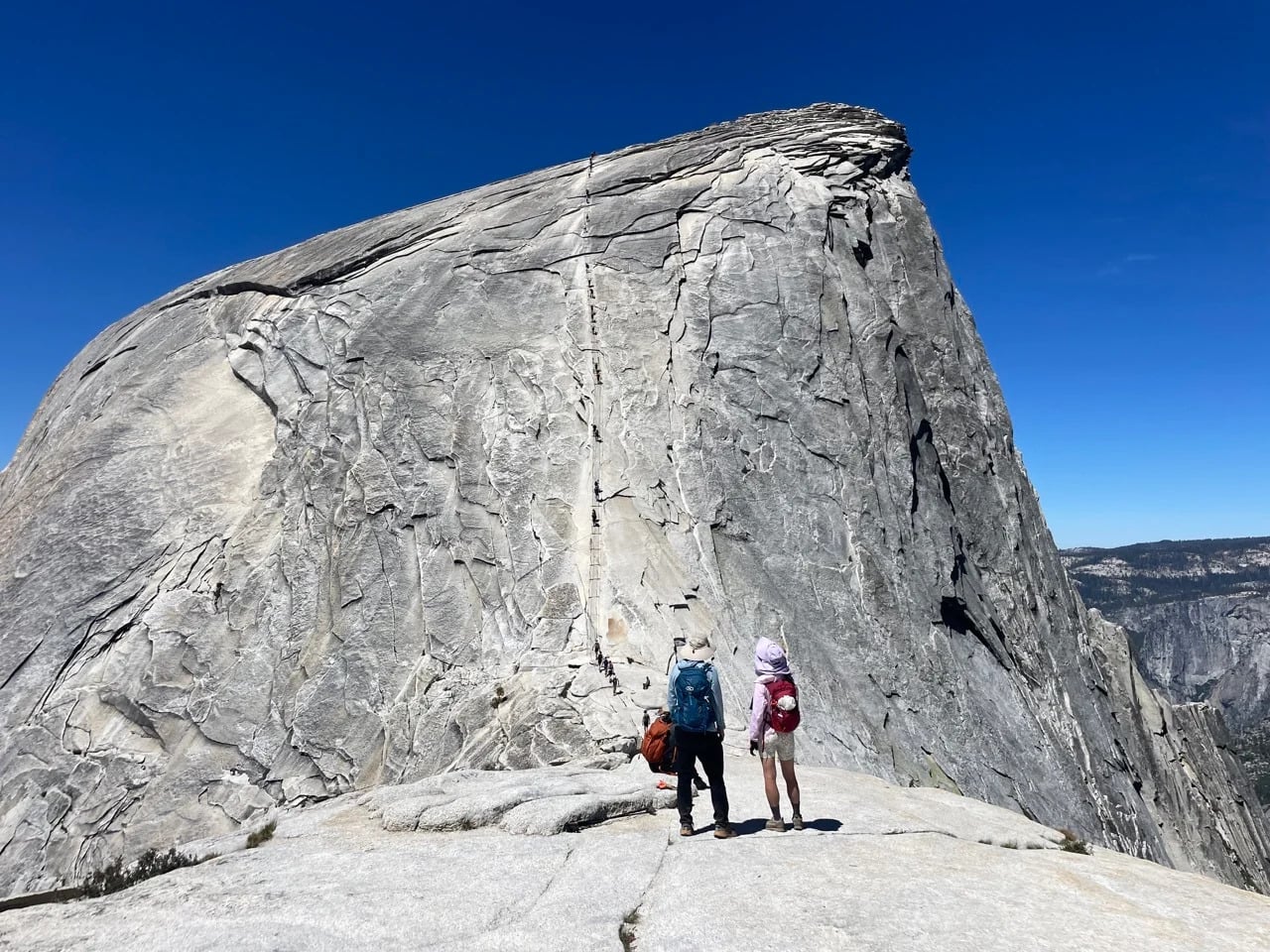
The morning starts with switchbacks through the forest, which can feel repetitive when your legs are already tired from the day before. Then the trees fall away, and you are hiking an open ridgeline with the dome growing larger ahead of you. That transition is one of my favorite moments on the entire hiking Half Dome route, because it is the first time the scale of what you are doing really sinks in.
Eventually you reach Sub Dome, a steep granite staircase that serves as the final test before the cables. It is physically demanding on its own, and it puts you right on an exposed edge. If heights bother you, this is where you will find out how you handle it.
Cable route Half Dome: the final push
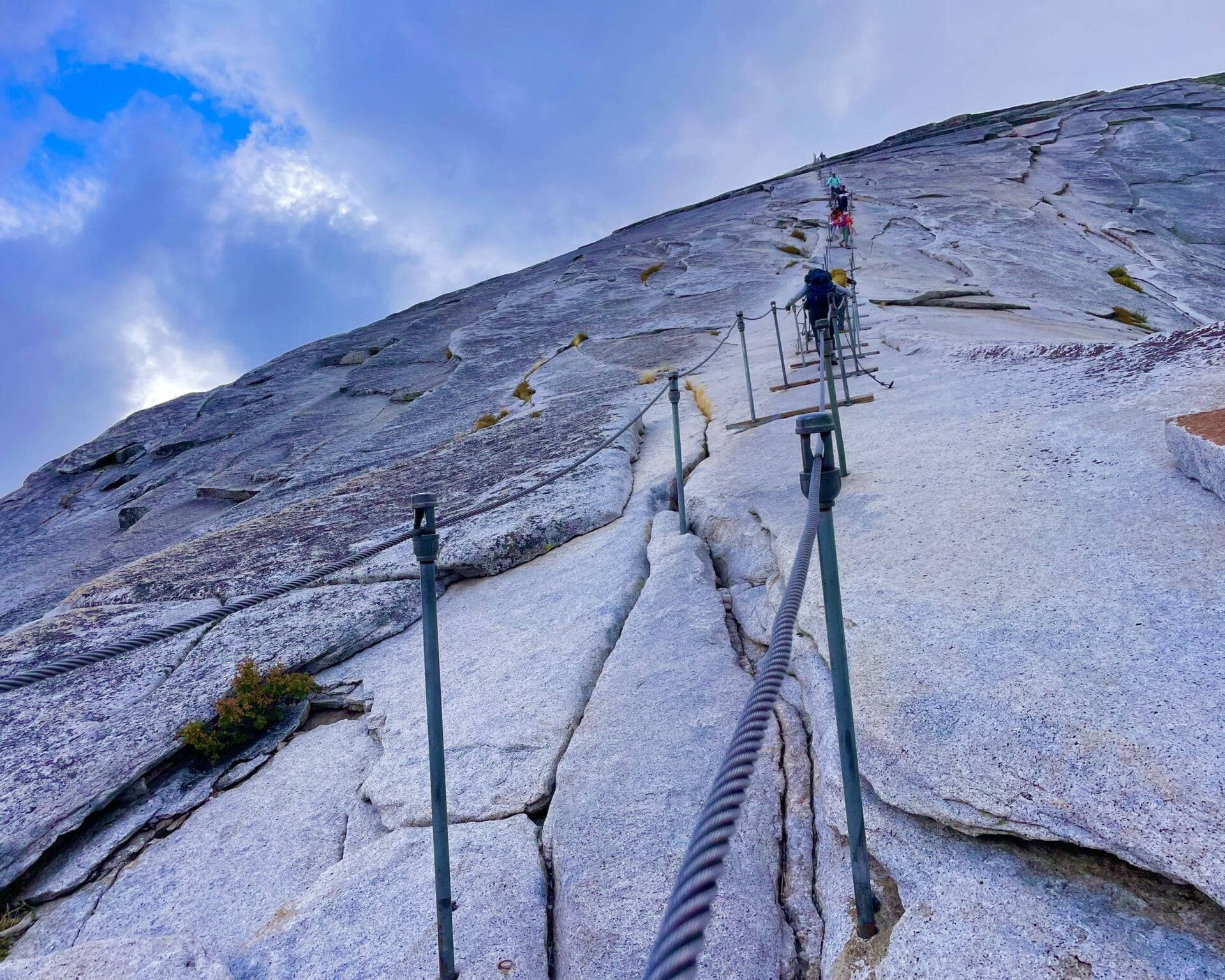
At the top of Sub Dome, you finally see the cable route in full. Two steel cables run up Half Dome’s smooth eastern face at roughly a 45 degree angle, anchored to the granite by metal poles with wooden planks spaced along the way to rest on.
I always tell my clients the same thing here. Do not think about the whole climb at once. Climb, rest, breathe, climb again. Breaking a genuinely intimidating obstacle into small, repeatable steps is what actually gets people to the top.
Is hiking Half Dome dangerous?
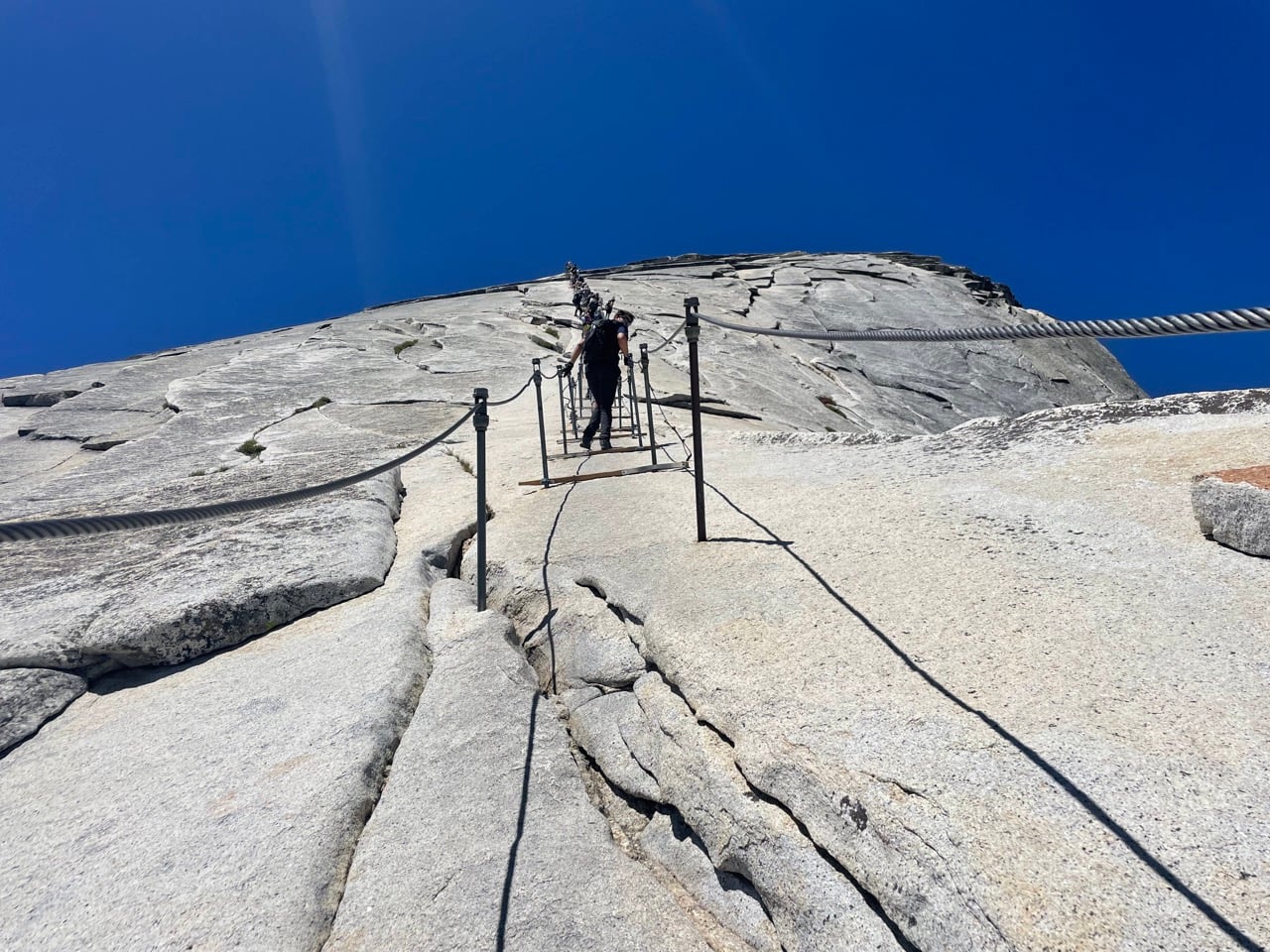
The cables make Half Dome accessible without technical climbing gear, but they do not make it risk free. Most incidents happen when the granite is wet, since the rock turns dangerously slick, or during lightning storms, since the summit is fully exposed.
I never take clients up if there is any real chance of rain, and if weather moves in while we are up there, we turn around immediately.
The climb uses a surprising amount of upper body strength, since you are pulling yourself along the cables as much as walking. Coming down is actually easier. You face the cables and lower yourself backward, which saves your arms and gives you better footing.
What to wear hiking Half Dome
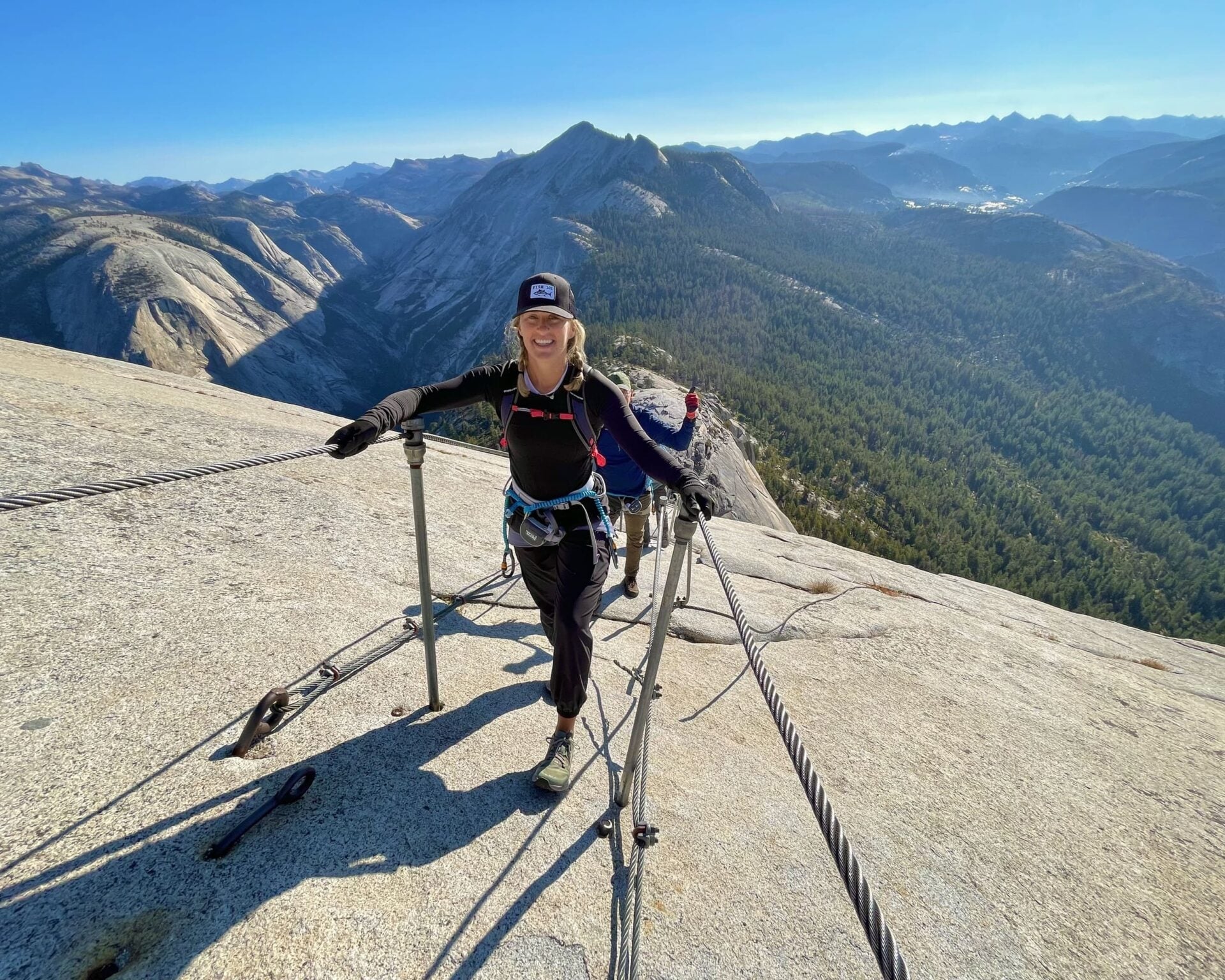
Two pieces of gear matter more than anything else here. First, gloves, since your hands will be sliding along steel cable for a sustained stretch and you want grip without shredding your palms. A simple pair of leather work gloves does the job.
Second, real footwear, either hiking boots or trail running shoes with solid tread, never sneakers. The granite on the cable route has been worn smooth by decades of hikers, and traction is everything.
Some people ask about bringing a climbing harness. If you already climb and own one, it will not slow you down, but learning to clip and unclip your way up an exposed granite face for the first time is more likely to rattle you than protect you. Most of my clients skip it and rely on the cables themselves.
Do you need a permit to hike Half Dome?
Yes. Once you pass Sub Dome, a ranger checks for a valid Half Dome hike permit, and you cannot continue onto the cables without one. Permits are limited to around 300 hikers a day, distributed through a National Park Service lottery, with a preseason lottery in spring and a smaller daily lottery during the season.
I always tell first timers to expect the permit process to feel more complicated than the hike itself. It is genuinely closer to winning a small lottery than booking a campsite, which is exactly the kind of logistics a guide can take off your plate.
The cables themselves are only up from late May through early to mid October. Outside that window, the route becomes a technical climb, not a hike.
Can you hike Half Dome in one day?
Yes, a Half Dome day hike is possible as a single long push, typically 10 to 14 hours round trip from the valley floor. I do not run it that way with my own clients, and I would encourage most first timers to think hard before attempting it in one go.
The math is unforgiving. You are descending the cables at the exact point in the day when your legs are most tired and your judgment is most likely to slip. A missed turnaround time can mean coming down the granite in the dark, or worse, still being on the summit if a storm rolls in, with no shelter anywhere on that open granite.
Backpacking Half Dome over 3 or 4 days lets you enjoy the valley, acclimate to the elevation, and tackle summit day with fresh legs instead of legs already 10 mi (16 km) deep into a marathon effort.
Half Dome backpacking also means a night camped in the shadow of the dome itself, one of the best parts of the whole trip. If your schedule only allows 1 day, it is doable, but you need serious fitness, an early start, and a hard turnaround time no matter where you are on the mountain.
Where to stay when hiking Half Dome
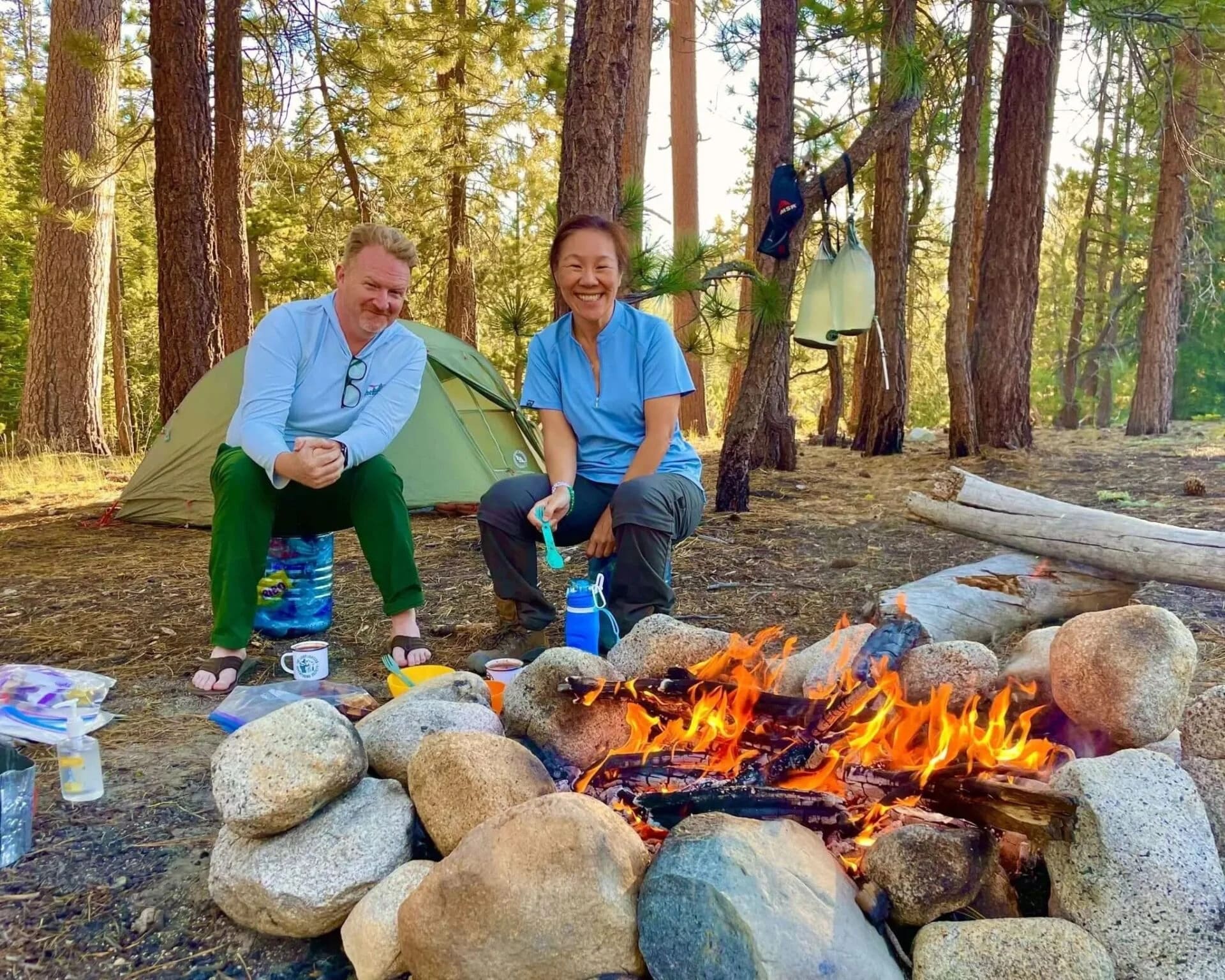
If you are backpacking, your permit also functions as your camping arrangement, and you will stay in designated wilderness camps like Little Yosemite Valley along the way. Reserve your first night in the valley’s backpackers campground, open only to permit holders.
If you would rather sleep in an actual bed before or after the climb, Yosemite Valley and the surrounding gateway towns have everything from historic lodges to simple motels.
Either way, book early. Yosemite fills up fast during the Half Dome hiking season from late May through early fall.
How hard is hiking Half Dome, really
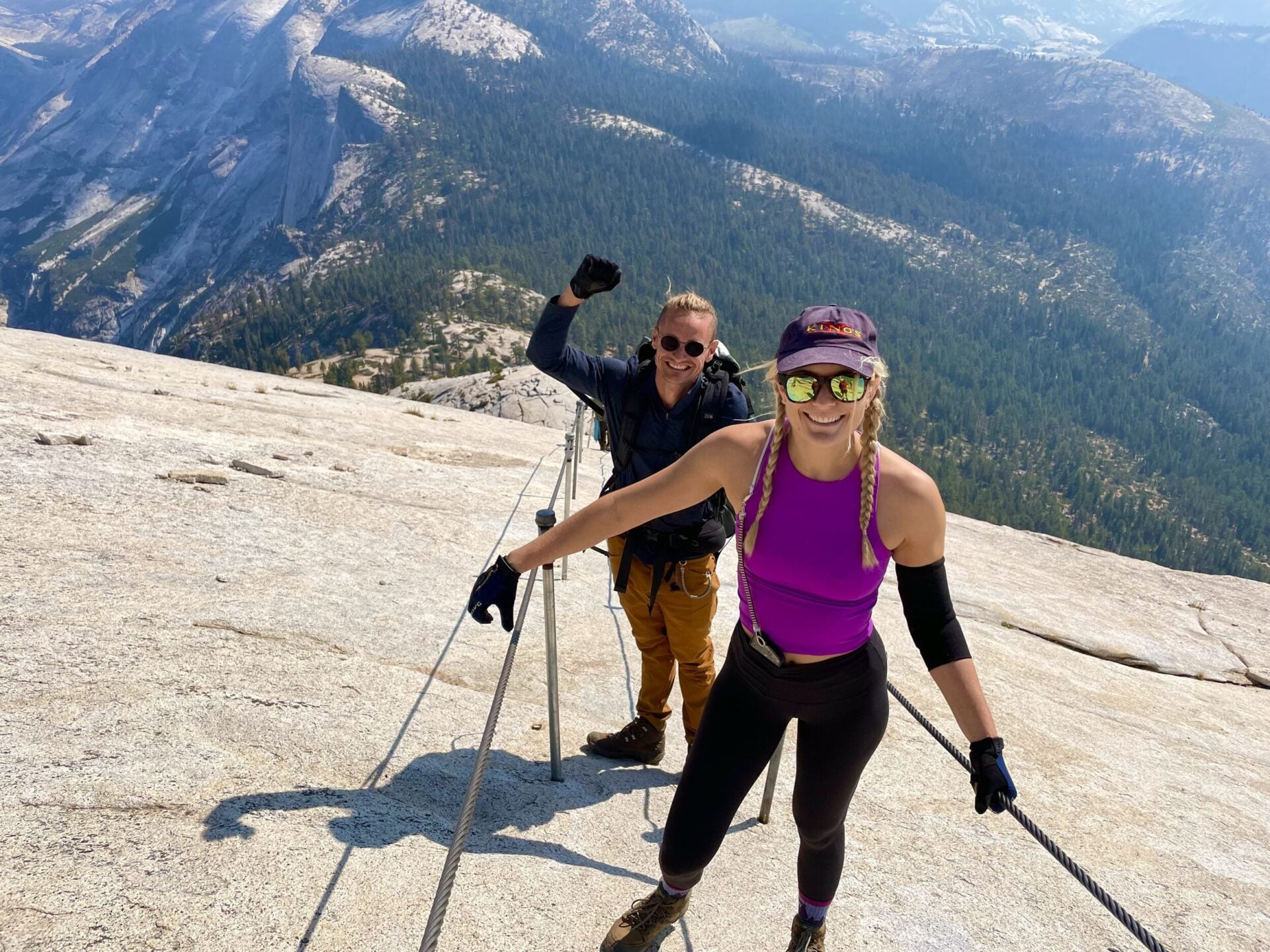
People ask me this more than almost anything else, and the honest answer is that it depends less on fitness than you might think and more on mindset.
Yes, you need real cardiovascular fitness and strong legs. But the hardest part for most of my clients is not physical. It is the moment past Nevada Fall when their legs are tired, the sun is out, and the trail keeps climbing, and they have to decide whether to push through or turn back.
I have never had a client regret pushing through that moment. Plenty have told me it changed how they see themselves entirely.
How to train for the climb
I have clients start training about three months out. Begin with a 4 mi (6.4 km) hike carrying around 1,000 ft (305 m) of elevation gain, ideally with a loaded pack similar to what you will carry on the trip.
Repeat that hike twice a week for two months, increasing the elevation gain each time, then keep the same schedule in the final month while pushing the gain higher still.
Altitude is a smaller factor here than people expect, since the whole route stays under 9,000 ft (2,743 m). The bigger factor is simply time on your feet with a pack on your back, well before you ever see Half Dome in person.
What people tell me after they reach the top
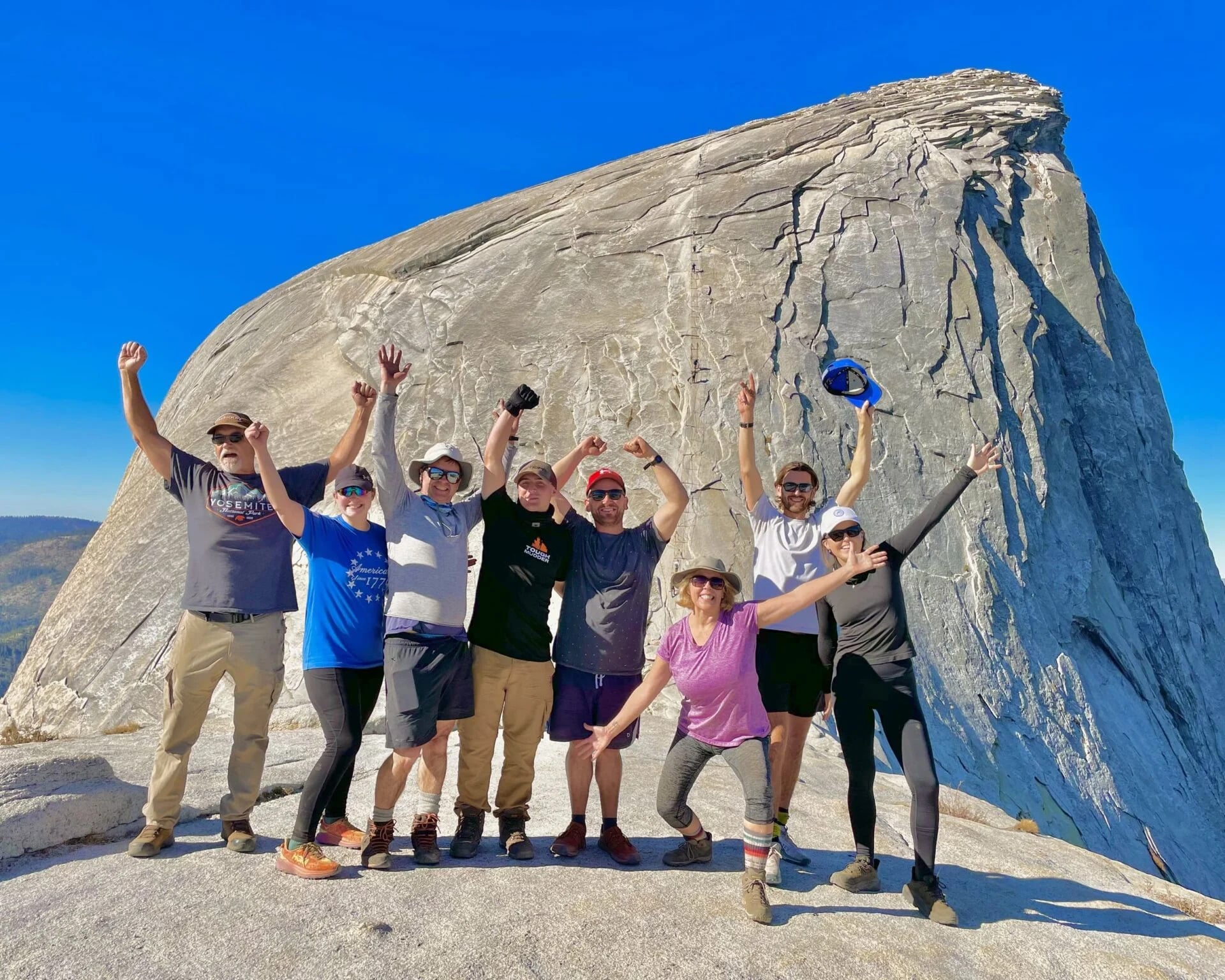
I brought three former clients into a recent conversation about this trip, and their stories say more about hiking Half Dome than I ever could on my own.
One woman came back a second time specifically to bring her grandson, after turning around partway up the cables on her first attempt years earlier. This time, they reached the summit together, and she described her grandson’s arrival behind her as one of the most emotional experiences of her life.
Another client had never backpacked or researched a permit system before this trip, and told me the planning alone would have stopped her cold without guidance.
A third does not consider herself a hiker at all, but said the trip became less about the physical accomplishment and more of a genuine personal turning point.
None of them described Half Dome as easy. All three described it as worth it.
Final thoughts before you go
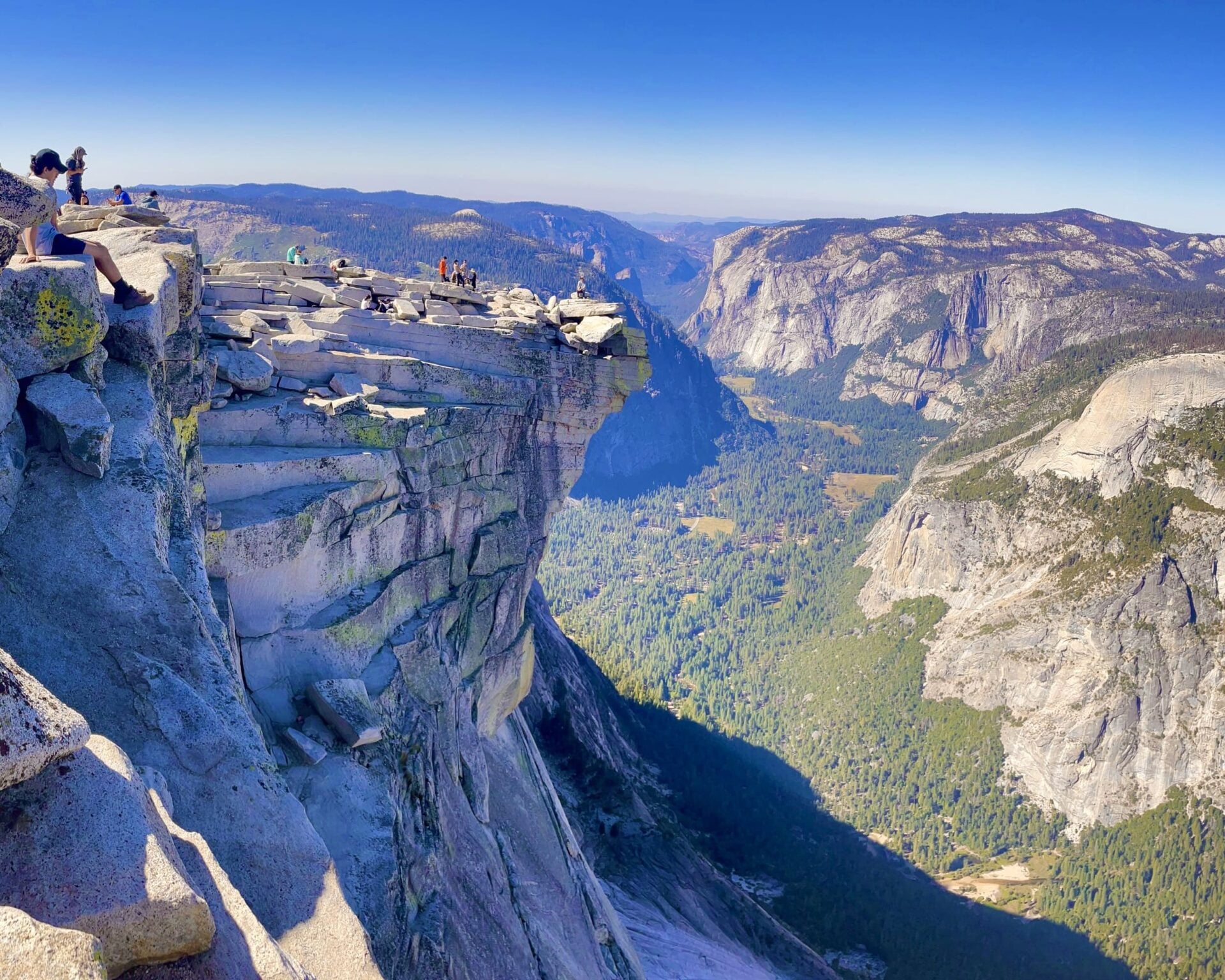
Half Dome does not owe you an easy path, and that is exactly why it means something when you reach the top. You will climb through waterfall spray on the Mist Trail, sleep beneath a wall of granite that seems to watch over your campsite, and eventually haul yourself up a 45 degree cable route with the entire Yosemite high country spreading out beneath you.
Somewhere in there, usually around the point where your legs stop cooperating, you will also learn something about yourself that a paved trail could never teach you.
That is the part I cannot fully explain to people before they go. The waterfalls and the granite and the cables are real, and I can describe every mile of them. But the moment you stand at the summit and look back down at where you started, something shifts that has very little to do with elevation gain.
Only a small fraction of Yosemite’s visitors ever make it to that summit. I want you to be one of them, prepared, safe, and with someone who has made this climb more times than I can count.
Come find me at the trailhead, and let’s go make one of your best memories together.