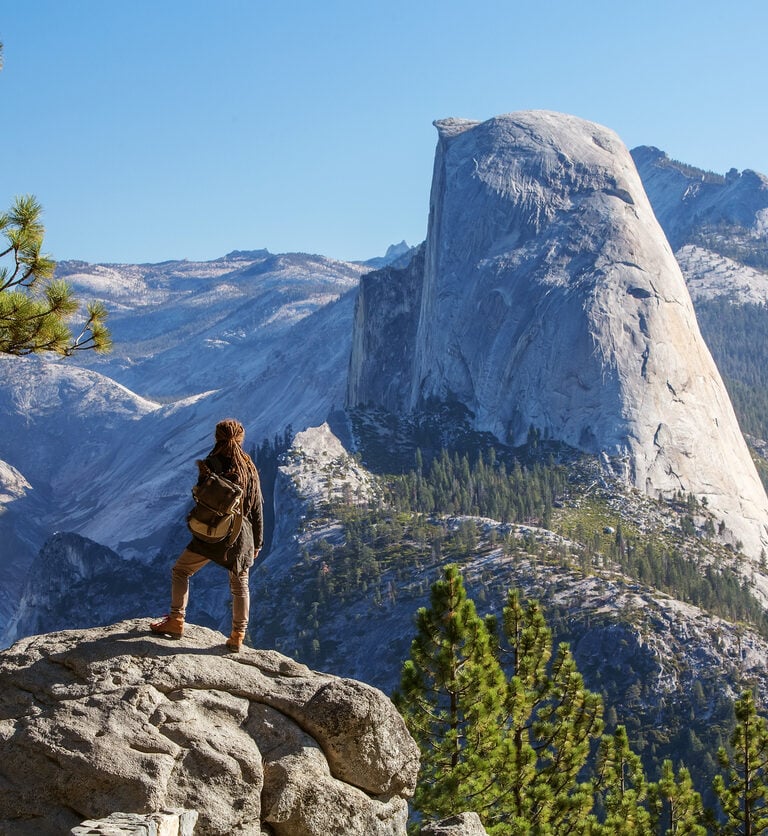
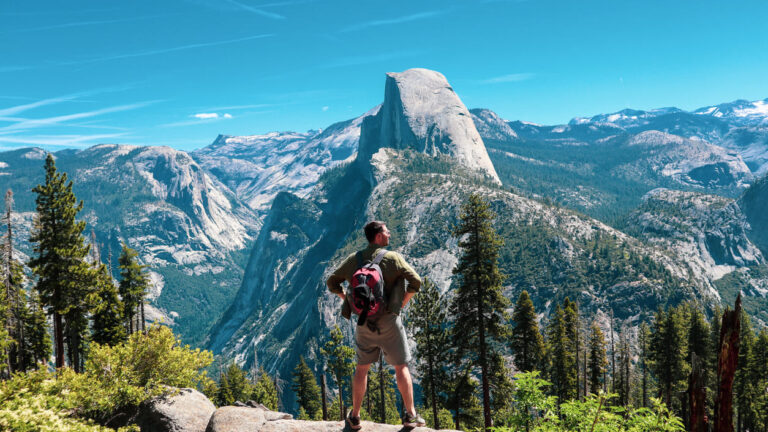
There’s a moment in Yosemite that catches you off guard, no matter how many times you’ve been. And if you’re out there chasing the best hikes in Yosemite National Park, it hits even harder. You come through the tunnel, round that last bend, and the valley doesn’t just appear, it takes over.
Granite walls rise so fast they don’t feel real. Waterfalls spill off the cliffs in slow motion, like they’ve been falling forever. For a second, everything else just drops away. Conversations stop. You forget what you were saying. You just stand there and take it in.
Most people think that’s Yosemite. That one view. That one moment. But that’s just the introduction. The Yosemite that stays with you isn’t found from the roadside. It’s out there on the trail, where the sound of the falls follows you up the canyon, where granite warms under your hands, where a ridgeline opens into something you didn’t see coming.
I’ve spent years guiding in this landscape, and what I’ve learned is simple. Yosemite doesn’t give itself away. It makes you go a little farther. Stay a little longer. Take that next step when your legs are already tired. And somewhere along the way, it gives something back.
If you’re trying to figure out where to start, what’s actually worth your time, and how to experience Yosemite beyond the surface, this is where I’d begin.
Where’s Yosemite National Park?
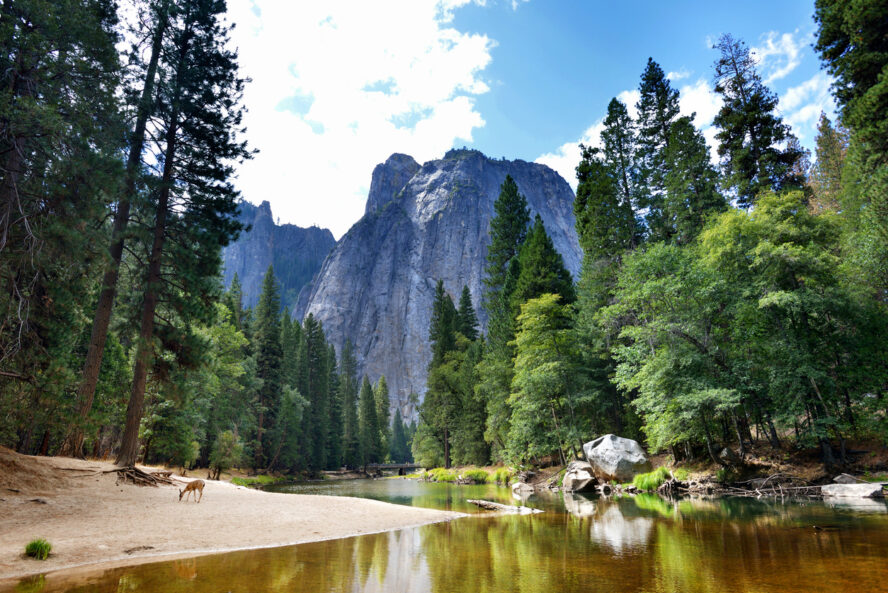
Yosemite sits in California’s Sierra Nevada mountains, about 3.5 to 4 hours from San Francisco and roughly 2.5 hours from Fresno. On paper, that sounds manageable. In reality, Yosemite is huge, over 1,100 square miles (2,850 sq km), with about 800 miles (1,287 km) of hiking trails in Yosemite.
The scale catches people off guard. You don’t just “see Yosemite.” You move through it. Driving from Glacier Point to Tuolumne Meadows alone can take about 2.5 hours, and that’s without traffic or stops. Elevation ranges from around 2,100 ft (640 m) to over 13,000 ft (3,960 m), so every part of the park feels different. You’ll notice it in the air too, warm and still in the valley, then thinner and cooler as you gain elevation.
When people ask me about the best hikes in Yosemite National Park, I usually start by asking how many days they have. Because that answer shapes everything. It determines whether you’re just scratching the surface or actually getting into the heart of the place. I’ve had people show up thinking they could ‘see Yosemite in a day’, and you can almost see the realization hit once they look at a map.
Yosemite’s history: A place shaped by people and time
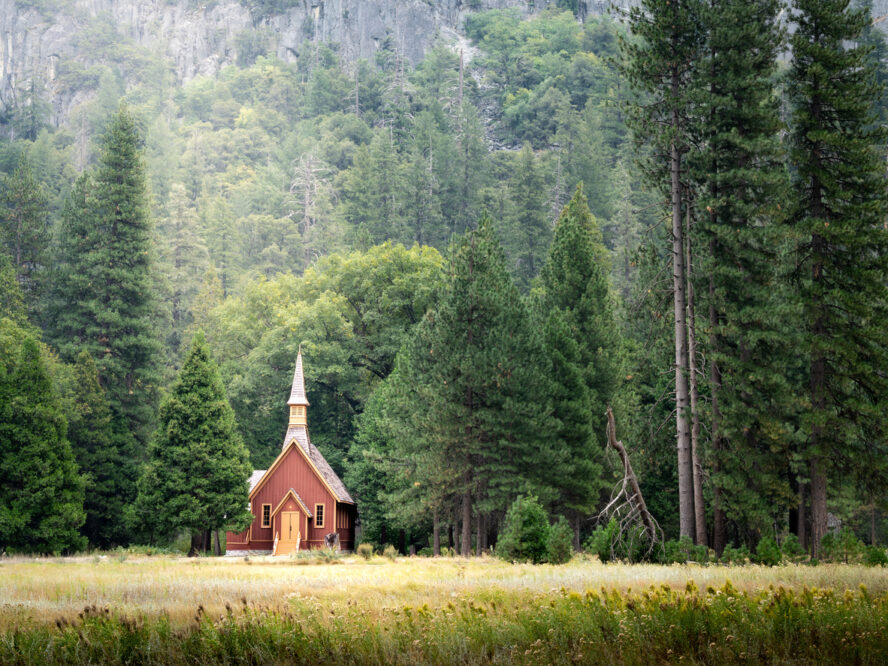
Long before Yosemite became a national park, the Ahwahneechee people lived in the valley for thousands of years. They called it Ahwahnee, the “deep grassy valley,” and they built some of the first trails we still use today. When you’re hiking here, especially on some of the older routes, you’re often following paths that existed long before recreation was even a concept.
Then came the Gold Rush. In 1851, the Mariposa Battalion entered the valley, removing the Ahwahneechee from their home. Even in that moment, they recognized the valley’s beauty. It left an impression.
Not long after, pioneers like Galen Clark helped push for protection of the valley, leading to the Yosemite Grant in 1864. John Muir later expanded that vision, helping establish Yosemite as a national park in 1890.
There’s a story I always come back to. John Muir and Theodore Roosevelt camping together in Yosemite, slipping away from the presidential entourage to spend time in the backcountry. Talking conservation around a campfire. That moment helped shape the national park system as we know it today. And when you’re out there hiking, it’s hard not to think about how many different stories have passed through the same ground you’re walking on.
What to see at Yosemite National Park?
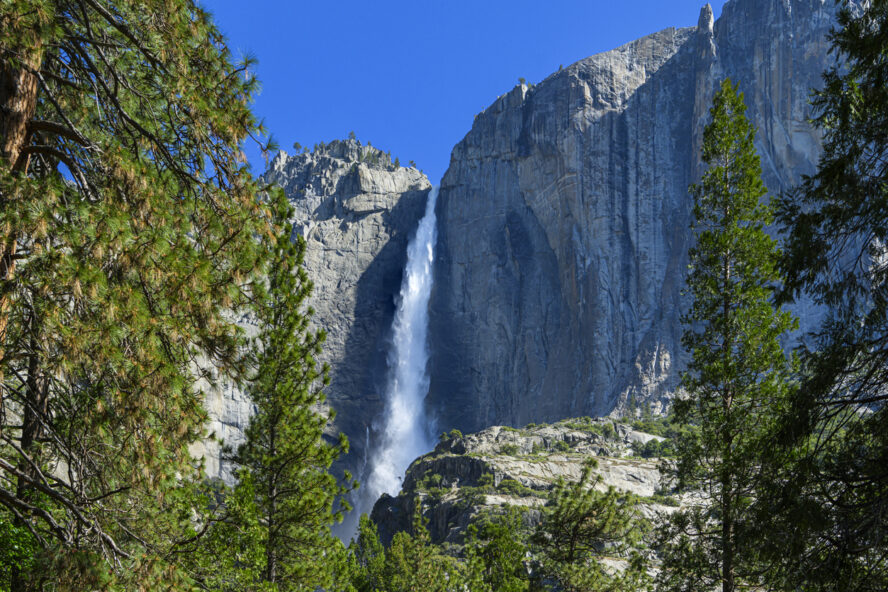
Yosemite Valley is where most people begin, and it makes sense. It’s about 7 miles (11 km) long and 1 mile (1.6 km) wide, but it packs in some of the most iconic landscapes anywhere. El Capitan rises over 3,000 ft (914 m) above the valley floor. Half Dome sits in the distance like a landmark you can’t stop looking at. Yosemite Falls drops 2,425 ft (739 m), one of the tallest waterfalls in the world.

But Yosemite isn’t just the valley. Head up to Tuolumne Meadows at 8,500 ft (2,590 m), and the entire experience shifts. The terrain opens up into alpine lakes, rivers, and rolling granite domes. Fewer people, more space, and a completely different pace. Sometimes you’ll hear nothing but wind and water, which is a pretty rare thing these days.
That shift is what catches people off guard: Yosemite gets quieter the farther you go. You can experience multiple landscapes in a single trip. And many of the best hikes in Yosemite National Park happen once you leave the valley behind and give yourself space to explore.
What are the best hikes in Yosemite National Park?
There’s no single answer, and that’s part of the beauty of it. Yosemite offers everything from mellow walks to demanding summit days. But over time, guiding and exploring, there are a few routes that consistently stand out as the best hikes in Yosemite National Park.
Why the Mist Trail captures Yosemite perfectly
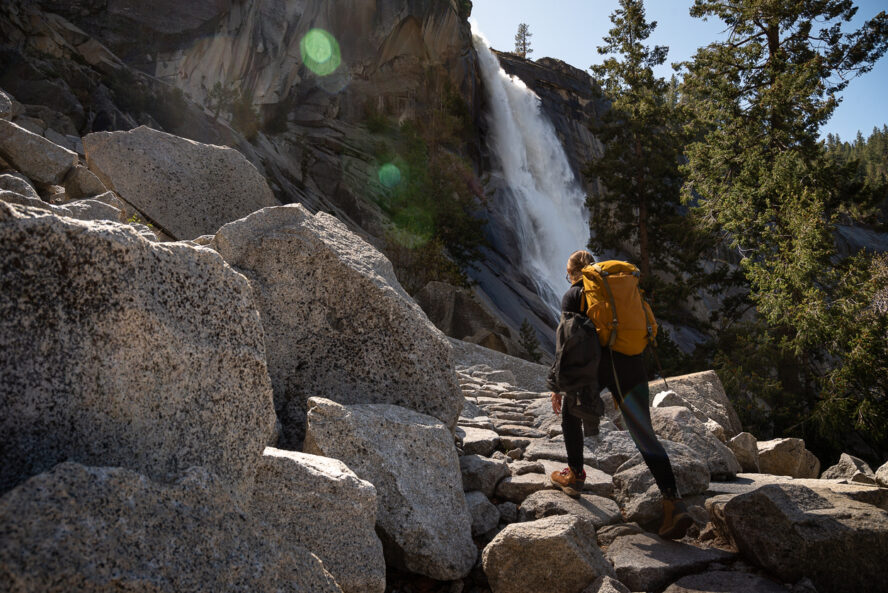
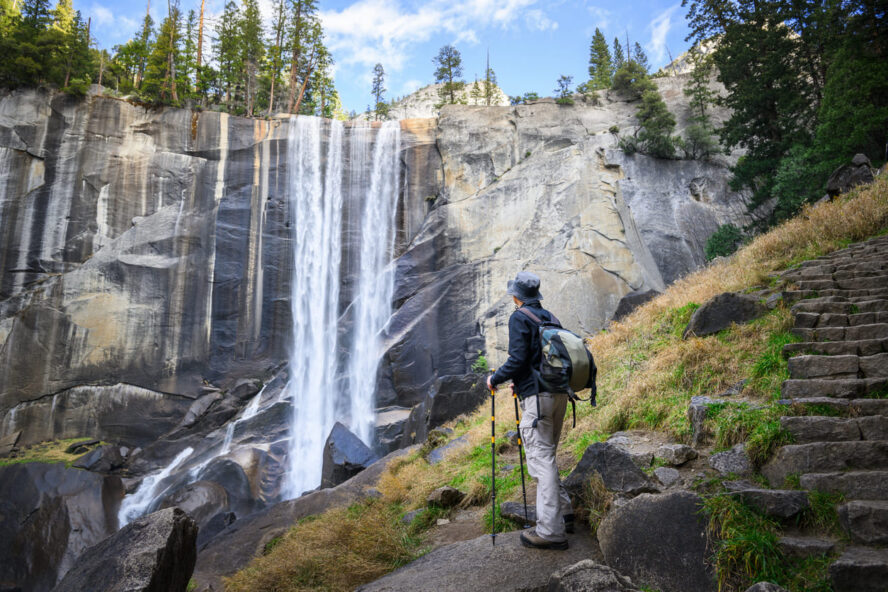
The Mist Trail is the one I recommend most for first-timers. It climbs alongside Vernal Fall and Nevada Fall, and in the spring, you feel the mist from the water almost the entire way. You’ll hear the roar of the falls building as you climb, and by the time you reach the steps, it’s almost all you can focus on.
It’s steep, no way around it. Stone steps, steady climbing, and a lot of effort. But the reward comes quickly. Standing at the top of Vernal Fall, watching the river pour over the edge, gives you a real sense of Yosemite’s scale and power.
I’ve guided groups up there early in the morning when the light cuts through the mist and everything goes quiet for a moment. Those are the kinds of experiences that stick with people. It’s easily one of the best hikes in Yosemite National Park because it pulls you right into the landscape.
What it really feels like hiking Half Dome
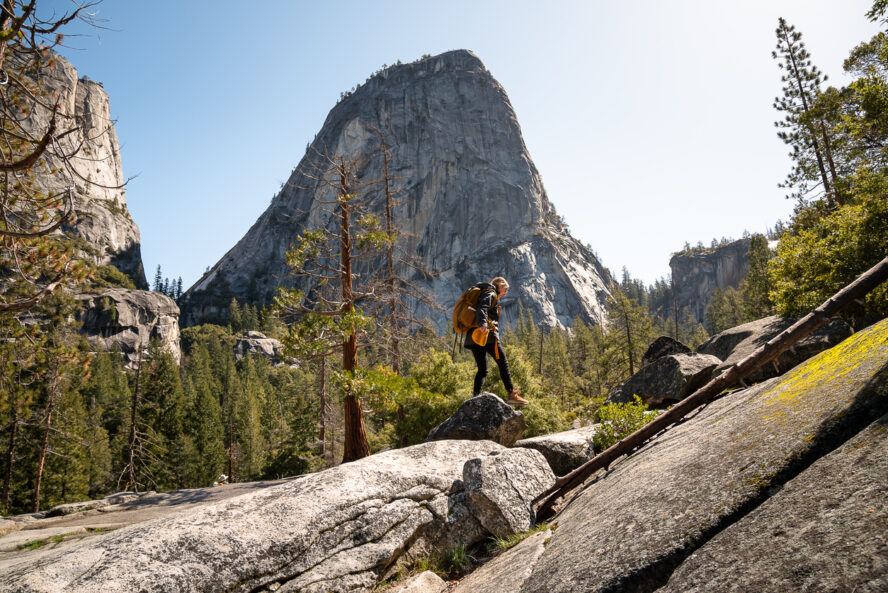
Half Dome is the hike people dream about. It’s long, around 14 to 16 miles (22 to 26 km), and it demands both physical and mental effort. It’s not just a hike, it’s something you build up to over the course of the day.

I’ve been on that summit over 150 times, and it still commands respect. One time, we were standing on top when we heard a deep cracking sound echo through the valley. A section of rock broke loose somewhere below. Not long after, a helicopter came in to assess the situation. Yosemite is constantly changing, even if we don’t always notice it.
The cables at the end can feel intimidating, but they’re manageable if you stay focused. You take it one step at a time, hands on the cables, steady movement upward. And despite its popularity, it remains one of the best hikes in Yosemite National Park for those looking to push themselves.
Why Clouds Rest is a guide favorite
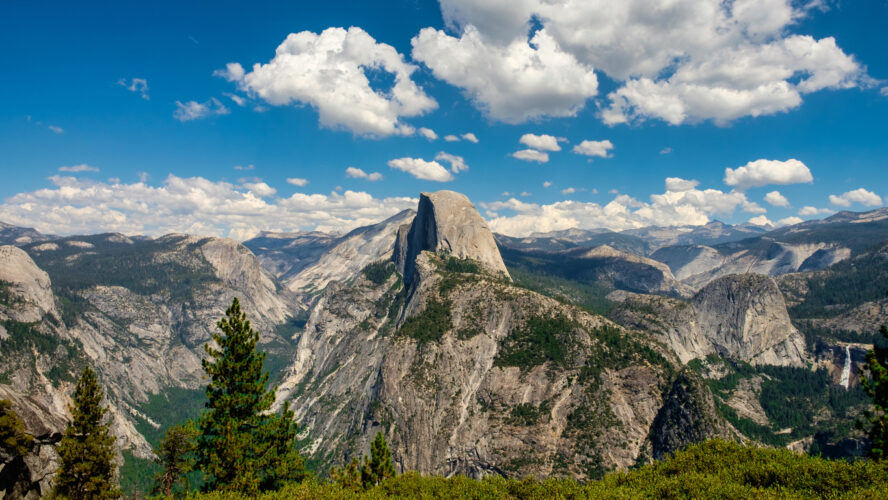
If you ask guides what their favorite summit is, Clouds Rest comes up a lot. It sits about 1,000 ft (300 m) higher than Half Dome, and from the top, you’re looking down at it with the entire valley behind. It’s one of those views that feels almost unreal the first time you see it.
The final approach is what we call the spine. Narrow, exposed, with a 4,000 ft (1,200 m) drop on one side. No cables, just your footing and your focus. The wind tends to pick up here too, which keeps you very aware of where you are.
I’ve had hikers tell me they felt more challenged here than on Half Dome. But reaching the summit brings a quiet kind of reward. Fewer people, bigger views, and a deeper sense of connection. It’s one of the best hikes in Yosemite National Park if you want something iconic but less crowded.
Easier hikes with the best views in Yosemite
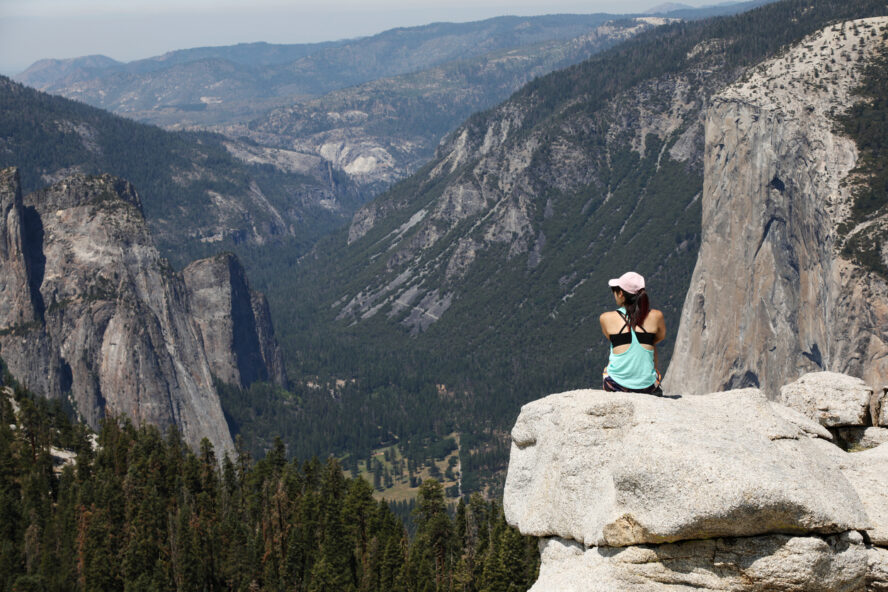
Around Glacier Point, you can access Sentinel Dome and Taft Point, and both offer some of the best views in Yosemite without requiring a full-day hike. These are the kinds of places where you can sit for a while and just take everything in.
Taft Point puts you right on the edge of the valley, looking across at El Capitan. You can feel the exposure there, especially when the wind moves through. Sentinel Dome gives you a 360-degree view that includes Half Dome and the high country.
These are hikes I often recommend to families because they deliver big views without a huge effort. Even though they’re shorter, they still rank among the best hikes in Yosemite National Park for their accessibility and scenery.
Hidden gems in Yosemite National Park
Yosemite sees over 4 million visitors each year, but most stay in the same areas. Once you step beyond those zones, you start to find space. And that’s usually where things get more memorable.
Tuolumne Meadows and the quieter side of Yosemite
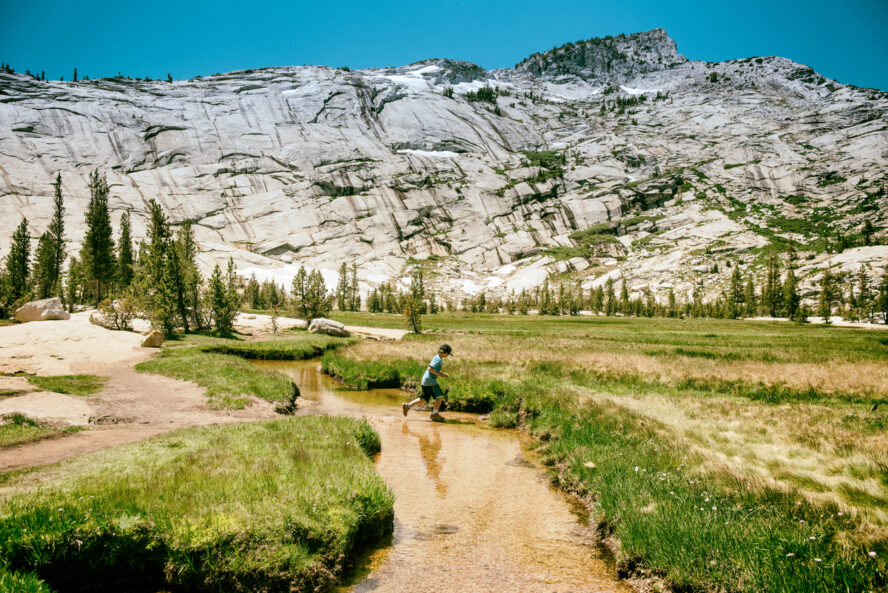
Tuolumne Meadows is one of my favorite places in the park. Sitting at 8,500 ft (2,590 m), it offers a completely different experience from the valley. The terrain is more open, the trails are more gradual, and the pace feels slower.
One of my go-to hikes follows the Tuolumne River toward Glen Aulin. It’s longer, but it’s moderate and incredibly scenic. You pass waterfalls, cascades, and quiet stretches of river where you can stop and just take it all in. Sometimes I’ll just sit there for a while, listening to the water move over the rocks.
These are the moments where Yosemite really sinks in. Not rushing to a viewpoint, but moving through the landscape. Some of the best hikes in Yosemite National Park are like that.
North Dome and finding your own space
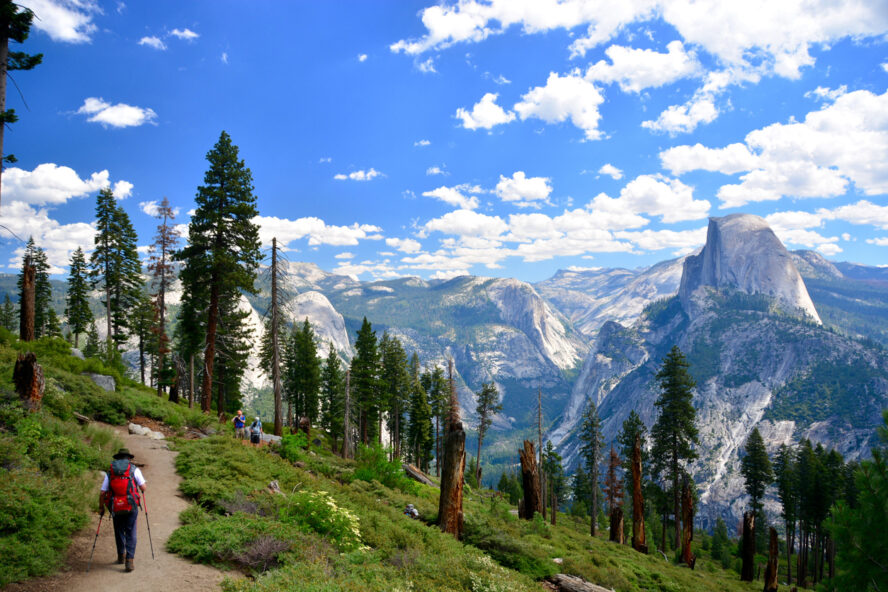
North Dome is another favorite. About 8.8 miles (14.2 km) round trip, and it puts you directly across from Half Dome. It’s one of those hikes that feels a little more personal from start to finish.
On the way, you can stop at Indian Rock Arch, a natural formation shaped by erosion. It’s a small detour, but one that adds to the experience. It’s also a reminder that Yosemite is still changing, slowly but constantly.
From North Dome, you get one of the best perspectives of Half Dome in the park, without the crowds. If you’re looking to step away from the busiest trails, this is one of the best hikes in Yosemite National Park to do it. I’ve had days out there where I’ve seen maybe two other people the entire hike.
How to plan a Yosemite backpacking trip?
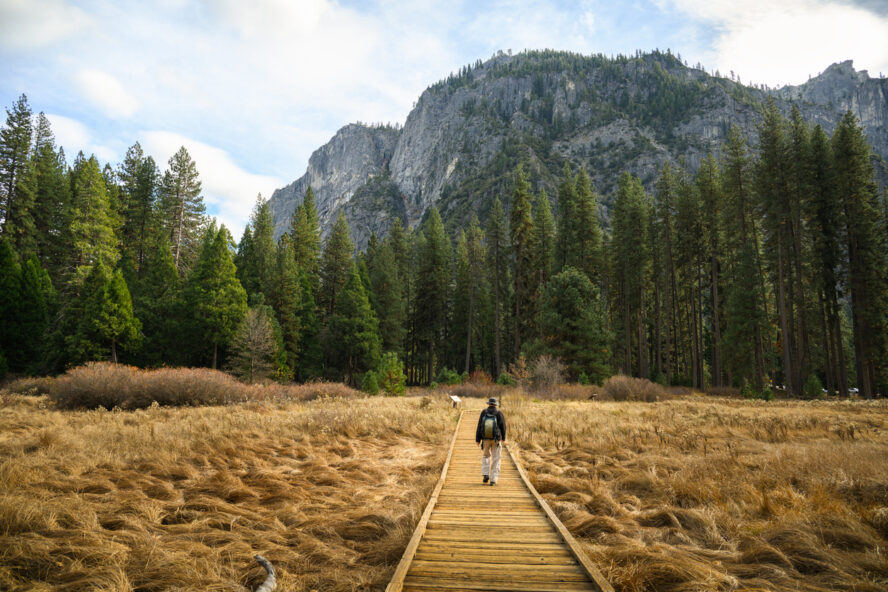
Backpacking is where Yosemite really opens up. You move beyond the day-use areas and start to experience the park in a completely different way. The rhythm changes. You wake up with the sun, you move at your own pace, and you end the day wherever you decide to camp.
One of my favorite routes starts in Tuolumne Meadows, heading up Rafferty Creek toward Vogelsang. From there, you drop toward Merced Lake and eventually reach Little Yosemite Valley. What makes this trip special is the variety. Meadows, alpine lakes, forest, granite basins, all connected in one journey.
Why multi-day trips reveal the best hikes in Yosemite National Park
The real highlight is finishing with Half Dome at sunrise. When you backpack it, you can leave early, before the crowds, and reach the summit just as the light hits the valley. It’s quiet, still, and completely different from the daytime experience.
Another incredible route is the North Rim, often called the Yosemite Icons trip. You follow the rim above the valley, visiting Yosemite Falls, El Capitan, and North Dome, with incredible campsites along the way. Snow Creek, in particular, is one of those places you don’t forget.
Then there’s the Grand Canyon of the Tuolumne, a 28-mile (45 km) route that follows the river through deep canyons and waterfalls. It’s more strenuous, but it shows you a side of Yosemite most people never see.
Some of the best hikes in Yosemite National Park aren’t day hikes at all. They’re multi-day experiences that let you fully settle into the wilderness and experience Yosemite the way it’s meant to be experienced.
What to wear hiking in Yosemite?
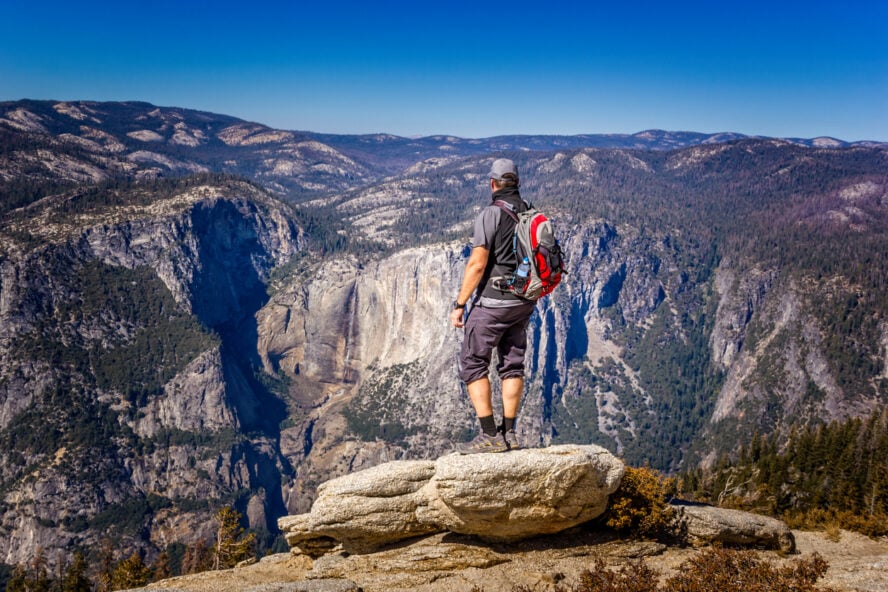
What you wear depends on where you’re going and when. Yosemite’s elevation range means conditions can change quickly, even within the same day.
I always recommend layering. Even in summer, mornings can be cool, especially in the high country. Good footwear is essential, along with sun protection and plenty of water. If your shoes aren’t broken in, Yosemite will break them in for you.
If you’re hiking the Mist Trail in spring, expect to get wet. That’s part of the experience. If you’re heading into the backcountry, proper food storage is critical.
Early in my guiding days, I made the mistake of not storing food properly. I woke up to a bear stepping over me to grab it. That was a lesson I never forgot. Yosemite does a good job of keeping wildlife interactions safe, but you still need to do your part.
When is the best time to visit Yosemite National Park?
Spring is loud, summer is busy, fall is calm, and winter feels like you’ve got the place to yourself. Each season offers something different. Spring, from April through June, is all about waterfalls. Snowmelt brings Yosemite Falls and others to life, and the Mist Trail is at its best.
Summer opens up the high country, including Tuolumne Meadows, but it also brings the largest crowds. By mid-July, mosquitoes can be an issue at higher elevations, something people don’t always expect.
Personally, I like September. The crowds thin out, the weather is still great, and the trails feel quieter. There’s something about that time of year that feels more relaxed.
No matter when you visit, the best hikes in Yosemite National Park offer something unique. It just depends on what kind of experience you’re after.
Why many hikers choose Yosemite hiking tours
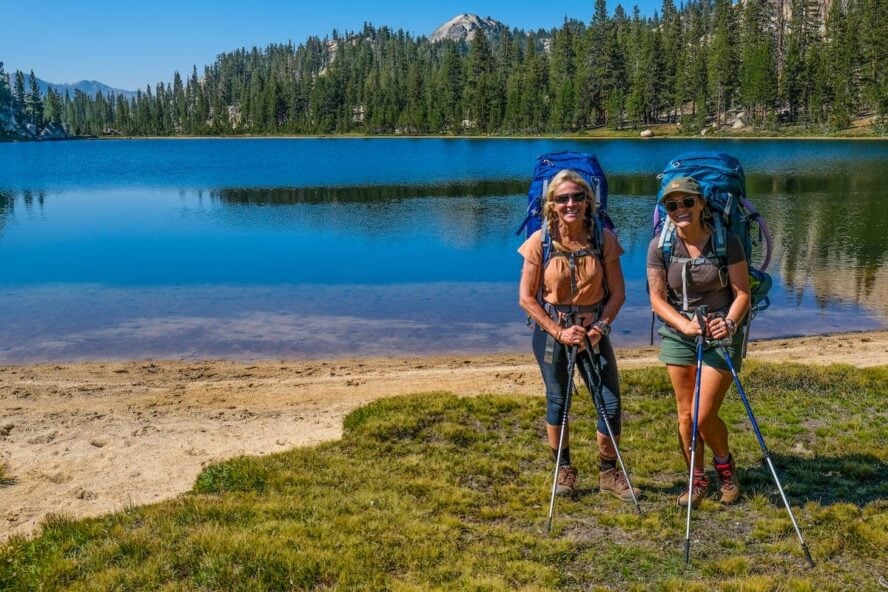
Planning a Yosemite trip can be complicated. Permits, reservations, timing, logistics. There’s a lot to think about, especially if you’re trying to experience more than just the valley.
That’s where Yosemite hiking tours can make a difference. A guide brings local knowledge, flexibility, and a deeper understanding of the landscape. They know where to go, when to go, and how to adjust when conditions change.
But more than that, they help you experience Yosemite differently. They point out things you might miss. Share stories that connect you to the place. And take care of the logistics so you can focus on the experience itself. That allows you to be more present, which is really what Yosemite is about.
A final thought on hiking Yosemite
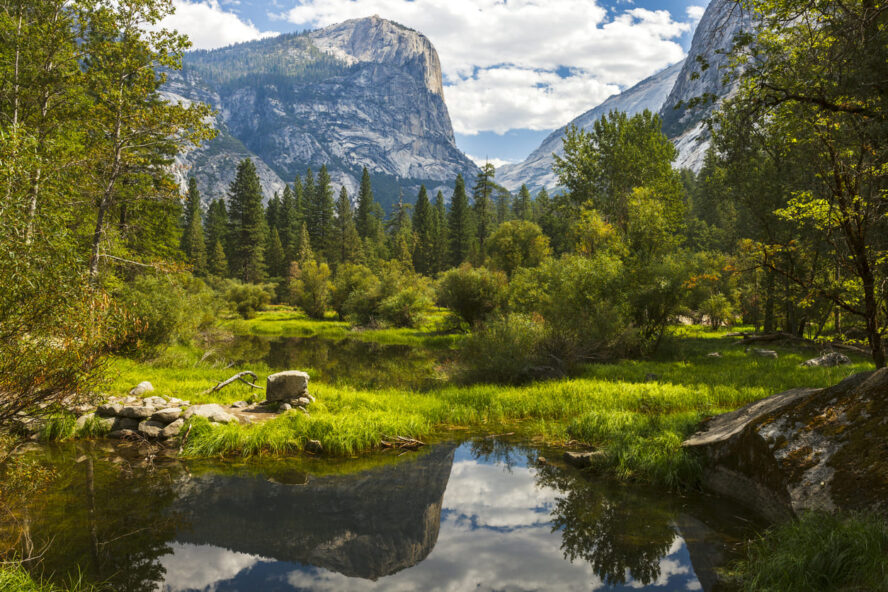
Yosemite doesn’t hand itself over easily. It gives you just enough at first to pull you in, that big valley view, the waterfalls, the scale of it all. But the deeper parts, the ones you remember years later, those take a little more effort. A few more miles. A slightly earlier start. A willingness to keep going when the trail tips upward and your legs start questioning your decisions.
And then it happens. You crest a ridge and the whole Sierra opens up. Or you find yourself alone beside a stretch of river that sounds like it’s been moving the same way forever. Or you stand somewhere high enough that the valley floor feels like a different world entirely. Those are the moments Yosemite keeps for the people who go looking for them.
The best hikes in Yosemite National Park are not just about where they lead. They are about how they change your sense of distance, time, and effort. They remind you that some places are still big enough to get lost in, in the best possible way.
So take the long way. Start before the sun. Stay out a little later than planned.