The Costa Rica adventure tour that I guide began with a Canadian who’d been in the country for 5 or 6 days. He’d spent the day at the Pacific coast with a Costa Rican he’d met at his hotel. On the way back to San Jose, he wanted to try a different route, one that went straight over the first mountain range.
That Canadian was my dad, and the ride took him 8 or 9 hours on a motorcycle.
When they finally made it out of the mountains, they stopped at a little restaurant. Within 20 minutes, his Costa Rican friend had 15 people crowded around the table. They were all listening to the story of the ride, and how amazing it had been. A little tough, sure, but great.
I think that table is where the idea was born, a way to give people an adventure they’d never forget.
Today that idea crosses the whole country, from the Pacific to the Caribbean. And the very first group left on the exact morning my little brother was born.
Where this trip came from
A trip designed around a good story
My dad’s from Canada, and he’s been guiding in Costa Rica for about 35 years. In the early 90s, he designed the first Costa Rica coast to coast route. We know exactly when the first commercial trip started, because it was the day my younger brother was born.
My dad was setting up the brand new bike rack he’d bought for the trip when the call came. He went to the hospital, met my brother for the first time, and then went right back to start the trip.
That was nearly 30 years ago, and the Coast to Coast Challenge is still running. It’s still the kind of Costa Rica adventure tour that makes you work for it. Yet it’s very doable, which is the part people tend to doubt before they arrive.

Growing up on the trail
I grew up around this. As a kid, all I wanted was to go on a trip with my dad or one of the other guides. I started as an assistant guide when I was 12 or 13. Then someone told me I could get paid, which sounded pretty great, so I got more and more involved. After high school, I did a 2-year guide program in Canada. Canada was too cold for me, though, so I came home and I’ve been here ever since.
I’ve guided for about 12 years now, mostly in Costa Rica but also in Nicaragua and Panama. I’m a passionate bikepacker too, and I’ve done a lot of riding around Central America. A few times, I’ve even crossed Canada by bicycle with my dad. I also teach jungle survival courses, so I’m never short of reasons to scout a new route.
Why I always come back
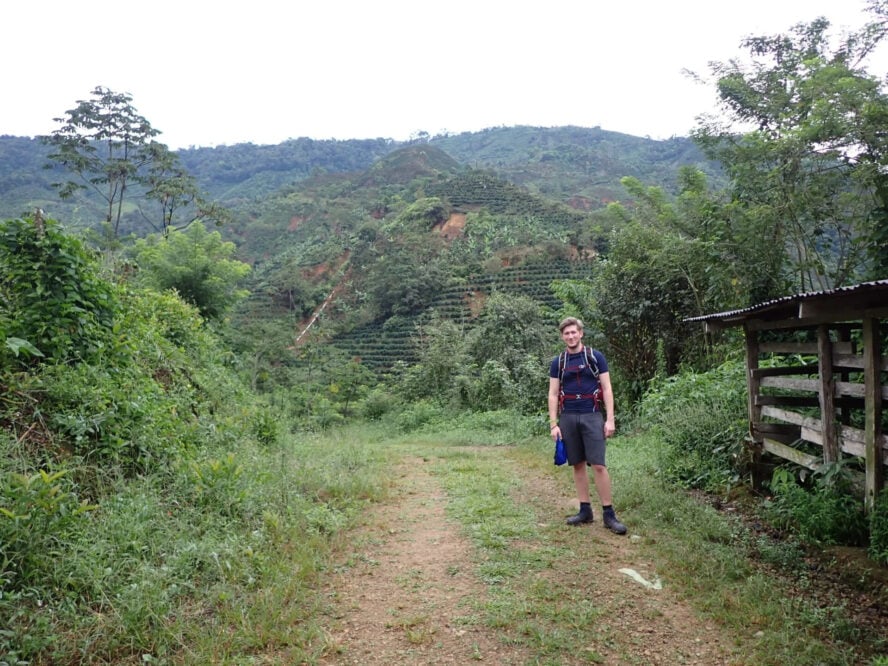
I’ve been lucky enough to live in other places, and I always end up back home. The weather is great, and the country offers a lot. It’s hard to find another place where you can be in the city in the morning and up in the mountains once you leave the Central Valley. A couple of hours later, you’re on the beach. While scouting new routes, I’ve even seen both coasts in a single day, which is quite rare.
But the thing I tell visitors first is always the people. We Ticos, as Costa Ricans call ourselves, are crazy about showing off our country. In rural areas and small towns, people want to chat. They’ll give you food and coffee and want you to try things you’ve never experienced.
For me, Costa Rica adventure travel is as much about those people as the places, and every Costa Rica adventure tour we run is built around meeting them.
How the Coast to Coast Challenge works
What is a coast to coast adventure tour in Costa Rica?
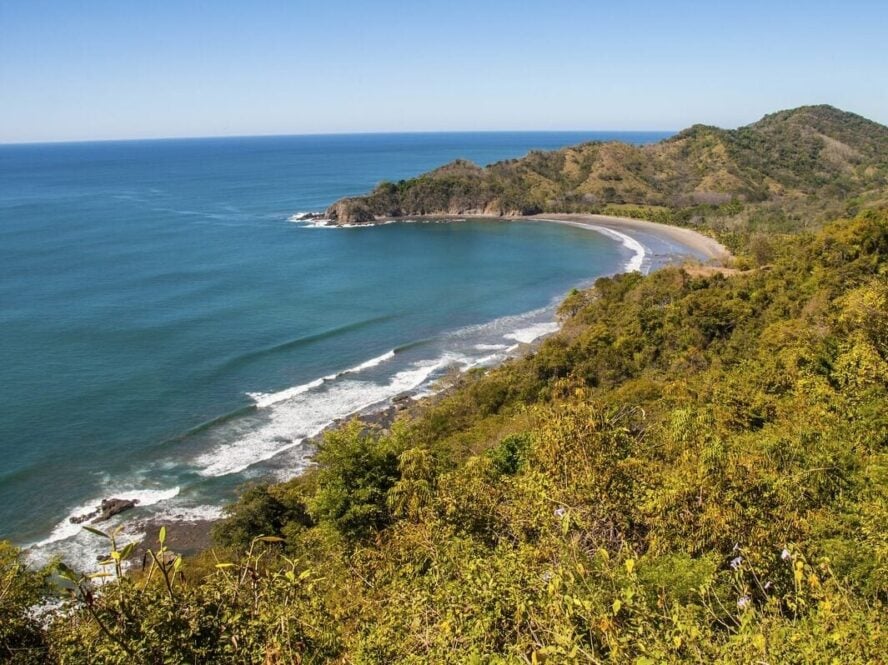
It’s a multi-day trip that crosses Costa Rica from the Pacific to the Caribbean. You travel by bike, on foot, in rafts and in kayaks. From the Pacific coast, you climb to the Continental Divide, run the Pacuare River and finish on the Caribbean side.
Most of the route runs through areas that are hard to reach, so you’ll see very few tourists along the way.
Three sections, two coasts
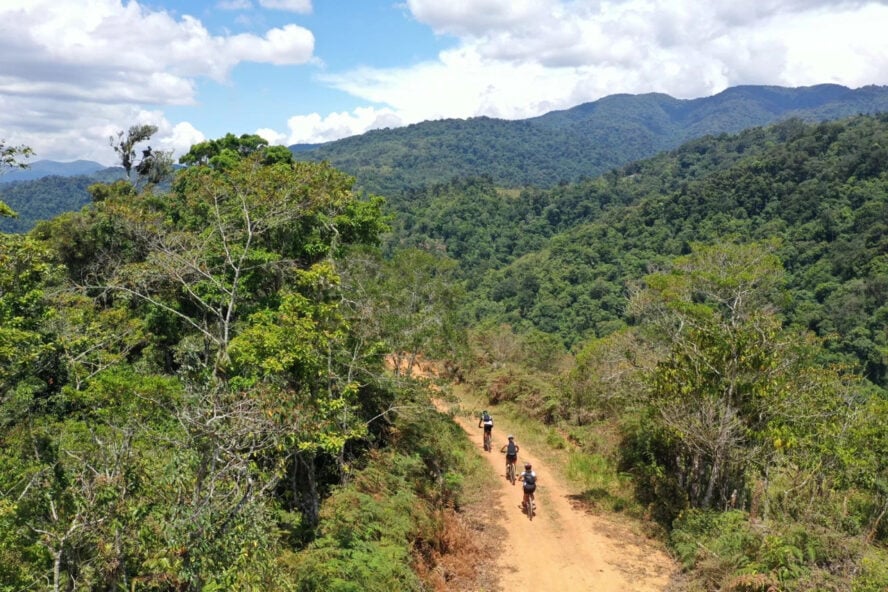
I like to think of the Costa Rica adventure tour in three sections. The first is cycling and hiking up to the divide. Next, the route drops into the Central Valley and finishes at the Pacuare River. The last section runs down to the Caribbean. It’s not only a Costa Rica bike tour, though. Bikes are one tool among several, because the terrain keeps changing and the activities change with it.
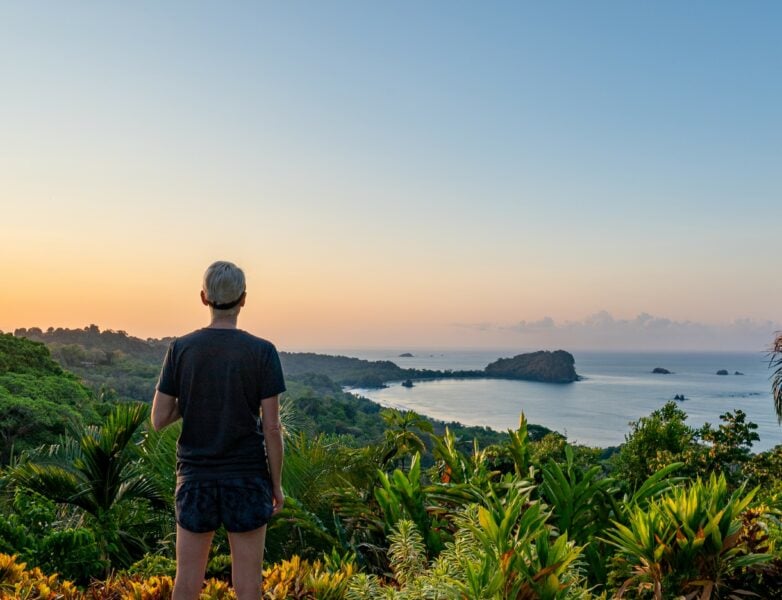
Getting to the start is easy. After a night in San Jose, we drive to Quepos, right next to Manuel Antonio National Park. It’s one of the nicest beaches in the country, and it’s full of wildlife. That makes it very popular with tourists, and it’s the last place you’ll see many of them. From there, we head into areas that are hard to get to, and that’s a big part of what makes the trip unique.
Cycling and hiking to the Continental Divide
Starting at the Pacific
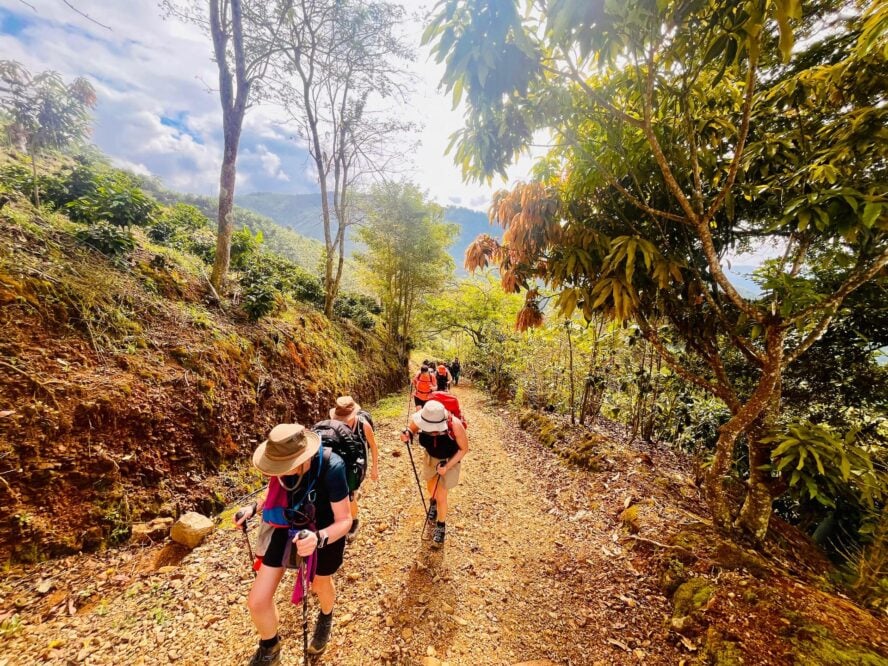
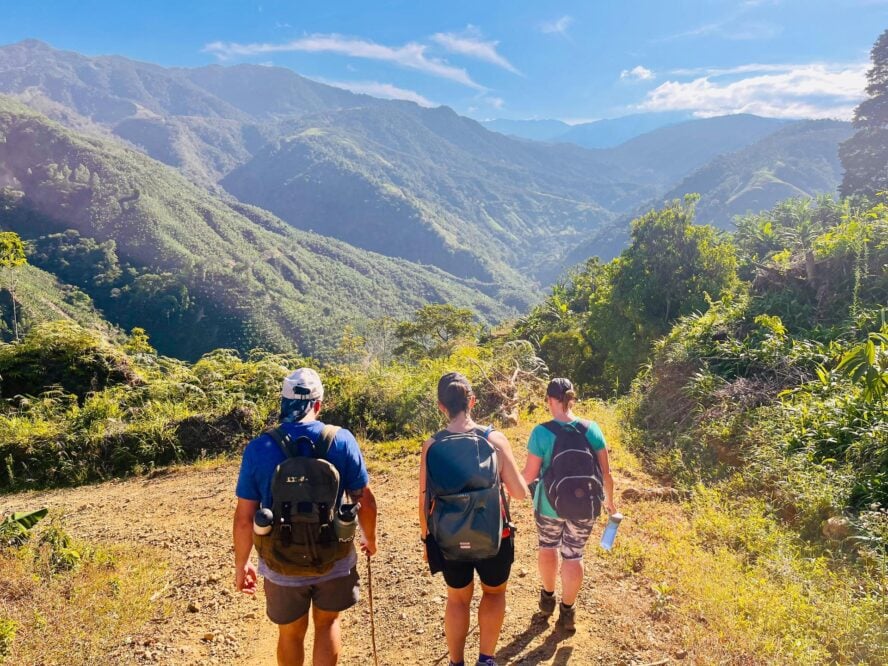
On the morning we start, we take a quick photo at the Pacific. That shows we began on the coast, and the adventure really begins right there. Then we ride through tropical dry forest near the shore. That first ride is a warm-up on the Costa Rica adventure tour, and it doesn’t last long. Soon we switch to hiking, and the hike is tough because it’s quite hilly. It takes 3 days of cycling and walking to reach the divide.
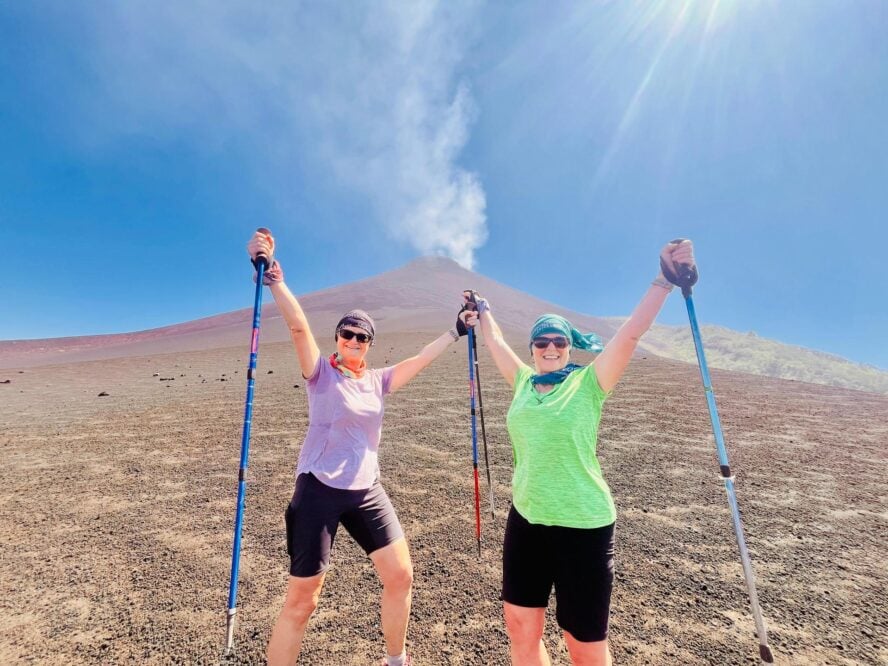
The Costa Rica Continental Divide isn’t necessarily the highest point in the country. It’s the line that separates the two coasts, and everything in this first section builds toward it.
Creeks, coffee and a lot of stops
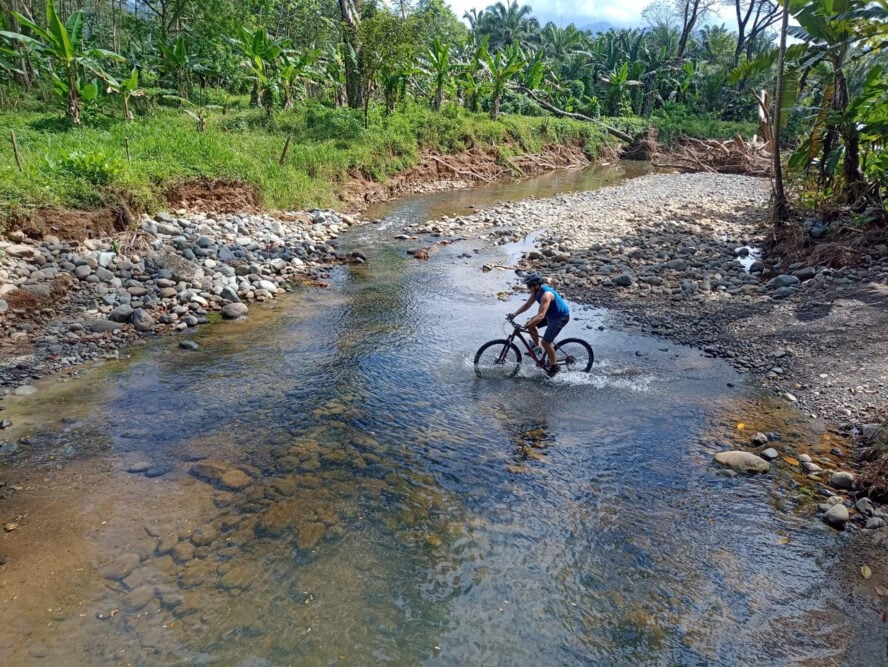
All along this stretch, we cross rivers and creeks. There’s forest on one side of the trail and coffee plantations on the other. Coffee matters here far beyond the scenery. When Costa Rica started exporting it, coffee was practically all we did for many years. It became the base of the economy and a huge part of our history.
That’s one reason I like to stop often. We use those breaks to talk about the country, soak up the views and share some history. They give everyone a chance to rest at the same time.
Going at your own pace
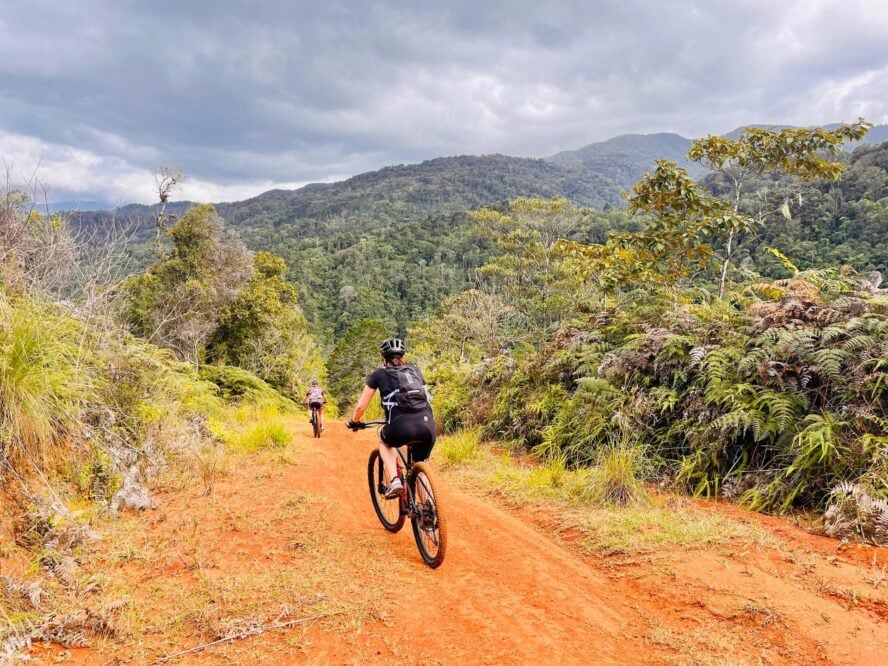
We want everyone to finish every activity, so we always leave enough time to do it at your own pace. That said, we do push you a little. The whole point is the sense of accomplishment you feel at the end of each day.
Days start early, with coffee first and then breakfast, which gives people plenty of time to finish what’s planned. It also means that when we reach camp or the hotel early, there’s time to relax and rest before dinner.
The hiker who wanted to quit
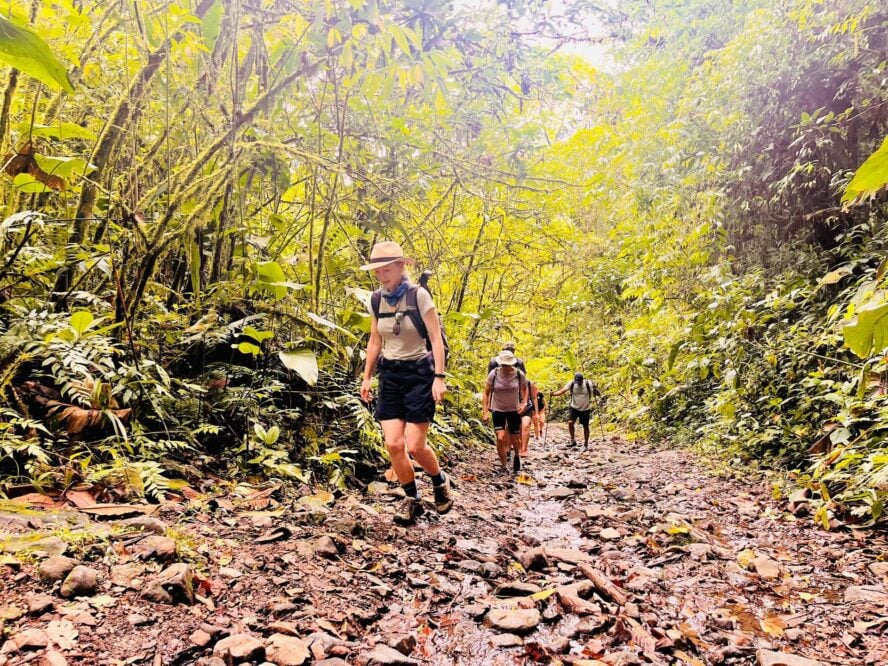
Four or five years ago, on the very first day, a hiker came up to me right at the start of the hike. We’d done the cycling warm-up, and the trail ahead was quite hilly. “I’m really sorry, but I can’t do this,” he said. “This trip is not for me.” He wanted to go back and stay in a hotel on the beach, and he offered to pay for all the extras. He also admitted it was his fault for not saying anything at the beginning.
We kept walking for a little while. Then I told him to focus on the next rest stop, a really nice creek where he could cool down. At the creek, I suggested we just go to the first campsite and decide from there. Once we got there, the plan for the next day was only the lunch stop and then the next campsite.
He finished the entire trip without ever getting into a vehicle. That’s what I’m hoping for on every Costa Rica adventure tour. The sense of accomplishment matters more to me than the pace.
The toughest day on the route
The 12 km (7.5 mi) climb
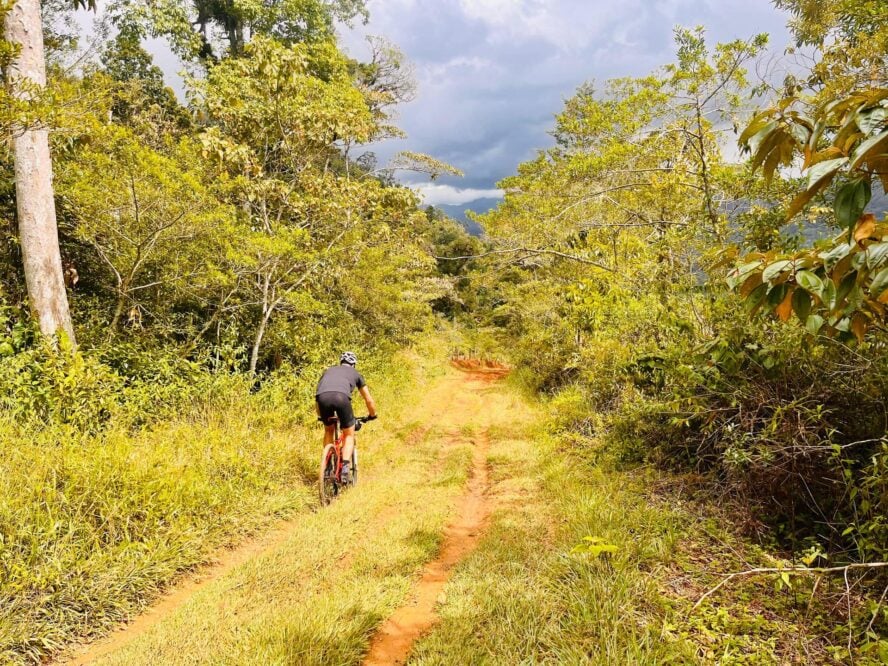
After the divide, the trip drops into the Central Valley. The second section of the Costa Rica adventure tour opens with its toughest day. We climb a hill that’s 12 km (7.5 mi) long, and then we tackle more hills and some single track.
It’s a big day, but we make sure everyone can do it. On the long hill, we let people start at different times. If you think you’ll be slower, you simply start earlier, and the pressure disappears. Our support vehicle and staff keep everything under control.
The single track is optional on the bike. If you love it, ride it. Not your thing? You can hike that section instead without missing any part of the trip.
How hard is an adventure tour in Costa Rica?
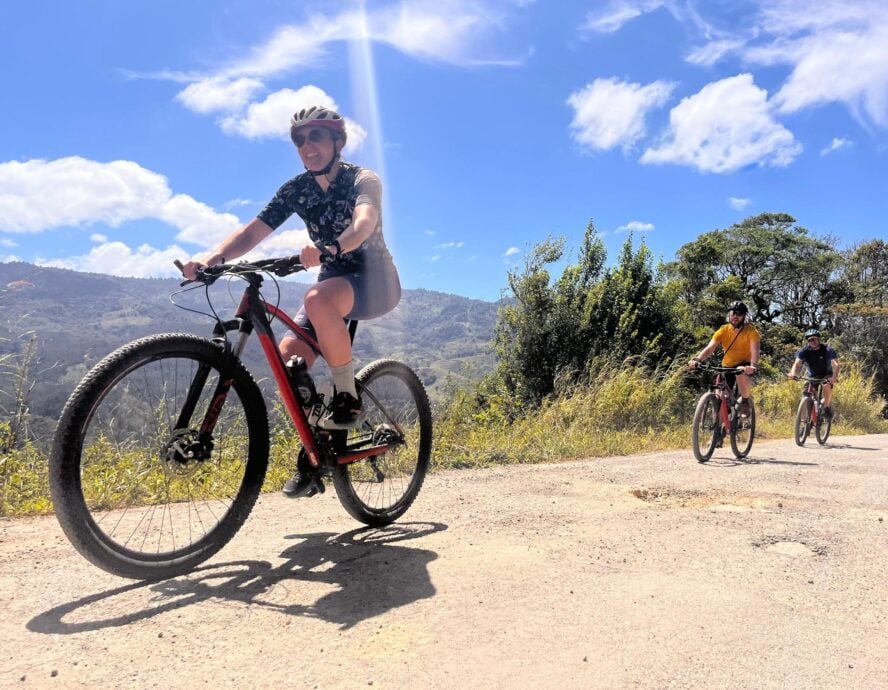
It’s a real challenge, but it’s very doable. If you’re reasonably fit and know how to ride a bike, you can do this Costa Rica adventure tour. A positive mind matters just as much as strong legs. We want you to work for it, but we also want you to finish.
I remember a family of four from a few years ago. On the first morning, the mom came to me and said, “I’m just here because my kids and my husband wanted to do this trip, and they’re fit.” She told me she’d be sitting in the support vehicle all day. Then she started the first biking section, and then the hiking, and she was positive from the beginning.
A couple of times, she asked if she could get in the vehicle. I told her to go just another 2 km (1.2 mi), and she kept going. She finished the entire trip.
Rafting the Pacuare River
Why I never get tired of this river
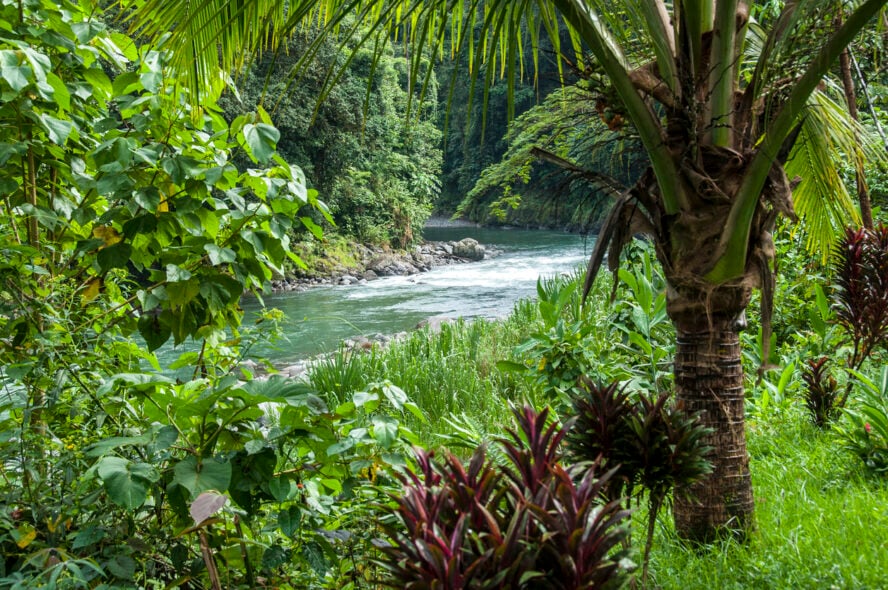
The second section ends at the Pacuare, the best whitewater river in Costa Rica. It’s also in the top 5 in the world. The rapids aren’t the only draw, either. Honestly, the scenery is amazing, and while you’re paddling, a blue morpho butterfly might float right past you. That’s quite special, and even after all my runs, it still amazes me.
Pacuare River rafting is the heart of this Costa Rica adventure tour. For me, Costa Rica white water rafting doesn’t get better than this. We spend 2 days on the water, with a stay in between, and that pacing lets you take it all in.
What class are the rapids on the Pacuare River?
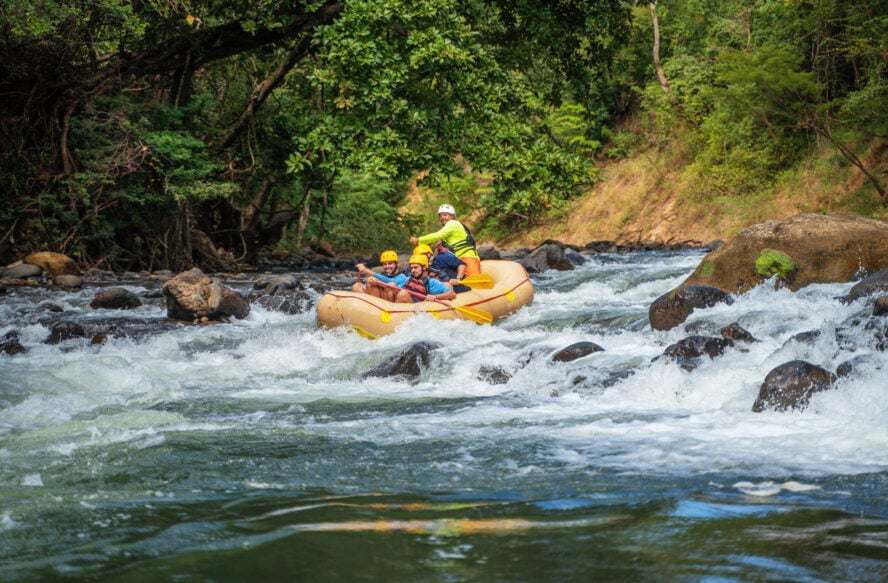
On the first day, we run Class II and Class III rapids, which is perfect if you’ve never rafted before. You get used to the river and to the paddle commands. On the second day, we tackle bigger rapids.
The first section is about 9 km (5.6 mi), and the second is about 25 km (15.5 mi). As you go, the Pacuare River rapids build, so you’re ready for the bigger water when it arrives.
A rest stop with no Wi-Fi
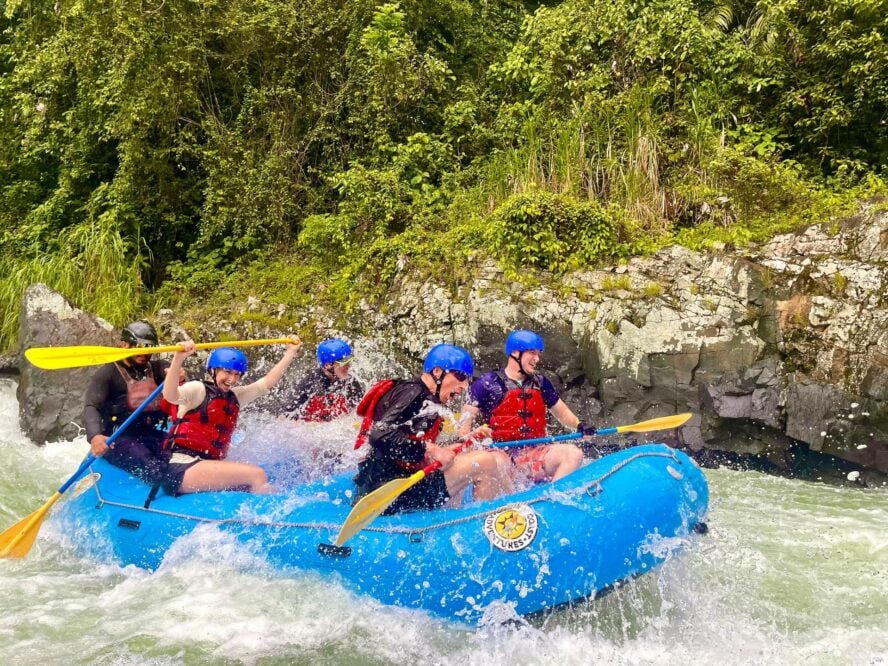
Between the 2 days of rafting, we stay at El Nido del Tigre, a set campsite right on the river.
There’s no electricity and no Wi-Fi, which makes it the perfect place for a rest day. You can sit, think about the adventure you’re having, and power up for the next few days.
The final stretch to the Caribbean
A flat ride and a wild paddle
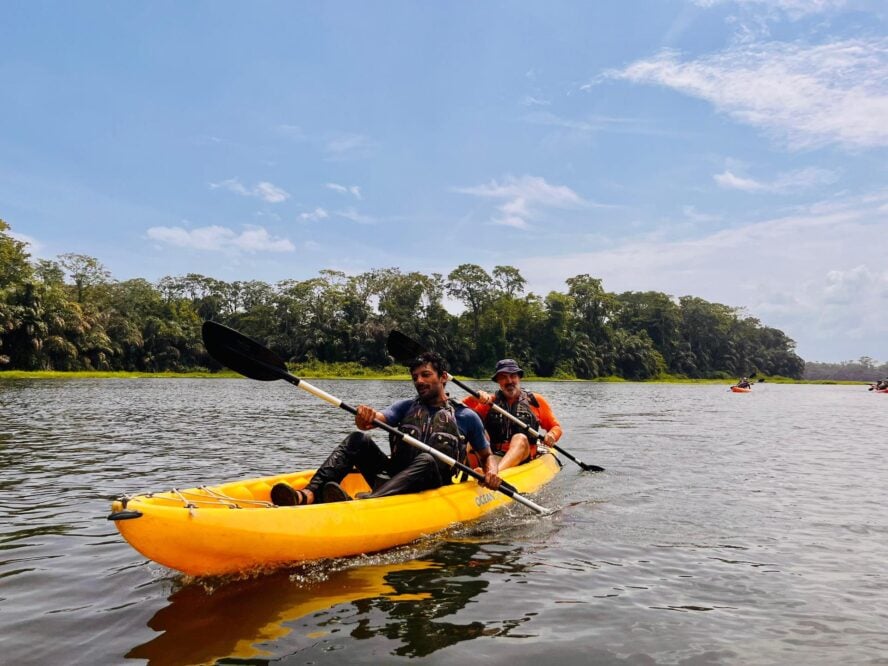
Once the rafting is done, only one stretch is left. For the last leg of the Costa Rica adventure tour, we cycle for a day along the river. After everything that came before, it feels quite flat and quite easy. Then we jump on kayaks for the final paddle to the Caribbean Sea. The river runs through wild primary forest, and there are no roads. Paddling is the only way to reach the end, and that’s quite amazing.
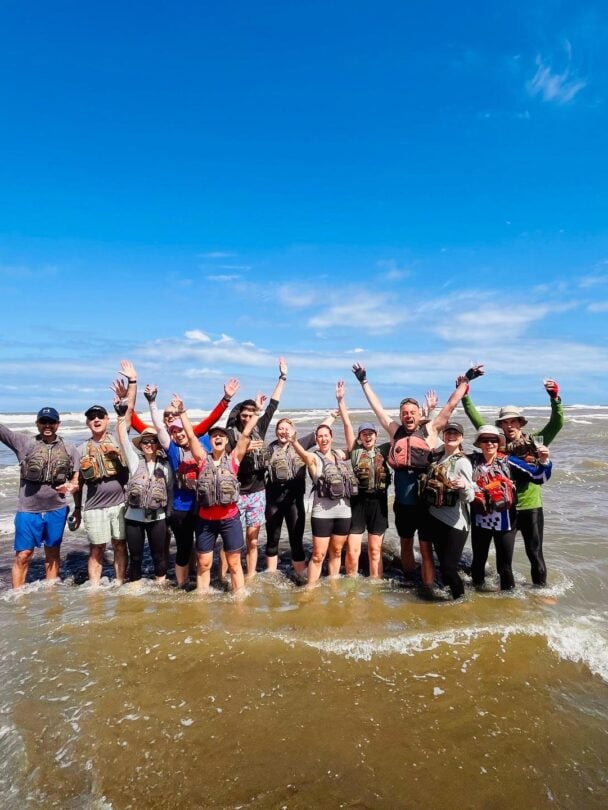
At the mouth of the river, we do a little celebration and take a final picture to prove we crossed the country. After that, a motorboat takes us out. A quick transfer gets us to the South Caribbean beaches.
Beach time at the end
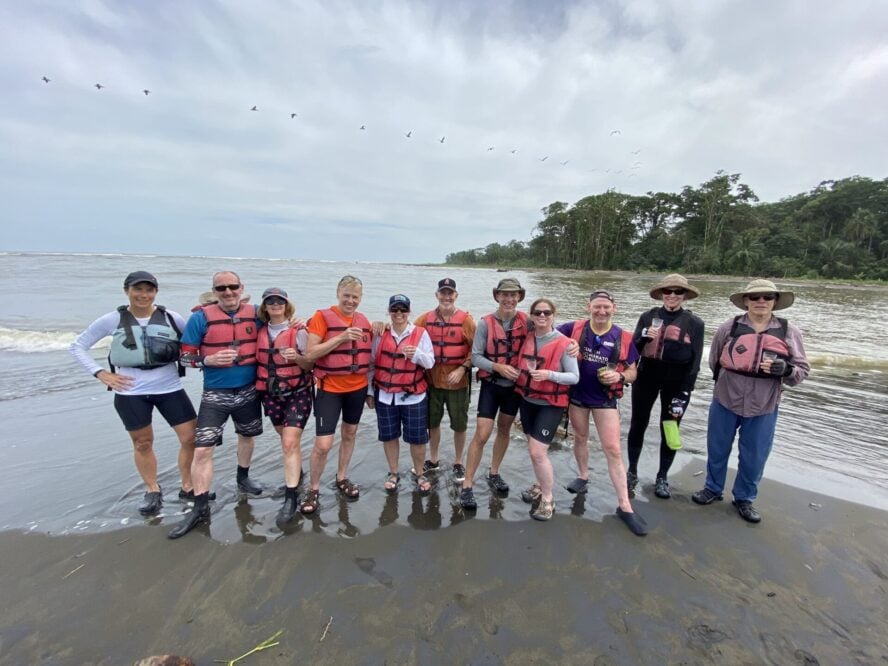
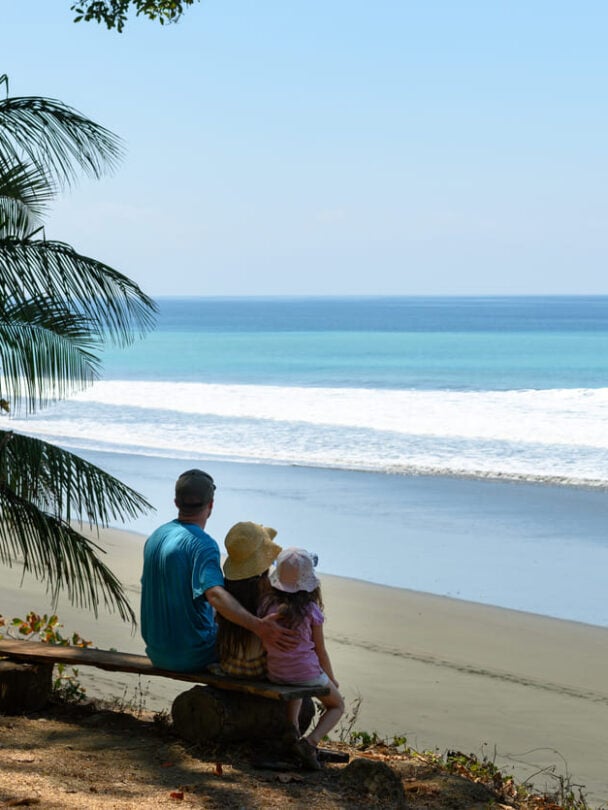
We spend an afternoon and the next morning on the beach before the final transfer back to San Jose. It’s the Costa Rica Caribbean coast at its most relaxed, and after the challenge, you’ll have earned it.
I often tell people to book 1 or 2 extra nights here, because resting from the challenge is important. Anyone planning a Costa Rica adventure vacation around this trip should build them in. If you’d rather trade the paddle for a surfboard, there’s also a surf week in Tamarindo on the Pacific coast.
Wildlife and nature along the route
What wildlife can you see on an adventure tour in Costa Rica?
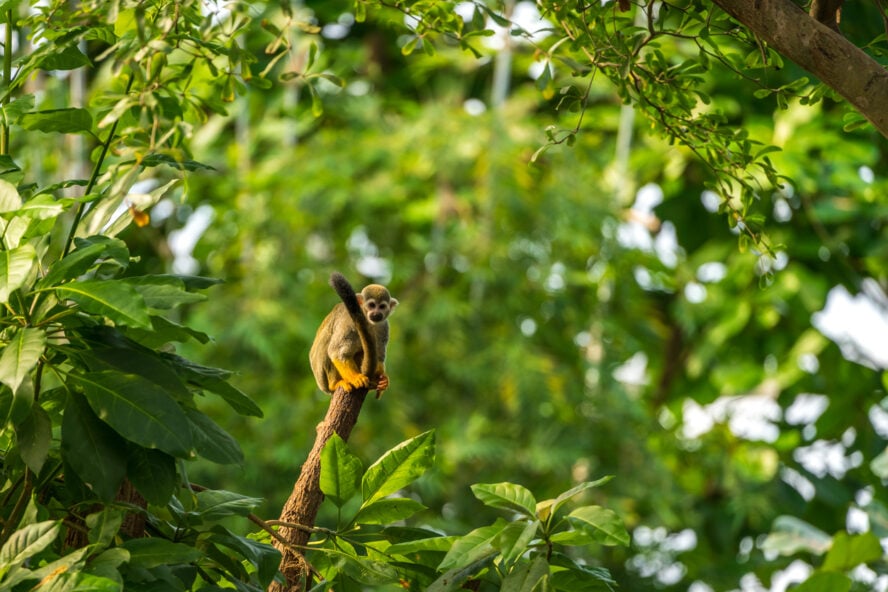
You’ll almost certainly see sloths and toucans on this trip, and we can nearly promise it. Our guides know the country’s wildlife well. We’re always happy to stop and show you something when there’s a chance. I remember a very relaxed howler monkey on a vine one time. Moments like that are part of every Costa Rica adventure tour we guide.
Macaws are back
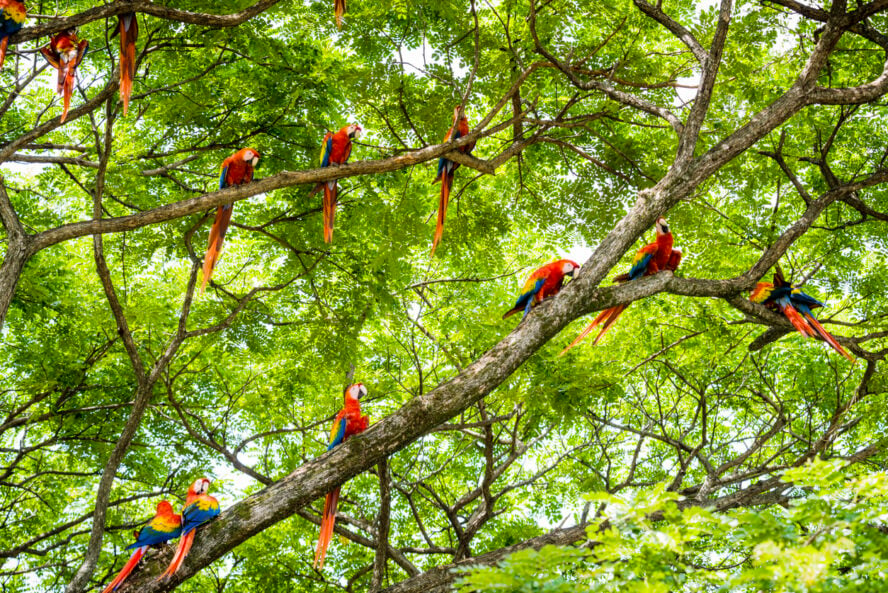
When I was really young, I remember seeing macaws. Then their numbers dropped, and for years you couldn’t see them at all.
In the last 5 or 6 years, the population has been growing like crazy. Costa Rica macaws are one of the best comeback stories I know. The country is also home to other endangered species, like green turtles and leatherback turtles.
Why the scenery keeps changing
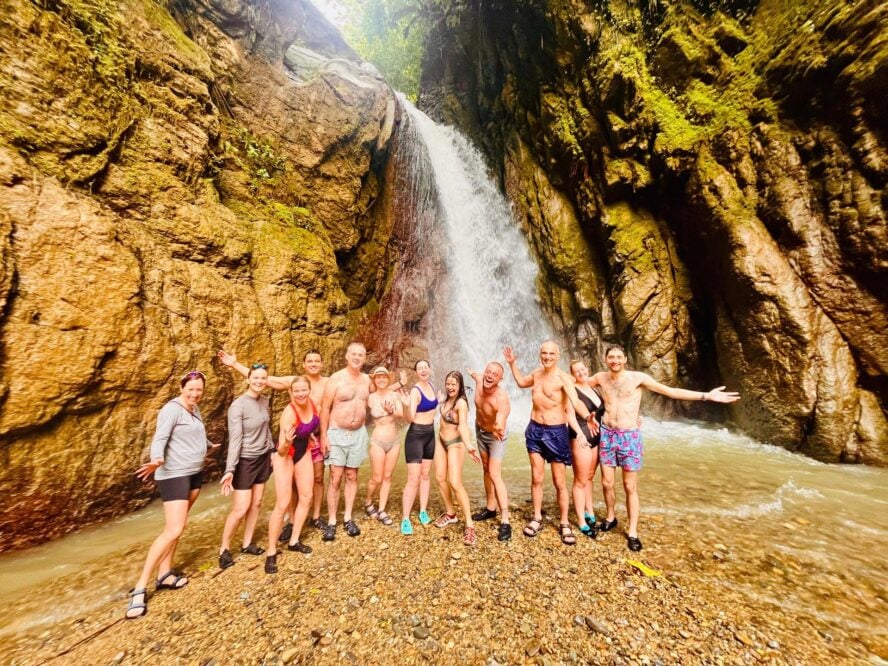
This isn’t a Costa Rica wildlife tour, but sometimes it feels like one. We start at sea level and climb to 2,400 m (7,874 ft), so everything changes along the way. Costa Rica holds about 5% of the world’s biodiversity. We have about 7% of the world’s bird life, which is more than the US and Canada combined. On top of that, there are 10,000 tropical plants and 1,200 types of orchids.
About 25% of our territory is protected, in national parks, forest reserves and indigenous reserves. Most of that land is protected from development, so it’s focused on ecotourism.
What to know before you go
Where do you sleep on a multi-day adventure tour in Costa Rica?
On our Costa Rica adventure tour, you get a really good balance of hotels, community centers and set campsites. You have a hotel in San Jose for the first and last nights, plus a hotel on the Pacific side and one on the Caribbean side. Between those, we camp for 2 nights in community centers in small towns in the middle of nowhere. In two of the bigger towns, we stay in small hotels and cabins. Near the end, we spend 3 nights at set campsites near the Pacuare River.
The community center stops are really cool, because the towns are far from everything and not a lot of people go by. Many of the hotels and cabins are family businesses we’ve used for years, so we have a special relationship with the owners. Everywhere has showers, flush toilets and a roof over dinner, so it’s all quite comfortable.
Food, gear and getting started
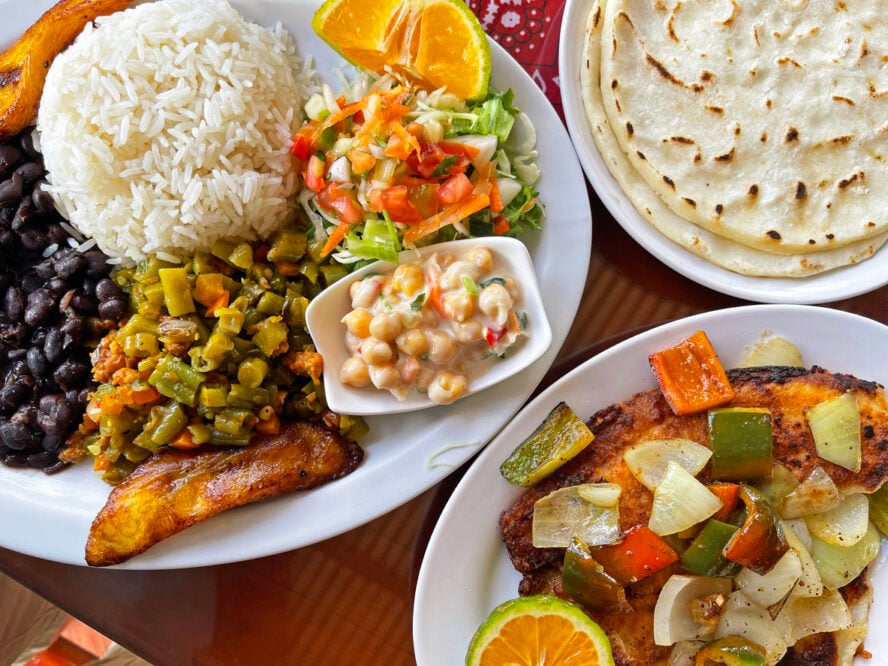
Food is a big part of every trip. Most meals are included because we’re in the middle of nowhere, so our staff buys fresh food and cooks it as we go. We’re good cooks, I promise, and dietary restrictions are no problem. At the end of every day, there’s beer or wine, and if you’re good to your guide, maybe even some cocktails.
Everything you need is provided, including kayaks, camping gear and bikes serviced by certified mechanics. I ask you to bring your own helmet, and I encourage you to bring your own saddle and pedals, though that’s optional. We pick you up at the airport in San Jose and transport everything else, so you basically just show up.
Back at the river mouth
I think about that mom every time we reach the end of the river. She’d planned to spend that first morning in the support vehicle. After the last paddle, when we got to the Caribbean Sea, she gave me a big hug. She was so happy she’d finished the day. Those are the moments that really stick with you as a guide.
My dad got a story out of his first ride over those mountains, a little tough but great. He told it to a table of 15 people. Nearly 30 years later, everyone who finishes this Costa Rica adventure tour leaves with one of their own, earned 2 km (1.2 mi) at a time.
We’re waiting for more people to come and join us. The Pacific is where we start, and the Caribbean is waiting at the other end.
Come and see the Costa Rica most people never reach.