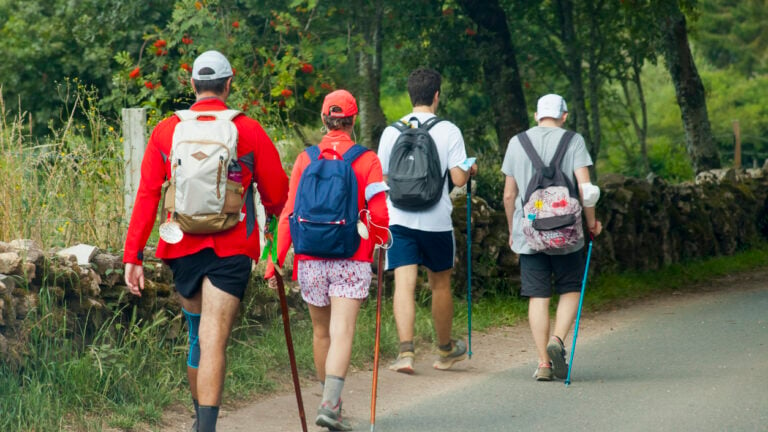
I’ve watched it happen more times than I can count. Early morning. Boots laced in silence. A first-time walker scanning the sky like it might offer instructions. The village is still half asleep, shutters closed, one café already open. People arrive on the Camino full of plans and unspoken questions. A few days later, most of that has quietly fallen away.
I’ve spent much of my life on these routes. Walking with groups. Walking alone. Stopping in villages where the bartender already knows why you’re there. Sometimes it’s just a nod and a coffee set down before you speak. Other times it’s a short conversation that stays with you longer than expected. That’s how the Camino works. It’s not about distance or destination. It’s about small moments that add up without announcing themselves.
This article comes from years of walking and guiding as a Camino de Santiago guide. I’m sharing what the Camino actually feels like once you’re on the trail. Where people usually begin. How long the days really feel. What preparation helps and what you can let go of. And why arriving in Santiago so often feels less like an ending and more like the start of something new.
What is the Camino de Santiago?
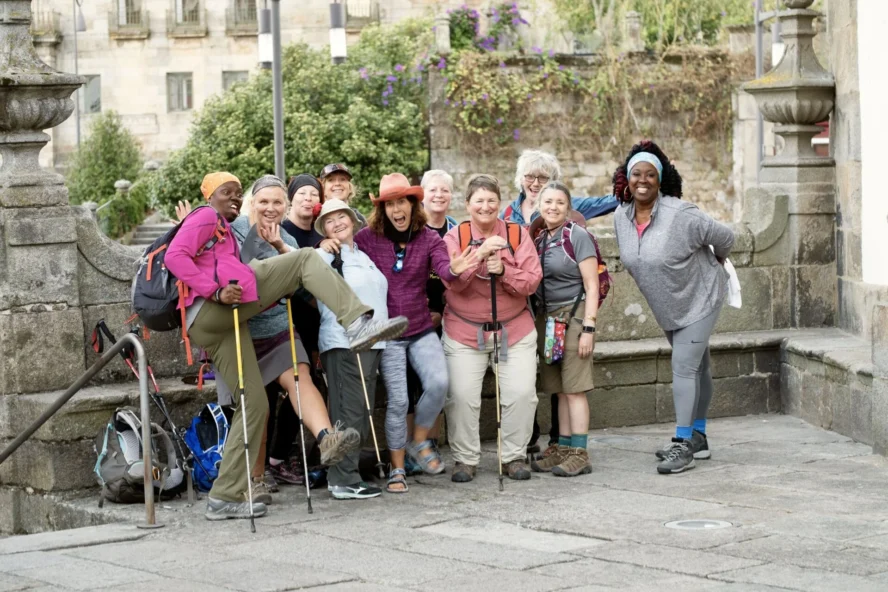
At its most basic, the Camino de Santiago means the Way of Saint James. Camino translates to “the way,” and Santiago refers to Saint James, one of the apostles. That definition is accurate, but it doesn’t explain why people keep coming back, sometimes again and again, even when they swear the last walk would be their final one.
According to tradition, Saint James traveled to Galicia in northwest Spain to preach Christianity. After his death in Jerusalem, his followers placed his remains on a stone boat and sent them across the sea. In the early ninth century, those remains were believed to have been discovered near what is now Santiago de Compostela. Word spread, and people began to walk. At first, the journey was deeply religious, undertaken as an act of faith, repentance, or devotion.

Over time, what started as a religious journey turned into one of Europe’s great pilgrimage networks. Kings walked it. Farmers walked it. Merchants, monks, and everyday people followed what would later become known as the Camino de Santiago routes. Inns appeared, bridges were built, and towns grew because pilgrims passed through. Even today, many villages exist primarily because of the Camino.
Walking it now, you’re still following those same natural lines through the land. Old Roman roads merge into farm tracks. Medieval bridges still carry tired feet across rivers. From the perspective of someone who’s worked as a Camino de Santiago guide for years, the Camino feels less like a historical artifact and more like an ongoing conversation between past and present.
Each walker adds something to it, even if they don’t realize it at the time.
How long is the Camino de Santiago?
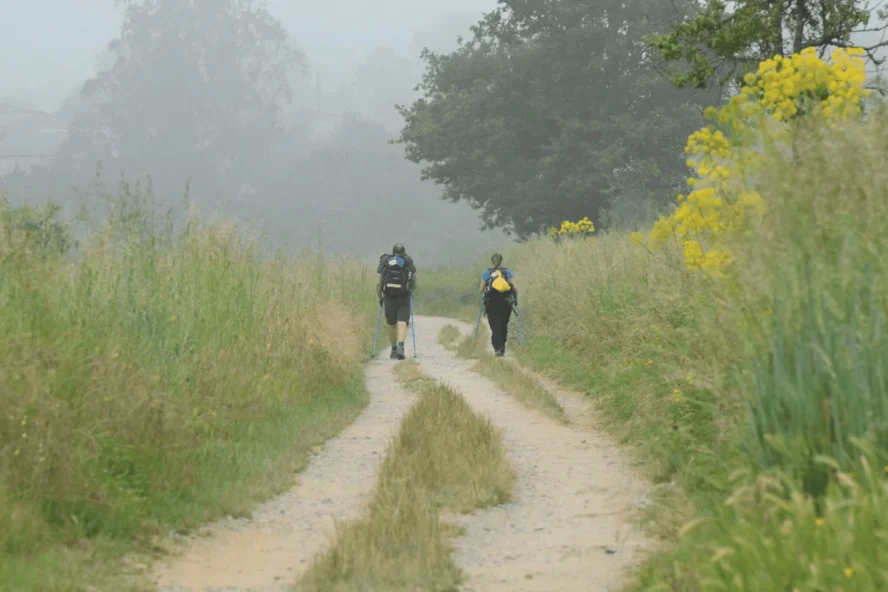
The length of the Camino depends entirely on where you choose to begin, and that’s often the first thing that catches people off guard. Many arrive thinking there’s a single start and a single distance, when in reality the Camino stretches and adapts depending on the route and the time you have.
If you start at Saint-Jean-Pied-de-Port on the French Way, known as the Camino Francés, you’ll walk about 770 km (478 mi). That journey usually takes around 30 to 35 days, and it includes everything from the steep first crossing of the Pyrenees to long open stretches across northern Spain and the rolling hills of Galicia. It’s the most iconic route, and for good reason, but it’s also a serious commitment in both time and energy.
The Camino Portugués offers a different scale and a different feel. Traditionally, it begins in Lisbon and runs roughly 610 km (380 mi) to Santiago, though many pilgrims today start in Porto, about 240 km (150 mi) from the cathedral. From my experience guiding on both routes, the Portuguese Way tends to feel more compact and a little gentler underfoot, especially in the early days. It moves through towns and villages more frequently, and for many people, that rhythm feels approachable without being any less meaningful.


Then there are the shorter sections that most people walk today. To receive the pilgrim certificate in Santiago, you only need to walk the final 100 km (62 mi) or cycle the final 200 km (124 mi). Many walkers choose this option, starting in places like Sarria or Tui. These shorter sections still offer forests, villages, cafés, conversations, and that growing sense of anticipation as Santiago draws closer.
From years spent helping people plan their walk as a Camino de Santiago guide, I can say that these shorter Caminos often feel just as meaningful as the full-length journey. It’s not about how far you go. It’s about how present you are while you’re there.
How long does it take to walk the Camino de Santiago?
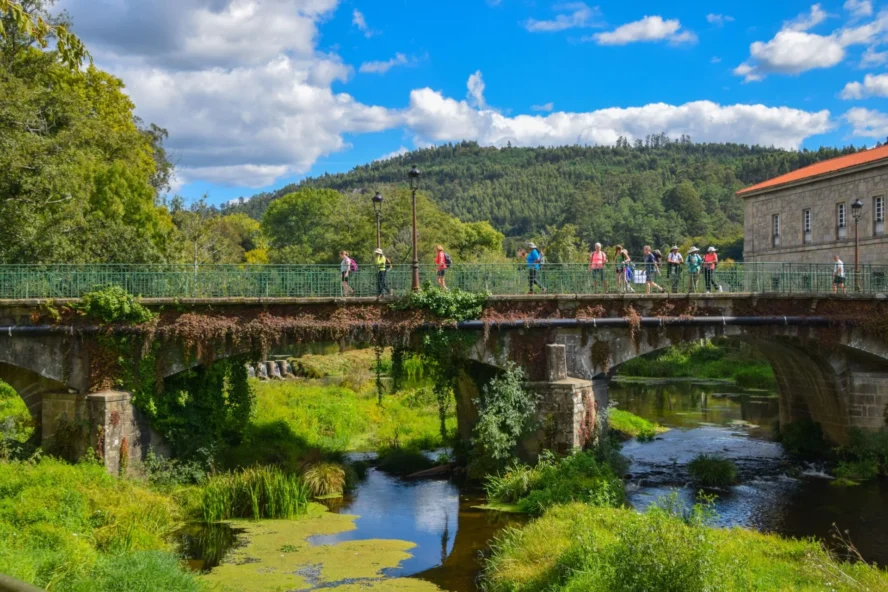
How long the Camino takes depends entirely on how much of it you choose to walk. That’s something I like to clear up early, because many people don’t realize just how long the full routes really are.
Walking an entire Camino from start to finish means committing to more than a month on the trail. The full Camino Francés, beginning in Saint-Jean-Pied-de-Port and crossing northern Spain, usually takes around 30 to 35 days at a steady pace. It’s a serious journey that asks you to slow down and settle into a very different rhythm of life.
Other routes are shorter or more demanding, depending on the landscape. The Camino Portugués, starting in Porto, typically takes around 10 to 14 days, while the Camino del Norte follows Spain’s northern coast and often takes 32 to 37 days. It’s stunning, but hillier and less forgiving, which naturally slows things down.
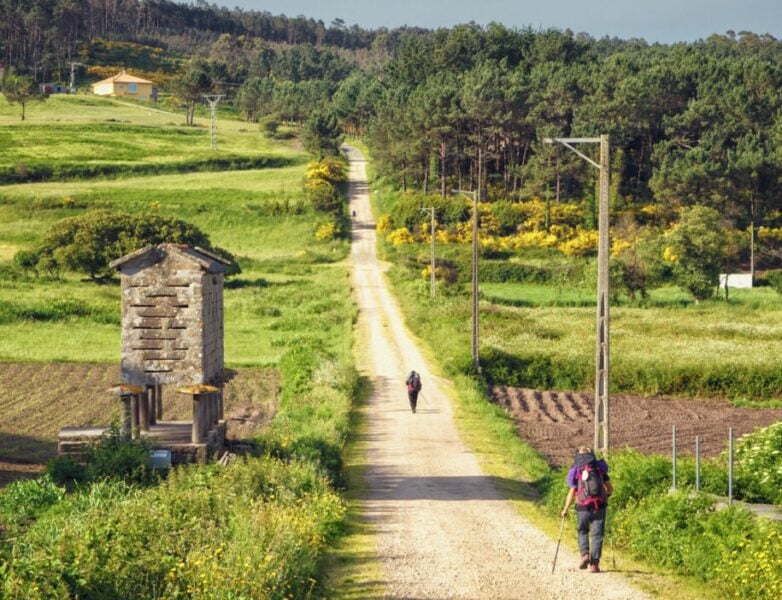
That’s why many people choose to walk just a section of the Camino, especially the first time. To receive the official pilgrim certificate in Santiago, you only need to walk the final 100 km (62 mi) or cycle the final 200 km (124 mi). Most people cover that last stretch in five to seven days, walking four to six hours a day and around 20 to 25 km (12 to 16 mi).
From years of walking and guiding, I’ve learned that the Camino doesn’t reward rushing. When you slow down just enough, the days begin to open up, and that’s when the Camino really starts to work.
Where does the Camino de Santiago start and end?
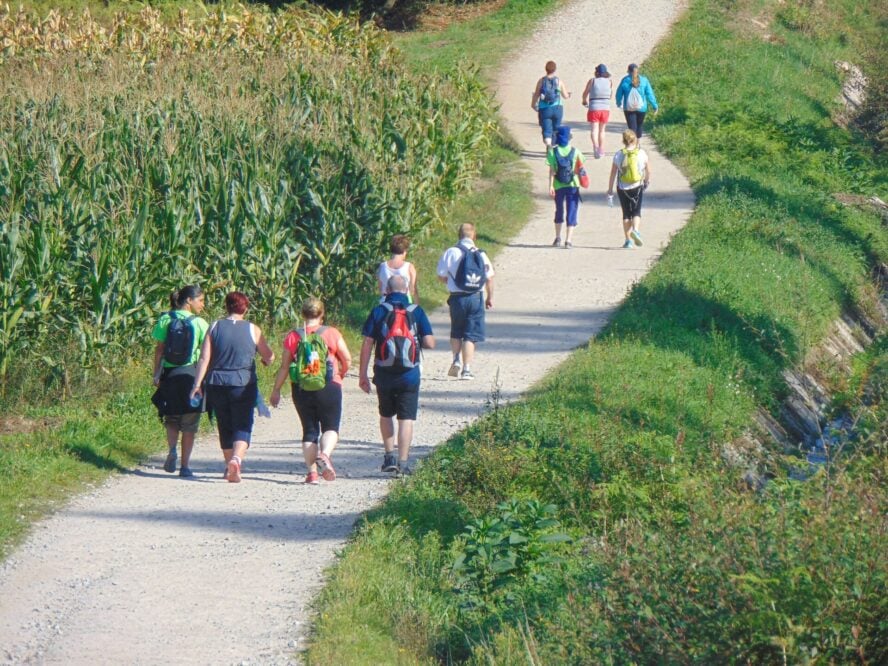
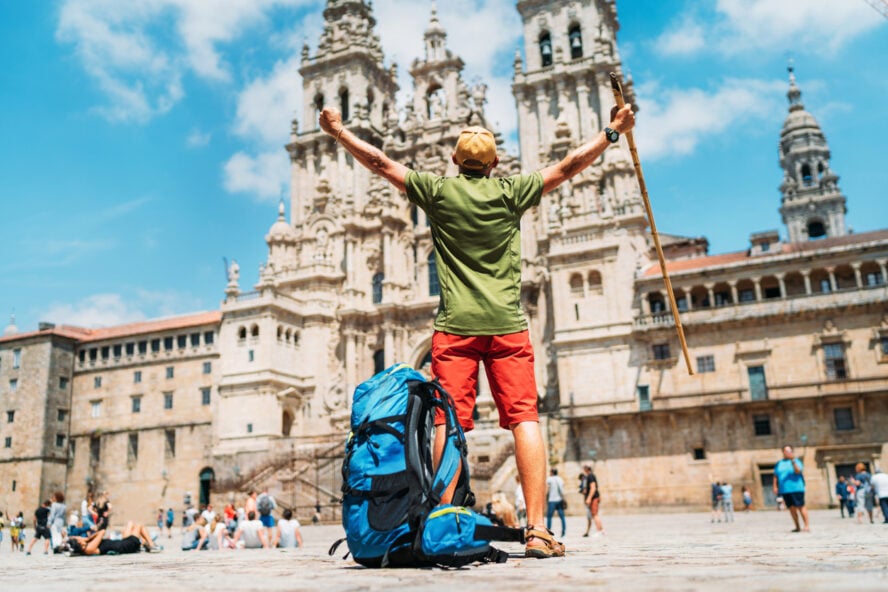
Every Camino route ends in the same place: the cathedral in Santiago de Compostela. That final approach into the city has a strange energy. Some people speed up, eager to arrive. Others slow down, savoring the last kilometers. Emotions surface unexpectedly. Tears aren’t uncommon.
Where the Camino starts is up to you. Many walkers begin in Sarria or Tui, depending on the route they choose. On the Portuguese Coastal Way, starting in Oia gives you a few days of walking beside the Atlantic before heading inland. The ocean air, the open views, and the sound of waves create a gentle beginning that suits many first-time walkers.
From what I’ve seen while working as a Camino de Santiago guide, the Camino doesn’t really begin at a specific town. It begins the moment you commit to stepping onto the path, whether that happens months in advance or on the first morning you shoulder your pack.
How do you prepare for the Camino de Santiago?
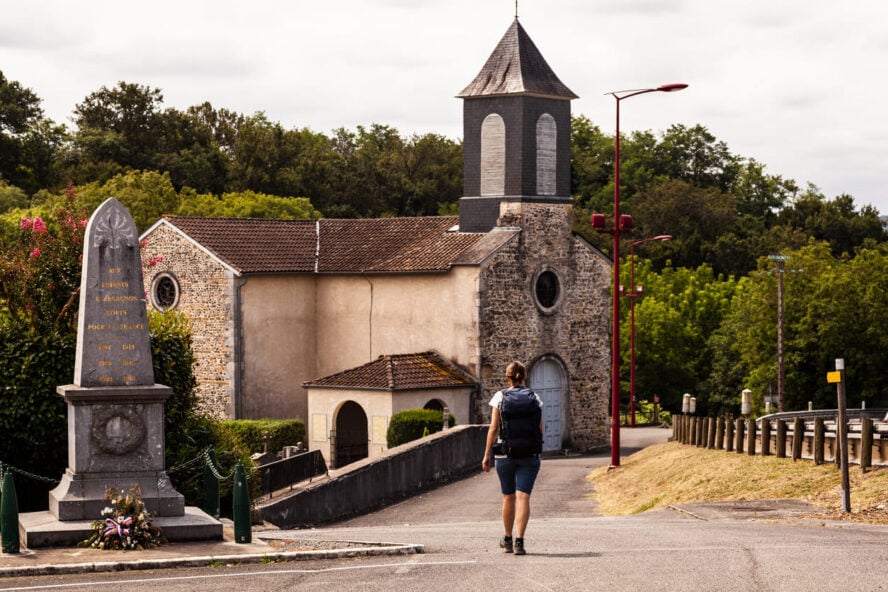
Technically speaking, the Camino isn’t difficult. You’ll walk on dirt paths, forest tracks, farm roads, and quiet stretches of pavement. The Camino de Santiago trail is clearly marked with yellow arrows and scallop shells, and it’s rare to feel truly lost.
What surprises people is how demanding repetition can be. Walking for several hours every day uses muscles and patience in equal measure. Preparation matters not because the terrain is extreme, but because consistency is required.
Years of experience as a Camino de Santiago guide have shown me that mental preparation often matters more than physical training. Accepting that some days will feel slow, that discomfort will pass, and that you don’t need to have everything figured out makes the journey easier.
How much does the Camino de Santiago cost?
The Camino works on many budgets. Accommodation ranges from small hotels to family-run guesthouses chosen more for warmth than luxury. After a long day on foot, comfort tends to matter more than star ratings.
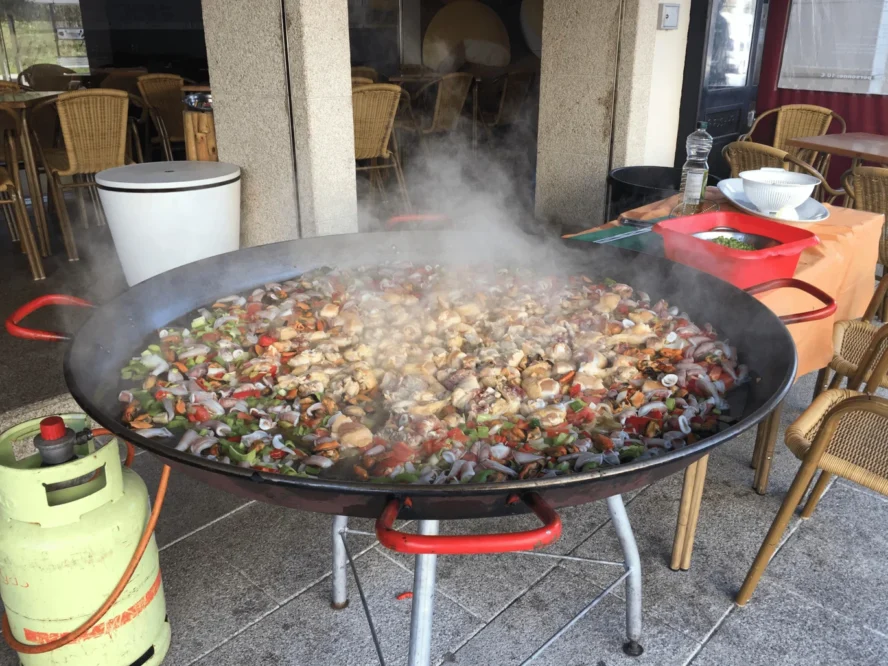
Food is simple and local. In Galicia, seafood appears often. Elsewhere, it’s fresh bread, tasty cheese, amazing cured meats, filling soups, and pilgrim menus that feel earned by the time you sit down. Meals become social moments, often shared with people you met only hours earlier.
One thing I’ve seen repeatedly while guiding is how much easier the walk feels when luggage is transferred ahead. Carrying only a small daypack allows people to focus on the experience rather than the weight on their shoulders. It’s a small detail, but one that makes a big difference for anyone walking with a Camino de Santiago guide or on their own.
How to train for the Camino de Santiago
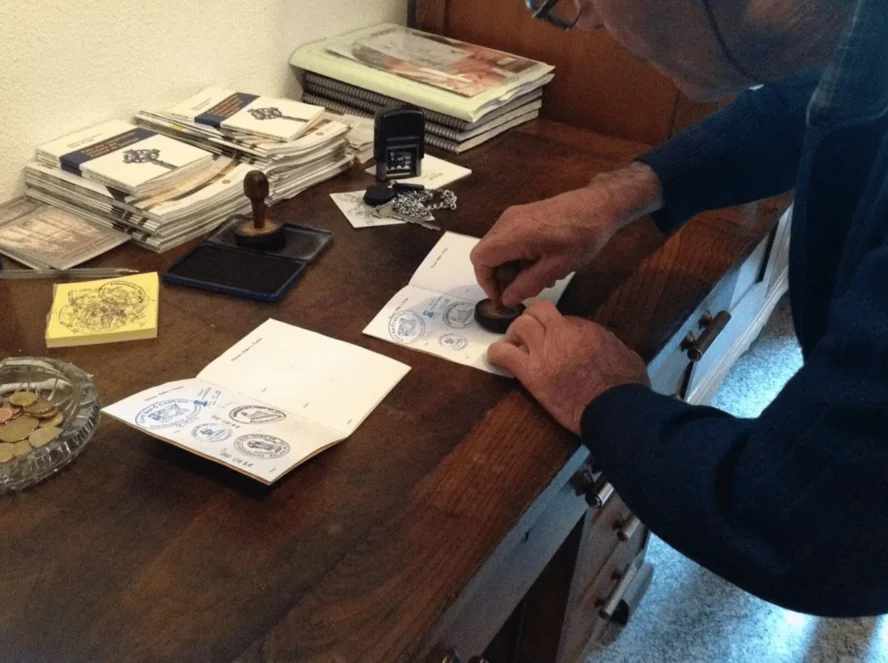
Training for the Camino doesn’t need to be complicated. Walking prepares you for walking. Regular short walks during the week and longer walks on weekends are usually enough. The goal isn’t speed or strength, but familiarity.
The final 100 km (62 mi) into Santiago are hilly but manageable. You might climb a few hundred meters (roughly 650 to 1,300 ft) in a day, spread across gentle ascents. Villages, cafés, and fellow walkers are never far away, which provides both physical and mental support.
I’ve watched people in their seventies finish strong, often surprising themselves. Experience on the trail has taught me that patience and consistency matter far more than speed, a lesson I return to often when working as a Camino de Santiago guide.
Why people come back to the Camino
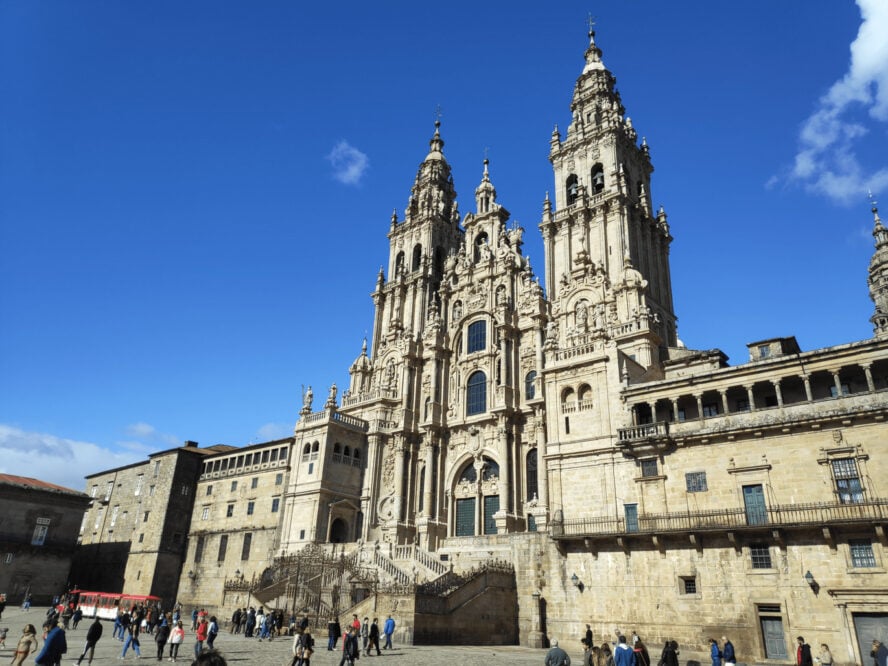
After all these years, there’s still one thing I can’t fully explain. People finish, go home, and then start thinking about returning. They don’t always have a reason. They just feel drawn back.
Walking together creates bonds quickly. Shared effort, shared meals, shared silence. I’ve watched friendships form that last long after the walk ends. Even for someone who makes a living as a Camino de Santiago guide, that sense of connection never gets old.
When you arrive in Santiago, take your time. Sit in the square. Let the noise wash over you. Watch people arrive the way you did. You’ve just completed a Camino de Santiago pilgrimage, whether it was a short Camino de Santiago hike or something much longer.
That moment doesn’t belong to anyone else.
It’s yours.
Buen Camino!