00:00
Cold open
Albert:
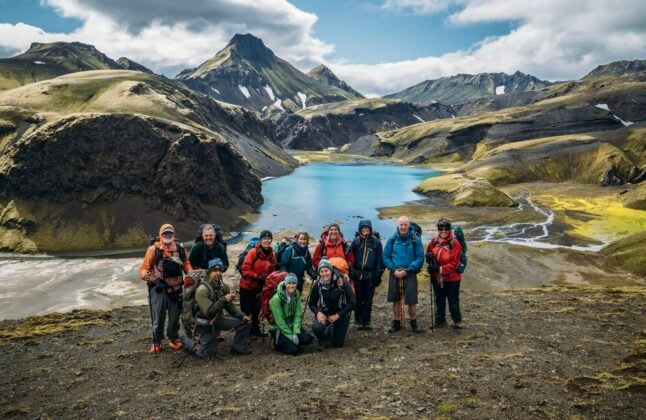
The feeling of being is in one of the best and wildest places of the Highlands was unbeatable. This is the Laugavegur Trail, the famous one. It's 55 kilometers in total. We do the hidden trails, so it's nearly three times the Laugavegur Trail in distance. This is one of my definitely favorite places. Back in the Middle Ages, people thought that the world was about to end because of the massive amount of lava that came out of the ridge.
A few years ago, our clients renamed us the Back of the Dragon. This is not a walk in the woods.
Back to chapters
00:44
Meet Albert: Amarok Adventures and the partnership with 57hours
Perica:
Hi, I'm Perica, co-founder of 57hours, and today we're going to talk about Hidden Trails of Iceland with Albert. Albert is one of the first guides who started working with 57hours. His trip is one of the best we have, probably one of the best Iceland has as well. I've been lucky enough to join him on this adventure in 2021, or at least the version that was active before.
Now it's even better, and it was really great to revisit this trip and all the details, and especially the fantastic images. We covered a lot of topics: how the trip was created; what's the difference between Hidden Trails and Laugavegur Trail; the challenges of the trip, and especially the very interesting river crossings; and a lot more.
Let's get into it.
Albert:
My name is Albert. I'm a co-founder of Amarok Adventures along with my partner Monica. We're a small company here in Iceland, and we operate all around the Arctic and Antarctic regions, so all polar regions. And we specialize on backpacking trips, expedition-style trips. And we have been working for quite a long time together 2021, I think you were, I would say, our biggest or our first big partnership back in the days that it was when we were starting.
And yeah, you helped our business to rocket all the way up, and now we are doing all kinds of crazy stuff that, yeah, five years ago I would have said like, "Ah, no, maybe in 10 years or 20 years, but not in five." So it's pretty good.
Back to chapters
02:26
Why Iceland: from South Greenland to the Highlands
Perica:
I'm glad you said that because you basically described what is our mission at 57hours.
Yeah. And me and Viktor, when we started the company, the vision was to create a platform where, you know, young guides who have really interesting and cool trips that we'll talk about in a few minutes, where they can come and just build their businesses. So maybe you can tell us, how did you end up in Iceland instead of somewhere else?
And why Iceland?
Albert:
Yeah, I would say it was mainly because of nature. So I was working for this company in South Greenland, and every time I was traveling there, I was just stopping by in Iceland. So I was flying into-- from Europe to Iceland, then Iceland to Greenland. And at some point, I decided to quit this company.
It was a really different organization to what I would have liked to be for that company, and I decided just to take the plane back and stay a little bit longer in Iceland. And then I decided to travel. I said, while I still was in South Greenland, I was just looking at the map and just planning. I said like, "Hey, I could just spend 10, 15 days just traveling on my own."
So I flew back into Iceland, and the moment I was going from Keflavík to Reykjavík, to the capital, I felt a little bit of like an extra connection that I didn't have before. And afterwards, I started traveling on the south coast of Iceland, and the moment I reach the south coast, specifically the part that is just near Vatnajökull Glacier, the biggest glacier in Europe, pretty knew already that I wanted to move there.
Back to chapters
03:59
The Highlands: Landmannalaugar, Eldgjá and a lava canyon
Albert:
Mainly, I would say, because of the crazy, beautiful, outstanding nature we have in Iceland. It is so different to what we have seen so far. So just to give you an idea, this is a video of the Icelandic highlands, and this is a place called Hnausapollur, that is this big, massive volcanic crater that is filled up with water.
And as you can see, there is water not going anywhere from here or going in. It's just water that comes from the snow and the rain. This is one of my definitely favorite places. Then, of course, Landmannalaugar. It is just outstanding. Perica, you have been there with me, and you will remember. There's just crazy beautiful slopes everywhere.
And then if I would need to choose one of my favorite places, it would be definitely the Eldgjá canyon. That is definitely one of the craziest locations that I like to take my groups on. So we just come here on the ridge and come down this trail all the way inside. This canyon, just to give you an idea, pretty much changed the perception of Icelanders back in the Middle Ages, and people thought that the world was about to end because of the massive amount of lava that came out of the ridge.
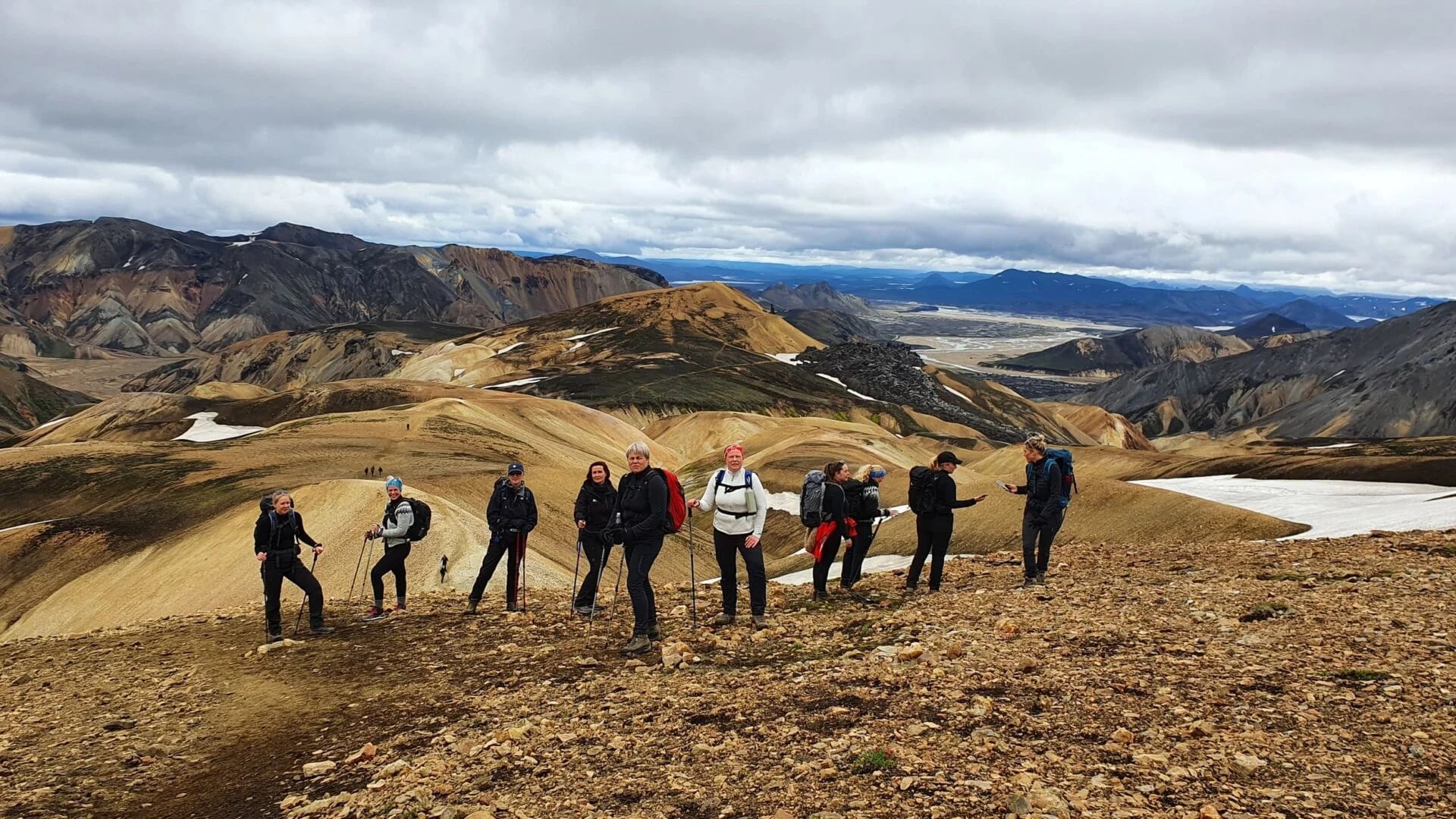
It's just, like, getting to imagine something like this, it's pretty, pretty gnarly. This is another view of my group just backpacking along the ridge. It's pretty epic place, to be honest.
Perica:
I would agree. It's quite surreal. I remember you just come there, it's so different than what you're used to, and I think you cannot get used to Icelandic landscape unless you're in Iceland.
Albert:
Exactly. And it's so massive, and the colors, like on this video, they just pop up so massively, and it's just full neon green, crazy, and you have tons of water flowing in every single direction, and the volcanic canyons is fantastic.
Back to chapters
06:00
From Laugavegur to Hidden Trails: how the route was born
Perica:
I agree. It's absolutely fantastic. And I know you've been guiding Laugavegur Trail.
That's an absolutely amazing classic trail on Iceland. But then what was the story from Laugavegur to Hidden Trails? Mm-hmm. And why did you do it?
Albert:
We work for tons of companies. Most of them are nowadays listed as well in 57hours. And back then, before creating the company, before creating Amarok, we knew that we wanted to do something else.
So, like, we didn't want to do what everyone else was doing. So after creating Amarok, we had a few years that we were doing quite nice in terms of sales, like people coming to discover Iceland with us. And there was this late September in the season that we got approached by an old coworker from a different company, and he told us, "Do you think you can give us a hand this late summer to just close the season, come to Landmannalaugar, do a little bit of wardening here and there?
And then, yeah, I mean, it would be quite nice to have you folks around." And we said yes. We had nothing else to do. And while we were on our free time around, we were just mainly scouting on the old maps that they had on the warden's cabin and just looking, "Oh, we could combine this and this," and started crafting on our heads some kind of a new trail.
And few months later, we decided to put that on paper and decided to give it a try. We decided to run it by ourselves. But instead of 12 days, we decided to do it in, I think it was, like, five days or four days. We did extremely long distances right after the season. And we also chose the worst time of the year and the worst week of the year.
We got like orange weather alert, rain, strong winds. It was just almost horrible, I would say. But the feeling of being is in one of the best and wildest places of the Highlands was unbeatable. Was something else, and we managed to just cover the whole distance. The last day we were supposed to arrive to one of the huts.
The warden was trying to see if we were going to arrive or not, if we needed some evacuation because nobody knew where we were, and we just imagine. We arrive completely soaking wet. Our boots were smelly and full of moist inside and we just arrive with big smile, and she was super concerned about us.
And when we came back home, we said, "Hey, this could actually work as a trip. We could do this and then link with the best stages of the Laugavegur Trail that to us are like Álftavatn, the big lake or the Swans Lake, and then Emstrur, the black desert, and the canyons in Markarfljótsgljúfur, and then all the way down to Þórsmörk, that is the Valley of Thor, with all this birch forest and stuff."
And when we were planning everything on the map, everything pretty much makes sense. We can make it happen. Like, why doing what everyone does if we can do something that it's a little bit more epic, a little bit more remote and away from the trails? And we decided to call it the Hidden Trails.
Perica:
You don't often really hear or know how much effort goes into creating these tours and putting them up.
Albert:
Oh, yeah. We actually got this story published in an adventure magazine afterwards. We took some pictures and everything and got featured. But I'm going to show you the map so you can have an idea.
Back to chapters
09:41
The route: Hidden Trails vs the Laugavegur Trail on the map
Albert:
So this is the Laugavegur Trail, this blue line in here. Do you see it? So what normally people do, they start in Landmannalaugar, and then on the first day they either hike to up to Hrafntinnusker, or they come all the way from Landmannalaugar to Álftavatn. And from here, they connect with Emstrur the next day and to Þórsmörk.
There's also another chance of staying in Hvanngil that it's a smaller hut just in here on the corner, so it's about two kilometers away from Álftavatn. It's not too far away. It's normally like to say about an hour-ish hiking. But yeah, so this is what everyone does. And when they arrive in Þórsmörk, some adventurous people decide to go up into the mountain pass that it's called Fimmvörðuháls, and then they come down into Skógafoss, a famous waterfall on the south coast.
So this is the Laugavegur Trail, the famous one, the one that everyone does, that it's 55 kilometers in total. We do the Hidden Trails, so we add a little bit longer route. So this would cover over 150 kilometers. So it's nearly three times the Laugavegur Trail in distance. Of course, what we always like to do, we like to spend two days in Landmannalaugar, so at least the people can get a little bit of a sense of what it will look like. What is it going to be?
And like to self-assess to see if they are going to be able to hike the trip or not. It's just for one unique reason. From Landmannalaugar, you can easily leave back to Reykjavík. You have buses coming and going, and it's very easy. Once you reach these places, if you need evacuation, well, we need to charter a Jeep to come and find you up in the mountains, or in worst case scenario, if because of an injury or something, you need to just leave by helicopter because most of the places where we hike on are non-reachable by car.
So we decided like, hey, this trip, it's catered not for regular hikers, but for people that really want to push their limits and to hike over 150K across some of the most gnarly places in the island. So we pretty much skip only, like, going up in Hrafntinnusker. But instead of going up in Hrafntinnusker, we spend two days in Landmannalaugar and we explore all of this region here that almost no one goes.
So we are actually hiking in Landmannalaugar pretty much by ourselves on the second day. The first day is the first day that we arrive. We do a little bit of a climb to a peak, to Bláhnúkur. You have, you yourself, you have come with us up in there, and it's pretty stunning. Just imagine what is beyond that peak, what you get to see.
So yeah, it's pretty nice. I do not want to take credit from Laugavegur Trail. Like, the Laugavegur Trail itself is fantastic. It's just, to our belief, full of people. Like, when you go on the Laugavegur Trail, you easily get to see around 100 people. On the hidden trails, we might see I don't know, maybe two people every three days max.
So it's a little bit of a different feeling for sure.
Back to chapters
12:43
Who it's for: carrying your own pack and 25 km days
Perica:
Tell us maybe a bit more then who is the Hidden Trails for and who is it not for? I think that's the two interesting questions I think is good to know. So who should do something like this?
Albert:
Yeah. So for doing the Hidden Trails, you would need to be self-sufficient.
You need to be able to carry your own backpack for the entirety of the trip. A few years ago we decided, "Hey, shall we include luggage transportation and everything like that?" And we said, "You know what? No. The people who really want to experience the wild side of Iceland, definitely they want to feel to be away from everything, from civilization, so let's just keep it simple."
We send the food to the huts with a truck that just drops the food in once on every single hut, and everyone needs to be able to carry their luggage on their backpacks. So you need to carry your sleeping bag. You need to carry your clothing for the entirety of the trip and your personal gear that you might need, toiletries and stuff.
Nothing else is needed. I normally say my backpack weighs something like maybe seven to eight kilos, no more than that. And we have seen people just coming with massive backpacks. On the first day we say, "Drop this. Just leave it in Reykjavík. You're not going to need it." If you come with four pairs of hiking pants, forget about it.
You just need one hiking pant and one Gore-Tex pant and you'll be happy. Yeah, you are going to be smelly because everyone is going to be smelly at some point, but it's not the point. Being clean or being smelly or not. It's just about enjoying the entire trip. Then you need to be able to do distance. You need to be able to do a maximum of 25 kilometers per day.
It is true that the average distance that we do every day, it's about 15K. That would be, what? Around nine miles-ish. But at the same time, you're going to have some short days, like the shortest we do is six kilometers, and the longest we do is 24. So we always say be ready to do 25K for several consecutive days because it happens, and it happened last year, for example I was able to hike on the short day and that was 6K.
And we normally like to say the short day is good because it's kind of like resting day. So it's active resting. We just do six kilometers. It has one wide river crossing, but it means almost nothing. And it's quite easy. We just wake up slowly in the mountain hut, start hiking to the next hut, and we arrive before lunchtime.
And then you have the entire evening to rest before the big day that is the next day that is about 24, 25K. It happened to us that I was able to do that. I was able to arrive before lunch. And when I was crossing the river, I noticed that the water was... Well, this is quite deeper than last times. So maybe there's an increase of water levels coming.
So I told Monica that evening, and she was two days behind me with another group, and I told her, "Be aware of this. There might be some water increase on the following days. Just keep an eye. Depart early just in case." And when she arrived, the river was uncrossable. It was impossible to cross. It was extremely dangerous.
The water was completely brown and was moving tons of sand and sediment coming down from the glacier. And the short day for them was nearly 20K. So they had to do 20K, and then the next day 25K. So it was pretty... two long days in a row. So fortunately, the people that come to these trips, they are very like-minded.
They know that they need to be flexible. They know that they're going to be up for any kind of challenge that they find along the way, and they know that hiking in Iceland, it's not a walk in the woods. It's just a pretty, pretty gnarly place, and it can be beautiful, it can be difficult, but it's going to be definitely an epic trip.
And then, of course, you need to be flexible. You need to remember that you're coming to Iceland, a land of ice and fire, also a land of wind, the land of rain, the land of sandstorms when you're just backpacking on the black sand desert. So you need to be aware that you're not coming to a very well-paved trail.
Back to chapters
17:19
The Back of the Dragon: steep ridges and no marked trail
Albert:
I can show you also another picture I have here, that it's from one of my favorite places. A few years ago, our clients renamed as the Back of the Dragon.
I do believe that we never brought you here, but it's a pretty spectacular place, and it looks like this kind of like serpent following the ridge of the mountains and everything. And when you're doing this, like, this picture is taken from the distance, so you don't really appreciate how steep it goes on the sides.
But it goes pretty steep, and there is a big fall on the sides. So we always say like, "Hey. You need to be ready to do things like this." This is not a, as I said before, a walk in the woods. It's just quite an adventure. I can show you, yeah, for example, this one, that it's all the climb up to Sveinstindur Mountain on Langisjór region.
And as you can see here, there's no marked trail. Yeah, you see back in here, like, these footsteps or the footprints of our group. Everyone is just making their own way following the same trail that the guy has been marking. In this case, it was taken by me, so this was my group. And there's no marked trail at all.
It's just sand, rock, volcanic rock, and you go up very slowly. And the mountain, yeah, is definitely not high, but takes a few hours to get to the top, and it feels like you have climbed a huge mountain. And of course, from the top you get to see quite gnarly places or views like the one that I'm going to show you now.
It's Langisjór.
Back to chapters
18:53
River crossings: the Thousand River Valley and crossing in triplets
Perica:
You also mentioned the river crossings, so maybe we can explain that because, you know, we probably have... You know, it's not a river crossing by bridge. It's...
Albert:
No, no...
Perica:
slightly different. So why are they cool?
Albert:
Why are they cool?
Perica:
And why are they challenging?
Albert:
It's something, for example, that Monica says always.
After doing, like, three river crossings, you're going to love the experience, and it is somewhat true. The places that we are hiking across, they are wild, and for getting into these places, you need to navigate rivers. You need to navigate wild nature. And river crossings are a big part or a part of our... the core of our trips up in the Arctic and Antarctic regions.
Like for example, when we go to Greenland, we always, for reaching some viewpoint or something, we need to cross a river. Same with Baffin Island for the entire traverse, we need to do this. In Iceland, as I said, this is something that you cannot skip. This is something that it's mandatory, like you need to for getting from point A to point B.
There is a story that I was telling the people on why I always like to tell my groups, "Wait for me," or, "Wait for your guide to cross first, and the guide will assess the terrain, will tell you if it's safe or not to cross." In this case, the group that was coming behind us, they chose the fastest way, and the people pretty much scattered around the river.
I have some videos as well that I can show you what a river crossing can look like during our hidden trails. This is a valley that it's in front of Mýrdalsjökull Glacier. It is right before arriving in Álftavatn, so right before reaching the Laugavegur Trail. We never get to see people here apart from us, and this valley itself or plain, it's called Kaldaklof in Icelandic.
Our groups renamed it as the Thousand River Valley a few years ago, and it is because you get so many rivers along this tiny plain that they are not rivers per se. They are pretty much streams, but they are wide. So even though they don't go super deep, as you can see here, it's maybe, what? A little bit higher than the ankle.
You need to keep crossing them over and over all the time, and it takes about two kilometers. So it's just two kilometers of walking with exposed legs in your sandals or water shoes all the way till the other side, that on a sunny day it's pretty okay. On a cold, rainy day is not as enjoyable, I would say, but it's part of the adventure as well.
That's a small river crossing, but for example-
Perica:
Now, I feel bad that I missed this one, so it was a bit...
Albert:
You can come and do this one, so if you want. This is definitely the biggest river crossing we have. The good thing of this one is this, it is just right before a hot spring. The moment you exit the river, you just dig your toes into the hot water of the hot spring.
But it's quite strong. When I normally need to cross it by myself just to scout the river and to see if it's safe for the group, I always struggle in one point, like it is quite strong even for me, that I'm big. It... Sometimes it can be quite tricky, so I spend tons of time inside the river trying to find the best way for my group, and then I always make them cross, not even in couples, but in triplets, like this one.
So, the stronger the bond, the safest, the more stable the crossing will be.
Back to chapters
22:25
Hot springs: Strútslaug and a soak in the snow
Perica:
Nice. You mentioned hot springs here. I have to say one of my favorite parts of being in Iceland. And I guess what I don't know is how many actually hot springs do you encounter on these hidden trails?
Albert:
On this hidden trail, we find two.
The first one in Landmannalaugar, and the second one in Strútur. That is the one that it's... The hot spring itself, it's called Strútslaug. It's about one hour and a half, two hours from the hut, depending on the pace of the group, of course. So when we cross this last river, for example, we spend, if the weather is good, we arrive in this hot spring, and we spend around half an hour, one hour just soaking in there, relaxing, and then we say, "Okay, let's keep going to the hut," and then we can just relax and have dinner all in there.
But sometimes it happens that we arrive in there and it's just too cold outside, it's raining and it's windy, and people say like, "Oh, let's keep going." But the feeling of going into these natural hot springs, it's something else. It is really, really spectacular. This winter, for example, we went to Landmannalaugar this winter, and natural hot spring that normally you share in the summer with easily 30, 35, 40 people at the same time.
It's crowding. You get to see from the distant tons of tiny heads inside the water. When we arrive in the winter, it was the best, probably the best hot spring I've ever been to.
Perica:
All to yourself, right?
Albert:
Yeah, because it was just us and our group. So maybe we were with, like, six people at a time inside the hot spring.
Perica:
Amazing.
Albert:
Yeah. Or eight people maybe, and it was just that feeling of belonging. Like, we were just ourselves inside the hot water. There was maybe, like, definitely more than 38 Celsius, maybe 40 Celsius, because in the winter it feels a little bit warmer. Just surrounded by snow, perfect sky, no clouds, nothing.
It was just clear skies. But it was cold. It was -18 Celsius. And this, of course, is in the winter, just to clarify.
Perica:
I remember this image of this, like, you know, taking a bath with the snow and ice around you. I mean, I think that's, that's amazing. Yeah. But I don't know if you know, when we were there in Landmannalaugar, I hacked the system a bit.
I actually enjoyed the pool by myself. But I woke up, I think, 6:30 before everyone.
And then I went to take a hot bath before we go, and I had like, I think half an hour for myself, and then one other person joined, because, yeah, in the evening it's like 100 people are there and then maybe 30 at a time take a bath because you cannot not do it.
But if you want to have a moment of solitude, you have to be an early riser.
Back to chapters
25:10
Beating the crowds on the Laugavegur Trail
Albert:
100%. There are so many tricks to avoid the crowds in the highlands, like, as you say, waking up early to go to the hot springs in Landmannalaugar. Because some people say like, "Ah, I'm just going to go after dinner. I bet that there's going to be no people," and it is just the opposite.
And same, like if you, for example, when we do the Laugavegur trail. There are some tricks as well to avoid the crowds. There are many detours that guides know. Of course, it's always the easiest to just stick to the trail, to the famous trail, and follow the trail. But there are so many detours and tricks that you can do for avoiding being with the crowds all the whole day long.
And it happens to us when we arrive in Álftavatn and the people say like, "Well, you know, this hut is nice, but we kind of miss the small huts and the feeling of being away from the crowds and the people and away from civilization." And normally what I like to do the first day that we hike, I take the people on the regular trail.
And after reaching Hvanngil, I say like, "You folks are good or are you done with people already?" And I could tell you, like 98% of the time it's just like, "Done. Like we don't want to see anyone." We have the proper conditions, weather conditions, and if we have a good group, we are having a very good pace and everything, we can just take the people to very cool places that hardly other people get to see.
For example, this one that it's just in front of the Laugavegur trail, and it's a trail that fortunately no one transits these days. And you get on, of course, on really good days like this one, amazing views of the glacier, of Mýrdalsjökull Glacier, and you don't get to see any other soul. It is longer. Yes, it is longer.
Instead of maybe doing 16K that day, we do 24. But it's something like one extra hour and a half plus the time that we stop to, for taking pictures and enjoying the views. But we don't get to see anyone for more than half day. So it's pretty good.
Back to chapters
27:21
The huts: big Ferðafélag huts vs small remote huts
Perica:
Amazing. Amazing. I love that. I mean, I know we did in this version that you used to do with the Jeep, we visited a few places like this, so having a hut for yourself or being- Yeah
in nature like that in scenery with only your group, you make new friends, which is also, I think, a big part of this adventure. Maybe worth mentioning is, you know, the huts themselves. Mm-hmm. I will say that you bring the experience closer to the French huts.
Albert:
I know.
Perica:
But maybe you can tell us how it normally works and then how it works on your tours because people know there is some showers, some not.
Albert:
Uh-huh.
Perica:
But Icelandic hut is not a French hut where you come and you can order almost all order from the menu or at least have dinner and all that stuff. So tell us a bit how that life in the hut- It looks like.
Albert:
Yeah, no, definitely. Like the mountain huts along the hidden trails are really different.
Like for example, you get to see the big huts, the ones from Ferðafélag Íslands like this one on the picture. This is the last hut that we stay at. As you can see, there's plenty of people and it's a big mountain hut. It's in Þórsmörk, it's in Langidalur, and it's a very nice hut. Don't get me wrong.
It's super nice hut and the surroundings are just mind-blowing, really beautiful. But it hosts up to, what is it, like 70 people I think, or 60, 70 people. So it's crowded and it's at the end of the Laugavegur Trail, so there's a big chance that you're going to get to see tons of people staying on this hut. But then we have the smaller huts.
For example, this one, that it's the one in Sveinstindi that normally hosts around 16 people max. So it's smaller, way smaller. So just imagine my whole group and myself are just getting all the beds inside pretty much, and we normally have like two, three beds left because in total we are 13, so 12 plus the guide.
And we have the kitchen as well inside and the dining table inside. So it's smaller, it is more remote, away from the people. But they're just placed in stunning locations. In these ones, in the small ones, I would say that is where you get like the real feeling of being away from the crowds and away from civilization.
While on the other huts, on the big ones, you get to experience a little bit of more connection with other travelers. So in these ones you are just with your group. In the other one you would be with more people. That it's completely fine and I love it. Like, my groups, they love arriving in Álftavatn or Emstrur and starting telling stories about what they have been seeing over the last few days to other people, and then they start sharing on the map like, "Yeah, we've been here, and we have been there."
And they share pictures, and they talk about the different experiences that each person have had. They're super, super nice. So I always say, like, even though we're coming back at some point to the big huts on the Laugavegur Trail, embrace that part of the experience because it's going to be priceless as well.
Yeah, you're going to get to see a lot of people, but you're going to get to know a lot of travelers and hikers that are always coming to Iceland for the same reason you are coming. Then in terms of facilities, on the big huts, we have heating, like geothermal heating or electric heating or gas. We have showers.
We have wardens. We have a small store most of the time where you can just purchase some groceries or some snacks if you are craving some Snickers bars and stuff like that. You can purchase that in these huts.
Perica:
Never happened.
Albert:
Never happened, no. But then on these small huts, you don't get any of this.
You only have one toilet that it's always outside, that in this case, for example, is this in the side, and then the entire hut. That is where your group is staying. Nothing else. No showers, no store for purchasing Snickers, no warden, and the only kind of heating we have is gas, that of course for safety reason we turn off during the night.
So these smaller huts, they're more rustic or basic maybe, but I can tell you that people love them much more than the big ones at some point because it gives you a little bit more of the raw feeling of being, as I was saying before, away from civilization. You're, like, staying on a small shepherd hut in the middle of nowhere.
So it's pretty special. Pretty special. And then in terms of what you were saying, like, we just give this kind of like, French mountain hut approach, I guess you were saying it because of our cooking?
Perica:
Of course.
Albert:
Of course.
Perica:
Of course.
Back to chapters
32:02
Food in the huts: cooking for the group
Albert:
So we love to cook. Both me and Monica, we love to cook, and over the years we have developed a big menu that has been changing from season to season, I would say.
So we always do pretty much the same. The guide cooks and everyone has dinner all together, and we just share a big meal, big pot of rice, lentils, pasta, blah, blah, blah. And then the people or the group organizes to just clean the table or setting up the table, cleaning the table afterwards, and help the guide with the dishwashing and everything.
So it's like a big group or team dynamics when we're in the hut. So you are never with the feeling of, "I've just been left behind and the guide is doing everything for us." No, you need to participate, and you need to come to the trip with that kind of feeling. You're going to be able to participate and to work and to have the feeling of belonging to a group and to a big, or a big family or a big group of friends traveling together.
Then in terms of what we offer, I can tell you that after the trips that we run in Tierra del Fuego in South America, or the ones that we run in Baffin Island, where we are forced to eat dehydrated food because we are going to be 12 days without being able to have any luggage or food, cash, a barrel waiting for us to replenish our everything with fresh vegetables and ingredients, I'm done with dehydrated food.
No, please. No, thank you. So as I was saying, we developed this menu. When you came to the trip with us, probably we were serving something completely different. Nowadays, we are offering very nice food, I can tell you that.
Perica:
It was nice back then, so I can only imagine that maybe it's now more than nice.
Albert:
Yeah, it is really nice. You know what? I feel sometimes a little bit bad because we are in these huts, and I'm cooking this big, huge pan that looks pretty much like these paella pans that we have in Spain with rice, vegetables, and the duck. And I'm just cooking that, and I'm in a big hut in Álftavatn. So I'm not joined only by my group, but by other travelers, and you get to see people just scooping their food out of the dehydrated food bag, and they are just smelling the...
that smell of the garlic being just fried on the pan and everything. And everyone is looking like, "Oh, gosh, can we have the leftovers, please?" And I always feel so, but we always put a little bit of extra just in case the group can share with someone else that really needs to have a little bit of extra punch for their trip.
Perica:
The length of the answer about food tells our listeners that the food is good. So I love that. Even though we didn't do the hard version, I mean hard, I don't even know if I would just call it, you know, normal adventure backpacking version. You have great food. I think it's the perfect way to end the night.
Albert:
Mm-hmm.
Back to chapters
35:08
How Albert found 57hours: the first webinar and a sold-out summer
Perica:
And I remember that you reached out to us. Mm-hmm. I think I fell in love in Iceland without actually seeing an image, because I think we talked for about an hour and a half. You were telling me about the hidden trails, and I was just listening about this tour. I was like, "This sounds absolutely amazing.
We have to have this on 57hours." But I'm interested, how did you even find us? Like, I know you reached out to us, which was unusual for that early days.
Albert:
Yep.
Perica:
Now it's not anymore. But what's the story with you finding 57hours?
Albert:
During COVID, we of course saw, like, this massive decrease on tourists, on people coming to Iceland and to the highlands with us.
And we said like, "Oof. What shall we do? What shall we wait and see how, what is going on? Why not trying to find some companies that might be worth it looking for some partnership?" And I can tell you that the first thing that we liked about 57hours when we found your website, it was very well designed, and we said our trips could look pretty nice on this website, so why not trying?
And so we decided to send you a, an email
Perica:
Amazing
Albert:
And I think I've never seen such a fast answer from a partner like yours. It was just like, boom, "Hey, yes, we are interested. Can we set up a meeting?" I was like, "Oh gosh, now we need to do this meeting." And this is a story that we always like to tell.
After that meeting, I believe that you told us, like, if we could run an online webinar. And we said yes, and then we were preparing this webinar and the presentation on Google Slides and everything. And I remember I told Monica, like, "We are losing time. This is just so much time-consuming.
We should be out there trying to find some clients and, or so on. Maybe we are going to get, like, five people connecting to this meeting." And then she was like, "No, let's give it a try. If we just get one person booking from this meeting, from this webinar, it might be 100% worth it." I said like, "Okay, sure. Why not?"
Then I remember you open for the attendees to join, and then we start to see the numbers increasing, boo, boo, boo, boo, boo, boo, going up, up, up, up. And I was just looking like, "Oh, shit. I'm just in front of..." I don't know. What was it? Like almost 1,000 people or something. It was crazy number. I was like, "What the heck have we done?"
We're like, we have just released a beast or something. It was crazy. It was truly crazy. And yeah, that was actually the first summer that we sold out.
Perica:
Yeah, I remember. We had, I think, three departures in the first year. We are now running eight, I think, plus all the other tours. But yeah, that was a really cool story.
So in '21, we joined as well. I remember seeing the photo of... And I never remember the name Mýlifell, the mountain. Mælifell?
Albert:
Yeah. Yeah.
Perica:
I loved it. When I saw that image, I was like, "I have to go there." And I think many people- Yeah ... have probably the same reaction. You know, you just see that, and after a few images you just have to see it for yourself.
Every image you show us, I was like, "Oh my God, this is unbelievable. Unbelievable." And then you told me that images don't do Iceland justice. And I remember then I was like, "This guy is crazy. These images are the best I saw ever." And then when I came to Iceland, I was like, "Okay, he's right." Oh yeah, this is the image that made it for me.
Albert:
Yeah, crazy place. Crazy place. That's actually... I was driving in here, like this was our car back in the days, and I was driving, like, the food boxes for Monica's group, to the hut that is just on the other side of Mýlifell. And I was just driving across these plains and decided like, "Oh, this is a pretty nice weather day, so I'm just going to launch the drone to see how it looks like."
And boom, it was pretty, pretty epic.
Back to chapters
39:04
Why guide the Hidden Trails after 50 trips
Perica:
I would like to ask you, Albert, maybe one more thing on this, and it's a bit of an open-ended question in a way that, you know, you must have done the hidden trails probably, like, you and Monica together, like more than 50 times.
Albert:
Yeah, easy. Yeah.
Perica:
Probably more.
And you still speak very passionately about that. I... and I love that. You know, you feel the passion about this tour that you already did, again, 50 times. Why do you still love guiding this tour? And, maybe we can wrap things up with that. Why do you love the hidden trails still so much?
Albert:
The good thing of the hidden trails is that you don't stick to one unique trail.
And, for example, this map that I have just behind me, this map is the map that we crafted about the hidden trails, and we can get to see Landmannalaugar and all the different huts along the Laugavegur Trail. However, while we have the Laugavegur Trail marked in there, we don't have the hidden trails marked in there because there are so many detours, so many different paths that we can take that it is totally different from every single time.
It is so, so different. There are some days that I, depending on the group, depending on the weather conditions, I say, "Okay, I'm just going to hit the trail, and I'm going to take my people through the long side, that it's going to, yeah, maybe take us, like, two, three extra hours, but they are going to love it for sure."
And sometimes the weather is so miserable that we say, "Hey, let's go straight into the hut," and we do it as fast as we can. For example, there was one time that I did the longest day of the trip, that is 24K, and I did it with a group in something like four hours. That normally takes, like, seven hours easily.
And everyone said, "No, no, we just want to get there." So the good thing or what, the thing that keeps us pumped about guiding the hidden trails over and over is that it allows us as guides to explore, to go a little bit beyond what we normally like to do. And sometimes, like last year, we discovered two new trails that we started using, and we passed the trail from one guide to another.
And we said, "Hey, hey, this is what we are doing now. Try to do this because the group and yourself, you're going to love it." And it has been like that. Like for example, I think I have a picture here of one of my favorite nowadays that it's called the, we call it the Shepherd Trail because you're pretty much walking on a sheep trail all the time.
It is very narrow, and you are just walking very close to a water source, to a small river. Has a waterfall in here. It is nothing very fancy or anything like that. Doesn't have massive, stunning views, but you are just walking on the back of some mountains, and you get to see where you came from six, seven days before the trip.
You get to see everything in the distance, and then you have this peaceful and quiet landscape or trail that you are just walking with your team, and it is fantastic. I don't do anymore what we used to do before. I just try, even if we have bad weather, because we always get to find some shelter in here.
So we always, always try to come this way. And it is just fantastic. As guides, doing a job that allows you to explore, doing a job that allows you to experiment and to experience something different, it is just stunning.
Back to chapters
42:51
Wrap-up: every departure is different, and Greenland next
Perica:
Amazing. I love everything you said. I mean, and from what I hear, so you could even say that every departure is a bit unique with you guys.
So I think that adds that extra value on top of everything we covered. Albert, I think this is amazing. I'm proud to be a founder of the company that partners with guides like you. And I was thinking to talk a bit more about some other adventures you do, but I have an impression if we go there, we'll just do another podcast.
So let's just leave your world exploration outside of Iceland for another podcast.
Albert:
Sounds good.
Perica:
Because I think this is the perfect wrap-up.
Albert:
Yes. Thank you very much. And again, like, we are very proud of this cooperation that we have had with you folks for a long time. And just a small hint, we are working on the Hidden Trails of Greenland, so that's something that we will need to discuss soon.
Perica:
Amazing. I love it already.
Back to chapters