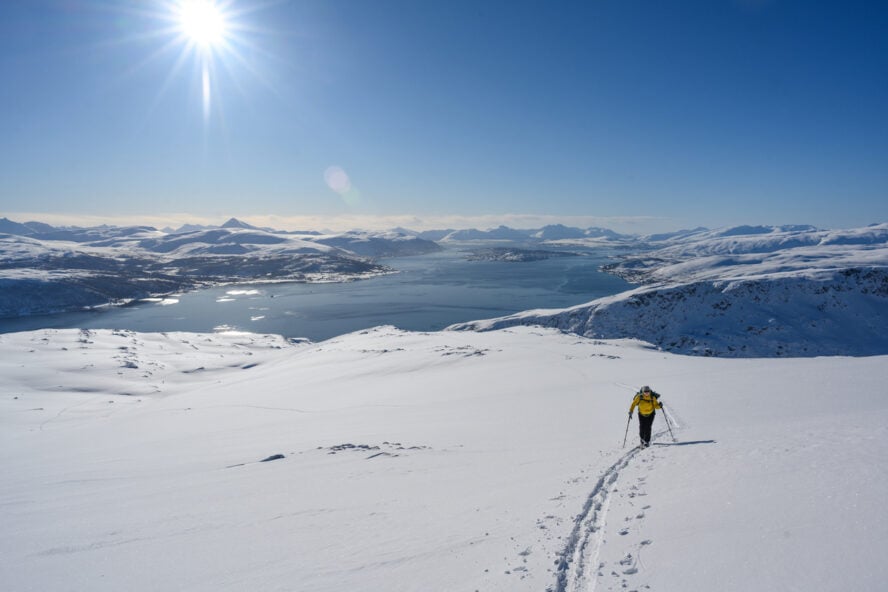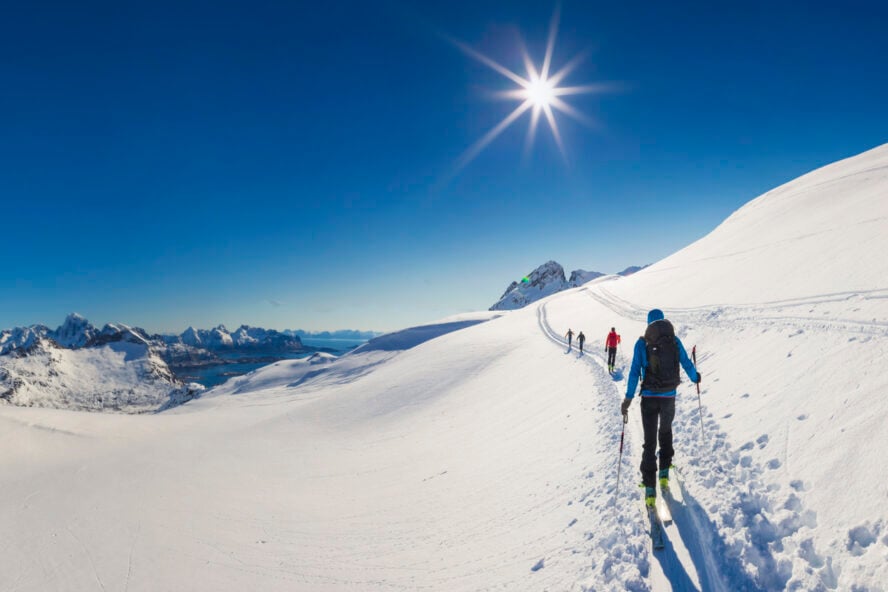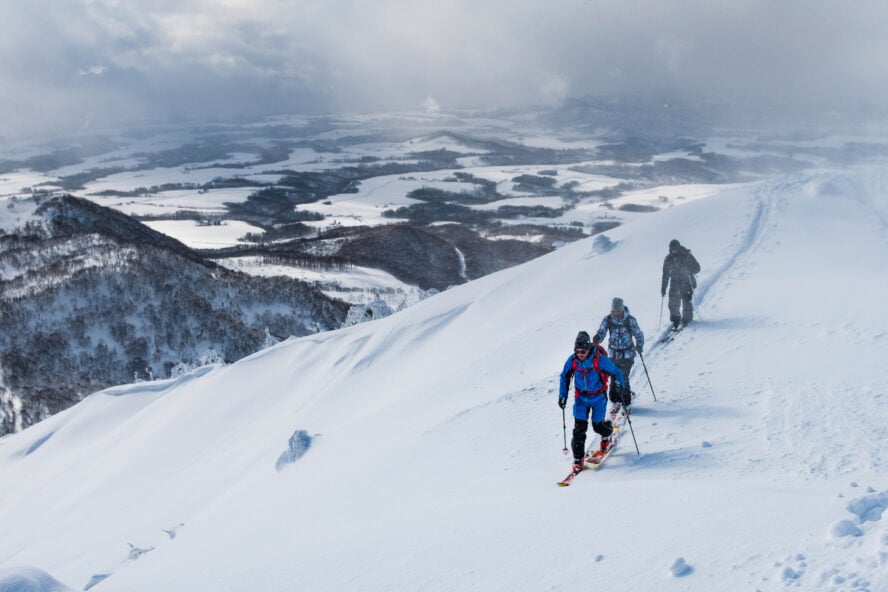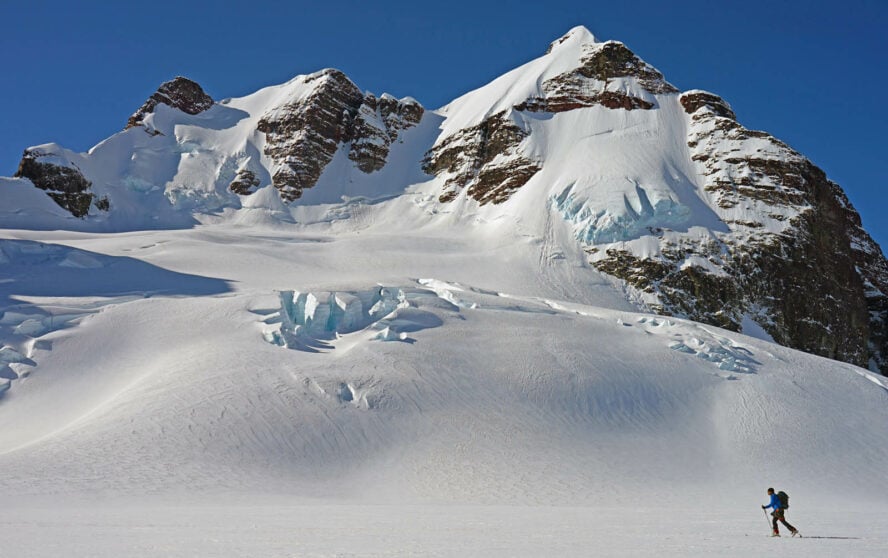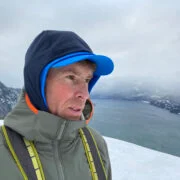
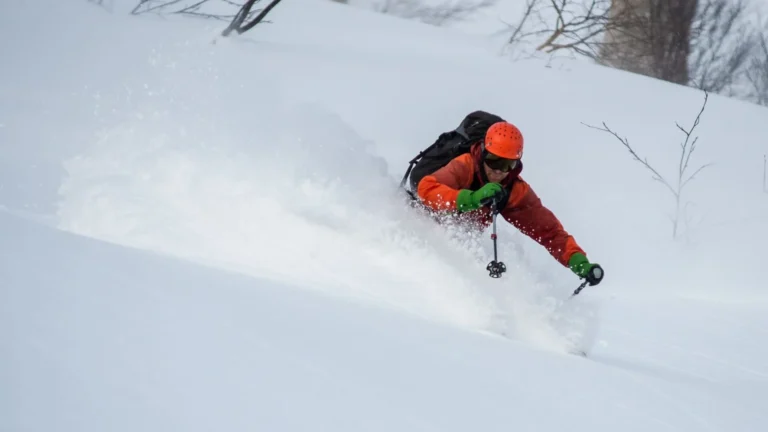
The first time I skied Japow, I thought something was wrong.
This wasn’t how coastal snow was supposed to feel. I dropped in expecting density, something you push against. Instead, I disappeared. The skis vanished. Snow rose to my chest. Each turn felt less like carving and more like being held inside a moving cloud.
That was the moment I understood why people cross an ocean for this.
I grew up in Australia, mostly on the water. Mountains came later. I moved to Canada in my early twenties, went through the full ACMG process, and built my career in complex continental snowpacks across the Rockies, the Interior, and the Coast Range. I respect those winters. They demand precision.
But every year, when the pressure maps start lining up over the Sea of Japan, I book the flight.
Because I haven’t found anything that matches Japow.
What is Japow?
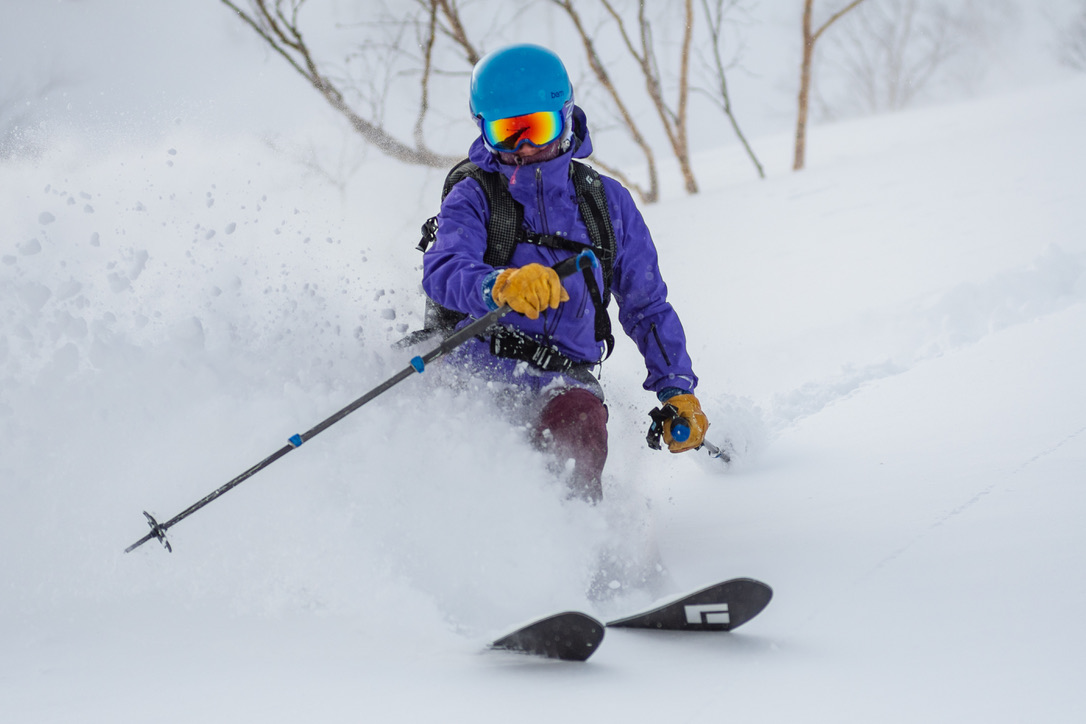
The Japow meaning is straightforward on paper. It’s simply shorthand for “Japan powder.” But in practice, it has come to represent a very specific type of snow and a very specific kind of skiing.
Japow snow is Japan’s deep, low-density powder that falls in remarkable volumes throughout the snow season in Japan. Technically, this is a coastal snow climate. Japan is surrounded by the ocean, and most coastal mountain ranges produce heavier, denser snow.
That’s what makes this so unusual.
Instead of thick maritime snow, Japan powder skiing often means floating through 100 cm (39 in) of new storm snow, skiing nearly the full depth of what fell overnight. You don’t skim the surface. You move through it. The snow rises and falls around you, and if you relax into it, it holds you up.
It changes how you ski.
Why Japow snow is so light
The reason comes down to large-scale weather.
Cold, dry air builds under a massive Arctic high-pressure system. That air flows south toward a strong low-pressure system over the North Pacific. On its way, it crosses the relatively warmer Sea of Japan, picking up moisture like a sponge.
When it reaches the Japanese Alps, the air is forced upward, cools rapidly, and unloads that moisture as snow. And it doesn’t just happen once.
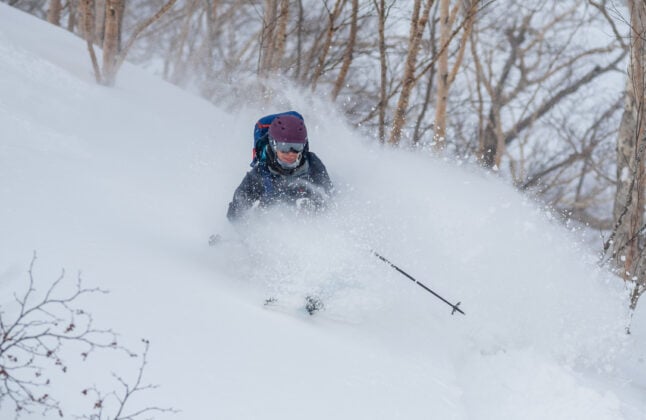
This pressure pattern can lock in for days. Sometimes weeks. I’ve seen seasons where it felt like the system barely turned off. Storm after storm, consistent delivery. It’s essentially a continental-scale snowmaking machine aimed directly at Honshu.
That’s why Japan powder has earned its reputation. It’s not just deep. It’s reliable. And it’s astonishingly low density for a maritime setting.
Why I guide Japow tours in the Japanese Alps
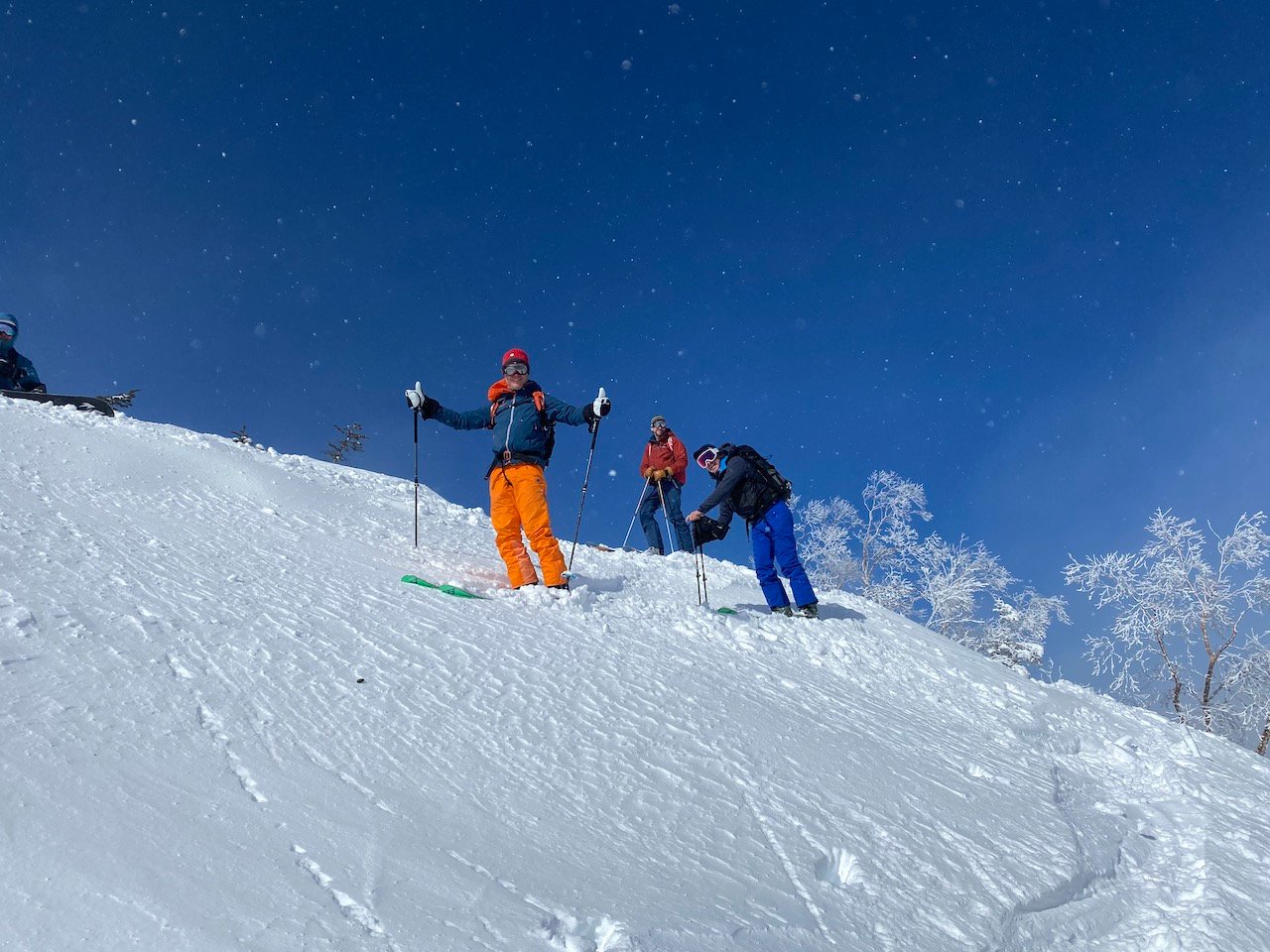
Japan has several well-known ski regions. Hokkaido gets a lot of attention, and for good reason. But I choose to guide in the Japanese Alps on Honshu, specifically in Hakuba and Myoko.
For me, terrain choice is everything.
Hakuba sits in a proper faulted mountain range running north to south. The base of Happo-One is around 750 m (2,400 ft). The upper lifts take us to about 1,835 m (6,000 ft), and from there we often continue on foot to Mount Karamatsu at 2,680 m (8,790 ft). From summit to valley floor, that’s roughly 1,920 m (6,300 ft) of relief.
That vertical matters.
Long runs allow Japow to develop a rhythm. You’re not dipping in and out of powder pockets. You’re settling into a thousand-meter descent where each turn flows into the next.
It feels expansive.
It feels complete.
No valley slogs
One of the underrated aspects of guiding here is efficiency. We use lifts to access premium terrain immediately. There’s no starting from the valley bottom and grinding upward for hours just to reach skiable slopes.
The resorts in Hakuba are relatively narrow within the overall mountain range. They avoid much of the alpine and upper transitional terrain, which leaves an enormous amount of backcountry terrain accessible just beyond their boundaries.
That allows me to adapt. If it’s storming hard, we stay lower in sheltered birch forests. If the weather clears, we step into large alpine bowls. If visibility is marginal, we ski transitional zones with defined ridgelines and tree islands for reference.
When you’re guiding, that flexibility is invaluable.
The forgotten ski boom and why it matters
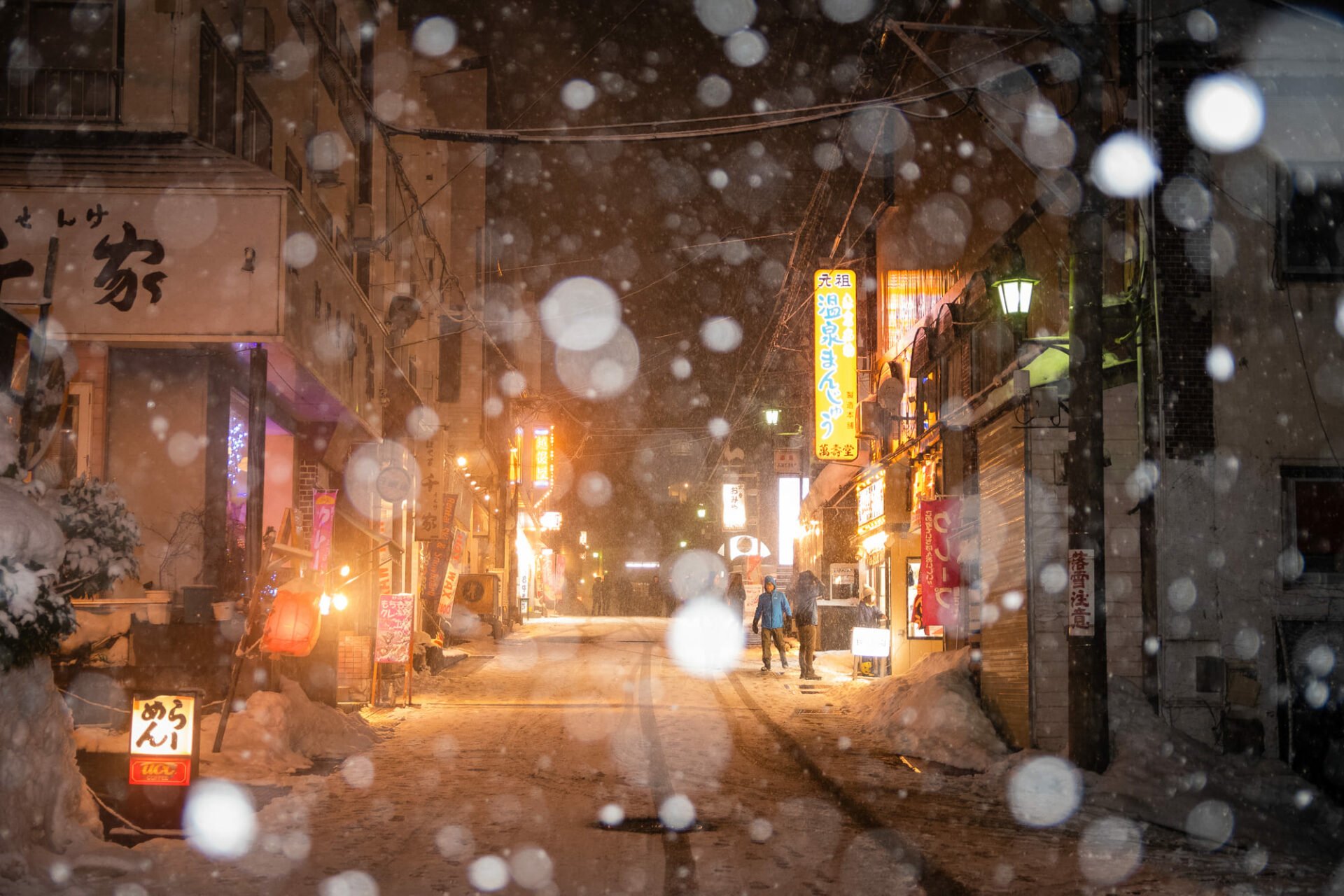
When people come to Japan for Japow, they’re often surprised by how some of the lift infrastructure looks.
You’ll see gondolas where you sit back to back. You’ll see lift stations that feel straight out of the 1980s. Occasionally, you might even spot a maintenance worker applying grease by hand to moving parts while the lift is running.
There’s a reason for that.
Japan’s 1980s ski explosion
In the 1980s, skiing in Japan absolutely exploded. It was fashionable. It was aspirational. Being seen skiing mattered. Money poured into rural mountain towns like Hakuba and Myoko. Resorts expanded quickly. Real estate developments appeared almost overnight.
Then, in the early 1990s, Japan’s economic bubble burst.
The property market collapsed, and ski culture shifted dramatically. Skiing fell out of vogue. Investment dried up. Many projects stalled or were abandoned entirely.
What that left behind is something unusual. Entire mountain valleys with significant lift infrastructure, but without the hyper-modern, overdeveloped feel you see in some Western resorts.
For backcountry skiing, that’s a gift.
The resorts remain relatively narrow within the terrain. They don’t consume the entire alpine. The upper mountain still feels wild. You step beyond the boundary rope and very quickly you’re in real terrain.
It gives Japow room to breathe.
The shape of the Japanese Alps
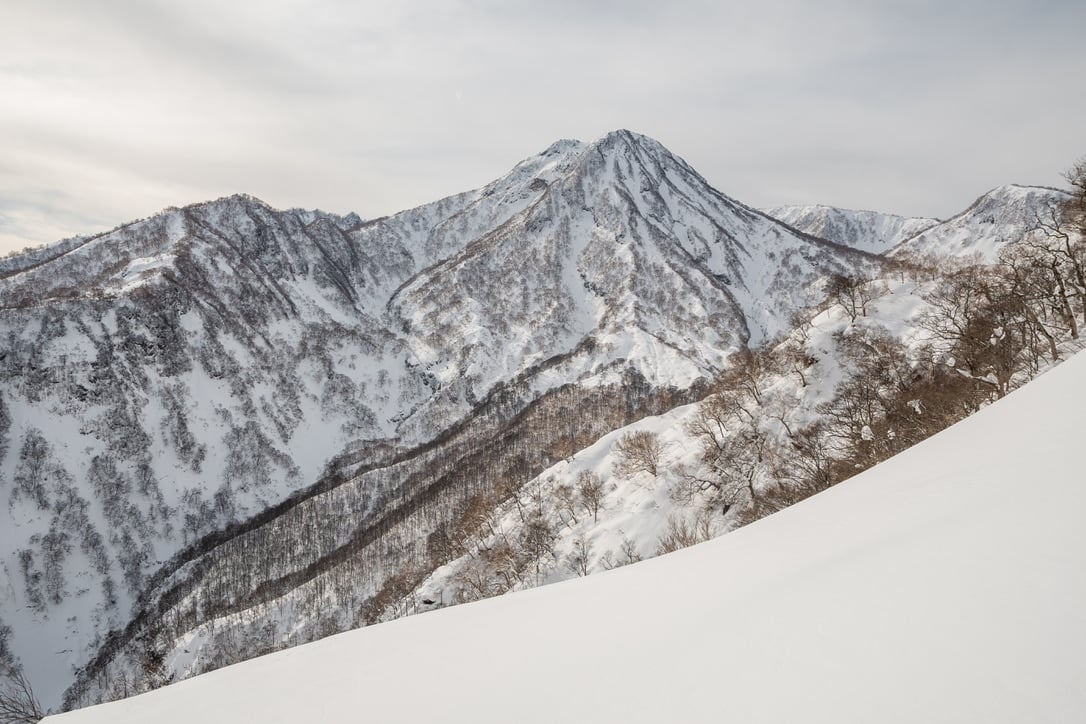
The Japanese Alps don’t feel like the glaciated ranges of western North America.
These mountains are built from highly erosive material and shaped not just by winter storms but by tropical monsoons in summer and strong spring avalanche cycles. The ridgelines branch and divide repeatedly. Geologists call them truncated spurs. On a map, they look intricate and almost chaotic.
On skis, they feel playful and complex.
You have bowls with 800 m (2,600 ft) of relief that I can often extend to 1,000 m (3,280 ft). But you also have ribs, gullies, and dividing ridges that preserve Japow beautifully when the storm is clearing. It’s not all steep and dramatic.
There’s a huge range of angles, which is important when you’re managing avalanche hazard and group ability.
Birch forests that hold snow
The forests are dominated by birch. In winter, they lose their leaves, so the snow falls cleanly to the ground. Under the trees, the quality is often just as good as in the open.
On heavy storm days, we move into these forests. The spacing is often ideal. Long sight lines. Clean lines between trunks. There’s something almost mystical about skiing Japow in falling snow through pale birch trees with grey lichen clinging to the bark.
It’s quiet. Focused. Immersive.
The snowpack difference
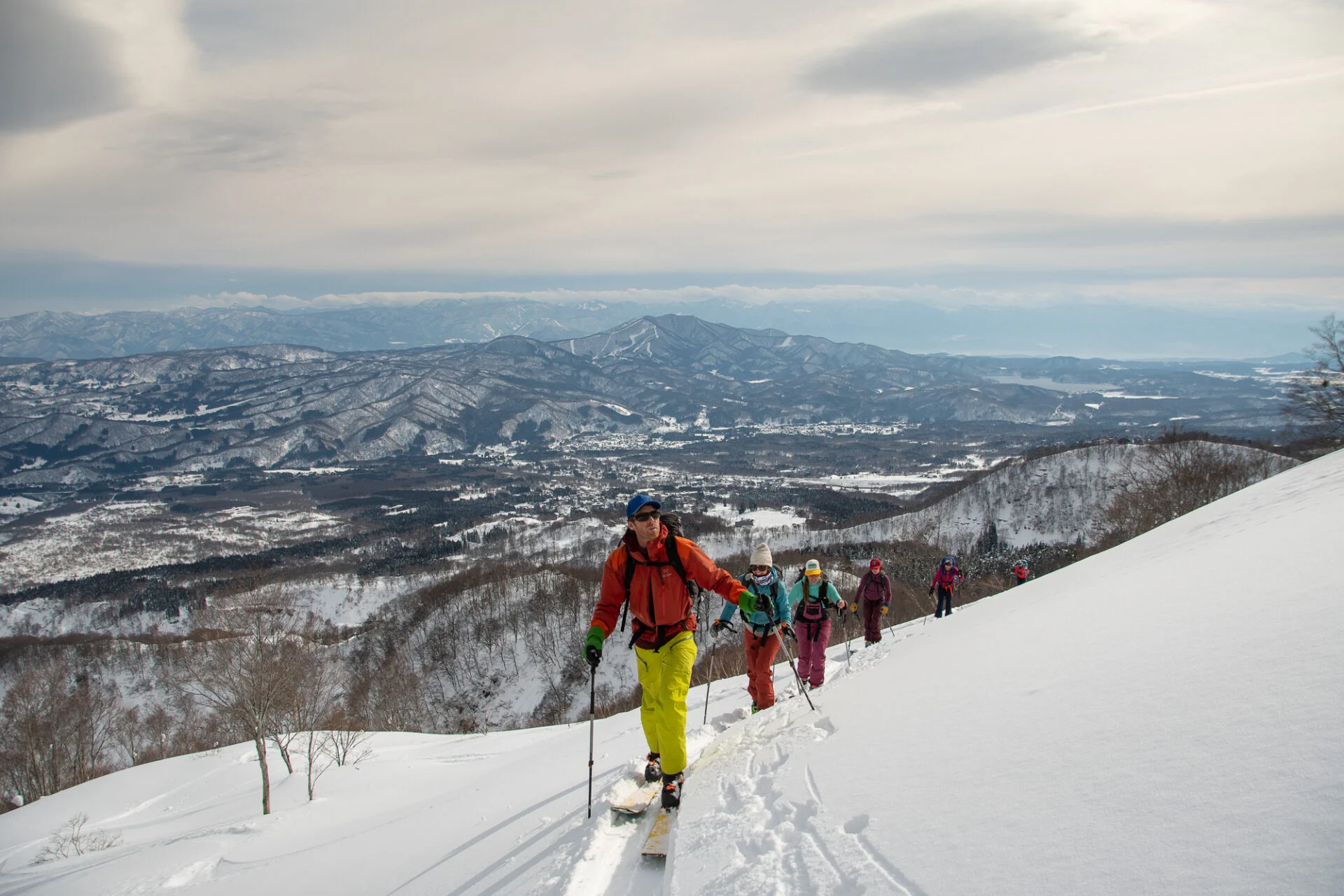
One of the reasons I enjoy guiding here so much is the character of the snowpack.
In Canada, especially in the Rockies, I spend much of the winter managing persistent weak layers. Long cold spells create faceting. Clear nights develop surface hoar. Once buried, those layers can persist for weeks and dictate terrain choices.
Japan behaves differently.
When it snows, it’s often cold, around minus 9 to minus 15°C (16 to 5°F). But the breaks between storms are usually shorter. And when high pressure settles in, temperatures often rise instead of plummeting dramatically.
That reduces widespread faceting and surface hoar formation.
Skiing steeper terrain with confidence
We still assess avalanche hazard every single day. There is no shortcut around that. But more often than not, the snowpack builds in a more uniform way, which allows us to ski steeper alpine terrain in Japow than many people expect from a maritime climate.
I remember a morning in Myoko when the alpine almost tempted us. Visibility flickered in and out, just enough to make you hopeful. We climbed partway to the crater rim, watched the cloud close in again, and turned back into the birch forest.
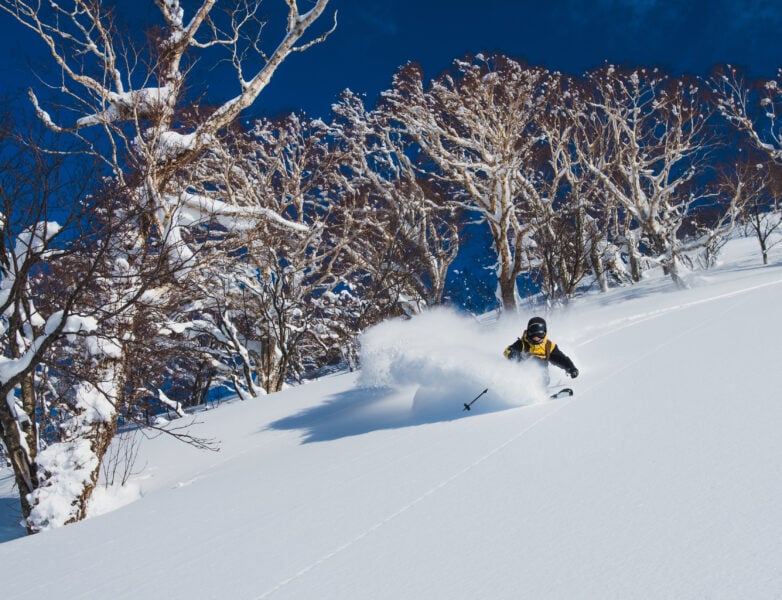
Three hours later we were skiing sheltered lines in perfect snow while the ridge above vanished completely. That’s part of guiding here too: knowing when the better run is lower.
That’s part of what makes it so compelling. You’re not tiptoeing constantly. You’re moving through terrain with intention and confidence, selecting lines that are both engaging and appropriate.
It keeps me sharp, but it also lets the skiing shine.
A day of Japow skiing in Hakuba
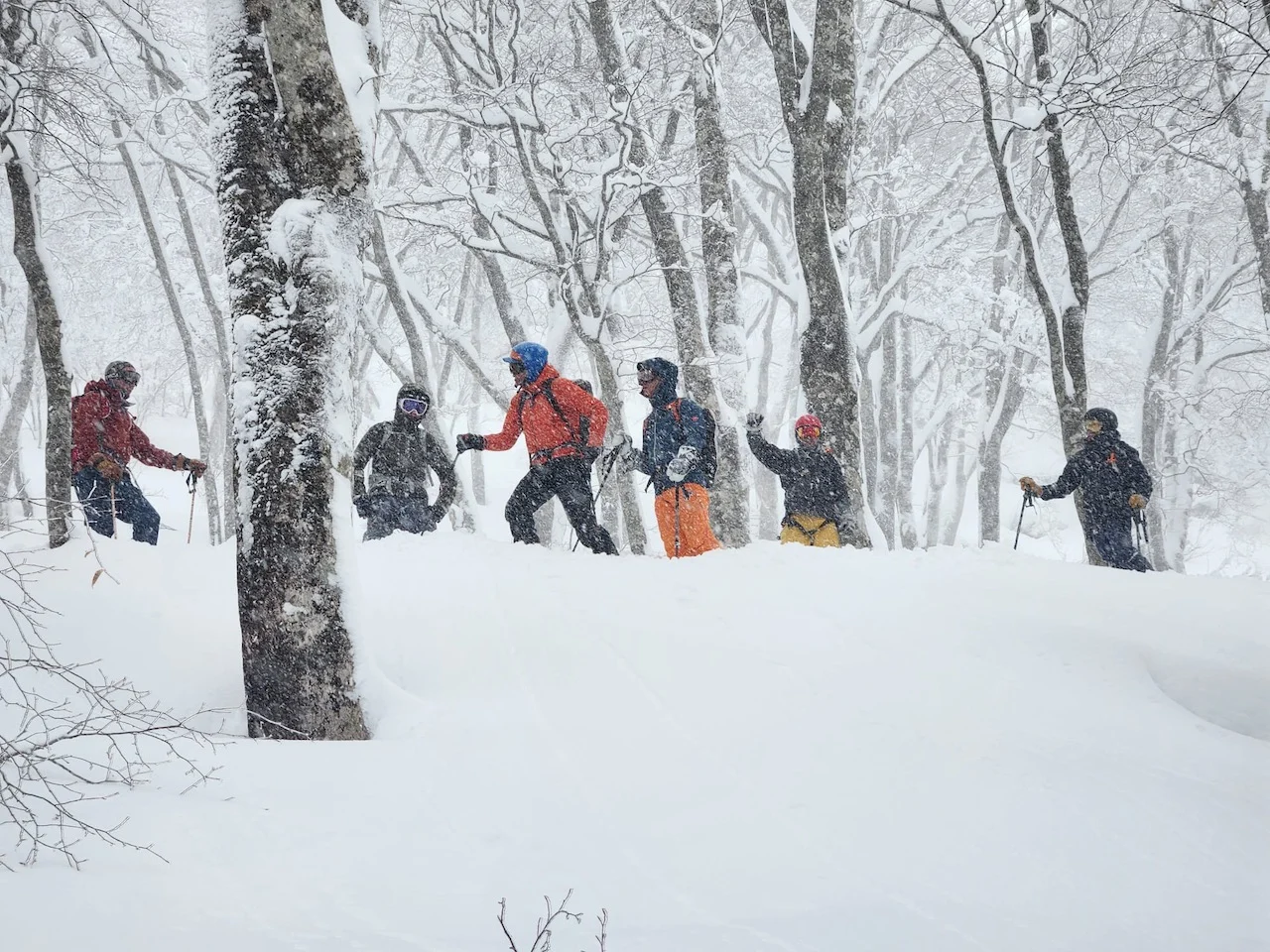
Our days typically begin in Wadano, a forested neighborhood near the base of Happo-One. We gather over coffee, and I walk everyone through the plan. How much snow fell overnight? What are the winds doing? What elevations are we targeting?
I often pull up Google Earth and show the exact ridgelines and bowls we’re aiming for. I like people to understand the terrain before we step into it.
Then we head up.
Finding rhythm in deep Japow
On storm days, we stay in the trees, skiing protected glades where Japow stacks up softly and evenly. On clearer days, we push higher into alpine bowls that feel vast and open.
The first run is usually full of laughter. Snow in the face. Goggles icing up. A bit of flailing. By the third run, something shifts. People start to relax. They stop trying to overpower the snow.
I remember one morning in Hakuba when we woke up to 90 cm (35 in) overnight. One of the guests, a strong skier back home, dropped in first and disappeared completely. All we could see was a slow-moving cloud of snow and then a muffled shout somewhere inside it.
He came up laughing, shook his head, and said, “Okay. I need to rethink everything.” By the end of the day, he wasn’t fighting the snow anymore. He was letting it lift him. That’s usually how it goes.
You learn that Japow rewards subtlety. Centered stance. Smooth transitions. Let the skis plane naturally. Let the snow carry you.
When that clicks, it’s hard to wipe the grin off your face.
Mount Myoko: volcanic terrain and deeper snow
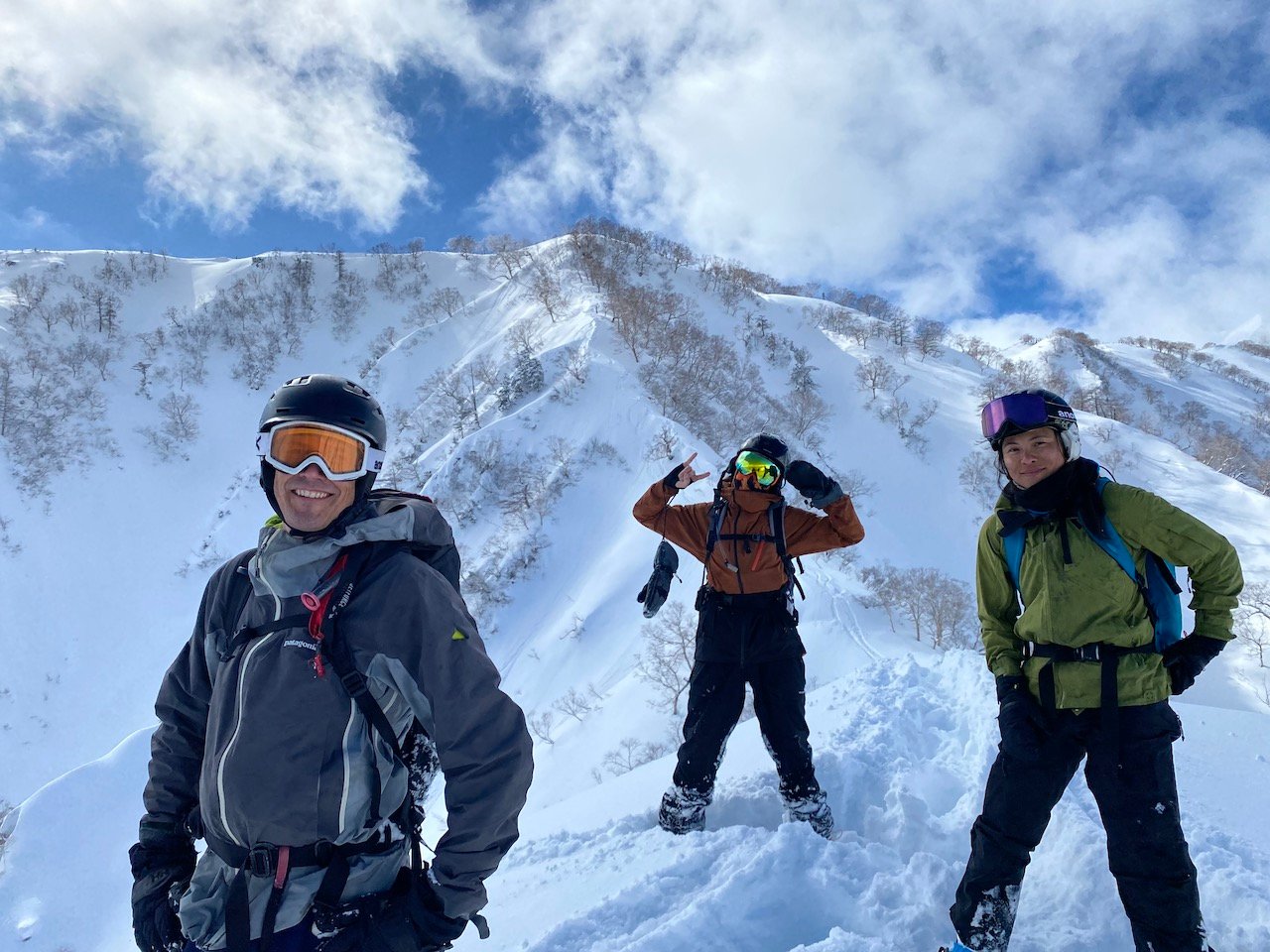
After Hakuba, we often move to Mount Myoko. It’s an active stratovolcano closer to the Sea of Japan, slightly colder than Hakuba, and it receives roughly 30 percent more snowfall over the season.
The summit is around 2,400 m (7,870 ft). The base is near 700 m (2,300 ft), giving about 1,700 m (5,575 ft) of relief. But the terrain character is distinct. There’s a defined crater rim, a central plug, and a caldera that fills beautifully with Japow during storm cycles.
The town of Akakura feels quieter than Hakuba. There are still signs of the 1990s property collapse from when Japan’s ski boom ended abruptly. Some buildings feel frozen in time. I find that part of the charm. It feels more like a lived-in Japanese town than an international resort.
From lift to caldera to Japow
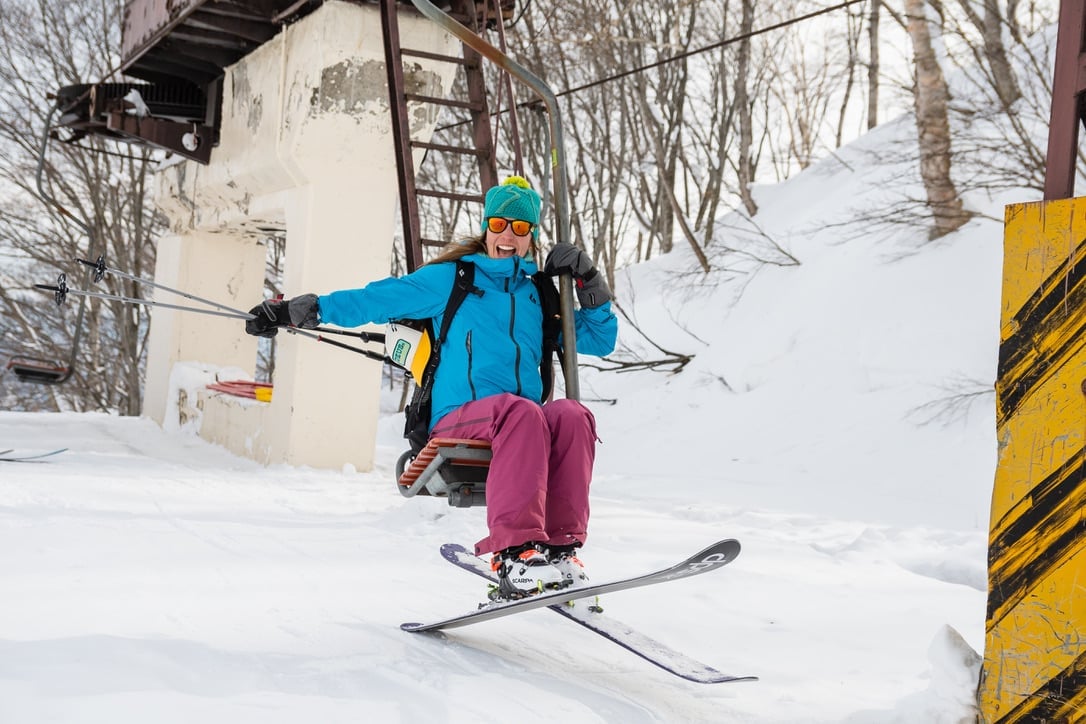
Some mornings we ride an old single chair I jokingly call the pizza box. It rattles up the slope slowly, giving you time to take in the snowbanks that can tower overhead.
From the lift, we skin toward the crater rim. Depending on conditions, we might manage small cornices before dropping into steep lines inside the caldera. On good days, the snow quality is exceptional.
If visibility allows, we continue to the summit cone. From up there, you can sometimes see the Hakuba range on the horizon, serrated and dominant.
When storms intensify, we retreat into dense birch forests. The skiing remains playful and immersive, even when visibility narrows.
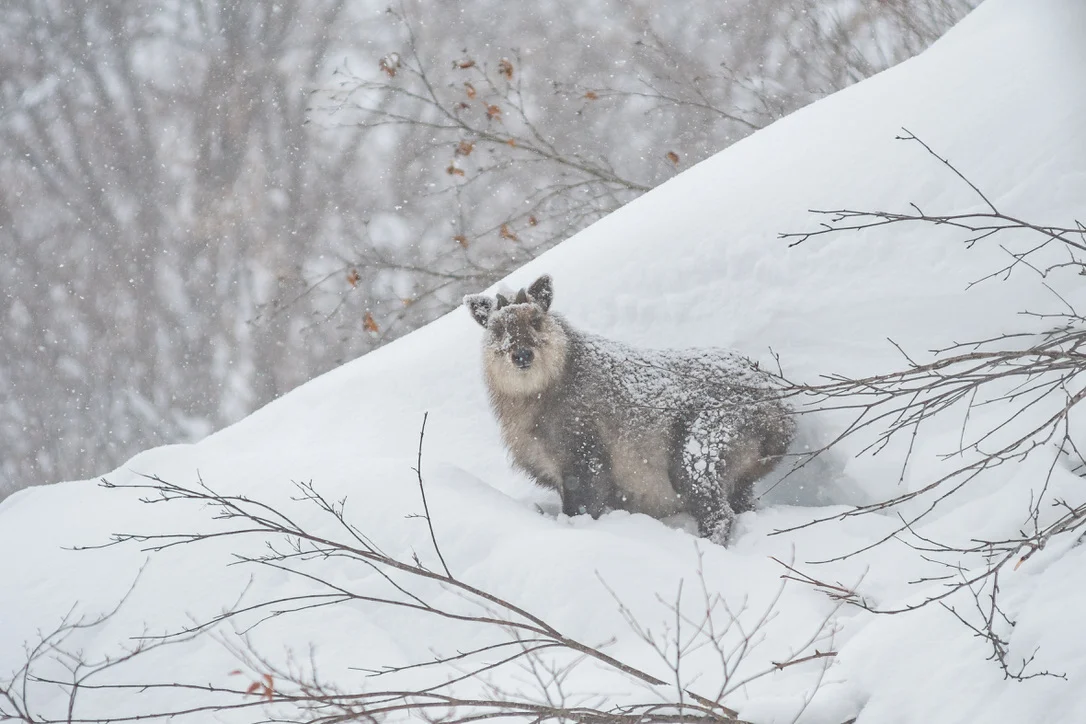
And occasionally, we stop and find ourselves face to face with a Japanese serow, standing calmly in snow deep enough to swallow a human. We stare at each other for a while. Then it turns and disappears into the trees.
Moments like that are part of the experience.
Hakuba versus Myoko: why I guide both
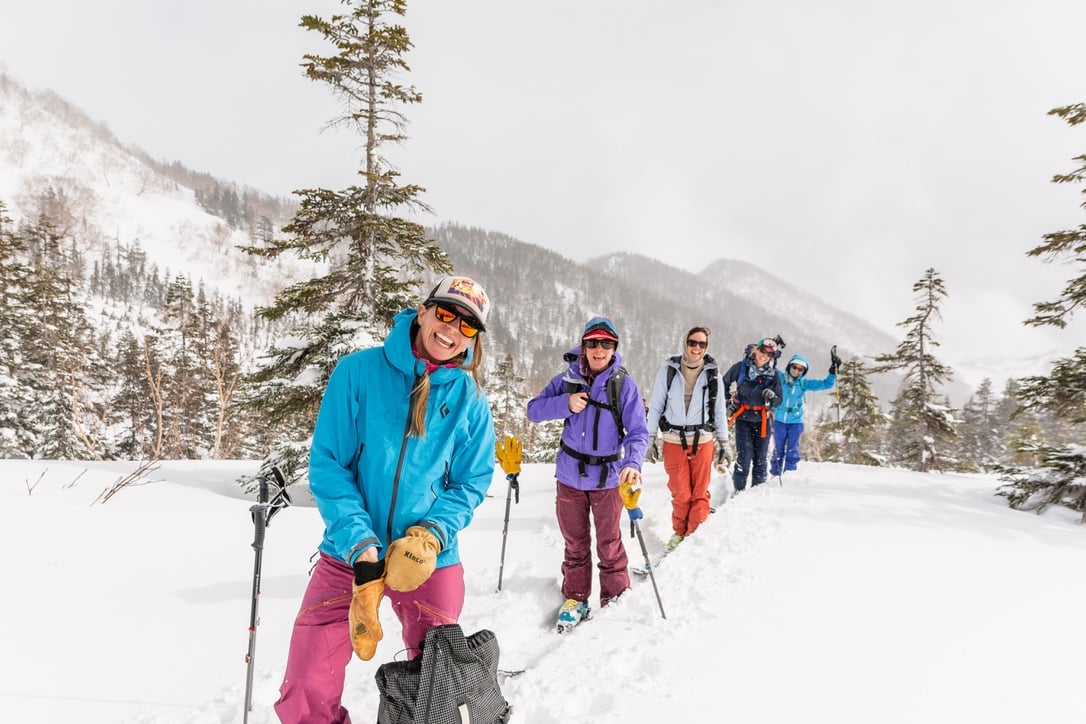
People often ask me which I prefer: Hakuba or Myoko.
The honest answer is that I like the contrast.
Hakuba feels bigger. The ridgelines are more dramatic. The alpine terrain stretches further, and on clear days you can move through large bowls and extended ridges with serious vertical relief.
Myoko feels more intimate.
It’s closer to the Sea of Japan. It receives about 30 percent more snow. The storm cycles can feel even more intense.
The town of Akakura is quieter, less international. You see kids taking ski lessons. You pass older buildings that hint at the 90s property collapse. It feels more embedded in everyday Japanese life.
Lodge-to-lodge rhythm
In Hakuba, we stay in Wadano, tucked into a forested area near the base of Happo-One. It’s modern Japanese style, lots of timber, clean lines, comfortable shared spaces.
In Myoko, the lodge has large west-facing windows looking toward the summit. In the morning, the mountain is right there. The day begins with a briefing in the living room, coffee in hand, snow totals on the table.
Then we step out into streets lined with towering snowbanks and head toward the lifts.
Guiding both areas back to back gives the trip rhythm. Bigger alpine days in Hakuba. Deeper, stormier forest days in Myoko. Volcanic terrain one day. Faulted ridgelines the next.
It keeps the experience dynamic.
And by the time the trip finishes, most people realize they don’t want to choose between them either.
Beyond Japow skiing
After a full day of Japow, there’s nothing quite like an onsen (hot spring).
In Myoko, the hot water comes directly from thermal vents on the mountain. It’s piped through the town and even used to melt snow in streets and parking areas. Sitting in an outdoor bath while snow falls gently around you is one of the most restorative rituals I know.
It resets the body for the next day.
Culture and connection
The cultural immersion is part of what makes these trips special. From the moment you land in Tokyo, maybe wander through a neighborhood on a casual Japan walking tour to shake off the flight, and then step onto the Shinkansen racing toward the mountains at nearly 300 km/h (186 mph), you feel that you are somewhere distinct.
Japanese culture values mastery, politeness, and attention to detail.
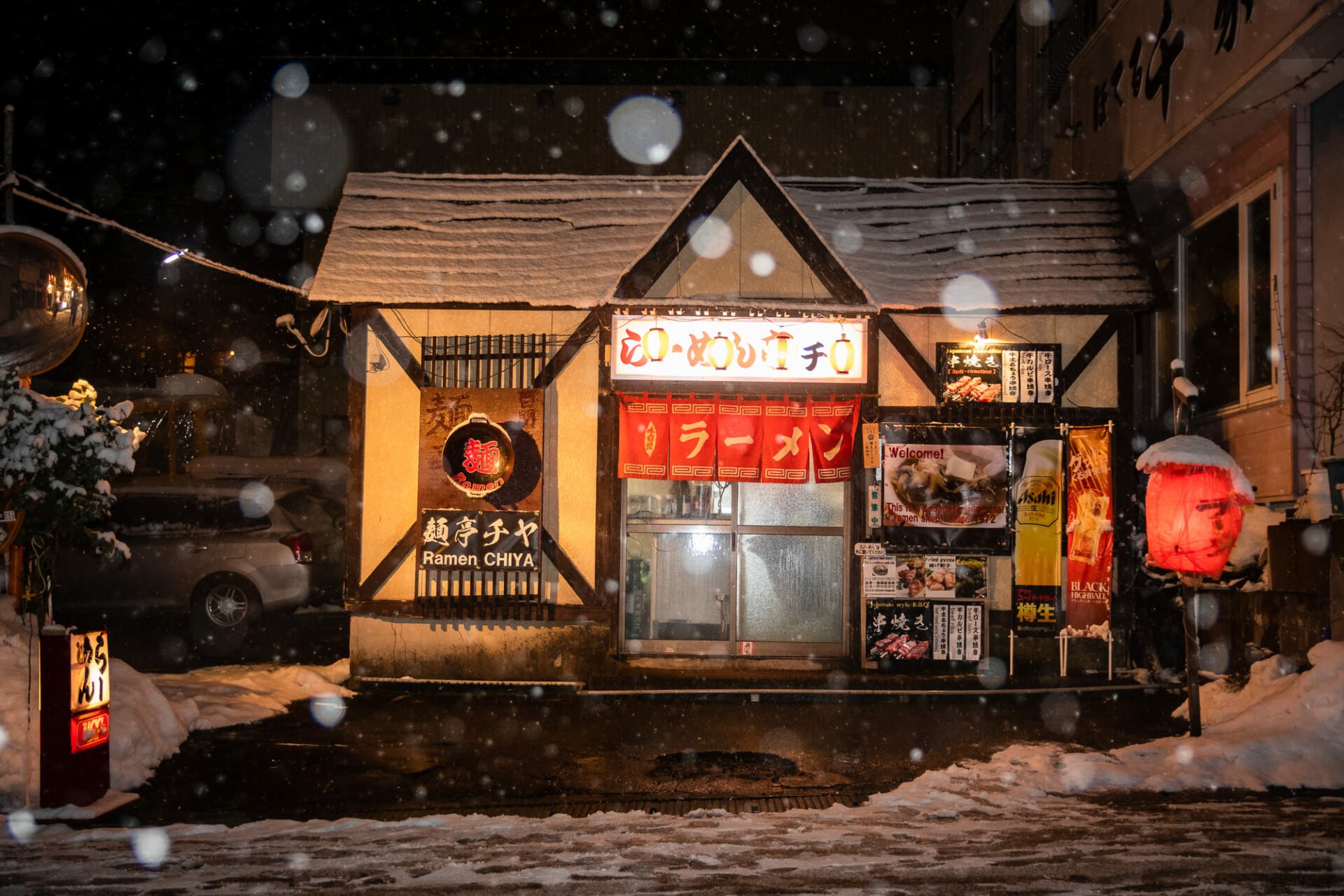
You see it in small ramen shops where one person has been perfecting the same broth for decades. You see it when lift operators bow as chairs pass through the terminal. You see it on the Shinkansen platform where everything runs on time down to the minute, even in the middle of a snowstorm.
There’s a quiet precision to daily life here that mirrors the mountains.
Groups often become almost giddy over the course of the trip. Part of it is skiing deep Japow day after day. Part of it is navigating a place where something new waits around every corner. And part of it is simply spending focused time together in the mountains.
Some places just work
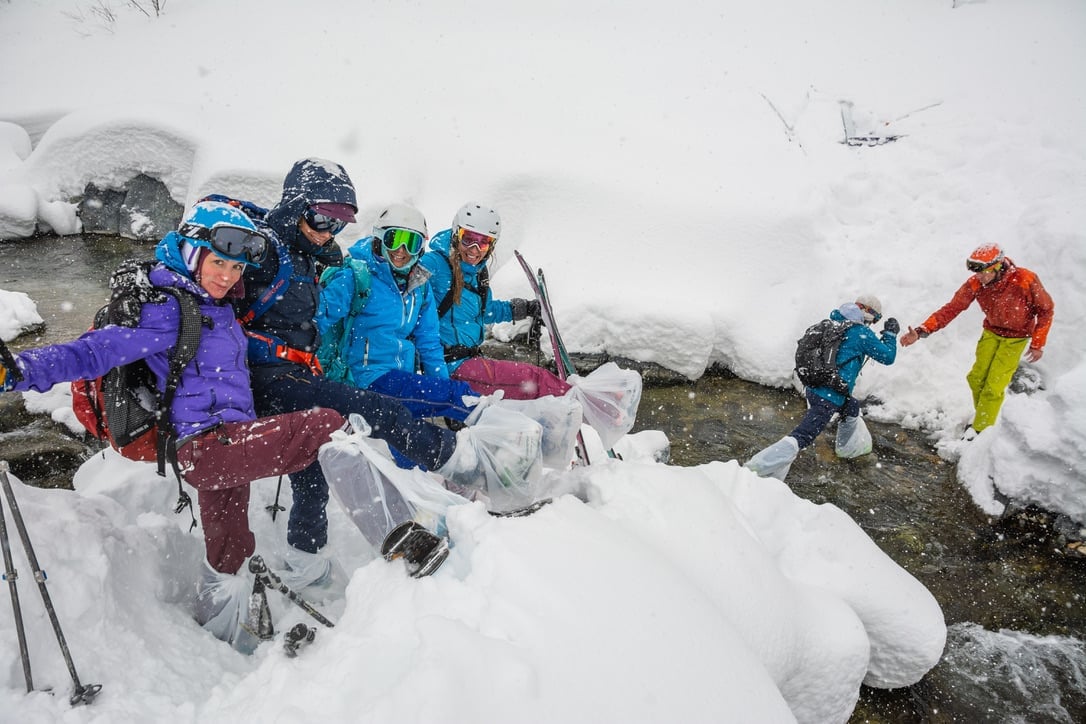
By the end of the trip, something changes.
Turns get smoother. There’s less fighting, less forcing. Deep snow stops feeling like a problem to solve and starts feeling like something you get to play inside.
After a few days of real Japow, you can see it — people relax. They trust the float. They stop trying to carve trenches through 100 cm (39 in) of fresh and let the skis do what they’re designed to do.
Hakuba’s long alpine bowls teach flow. Myoko’s caldera lines demand a bit of nerve. The birch forests reward patience when it’s dumping sideways and visibility shrinks to twenty meters. Stack enough of those days together and you come out the other side skiing differently.
And that’s why I love it.
Because Japow isn’t just about snow totals. It’s about a storm engine that rarely switches off, mountains positioned perfectly to catch it, lifts that drop you into meaningful terrain, and evenings that end in hot water while snow keeps falling.
Storm, ski, soak, repeat. It’s a simple rhythm, and it works.
Every winter, I watch the forecasts line up over the Sea of Japan and tell myself I don’t need another trip.
And then it snows again.
The storms are lining up, and I’d rather guide you through it than tell you about it.