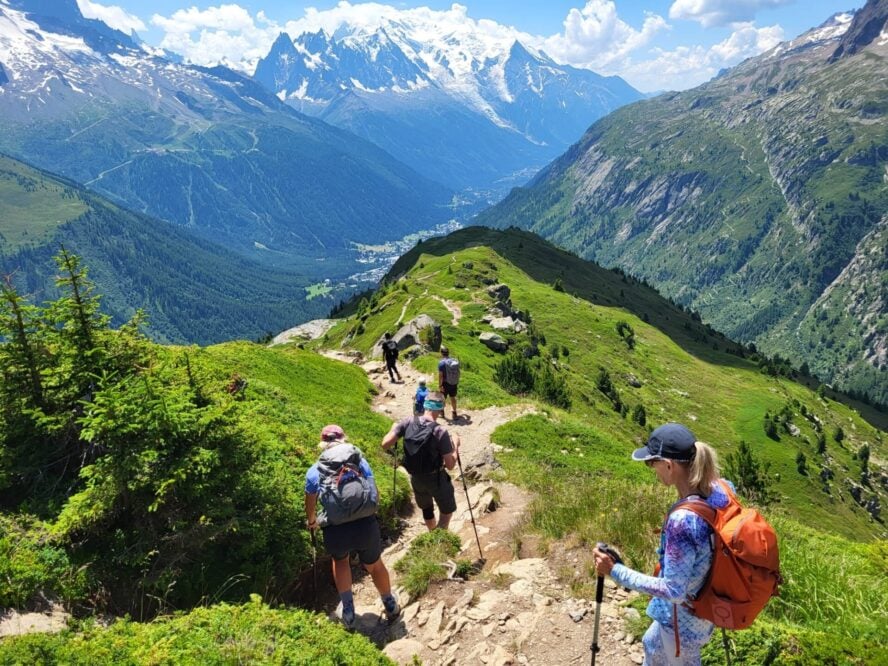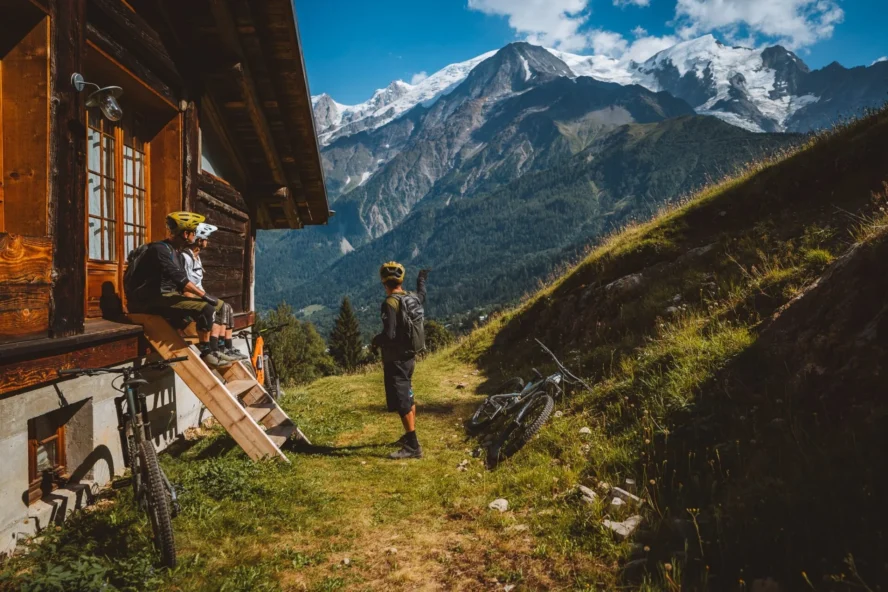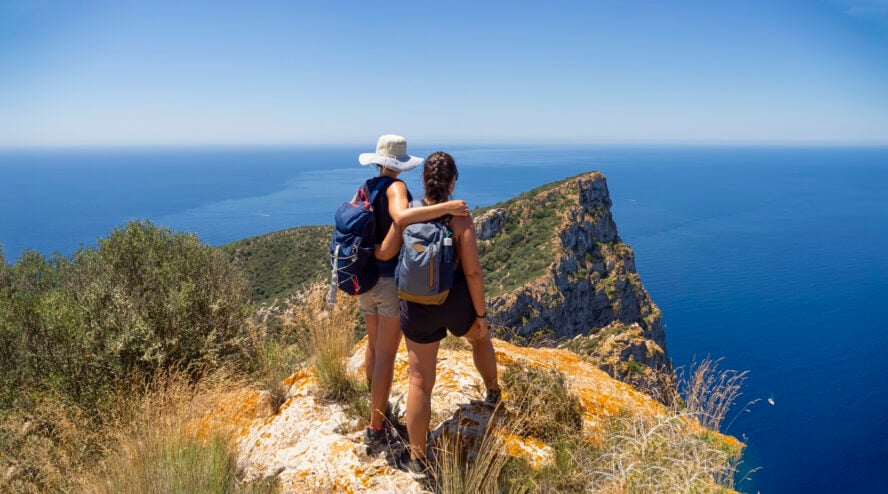

The first time you step into Chamonix, you feel small. Not in a bad way, but in a way that makes you lift your head and go quiet for a second. That is often how we begin hiking Chamonix, with a pause before the first step.
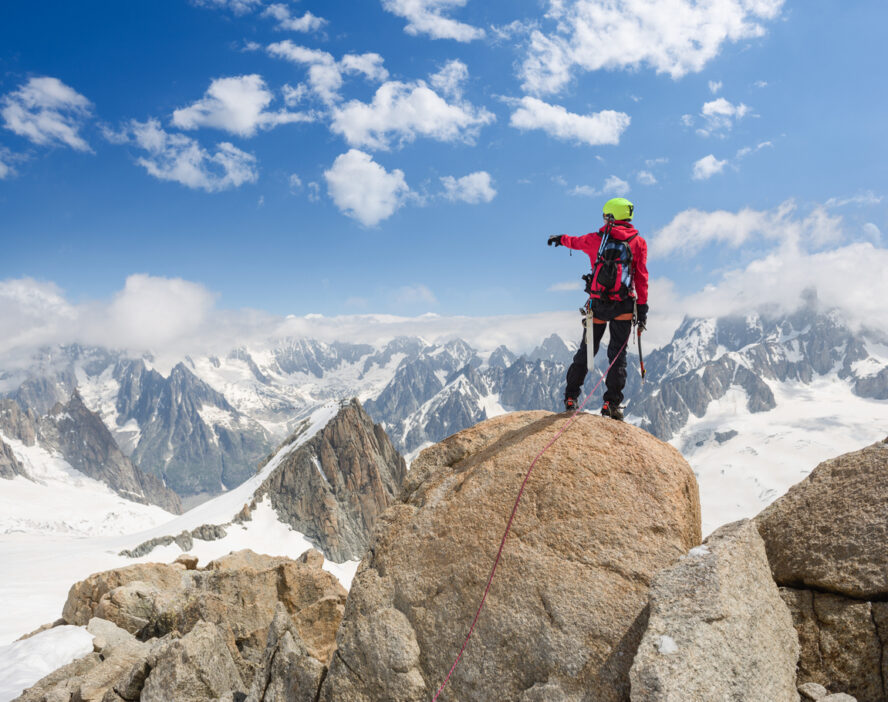
Mont Blanc rises straight above the valley, 15,774 ft (4,808 m) of rock, ice, and weather shaping everything around it. Glaciers spill down from the peaks. Needles of granite cut into the sky. And somehow, this is just an ordinary day here.
I’ve been guiding in this valley since 2004. I’ve traveled across Europe, crossed ranges in Scotland and the French Alps, but when I arrived in Chamonix, I knew I had found a place that doesn’t finish revealing itself. Every season shifts the light. Every trail changes the perspective.
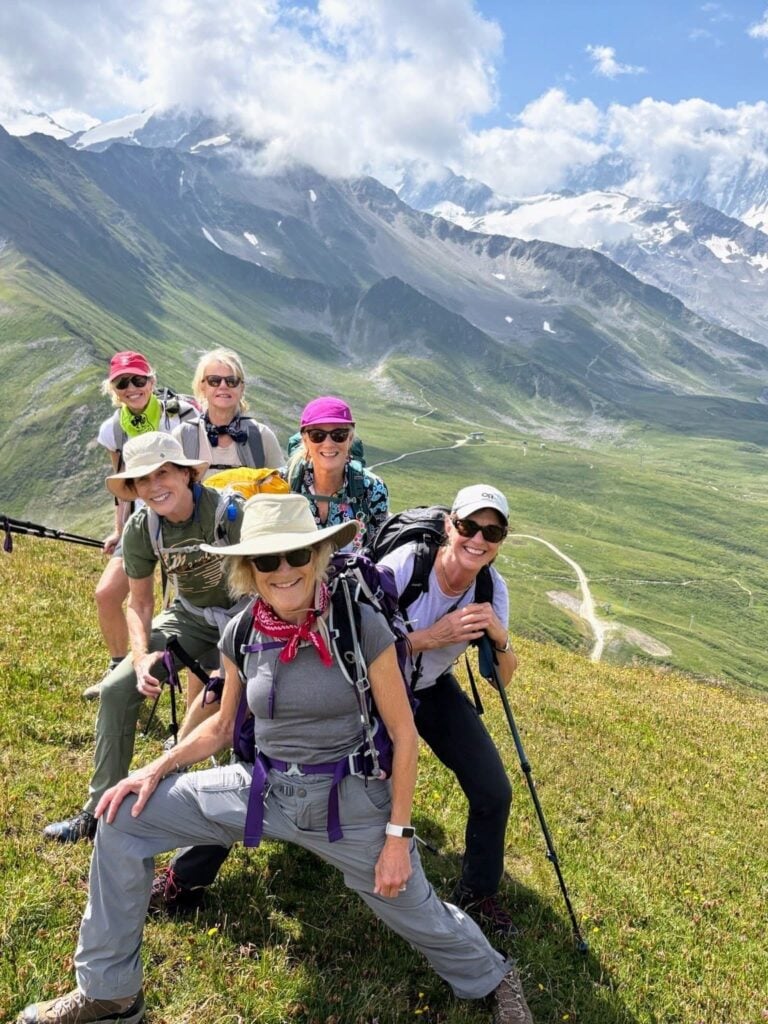
And when we hike as an all-women group, something shifts. Barriers fall away. Confidence grows. The mountains feel different.
There’s a reason women leave this valley taller than when they arrived, and it has nothing to do with altitude.
At the foot of Mont Blanc
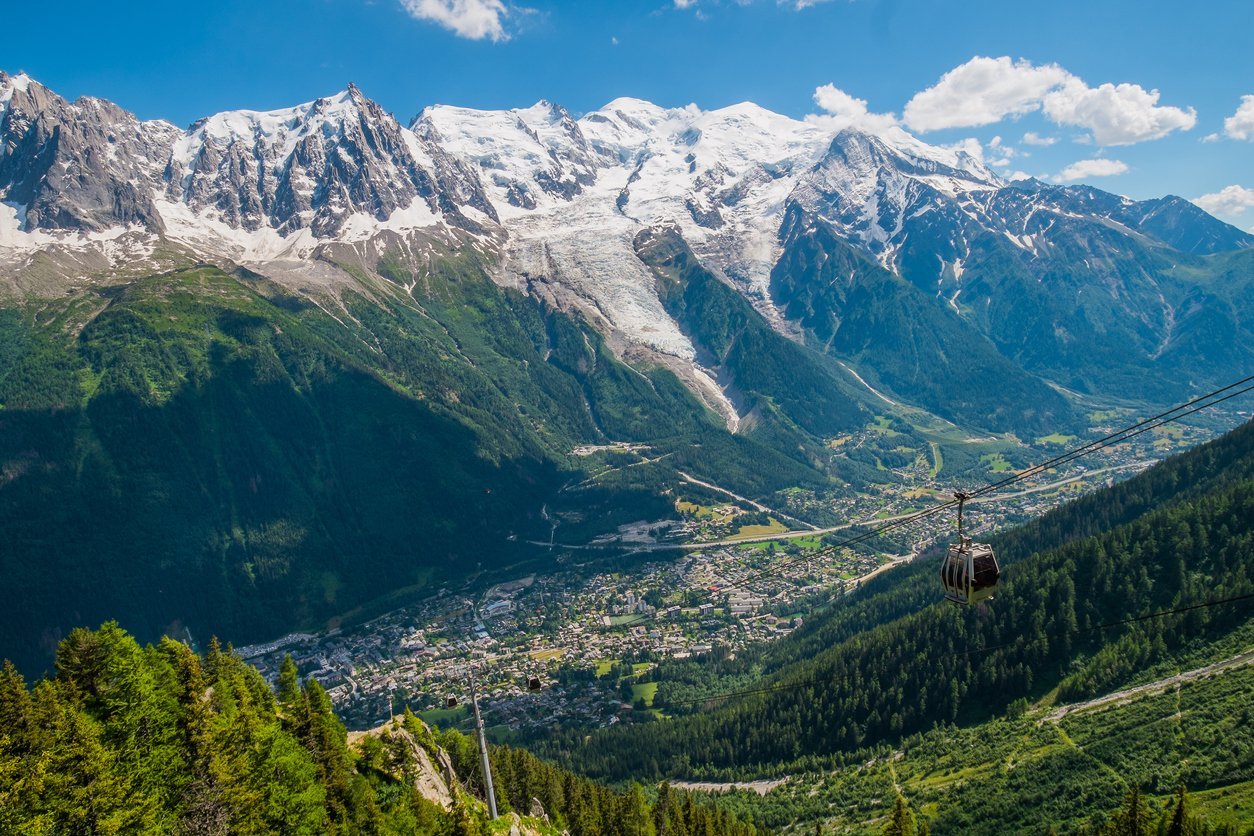
Chamonix sits in the Haute-Savoie region in southeastern France, about one hour from Geneva Airport. Italy is 45 minutes away through the Mont Blanc Tunnel. Switzerland is just as close. In one week of hiking Chamonix, we stand in three countries.
The valley is bordered by the Mont Blanc massif on one side and the Aiguilles Rouges on the other. When I guide, I always point things out. “Two days ago, we were there,” I’ll say, tracing a line across the skyline.
I love showing how everything connects. If you look at a Chamonix hiking map or even a detailed Chamonix trail map, you start to see how tightly everything is woven together.
We have around 350 km (217 mi) of marked trails here. I’ve walked nearly all of them. The network of Chamonix hiking trails stretches from valley floor forests to high alpine balconies. You could spend years exploring and still find something new.
That’s what makes hiking Chamonix so special. The variety. The scale. The constant shift in perspective.
Why an all-women hiking Chamonix trip changes the experience
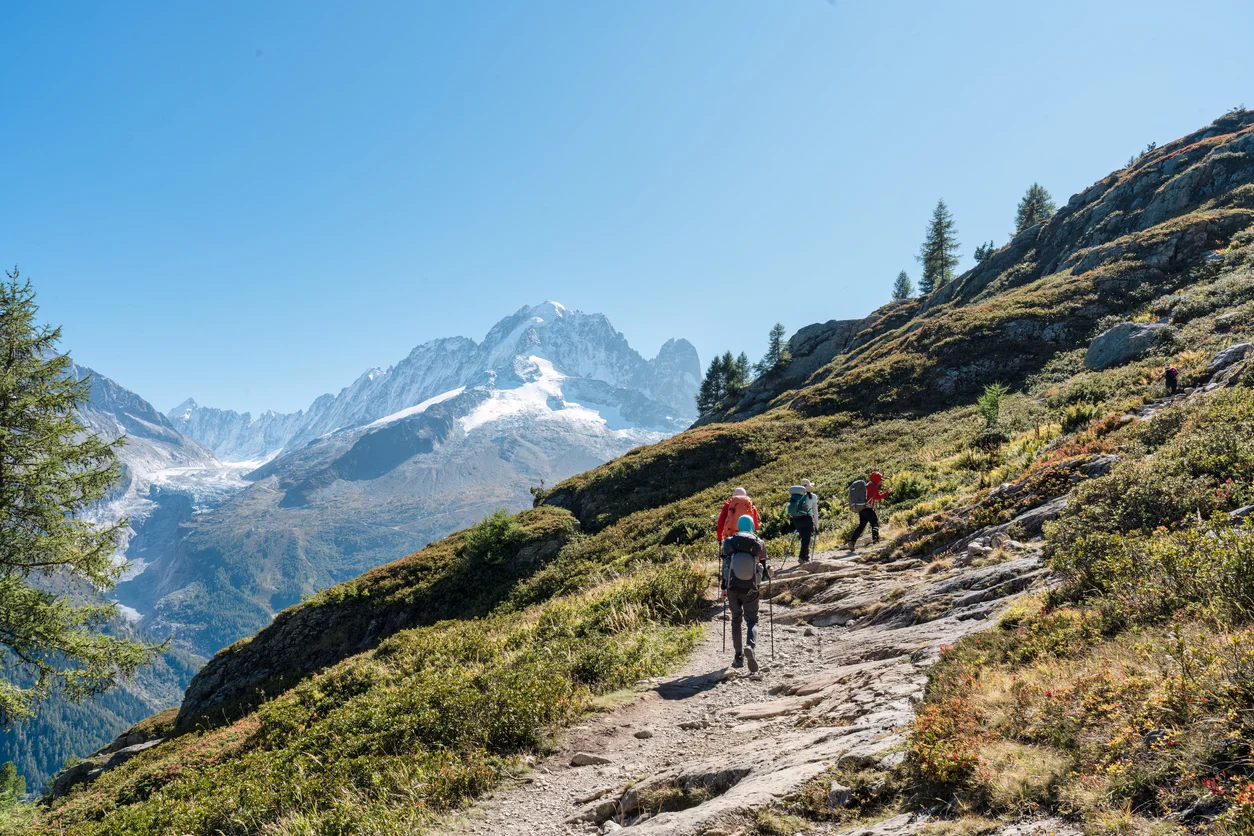
For years, I guided mixed groups. Two years ago, I began leading women-only trips. I didn’t expect it to feel so different. But it does.
There’s an ease. A natural cohesion. I often see women encouraging each other without hesitation. If someone feels unsure on rocky terrain, another is right there. If someone doubts her fitness, by the end of the week she’s smiling on a summit.
I’ve watched women who hadn’t hiked in years complete glacier travel with crampons. That’s a huge joy for me.
Hiking Chamonix in a women’s group becomes more than a physical journey. It becomes a shared progression. Each day builds confidence for the next.
What are the best hiking trails in Chamonix?
I am asked this question all the time. The honest answer is that it depends on what you are looking for. Scenic reflections. Balcony traverses. Glacier immersion. Wildlife encounters. Chamonix hikes offer all of that.
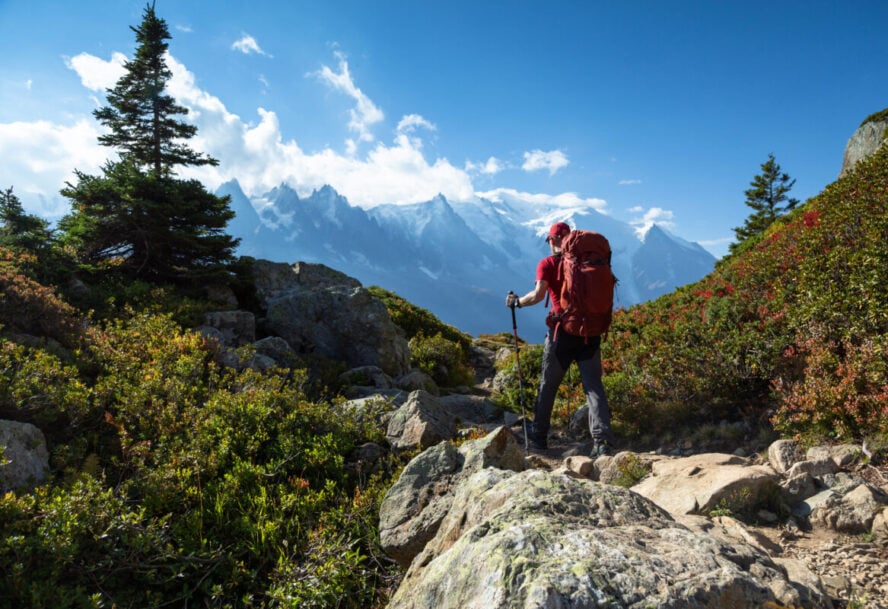
For panoramic views of Mont Blanc, Lac Blanc is often considered one of the best hikes in Chamonix. The reflection of the massif in the lake, especially in clear morning light, is unforgettable. There are multiple route options, which allows me to adapt the day to the level of the group.
For a classic traverse with dramatic exposure to the south face of Mont Blanc, the balcony section toward Refugio Bonatti in Italy is outstanding. It is part of the Tour du Mont Blanc, and it gives you that feeling of moving through big alpine terrain without committing to a full multi-day circuit.
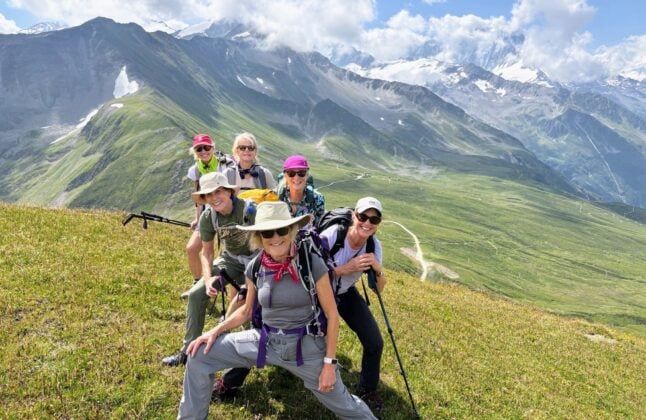
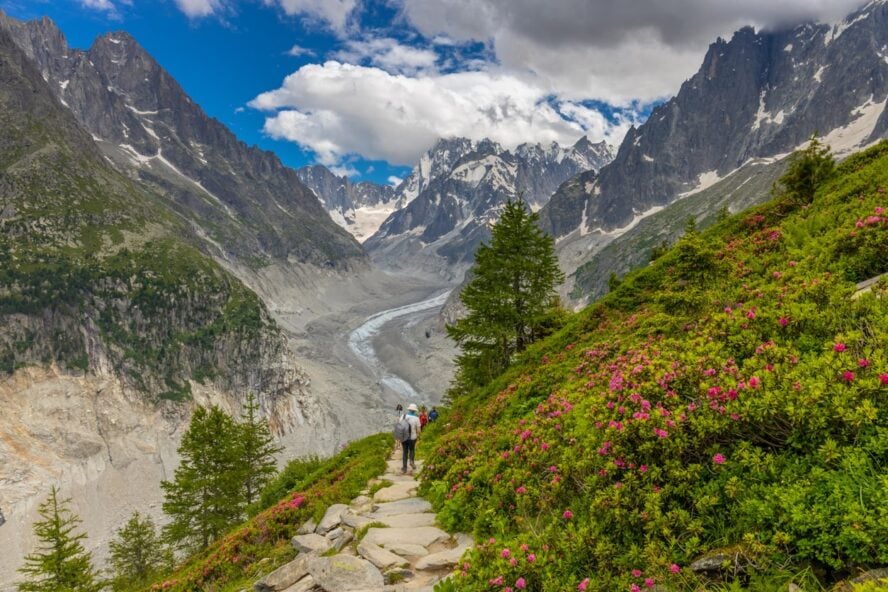
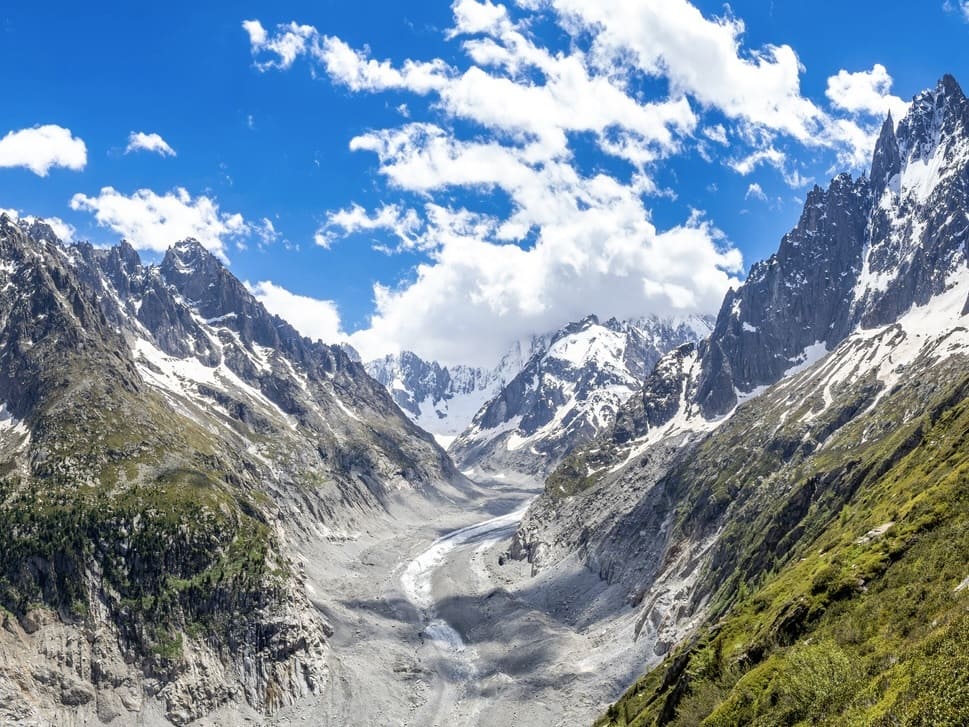
If you want something truly unique, walking on the Mer de Glace is exceptional. It is not just one of the most memorable hiking Chamonix experiences, it is also a way to understand the glacier landscape that defines the valley.
And then there are quieter trails, like my preferred variation toward Lac Blanc, where we often see ibex and avoid the busiest sections. Those are the ones I do not always mark clearly on a public Chamonix hiking map, because local knowledge matters.
The beauty of hiking Chamonix is that you can combine iconic viewpoints with hidden corners in a single week.
The best hiking Chamonix experiences, day by day
Day 1: Les Posettes and our first 360° view
Our first hike is an introduction. We drive about 20 minutes, take a lift, and begin walking toward Les Posettes.
It’s about 5.5 miles (9 km) with moderate elevation gain. A gentle start. Alpine meadows. Cowbells. Wide-open views.
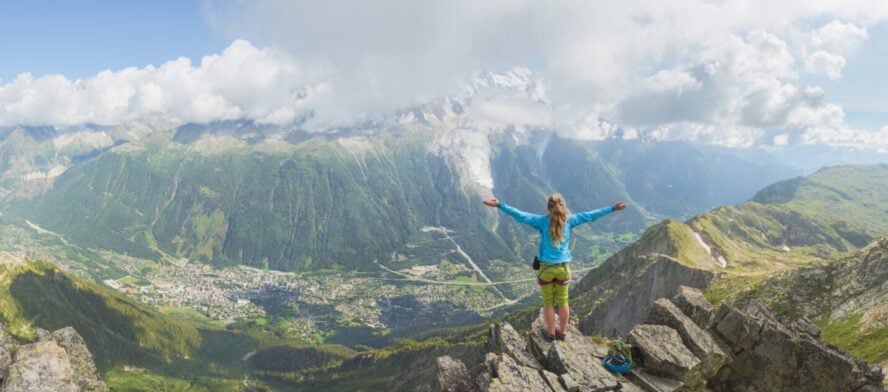
From the summit, we have a 360° panorama of the Chamonix Valley and across to Switzerland. I often say, “Look carefully. You’ll recognize this later.” Throughout the week, we’ll see these peaks again from new angles.
This first day sets the tone. We walk together. We find our rhythm. We cross the France–Switzerland border just for fun photos. It’s lighthearted, but it matters. The group begins to gel.
Day 2: Balcony hiking in Italy and Refugio Bonatti
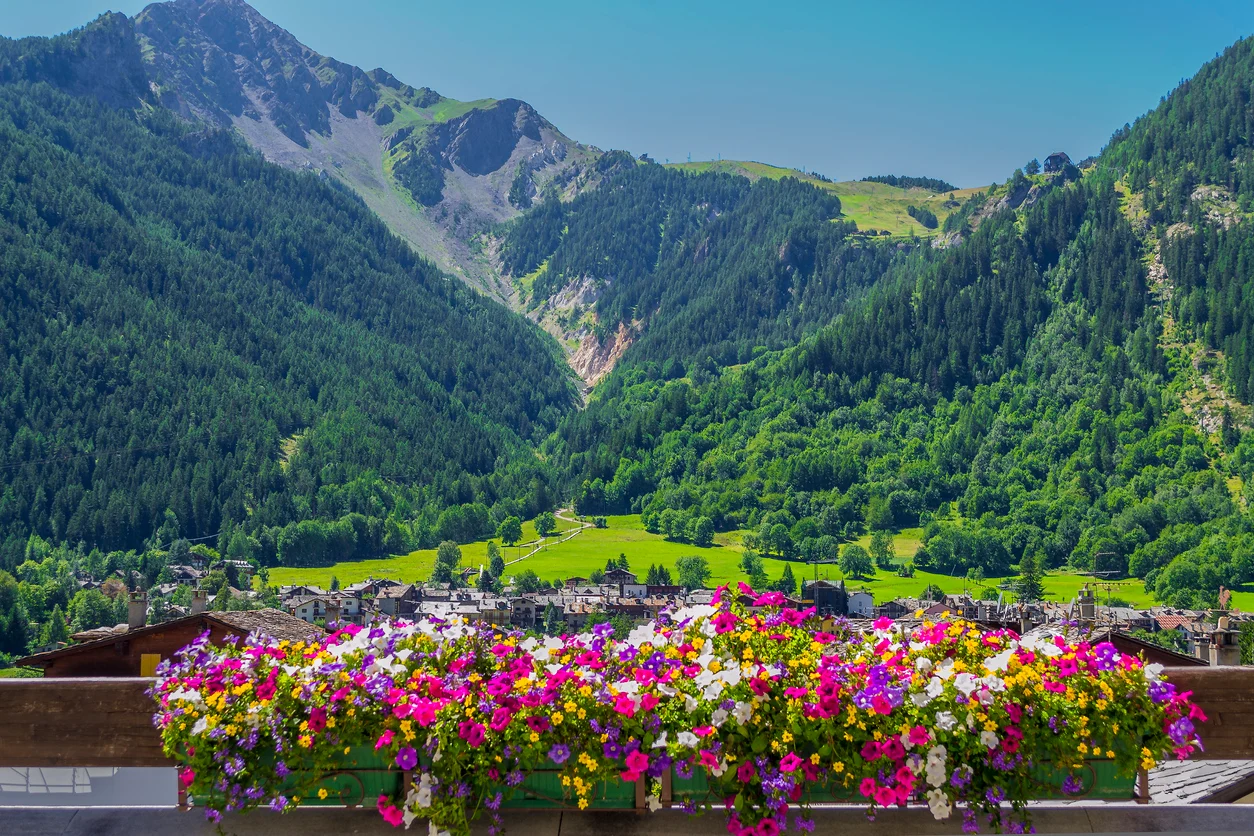
The next day, we drive through the Mont Blanc Tunnel into Italy’s Val Ferret. Suddenly, Mont Blanc looks completely different. The south face rises in a more severe, dramatic form.
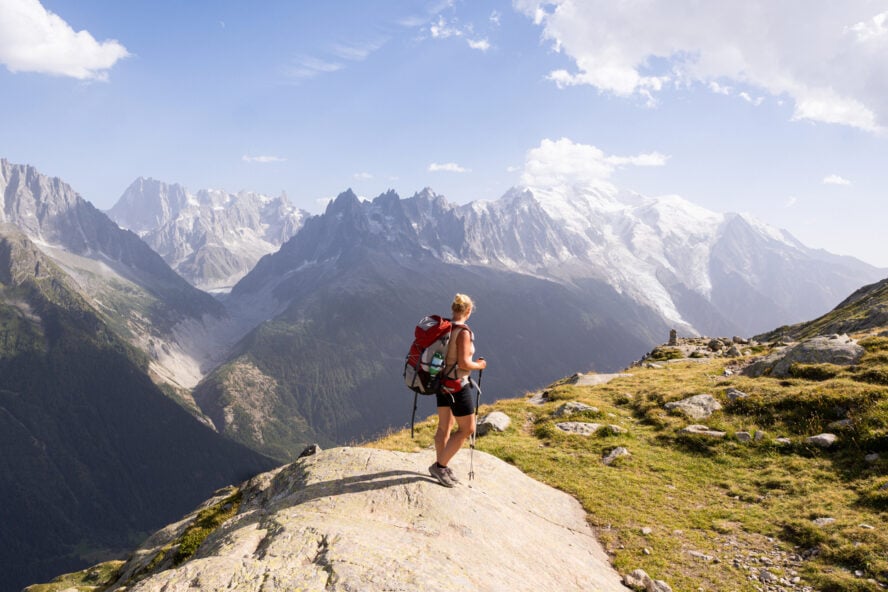
We join a section of the Tour du Mont Blanc, known locally as the TMB. This is classic balcony hiking. A steady ascent, then a long traverse with expansive views.
We stop at Refugio Bonatti, named after Walter Bonatti, one of Italy’s most respected alpinists. Lunch here is a highlight. Polenta. Pasta. Simple mountain food done properly.
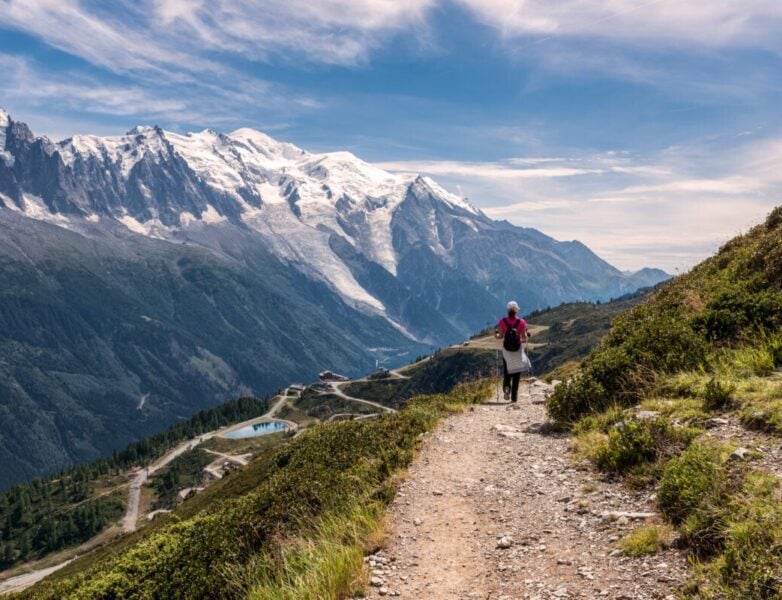
Hiking Chamonix often means crossing cultures in a single day. In the morning, we start in France. By lunch, we are in Italy. By evening, we’re back in Chamonix.
The landscape feels dynamic and alive. And the group begins to feel strong.
Day 3: Walking on the Mer de Glace
This is often the most adventurous day.
We take the historic Montenvers train up to 6,276 ft (1,913 m). Below us stretches the Mer de Glace, France’s largest glacier.
You’re fitted with crampons, a harness, and a helmet. A female high mountain guide leads the technical portion. I stay close, helping, encouraging, taking photos.
For most women, this is a first. The first time stepping onto a glacier is something they never forget.
We talk about the glacier’s past, present, and future. I share what my glaciologist friends tell me. We descend onto the ice. You feel it under your feet. Solid, ancient, and moving.
This is Chamonix hiking at its most unique. Not just trails, but ice, history, and high mountain culture.
Day 4: The Aiguille du Midi high alpine world
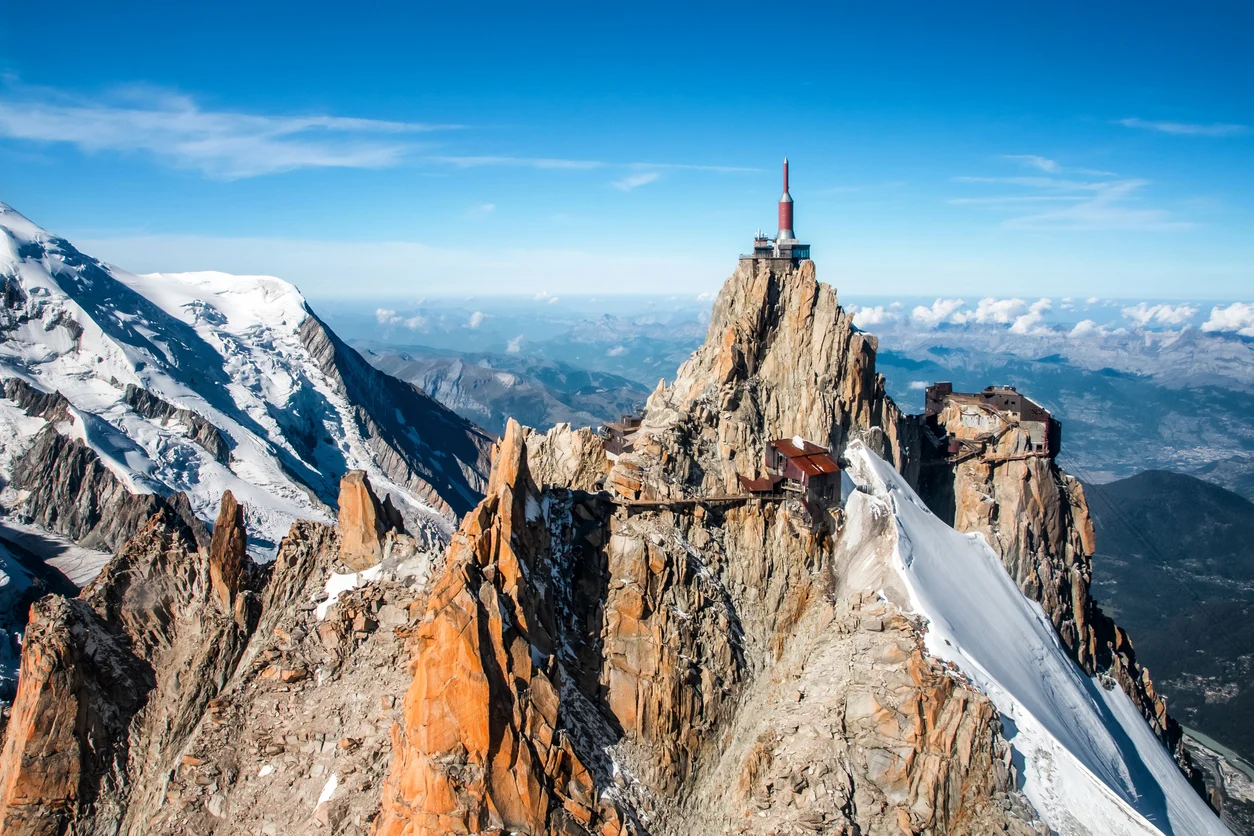
In 20 minutes, we rise from town to 12,605 ft (3,842 m) at the Aiguille du Midi.
This is not a hiking day. It’s immersion. We stand on terraces surrounded by glaciers and summits. Mont Blanc feels close enough to touch.
Some women choose to cross by gondola over the Glacier du Géant into Italy. It’s a 25-minute journey suspended above the ice. I always say, even to French visitors, this is something to do once in your life.
Hiking Chamonix is about effort. But it’s also about understanding the high mountain environment that shapes every trail below.
Day 5: Switzerland and the Emosson Dam
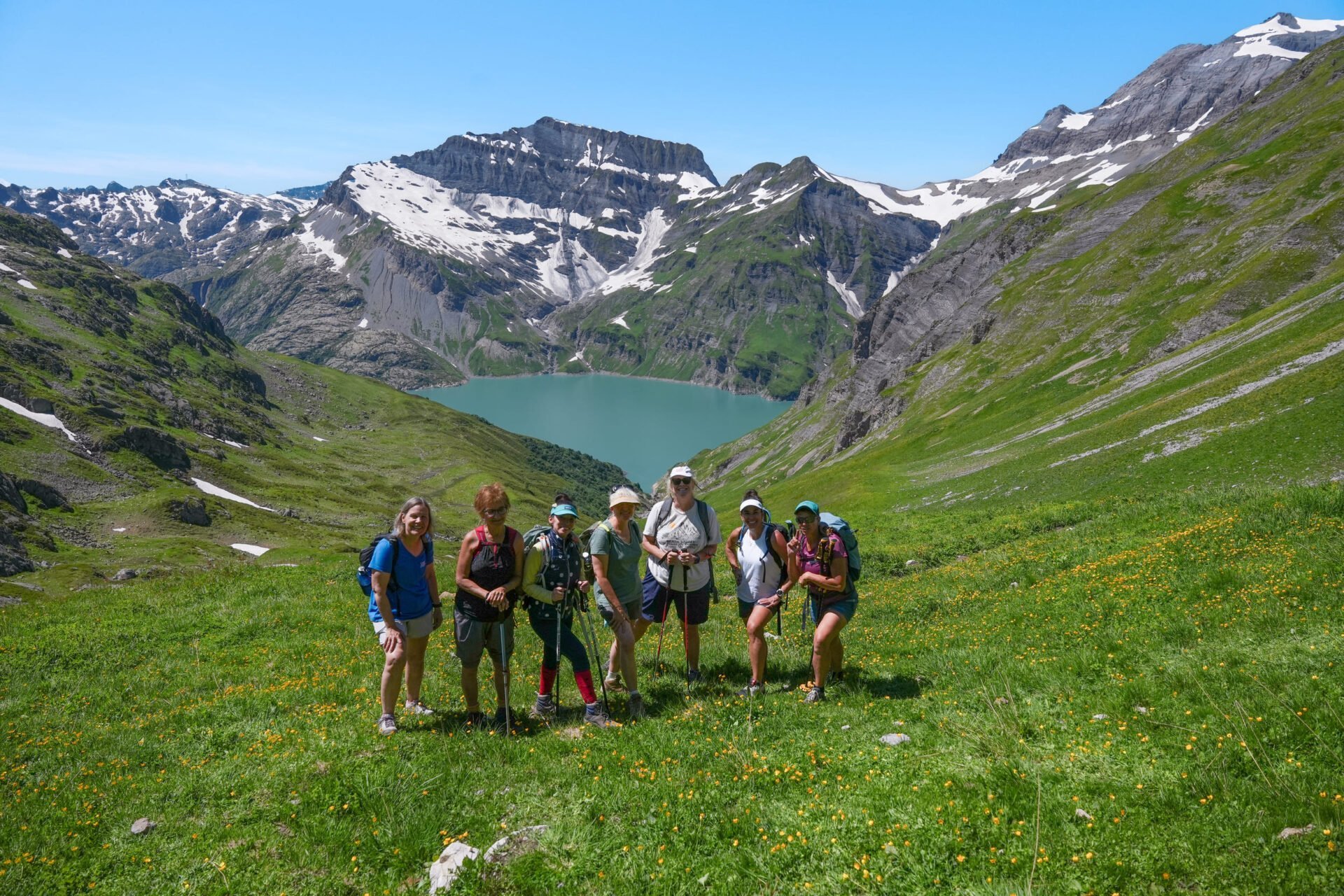
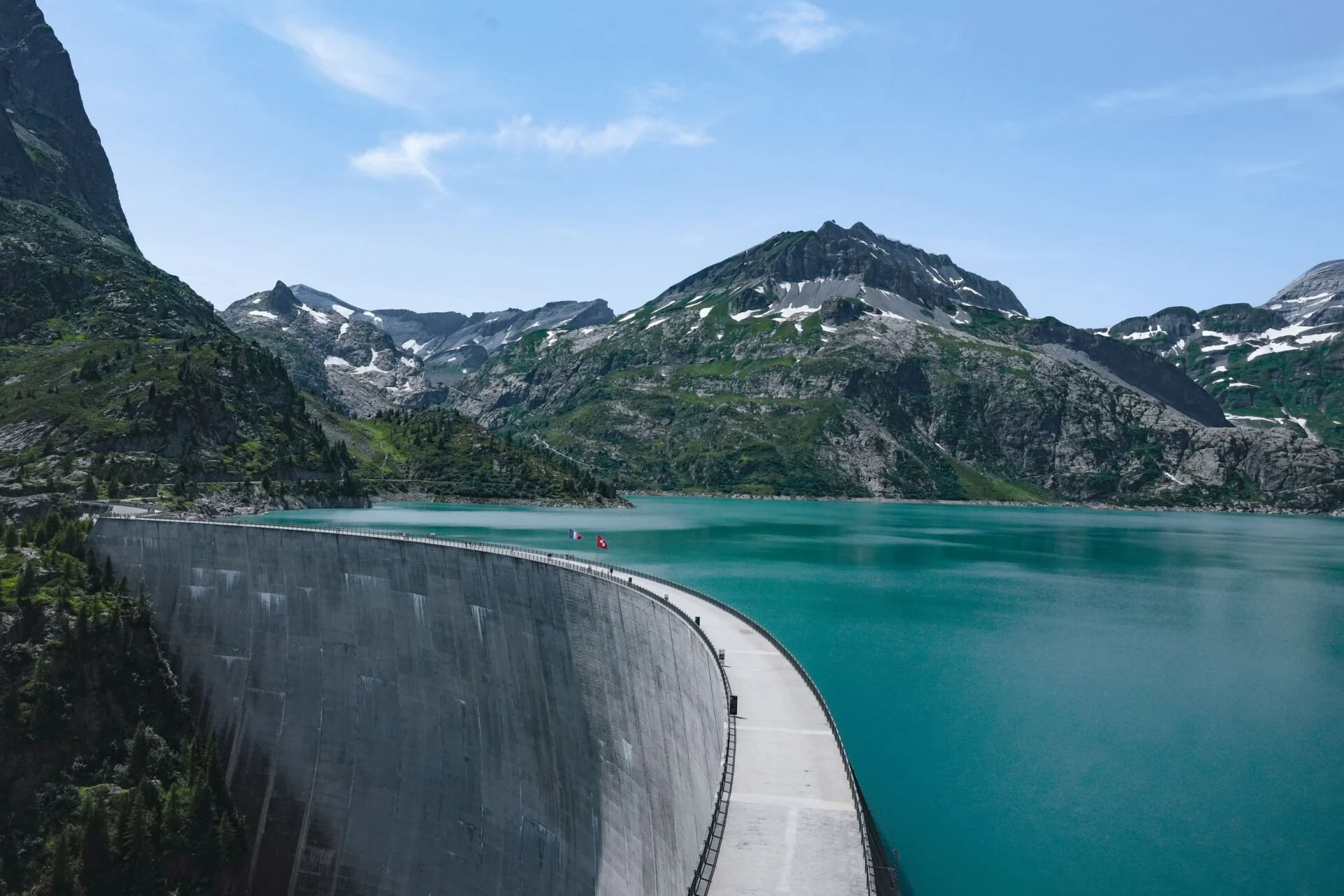
We drive about 35 minutes into Switzerland to the Emosson Dam, the second largest in the country.
From here, we hike toward fossilized tracks discovered in 2005. These prints are from reptiles that lived 250 million years ago. Long before the Alps rose from the sea.
The landscape feels lunar in places. Wide. Open. Quiet.
Some guests tell me it reminds them of Colorado. The scale. The clarity of the air.
Hiking Chamonix extends beyond France. It’s international. It’s geological. It stretches time as much as distance.
Day 6: Lac Blanc and my secret path
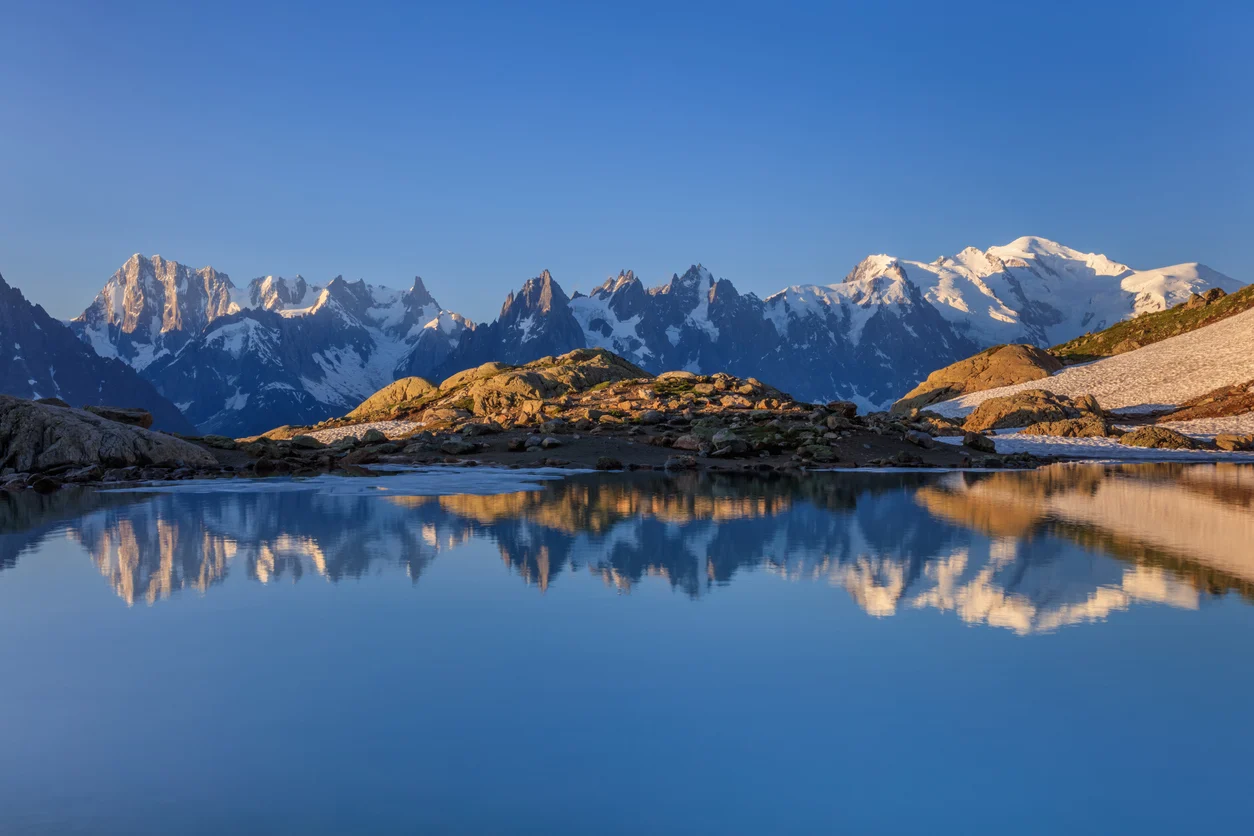
On the final hiking day, we head to Lac Blanc in the Aiguilles Rouges.
This is what some call “Chamonix Beach.” The reflection of Mont Blanc in the lake is famous. It’s deserved.
There are multiple route options. A longer, more technical approach. A shorter traverse. And then, my favorite, a quieter path where we often see ibex.
By now, the group is strong. Poles are used confidently. Ascents feel steady. The training, the glacier day, the balcony traverses all build to this.
We sit by the lake. Marmots whistle. The peaks stand sharp against the sky.
For me, this is the essence of hiking Chamonix. Effort rewarded with perspective.
Hiking Chamonix: from mule tracks to mountain culture
Chamonix has welcomed visitors since 1741, when two British explorers came to see what they called the “Sea of Ice.” Without realizing it, they began the era of modern alpine tourism.
At that time, the Mer de Glace was accessed by mules. Ladies in long dresses and hats were guided onto the glacier. Local guides carved steps into the ice. Crampons did not exist as we know them. Wooden “socks” were placed over shoes for grip.
Hiking Chamonix today stands on that heritage. This valley opened to tourism earlier than most alpine destinations. Mountaineering culture runs deep here.
When we walk the trails, we are part of a long story of hiking Chamonix.
Flora and fauna of Chamonix
This hike is not only about summits and glaciers. It’s also about noticing the details.
We often see ibex, especially near Lac Blanc. Sometimes chamois appear quietly above us. Marmots whistle from the rocks. In late summer, we walk through blueberry fields and stop to taste them.
In alpine pastures, cows wear heavy bells. In autumn, there is a traditional celebration when herds descend to the valley. The strongest cow is crowned and decorated. These customs are still very much alive.
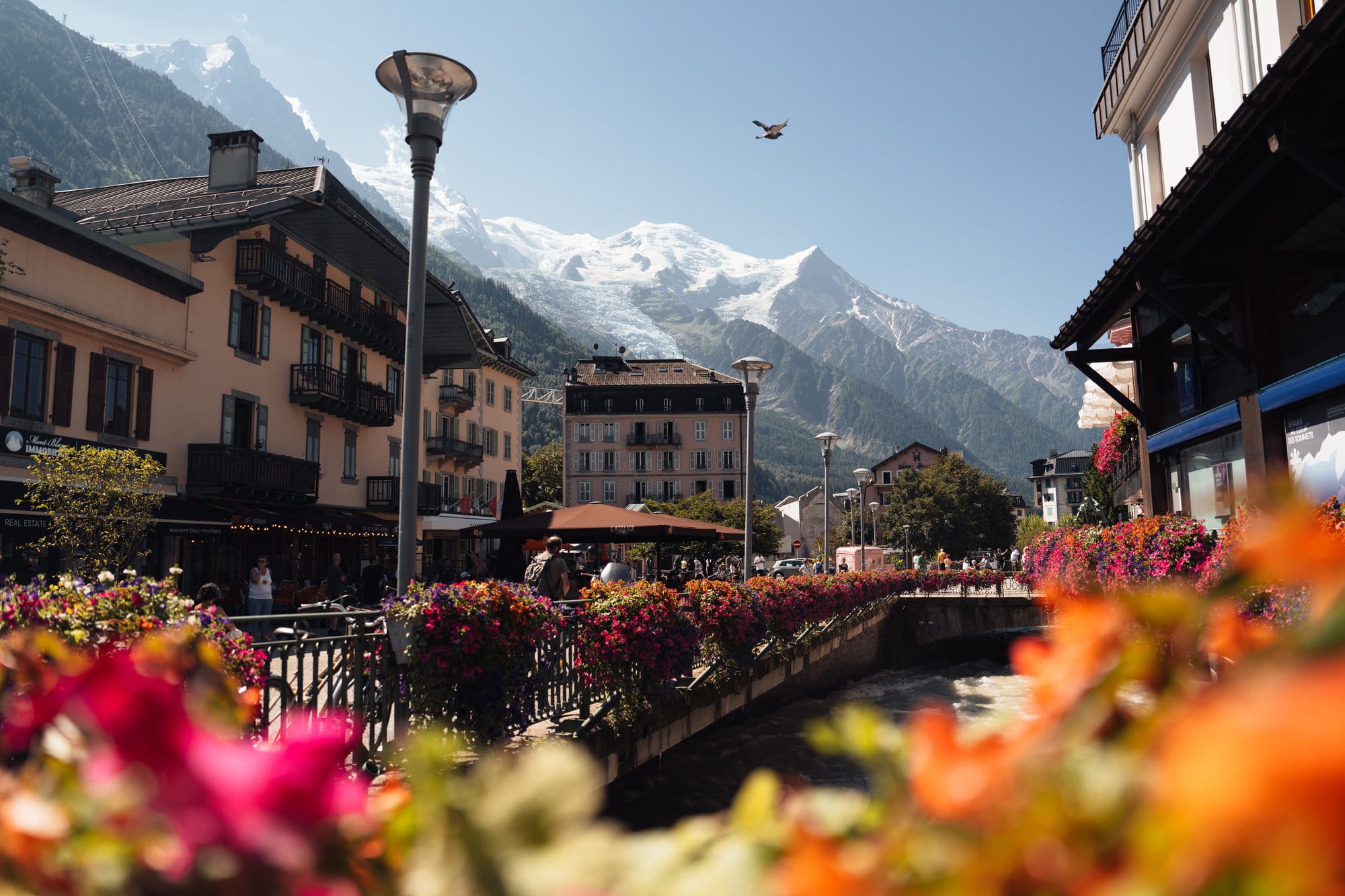
The town itself is full of flowers in summer. Architecture ranges from Belle Époque palaces to traditional wooden chalets. It is a small town with an international spirit.
And for me, this is what I hope you remember most. Not just the big views, but the quiet moments. The sound of a marmot, the taste of a blueberry, the way the light hits the peaks at the end of the day. Those small mountain details are what make this place feel like home to me, and I love sharing them.
The rhythm of life in Chamonix
Hiking Chamonix fills the days, but the town offers more.
There is a jazz festival in July. The UTMB trail race at the end of August. Markets. Saunas. Spas facing Mont Blanc.
Some women choose paragliding. Others take a helicopter flight around Mont Blanc for 20 to 30 minutes. There is a crystal museum displaying quartz found in the massif, and even gemstones recovered from historic plane crashes high on the mountain.
Chamonix is not just a trail network. It is a living alpine community with layers of culture and history. Between Chamonix hikes, there is always something to discover in town.
Where to stay in Chamonix for hiking?
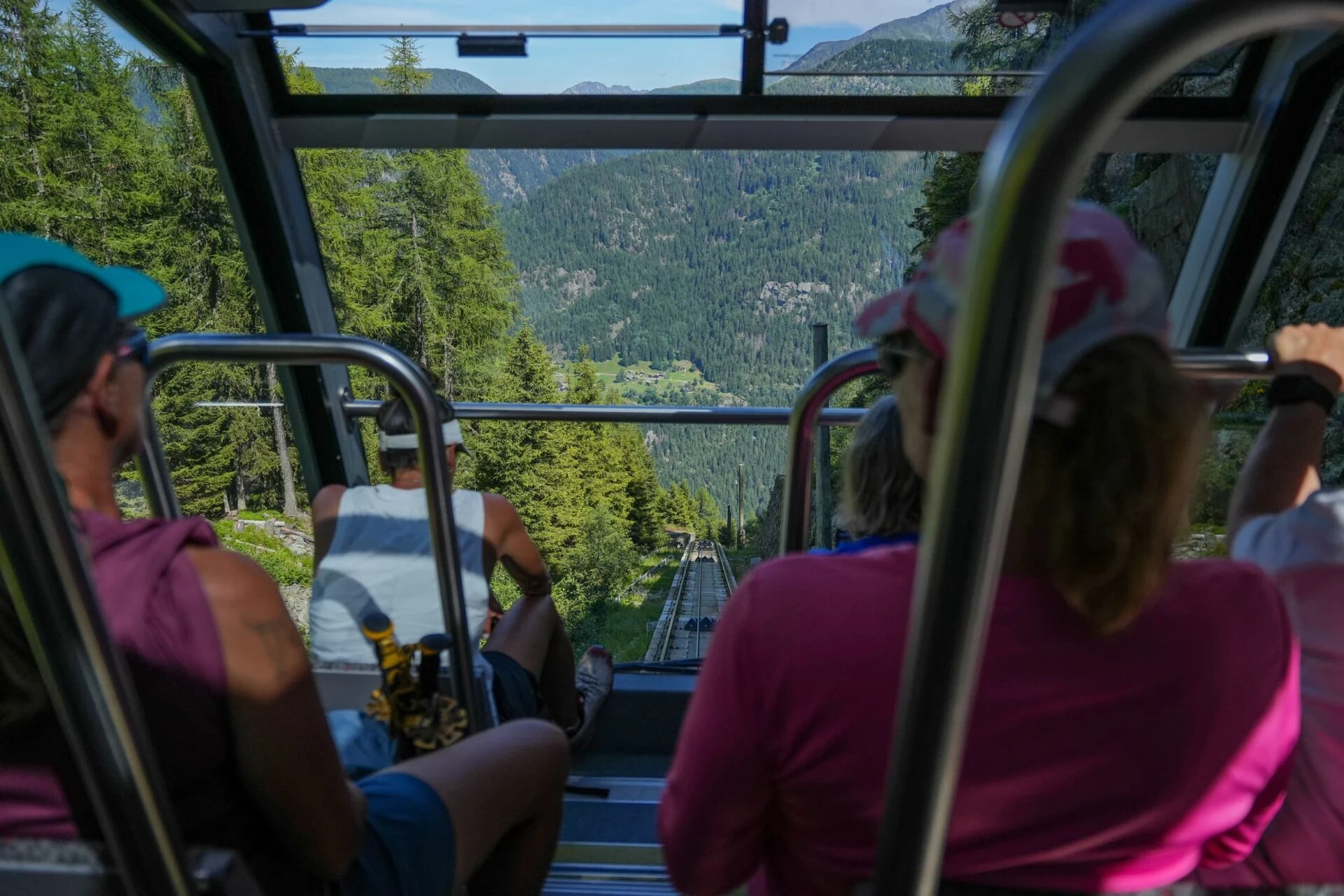
For this program, we stay in comfortable, centrally located hotels with spa access and wellness facilities. After a full day of hiking Chamonix, proper rest makes a real difference. Good sleep, a warm shower, and time to relax help you recover for the next climb.
Staying in town also means everything is within walking distance. Restaurants, bakeries, and mountain views are right outside your door. You remain connected to the atmosphere of Chamonix while enjoying comfort and convenience throughout the week.
In the evening, we can stroll through town together and still look up at the glaciers glowing above the rooftops.
It creates a balance between effort in the mountains and ease at the end of the day. That rhythm is part of what makes the week feel sustainable. Comfort here supports the adventure, it does not replace it.
Am I fit enough for hiking Chamonix?
I hear this often. And the answer is yes, if you prepare.
Cardio training helps. Stair machines. Incline walking. Strengthening quadriceps and glutes. Practice on uneven terrain if possible. Even long walks in your neighborhood with a loaded backpack can make a difference.
I usually recommend starting to train at least six to eight weeks before your trip. Two to three sessions per week focused on uphill movement will build confidence quickly. If you can hike for three to four hours at a steady pace before arriving, you will feel comfortable hiking Chamonix.
I’ve guided women who hadn’t hiked recently. They were unsure at the start. They worried about the distance, about the altitude, about the glacier day. By the end, they stood at Lac Blanc smiling, proud, and already talking about their next mountain trip.
Hiking Chamonix is achievable. It challenges you, but it supports you. With preparation and the right mindset, most active women can complete this program and enjoy it fully.
The part that stays with you
I have so much to share about this valley.
The history. The glaciers. The minerals hidden in the mountains. The quiet meadows where cows still wear bells in autumn. The way Mont Blanc looks different from France, from Italy, and from Switzerland.
But what stays with me most are the faces at the end of the week. Confident. Connected. A little tired. Very proud. I see friendships forming over picnic lunches and quiet conversations on balcony trails.
There is something about walking these trails together that never loses its meaning.
Doing it together, as women, makes it something you carry with you long after the mountains fade from view. And I would truly love to share it with you.