
Iceland is basically just one big volcano.
That’s not a dramatic opening. It’s geology. About 20 million years ago, this island pushed up from the North Atlantic Ocean, and since then glaciers, rivers, wind, and fire have been reshaping it. What you get today is a landscape that feels unfinished in the best possible way. Black deserts. Moss-covered mountains. Steam rising from the earth beneath your boots.
Living on an island in isolation for more than a thousand years does something to people. We became storytellers. We filled lava fields with trolls, cliffs with elves, and glaciers with gods. When guests ask me about the best hiking in Iceland, I don’t start with mileage or elevation. I start with this: here, you don’t just walk through scenery. You walk through belief.
I guide a six-day hut-to-hut trek through the central highlands. It follows one of the old Viking trails across the island. And in my experience, if you want something raw, remote, and deeply Icelandic, this is the best possible option.
Let me show you why.
What are the best hiking trails in Iceland
This is the question I hear most often.
The best hiking in Iceland depends on what you want. If you want a classic, well-marked multi-day trek with colorful mountains and established huts, the Laugavegur Trail is an excellent choice. It’s accessible, popular, and stunning.
If you want coastal cliffs and dramatic sea stacks, the Westfjords offer incredible routes with far fewer people.
If you prefer day hikes near Reykjavík, there are accessible options within an hour’s drive that provide waterfalls, geothermal valleys, and sweeping views.
Choosing the right trail for you
But if you want remote highlands, glacier views, geothermal valleys, lava fields, and the feeling of walking through history, then this hiking tour between Langjökull and Hofsjökull represents, in my opinion, the best hiking in Iceland for that kind of experience.
It’s not the easiest. It’s not the most famous. But it’s the one that feels the most complete and stands apart from more crowded Iceland backpacking trails.
Hut-to-hut hiking across the highlands
This is a six-day hut-to-hut trek through the central highlands. We begin in Reykjavík and travel the Golden Circle on our way into the mountains. At Þingvellir, you can stand between the North American and Eurasian tectonic plates.
At Geysir, boiling water erupts 20 to 30 m (65 to 100 ft) into the air every few minutes. At Gullfoss, water crashes down powerful tiers into a deep canyon.
Then we leave the paved world behind.
Small groups for the best hiking in Iceland
We hike with daypacks. Luggage is transported by a modified highland vehicle with 44-inch tires that crosses glacial rivers deep enough to flow over the hood. It’s practical and a little dramatic. You see the vehicle parked at the hut and it looks like it belongs in a rally race.
Group size is limited to ten. That matters. You are not stretched across the horizon in a line of thirty hikers. We move together. We talk. By the end of the week, most groups feel like a small expedition team.
For travelers looking for the best hiking in Iceland that balances comfort with wilderness, hut to hut hiking Iceland in the highlands offers exactly that, and it defines what a true Iceland highlands tour should feel like.
Hot springs, lava fields, and valley crossings
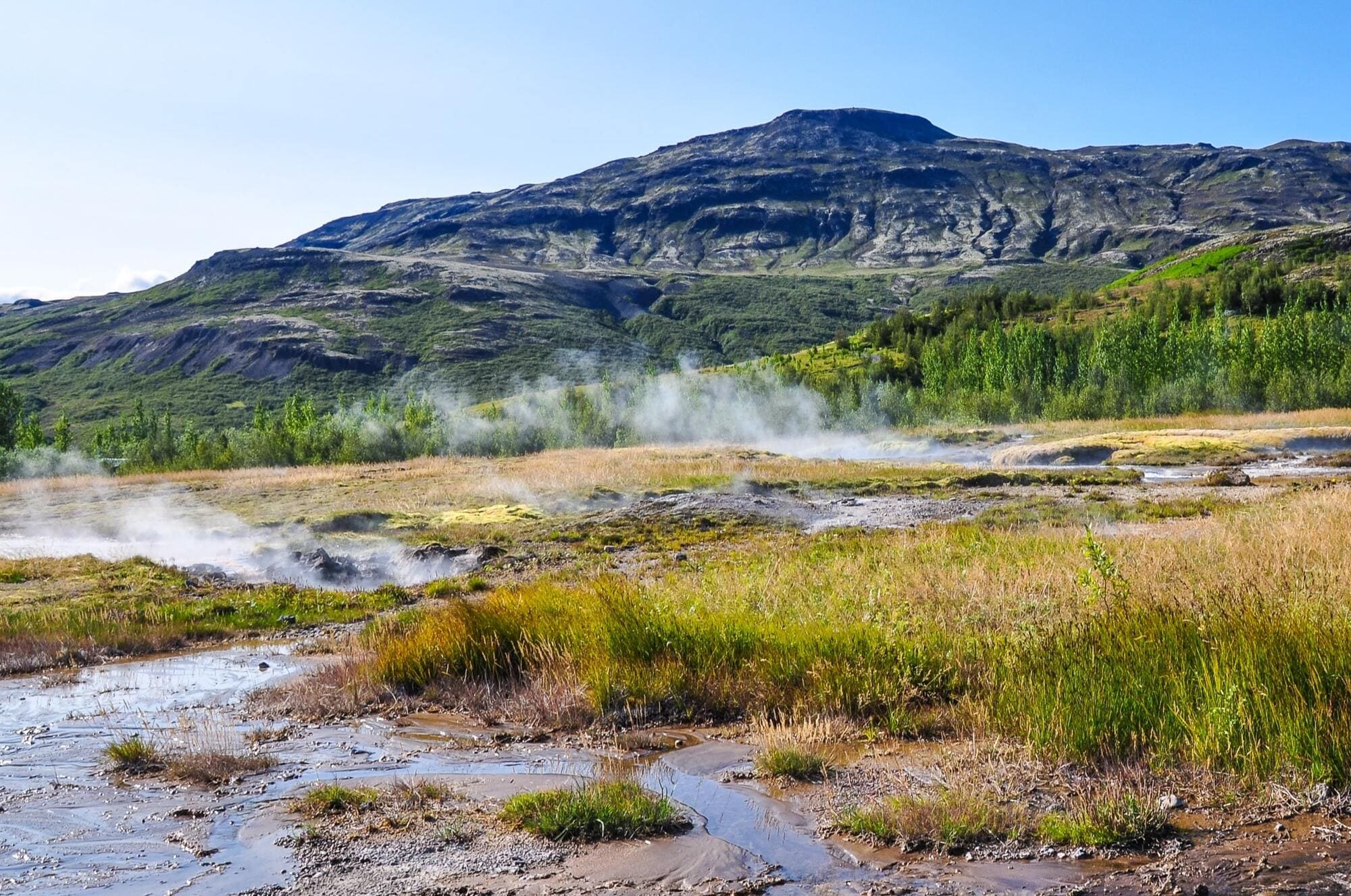
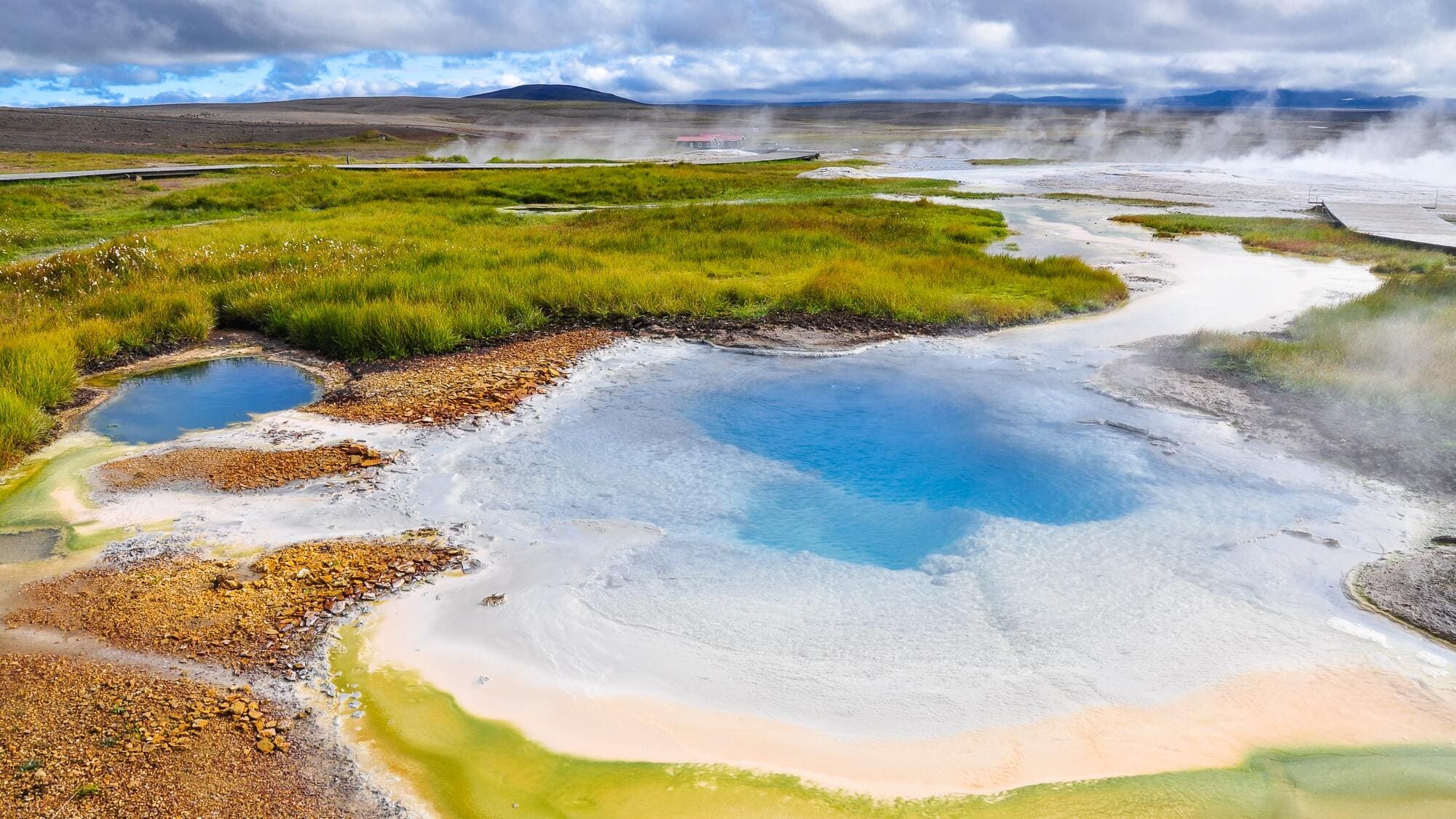
On the first evening in Kerlingarfjöll, we hike into a steaming valley and soak in a natural hot spring. It’s the perfect temperature to sit for an hour and let the mountains surround you. That combination of effort and reward is part of what defines the best hiking in Iceland.
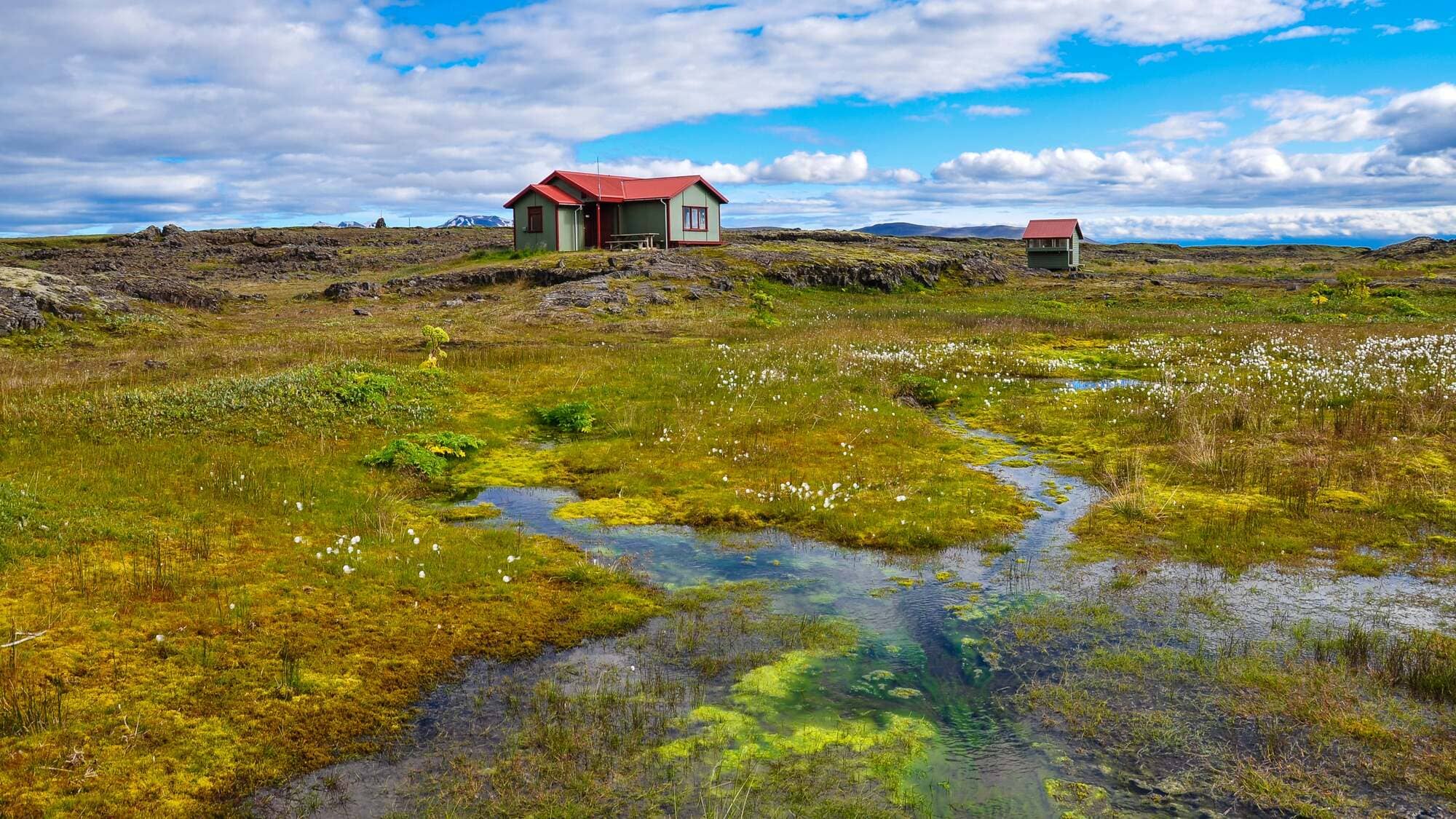
One day we cross one of the largest lava fields in the country. Rock formations create natural shelters where we sometimes stop for lunch. Sheep roam freely in summer, released by farmers in June and collected again in September.
Evenings in the mountain huts
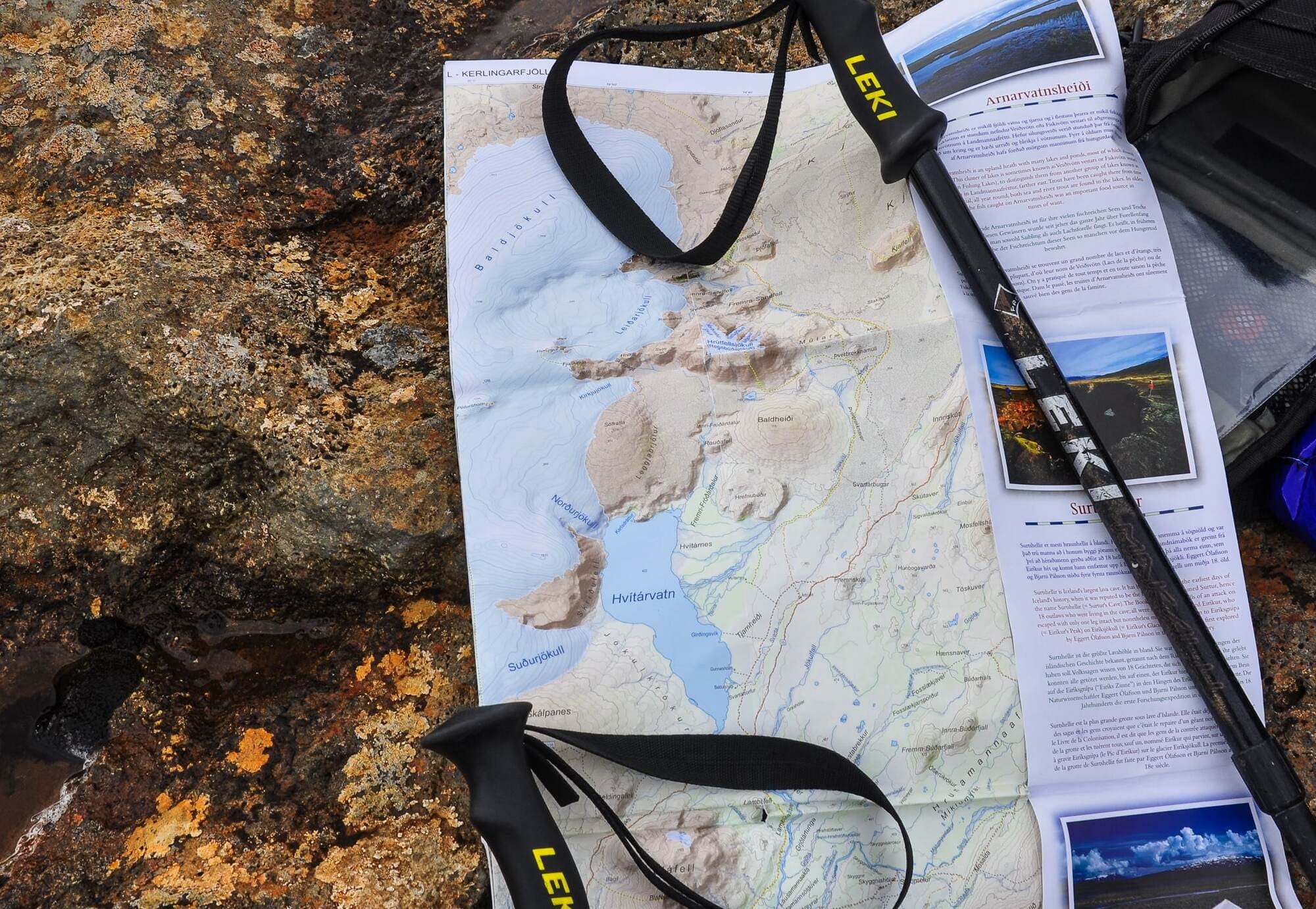
We follow cairns stacked centuries ago, moving from one rock pile to the next like they did back then. No signs, just stone guiding stone. We pass a mountain that guests quickly rename Cupcake Mountain because the glacier spills over it like icing. And we cross rivers on small bridges now. The old Vikings jumped them. We prefer to arrive dry.
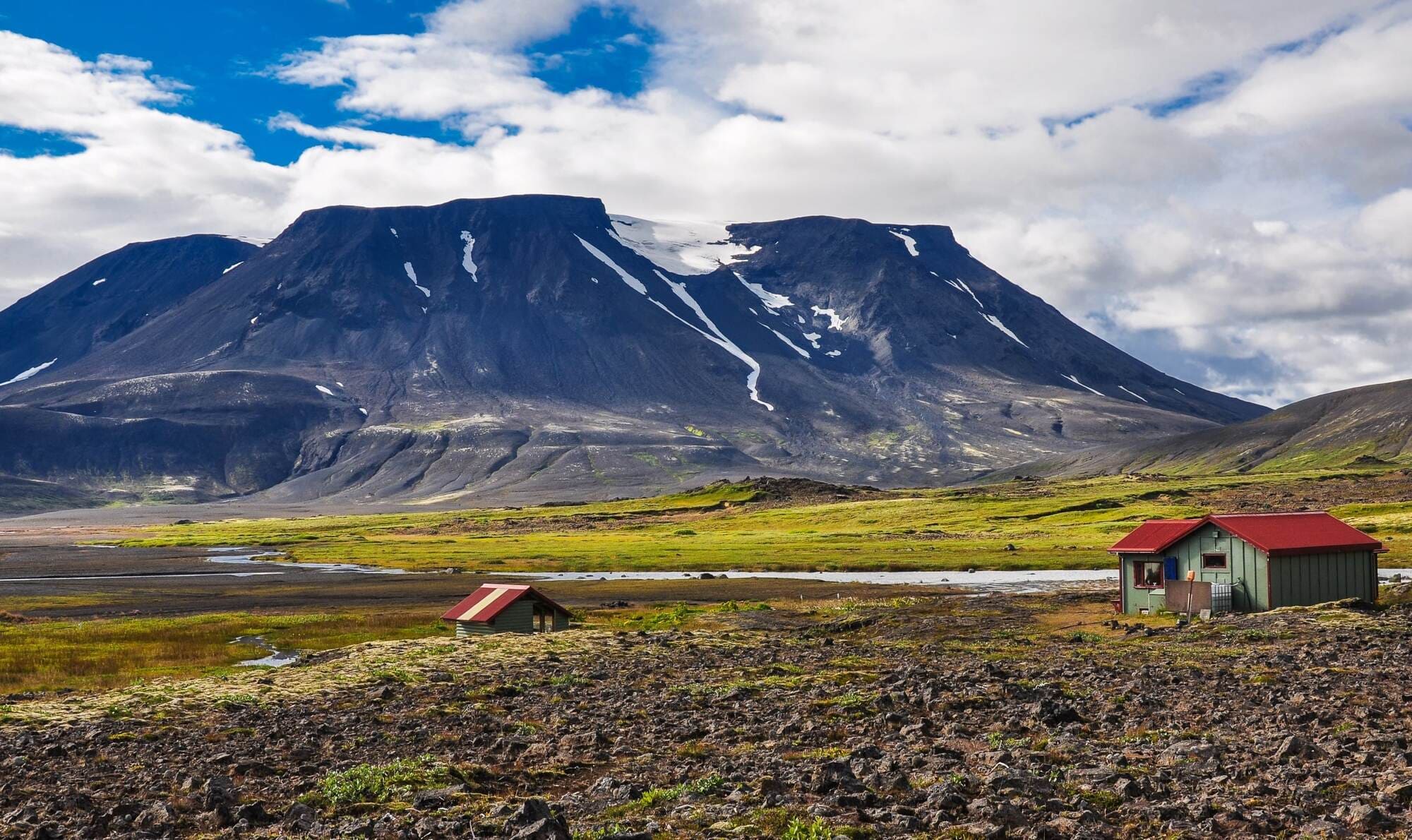
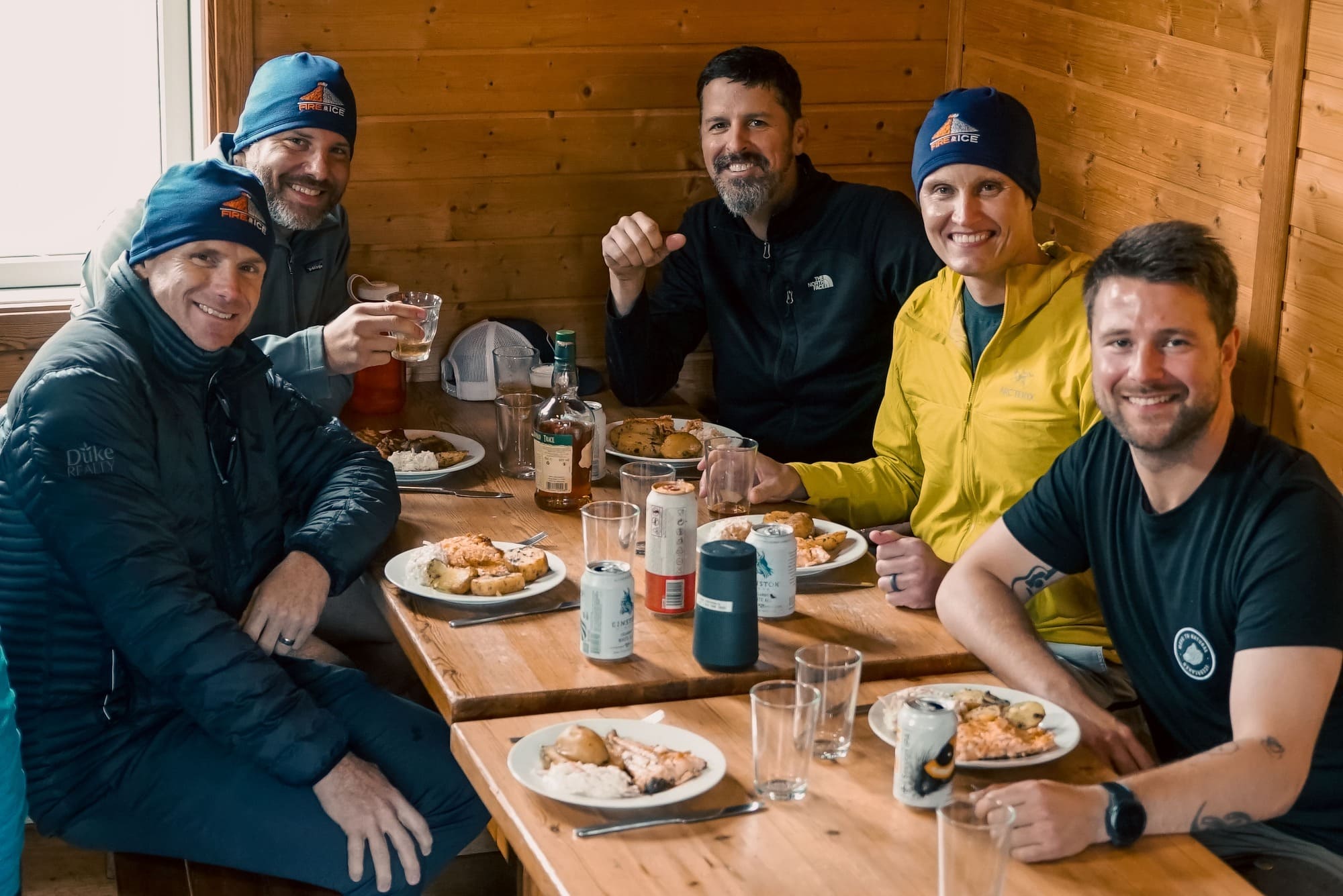
Each day ends in a mountain hut. Some are snug. One is so tight that if a single person stands up, the rest of us have to shift around. That’s usually when the laughter starts. Cards come out, stories get louder. The dog usually sleeps outside unless the weather turns wild.
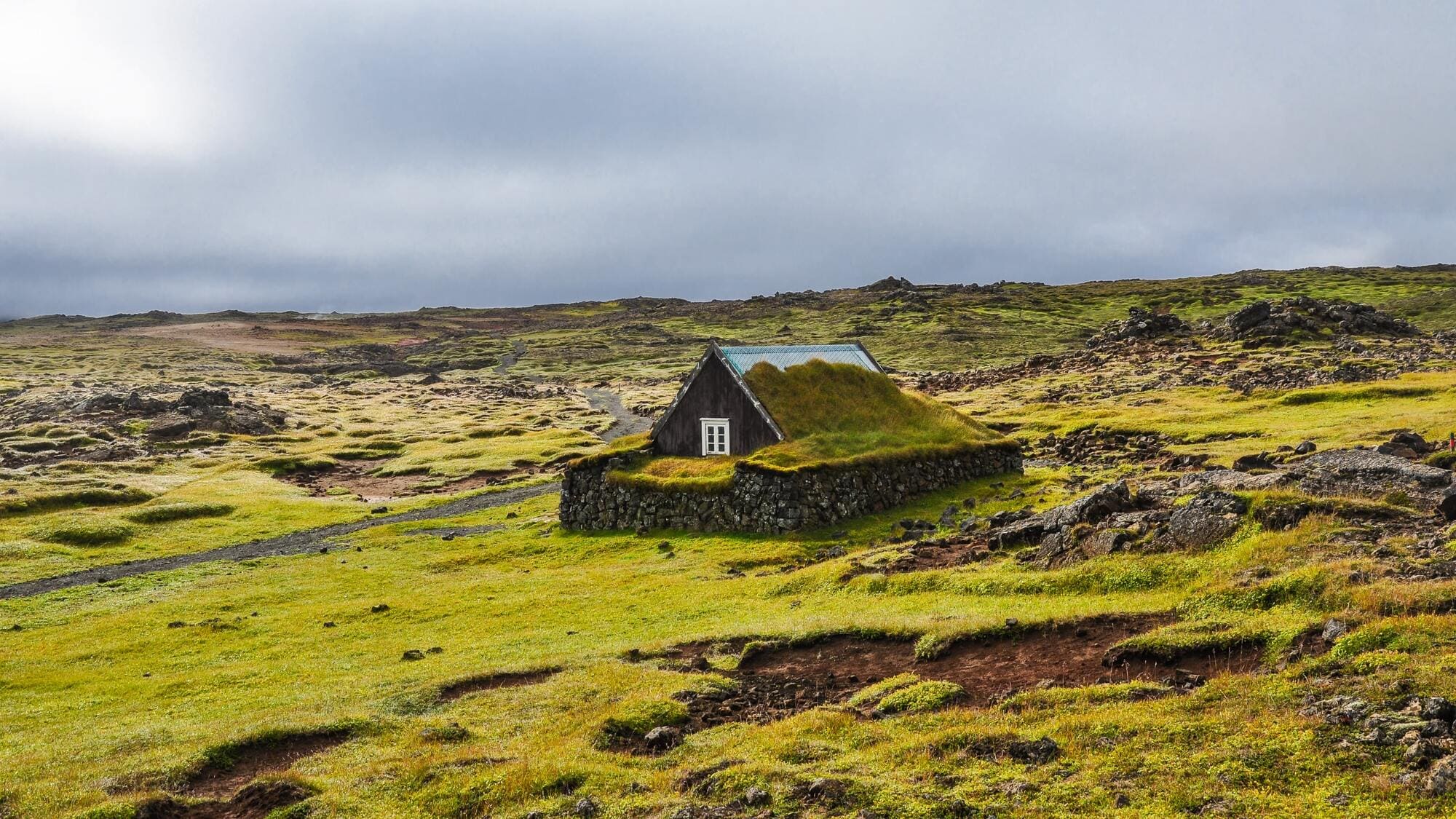
The final hut is the oldest mountain hut in Iceland, originally a turf house. We mark the last night with a proper farewell feast, grilling meat and making sure the vegetarians are well fed too. It’s not about luxury. It’s about the feeling in the room.
Þingvellir, geysers, and the road into the highlands
Before we even step onto the trail, we drive the Golden Circle, and that part matters more than people expect.
At Þingvellir National Park, you walk between tectonic plates that are slowly pulling apart. You are literally stepping through a crack in the Earth’s crust. This is also where the Alþingi was founded in 930, the gathering place where laws were spoken aloud and Iceland took its first steps toward organized society.
Standing there, I always remind my guests that this is not just geology. It is where Iceland learned how to govern itself. The cliffs around you are shaped by continental drift. The valley beneath your feet shaped a nation.
From there we stop at the Geysir geothermal area. Strokkur erupts every five to ten minutes, sending boiling water 20 to 30 m (65 to 100 ft) into the air. The first time you see it, you flinch. The second time, you start timing it. It is a reminder that the ground here is alive.
These stops are not filler. They set the tone. When people later describe this week as the best hiking in Iceland, it often begins with the realization that Iceland is geologically unstable in the most beautiful way.
A land shaped by extremes
If you look at a map, Iceland seems small. Once you step into the highlands, it feels endless.
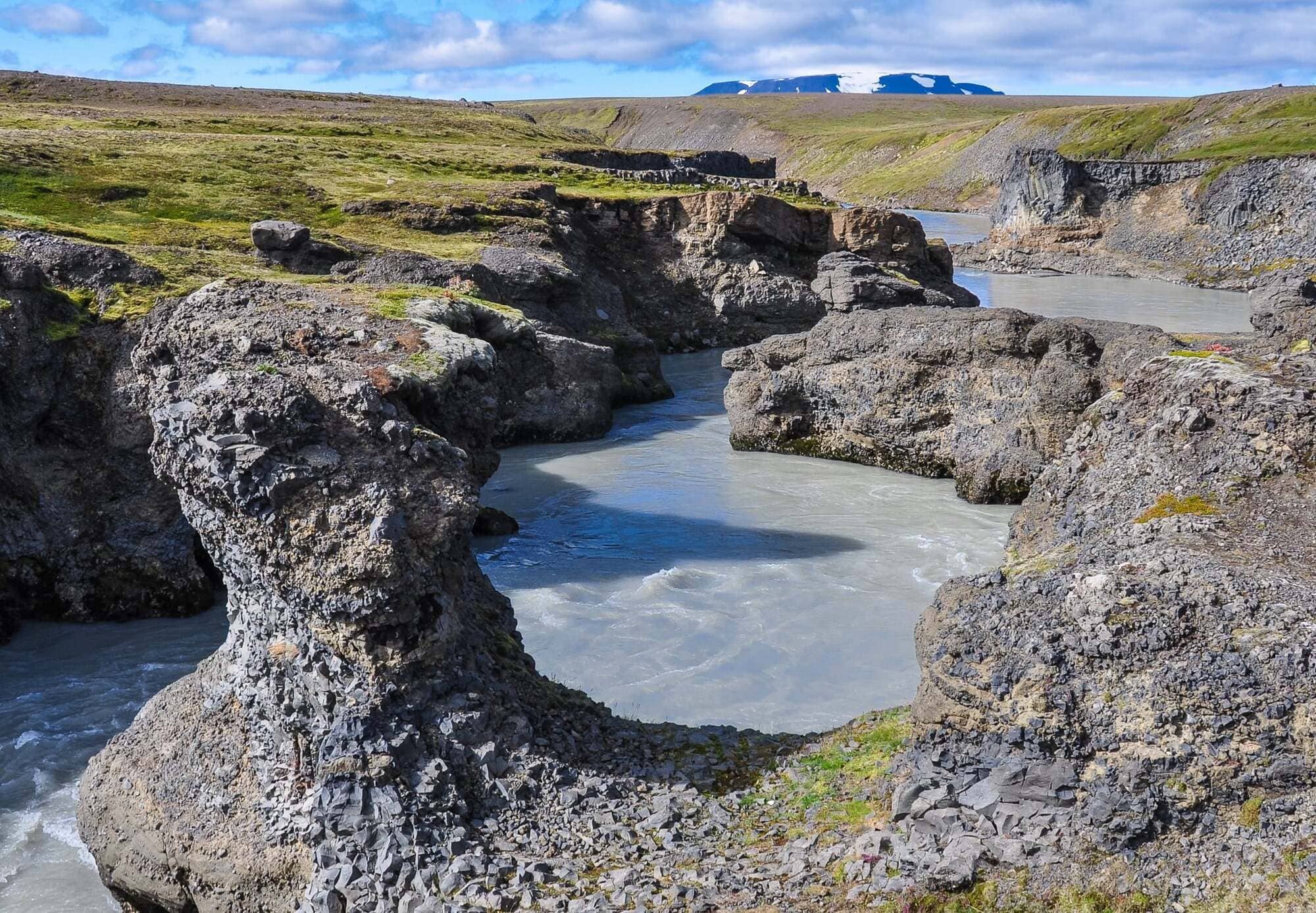
The central interior is uninhabited. No villages. No farms. No roadside coffee stops. Just space between glaciers, carved by rivers and blasted by wind.
When people imagine a hiking tour in Iceland, they often think of dramatic waterfalls or colorful rhyolite mountains. Those exist. But the real magic is the scale.
Where the highlands take over
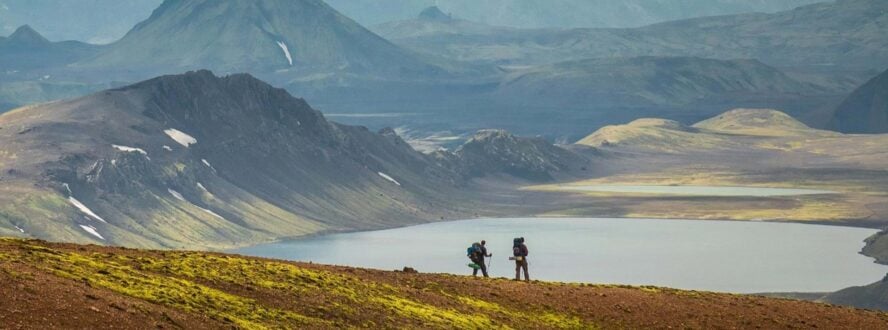
In the Fjallabak region near Landmannalaugar, you see black volcanic plains pressed against bright green moss slopes. In summer, red sheep’s sorrel spreads across the tundra like someone spilled paint. Rhyolite mountains glow in shades of orange, yellow, and pink. It feels exaggerated, but it’s not.
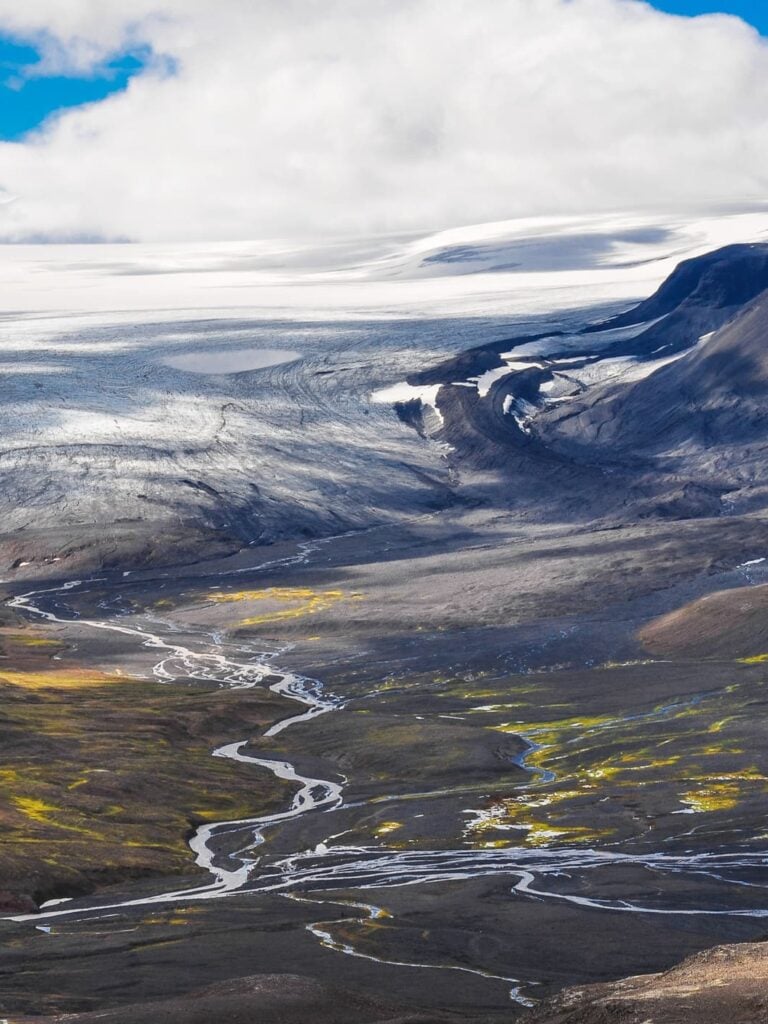
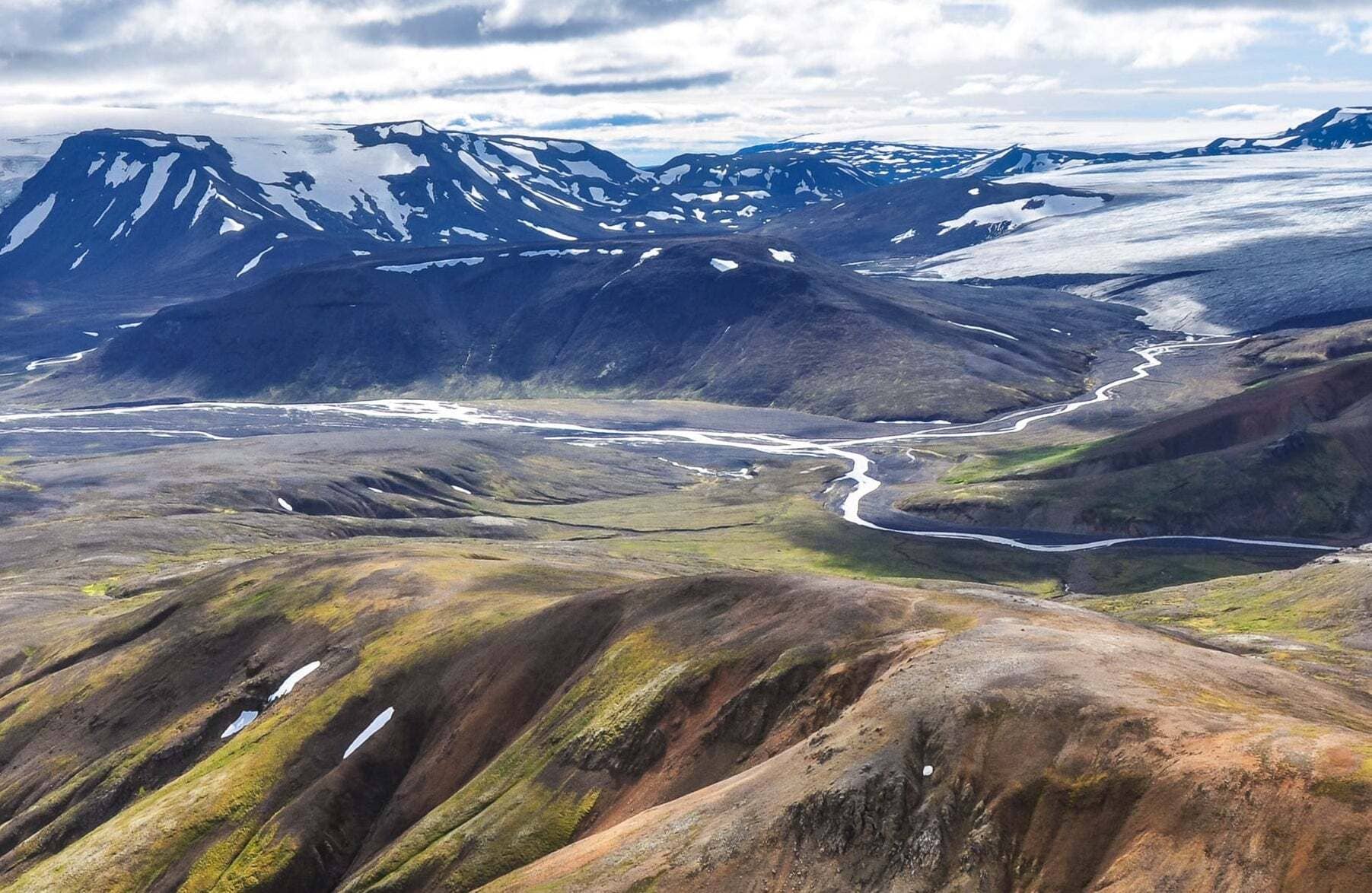
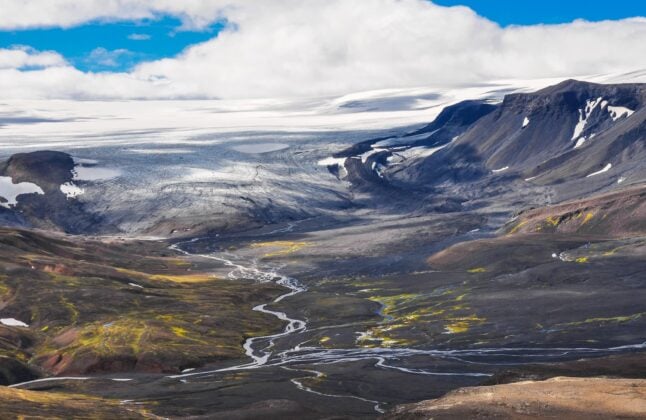
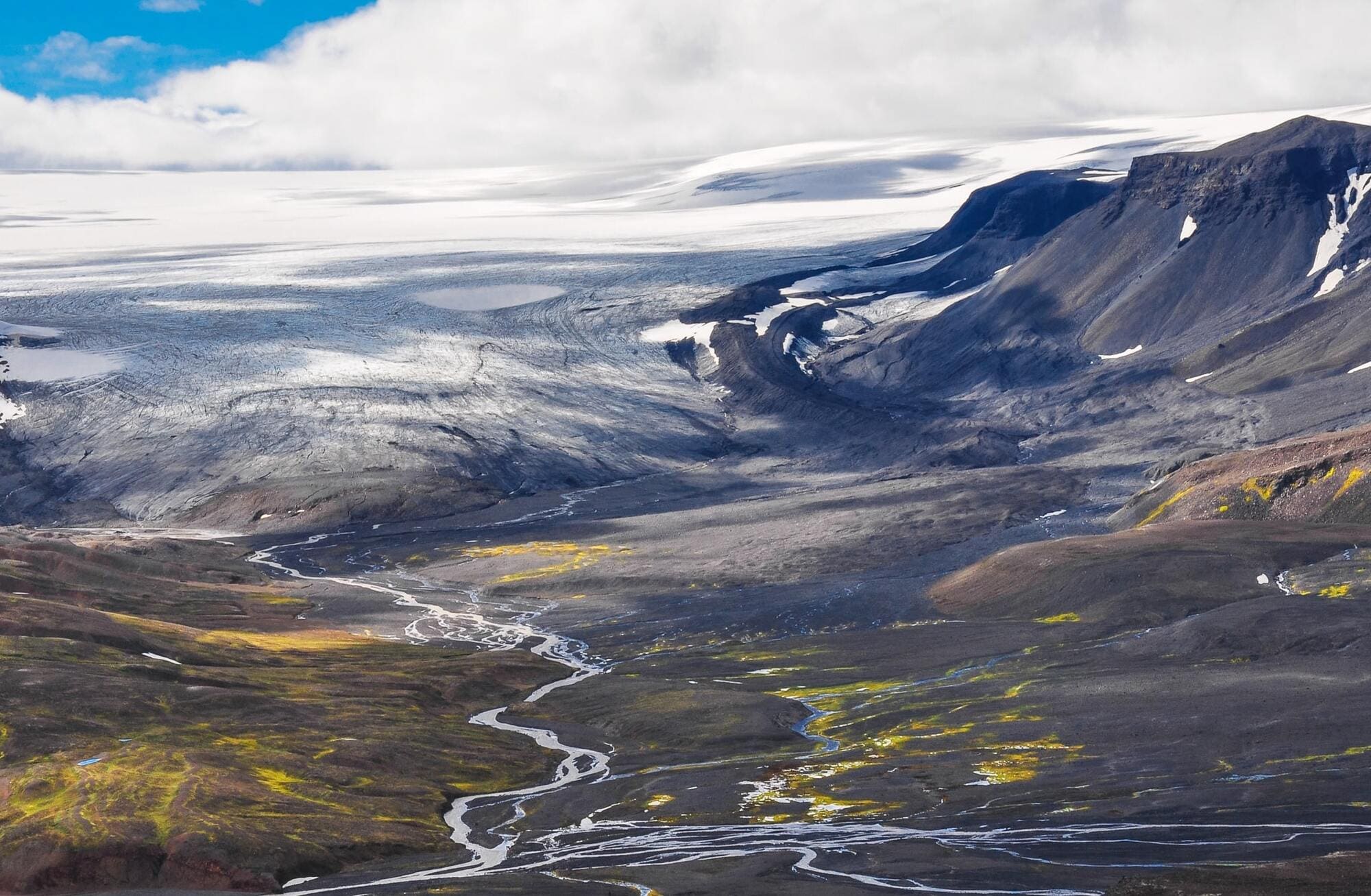
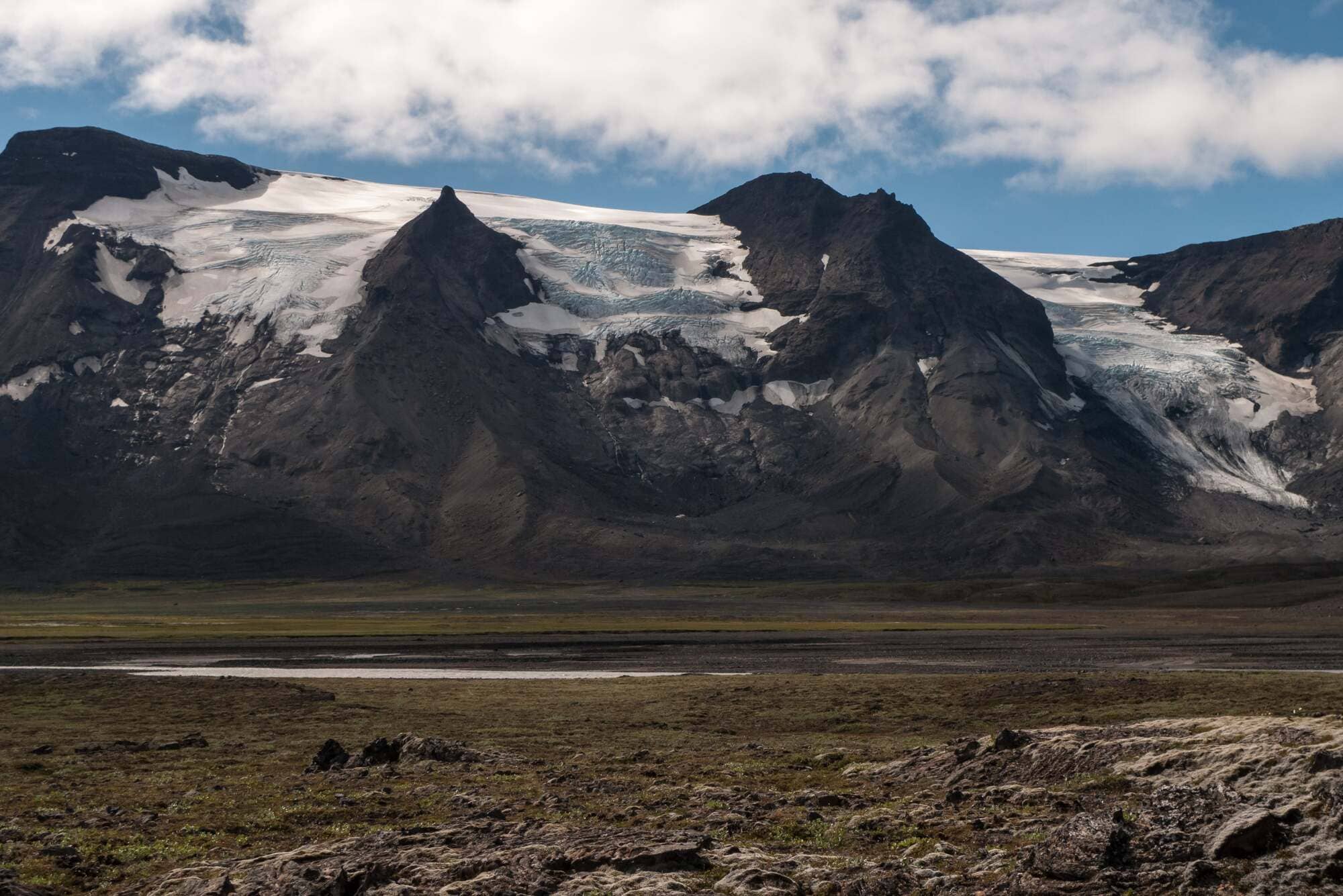
About 11 percent of Iceland is covered by glaciers. Langjökull and Hofsjökull dominate the highlands. Between them lies the old north to south crossing that my trip follows. Braided rivers snake through black sands. Perennial snowfields linger on shaded slopes. Storms build quickly and dissolve just as fast.
When guests ask me directly where to find the best hiking in Iceland, I tell them to look for the empty middle of the map. That is where Iceland feels most honest and where true Iceland trekking begins.
Fire under your feet, ice above your head
Iceland is still forming. Volcanoes erupt. Glaciers retreat. Rivers carve new channels.
In 2022, we had an eruption not far from Reykjavík. It was small and contained, without heavy ash or dangerous gas levels, so authorities created safe trails to view the lava. I stood with visitors on a ridge watching molten rock flow across fresh earth. It felt ancient and brand new at the same time.
Walking safely in a volatile landscape
People sometimes worry that hiking in a volcanic country is unsafe. The truth is, Icelanders are practical. If it’s not safe, it’s closed. If it’s safe, we go look. That same balance applies to glacier hiking.
With proper equipment and a qualified guide, you can walk across blue ice or enter seasonal ice caves that change every year. Without a guide, you should not attempt it. Crevasses are invisible until they aren’t.
The best hikes here often happen where fire and ice collide. Steam vents hiss near snow patches. Glacial rivers cut through lava fields. It’s dramatic, but it’s also real.
Life in the highlands: sheep, silence, and scale
One detail that surprises people is the sheep.
In June, farmers release them into the highlands to graze freely all summer. They roam across lava fields and green valleys, completely at ease in terrain that looks hostile to us. In September, farmers ride out to gather them again. It is a tradition that has barely changed in centuries.
Walking through these landscapes, you begin to notice the silence. No traffic. No power lines. No distant hum of civilization. Just wind, water, and sometimes the sound of your own breathing.
That silence is one of the reasons I believe this route represents the best hiking in Iceland. It strips things down. It forces you to be present.
There are moments when we crest a ridge and the view opens between Langjökull and Hofsjökull. Rivers braid below. Snowfields cling to distant peaks. The sky feels enormous. Someone always goes quiet. It happens every trip.
And that is the moment I wait for.
Weather, unpredictability, and why it matters
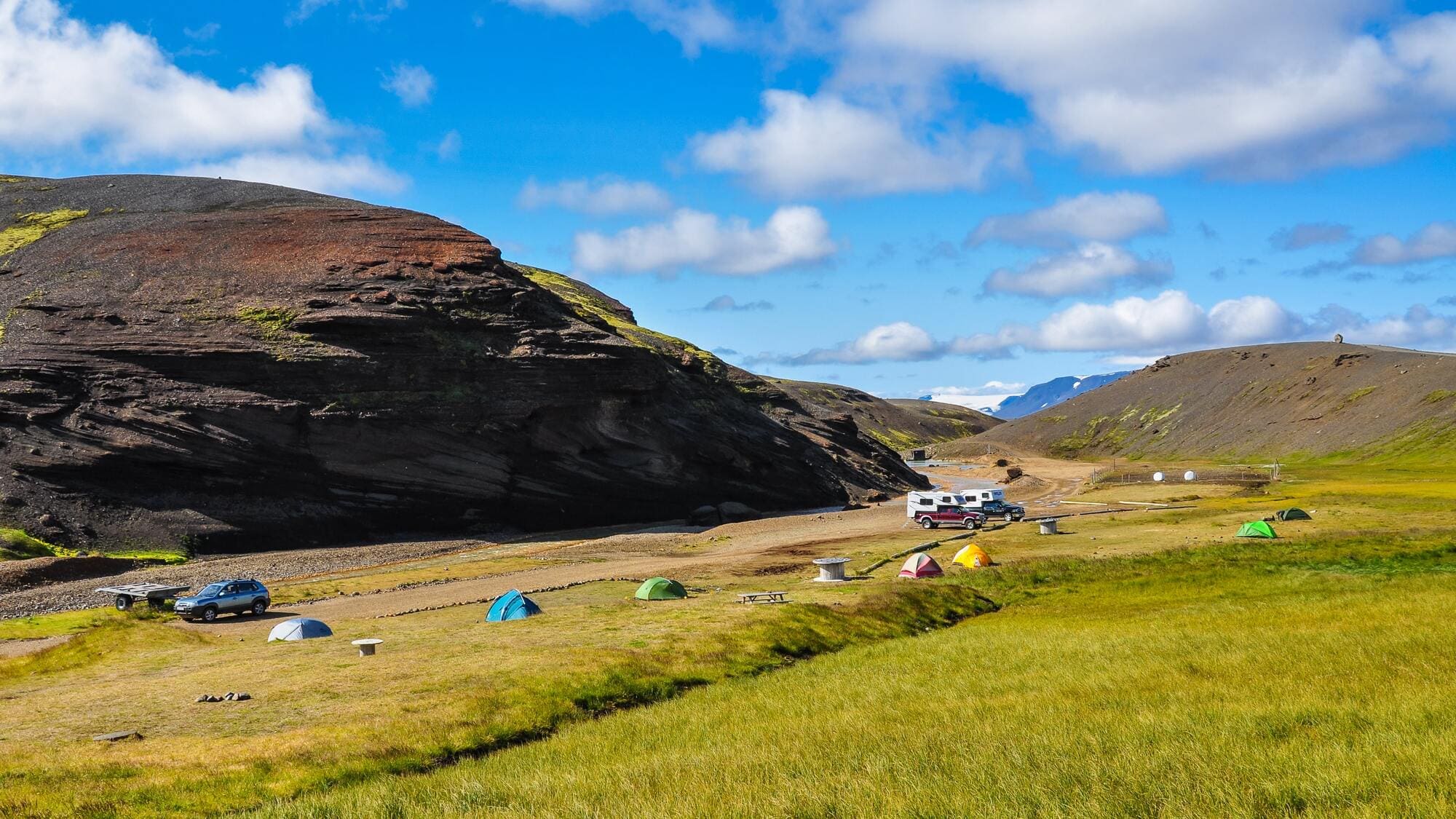
The highlands are not predictable. You might start the day in snow and finish in sunshine. Mist can swallow a valley in minutes and clear just as quickly. Even the most accurate Icelandic weather forecasts are more of a guideline up here than a guarantee.
Embracing the elements
Some people see that as a risk. I see it as character. The best hiking in Iceland is not sanitized. It demands flexibility and respect. But with experienced guides, proper planning, and small groups, it becomes deeply rewarding rather than intimidating.
There is something powerful about walking through shifting weather between two glaciers. It reminds you that you are small in the best possible way.
How difficult is this hike
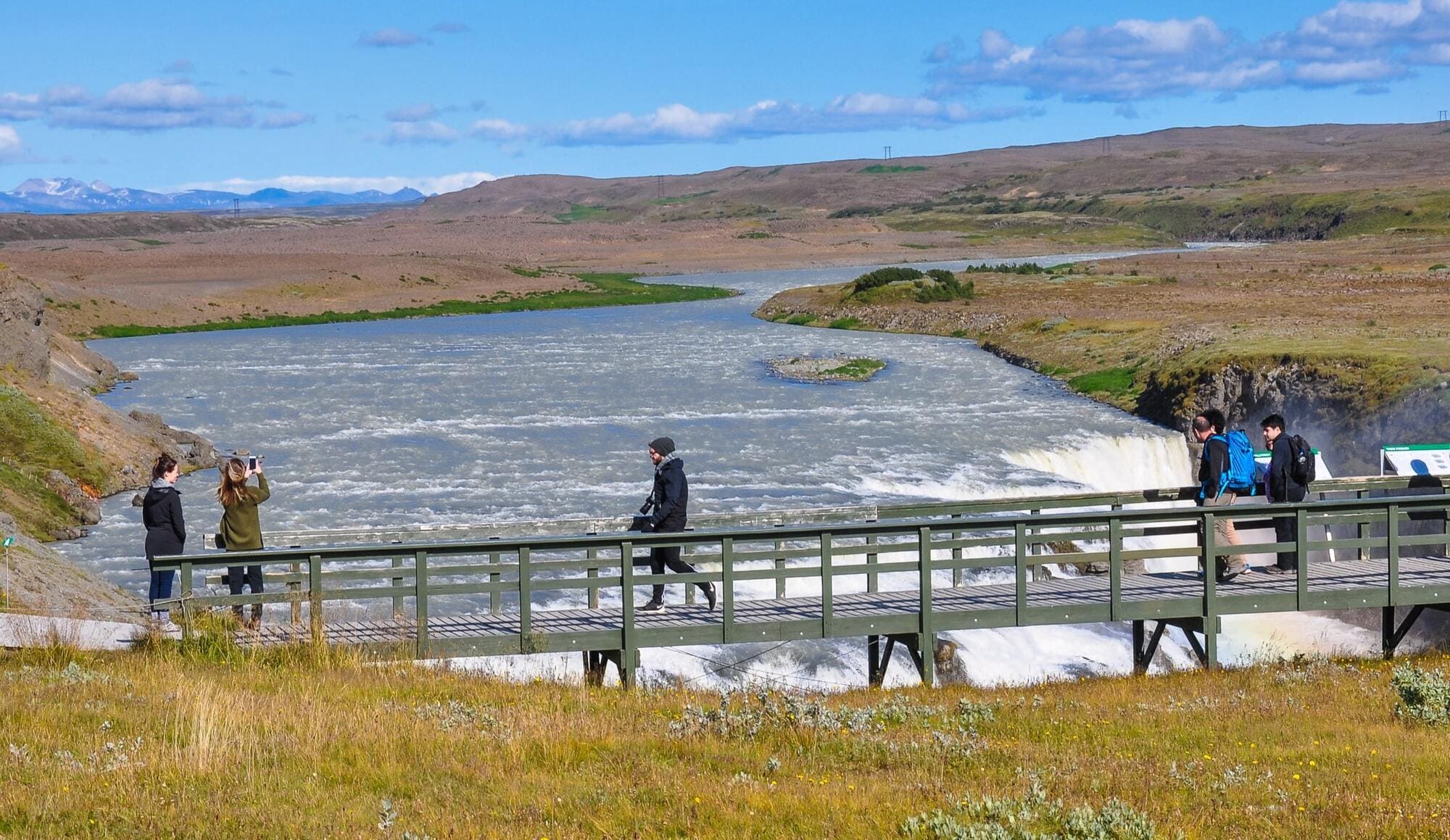
This is not a stroll, but it’s also not an expedition reserved for elite athletes.
We hike for about 6–8 hours per day, covering roughly 10–18 km (6–11 mi) depending on the section. Elevation gain varies, but you should expect steady climbs rather than extreme ascents. The terrain is uneven at times, especially across lava fields and river valleys, but there is no technical climbing involved.
If you’re comfortable hiking multiple days in a row and carrying a daypack with water, snacks, and layers, you’ll be fine. You don’t need mountaineering experience. You do need decent endurance and a willingness to walk through changing weather.
The highlands reward preparation. If you show up ready, they give back generously.
When is the best time to go hiking in Iceland
For this route, the season is short and that’s part of what keeps it special.
We run the trip from late June through early September, when the highland roads are open and the snow has mostly cleared from the passes. July and August offer the most stable conditions, long daylight hours, and surprisingly green valleys between the glaciers.
June can still feel wild and freshly thawed. September brings quieter trails and sharper light, with a hint of autumn in the air.
Outside of summer, the central highlands are largely inaccessible. If you want to experience the best hiking in Iceland across the interior, summer is your window. When the roads open, we go.
The Vikings who crossed these mountains
This hiking tour follows a route Vikings used in summer to cross Iceland from north to south. It was the shortest connection between settlements. It was also exposed, remote, and unforgiving.
The Norwegians settled Iceland around the year 870. For decades there were no laws, just scattered farms and chieftains. In 930, leaders gathered at Þingvellir and formed what is considered the oldest parliament still in existence. Laws were spoken aloud. Disputes were settled. Criminals were often exiled into the wilderness.
From exile routes to best hiking paths in Iceland
Imagine being banished into the highlands with nothing but what you could carry. Those old crossings became lifelines for trade and travel. Cairns were stacked to mark the safest path through shifting terrain.
When people search for the best hiking in Iceland, they often find the Laugavegur Trail. It’s famous, and it deserves that reputation. But this older Viking crossing carries a different weight. You are following a historical corridor that shaped the country.
Norse mythology and the mood of the mountains
Before Christianity, Icelanders believed in Norse mythology. Odin. Thor. Freyja. Loki. These were not fictional characters to them. They were real.
One of my favorite stories is about Fenrir, the wolf who grew so powerful that the gods feared him. They bound him with a magical ribbon forged from impossible things like the sound of a cat’s footsteps and the beard of a woman. When he realized he was trapped, he bit off the hand of the god Týr.
When storms feel like Ragnarok
The end of the world in Norse belief is called Ragnarok. Giants rise. The wolf breaks free. The world burns and floods.
Stand in the highlands during a storm, wind ripping across black sand between two ice caps, and tell me Ragnarok feels unrealistic. The best hiking in Iceland is not just physical. It’s atmospheric, shaped by Icelandic legends that still echo in these mountains.
Trolls, elves, and everyday superstition
As people, we are superstitious. Living in isolation for centuries will do that.
Trolls are big, ugly creatures who turn to stone in sunlight. Many strange rock formations are said to be trolls caught by dawn. Elves, or hidden people, are elegant beings who live inside certain rocks.
There are real cases where construction projects were altered because workers believed they disturbed elf stones. In one famous situation, an elf medium was consulted before moving rocks during a highway build.
Why folklore still shapes the land
Coincidence or not, the problems stopped after the rocks were relocated respectfully.
When you hike through a lava field at dusk, fog rolling in and cairns guiding your steps, it’s not hard to understand how stories grew here. The best hiking in Iceland is tied to Icelandic folklore because the landscape itself feels mythical.
Why I believe this is the best hiking in Iceland
After years of guiding across Iceland, I keep returning to this route. Not because it’s easy. Not because it’s famous. But because it feels complete.
You stand between tectonic plates. You walk across lava fields shaped by ancient eruptions. You soak in geothermal valleys. You follow Viking cairns. You sleep in mountain huts under vast skies. You watch rivers braid across black sands between ice caps.
The best hiking in Iceland is not just about scenery. It’s about immersion. It’s about stepping into a landscape that is still forming and a culture that still tells stories about it.
When I stand on a ridge overlooking Langjökull, wind pushing against me, I still feel that same pull I felt the first time I guided here. Not excitement. Something steadier. A reminder that this landscape was here long before us and will be here long after.
Out there, between glaciers and black sand, you understand your place. You are not conquering anything. You are moving through it.
So if you ask me what the best hiking in Iceland truly is, I won’t give you a list. I’ll tell you this. It’s crossing the highlands on foot, following old cairns between fire and ice, and feeling, even for a moment, like you belong to something much older than yourself.
I’ve told you the stories. Now come help me make a few more out there.