There was an error with your log in

Greece Bike Tours

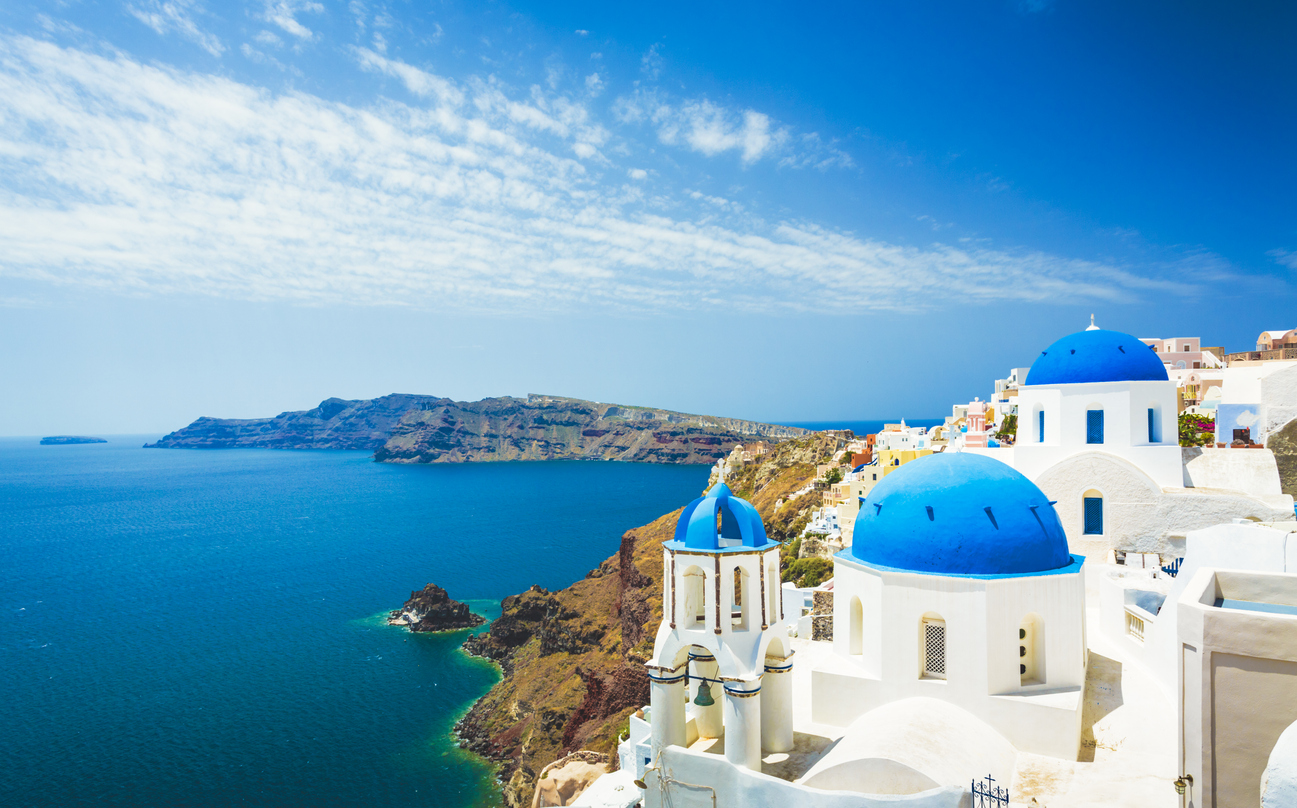
Cycle Greece's islands and coastline with local guides, on routes that range from easy, café-stop coastal rides to real climbs through some of the most dramatic scenery in the Mediterranean.

Greece, experienced the slow way on two wheels

What cycling in Greece actually looks like right now

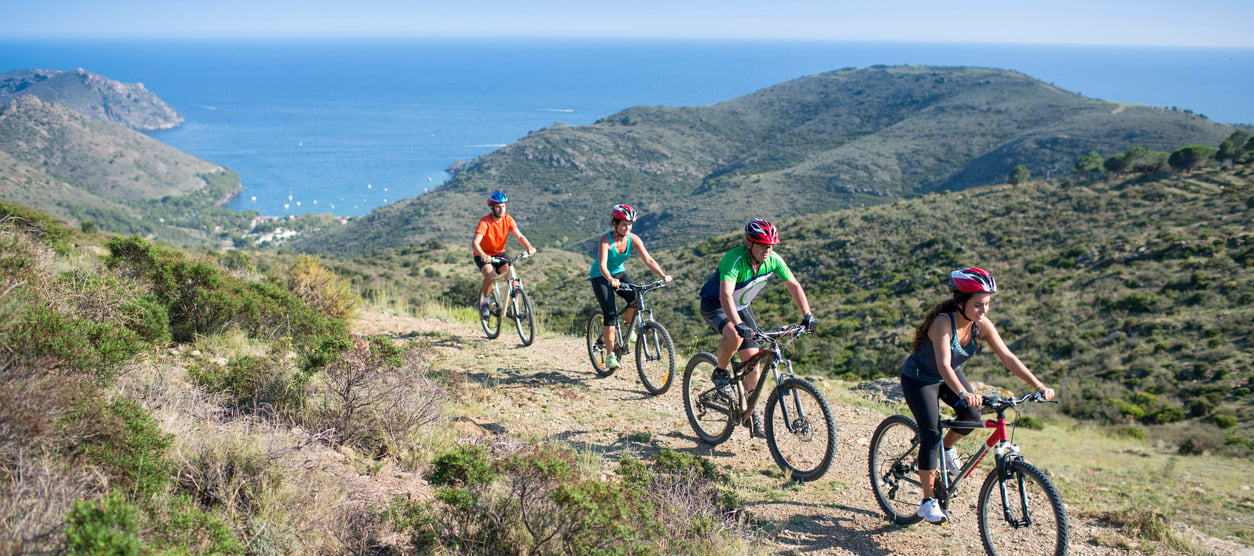
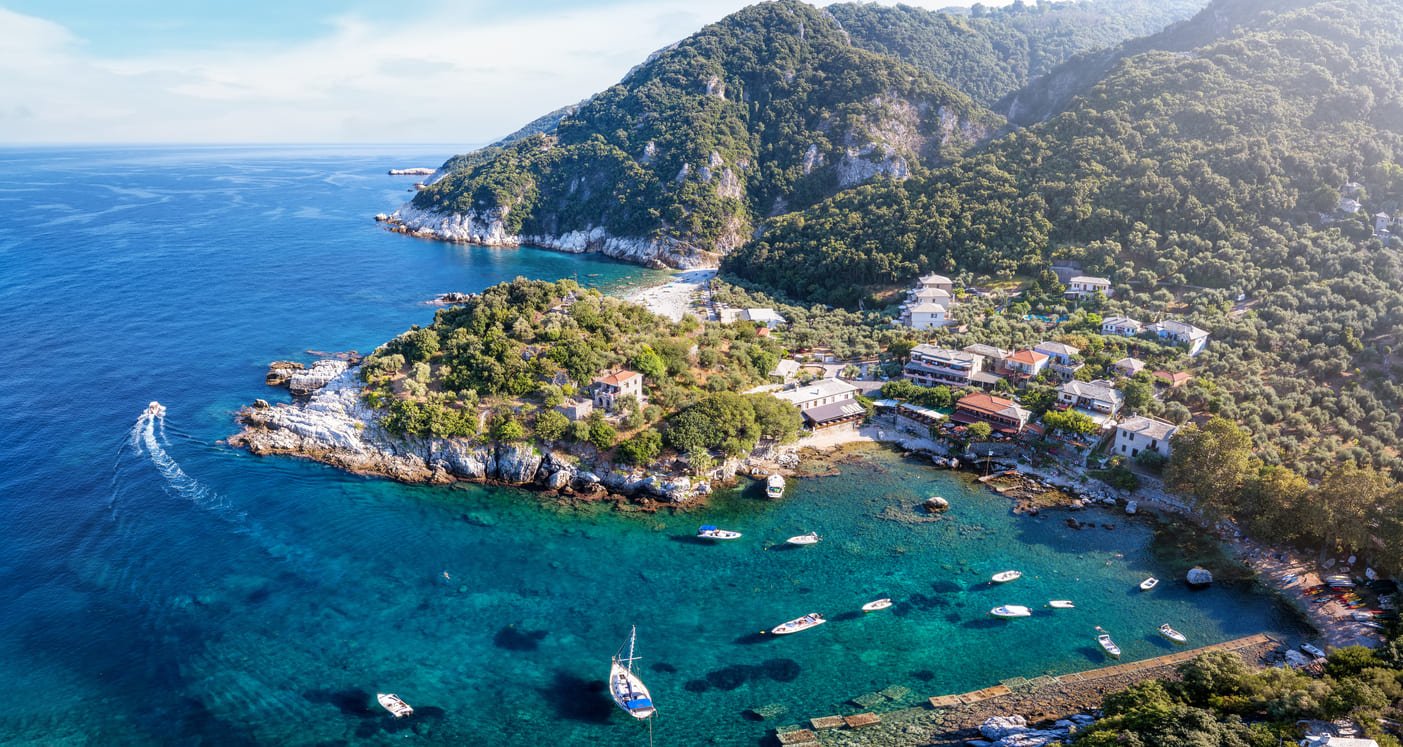
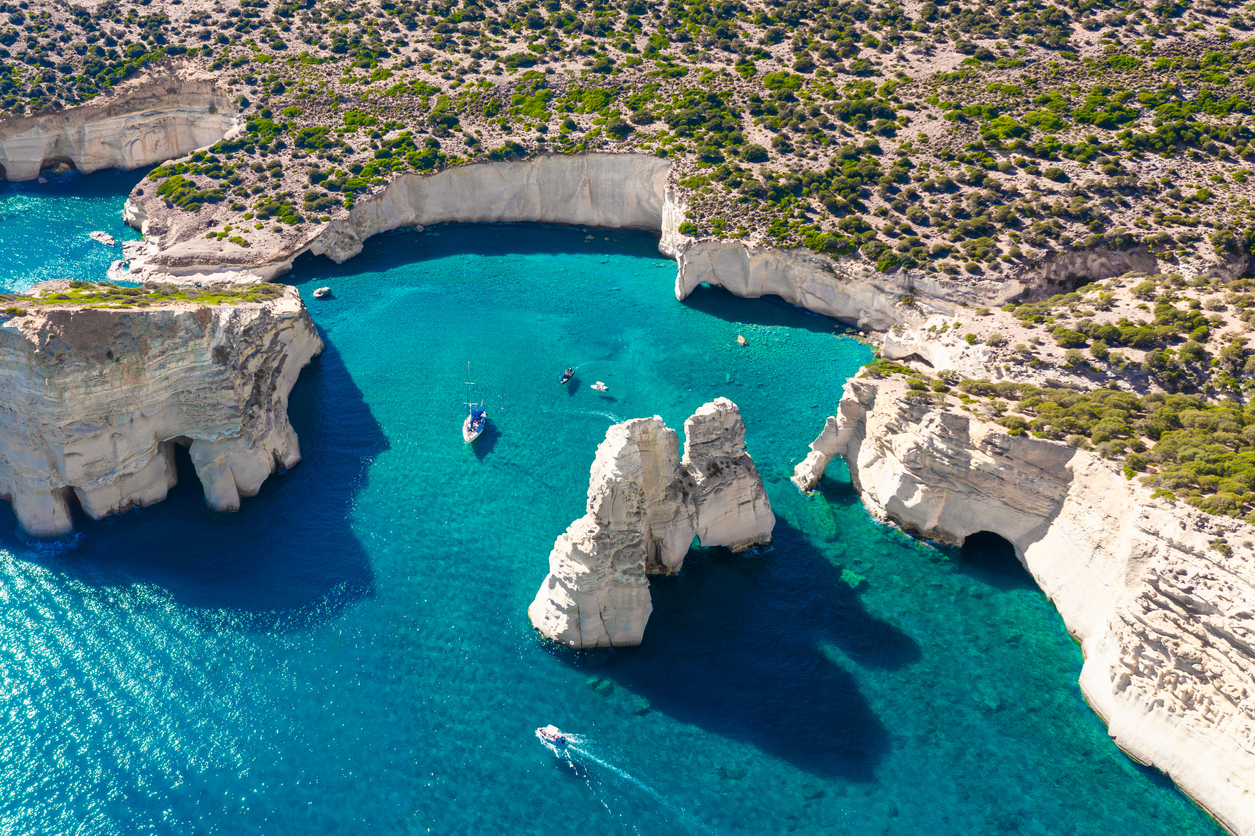
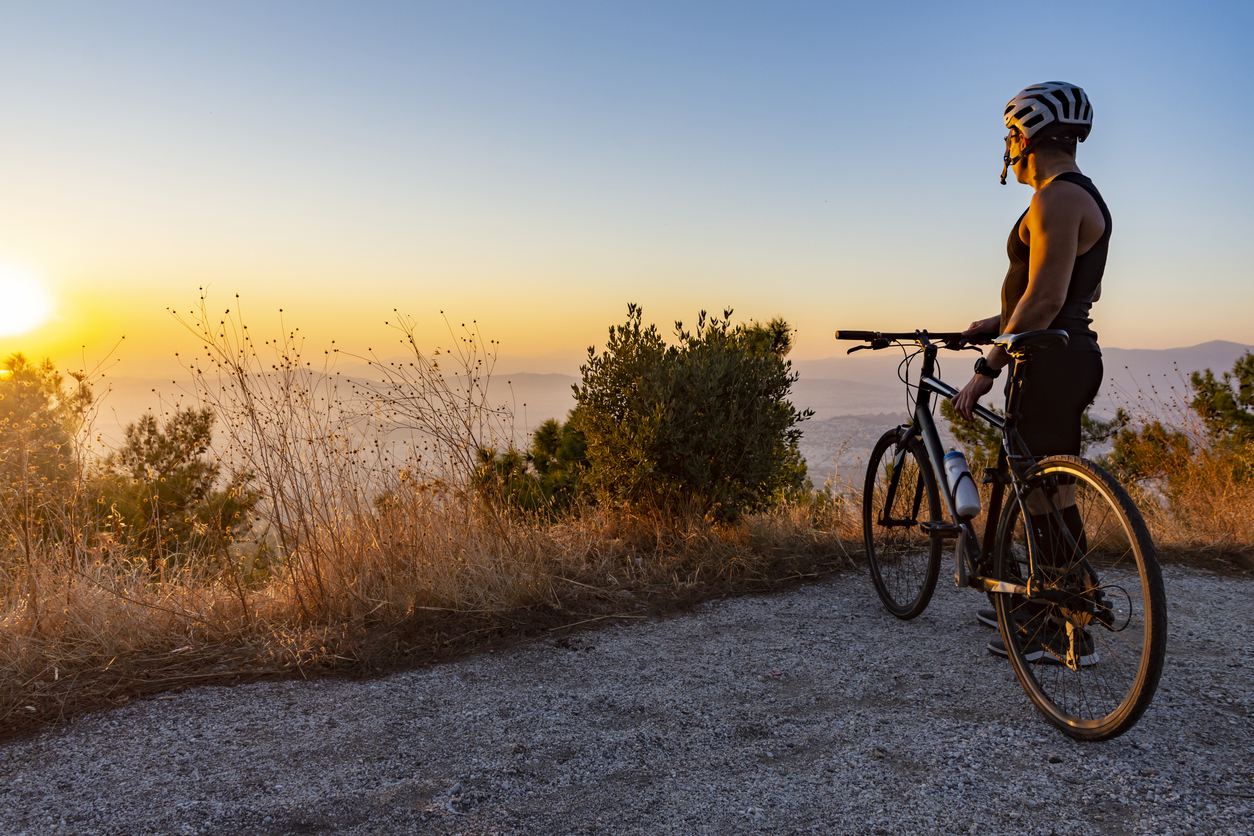
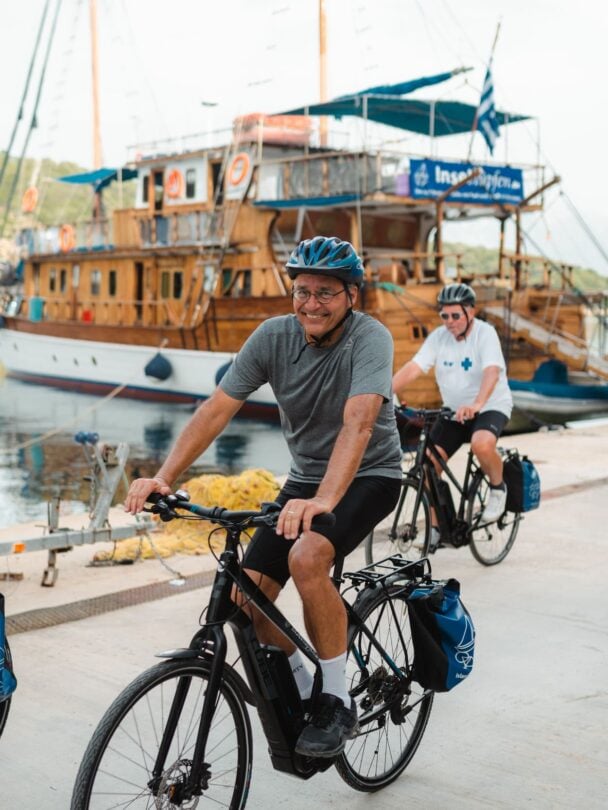
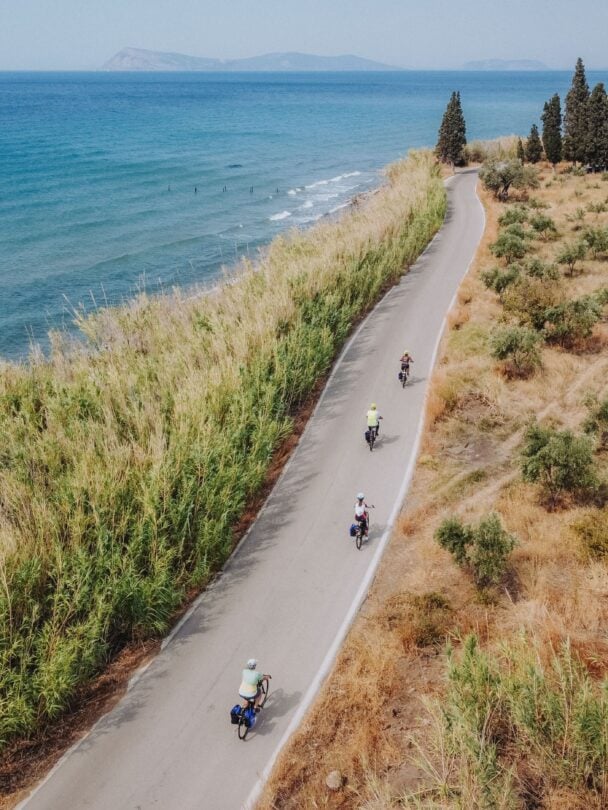
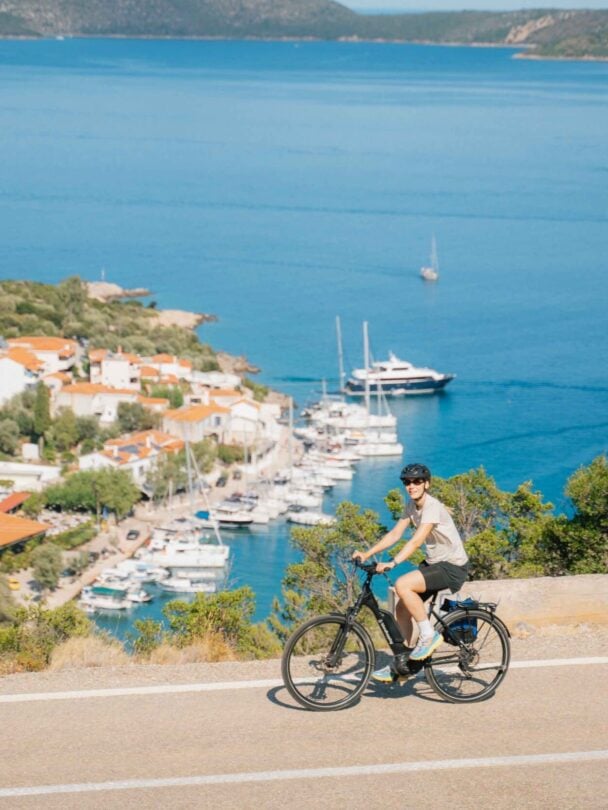
Many of our Greece routes pair the bike with a boat, and it’s worth knowing why before you assume it’s a gimmick. Board a yacht, a Turkish gulet, or a traditional wooden caique, and it becomes your floating hotel for the week. Every morning, you get off the boat and onto a bike—road, e-bike, or mountain bike, depending on the trip—and ride anywhere from 14 to 40 kilometers of coastal roads, hill switchbacks, or singletrack. The boat sails ahead while you ride, so you unpack once, on day one, and wake up somewhere new for the rest of the week.

It’s a format that works especially well in Greece, where the best riding is scattered across islands a ferry schedule would never string together on its own.
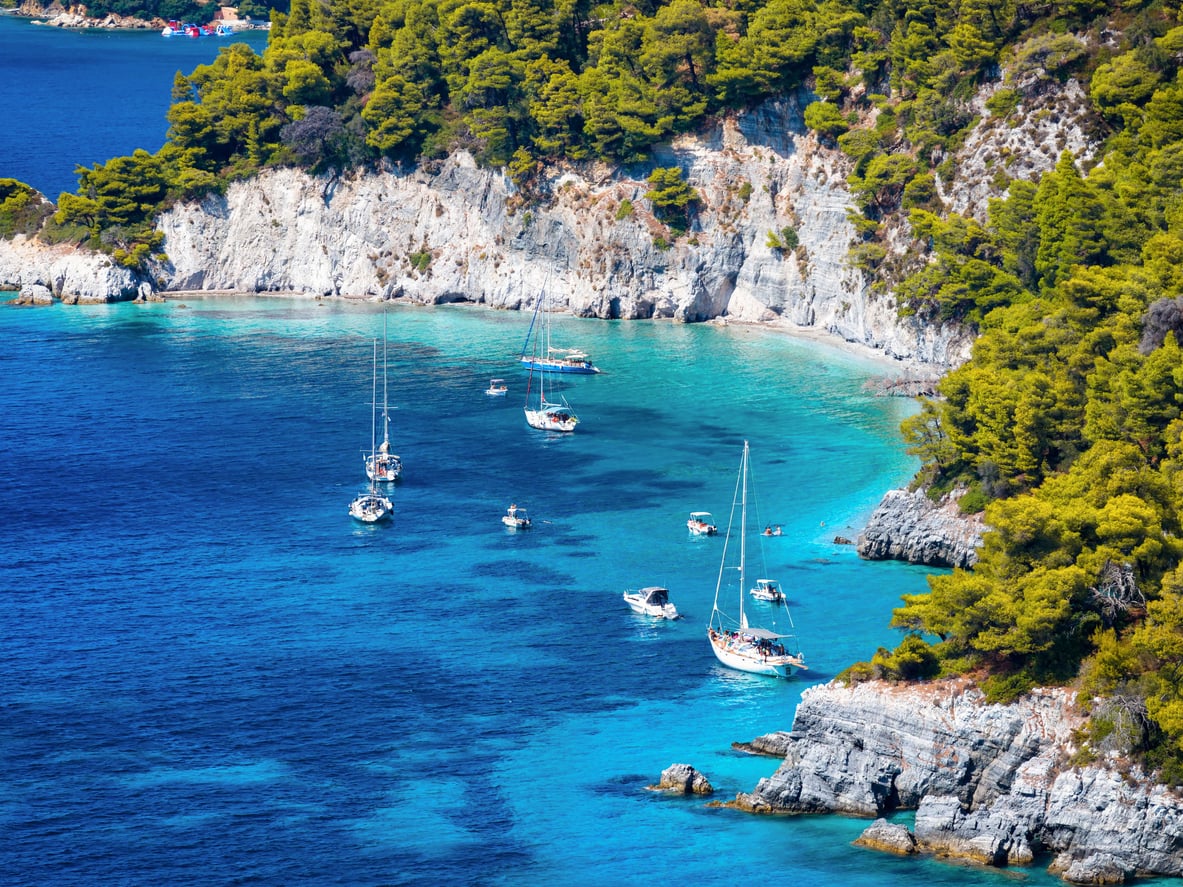
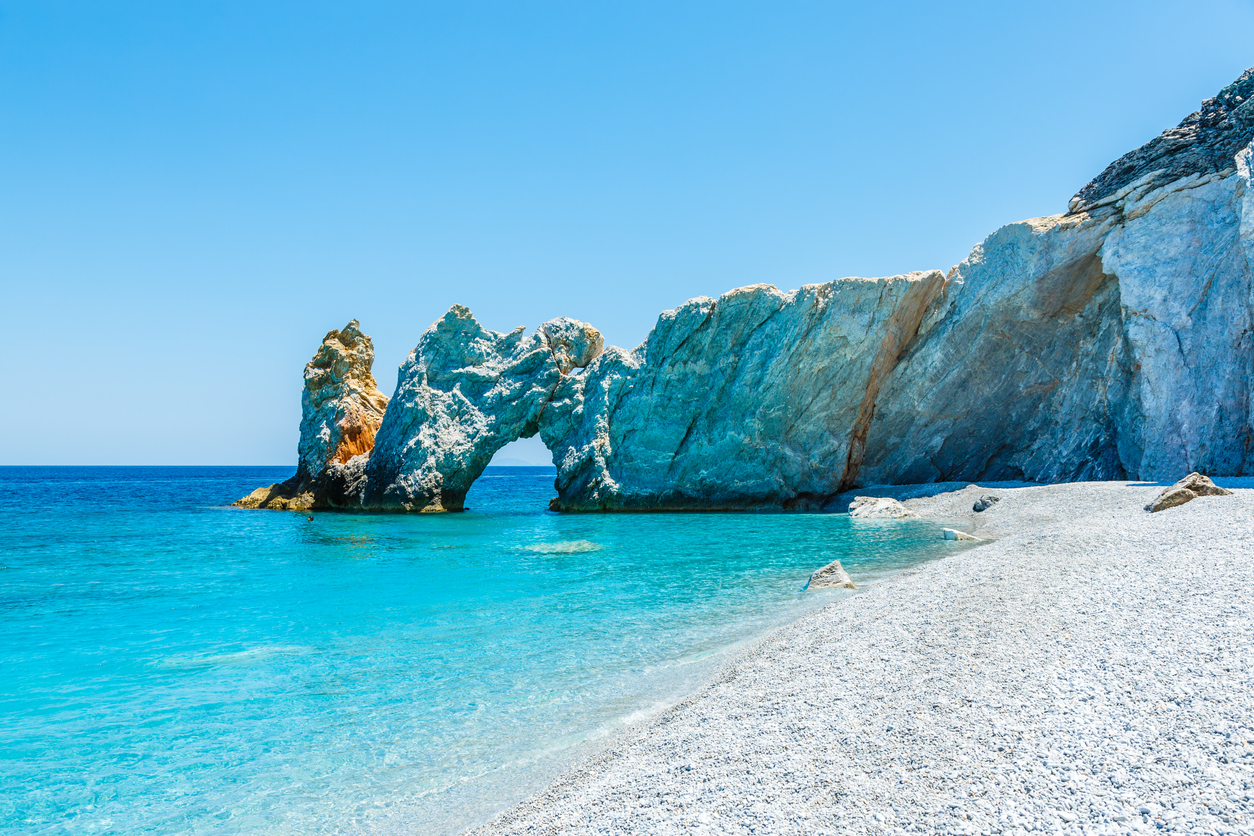
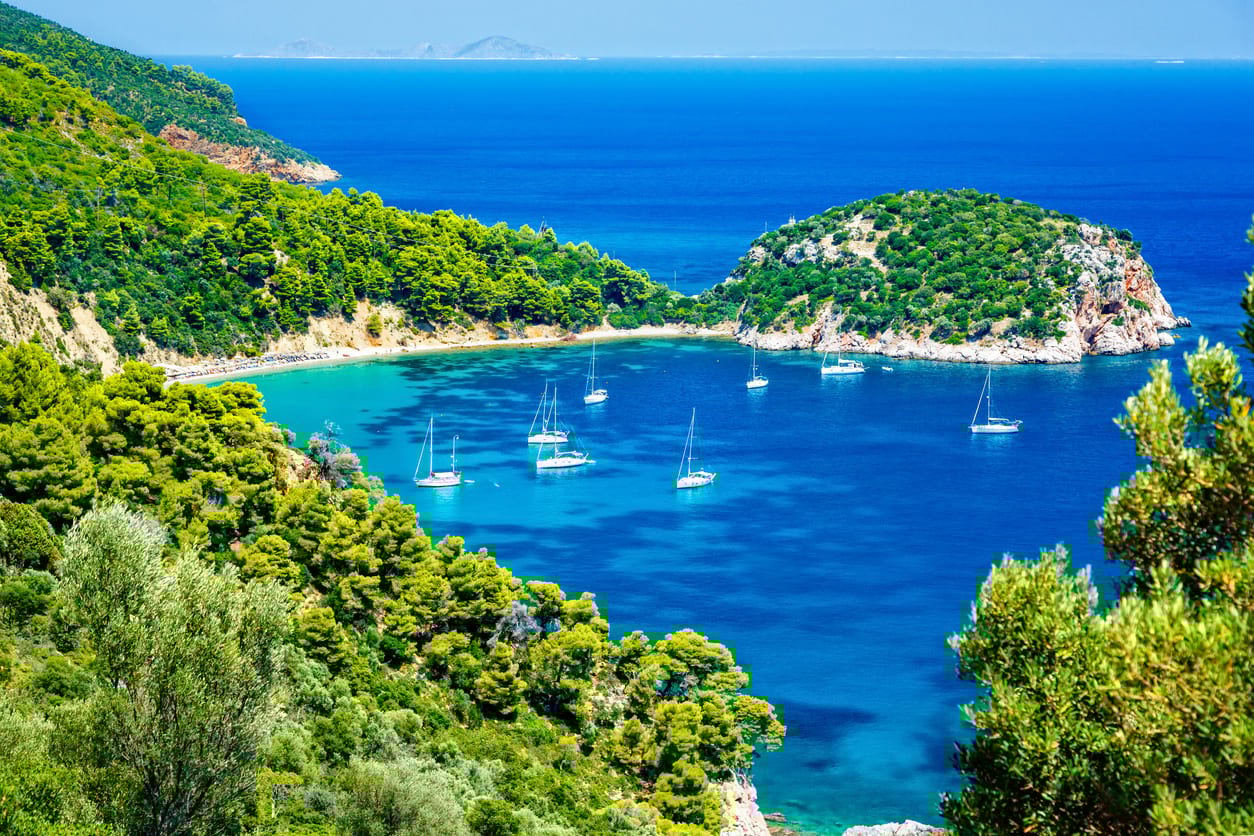
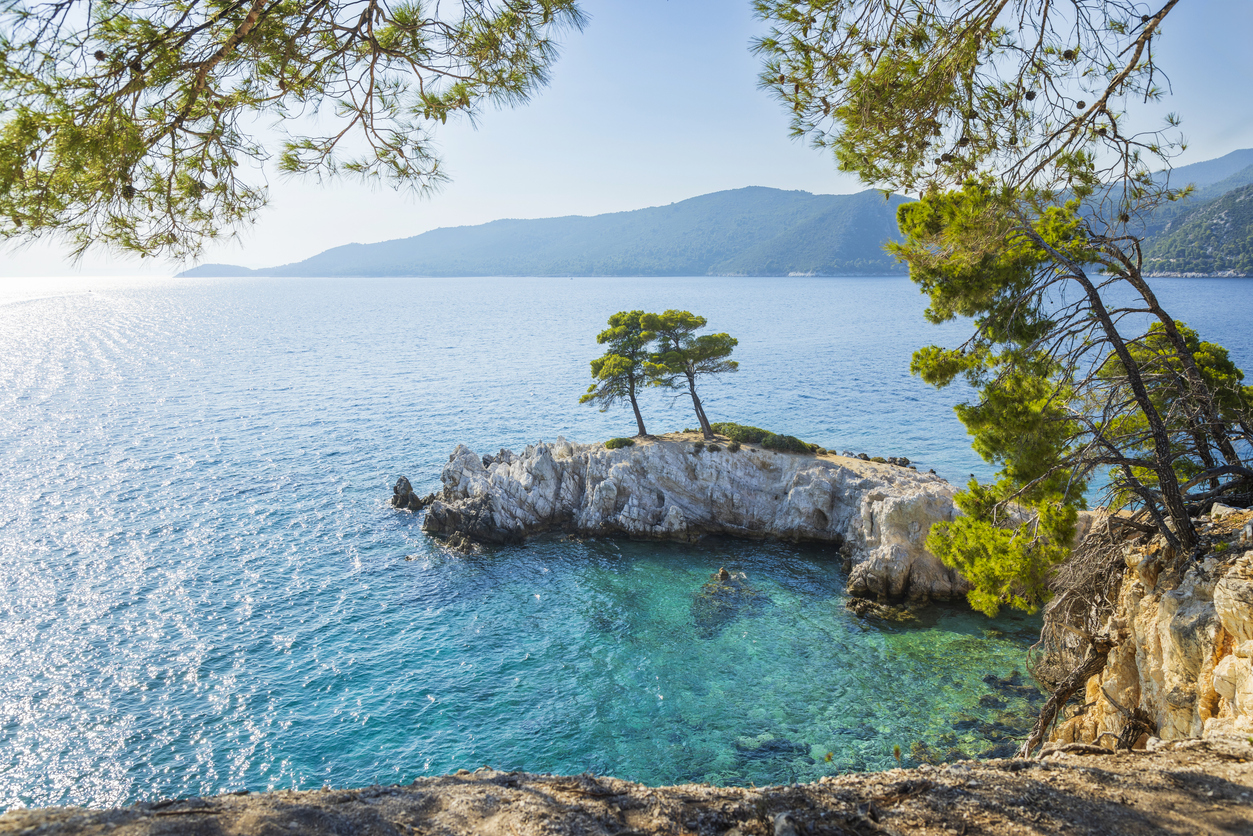
skopelos island greece

History and mythology, at bike-riding pace

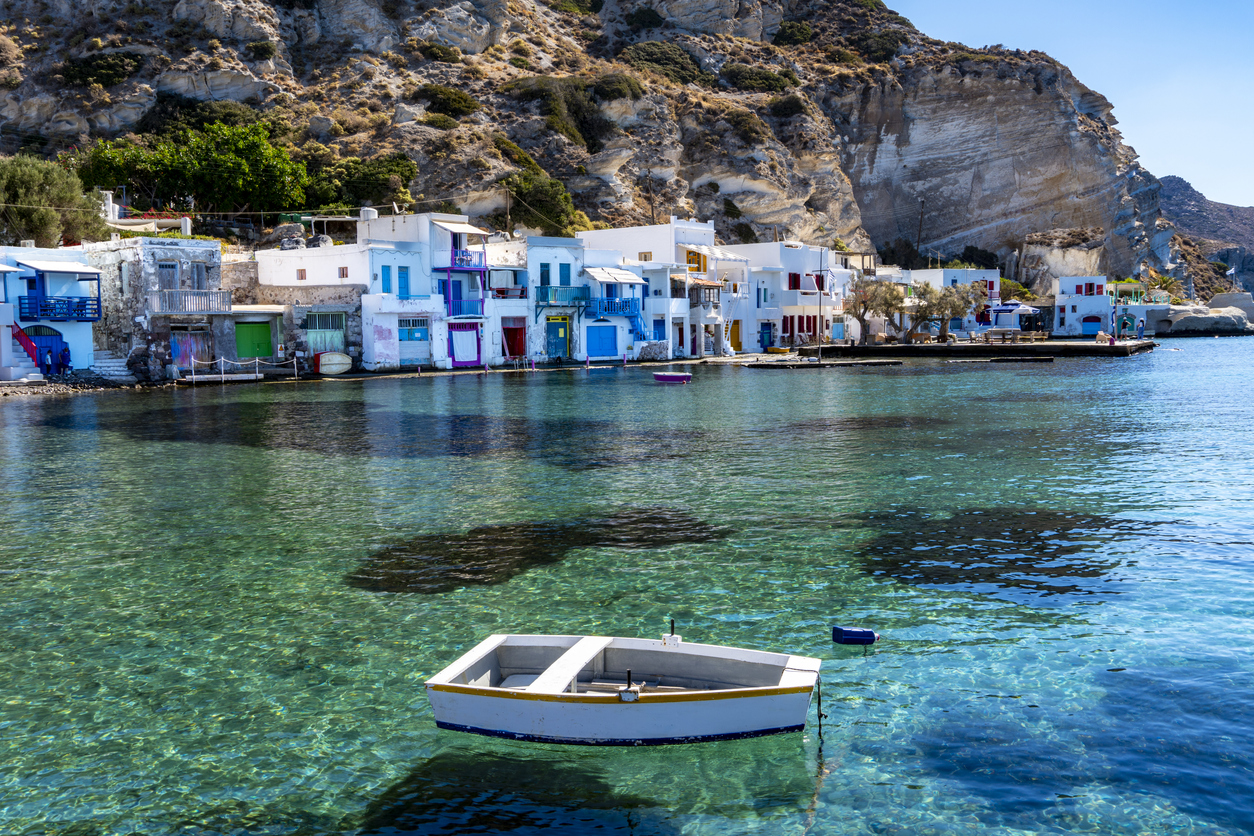
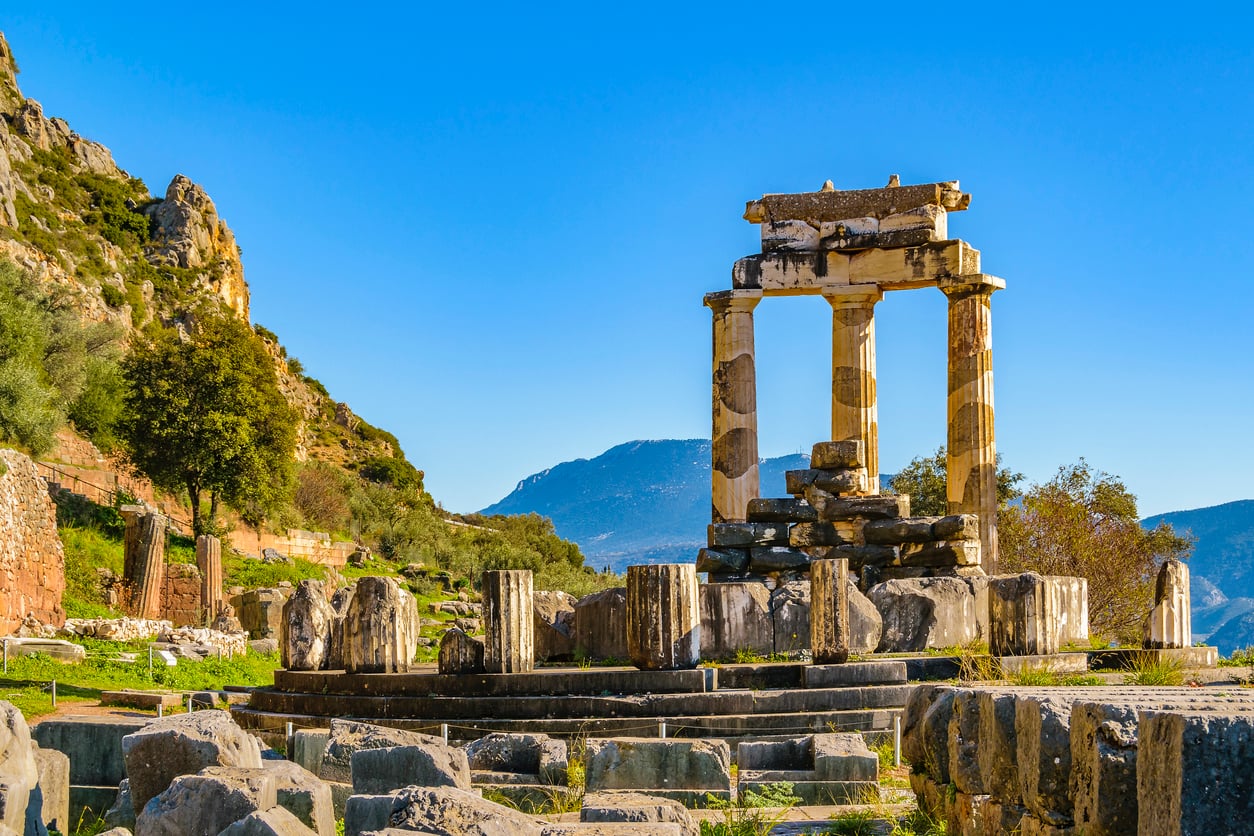
You’re cycling through some of the oldest stories in the western world, whether or not you’re paying attention to that fact. The Ionian route rides the mythical home of Homer’s Odysseus on Ithaca, then sails through the Corinth Canal with a stop near Delphi’s oracle. The Peloponnese and Saronic route covers close to 2,500 years of history in a week, from ancient temples to Venetian-era ports on car-free Hydra. The South Aegean trip mixes Ottoman-era villages with ancient theaters, and if Mamma Mia! is more your reference point than mythology, the Sporades route pedals straight through its filming locations on Skiathos and Skopelos.

ancient greece remnants

Matching the trip to your legs

Not every bike tour in Greece asks the same of you. Some routes are built for a good basic level of fitness, with daily distances of roughly 22 to 35 kilometers. Others ask for more—up to 40 kilometers a day with real climbing, and operators are upfront when a trip needs genuinely strong fitness rather than casual enthusiasm. Pick the pace you want, and let the difficulty grade on the specific trip tell you the rest.

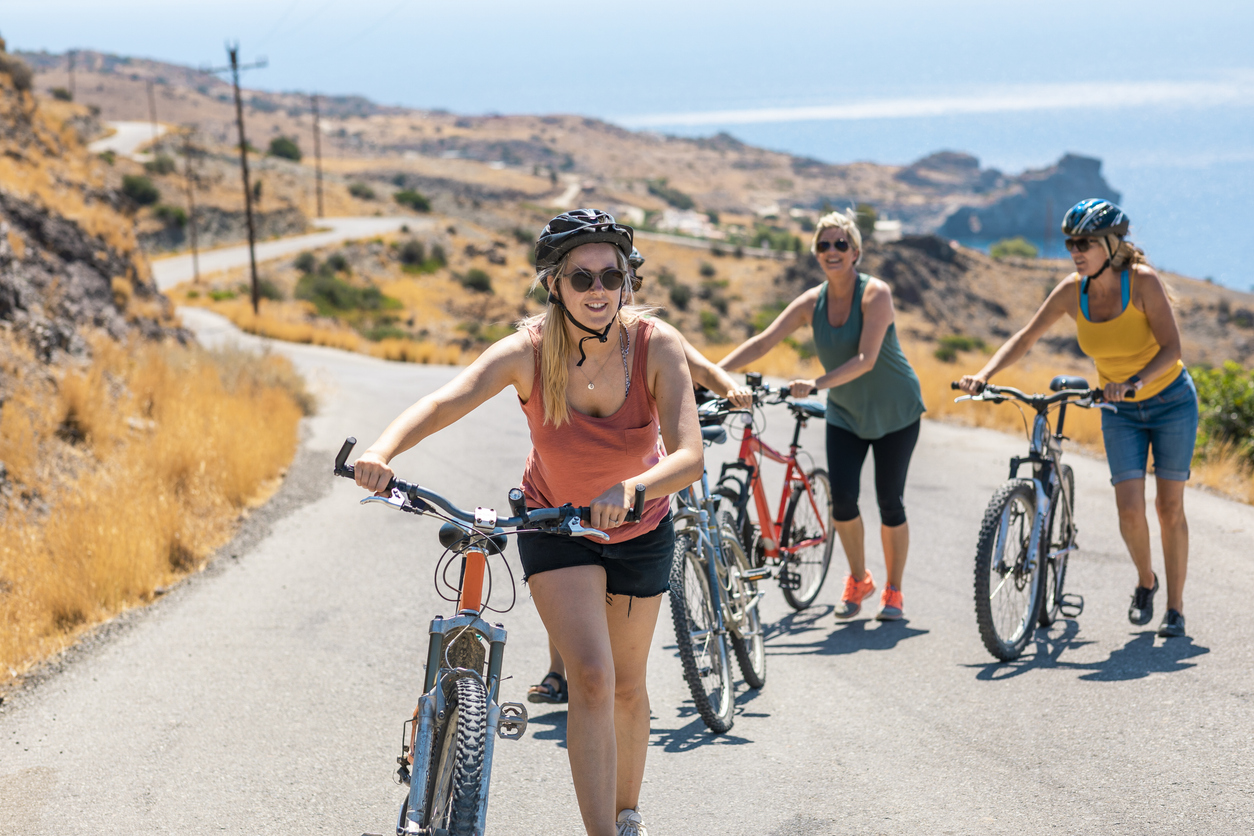
pushing bikes greece

The Greece you meet off the bike

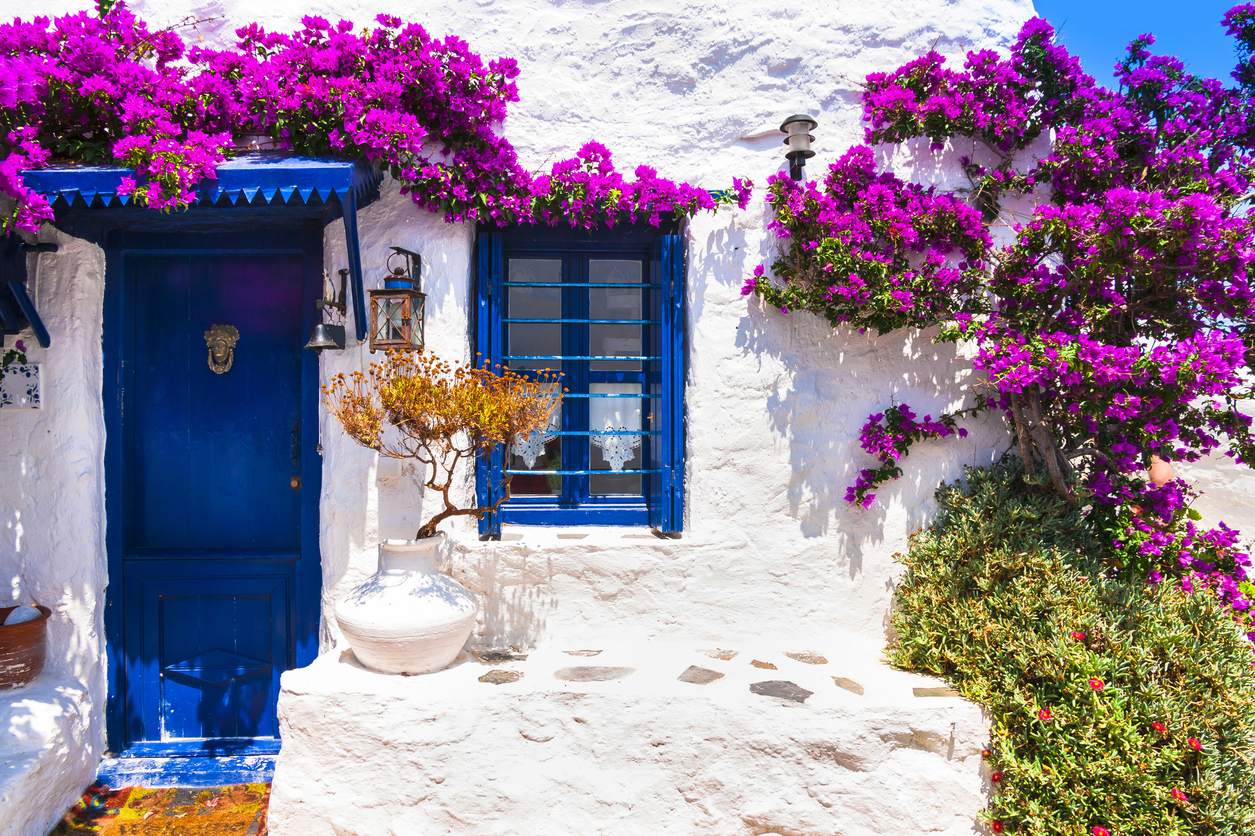
The best part of the day isn’t always the ride itself. Between routes, you’ll find the parts of Greece that never make it into a brochure:

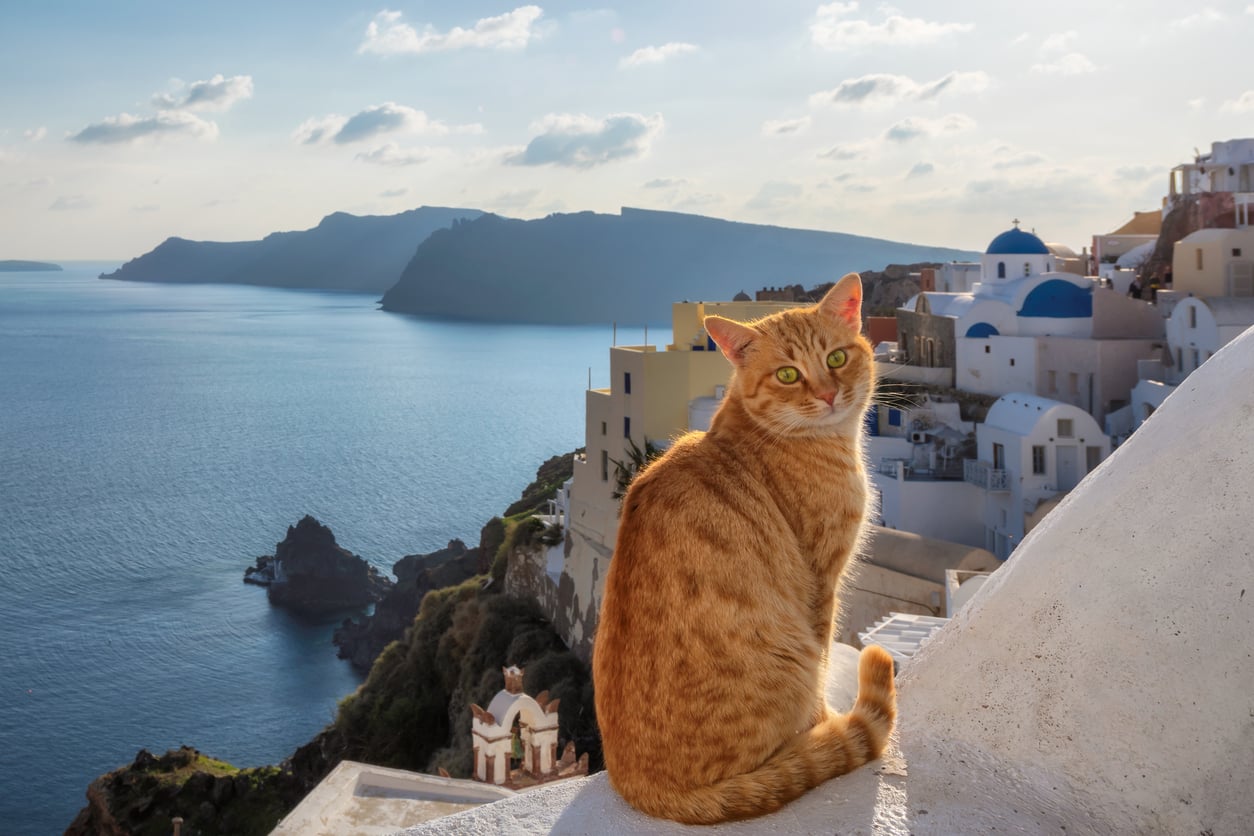
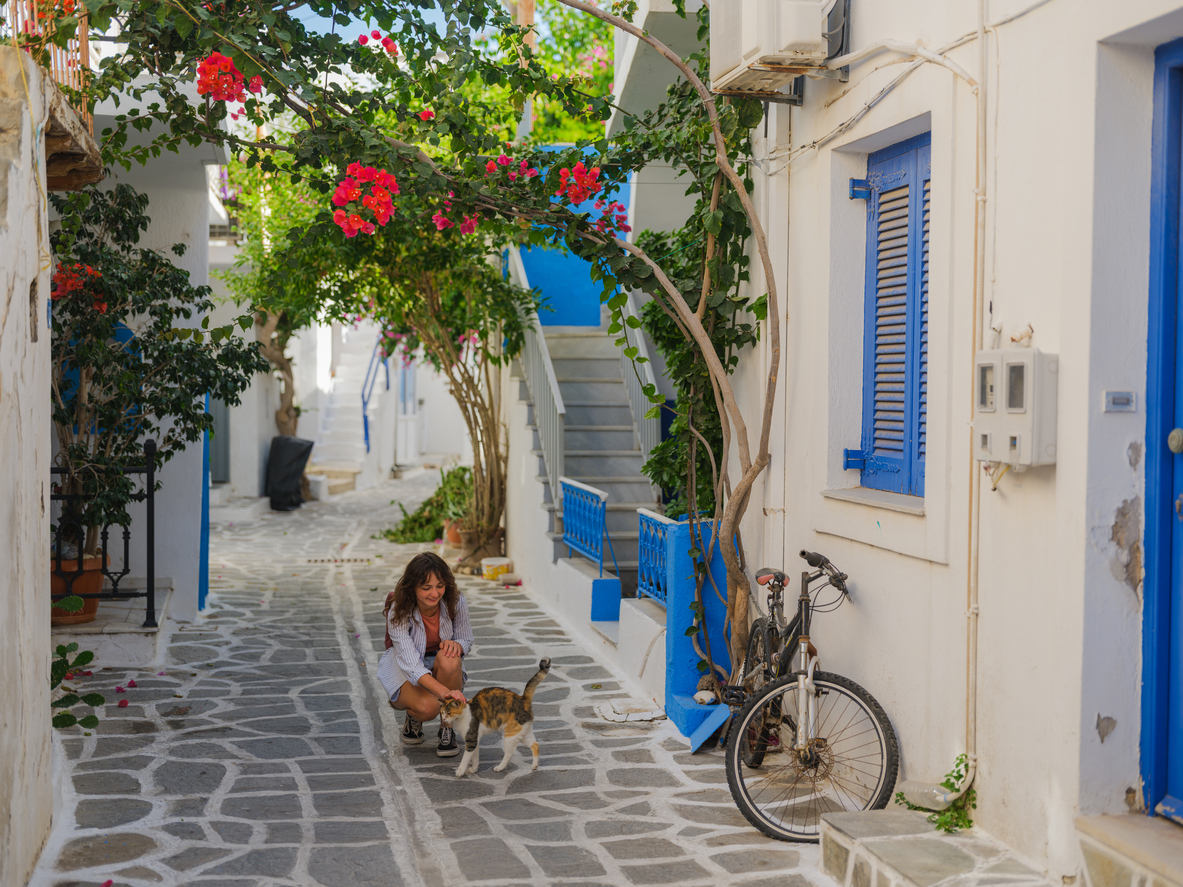
    • Cats, everywhere—sprawled outside every taverna, working every fishing dock, generally unbothered by your itinerary.
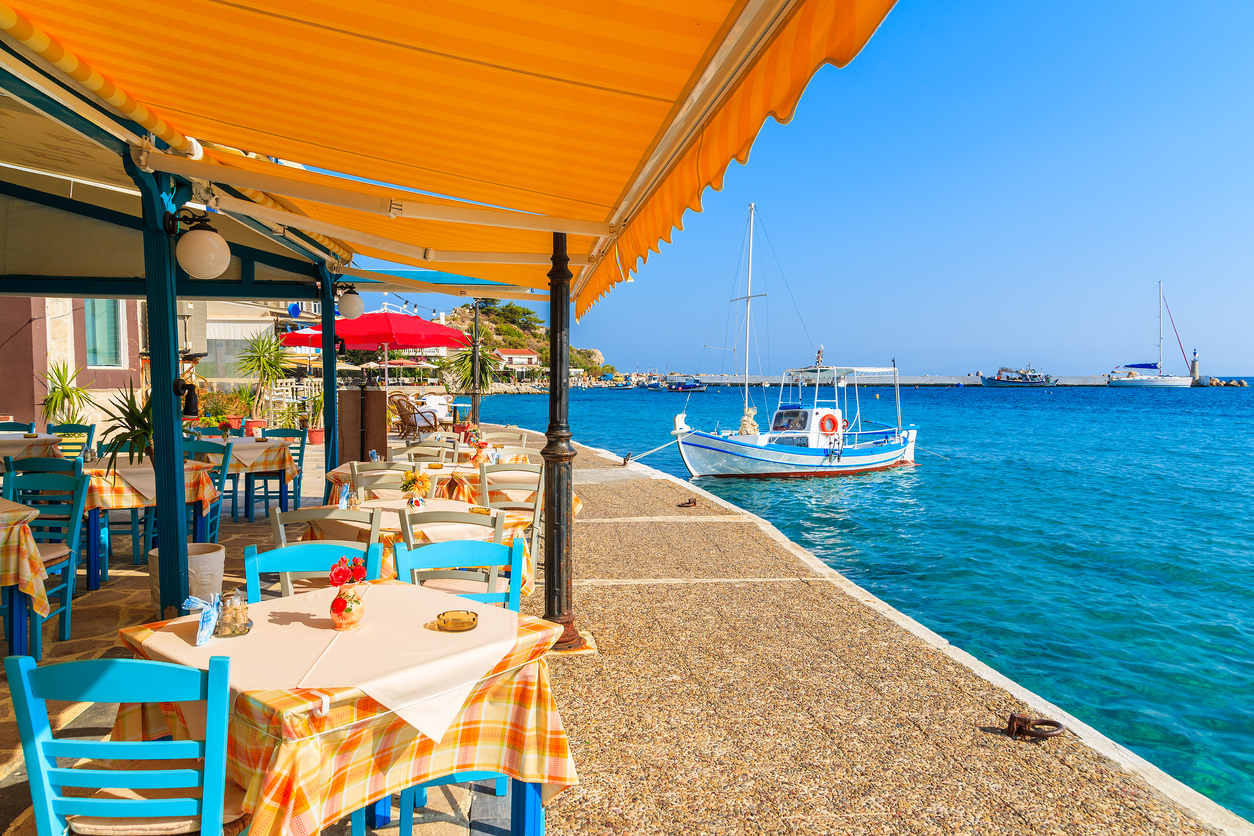
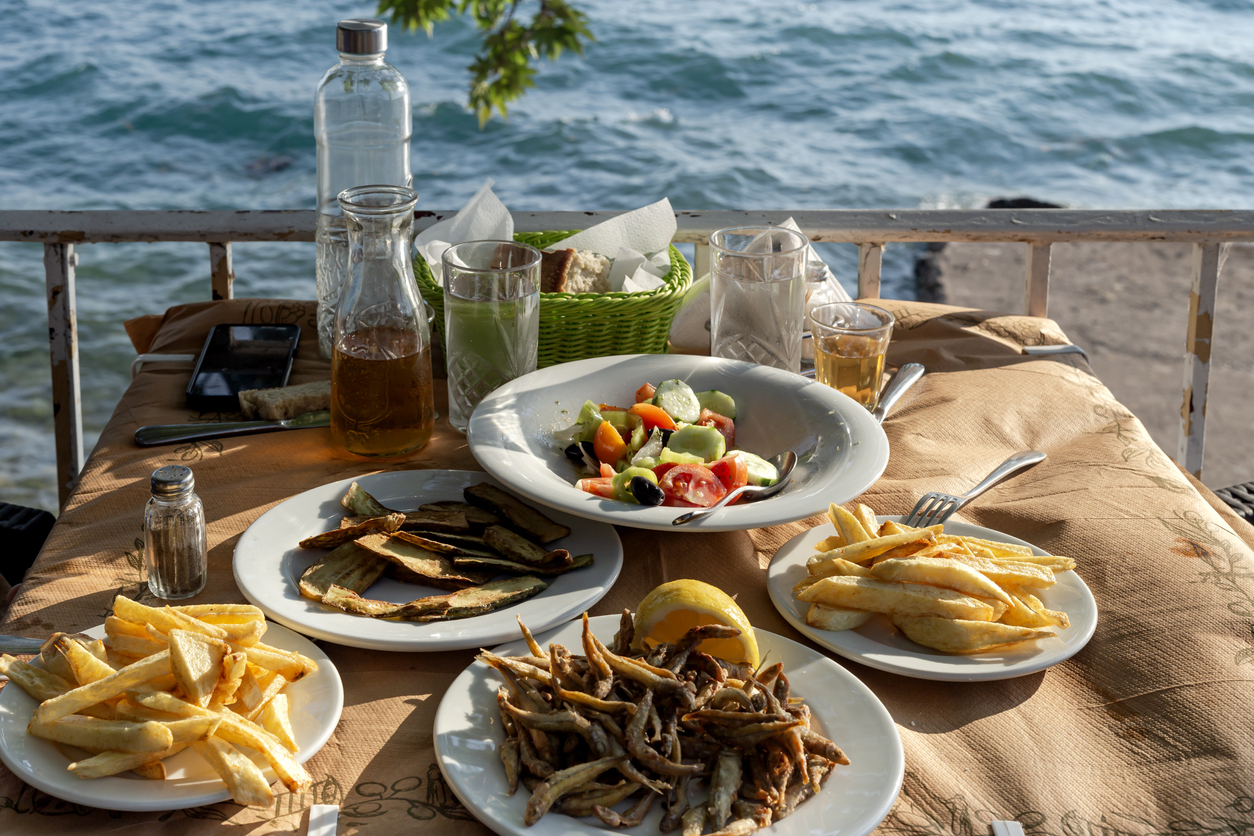
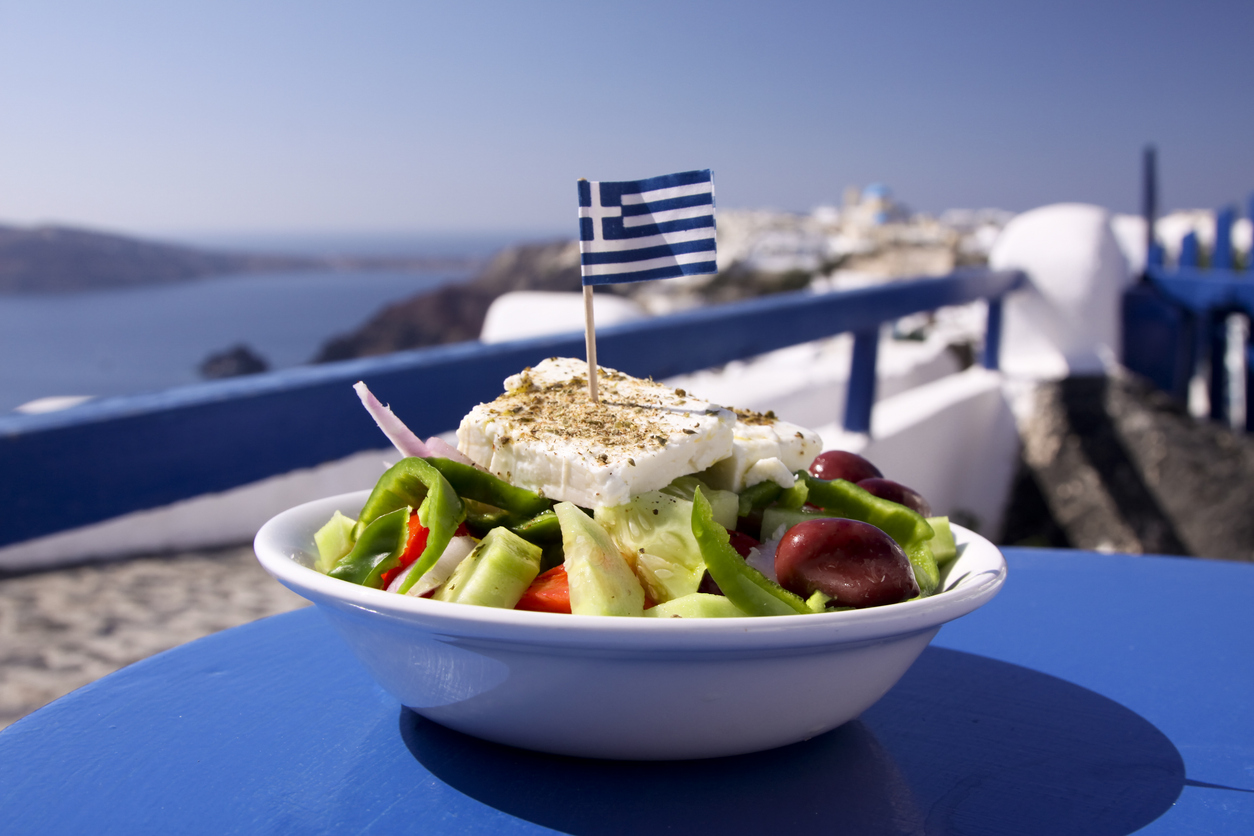
    • Tavernas that serve whatever’s fresh that day instead of a fixed menu—grilled octopus, a horiatiki salad, a carafe of the house wine nobody bothers to name.
    • Villages that slow down hard after lunch, and locals who see no reason to speed that back up for you.
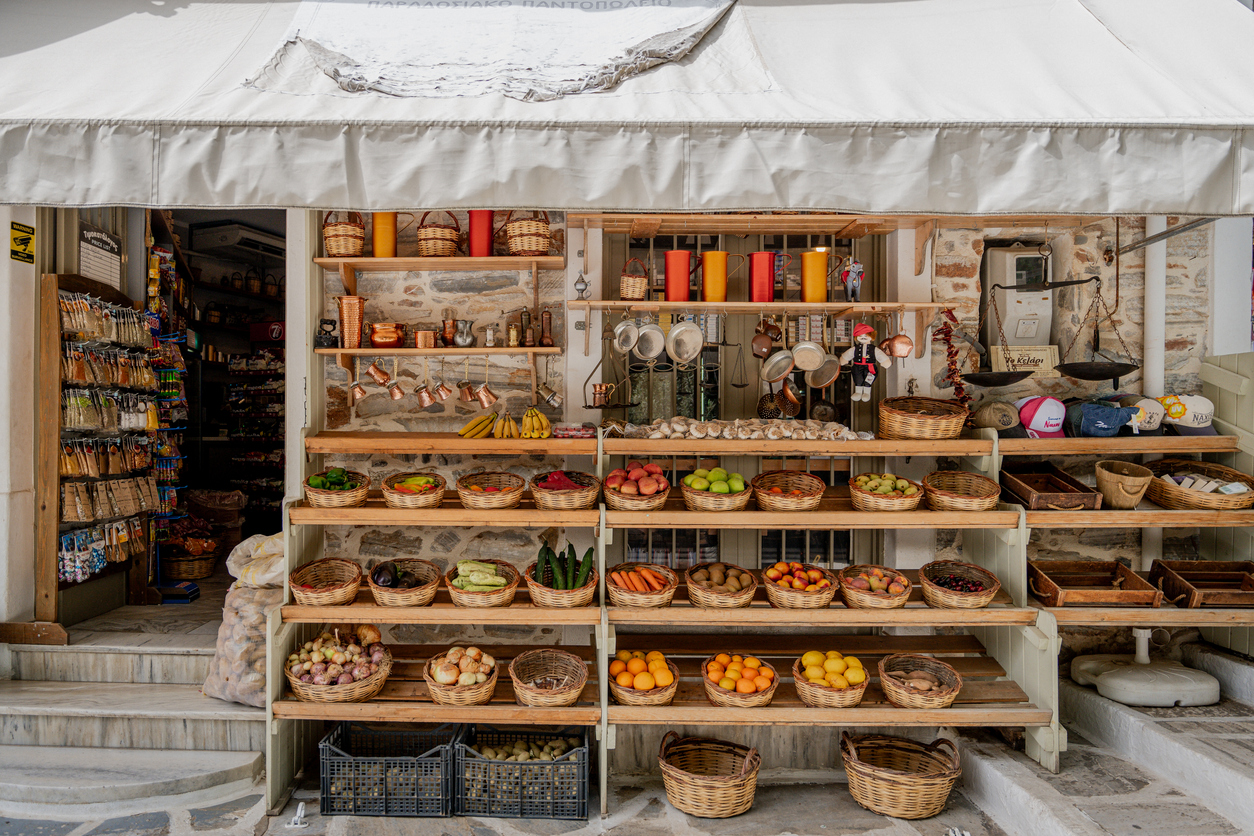
    • Small bakeries and produce stands worth a detour, even if it means rolling into the next stop a little later than planned.

It’s the kind of texture you’d miss entirely from a bus window and can’t miss from a bike seat.

orange boy greece

E-bikes make the hills a non-issue

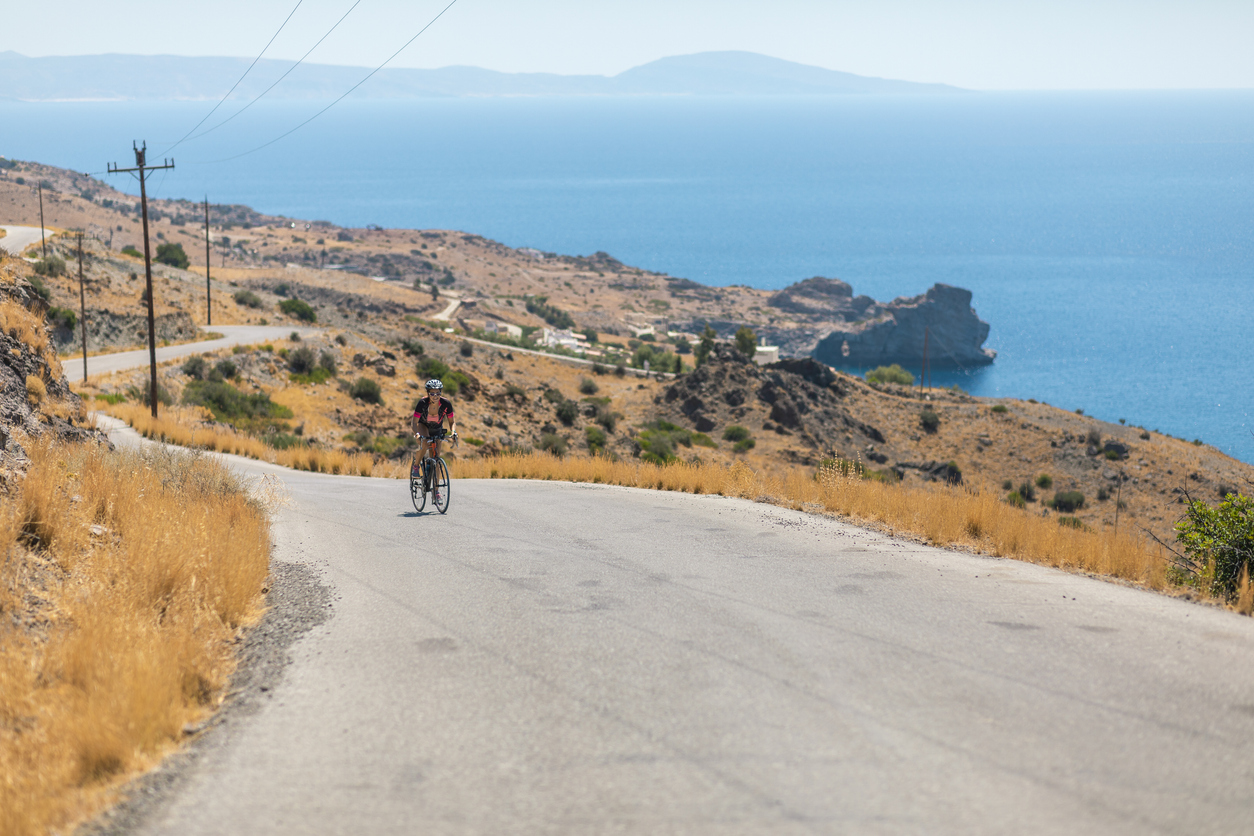
Greek islands are rarely flat—many routes gain 300 to 900 meters a day, and some climb enough that operators flag them for riders with genuinely good fitness. E-bikes with pedelec motors close that gap for most people, which is why they’re offered as an add-on on many trips.

Prefer to skip the assist? Several routes also run full-suspension mountain bikes and gravel setups, with singletrack ranging from easy blue trails to technical black sections through volcanic terrain. Check the specific trip for its exact difficulty breakdown—distance, elevation, and terrain all vary by route.

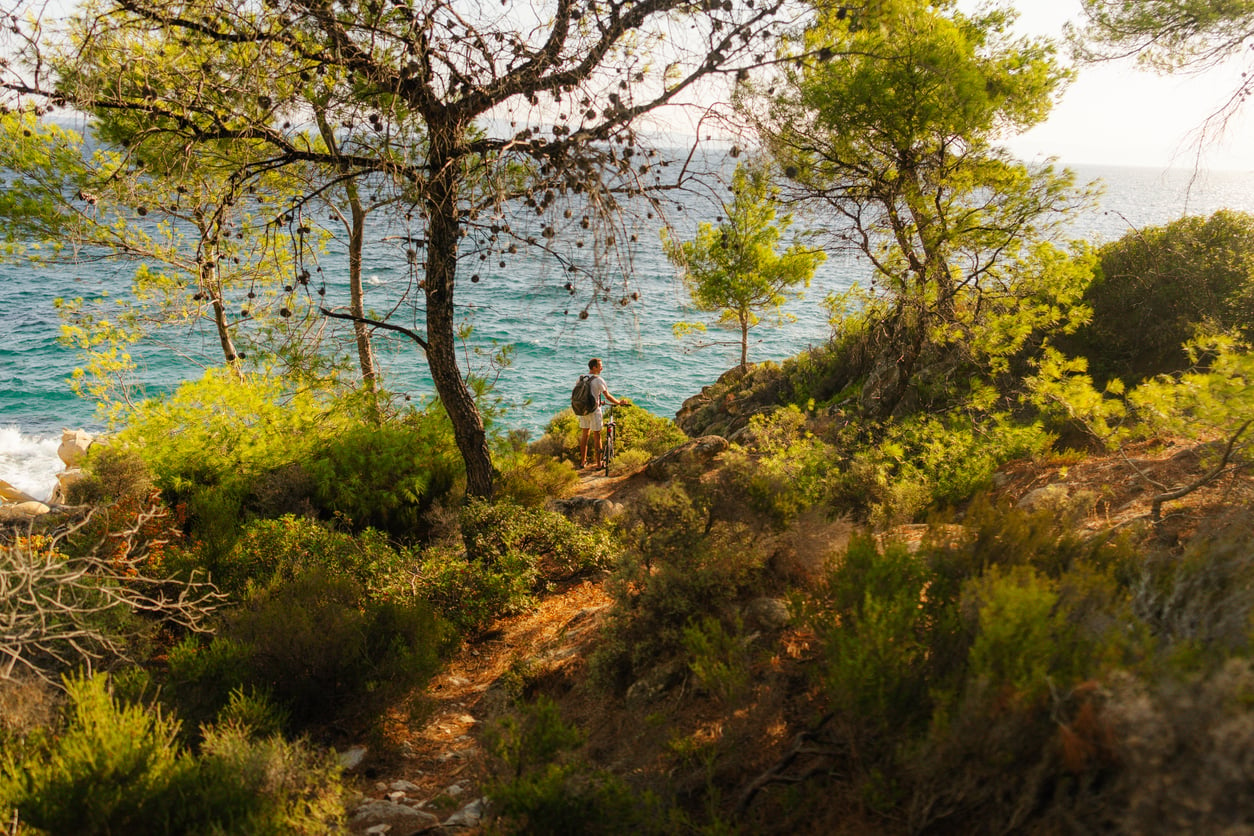
forest greece bike
What do people think of Bike Tours in Greece?
J Goodwin

Great guides, great boat and staff, awesome food. The rides were great too even in the heat as they were organed to be in the cooler part of the day

Susan Marr

The itinerary, the guides, the crew were all outstanding, thoroughly enjoyed the whole experience.

Roger Brazill

Dionysis was perfect. Knowledgeable, helpful, fun, careful and kind. The rides each day had the balance between work and play. Island hopping bikes were in good shape.

Frequently Asked Questions About Biking in Greece

  • It’s a week split evenly between two ways of moving through the Greek islands: cycling on land, and sailing between them. You ride anywhere from 14 to 40 kilometers a day on quiet island roads or singletrack, and a yacht, gulet, or traditional caique carries your luggage—and you—to the next port overnight. You unpack once and wake up somewhere different for most of the week. It’s currently how every top-selling Greece route on 57hours is built, though not every future trip in this hub will necessarily follow the same format.

  • Yes. Every bike tour in Greece on 57hours comes with an English-speaking local guide who knows the roads, the ports’ quirks, and the history behind the places you’re riding into—from the Corinth Canal to the backstreets of Hydra. Larger groups often get two or three guides so nobody’s riding alone at the back.

  • It depends on the trip, but the basics are typically covered: guide, accommodation (a boat cabin on the current routes), most meals (usually a mix of half board and full board days), and entrance fees to the archaeological sites and museums on the route. E-bike or MTB rental is usually offered as an add-on rather than bundled in. Always check the specific itinerary for the exact inclusions before booking.

  • Depends which islands you pick. The Cyclades & Saronic and Sporades routes ask for a good basic level of fitness—daily rides of 22 to 35 kilometers with moderate elevation gain, and you can skip a riding day and stay on the boat if you’d rather. The Ionian, Peloponnese, and South Aegean routes are built for stronger riders, with days up to 40 kilometers and real hills. E-bikes narrow that gap considerably, so check the difficulty grade on the specific trip rather than assuming.

  • May, June, and September hit the sweet spot. Warm enough to swim between rides, without the meltemi winds that pick up across the Aegean from June through September and peak in July and August. The Ionian side is more sheltered than the Cyclades or South Aegean, so it holds a slightly longer, calmer season if you’re set on midsummer dates.

  • Your skipper adjusts. The meltemi can turn an easy Cyclades crossing choppy with little warning, so operators build alternate routes into the itinerary—a different order of islands, a sheltered passage through the Saronic Gulf instead of open Aegean water—rather than sailing through it. It’s normal, and it’s exactly why an experienced local crew is worth having.

Get in touch
We’re happy to answer any of your questions. Send us an inquiry or talk to one of our adventure planners free of charge.
Need help finding a perfect adventure?
We're happy to answer any of your questions. Send us an inquiry or talk to one of our adventure planners free of charge.
Saved to bucket list
Removed from bucket list

Choose a currency

  • USD - $
    US Dollar
  • EUR - €
    Euro
  • AUD - AU$
    Australian Dollar
  • CAD - CA$
    Canadian Dollar
  • GBP - £
    British Pound Sterling
  • CHF - CHF
    Swiss Franc
  • JPY - ¥
    Japanese Yen
  • SGD - S$
    Singapore Dollar
  • HKD - HK$
    Hong Kong Dollar
  • DKK - Dkr
    Danish Krone
  • NOK - Nkr
    Norwegian Krone
  • NZD - NZ$
    New Zealand Dollar