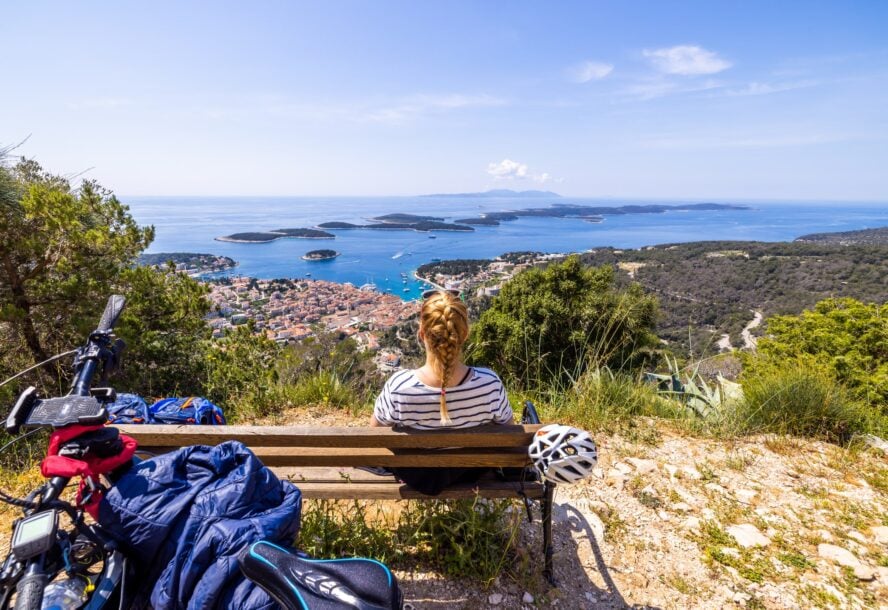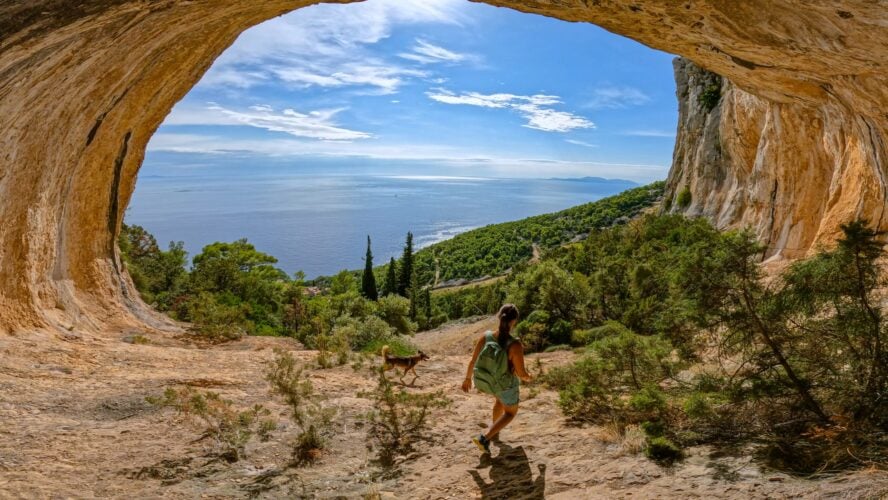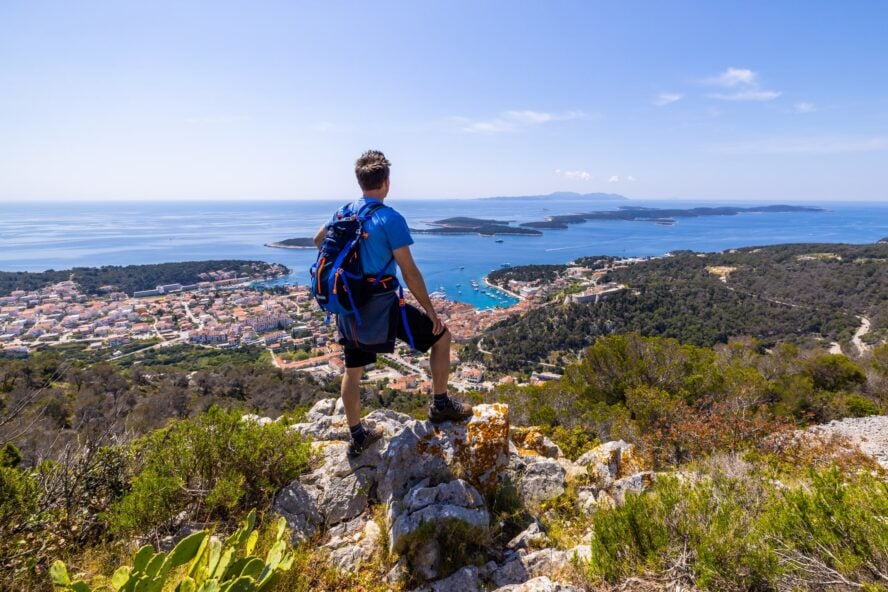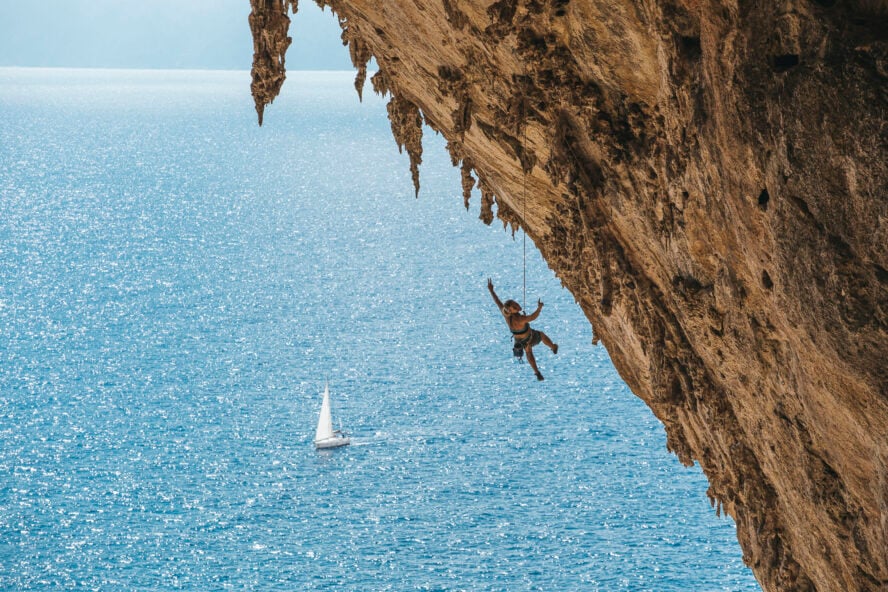

Climbers love to complicate things, and rock climbing in Croatia is no exception. Guidebooks thicker than novels. Beta debates that last longer than the route. Epic approaches that are apparently “part of the experience.”
Here’s a thought. What if the best approach trail is liquid?
I’ve guided plenty of climbing holidays across Europe, but none of them started with dropping anchor.
I grew up on the Croatian coast but left to chase grades abroad. Greece, Turkey, France. I spent months in Kalymnos pulling on pocketed limestone, trained on steep tufas in Turkey, and stood under the grey walls of Céüse trying to move like I belonged there. I came back stronger, sure.
But I also came back blind to what was sitting in front of me. Limestone walls rising directly from the sea, quietly waiting.
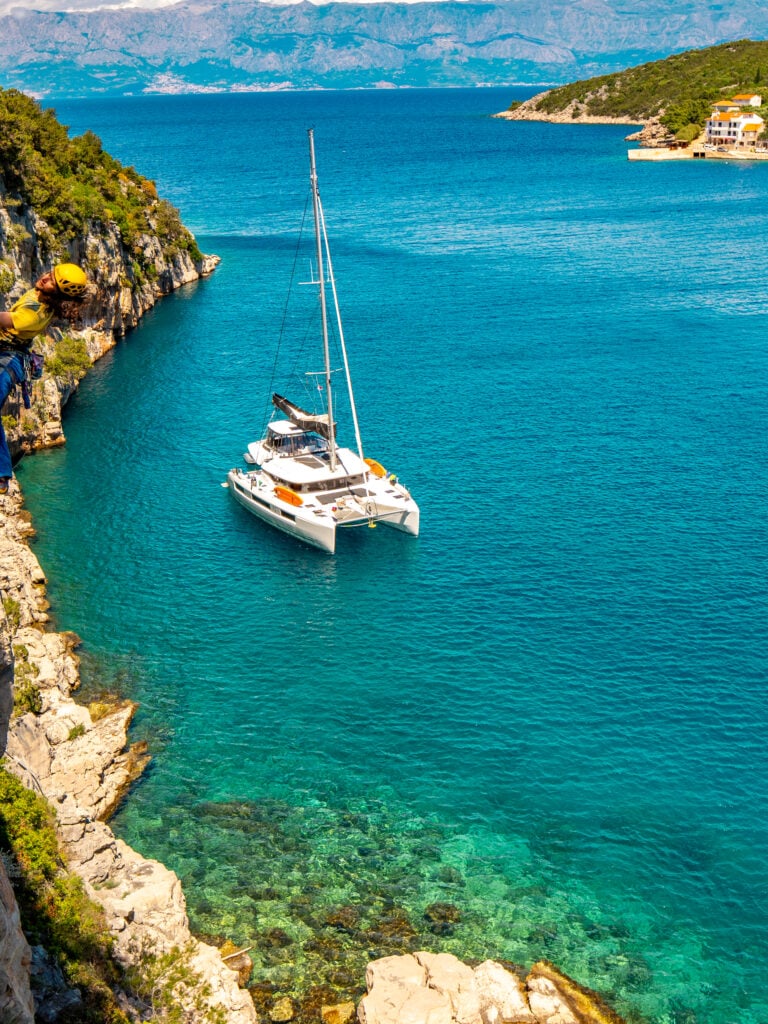
The first time I started sailing between the Dalmatian islands and tied in after arriving by boat, not by asphalt, I understood something uncomfortable. Rock climbing in Croatia didn’t need to copy anyone else’s formula. It just needed to stop pretending the parking lot was essential.
Why Croatia, why Dalmatia

Croatia sits on the eastern side of the Adriatic Sea, staring straight at Italy. To the north are Slovenia and Hungary. To the east, Serbia and Bosnia and Herzegovina. Montenegro anchors the south. We sit right between Central Europe and the Mediterranean, and you feel that mix immediately. Espresso culture meets mountain mentality. Stone villages meet alpine ridgelines.
We’re a country of about 4 million people, but geographically we punch far above that. The east is flat and agricultural. The north rolls gently around Zagreb. Inland you hit mountains. And then the coastline begins. Seventeen hundred kilometers, about 1,050 mi (1,700 km), of raw interface between land and sea, stretching from Istria down to Dubrovnik.
Where the mountains meet the sea
Off that coastline sit more than 1,200 islands. Not decorative. Not random. They’re the exposed tops of the Dinaric Alps, ancient limestone ridges that slowly sank and fractured over time. When we sail during the week, we’re literally moving through drowned mountain peaks.
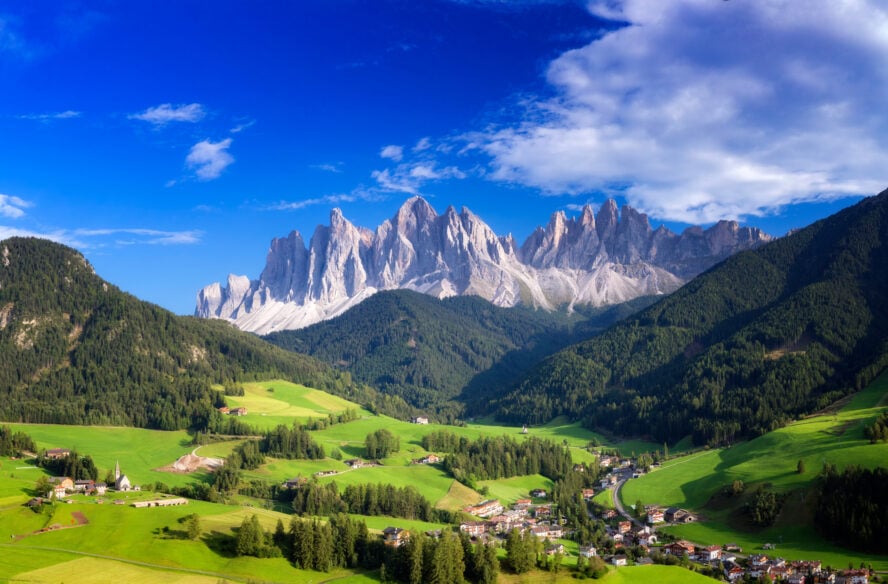
Dalmatia is where this collision feels the most dramatic. The mountains don’t politely fade into the sea. They drop into it. White limestone walls rise straight out of turquoise water. Old stone houses sit below cliffs that look like they were designed by climbers.
You can climb in the morning and swim in deep blue water before your forearms even recover. That’s why rock climbing Croatia feels different here. The setting isn’t background. It’s part of the movement.
I’m not originally from Dalmatia, but my family has a home on the island of Pag. I’ve been connected to this coastline since before I was born. Summers here shaped my sense of time. Long afternoons. Pine resin in the heat. That quiet understanding that nothing truly urgent happens before sunset.
And when you grow up with that rhythm, you start building your adventures around it.
The meaning of “pomalo”
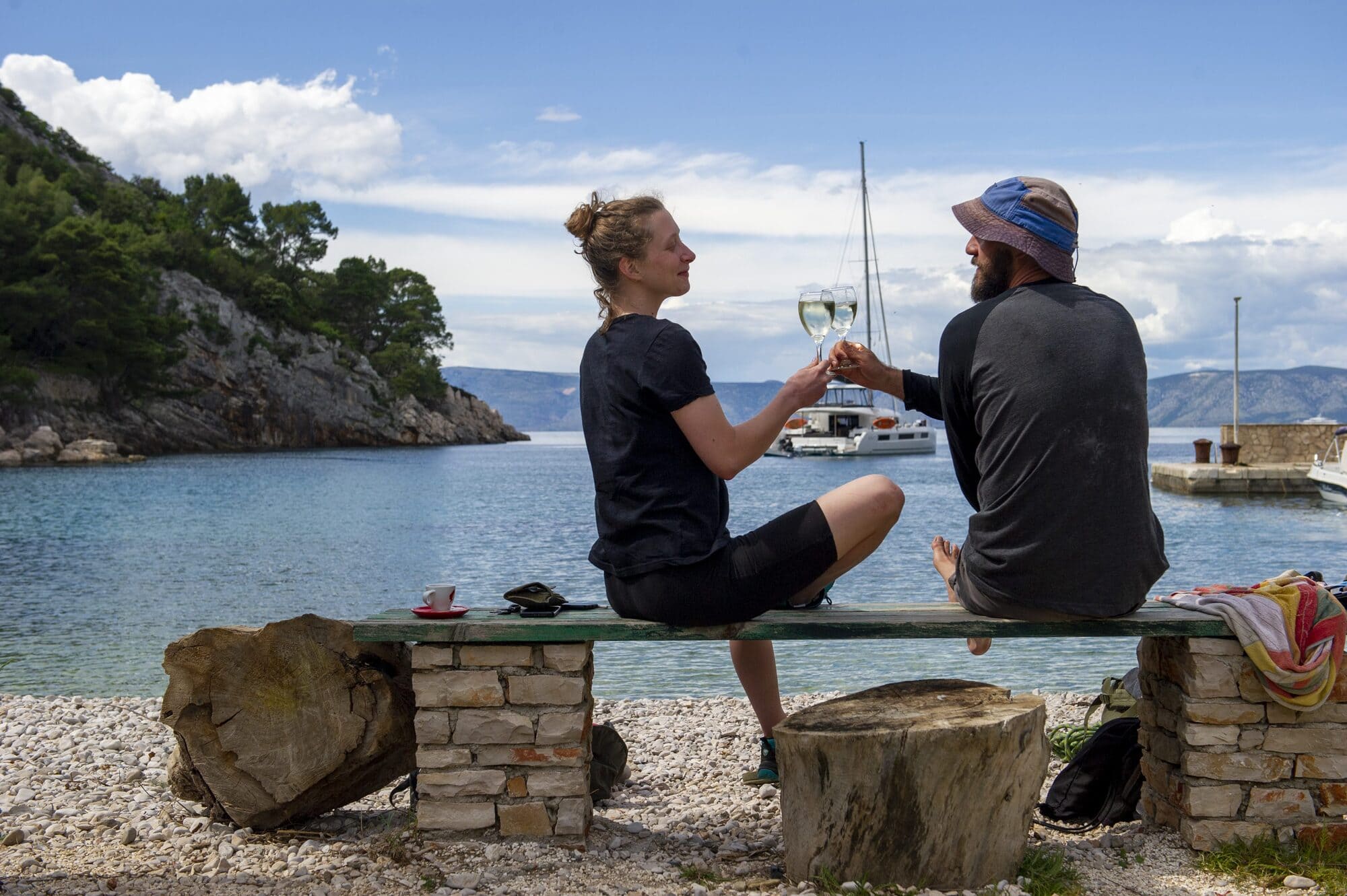
In Dalmatia, we have a word that explains the rhythm better than any itinerary ever could. Pomalo. You cannot translate it directly. It loosely means take it easy, or what you did not finish today can wait until tomorrow. It is not laziness. It’s a philosophy.
The modern world absolutely exists here. We have busy towns, marinas, restaurants, and nightlife. But once you sail away from the main ports and anchor in a quiet cove, something shifts. The pressure drops and the noise fades.

By the second or third day of the trip, I see it happen with guests. They stop looking at their phones. They stop asking what time it is. They start watching the light change on the rock. They sit a little longer after dinner. They begin to understand “pomalo” without anyone explaining it again.
That shift matters. It affects how you climb, how you rest, and how you connect with the people around you during rock climbing in Croatia and sailing the Adriatic sea.
The limestone of Dalmatia
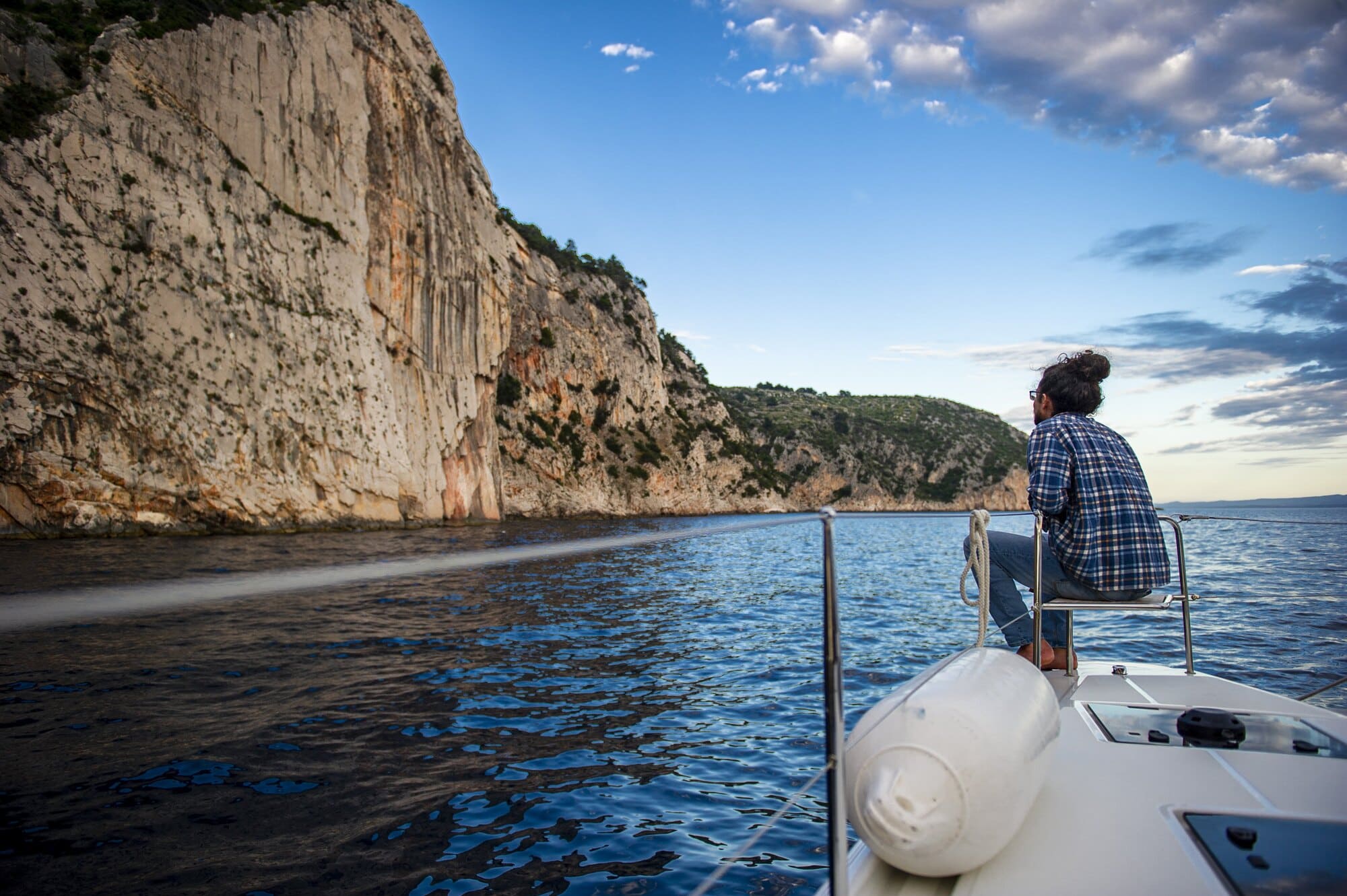
Most of my climbing life has revolved around limestone. It is a rock type that demands attention. Slabs require trust in your feet. Vertical faces demand body awareness. Steeper sections test endurance and precision.
Dalmatia is one of the richest limestone regions in Europe, and still somehow under the radar compared to places like Kalymnos or Céüse. The national guidebook for Croatia runs about 700 pages. Roughly half of it is dedicated to Dalmatia alone.
That gives you an idea of the density that makes rock climbing Croatia such a serious destination and a benchmark for limestone climbing along the Mediterranean.
Across this region, there are more than 2,200 sport routes. On the specific island circuit that we sail during this week, we have access to roughly 700 routes. That number allows us to adapt constantly to conditions and to the level of the group, which is one of the strengths of rock climbing in Croatia.
A range for every climber
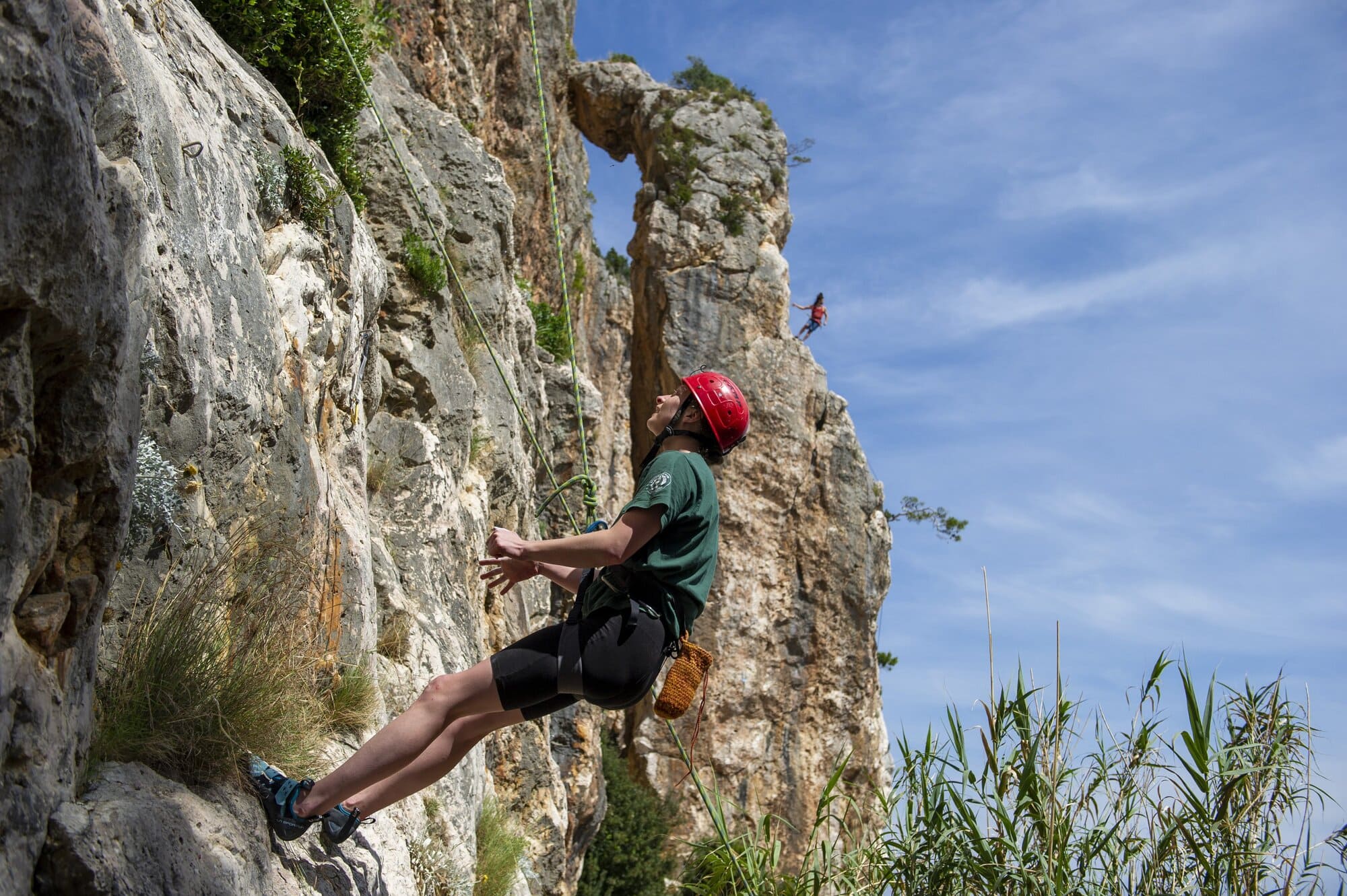
On this trip, you will find routes from beginner-friendly 4s and 5s, which correspond roughly to 5.6 to 5.9 in Yosemite grades (4c to 5c), through solid 6s and 7s, around 5.10 to 5.11 (6a to 6c+), and in certain sectors even into the 8th grade, 5.12 and above (7b and harder).
We often begin in Vela Stiniva, a large north-facing cove that offers climbing on both the east and west sides. This means we can choose sun or shade depending on the time of day. Morning sun on one wall to warm up. Afternoon shade on another to keep skin intact.
The limestone here is compact and beautifully featured. On the slabs, you learn to move quietly and trust friction. On the vertical sections, you focus on subtle shifts of weight. Slightly overhanging routes introduce pockets and edges that require controlled power.
This is where the week starts to sink in
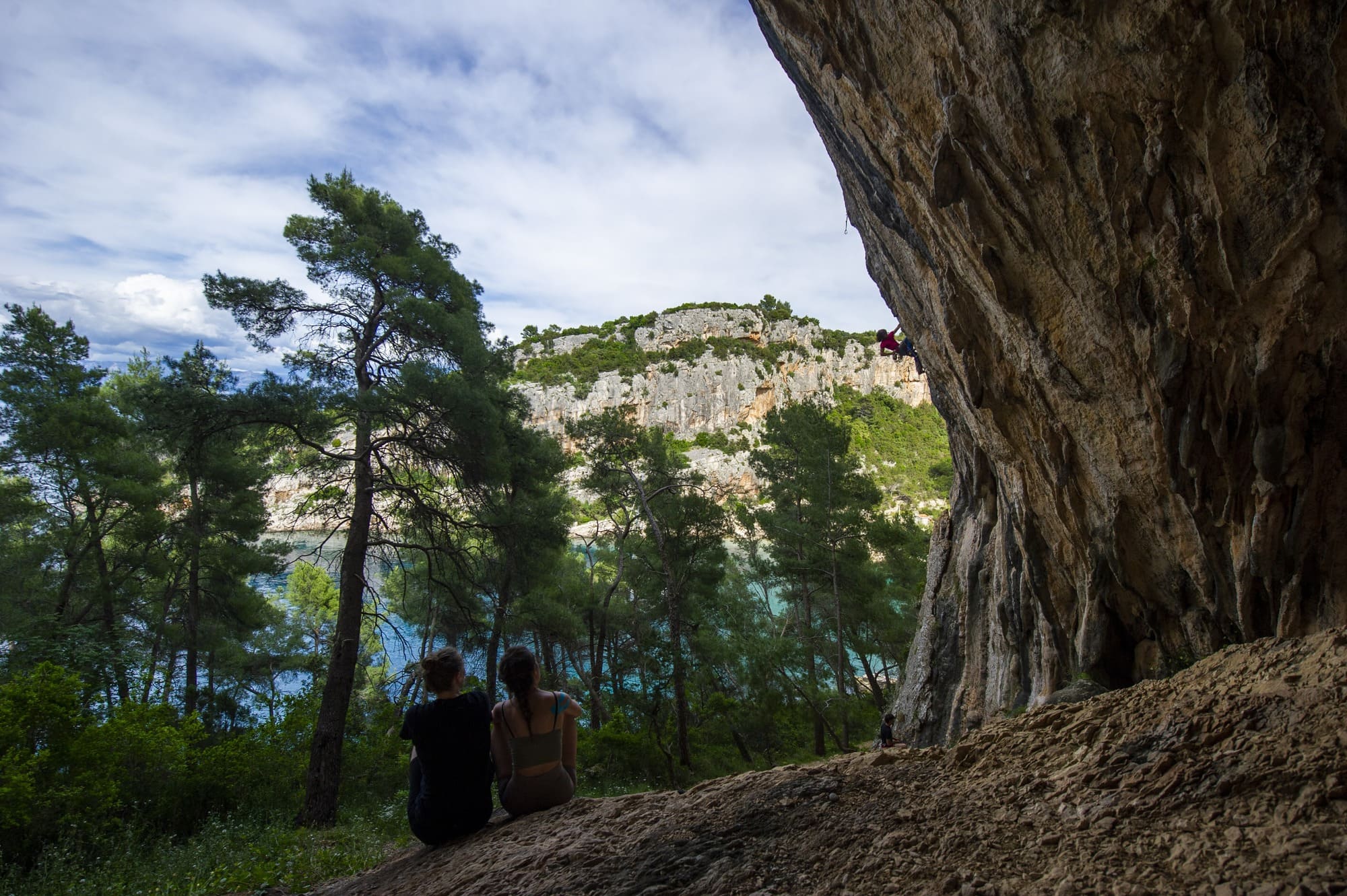
I always tell guests this is a vacation, not an Olympic training camp. I’m not here to turn you into a podium athlete. But don’t be fooled. You’re going to climb. A lot.
By day four, your fingertips will feel thin and your forearms pleasantly heavy. You’ll notice you’re thinking about sequences over breakfast and scanning walls from the deck before coffee even kicks in. That steady immersion is part of the rhythm.
Rock climbing in Croatia isn’t about squeezing in one big send and calling it done. It’s about stacking quality days, moving on sun-warmed limestone, and letting the rock slowly recalibrate your body and your head.
By the end of the week, you won’t just feel stronger. You’ll feel tuned in.
Why rock climbing Croatia is world class
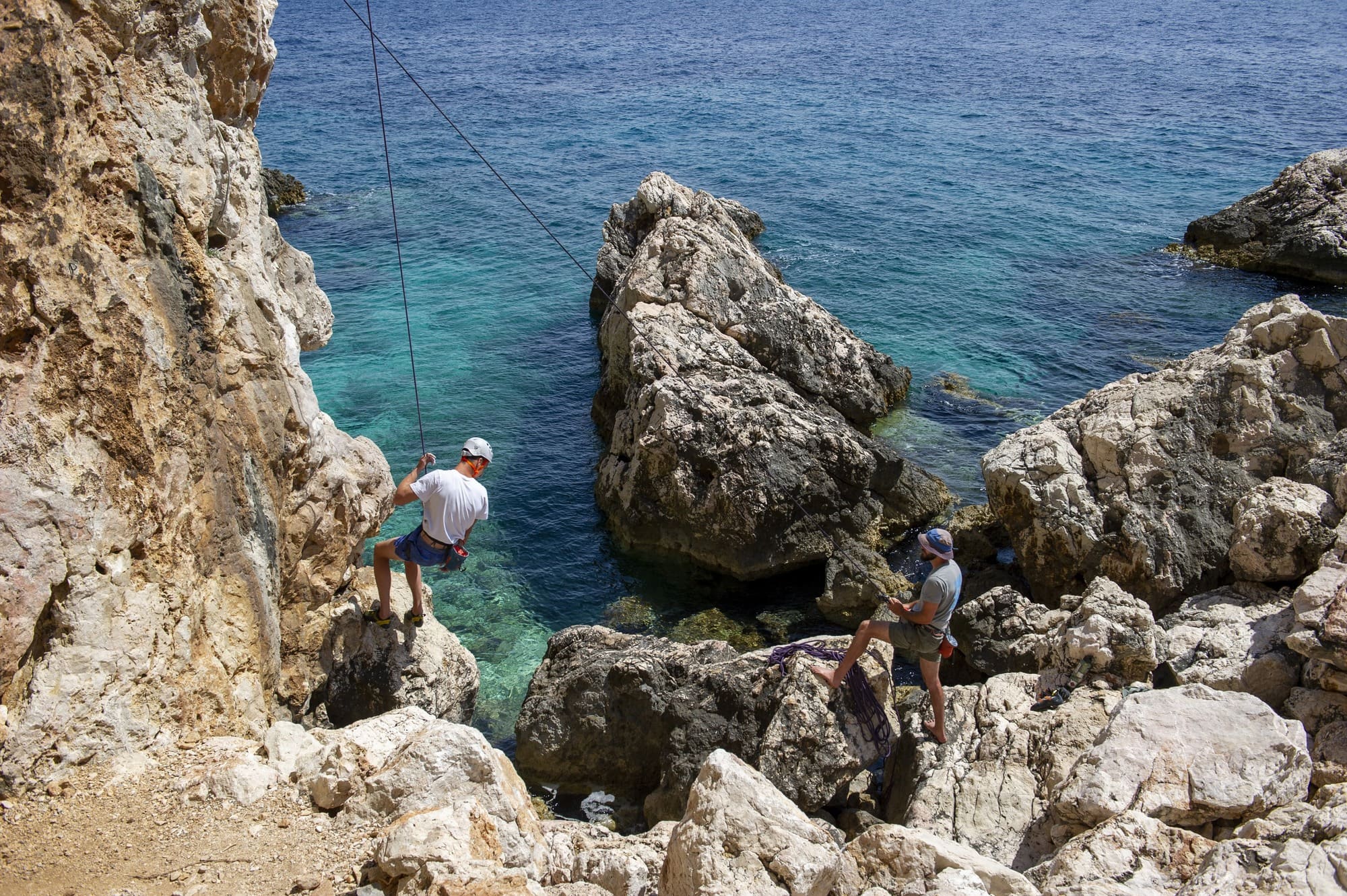
Rock climbing in Croatia stands shoulder to shoulder with the most established limestone destinations in Europe, even if it doesn’t shout about it. The quality of the rock alone would be enough. Compact, sculpted limestone with pockets, edges, and technical slabs that demand precision and reward good movement.
Then there is the density. More than 2,200 sport routes across Dalmatia means variety is never the problem. You can climb vertical technical faces one day, steep pocketed walls the next, and finish the week with multi-pitch above turquoise water.
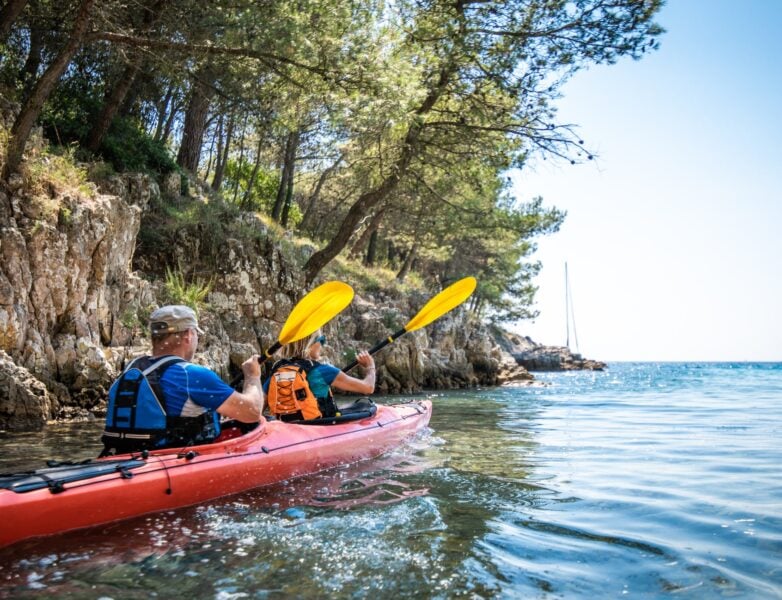
What elevates rock climbing in Croatia even further is the setting. Walls rising straight from the sea. Approaches measured in minutes. Consistent Mediterranean weather during the main season. Add strong local climbing ethics, well-bolted routes, and growing international recognition, and you have a destination that quietly delivers at the highest level.
It may not market itself as loudly as some other places, but once you climb here, you’ll understand why it belongs in the same conversation.
Approaching by boat instead of car
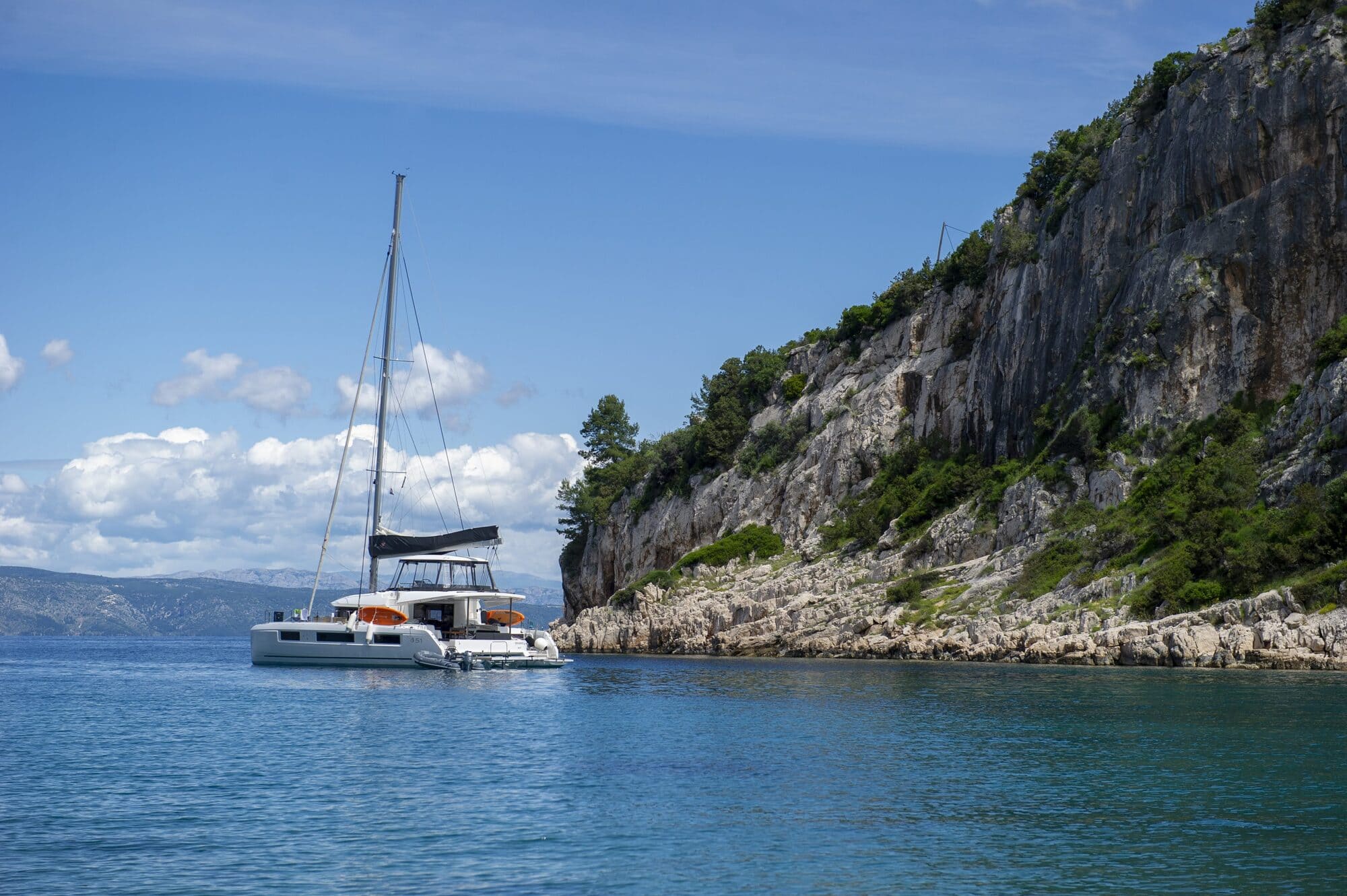
On a typical climbing trip, your day starts with packing your gear, driving winding roads, searching for a parking spot, and hiking uphill before you even tie in. By the time you reach the base of the wall, you are already a bit drained.
Here, we wake up in a quiet bay. Coffee is ready. Breakfast is prepared with climbers in mind, something that fuels you without weighing you down. We check the wind, look at the sun, and decide where to go.
We load the dinghy with ropes and quickdraws and reach the shore in a few minutes. Most approaches are five to ten minutes at most. Sometimes less. That alone changes your energy for the day and completely redefines how you experience rock climbing Croatia.
Flexibility shaped by wind
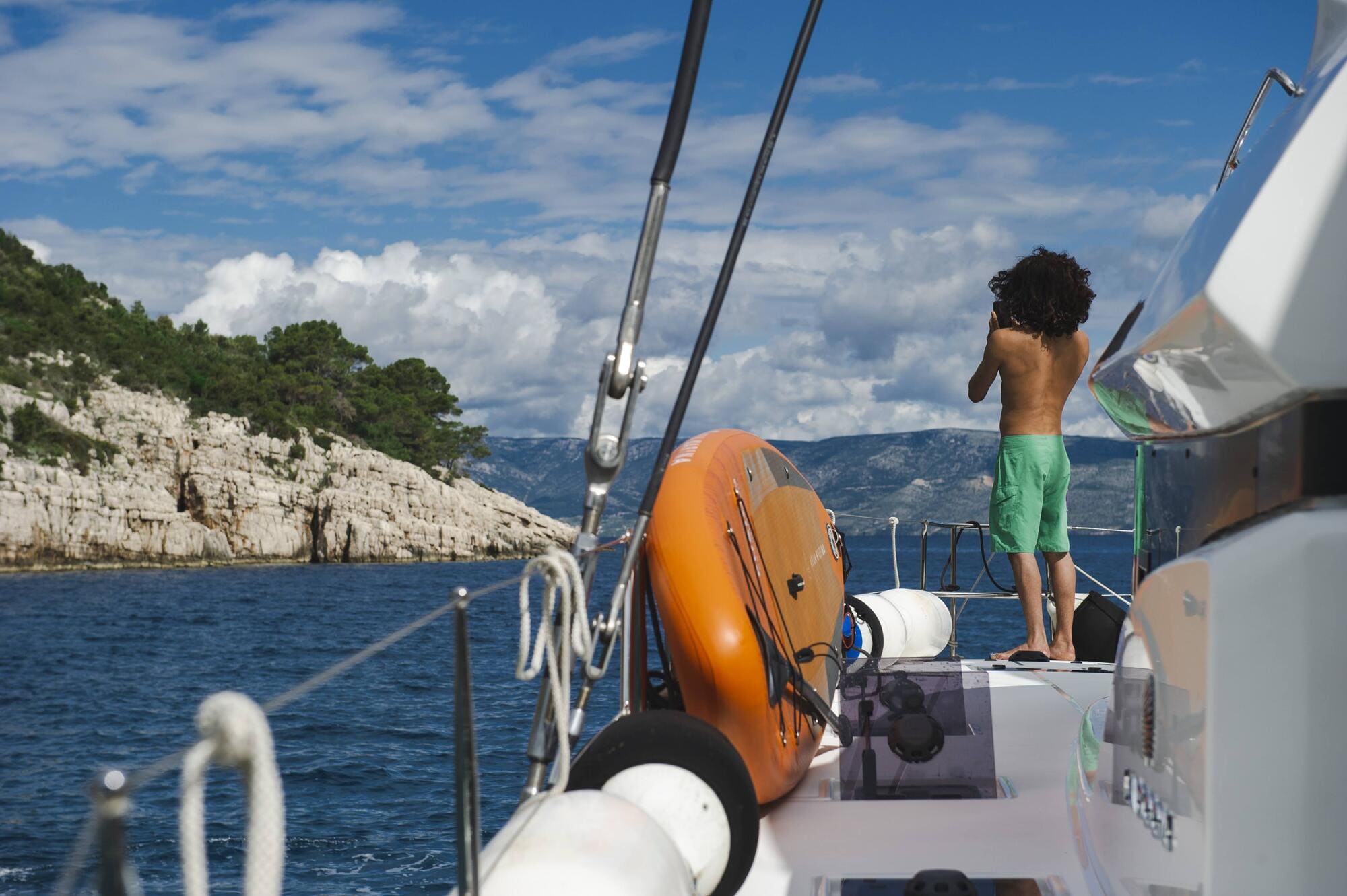
The Adriatic is generally kind to us, but it has its moods. The bura is a strong northern wind that can blow down from the Alps and sweep across the coastline. When it hits the exposed side of an island, it can be intense.
The beauty of sailing is that we are not fixed in one place. If the north side is windy, we sail to the south. If a wall is too hot in the sun, we move to a shaded cove. If the group wants something steeper or more technical, we adjust.
We are not bound to a single valley or a single access road. We follow conditions. That freedom allows us to maximize climbing time and comfort throughout the week of rock climbing in Croatia.
No two weeks look exactly the same. The structure is there, but the details are always shaped by wind, water, and the energy on board.
Hvar: A climber’s playground
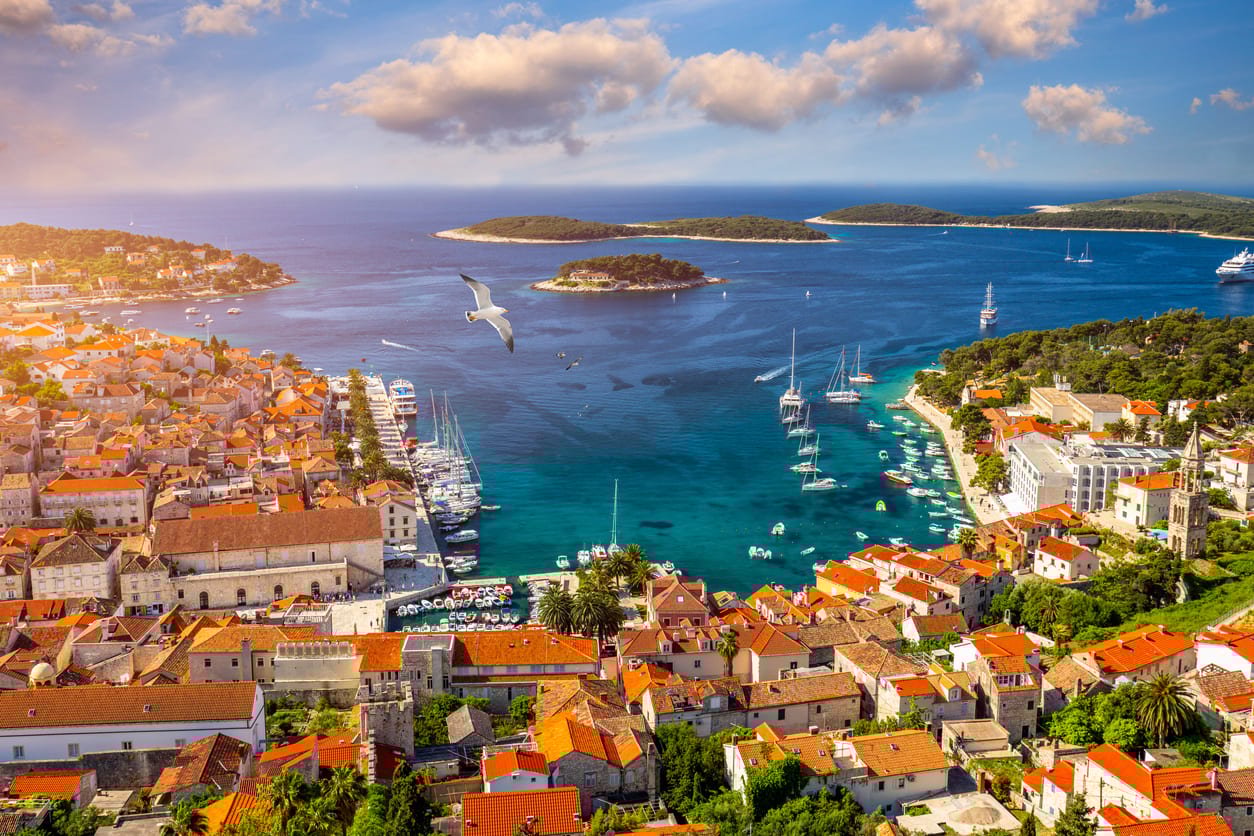
The island of Hvar becomes our main playground during the week. It has a remarkable concentration of high-quality sport climbing in close proximity to sheltered anchorages.
In Pokrivenik Cove, we step off the dinghy, walk past a few small houses, and within five to ten minutes stand at the base of the wall. One side offers easier slabs in the sun, perfect for warming up. The other side, including a sector known as Poseidon, stays in the shade until around 2 pm, offering cooler conditions for harder routes.
Routes here are sustained and beautifully bolted. The lines are clean. Movement flows naturally. It is the kind of climbing where you look up and think, this makes sense, and many consider Hvar a highlight of rock climbing Croatia.
Pandolovica and the southern side
On the southern side of Hvar, Pandolovica presents a different character. The rock turns golden and slightly overhanging. You find more pockets, more powerful sequences, and longer endurance sections.
I once guided a climbing camp here when the bura was blowing so hard on the northern side that it even damaged tents. We sailed south to Pandolovica and not even a breeze touched us. Perfect climbing conditions while chaos was happening just a few nautical miles away.
That kind of contrast is typical in Dalmatia. The islands create natural shelter and orientation. You can escape bad weather by moving a short distance.
Guests often surprise themselves in these sectors. Someone unsure about leading on day one finds confidence and clips the chains of a 6c or 7a by midweek. Another climber rediscovers the joy of outdoor rock after years indoors. The limestone rewards patience and focus, which is exactly what draws people to rock climbing in Croatia.
Cliffbase and deep water solo
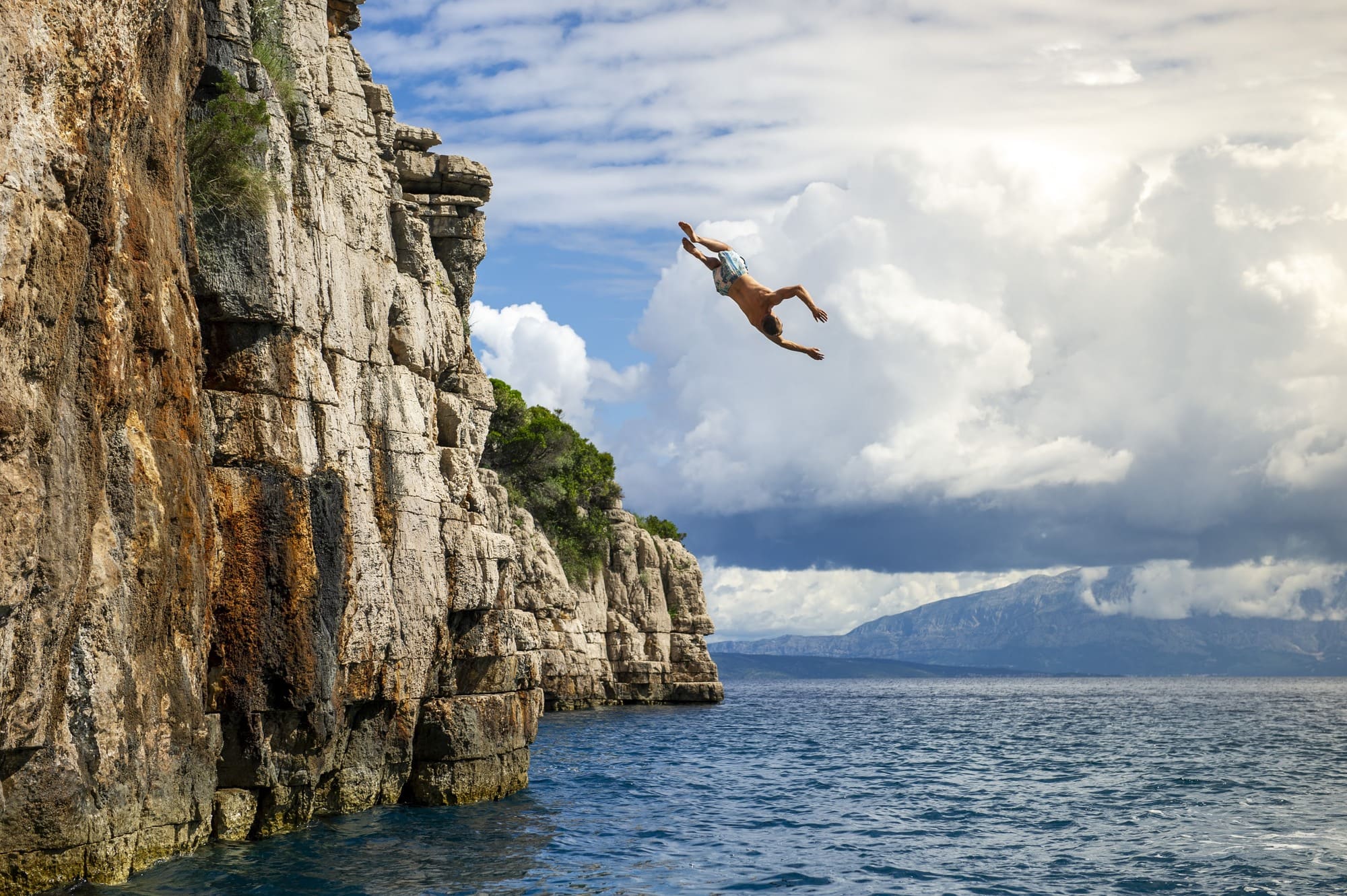
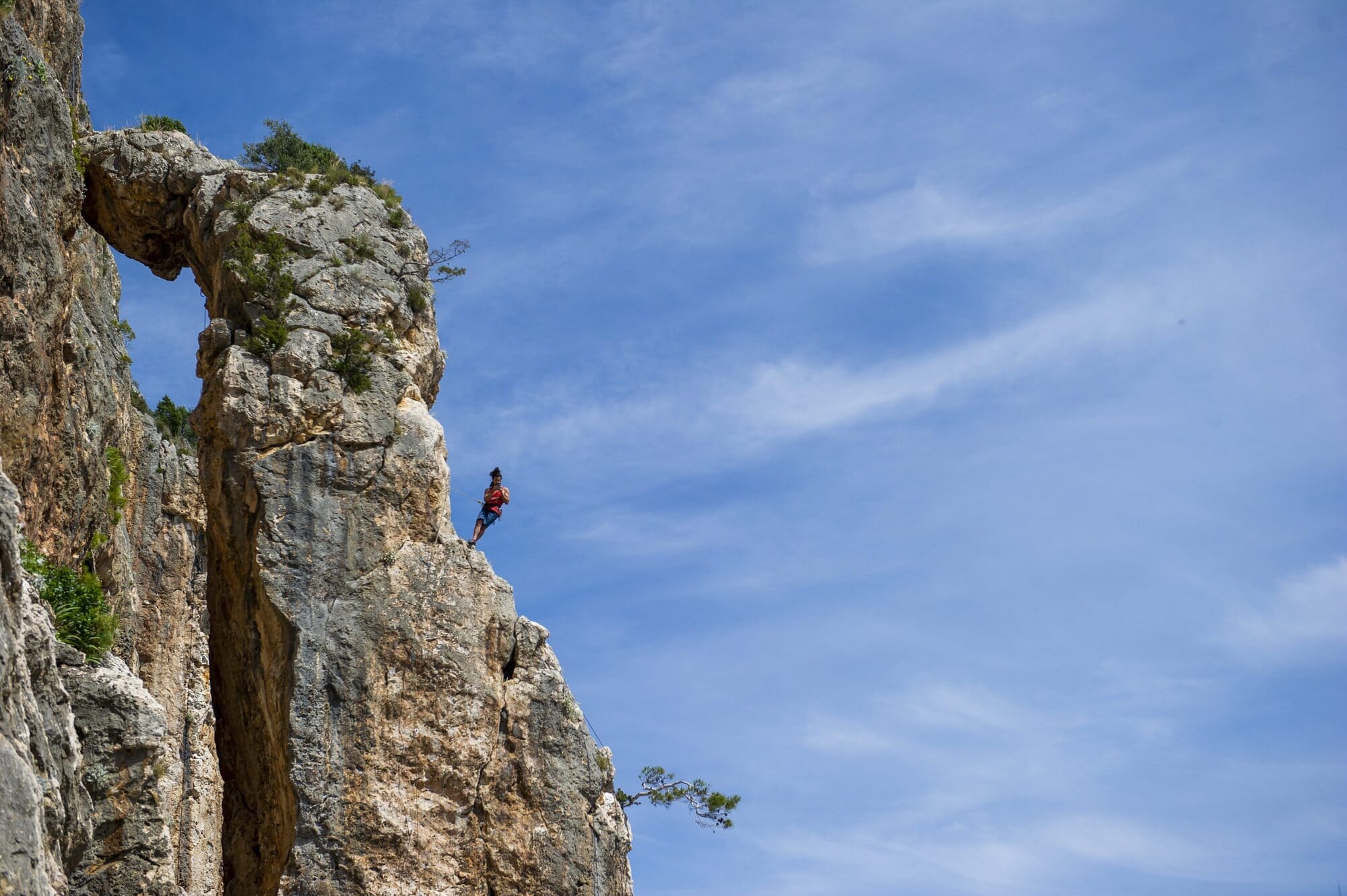
If there is one place that consistently leaves guests speechless, it is Cliffbase, sometimes called Little Thailand. The approach alone is worth it. We sail into a cove framed by towering limestone walls that seem to rise straight from the sea.
More than 150 routes stretch across this wall. There is a leaning tower that stands almost independently from the main face, connected only by a massive boulder at the top. It is bolted on both sides, offering unique lines and perspectives that add another dimension to rock climbing Croatia.
For those who want something longer, we can set up a two-pitch route of around 60 to 70 meters, which is approximately 200 to 230 ft (60 to 70 m). It is not alpine, but it gives a taste of exposure above turquoise water.
When climbing turns playful
At the base of Cliffbase runs a 200 m (650 ft) deep water solo traverse. It is relatively easy, perfect for moving sideways above the sea, with the option to drop in at any point.
Not everyone climbs all day, and that is completely fine. Some guests take off their harness, change into a swimsuit, and spend an hour swimming or jumping from the rocks. Others paddle around on a stand-up board. The rocks are sharp, so I always recommend bringing a second pair of climbing shoes that you do not mind getting wet.
There is something liberating about finishing a route, lowering to the ground, and diving straight into clear water. It reminds you that climbing can be serious, but it can also be playful.
Omiš: Where my guiding began
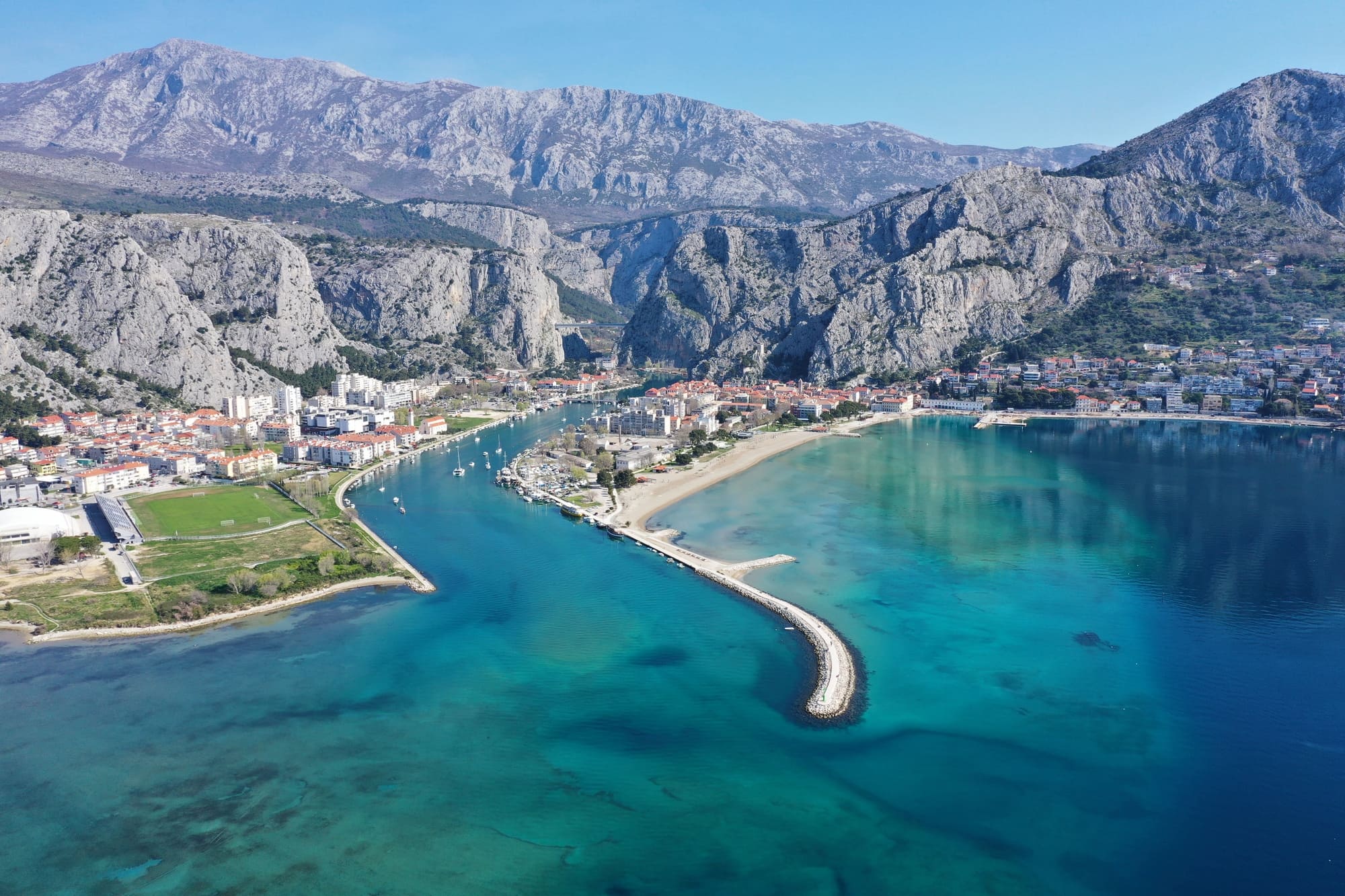
As the week progresses, we move from remote island bays toward the mainland. The atmosphere shifts slightly. There is more life, more lights, more movement.
Omiš sits near Split, framed by the dramatic Cetina Canyon. In just a few kilometers, you have river, sea, and limestone walls rising steeply above both, another powerful example of the diversity within rock climbing Croatia.
This is where my professional guiding journey truly began. I spent seasons living in a tent near the canyon, guiding daily, swimming in the Cetina River after long sessions. Those years shaped me. They taught me responsibility and the importance of reading both rock and people carefully.
Canyon walls and sunset ferratas
Climbing in Omiš offers variety. There are single-pitch sport routes and multi-pitch lines that stretch upward along the canyon walls. You climb with views over the river flowing toward the Adriatic.
If the group still has energy, we sometimes finish with a via ferrata high above the canyon, catching sunset near one of the old pirate fortifications. Omiš has a long history of piracy, and the fortresses still watch over the town.
Being there always feels personal to me. It is where I first felt fully immersed in guiding, living outdoors, and committing to this lifestyle.
Split and the urban crag
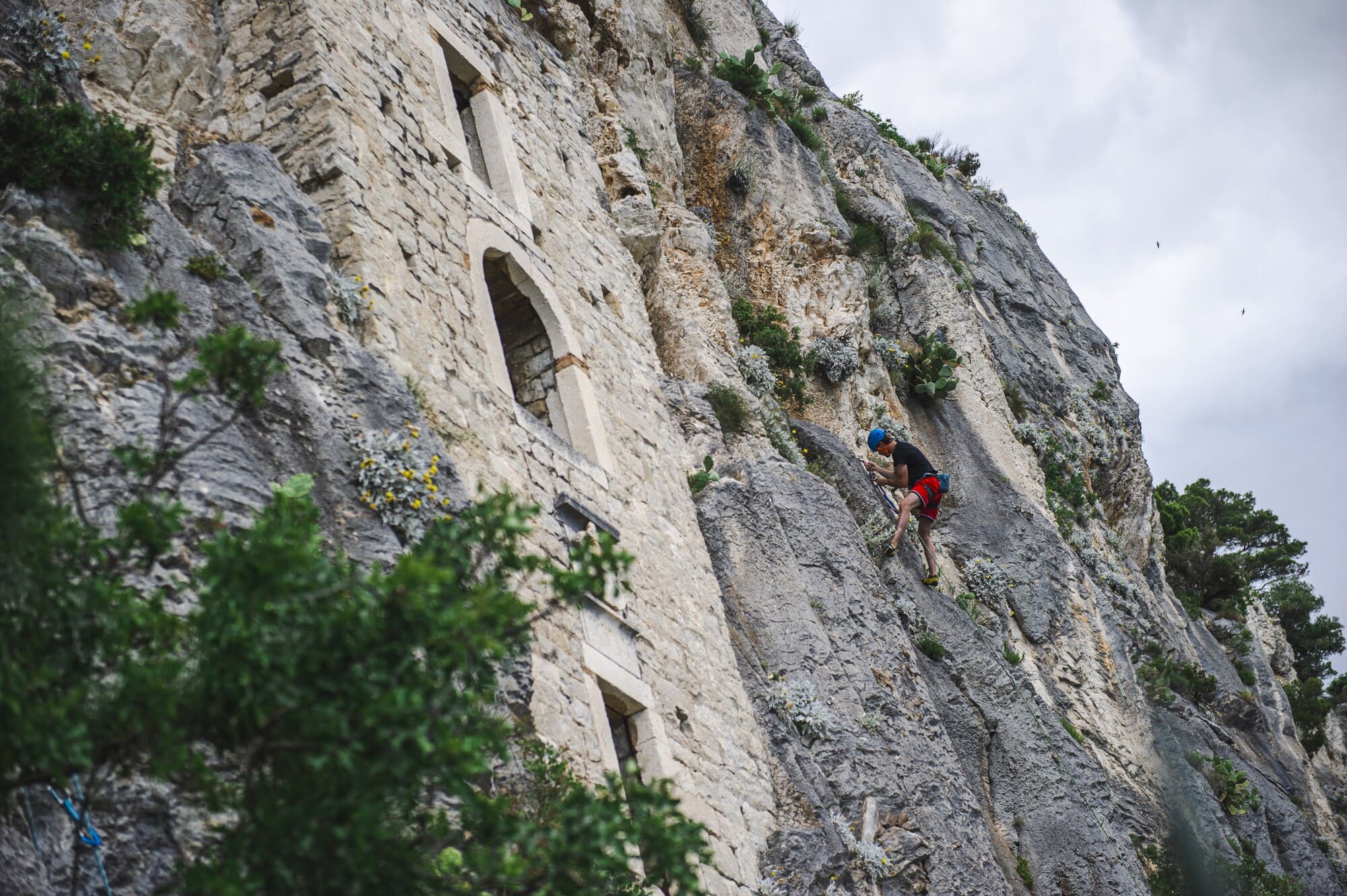
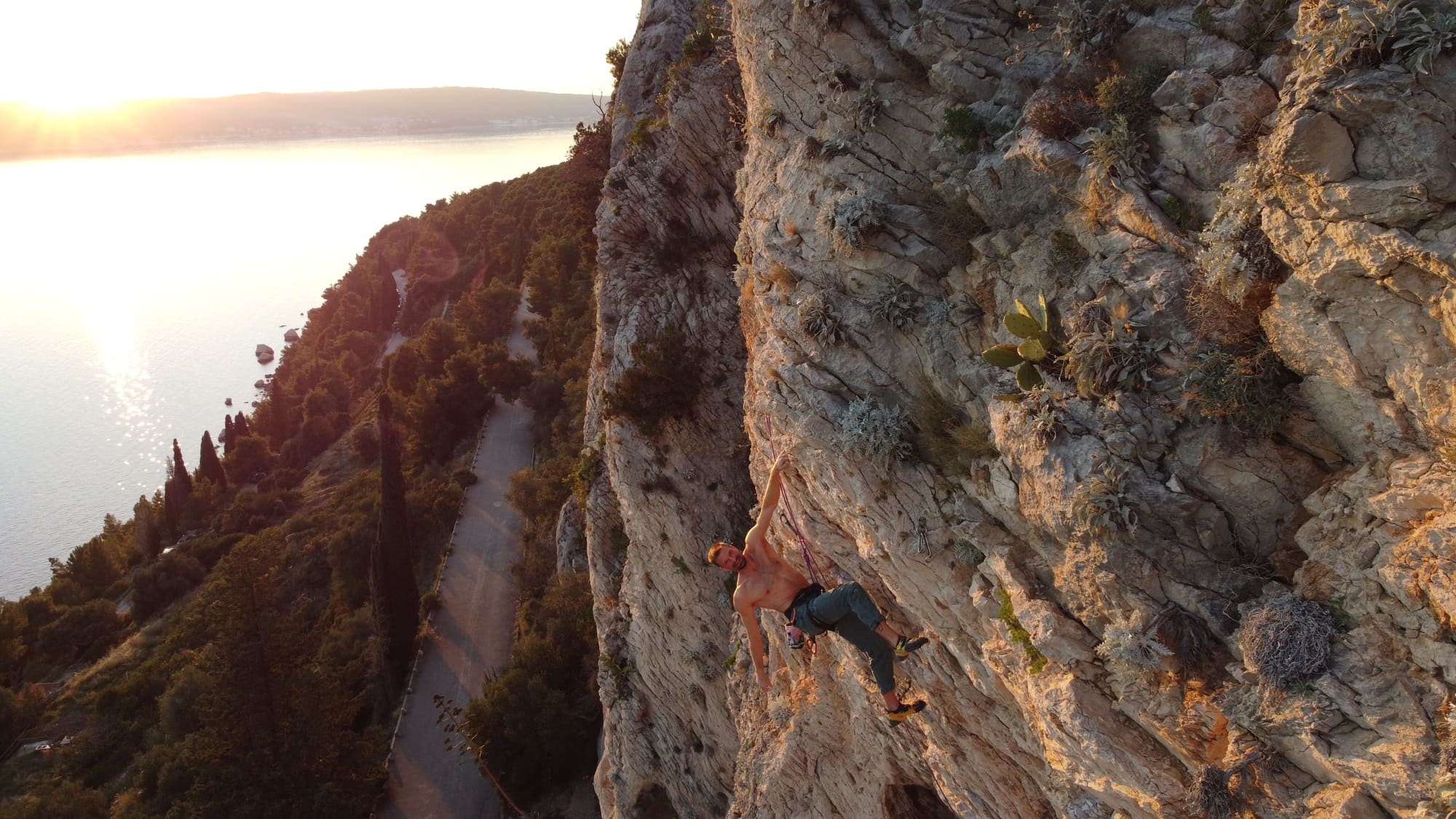
Our final climbing session often takes place in Split, in the Marjan park-forest that serves as an outdoor playground for locals. Running, hiking, cycling, and climbing all happen there daily.
Climbing in Split feels different. The sea is on one side, the city on the other. The routes are playful and well-used. There is a 6a that feels almost like a gym route, steep and juggy, like a long boulder problem. After a full week on limestone, it is a fun way to spend whatever skin you have left.
From limestone to Roman stone
After climbing, we walk into Split’s old town. At its center stands Diocletian’s Palace, nearly 2,000 years old. It is one of the best-preserved Roman palaces in the world.
To move from tying knots and clipping bolts to walking through ancient stone corridors in the same afternoon is a contrast that defines this region. Nature and history sit side by side.
It is a fitting way to close the climbing chapter of the week.
Life on the catamaran
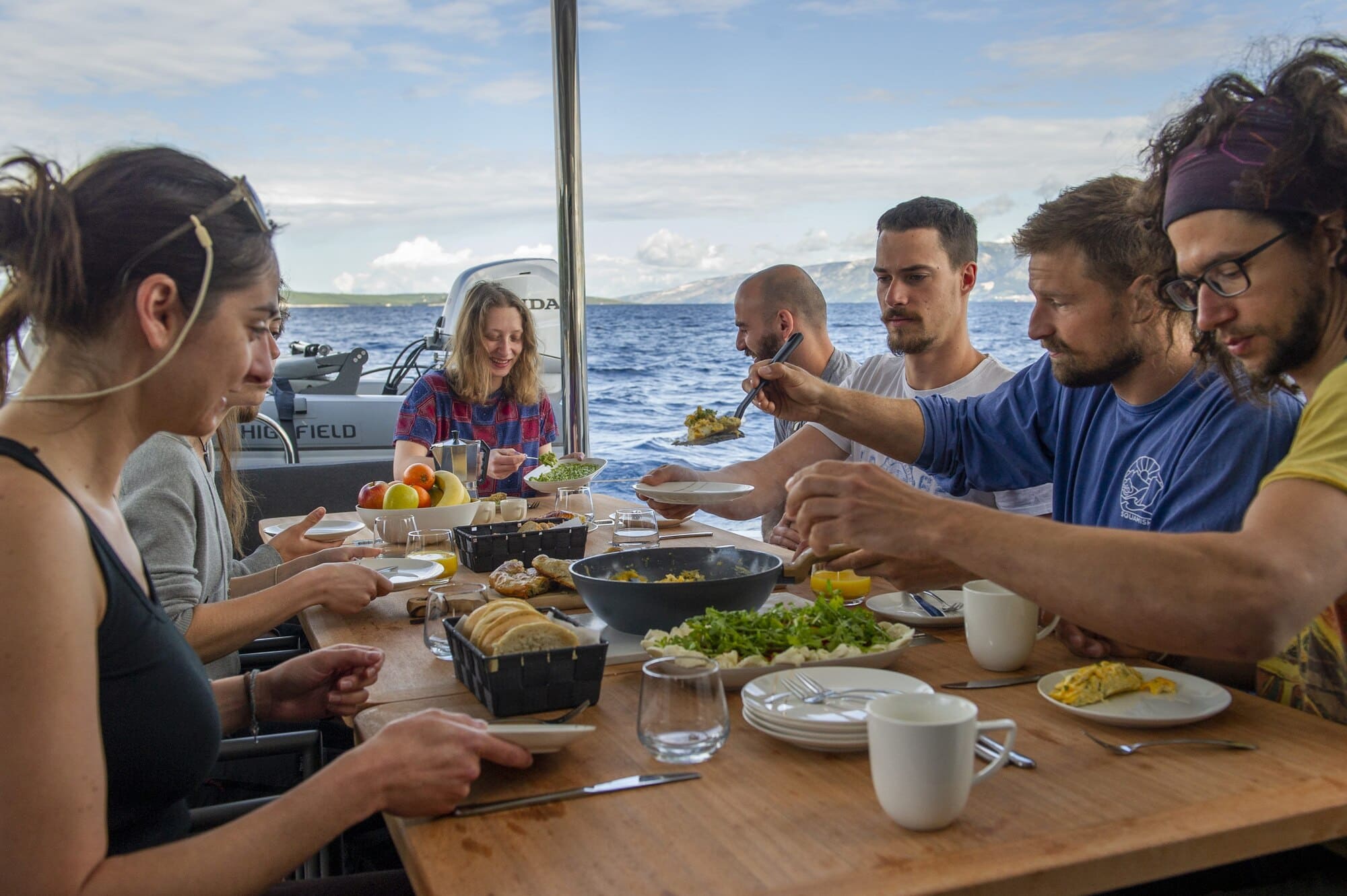
The boat is not simply transport. It is the foundation that makes the entire experience work.
We sail on a Fountaine Pajot catamaran. It is stable, spacious, and fully equipped for a week at sea. Cabins have queen-size beds that you can walk around, private bathrooms, and enough storage to keep climbing gear organized.
Most guests are surprised by how much space there is. It feels more like a floating apartment than a typical sailboat, elevating the experience beyond a standard active holiday in Croatia and into something closer to a luxury sailing holiday in Croatia.
Evenings under the stars
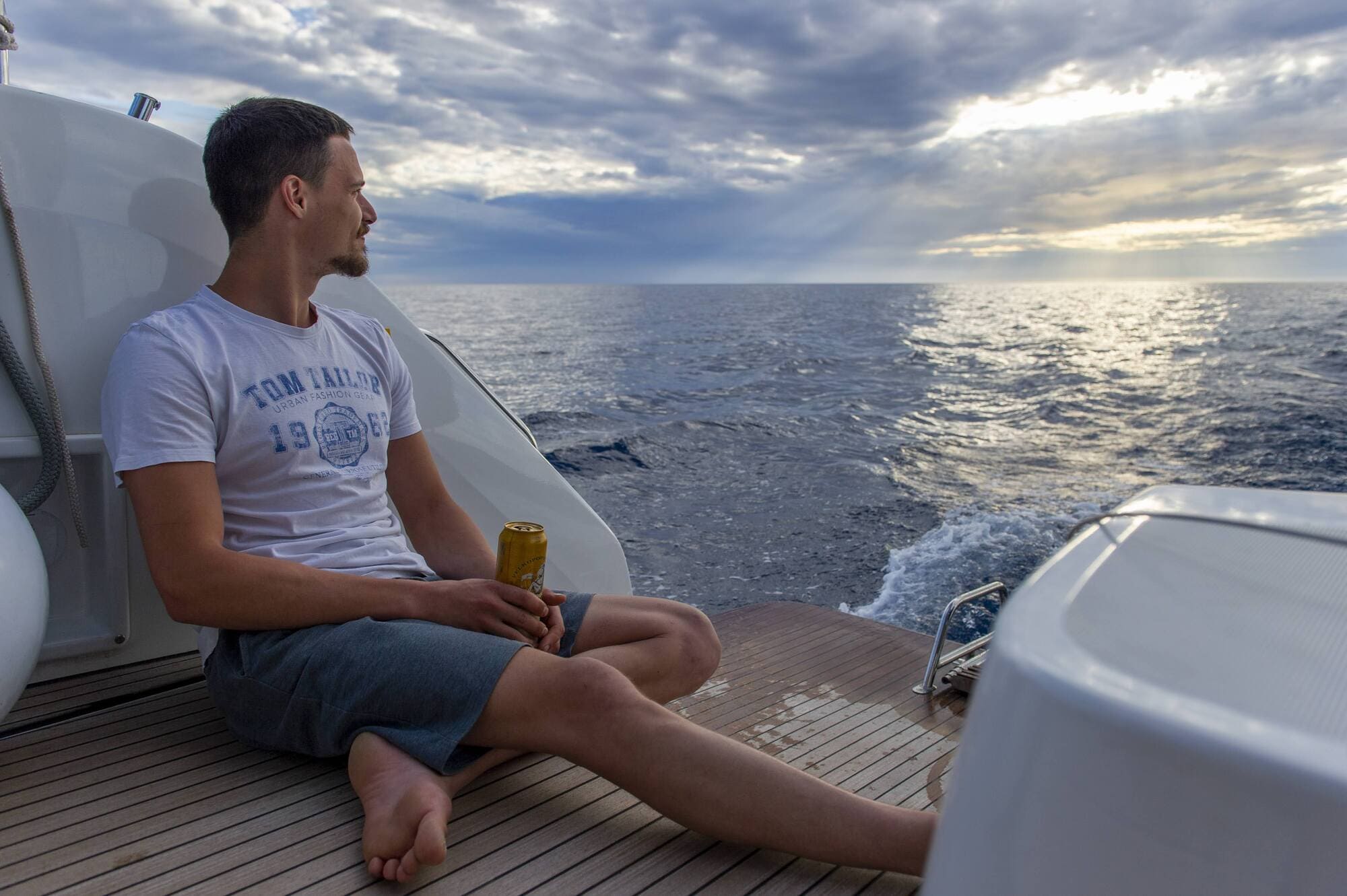
Evenings are intentionally simple. We return from climbing, shower, and prepare dinner together. Sometimes we organize traditional meals like peka, slow-cooked under an iron bell with potatoes and vegetables. Sometimes it is freshly grilled fish caught that day, served with local olive oil and bread.
Dalmatian olive oil is something I am proud of. It has depth and intensity that reflects the sun and stone of these islands.
After dinner, there is no strict program. Sometimes board games come out. Sometimes someone plays guitar. Often, it is just long conversations under a sky full of stars. And sometimes, after a long day on the rock, you sit quietly on deck, watching the moon reflect on the water.
Those quiet moments often stay with people the longest.
What is the weather like in Croatia when sailing?
When sailing along the Croatian coast, especially in Dalmatia, you can expect a classic Mediterranean climate with long, dry summers and mild shoulder seasons.
From May to October, conditions are generally ideal for sailing. Summer temperatures range between 75 to 90°F (24 to 32°C), with sea temperatures warming up to around 68 to 77°F (20 to 25°C). Rain is rare in peak season, and visibility is usually excellent. That means reliable climbing conditions as well.
The two main winds you’ll hear about are the maestral and the bura. The maestral is a steady, thermal wind that often builds gently in the afternoon, perfect for smooth sailing. The bura is stronger and comes from the northeast. It can be powerful, but it is predictable and part of the rhythm of sailing the Adriatic sea.
Spring and fall are slightly cooler, around 60 to 75°F (15 to 24°C), but many climbers actually prefer these months. The rock stays cooler, skin lasts longer, and the islands feel quieter.
In short, when you sail Croatia during climbing season, the weather is rarely the limiting factor. It’s more often your forearms.
What to pack for sailing in Croatia?
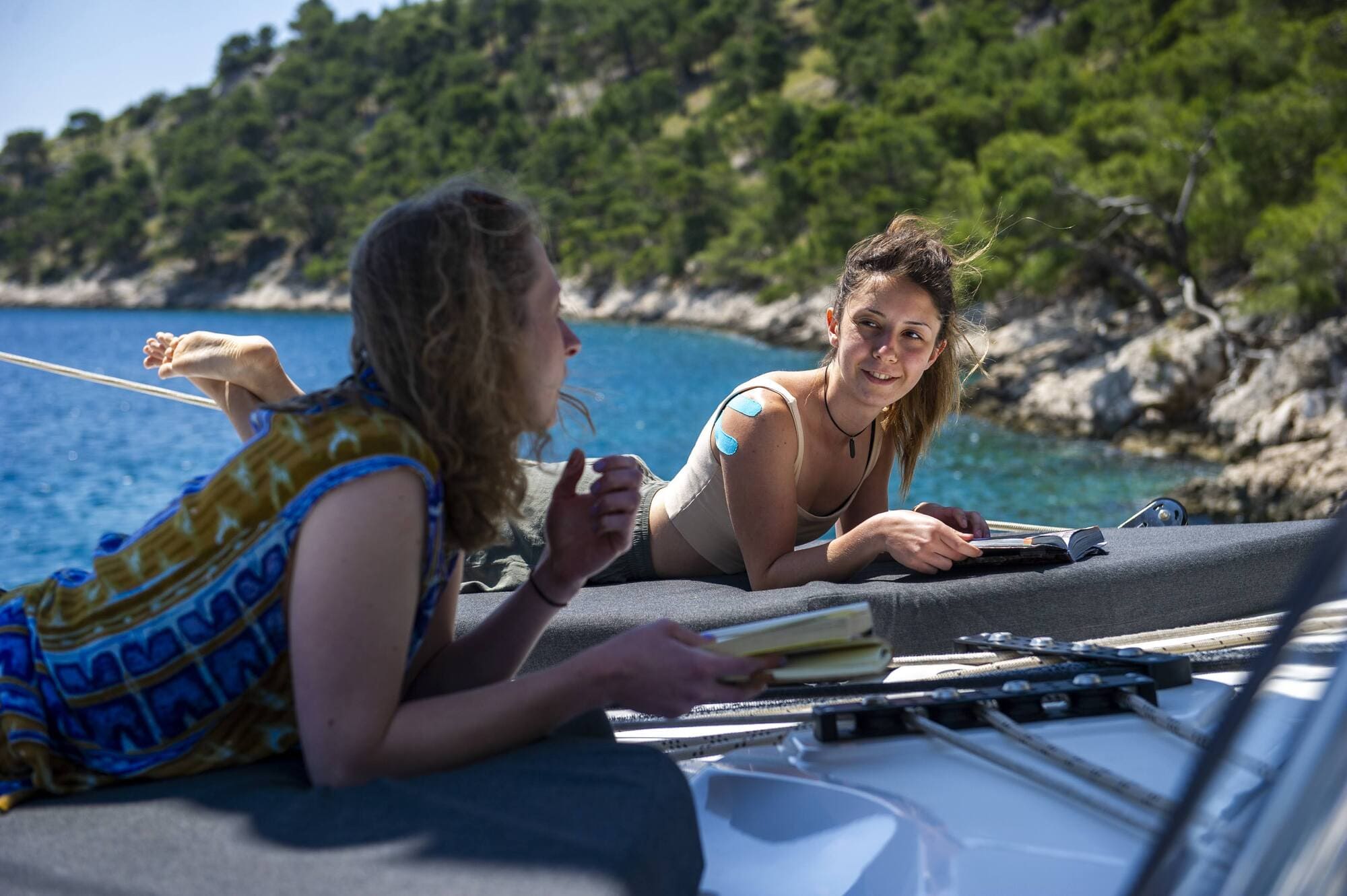
Packing for a week of sailing in Croatia is surprisingly simple, especially when you’re combining climbing and life on a catamaran. The key is to bring practical layers and avoid overpacking. Space on board is comfortable, but soft bags work better than hard suitcases.
For daily life, bring lightweight summer clothes, swimwear, a hat, sunglasses, and reef-safe sunscreen. Evenings are usually warm, but a light long-sleeve layer or fleece is useful once the sun drops. A windproof or light rain jacket is essential, especially if the bura picks up while you’re underway.
For climbing days, you’ll need your harness, helmet, chalk bag, and two pairs of climbing shoes. One pair for sport climbing and another that you don’t mind getting wet if you try deep water solo. Approach shoes or sturdy sandals are important for rocky landings.
On deck, barefoot works most of the time, but non-slip sandals are helpful. And one thing people forget: a reusable water bottle. Between sun, salt, and movement, you’ll drink more than you expect.
Keep it simple. You’ll spend most of the week in shorts, a harness, and salt-dried hair anyway.
Rest days and island stories
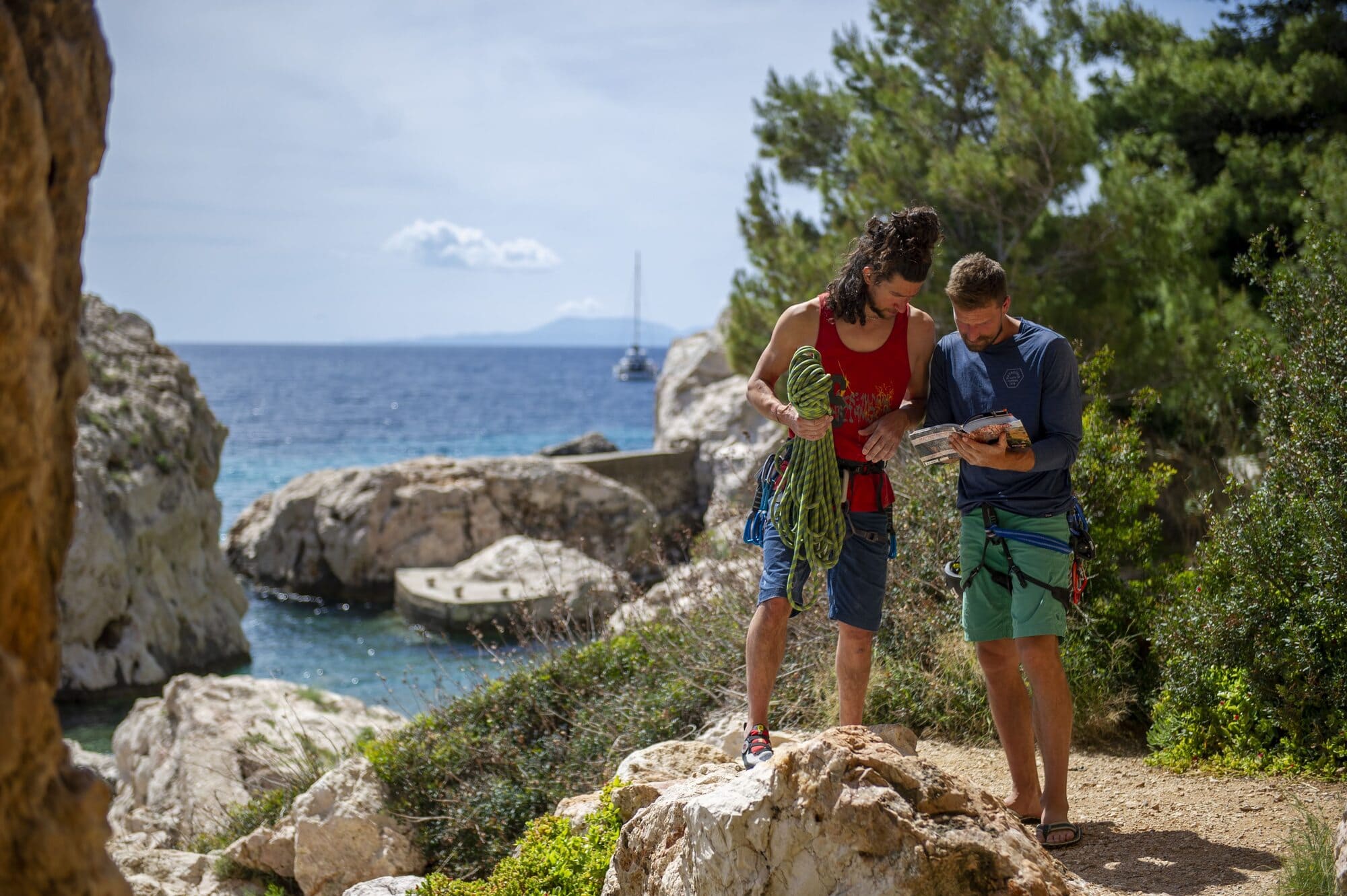
We usually include one or two rest days during the week, depending on the group and conditions. Rest does not mean inactivity. It simply means shifting focus.
On Brač, we sometimes visit Pustinja Blaca, a monastery carved into limestone cliffs. We hike through pine forests and connect two small canyons before returning to the boat.
On Vis, the furthest inhabited island from the mainland, history takes center stage. Until the 1990s, Vis was closed to foreign visitors because it served as a military island. More than 20 km (12.4 mi) of underground tunnels were carved into it.
From sea cliffs to underground bunkers
We sometimes join a guided tour in old military vehicles, exploring submarine shelters, bunkers, and command centers. It is a striking contrast to sunlit climbing walls.
These rest days add context. They remind us that the islands are layered with stories, not just routes and grades, and that when you sail Dalmatia you experience far more than just climbing.
Then we sail back toward another wall and tie in again.
Safety, community, and the leap
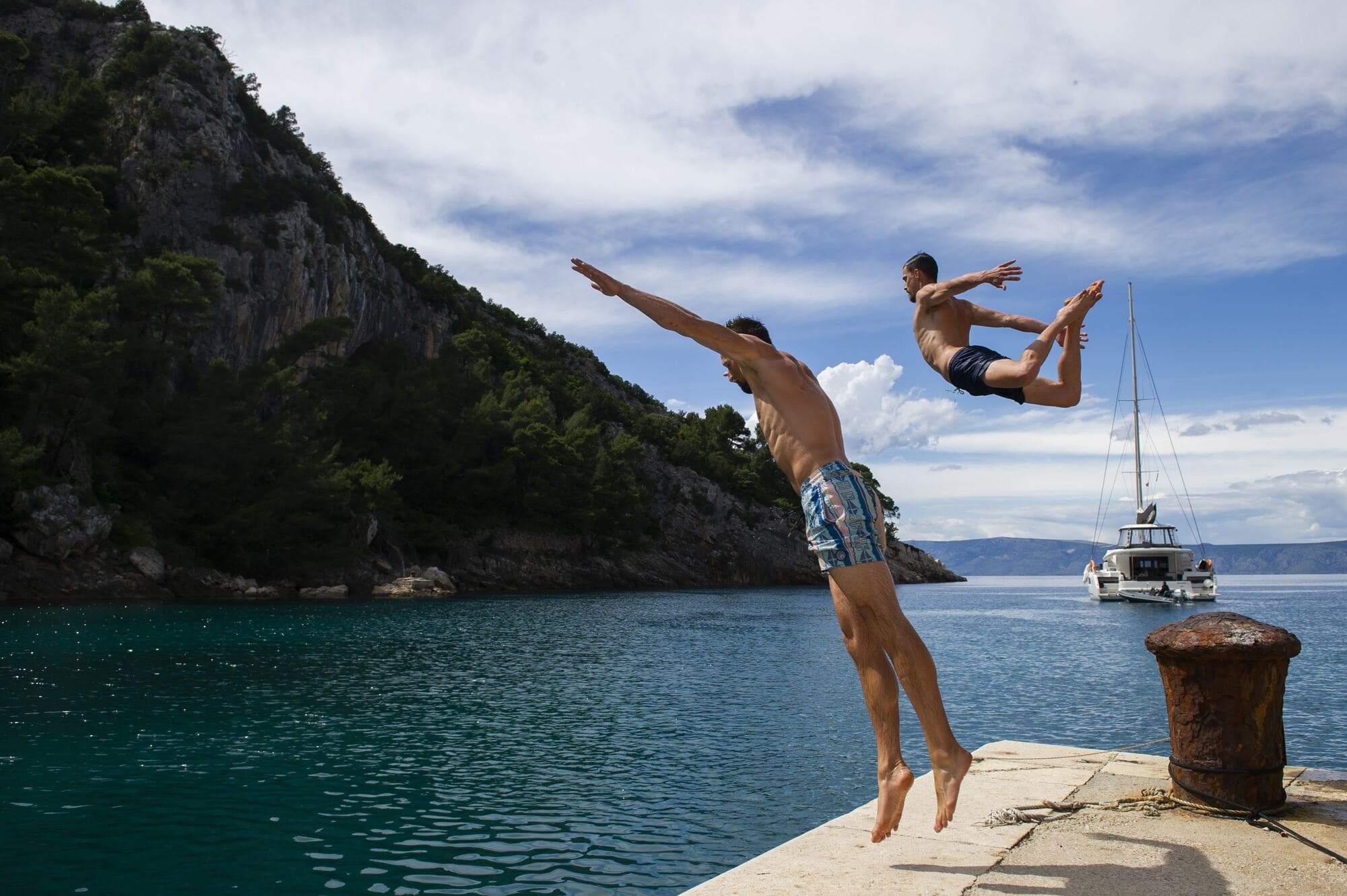
Guests rarely say it directly, but safety is always in their minds. It is in mine too. If conditions are not right, we adjust. If someone is too fatigued, we take a break. Our skippers sail these waters at least six months a year. They know every bay and current.
Am I good enough?
Almost every guest asks this question before arriving. We have welcomed climbers who led their first outdoor route with us. We have also had advanced climbers working on hard 7b and above.
What matters most is that you are comfortable belaying and open to learning. By day two, most doubts fade. You get into the flow of the week. You trust the rope, the rock, and the people around you.
This is the real crux
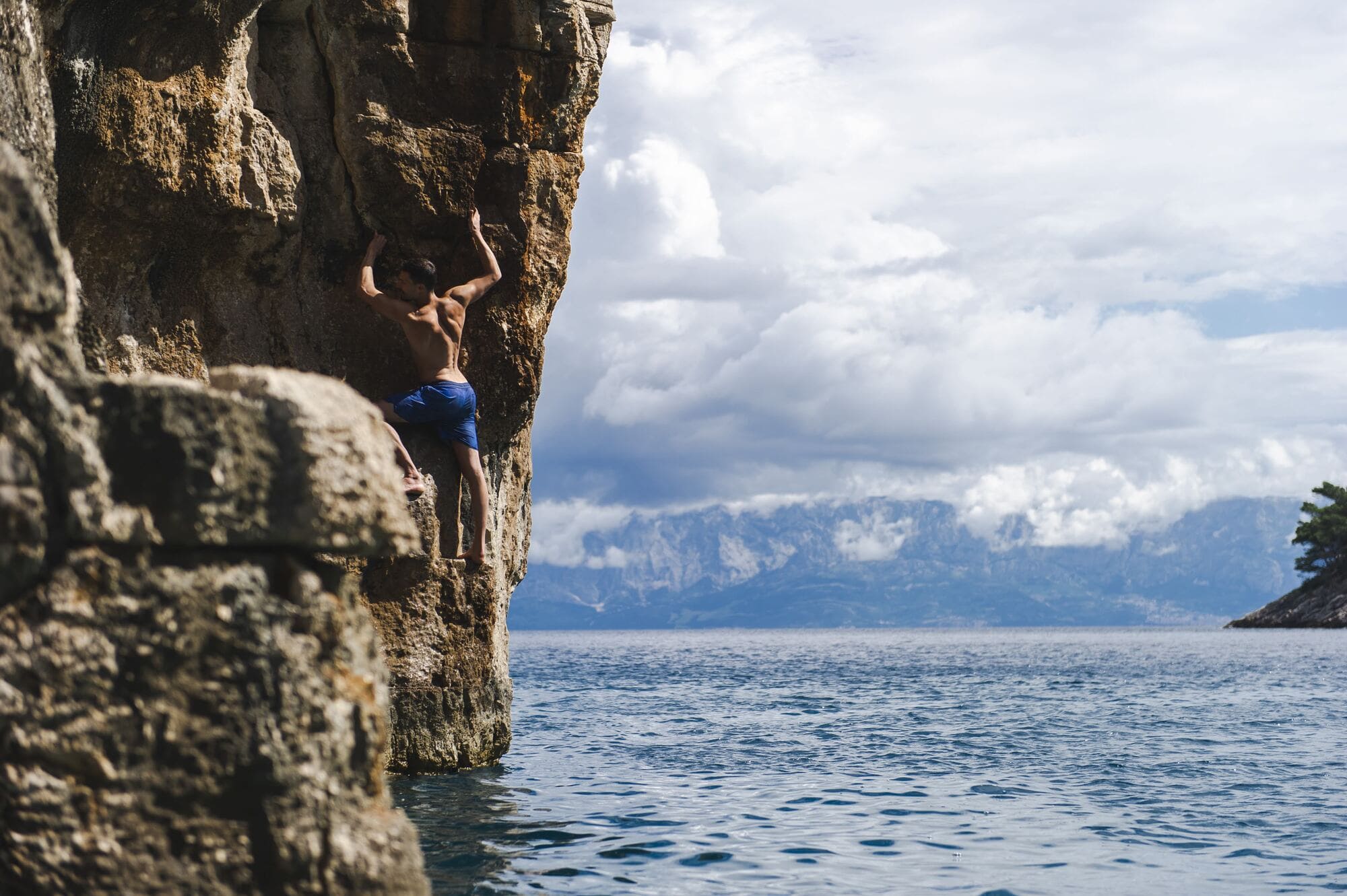
Community on a boat doesn’t need forcing. It builds itself. You share ropes, beta, sunscreen, the last piece of bread. You watch someone hesitate below a crux and cheer when they commit. You jump in together after. That kind of week compresses time.
By midweek, nobody’s performing anymore. You’re just climbing, sailing, eating, laughing. The rhythm strips things down fast. No one cares what you do for a living. They care whether you’ll take the next lead and whether you’re jumping in after.
For me and my guiding partner Luka (yes, we share the same name), this wasn’t a clever concept. It was us deciding to combine the two things that make the most sense in this part of the world.
Limestone and wind. Movement and salt. That’s it.
If that combination sparks something in you, trust it. We will be here, waiting in Croatia. Ropes ready. Anchor down.
Come spend a week with us between rock and sea. There’s a cabin with your name on it.