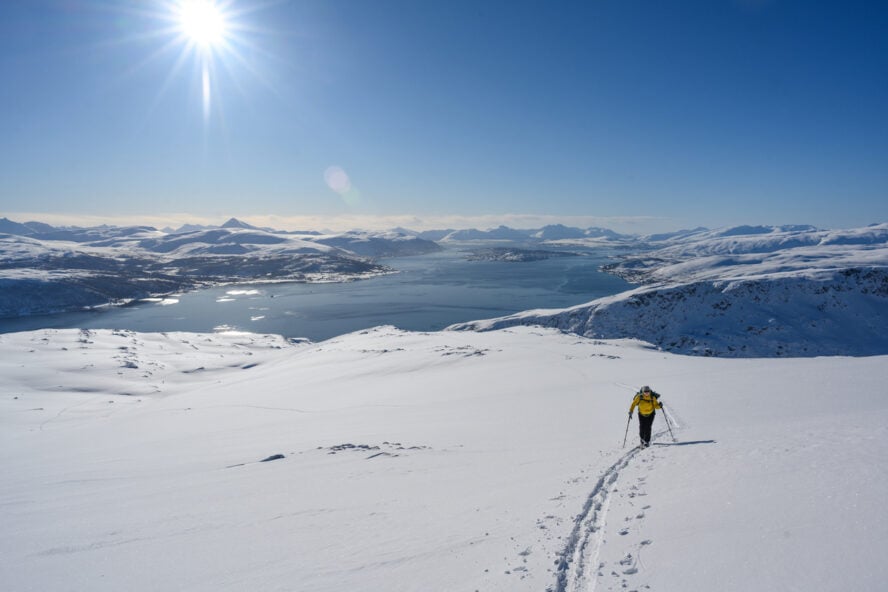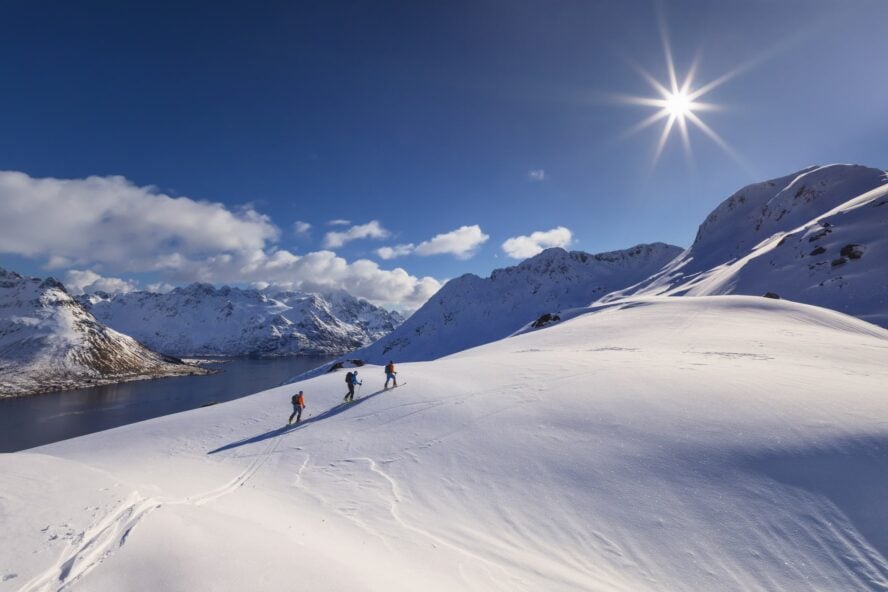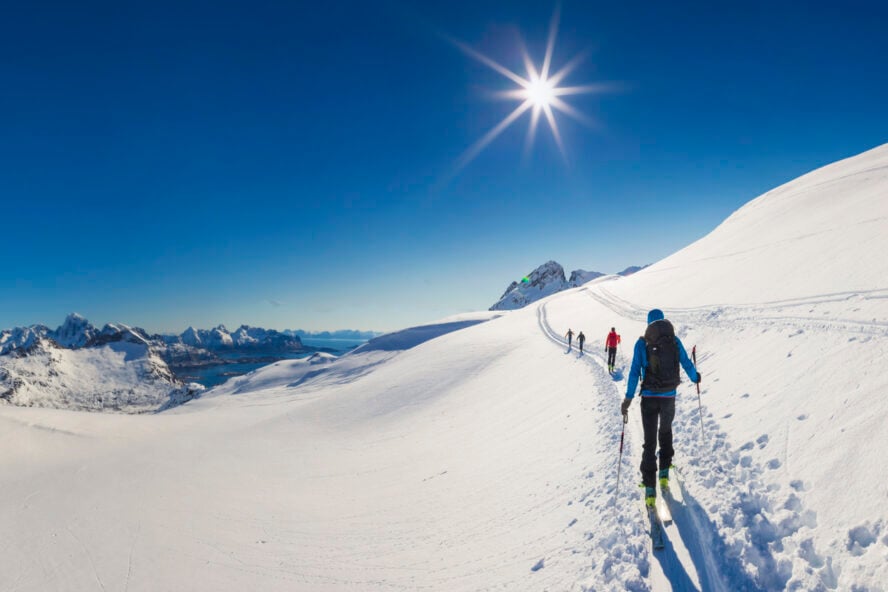

I’ve been lucky enough to ski in a lot of corners of the world. Western Canada has been my backyard for decades, but my work has taken me much farther than that. Japan, Norway, Antarctica, and plenty of places in between.
And yet, for all of those destinations, there’s one place that keeps pulling me back year after year.
That place is Svalbard.
The first time I went, I’ll admit I was skeptical. Skiing next to the ocean in the High Arctic didn’t sound like a recipe for great snow, just a good story. I assumed the adventure would carry the trip and the skiing would be secondary.
That assumption lasted about half a day.
My first zodiac ride toward the shoreline of Tennerbukta completely changed my mind. Within hours, I realized Svalbard skiing wasn’t some quirky Arctic novelty.
It was the real thing, just delivered in a place where the sun doesn’t set and the mountains rise straight out of the sea like they’re daring you to doubt them.
Eight years later, I’m still discovering new lines, new perspectives, and new reasons to keep coming back.
Where Svalbard Sits on the Map
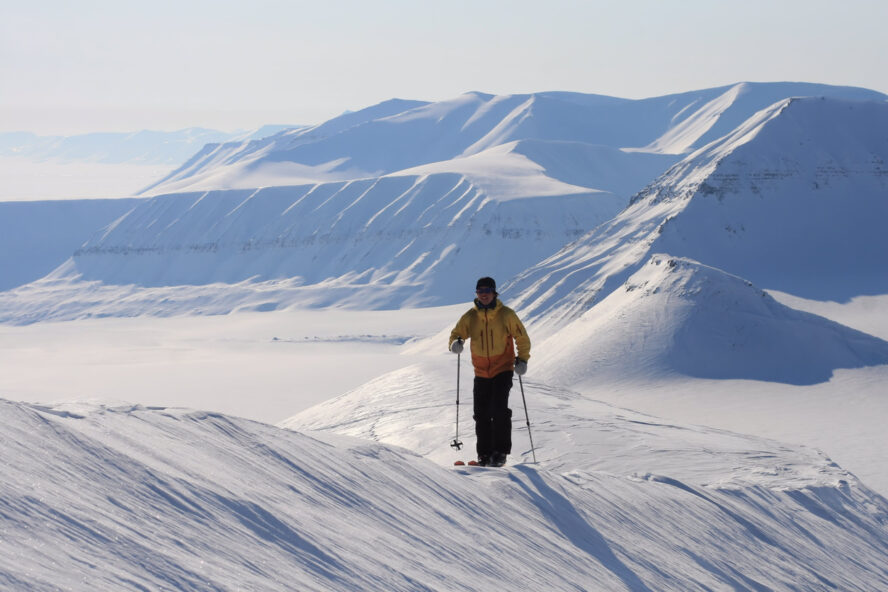
Svalbard is a Norwegian archipelago of nine islands located far north in the Arctic Ocean.
Most of our skiing happens on Spitsbergen, the largest island by far. The southern end of the archipelago sits around 74 degrees north, and the northern reaches approach 80 degrees. That puts us well above the Arctic Circle at 66.5 degrees.
That latitude defines everything about Svalbard skiing. The light, the snowpack, the pace of the day, and even the way you think about time all change this far north.
It’s remote, wild, and surprisingly accessible once you’re there, which is exactly why every decision you make here feels more intentional than it does almost anywhere else I’ve skied.
Out here, you don’t casually “pop over” to another zone or squeeze in a quick lap. Every plan is shaped by weather, sea ice, and daylight, which forces a level of focus that feels refreshing in a world of endless options.

Polar Night and Polar Day
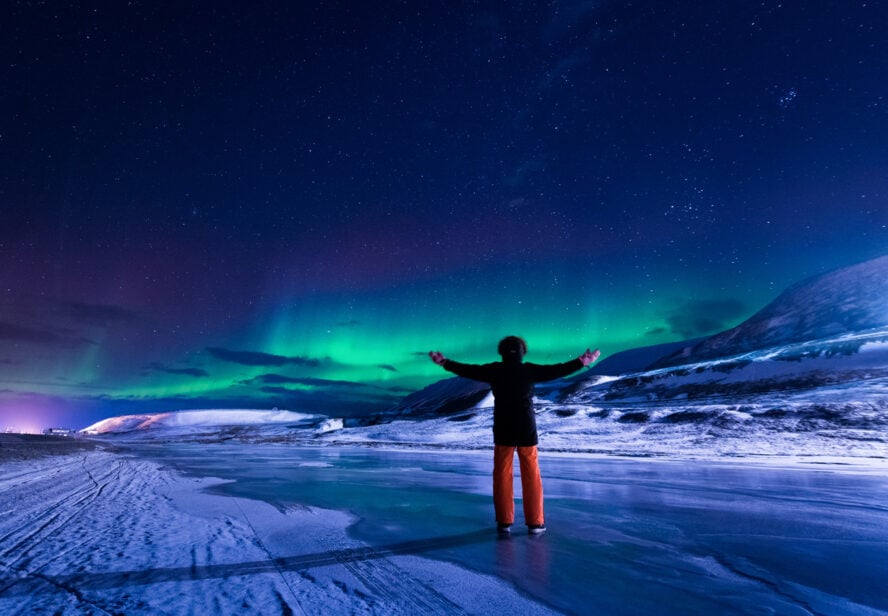
Because of where it sits on the globe, Svalbard has two seasons that shape daily life. The polar night lasts about two months in winter, with no sunlight or twilight at all. During that time, the only natural light comes from moonlight, starlight, and the aurora borealis.
When we ski here in spring, we experience the opposite. The polar day brings 24 hours of sunlight. Around the summer solstice, the sun never drops lower than about twelve degrees above the horizon. That constant daylight changes everything about Svalbard skiing.
Midnight ski tours aren’t a novelty. They’re simply part of the rhythm, and learning to move with it is one of the first ways Svalbard reshapes how you experience the mountains.
Without the usual cues of sunset and darkness, your body starts listening to different signals: weather, fatigue, snow quality, and the day stretches or contracts naturally around those instead of the clock.
First Impressions From the Shoreline
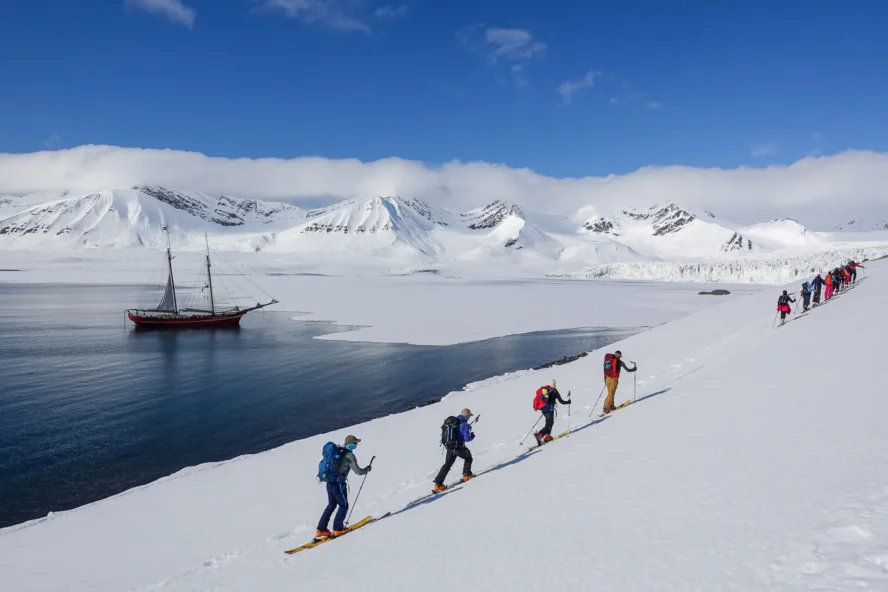
I still remember my first landing in Svalbard vividly. The zodiac slowed near the shore, skis piled at our feet, mountains rising straight out of the fjord. It felt impossible that those slopes could hold good snow, yet they did.
That’s one of the defining features of Svalbard skiing.
You skin up from sea level and ski all the way back down to the ocean. At the bottom, the sea laps quietly against rocks, kelp sways in the current, and your ship waits to take you somewhere entirely different the next day.
That simple loop—from sea to summit and back again—is what anchors every day here and keeps the experience feeling both raw and complete.

A Landscape Built for Ski Touring
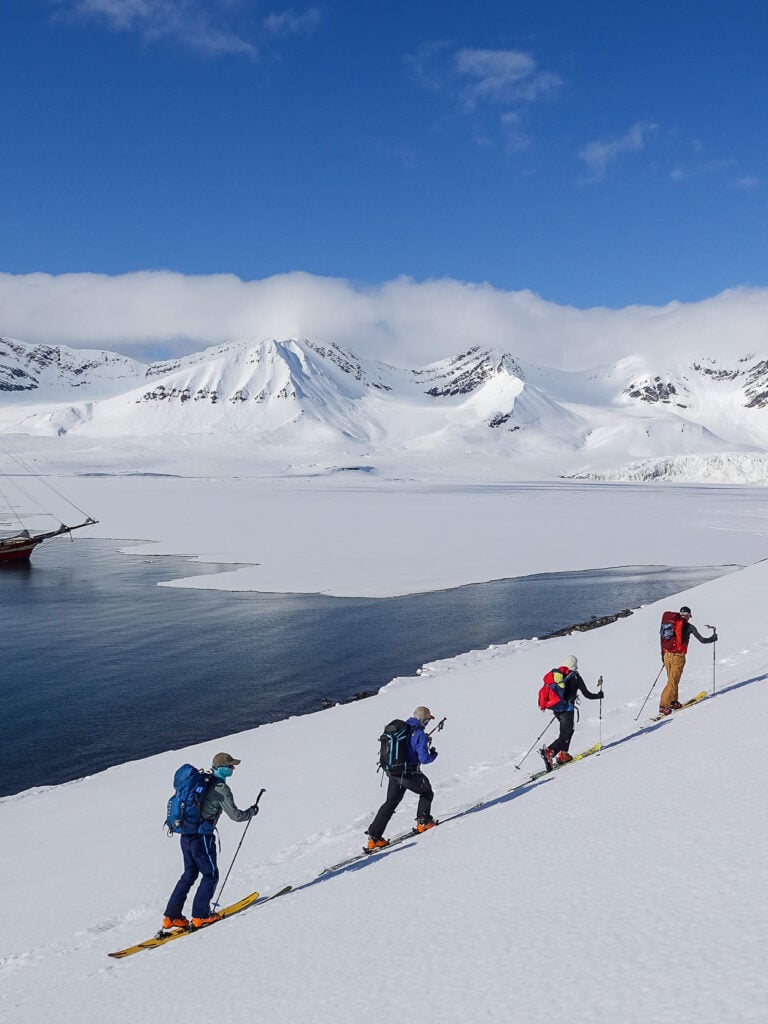
If I had to describe Svalbard in one sentence, I’d say it’s a land made for ski touring.
Peak bagging, long loop tours, and traverses where we get dropped off on one side of a peninsula and picked up on the other are all part of the experience.
The mountains themselves are incredibly varied. Jagged spires rise above broad glaciated plateaus, steep faces sit beside rolling slopes, and fjords carve deep into the land.
This variety is one of the reasons Svalbard skiing never feels repetitive, and why even after years of guiding here, I still find myself genuinely curious about what’s around the next corner.
It’s a place where you can ski something playful and forgiving one day, then turn your attention to bigger, more committing terrain the next, all within the same stretch of coastline. If this kind of skiing speaks to you, Svalbard has a way of answering back.
Snowpack and Avalanche Considerations
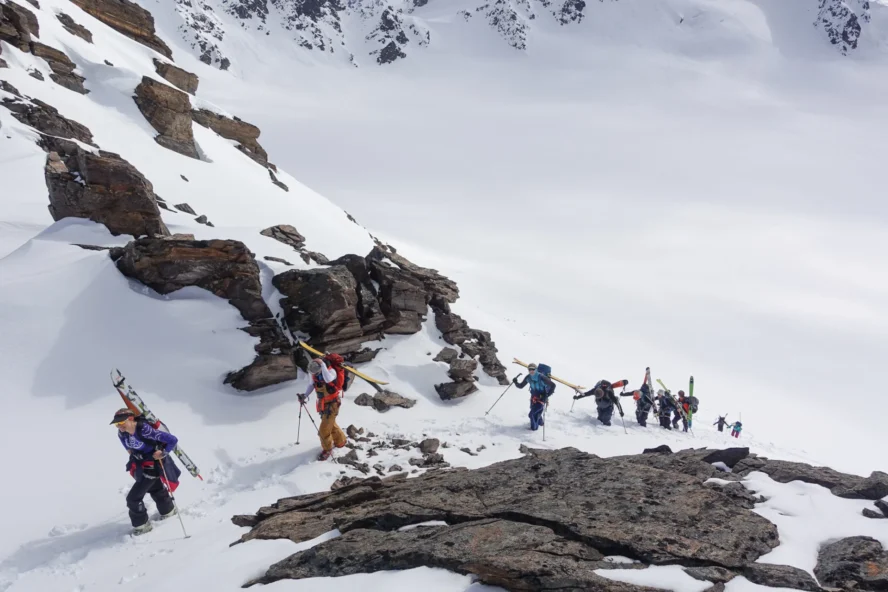
One thing that surprises many people is how stable the spring snowpack often is. The cold, dry climate preserves layers well, and large avalanche cycles are less frequent than in many other mountain ranges.
That said, there are no avalanche bulletins here and very little shared information between operators.
Every decision we make during Svalbard skiing is based on daily observations, guide meetings, and a conservative mindset. Experience matters in this environment, and it’s something I take very seriously.
The lack of formal reporting forces you to stay sharp, constantly reading the snow and terrain instead of relying on external summaries, which ultimately makes you a better backcountry skier.
Svalbard Ski: Steep Lines and Big Descents
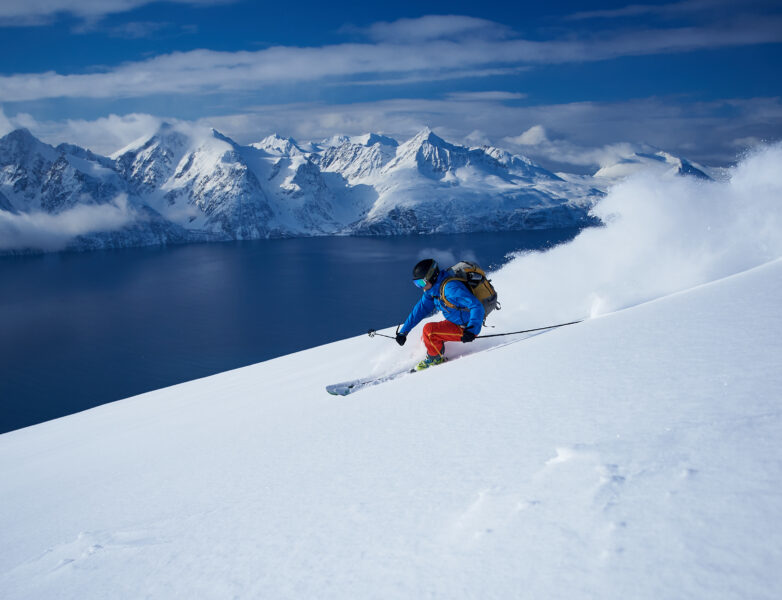
While much of the skiing is classic touring, Svalbard absolutely offers serious terrain when conditions allow. We ski couloirs, steep faces, and big alpine lines with pitches reaching 40 degrees and beyond.
Boot crampons and ice axes aren’t just theoretical items on an equipment list.
When everything lines up, Svalbard skiing can deliver some of the most exhilarating descents I’ve experienced anywhere. Soft, undisturbed snow, no tracks, no wind effect, and a run that drops straight toward the sea.
Those days are rare anywhere in the world, and here they feel earned in a way that makes them stick with you long after the skis come off.
It’s the kind of skiing that doesn’t beg for photos or social proof. It’s enough just to stand at the bottom and look back up in quiet disbelief.
Living Among Ice and Glaciers
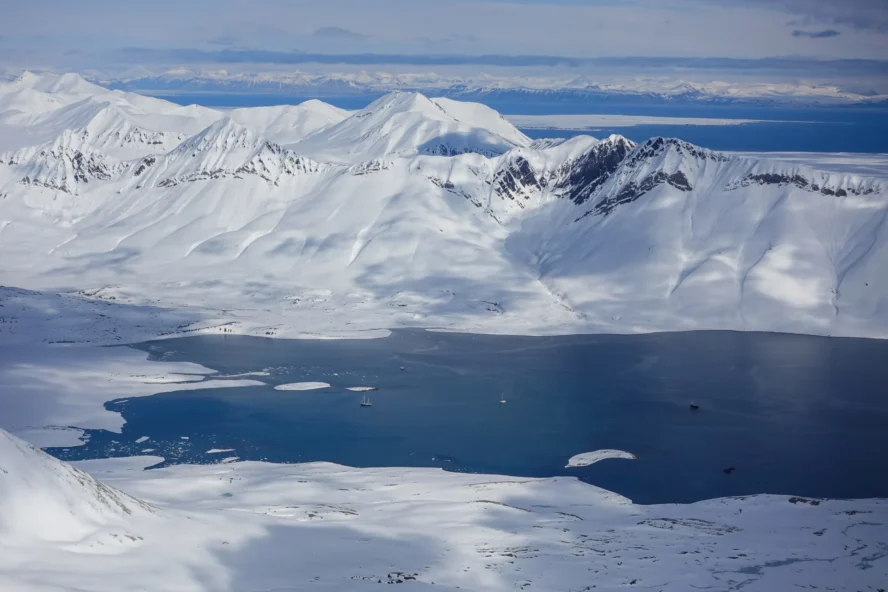
Skiing here isn’t just about snow. It’s about ice, and lots of it.
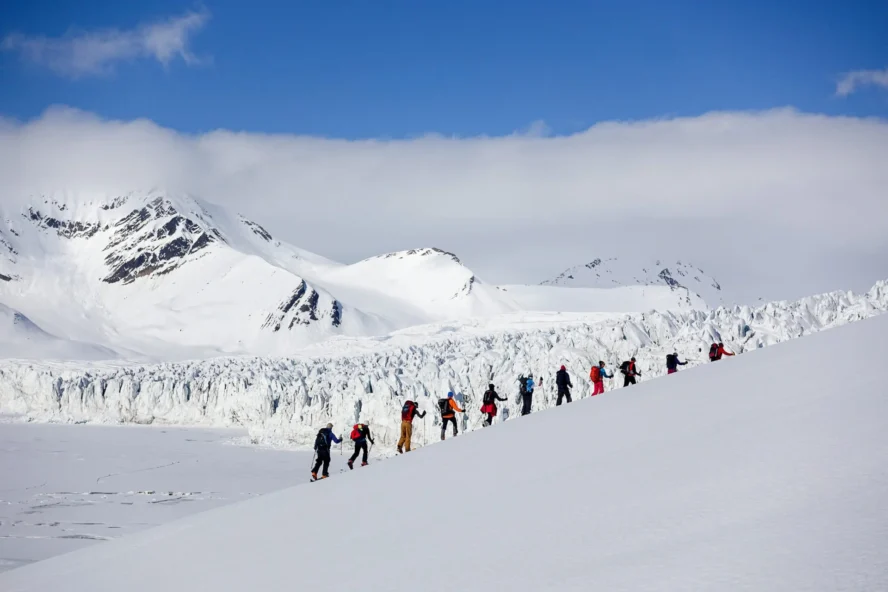
Glaciers dominate the landscape, flowing slowly toward the sea like frozen rivers. Seracs collapse, icefalls twist, and the scale of it all is hard to grasp until you’re standing in the middle of it.
We travel on glaciers every single day. It becomes part of the routine of Svalbard skiing, even though it would feel extraordinary almost anywhere else, and that constant exposure builds a deep respect for the terrain you’re moving through.
Wildlife Encounters on Svalbard Ski Touring Trips
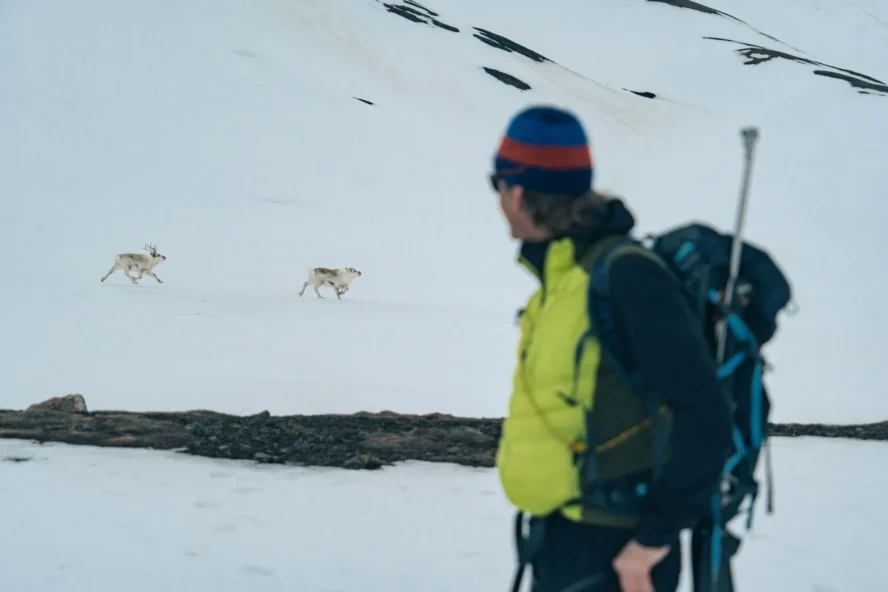
Svalbard is home to just four land mammals: voles, Arctic foxes, reindeer, and polar bears.
Polar bears get most of the attention, but sightings are rare. When we do see them, we keep our distance and let them go about their business.
Reindeer are far more common. One of my favorite memories of Svalbard skiing is descending a glacier while a small herd of reindeer galloped alongside me, completely unfazed by our presence.
Moments like that remind me that skiing here means entering a living landscape, not just passing through it. You’re never the main character in Svalbard, and that perspective is part of what makes the experience so grounding.

Why Ski and Sail Makes Sense
There are almost no roads in Svalbard, and helicopter access for recreational use is forbidden. Ground-based expeditions are slow and require constant polar bear watches.
A sailboat solves all of that.
It gives us mobility, comfort, and safety. Our ship becomes a moving backcountry lodge, which is why the ski and sail model works so well in Svalbard, and why it remains the most natural way I know to explore this place.
Sailing allows us to cover huge distances overnight, wake up somewhere entirely new, and let the mountains dictate the day instead of fixed infrastructure.
The Boats We Use
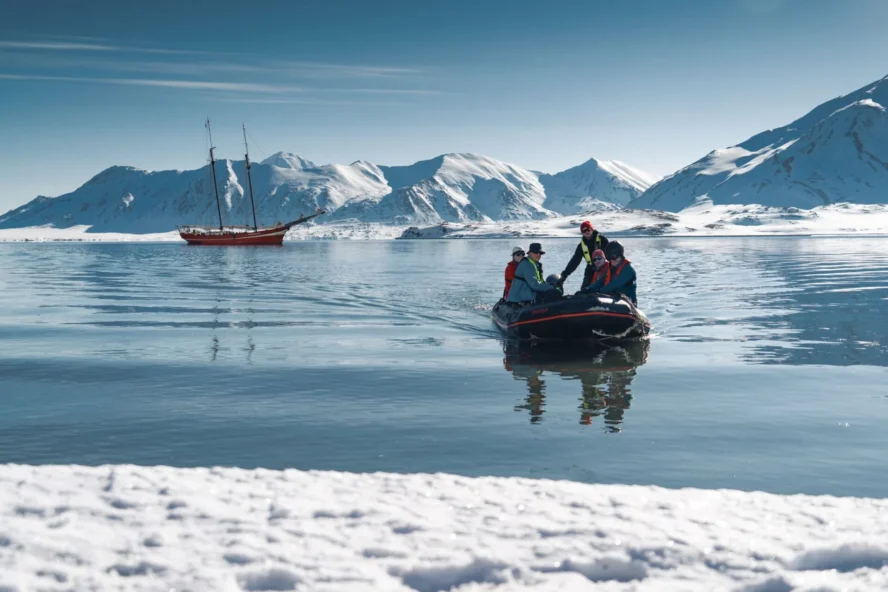
The Norderlicht has been our primary vessel for most of the past eight years. Built in 1910, she’s older than the Titanic and, in my opinion, one of the prettiest ships operating in the Arctic.
We also work with the Rembrandt van Rijn and Keelak, a modern expedition sailboat built in 2018. Each offers a slightly different experience, but all are perfectly suited to supporting Svalbard skiing in remote fjords.
Choosing the right boat isn’t about luxury. It’s about trust, reliability, and having a safe home base in a place where conditions can change quickly.
When the weather turns or the ice shifts, you want to know your floating lodge can handle whatever the Arctic decides to throw at it.
A Typical Day on a Ski and Sail Svalbard Trip
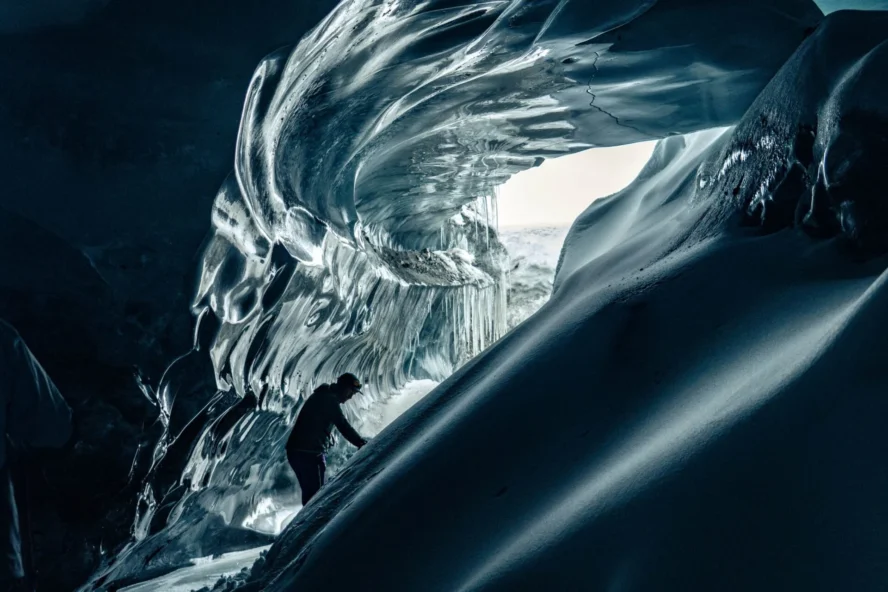
Every day starts with a plan that depends on both the weather and the sea. If we can’t sail there, we can’t ski there. The expedition leader and guides coordinate closely, and the plan gets written up so everyone knows what to expect.
After breakfast, the guides head ashore first to check landing sites and look for any sign of polar bears. Then guests pile into the zodiacs for the ride to shore.
That moment of stepping onto snow is where Svalbard skiing really begins for the day, and where the sense of commitment quietly settles in. Once you leave the boat behind, the distractions disappear, and the only thing that matters is the line ahead of you.
Evenings on Board
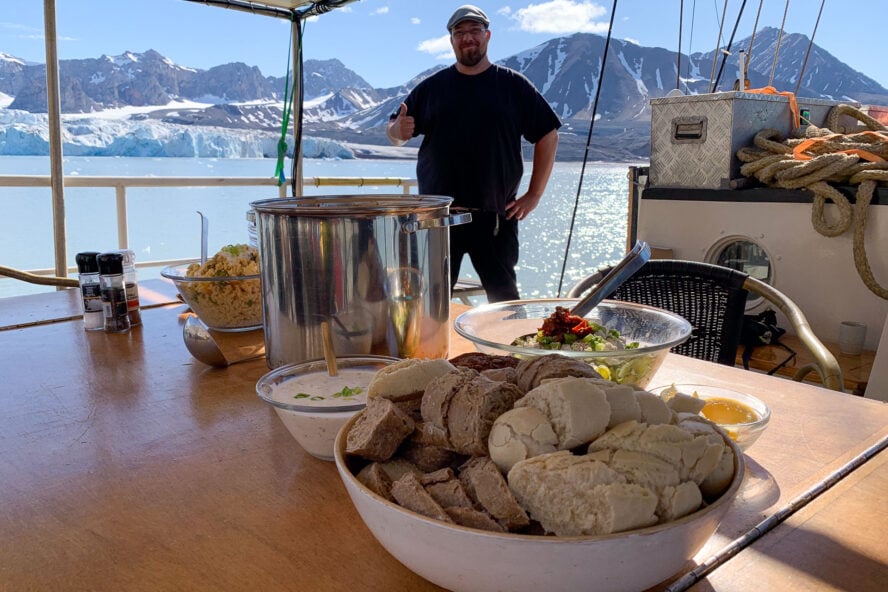
At the end of the day, we return to the ship, peel off layers, and settle into the saloon. Appetizers appear, stories get shared, and the day starts to sink in.
Dinner is often served while we sail to the next fjord. Sitting on deck under endless daylight, watching the Arctic coast slide by, is one of my favorite parts of Svalbard skiing trips.
Those evenings are where the adventure softens just enough to let the experience really land.
Midnight Skiing in Barentsburg
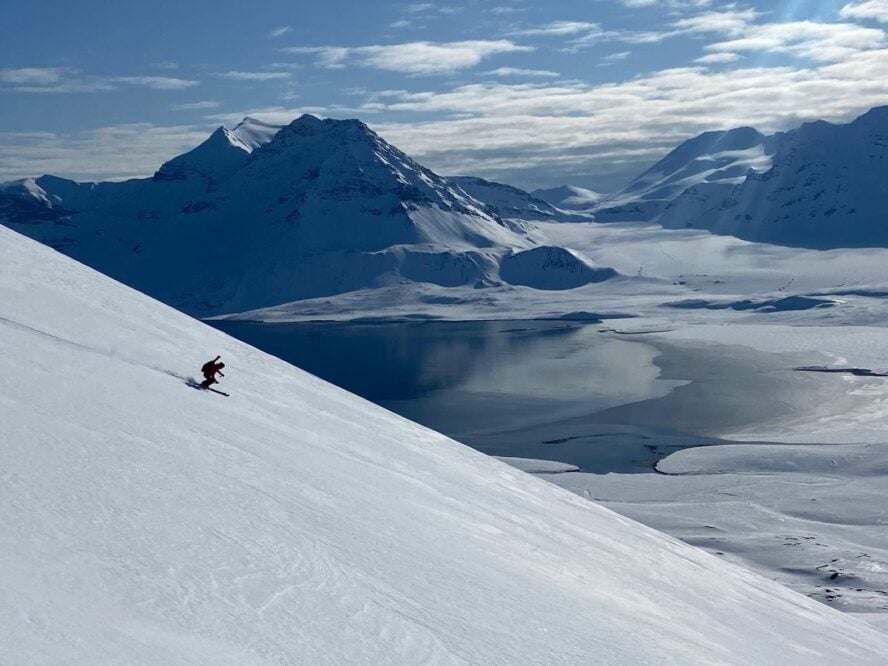
Some of the most memorable skiing I’ve done here wasn’t planned at all. One night in Barentsburg, after a long day, a guest asked if we could go for a midnight ski tour.
We walked through town under bright sunlight late in the evening, past industrial buildings and a bust of Lenin preserved by local heritage laws. At exactly midnight, we locked our heels and skied down perfect snow with the sun hovering just above the horizon.
It was one of those moments that defines Svalbard skiing for me, because it only happens when you stop trying to control the schedule and let the place lead.
That kind of spontaneity is rare in the mountains, and Svalbard rewards it in unforgettable ways.
Favorite Mountains and Long-Term Dreams
Choosing a favorite mountain in Svalbard is nearly impossible, but a few stand out. Grunfjordfjellet, above Barentsburg, is modest in height but offers incredible views and a satisfying descent straight back to town.
Another peak took me years to finally climb. Weather, snowpack, crevasse conditions, and group dynamics all had to align. When they did, it delivered one of the best days of Svalbard skiing I’ve ever had.
Those long-held objectives are what keep the place feeling unfinished, no matter how many times I return. There’s always another line waiting, another idea quietly forming in the back of your mind.
Who Thrives on This Trip
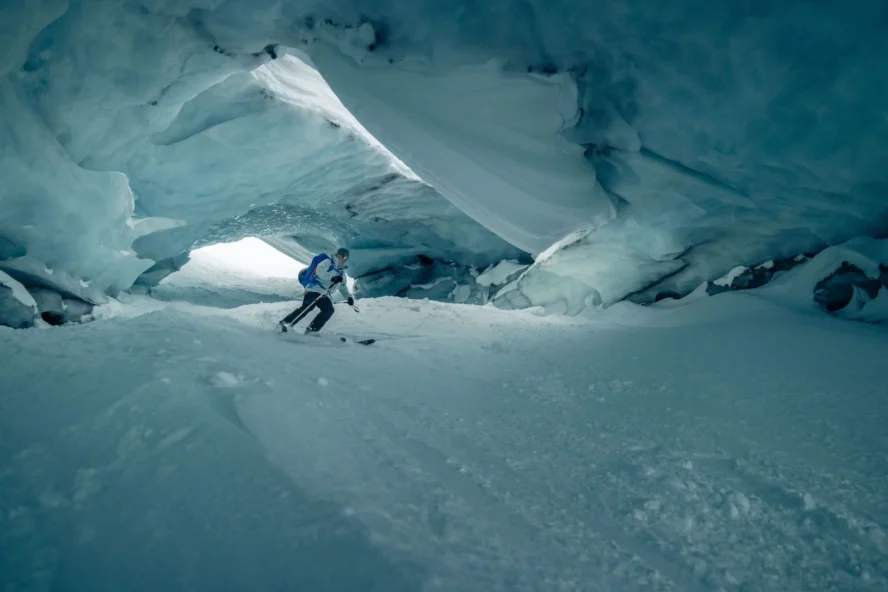
This trip isn’t about skiing as hard as possible every day. It’s about adaptability, curiosity, and comfort in the backcountry. We ask guests to be strong intermediate to advanced skiers, capable of handling variable snow and efficient transitions.
With multiple guides, we’re able to adapt daily objectives so everyone gets the most out of Svalbard ski touring, regardless of pace or experience level.
The skiers who thrive here are the ones who value the journey as much as the descent.
Getting to Svalbard
Daily flights run from Oslo to Longyearbyen, and the airport is just minutes from town. I always recommend spending a few days in Oslo beforehand to adjust to time zones and buffer against travel delays.
Longyearbyen itself is worth exploring, and we often offer land-based skiing there before heading out by boat. It’s a great introduction to Svalbard ski culture and the Arctic environment.
That extra time helps shift you out of travel mode and into the slower, more deliberate pace Svalbard demands. Arriving unrushed makes a real difference once you step onto the boat and the expedition truly begins.
Why I Keep Returning
After all these years, I still find myself standing on deck, coffee in hand, watching glaciers slide past, thinking about how lucky I am to ski here.
Skiing Svalbard isn’t just another trip. It’s an experience that reshapes how you think about mountains, snow, and adventure.
These are the northernmost slopes on Earth, but more than that, they’re a reminder of why we go into the mountains at all. For exploration, for perspective, and for moments that stay with you long after the skis are packed away.