
Biking in Slovenia begins in villages like the one where I grew up. We’re just two million people in the whole country. On the map, we look a bit like a chicken, and we joke about that. We also like to point out that the word “love” is hidden in Slovenia. Small country, big personality.
What defines us is not the shape, it’s the compression. Within one hour, you can move from serious Alpine terrain to the Adriatic coast. Within 30 minutes of leaving the capital, you are already climbing. There is no long transition. You are immediately in it.
I spent years working abroad. Skiing was my main passion for 11 years. I worked in Davos and other mountain towns, chased winters and wind, guided as a diver, kite surfer, and ski instructor. I learned how landscapes shape people. And every time I came home, something felt obvious.
What I was searching for was already here. That’s when I stopped chasing bigger mountains abroad. If you want to know why Slovenia punches above its weight, you start on the climbs.
Why biking in Slovenia feels so different
When people ask me, “Where exactly is Slovenia?” I explain that we border Austria to the north, Italy to the west, Hungary to the east, and Croatia to the south. That geography shaped us for centuries.
You feel Austrian influence in the mountains. Italian in the food and architecture near the west. Balkan warmth in the villages. Hungarian traces in the east. For a rider, that means every few days the atmosphere changes. Architecture shifts. Cuisine shifts. Even the rhythm of the villages changes. It never feels static.
Biking in Slovenia is not just about terrain. It is about moving through subtle cultural transitions without ever crossing a long distance. In one week, you feel like you have crossed borders, even though you stayed inside one small country. That is what makes Slovenia cycling so surprisingly diverse.
Forests, rivers, and constant change
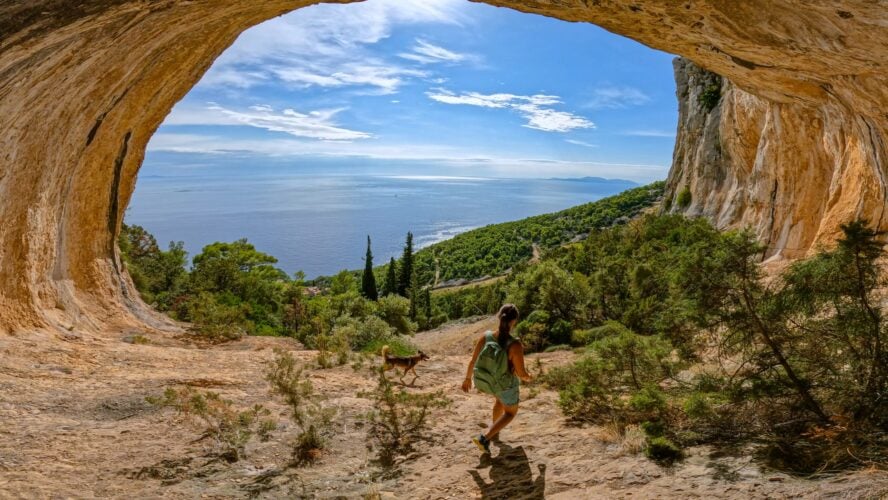
Around 60 percent of the country is forested. Large portions of the country are protected in some form. We have 74 different tree species. Limestone dominates the Alps. That limestone shapes the rivers, the caves, the colors of the landscape. It gives the mountains their pale, sharp character.
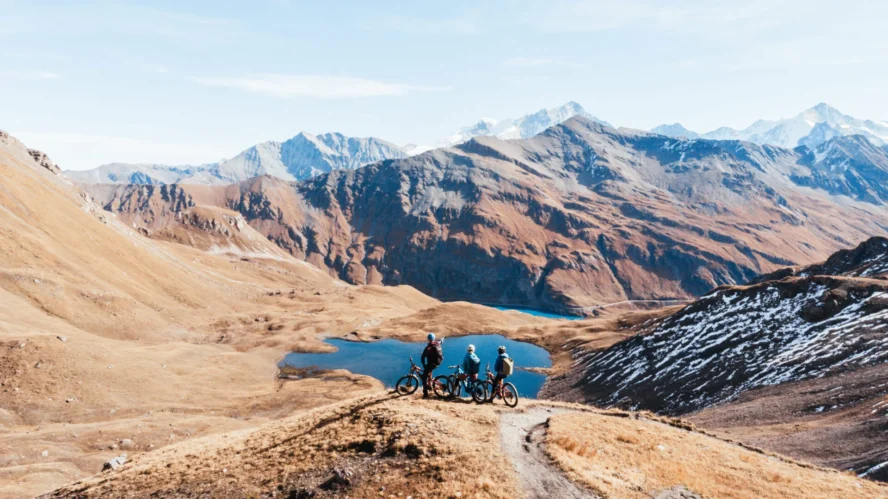
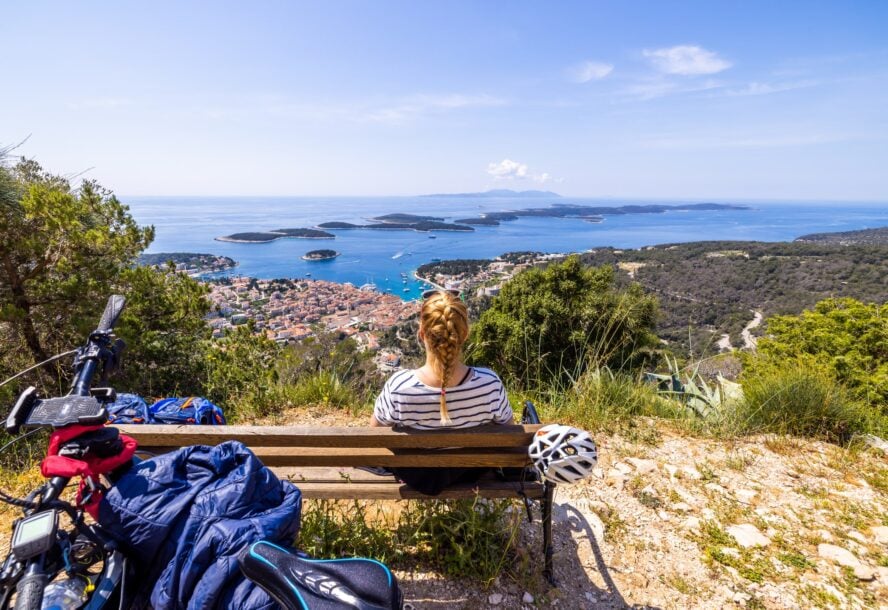
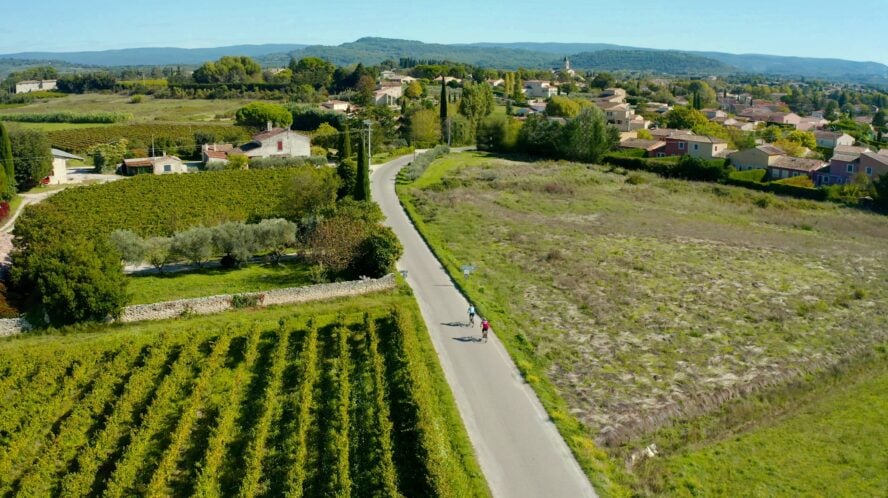
When you ride here, the scenery does not stay the same for long. One day you are climbing above a glacial valley. The next day you are rolling through vineyards. Then you descend toward the Adriatic and feel the air soften and the light change. The smell of pine becomes the smell of salt.
As a kid, I would ride roughly 100 km (62 mi) from the Alps to the coast for a quick trip. Sleep there. Ride back the next day. At the time, I did not appreciate how unusual that was. Now I do. That ability to link mountains and sea in a single ride is at the heart of biking in Slovenia.
Road cycling: Climbs that test you
We are proud of our professional cyclists. Tadej Pogačar and Primož Roglič have changed how the world sees us. They won the Giro, the Tour, and La Vuelta. For a nation of two million, that is unusual. It created a new wave of young riders who look up to them.
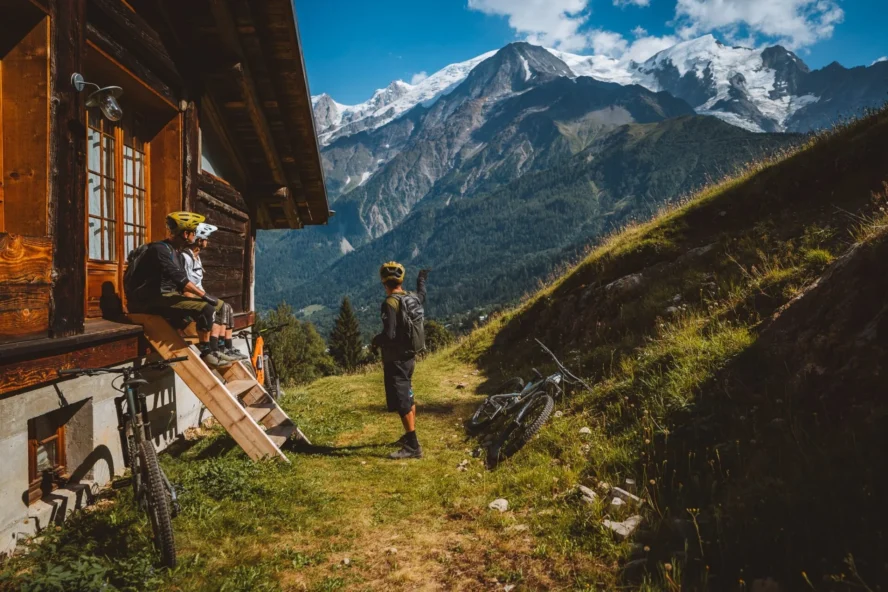
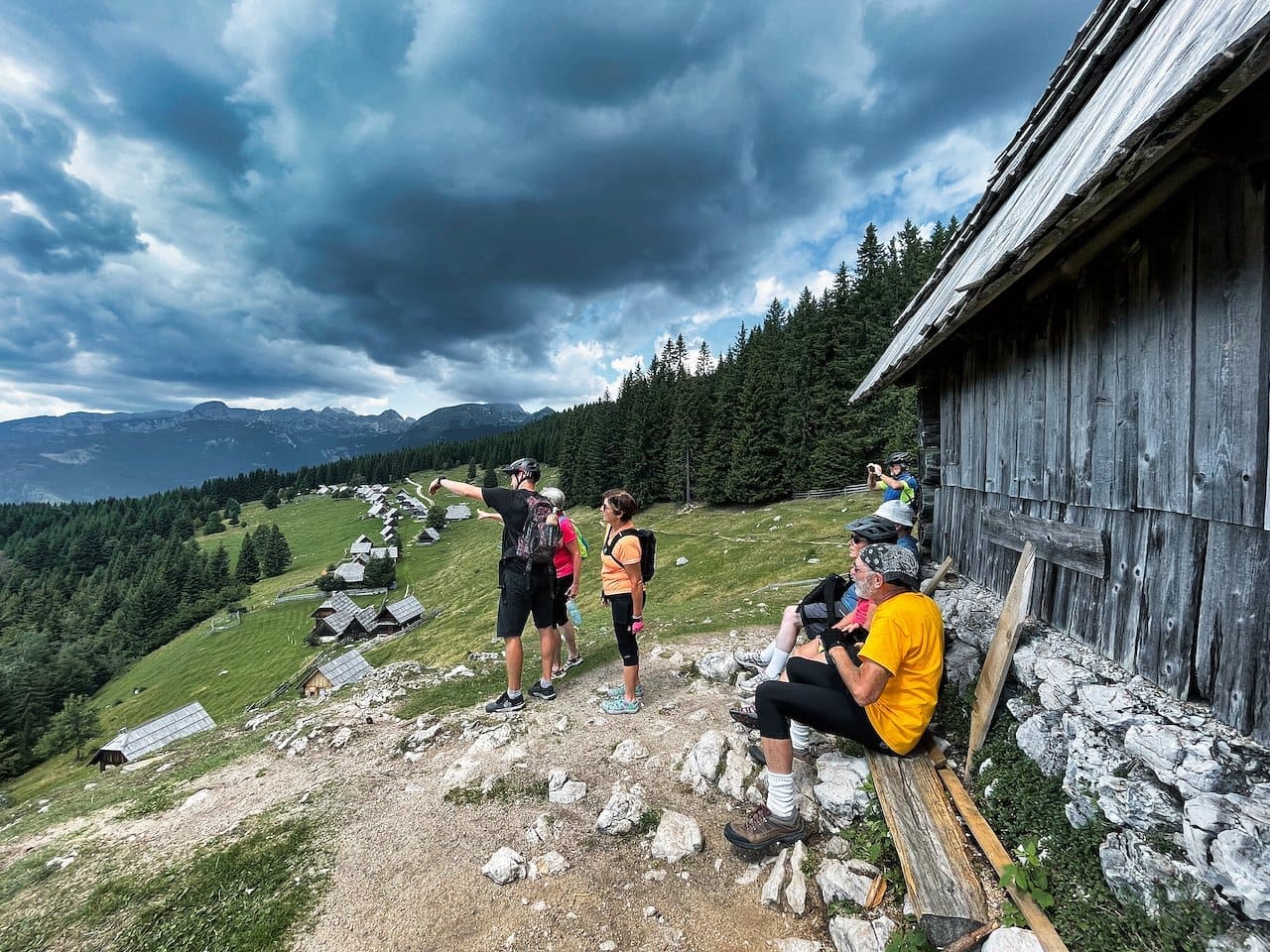
But the culture of biking in Slovenia was strong long before that. Road cycling has deep roots here. On any sunny day, you will see local groups climbing together, pushing hard, then stopping for coffee at a mountain hut before descending.
One of the most famous climbs is the Vršič Pass. It has 50 hairpin turns. The uphill side is partly paved with cobblestones, laid by Russian prisoners during World War I. It is scenic and historic. In summer, it is also busy. I usually recommend riding it early in the morning or outside peak season so we can focus on the rhythm of the climb.
My favorite high road for biking in Slovenia
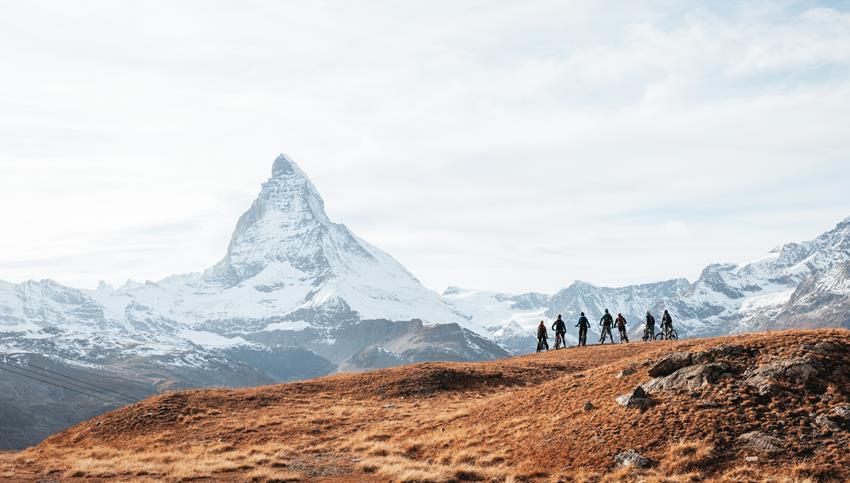
If I had to choose one road climb, it would be the Mangart Saddle. It rises to just above 2,000 m (6,560 ft). It is the highest road in Slovenia. From the top, you can see three countries. On a clear day, you can even see the Dolomites in Italy stretching far in the distance.
The climb is steady and exposed. The final section feels wild and high. There are moments when you feel very small against the scale of the mountains. When you reach the top, you know you earned it. The descent is long and smooth, and you carry that feeling with you for hours.
On my epic road tours, riders typically climb 1,500 to 2,000 m (4,900 to 6,560 ft) per day. Sometimes more. It is not a casual spin. It is a focused, challenging experience that rewards preparation and consistency. For those specifically searching for cycling Slovenia with serious elevation, this is where the country truly delivers.
Quiet roads and strong legs
One thing surprises many guests. The roads are quiet. Even the iconic climbs rarely feel overwhelmed outside high season. The infrastructure is well maintained. Asphalt quality is strong. Markings are clear. Drivers are generally respectful of cyclists.
We have many roads, more than most people expect. And because the country is small and spread out, traffic disperses. That creates long stretches of peaceful riding where you hear only your breath and the sound of tires on pavement.
For serious road cyclists, biking in Slovenia delivers real climbing and real quiet. It is a place to train, but also a place to enjoy.
Mountain biking in Slovenia: Earn the descent
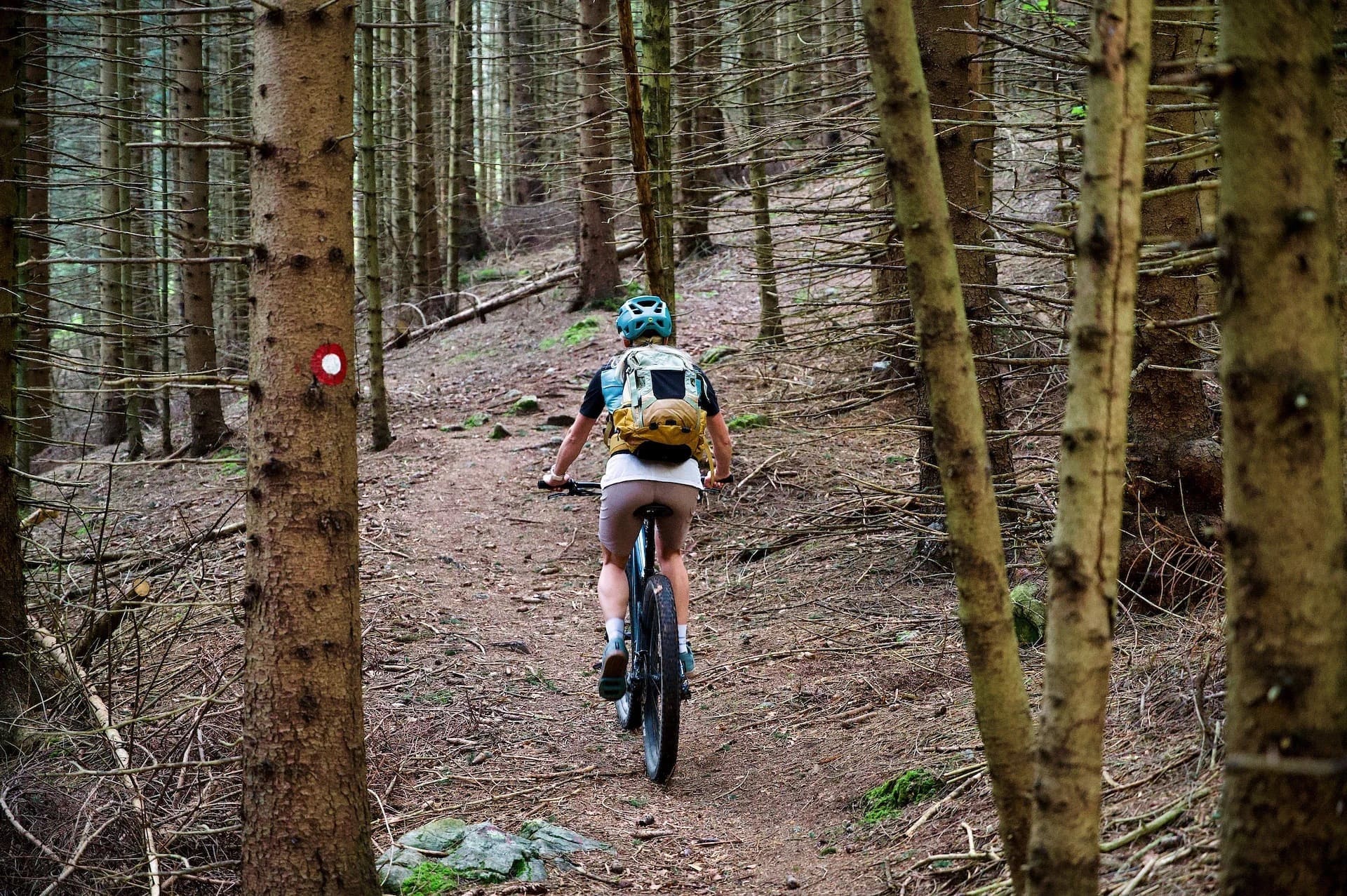
When it comes to mountain biking in Slovenia, you need to understand something. We do not have endless, purpose-built flow parks. What we have are natural singletracks, forest roads, and old shepherd paths carved by use, not by machines.
They can be technical. They can be rocky. Limestone creates sharp edges and loose sections. Roots and stones are part of the ride. But they feel authentic and grounded in the landscape. That raw quality is exactly why mountain biking Slovenia attracts riders who prefer real terrain over manufactured flow.
When I guide mountain bike tours in the Alps, we often cover 40 to 50 km (25 to 31 mi) per day with 1,200 to 1,500 m (3,900 to 4,900 ft) of climbing. It is real mountain terrain. You work for the views. And when you stop at the top, you understand exactly why you climbed.
The role of e-bikes
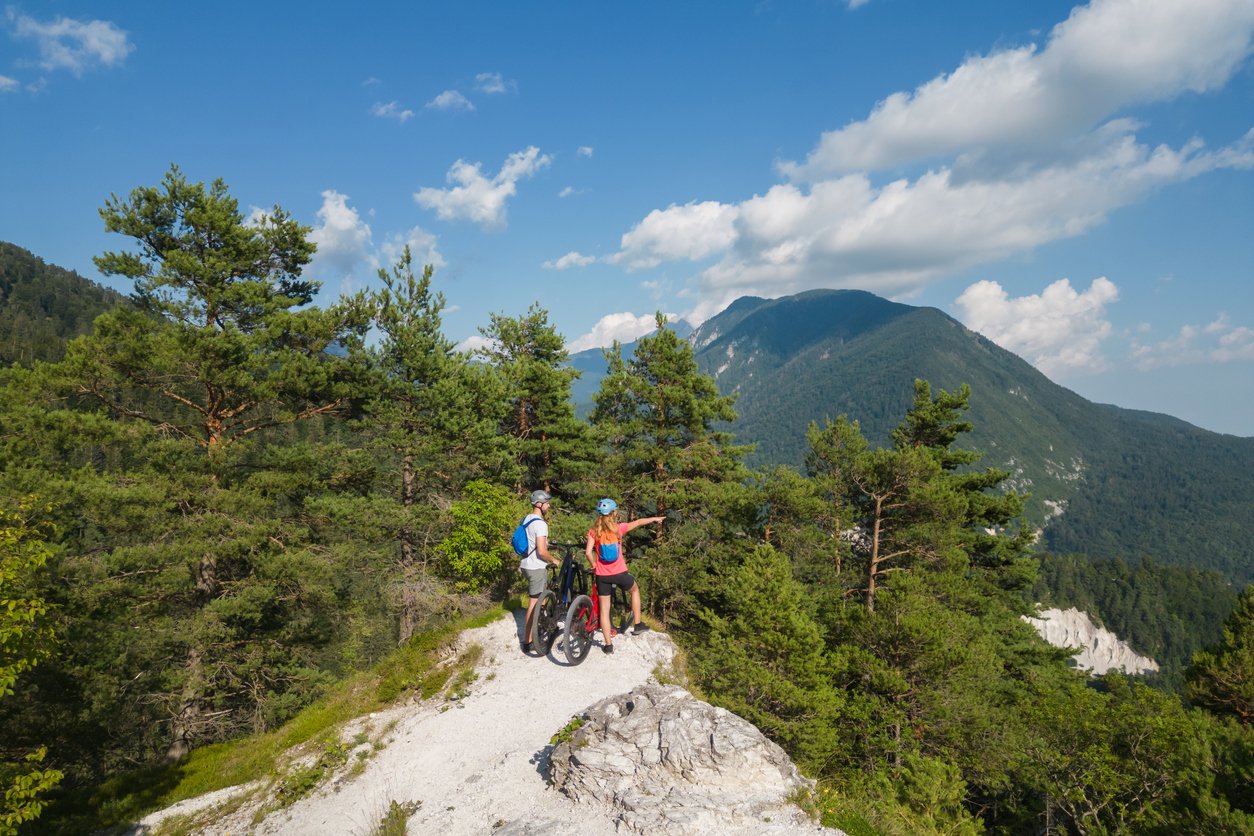
Electric mountain bikes have changed biking in Slovenia significantly. With a 750 Wh battery and good suspension, riders can reach higher ridgelines and deeper valleys without exhausting themselves completely. It opens options.
It allows mixed groups to ride together. Strong riders still push. Less experienced riders feel supported. It opens terrain that was previously limited to the fittest athletes. It also means we can explore more in a single day without rushing.
I have guided guests in their twenties and guests in their eighties. One group of Canadian women, average age 80, completed a long Alps to Adriatic journey on e-bikes. Their determination impressed me deeply. Biking in Slovenia is about willingness more than age.
Bike and hike combinations
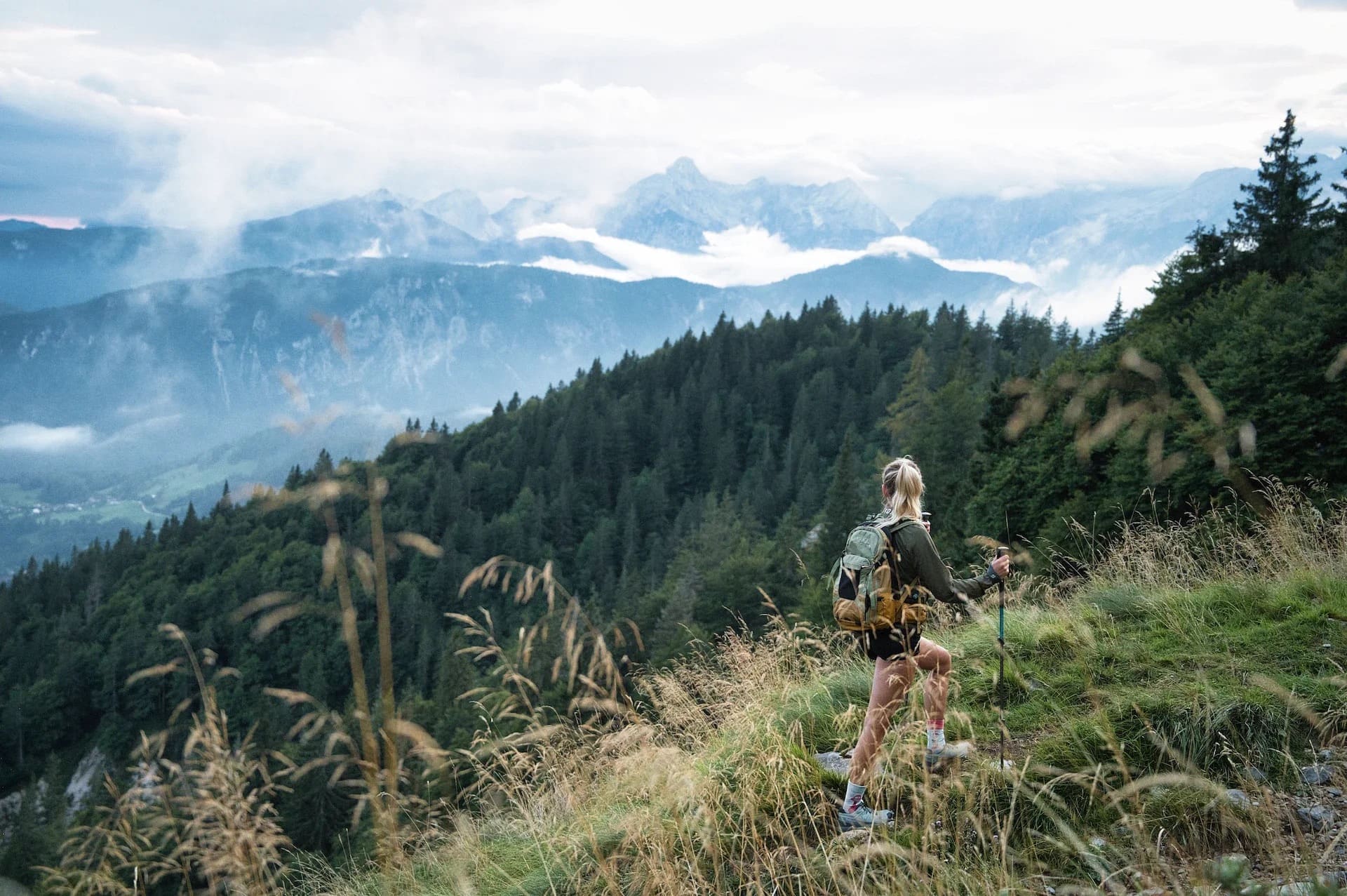
Our Alpine peaks are steep. Often too steep to access fully by bike. That is why I offer bike and hike tours as well.
On those days, we ride into the valley, lock the bikes, and continue on foot to reach the summit. It adds another layer to the experience. Three days of riding, two days of hiking. Or the reverse. The combination makes the week more complete.
You do not just circle the mountains. You stand on top of them and look back at where you rode.
Gravel riding: The underrated side of biking in Slovenia
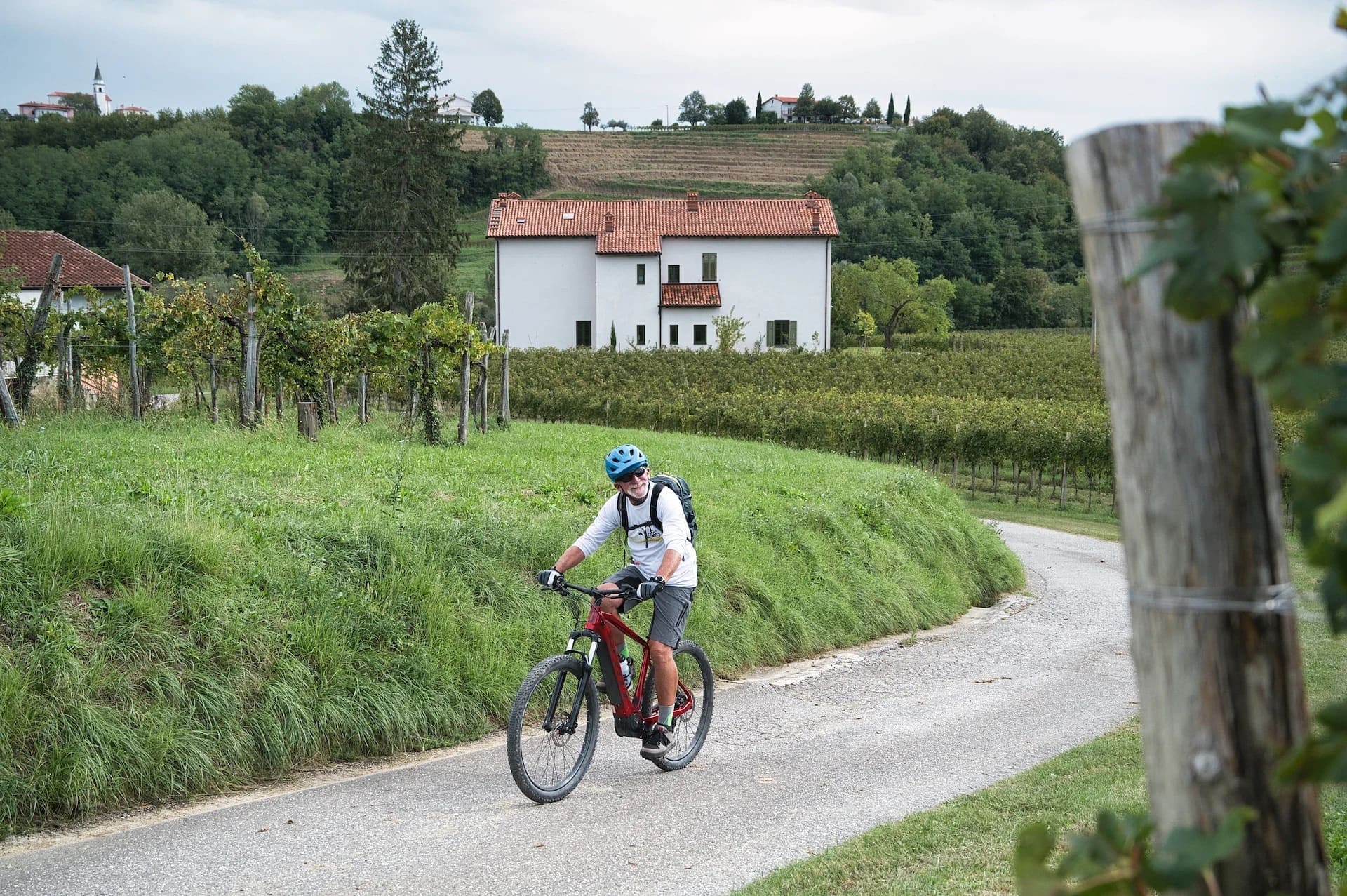
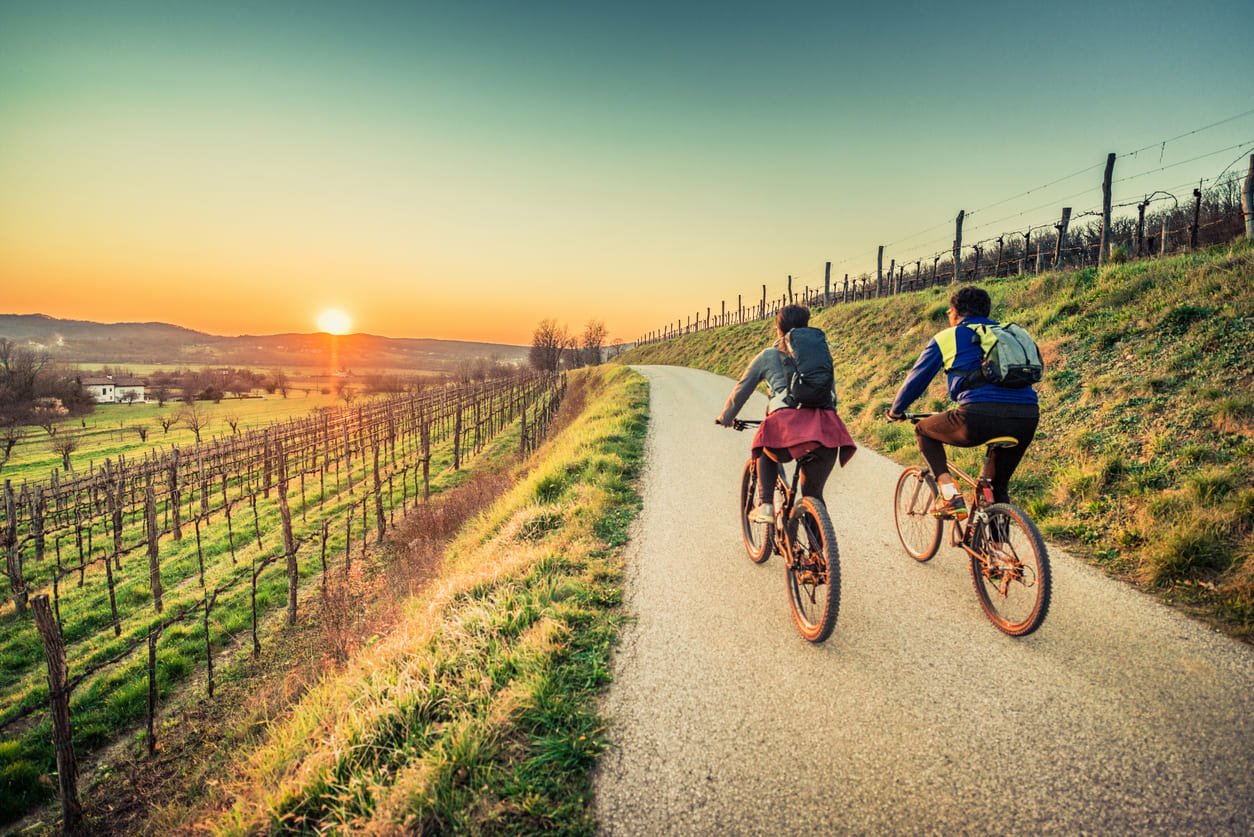
Gravel bikes have become popular here in the past five years. In central and southern Slovenia, you find long, well-maintained gravel roads cutting through forests and vineyards.
The surface is generally compact and smooth. Perfect for wider tires and steady rhythm. You ride through quiet farmland, past small villages, and occasionally past someone working in a garden or tending vines.
Gravel biking in Slovenia feels intimate and relaxed. It is not about speed or competition. It is about flow and space. It is about being slightly off the main road and discovering places you would otherwise miss.
Choosing the right bike
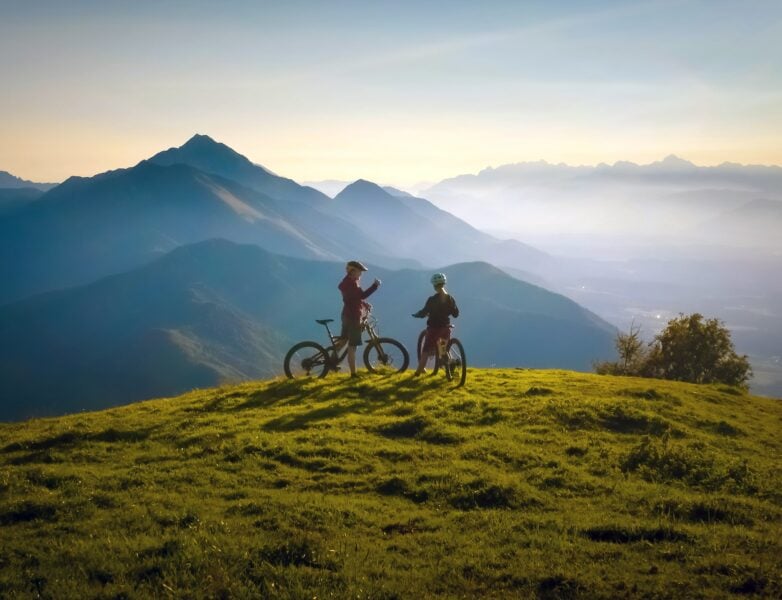
Slovenia is a hilly country, and some of our climbs are steep, whether you’re riding in the Alpine valleys or through the rolling vineyards of Goriška Brda.
If your priority is exploration and views, e-bikes are often the better option. They let you focus on the landscape instead of the gradient. But if you’re looking for a real challenge or you’re an avid cyclist who enjoys earning every meter, a gravel bike is the right choice.
You can link rolling climbs and descents for hours. Smile without thinking about traffic. Stop at a local winery. Continue through olive groves. This quieter version of biking in Slovenia often surprises road riders who want something different but still challenging.
From the Alps to the Adriatic: The full spectrum
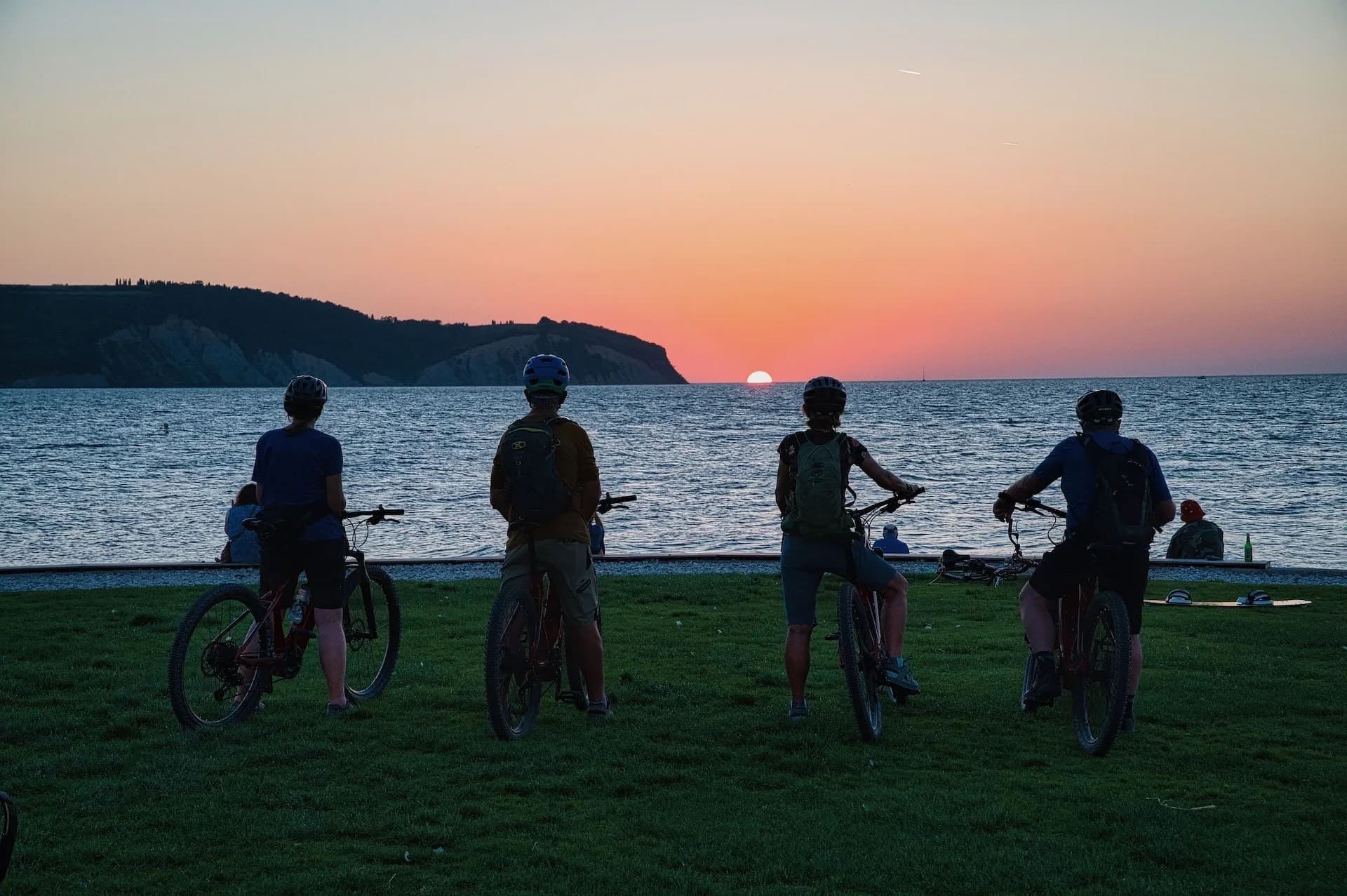
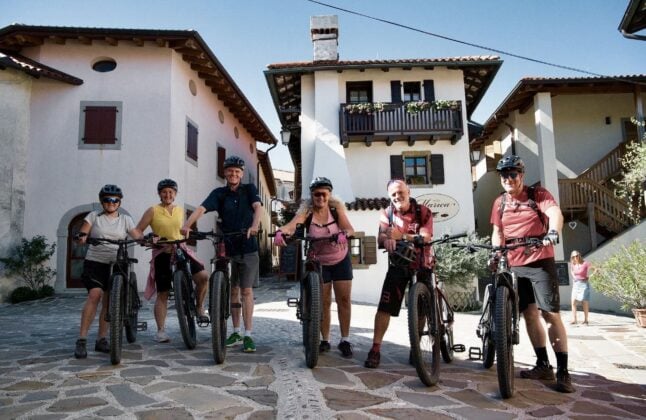
Many of my tours begin in Ljubljana. Within 30 minutes, we are already in pre-Alpine terrain. From there, we move toward Lake Bled, then deeper into the mountains near Kranjska Gora.
After several days of climbing and exploring, we gradually descend toward the wine region of Goriška Brda. Finally, we reach Piran on the Adriatic coast.
Each location feels distinct. The buildings change. The food changes. The pace of life changes. And yet the distances between them are short.
Why I prefer 12 days of biking in Slovenia
You can do this journey in seven days. Some do it in five. I prefer 12 days.
Two nights in each location. Six different bases. That rhythm allows you to settle in, explore properly, and avoid feeling rushed. You get to know the place, not just pass through it.
For riders planning Slovenia cycling holidays and wanting depth rather than a quick transfer route, this format makes a real difference.
Two days earlier you were surrounded by high peaks. Now you are riding beside olive trees. That contrast defines biking in Slovenia and makes it memorable.
At the end, many guests take a ferry from the coast to Venice and continue their journey. The transition from Alpine Slovenia to the Adriatic and onward to Italy feels seamless and satisfying.
Beyond the bike: Culture, caves, and rivers
Although most of our time focuses on riding, I always integrate cultural stops. We pass Predjama Castle, built dramatically into a cliff face. We visit museums dedicated to World War I history in the Soča region.
In the hills, you often see small churches perched on top. Historically, they served defensive purposes against Ottoman invasions. Today, they create unique viewpoints and landmarks that guide your ride.
Biking in Slovenia is enriched by these layers of history that quietly surround you.
Underground worlds
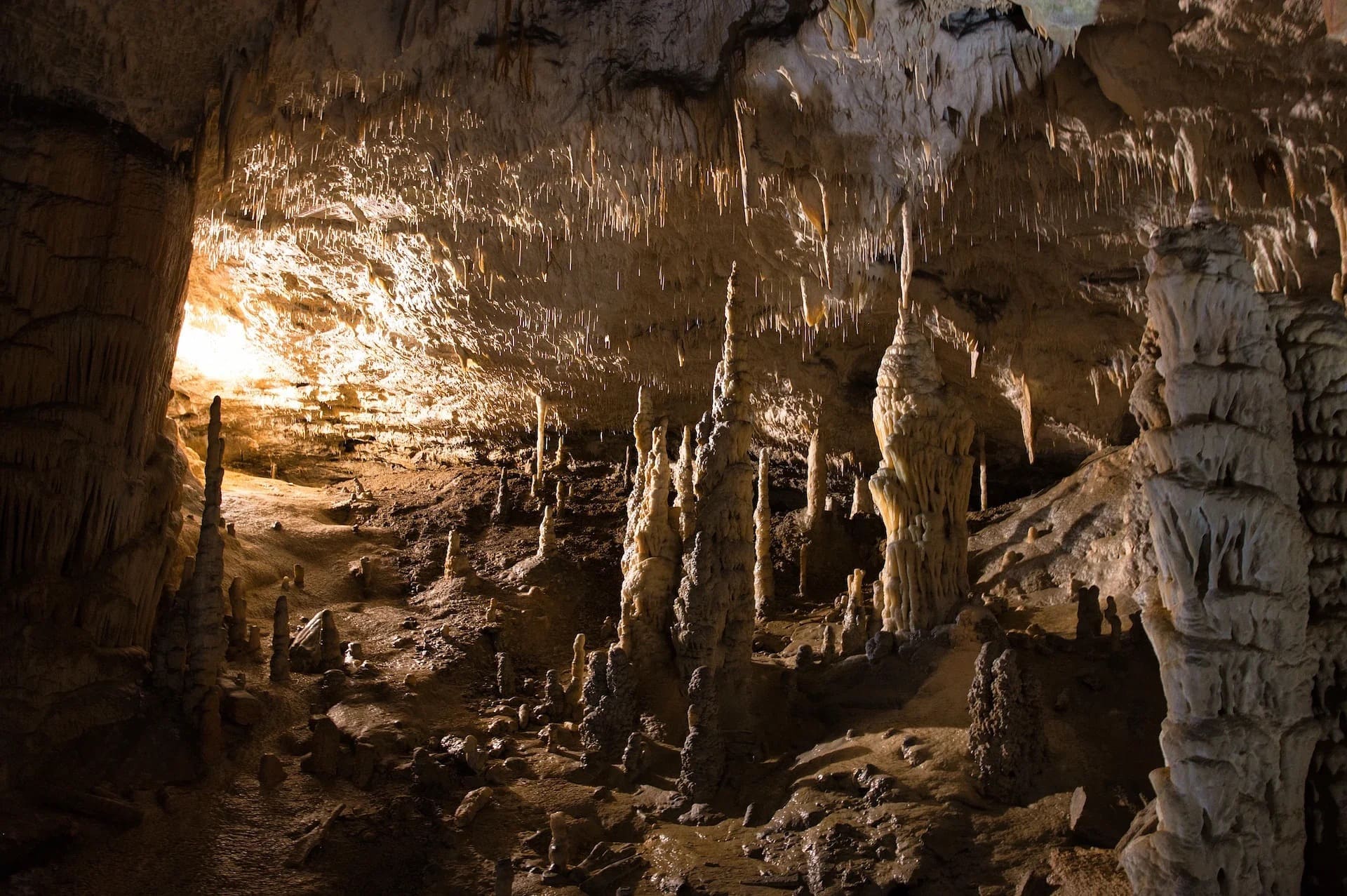
Slovenia has one of the most extensive and accessible cave systems in Europe. Postojna Cave is famous and vast. Škocjan Caves features a dramatic underground canyon and is UNESCO listed.
On rainy days, we sometimes explore these caves. It adds contrast to the riding days. Limestone shapes not only the mountains but also the underground world beneath them.
The Soča river reset
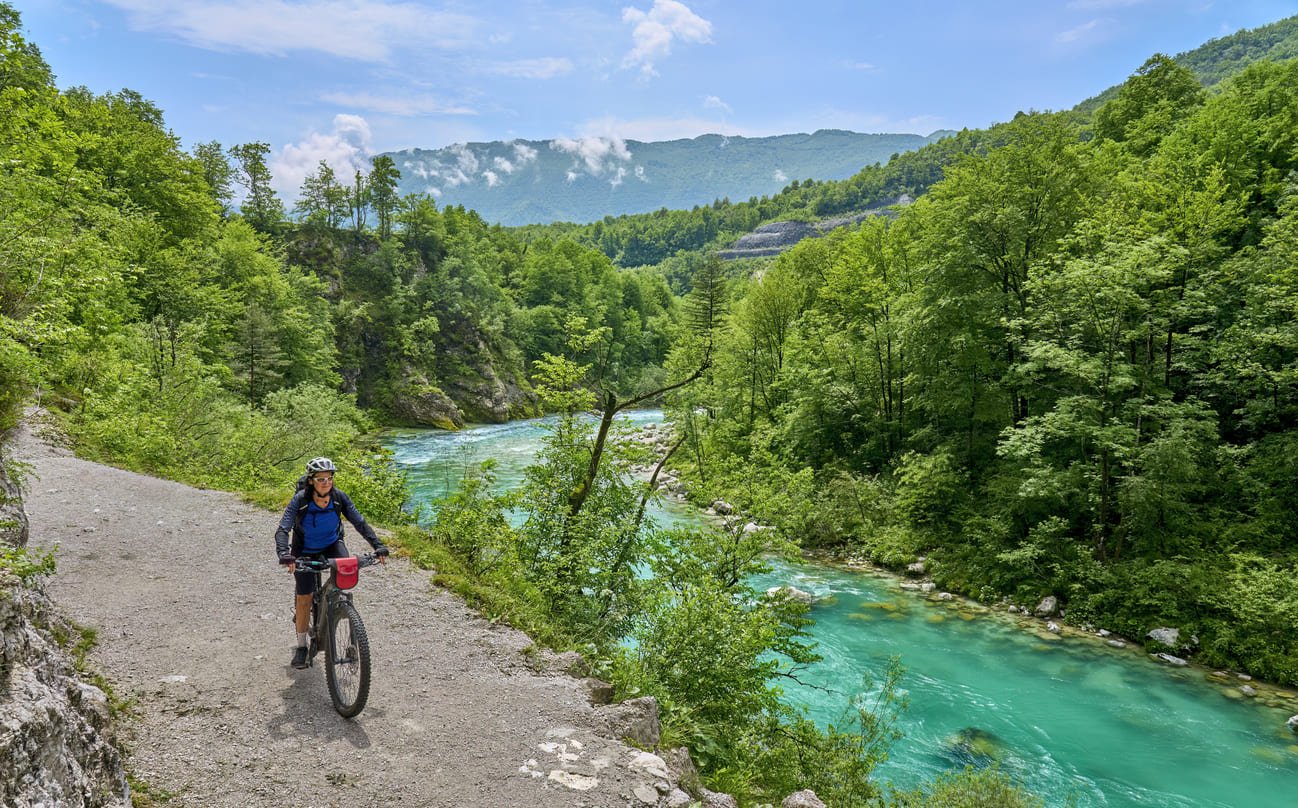
The Soča River is often called one of the most beautiful in Europe. Its emerald color comes from the limestone. After a long ride, jumping into that water feels like pressing reset on your body.
We sometimes add rafting or kayaking to the itinerary. It is not the main focus, but it complements biking in Slovenia perfectly and reminds you how closely everything here is connected.
Local cuisine, people, and small stays
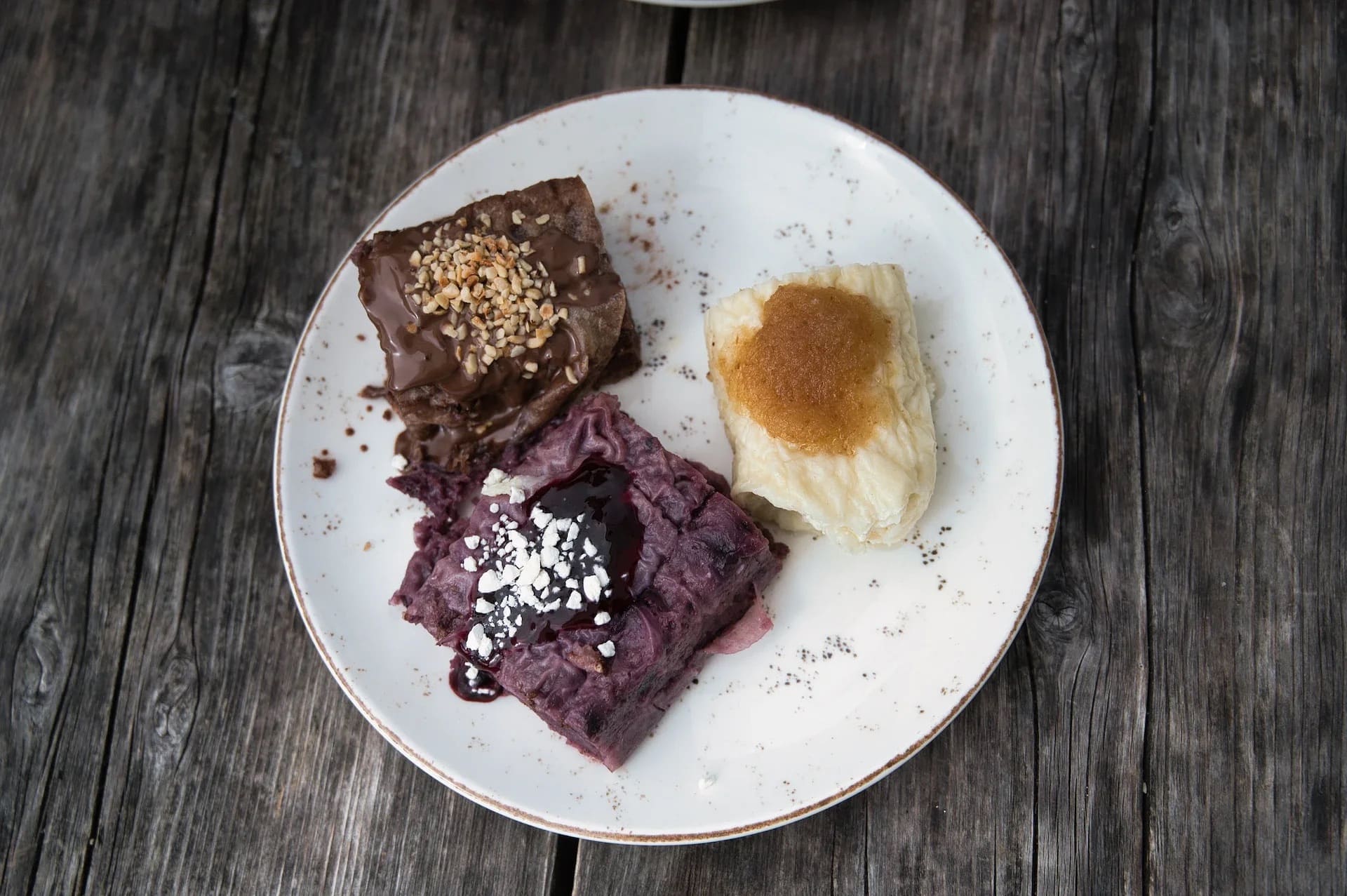
We do not have many large chain hotels. Most accommodations are small boutique farm stays or mountain lodges run by local families. Breakfast often includes local cheese, honey, vegetables from the garden, and bread baked nearby.
I prefer it this way. You connect with the owners. You understand the region better. It adds depth to the physical challenge of biking in Slovenia.
Food shaped by four borders
Slovenian cuisine reflects our neighbors. In the Alps, you find stews, cheese, and cured meats. Near the coast, you find pasta with truffles, olive oil, and Mediterranean flavors.
In the wine regions, long lunches stretch into the afternoon, with seasonal vegetables, fresh bread, and simple dishes built around what was harvested that morning. Even something as basic as soup or dumplings tastes different from valley to valley because recipes are still passed down inside families.
One guest once told me, “The biking was incredible, but the people made the trip.” That meant a lot. Behind every wine tasting or meal is someone passionate about their craft. Those encounters stay with you long after the climbs fade from your legs.
When to plan your trip
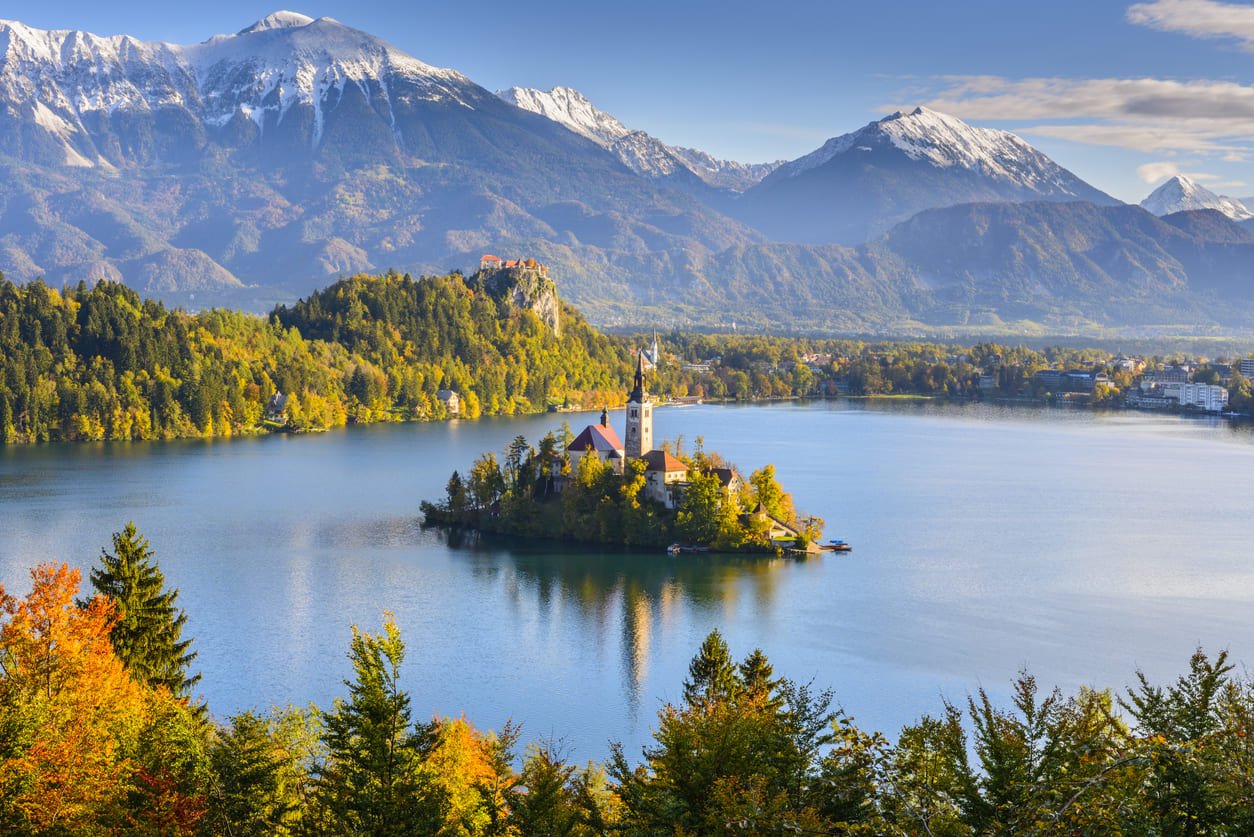
Spring runs from April to late June. Fall covers September and October. These are my favorite seasons for biking in Slovenia. The colors are strong. Temperatures are moderate. The air feels fresh and stable.
Rain can come in blocks of three to five days. The advantage is flexibility: within one hour, we can often find better weather elsewhere and adjust the plan.
Summer swims and Alpine air
In July and August, the Alps remain cooler. If the coast is hot, we ride higher. Summer allows swimming in lakes and rivers at the end of a ride. One guest told me that swimming every day in August made her trip unique and unforgettable.
Each season offers something different. That is another reason biking here never feels repetitive, even for me as a guide.
How I guide and what to expect
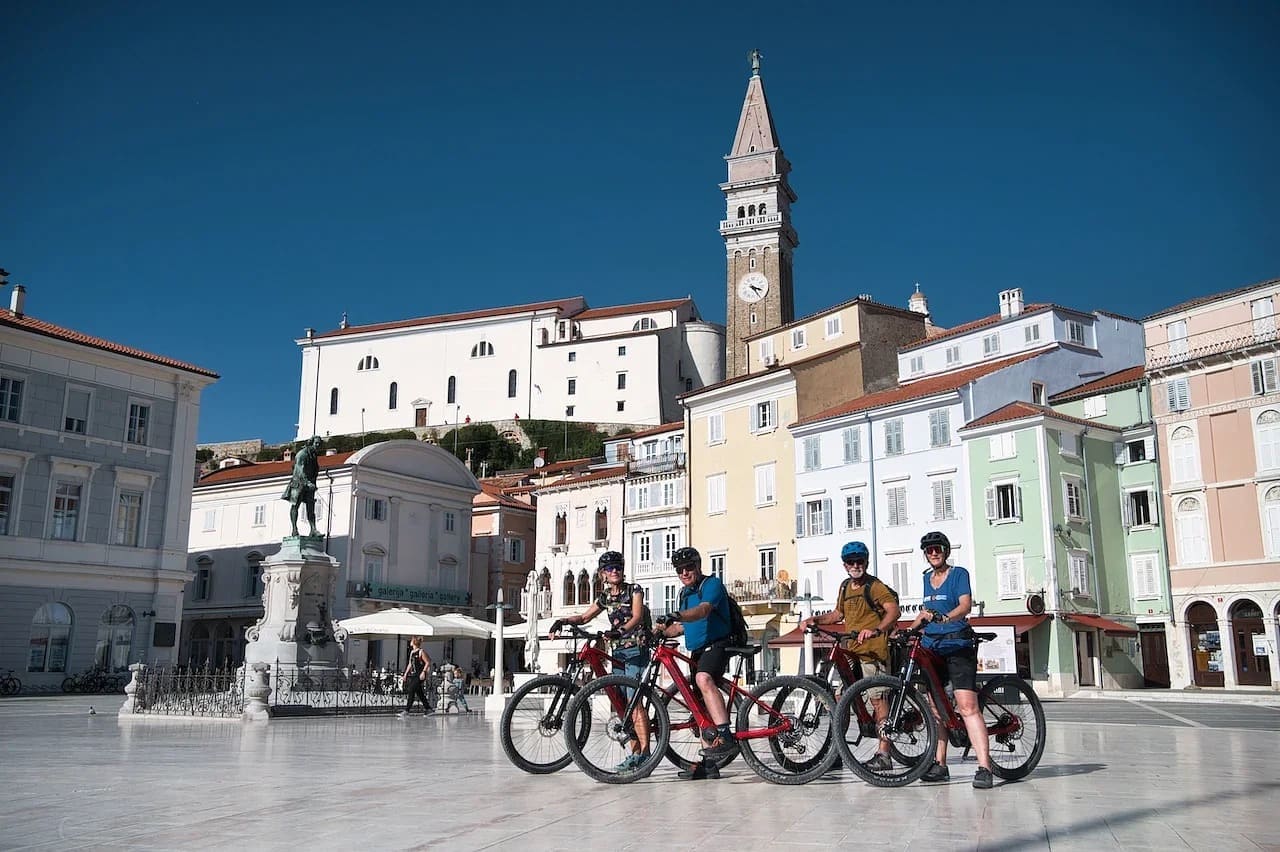
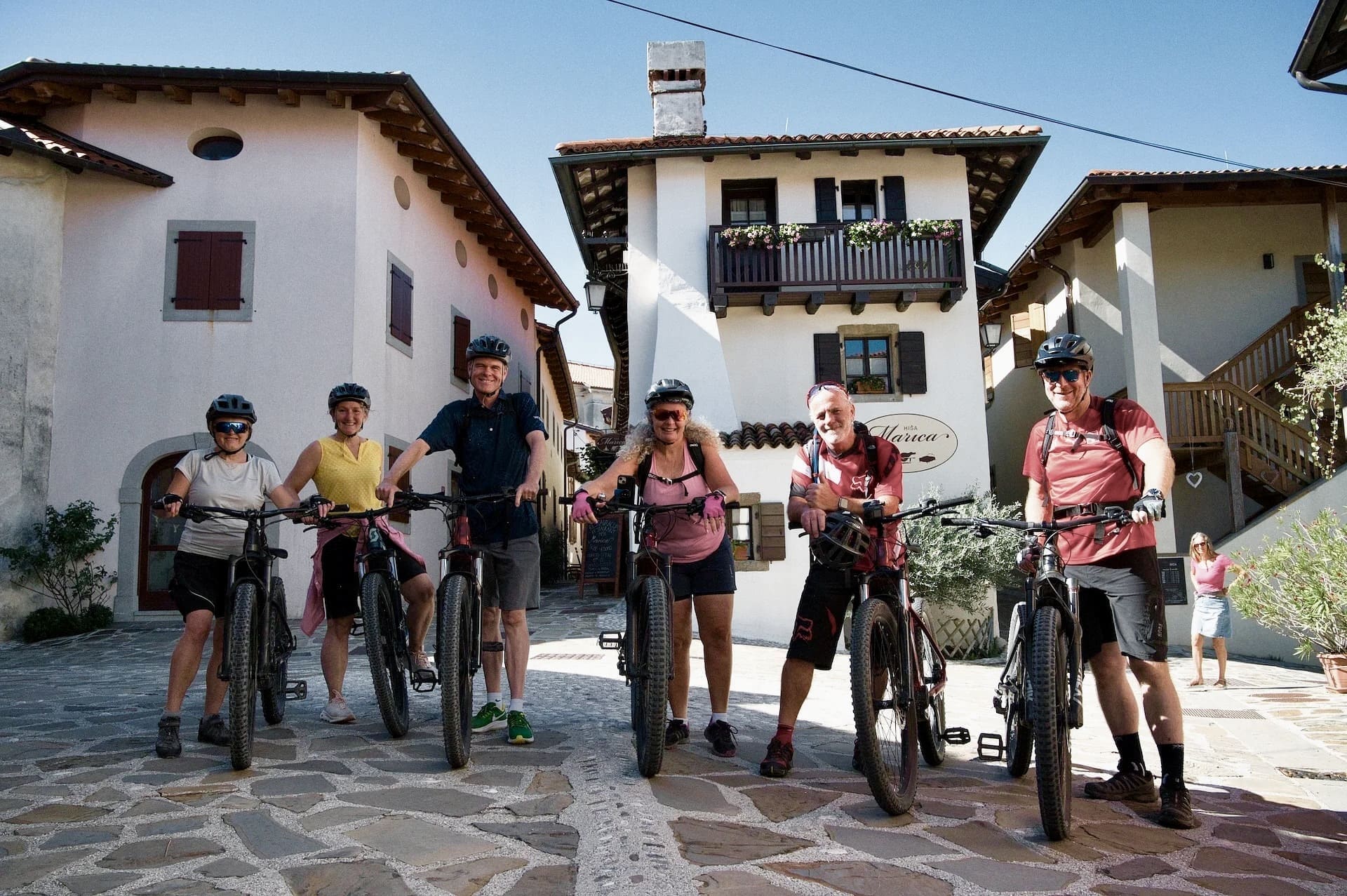
I usually limit groups from five to seven or eight riders per guide. If more friends join, we add another guide. I want each rider to feel seen and supported, not lost in a large group.
Every morning, we review the plan. We start between 9 and 10 am. We ride until 4 or 5 pm. If the weather changes, we adapt. If the group feels strong, we extend. If someone needs a shorter day, we adjust.
After riding, I maintain the bikes. Clean. Inspect. Prepare for the next day. Equipment matters. Safety matters. I take that part seriously.
Who can join
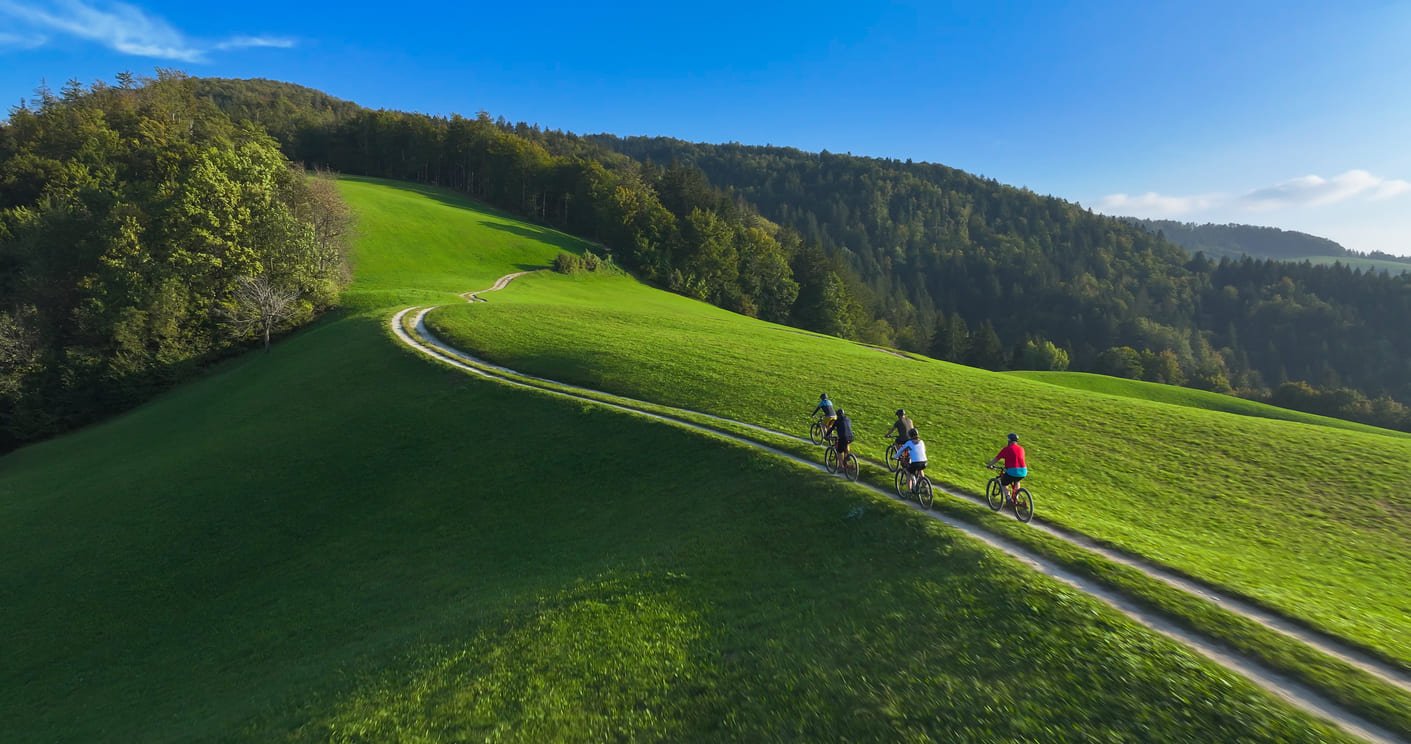
I believe biking in Slovenia is for everyone willing to try. With e-bikes available and flexible routing, we can adapt to many levels and abilities. That is why I always say, if you want to bike Slovenia properly, do it with time, curiosity, and an open mind.
Bring appropriate layers in spring and fall. A light rain jacket even in summer. Comfortable cycling clothing. Helmets are provided.
The goal is simple. Ride well. Eat well. Sleep well. Repeat. And slowly understand why this small country leaves such a big impression.
What lingers after the last ride
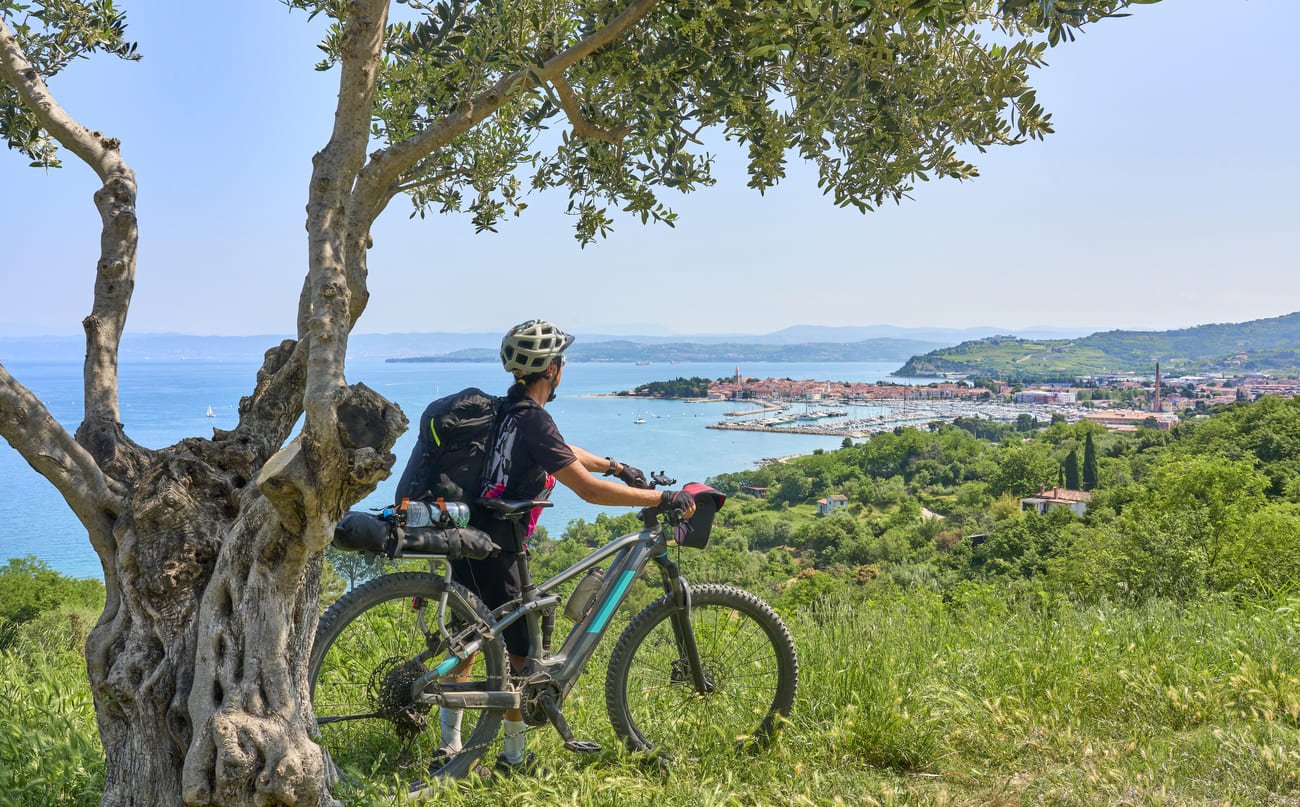
At the end of most tours, we sit together and reflect. Riders often say they cannot believe how much variety they experienced in such a small country.
Alpine passes. Gravel vineyards. Coastal roads. Emerald rivers. Local meals. Quiet evenings in small villages. All within short distances.
For me, guiding here is personal. I grew up in these valleys. I learned on these roads. Each time I ride from the mountains toward the sea, I feel the same appreciation I felt when I first came back from abroad and saw Slovenia with new eyes.
If you want terrain that changes quickly, roads that stay quiet, and culture that feels lived in, biking in Slovenia delivers.
I would be glad to ride alongside you and show you why I came back.
Just give me twelve days, and I’ll show you more variety than most countries offer in a month.