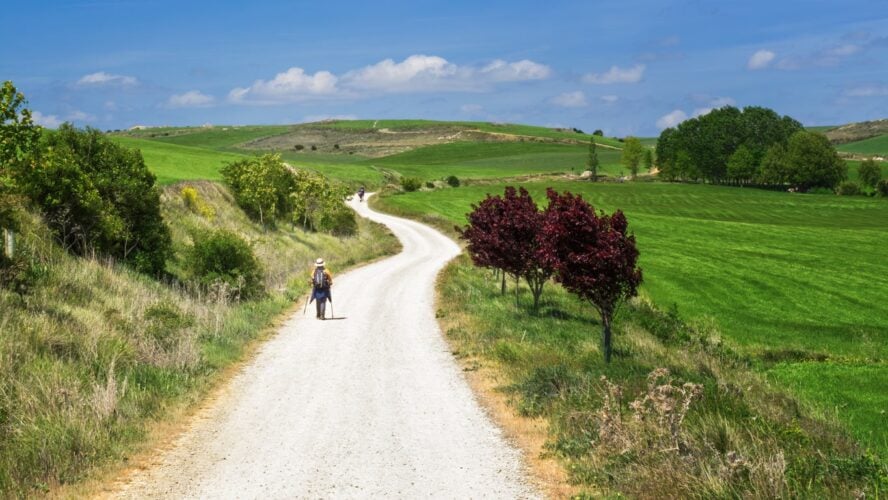
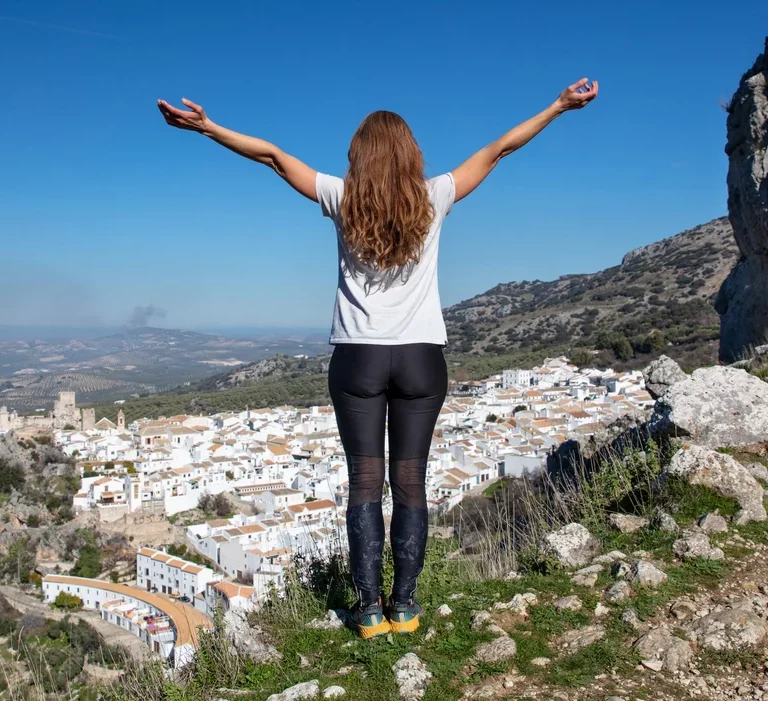
When people hear southern Spain, they think of beaches. They think of cities, heat, tapas, and late evenings in busy plazas. I understand that. I love all of that too. But if you ask me where the real magic is, I’ll point you inland, toward the mountains. For me, everything begins with Sierra Nevada hiking.
My sister Sara and I took over our company in 2021, right in the middle of Covid. The world had slowed down. My charity work had stopped overnight. Sara’s Montessori nursery had closed. We were both asking ourselves the same question so many women were asking at that time: how do we want to spend our time?
We grew up in the Lincolnshire countryside, with animals and muddy boots and wide skies. Movement was normal. Being outside was normal. When the opportunity came to take on a long-standing women’s walking company, it felt right. Very quickly, Sierra Nevada hiking became central to what we offer.
Not because it’s trendy. Not because it’s easy to sell. But because most people have no idea southern Spain can look like this.
Where Sierra Nevada Hiking Actually Happens
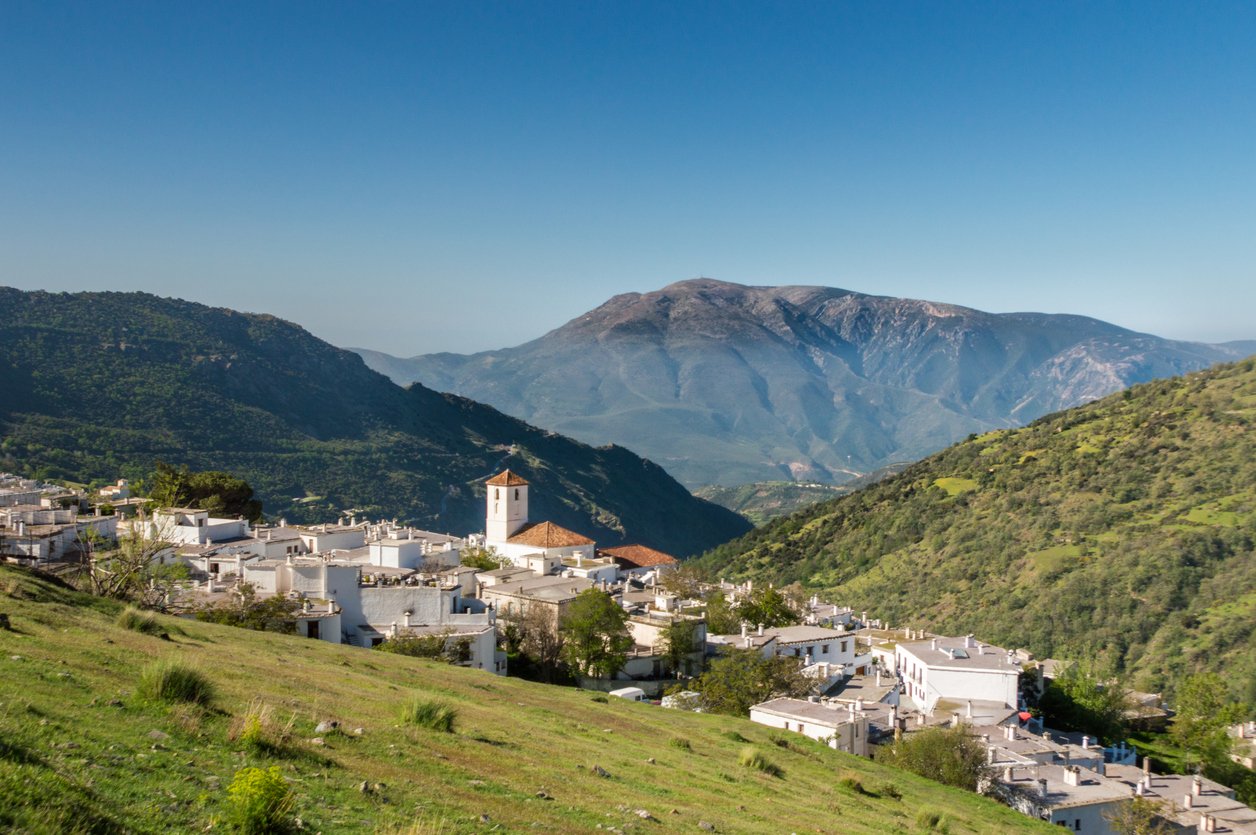
Let’s get our bearings first. The Sierra Nevada rises dramatically above the region of Andalusia, in southern Spain. Within it lies Sierra Nevada National Park, one of the most significant protected mountain landscapes in Europe.
These mountains hold the highest peak in mainland Spain, Mulhacén, which reaches 3,485 m (11,434 ft). On clear days, you can stand on that summit and see the Mediterranean shining in the distance. Sometimes you can even make out the outline of Morocco beyond.
What makes Sierra Nevada hiking so special is the contrast. You can land at Málaga Airport, feel warm air on your face, drive for an hour, and suddenly you are climbing into high alpine terrain. Snow sits on the upper ridges in winter. In May and October, the air is crisp and clear. The light is sharp. The distances feel enormous. It’s mountain terrain with a southern soul.
Why We Base Ourselves in Capileira
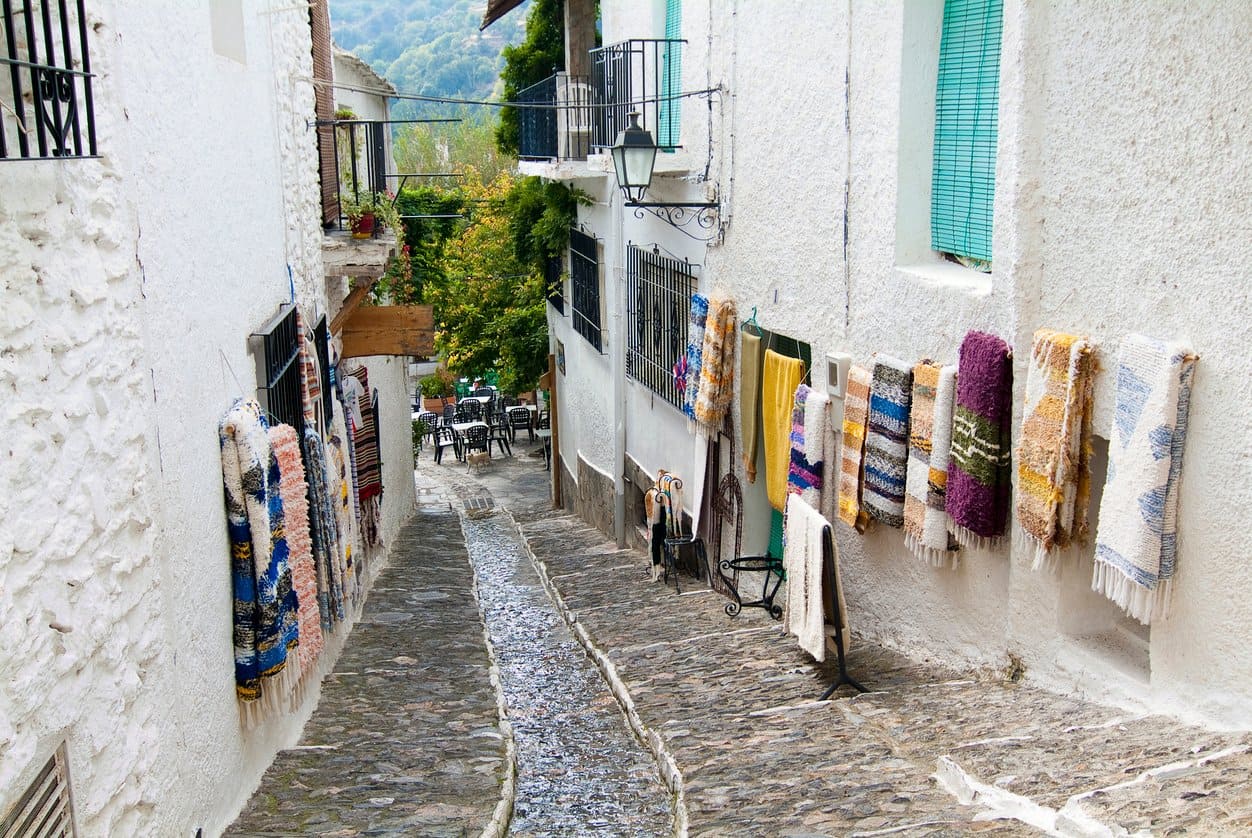
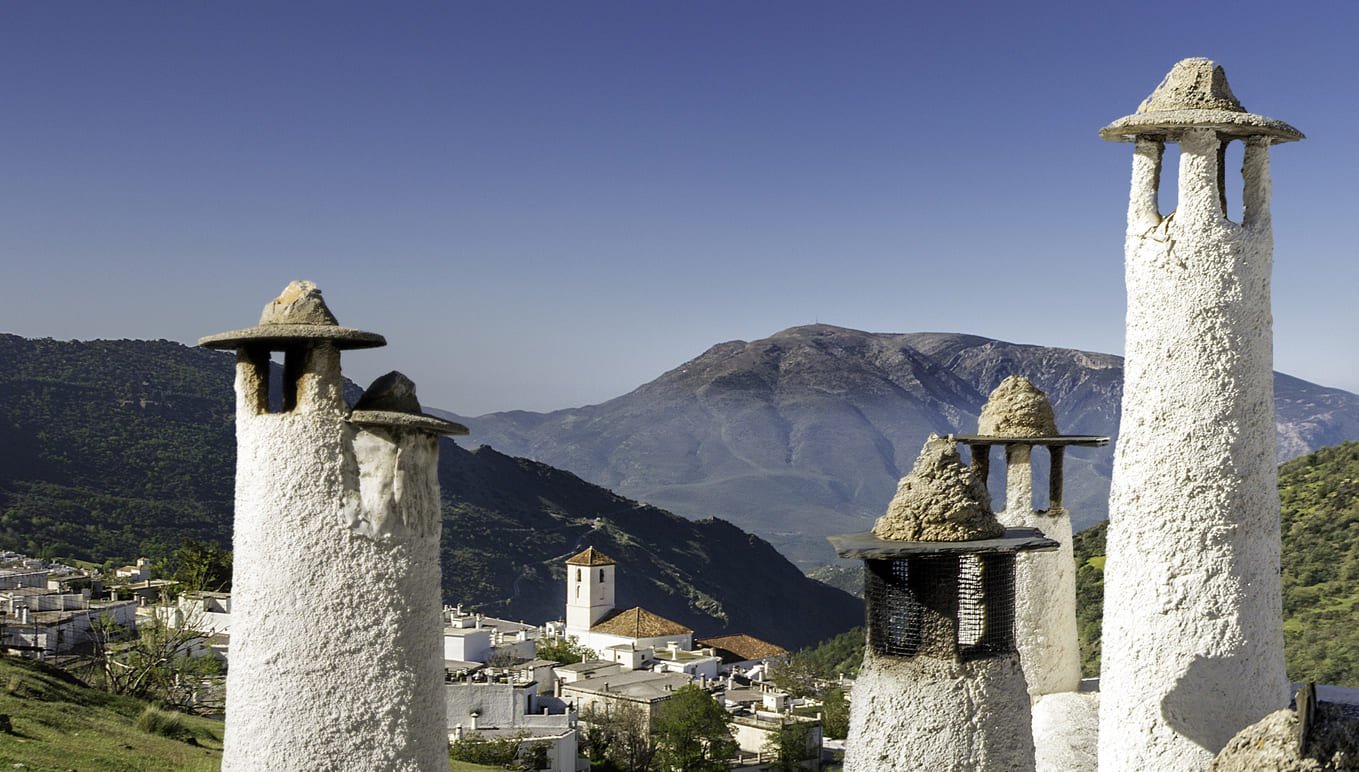
We stay in Capileira, one of the three white villages of the Alpujarras. It sits high in a gorge, looking out toward the open sky and distant peaks. Capileira is small, and that matters.
You walk through narrow lanes and pass whitewashed houses with flat roofs. You see the same café owner each morning. The rhythm is slow. There are no crowds. There is space to breathe.
For me, Sierra Nevada hiking begins with coffee in the village square. It begins with watching the light creep down the mountainsides because sunrise arrives late in this gorge. It begins with feeling removed from noise. In the evenings, sunset comes early and turns the peaks pink.
Sometimes a sea of clouds settles below us, filling the valley while we remain above it. Those are the moments that anchor a week. Because we stay in one hotel all week, we’re not packing and unpacking. We go out each morning and return in the afternoon. There is comfort in that rhythm.
The Terrain: What Sierra Nevada Hiking Is Really Like
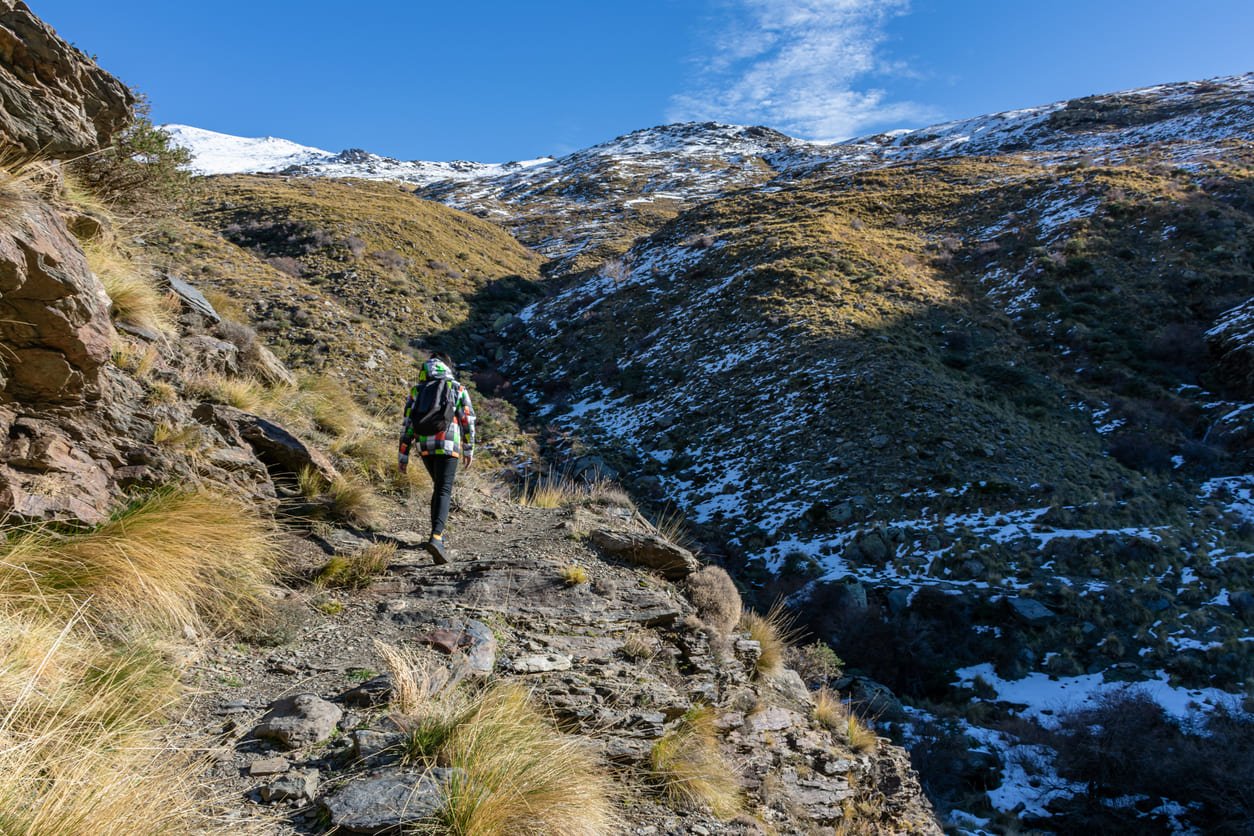
This all-women hiking adventure is varied. Much of it unfolds across the Alpujarras, where medieval paths and irrigation channels that once connected villages long before roads existed still shape the landscape. Back then, people traveled by foot, with donkeys and mules. Those same stone routes remain, worn smooth by centuries of use.
Other days, we walk alongside ancient irrigation channels called acequias. These systems were developed over centuries, first by Phoenicians, then expanded by Romans, and later perfected during the Moorish period. Water is everything here. The villages survive because of it, and the mountains hold it.
You might find yourself walking through chestnut groves in spring. You might step into a small forest where a cold spring emerges from rock. You might cross uneven ground scattered with stones polished by time. Above 2,500 m (8,200 ft), the landscape changes and trees disappear.
The earth becomes open and exposed. The horizon widens. Sierra Nevada hiking never feels monotonous. It evolves with altitude, with aspect, and with light.
The Summit of Mulhacén
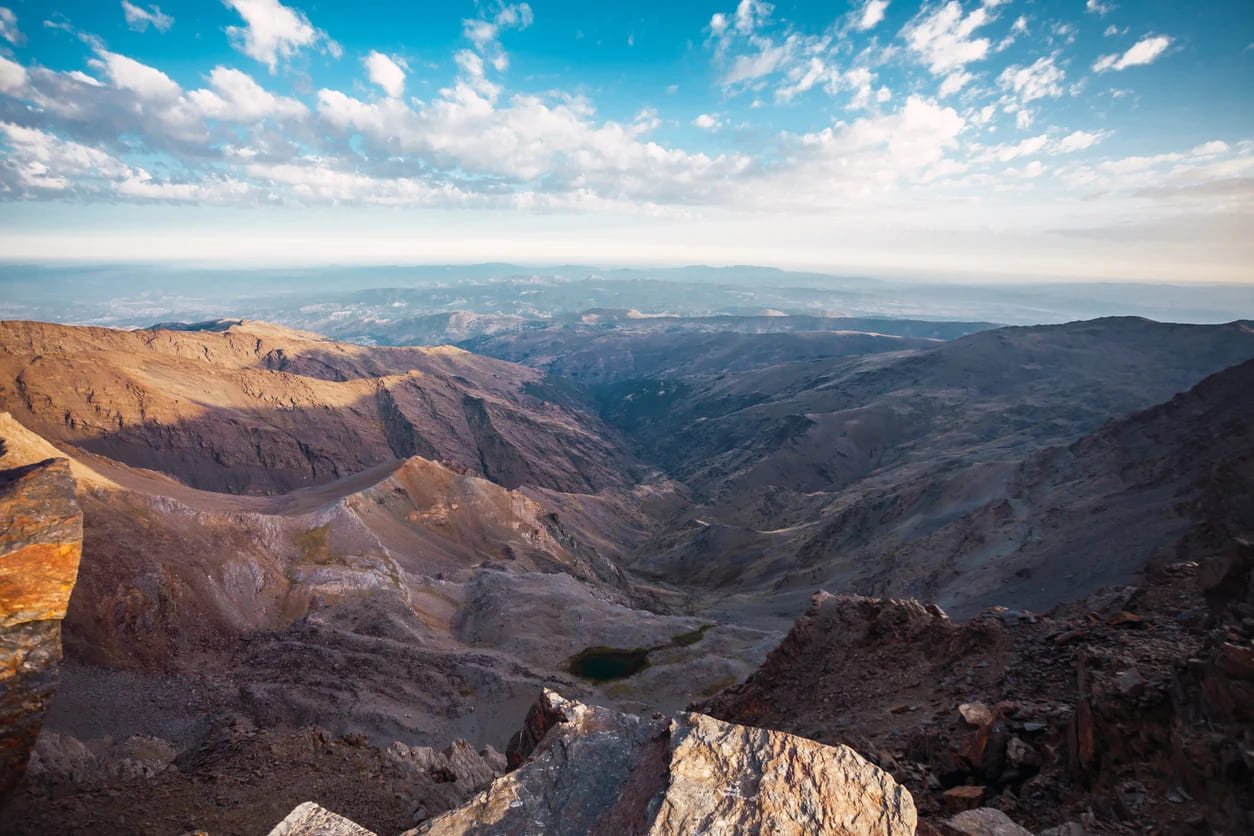
I remember the first time I asked Victoria, our local mountain guide, if we could climb the highest peak. “Let’s do the biggest one,” I said. She smiled in that steady way she has, and replied, “We go gently.” That sums up how we approach Sierra Nevada hiking.
Mulhacén stands at 3,485 m (11,434 ft). From the northern side, it looks sharp and dramatic. From the southern approach, which we use, the ascent is long but gradual. We take a short transfer from the village to a higher starting point and then begin to climb.
The full day can reach close to 17 km (10.5 mi), depending on conditions and route choices. We usually start between 8 and 9 am and return late in the afternoon. Somewhere above 3,000 m (9,843 ft), people notice the air and begin to breathe more deliberately.
That is where pacing matters. We move steadily. We talk less. We encourage each other. One year, three women over 70 stood on that summit with us. One of them said quietly, “I didn’t think this would still be possible.” That sentence has stayed with me.
This all-women hiking tour is not about ticking off a peak. It is about redefining what feels possible at different stages of life.
Why Women Choose This Experience
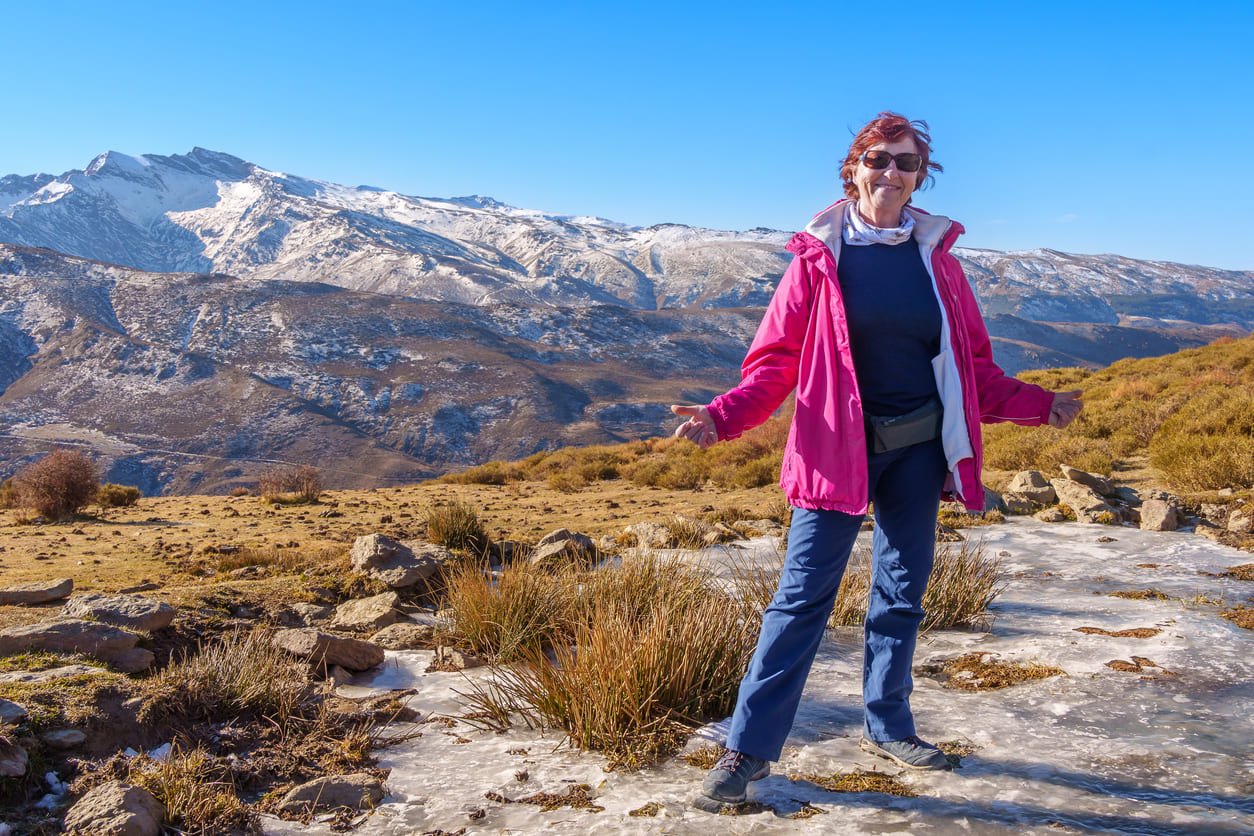
We are very clear about who we are. All our guides are women. Our core team is women. We support women-led businesses where we can. But the deeper reason women choose this kind of experience goes beyond branding.
Many of our guests travel solo. Some are recently retired. Some are widowed. Some simply have partners who do not enjoy walking. Others used to travel independently but no longer feel comfortable navigating remote mountain terrain alone.
They want safety. They want guidance. They want company without pressure. For many of them, women only group travel provides exactly that structure, a way to step into challenging terrain without carrying all the responsibility alone. These hikes provide a physical challenge. The group provides the emotional space.

I have watched women hesitate before stepping into a water crossing and then decide to go because the rest of the group stood nearby, encouraging. I have seen strangers on day one become firm friends by day five. I have seen women book their next trip together before they even leave Spain.
From the outside, it might look like women only hiking tours. From the inside, it feels like something far more personal.
A Different Way of Moving Through Life
Victoria often says something that resonates deeply with our guests. She talks about how many women spend decades being daughters, partners, and mothers. Then one day, the house is quieter. Roles shift. Children grow. Life opens again.
“This is the time,” she says, “to discover.” Sierra Nevada hiking offers that discovery in a grounded way. You wake up, eat breakfast together, shoulder your pack, and step onto a trail.
You move your body through the landscape. You return, rest, and share food. It is simple, and yet it changes people. That is the power of walking in mountains.
Culture After the Trails
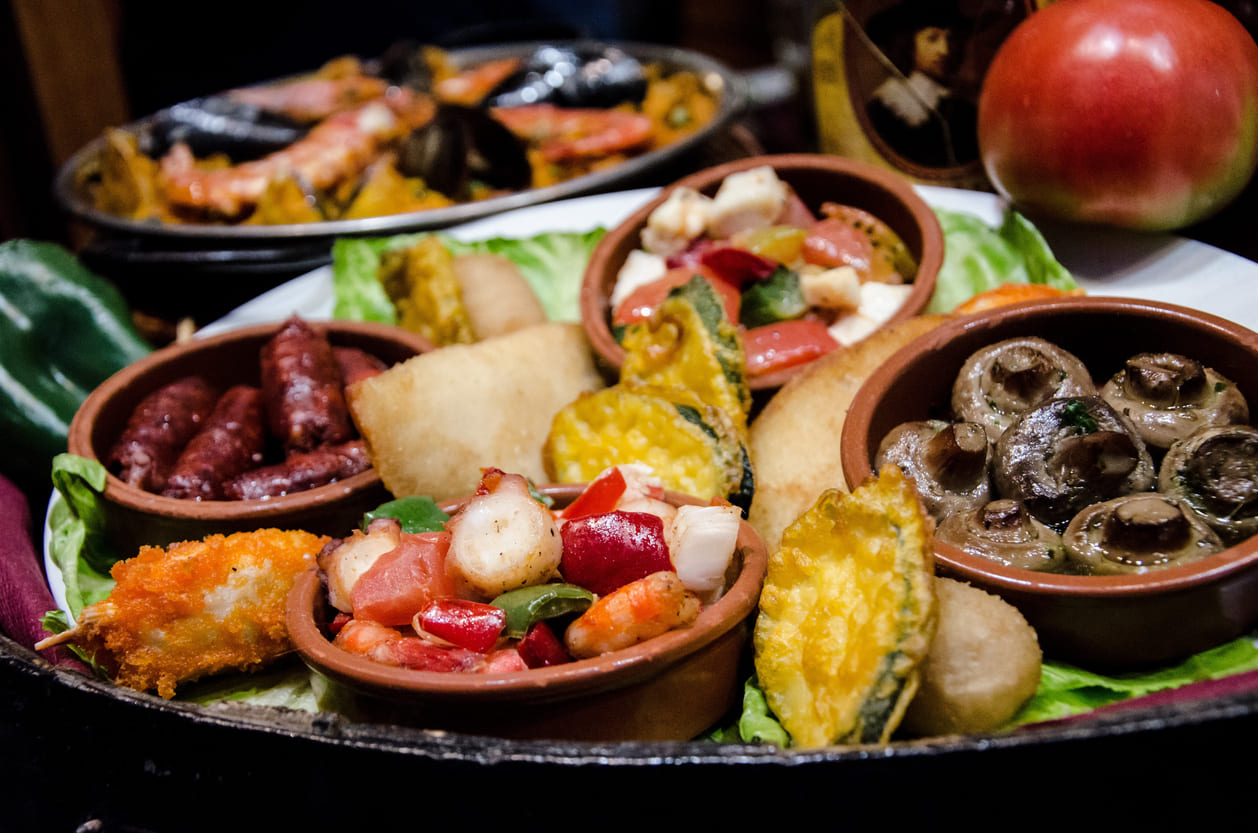
Mountain days are only half the story. In the evenings, we immerse ourselves in Andalusian culture. We share tapas. In this part of Spain, a small dish arrives when you order a drink, whether that drink is wine, beer, or something non-alcoholic.
Jamón from nearby Trevélez dries at some of the highest elevations in the Iberian Peninsula. There are local cheeses, stews, rice dishes, and sweets. Food becomes part of the rhythm of the week.
One evening, we attended an intimate flamenco performance. Not on a grand stage, but close enough to see the tension in the dancer’s hands and the stamping of feet. Victoria once said after one show, “Why don’t I walk like that every day?”
Flamenco is not just dance. It is presence, power, and expression. For many women, that evening becomes as memorable as the summit. When people talk about walking holidays in southern Spain, this is what I think of.
Practical Considerations for Sierra Nevada Hiking
The terrain is uneven in places, and you should expect rocky sections and altitude. Good footwear matters. We recommend hiking boots with ankle support, well broken in before arrival.
Some guests prefer to bring both boots and lighter shoes for variety. A day pack of around 20 to 25 liters is sufficient for water, layers, and perhaps a picnic. Weather can shift quickly, even in southern Spain.
We once walked through heavy rainfall and even hail. We returned soaked and laughing. Mountains demand flexibility.
Hydration is crucial, especially on summit day. Some women use hydration bladders. Others prefer bottles. Electrolyte tablets can help with recovery. We follow leave-no-trace principles carefully, and privacy off-trail is handled respectfully.
These walking holidays in Spain are accessible to fit walkers, but it is real mountain terrain. That authenticity is part of its appeal.
What a Typical Week of Sierra Nevada Hiking Looks Like
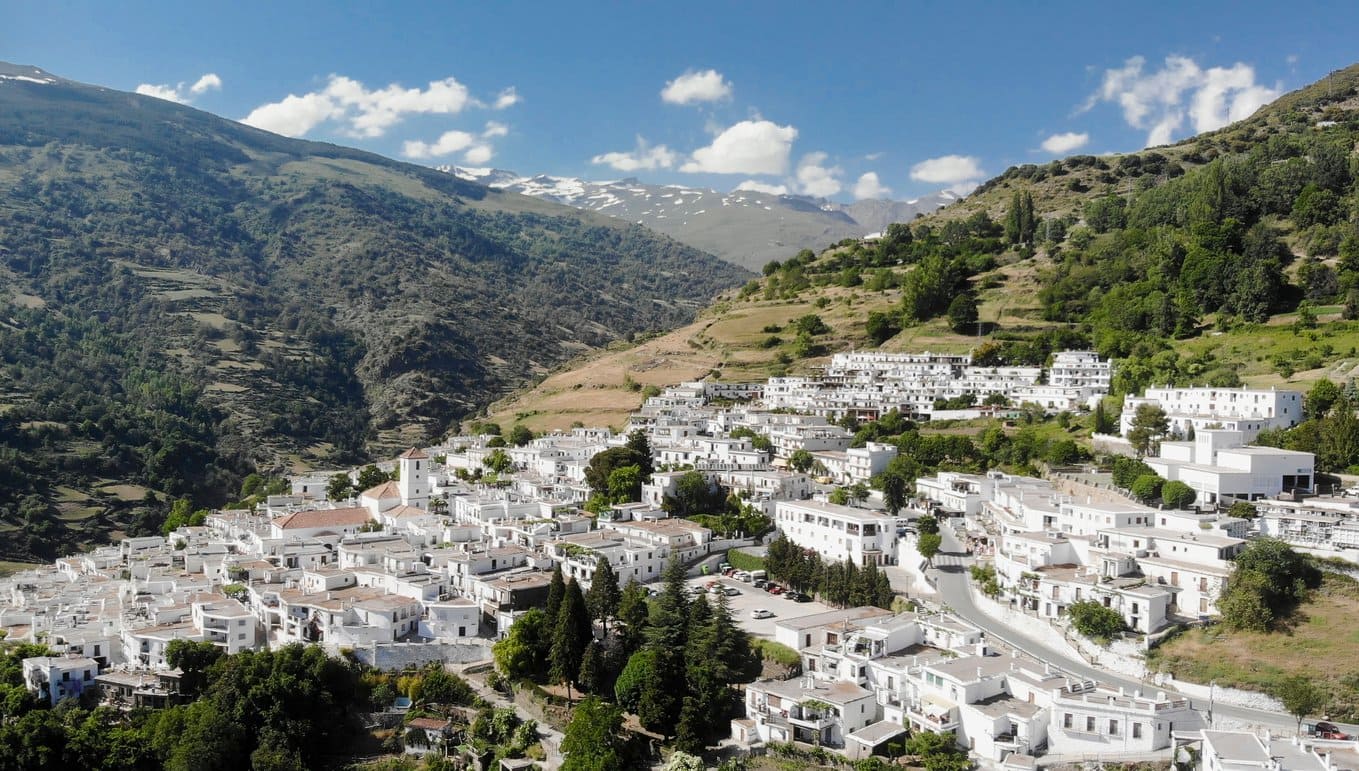
People often ask what a full week of Sierra Nevada hiking actually feels like day to day. Not just the summit. Not just the highlights. But the rhythm.
We usually begin gently. The first walk introduces the terrain, the pace, and the group dynamic. It might be a 10 to 12 km (6 to 7.5 mi) route along medieval paths linking villages. There is time to adjust boots, test poles, and settle into conversation. No one is rushing. I always say the first day is about listening to your body.
By the second or third day, confidence shifts. Strides lengthen. The chatter changes from polite introductions to real stories. This is when the tour begins to weave its quiet thread through the group.
Building toward summit day
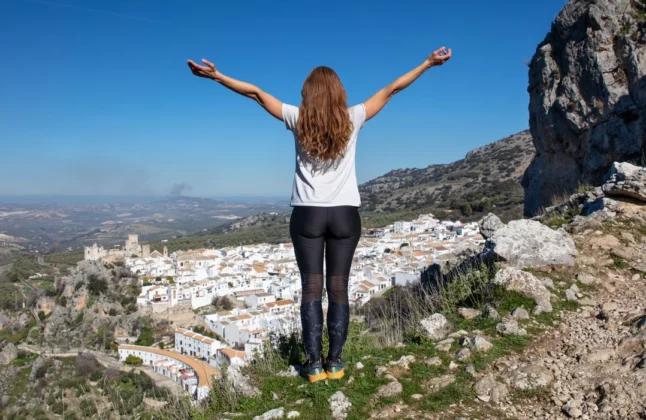
Midweek often brings the bigger objective, weather permitting. Summit day. An early breakfast. Layers packed carefully. A sense of anticipation that sits somewhere between nerves and excitement. The climb unfolds steadily, and the descent often feels lighter, not just physically, but emotionally.
Later in the week, there is space for a shorter walk. Perhaps 8 to 10 km (5 to 6 mi), with more time to pause. Some women linger over views. Others sit quietly. By now, Sierra Nevada hiking has become familiar terrain. What felt unknown on day one feels navigable.
Evenings settle into their own rhythm. Showers. Swimming pool dips for those brave enough. Shared dinners. Laughter. Sometimes planning future trips together. By the final morning, there is always a moment of stillness before departure.
That is the arc of a week here. Movement. Altitude. Culture. Rest. Connection. This hiking tour is not a race through landscapes. It is a gradual unfolding.
How This Fits Into the Bigger Picture
If someone were broadly researching hiking in Andalusia, they would find many options. Coastal walks, countryside routes, and historic towns all offer something different. But the Sierra Nevada stands apart because of its scale and altitude.
It offers high mountain wilderness that many do not expect in southern Spain. It is easy to see why some describe this region as offering some of the best hiking in Spain.
You can climb to nearly 3,500 m (11,434 ft) and still return to a village café for coffee the next morning. There is a depth here that rewards repeated visits.
Where to Go Hiking in Spain?
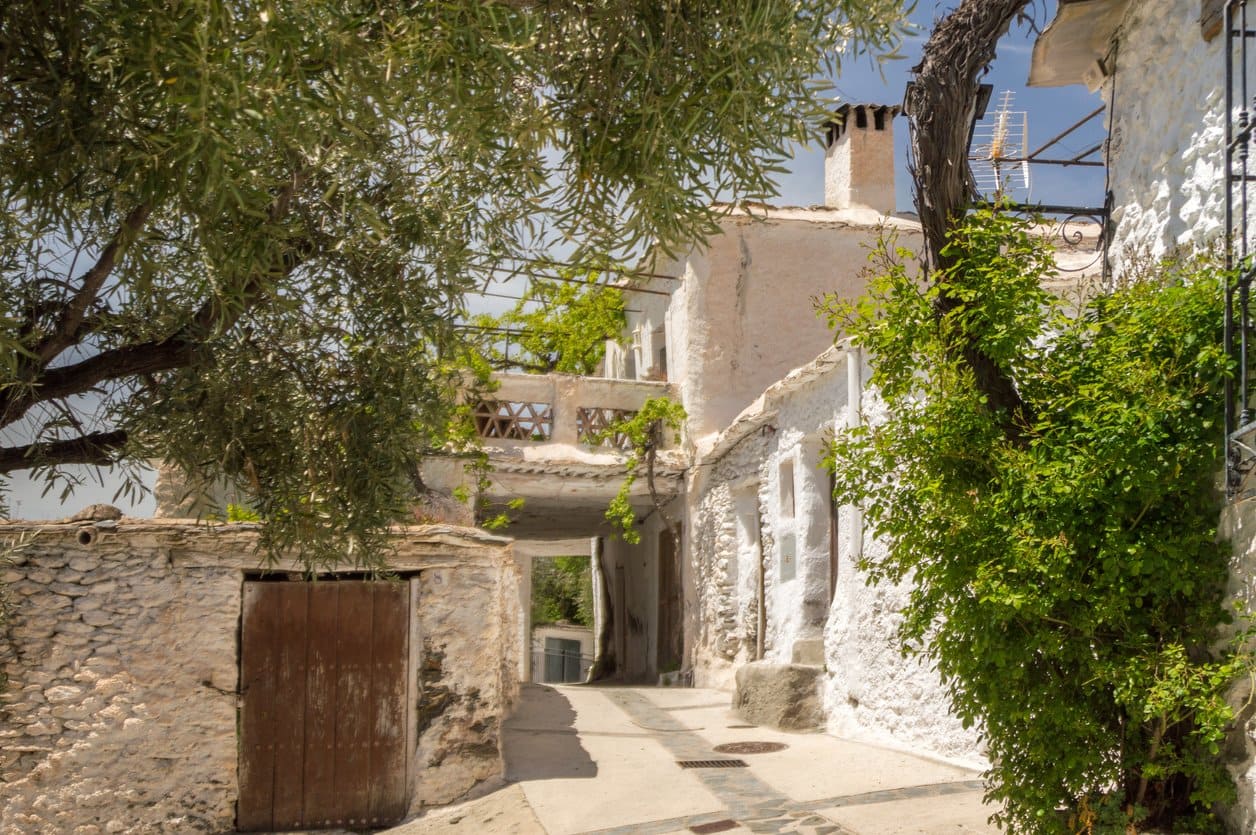
Spain is incredibly diverse for walkers. In the north, you have the Picos de Europa with dramatic limestone peaks. In the Canary Islands, volcanic trails cut through otherworldly landscapes.
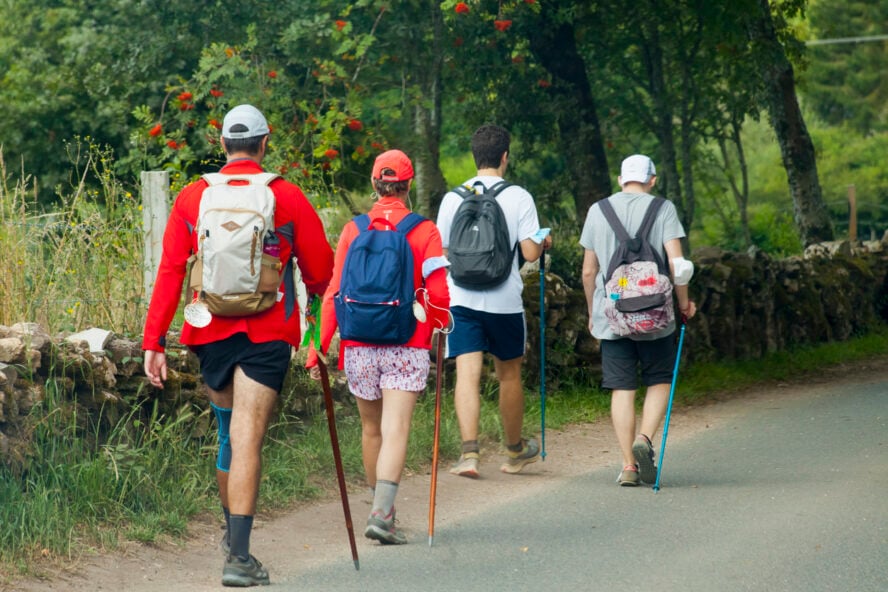
Along the Camino routes, pilgrims move steadily across the country. But if you are asking me where to go hiking in Spain for altitude, culture, sunshine, and accessibility, I will always say the Sierra Nevada.
Here you can reach 3,485 m (11,434 ft) without technical climbing. You can stay in a traditional white village. You can immerse yourself in Moorish history and functioning irrigation systems.
Sierra Nevada hiking gives you mountains with character and context. For many women rediscovering adventure, that balance feels exactly right.
What Is the Famous Hiking Trail in Spain?
When people ask about the most famous hiking trail in Spain, they often mean the Camino de Santiago. That historic pilgrimage route crosses large parts of northern Spain and attracts thousands of walkers each year.
It is iconic, and rightly so. But fame is not the same as fit. If you are looking for a shorter, mountain-based experience with dramatic altitude, then Sierra Nevada hiking offers something different.
Instead of walking for weeks across varied terrain, you focus on a specific high-mountain environment. You climb Mulhacén at 3,485 m (11,434 ft) and explore the Alpujarras.
Both experiences are valid. For women seeking guided support and community, Sierra Nevada hiking often proves to be the better match.
The Emotional Landscape
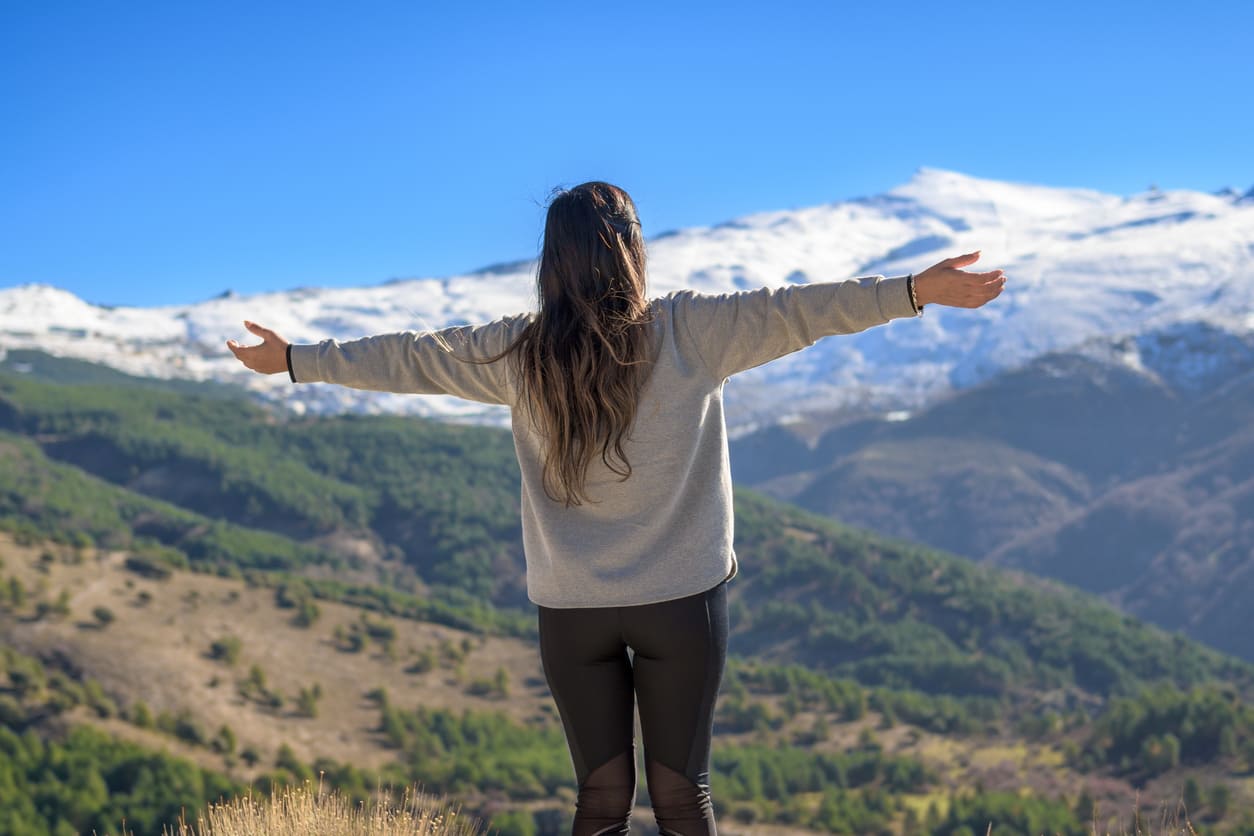
The physical landscape is dramatic, but the emotional landscape is just as important. There is something about standing at altitude that strips things back.
Conversations become honest. Silences become comfortable. Laughter carries further in thin air.
I have seen women arrive slightly uncertain and leave visibly steadier. Sierra Nevada hiking does not shout. It does not overwhelm. It invites.
It says, come as you are. Walk steadily. See what happens.
Why This Range Never Gets Old
I could walk these mountains alone. Sometimes I do. But guiding women on Sierra Nevada hiking tours has added a new layer to my own experience.
Each group is different. Each week unfolds differently. Weather shifts. Personal stories emerge. Summits feel earned in unique ways.
I still feel that same small thrill each time we crest a ridge and the Mediterranean flashes into view. I still feel quiet pride watching someone who doubted herself step onto the highest point in mainland Spain.
If someone asked me whether this counts as walking Spain in its fullest sense, I would say yes. Because this is Spain beyond the postcards. Spain of water channels and white villages, altitude and ancient paths.
More Than Just a Hiking Holiday
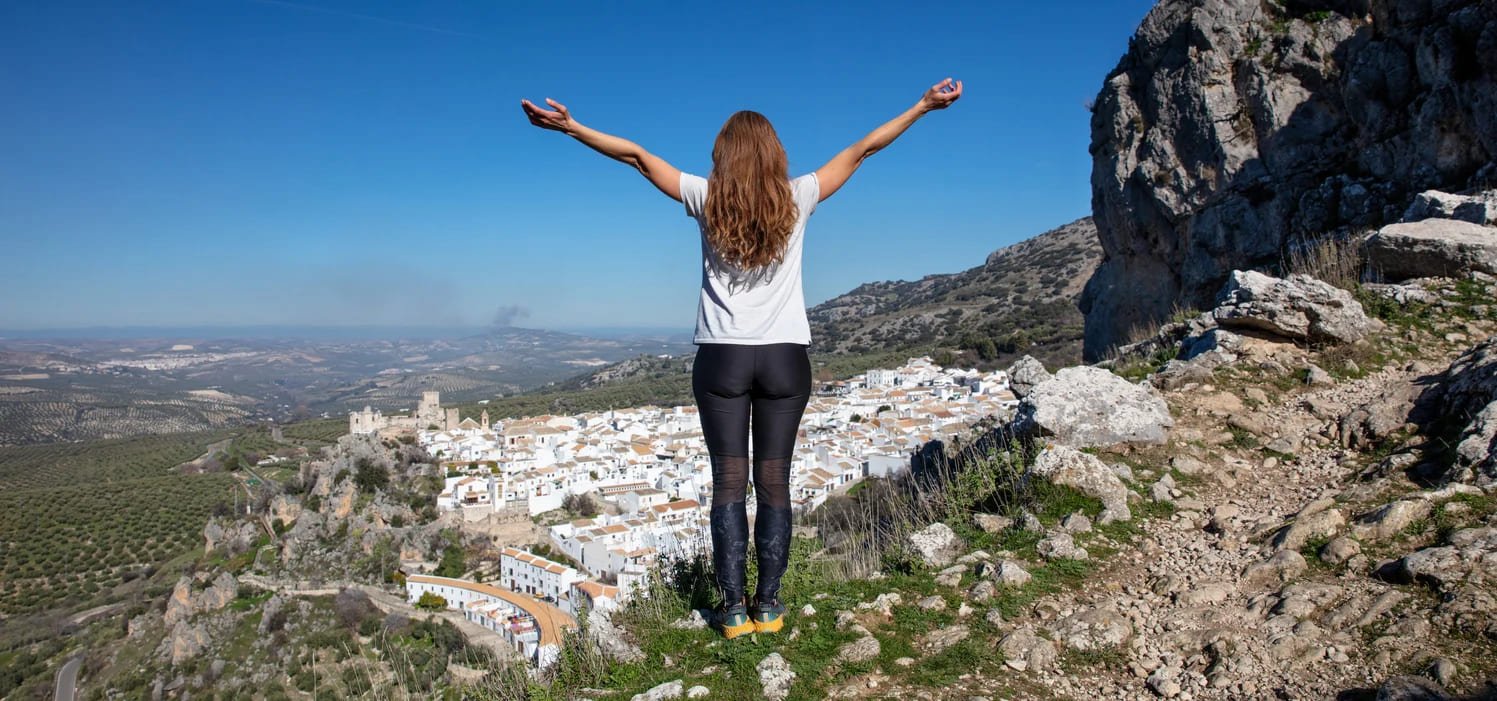
On paper, this is a structured trip with a hotel base, daily hikes, and cultural evenings. In reality, it becomes something else.
Women come to move, reconnect with their bodies, share stories, and test themselves at altitude. They leave with new friendships and photographs of wide horizons.
They leave with the memory of standing at 3,485 m (11,434 ft) and feeling very much alive. For me, Sierra Nevada hiking will always be about that moment.
That pause on a summit. That shared glance between women who have just done something they were not entirely sure they could do. When someone asks me where to find altitude, space, and something that feels earned, I don’t hesitate.
I send them here because I know these trails. I know this mountain. I’ll guide you all the way up and all the way back down.