The first time I paddled into the Raja Ampat islands, I thought I’d taken a wrong turn. Islands rose straight out of the sea. Jungle pressed in close. Channels twisted, disappeared, then opened into lagoons so calm they felt completely hidden from the rest of the world.
I’ve been guiding for more than 20 years, chasing places that take effort to reach and don’t reveal themselves all at once. Raja Ampat didn’t just meet that expectation. It reset my sense of what “remote” and “wild” really mean.
People call this place “the last paradise on Earth.” I’m usually skeptical of phrases like that. After weeks of kayaking, diving, snorkeling, and moving slowly through the Raja Ampat islands, I stopped arguing with it.
Some places really are that rare.
Where is Raja Ampat
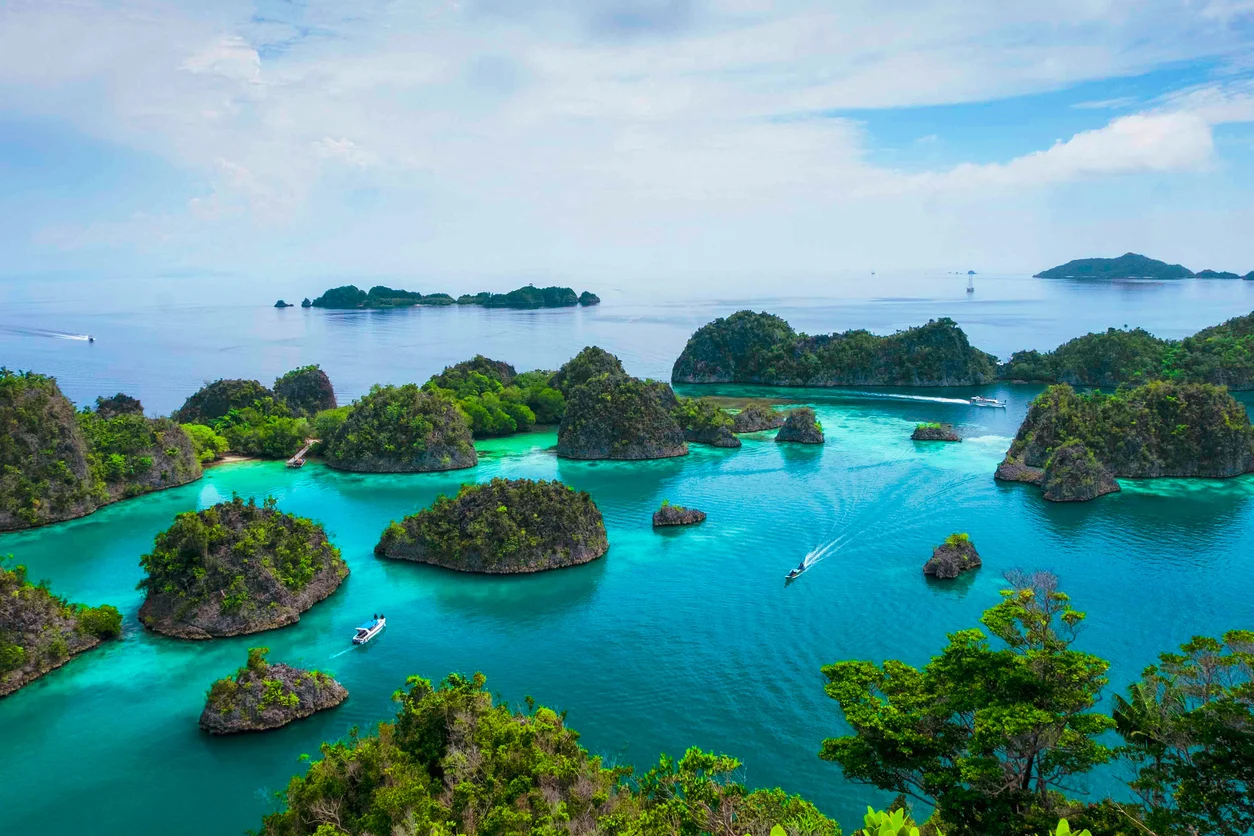
Raja Ampat is located off the northwest tip of West Papua, in eastern Raja Ampat, Indonesia, just north of the island of New Guinea. It sits directly on the equator, where major ocean systems and tectonic plates collide.
The region is made up of four main islands: Waigeo, Batanta, Salawati, and Misool, along with thousands of smaller limestone islands scattered between them. That density is what gives the Raja Ampat islands their maze-like feel. You’re never paddling along a simple coastline here. It’s always layered, folded, and full of choices.
The main entry point is Sorong, a busy port city that serves as the gateway to Raja Ampat. From there, everything shifts from roads and schedules to boats, tides, and weather windows.
A place shaped by geology, currents, and isolation
The Raja Ampat islands sit at one of the most geologically complex intersections on the planet. Four continental plates meet here. The Pacific and Indian Oceans push massive currents through the region. That constant movement fuels life, both above and below the surface.
Most of the islands themselves are limestone. Long ago, they were living coral reefs surrounding volcanoes. Over time, the volcanoes eroded away, sea levels changed, and the reefs compressed into stone. Rainwater, slightly acidic, continues to dissolve the limestone, carving caves, arches, and sharp karst towers.
From a kayak, you can see this process everywhere. Overhangs you can paddle beneath. Passageways cut clean through islands. Caves that feel half-hidden until you’re right at the entrance. The landscape feels alive, still evolving, even if that evolution happens on a geological timescale.
Why kayaking defines the Raja Ampat islands
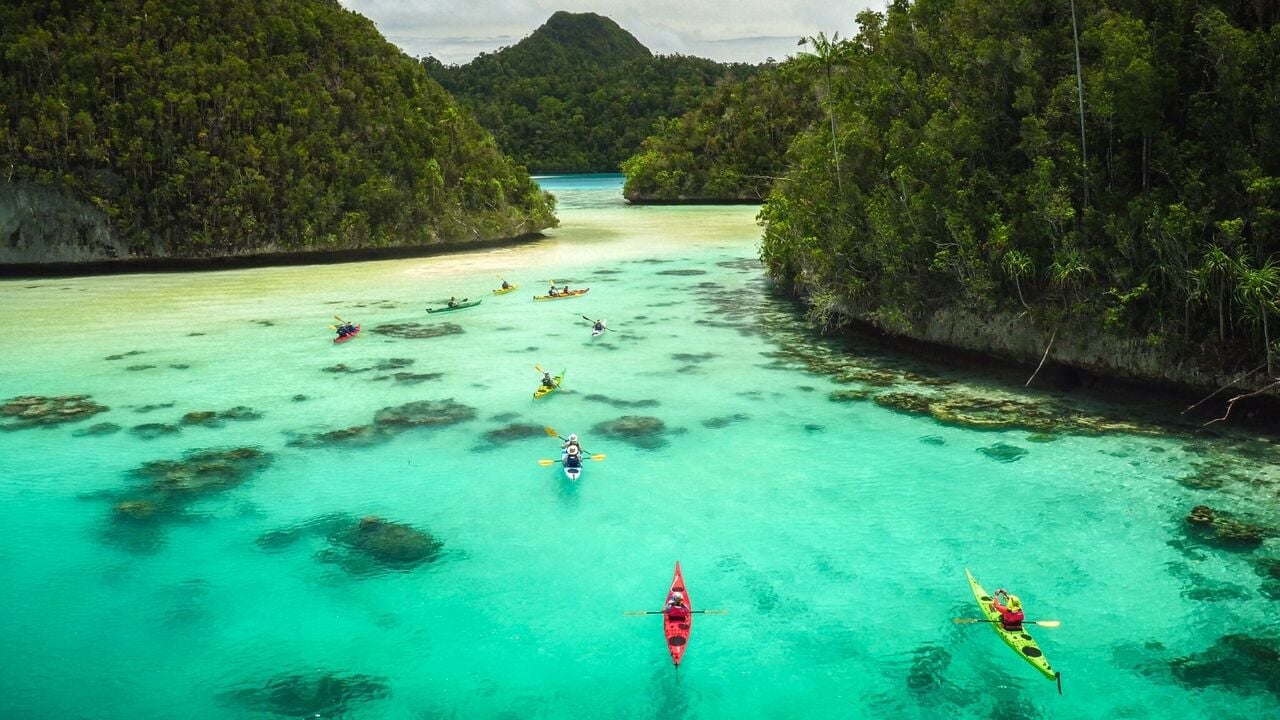
If I had to choose one activity that best explains this region, it would be kayaking. Not because it’s the most adrenaline-filled option, but because it forces you to slow down and engage with the coastline in detail.
The shoreline here is endlessly intricate. Sheltered bays sit right next to exposed outer coasts. Calm, glassy water exists just meters from rolling Pacific swell. One turn can take you from a protected mangrove channel into the open ocean.

Up north, Wayag is the image most people recognize. Inside the lagoon, the water is completely protected: mirror-flat, with no swell and almost no wind. You could paddle there all day and barely feel movement beneath your hull.
Outside the lagoon, the same island faces the full force of the Pacific, with long limestone cliffs stretching for kilometers and powerful swell wrapping around the headlands. That contrast is one of the reasons the Raja Ampat islands work for so many different paddlers.
Kayaking conditions and who Raja Ampat is for
One thing I always emphasize is that kayaking here isn’t about speed or mileage. It’s about exploration. Some days we paddle for two hours. Other days it’s four. Sometimes we move point-to-point and get picked up by the boat. Other times we loop back and finish exactly where we started.
Conditions in sheltered zones are forgiving. If you’re fit and comfortable on the water, you don’t need technical sea kayaking experience to enjoy most paddles. On exposed coasts, experience matters, and we’re selective about when and where we go.
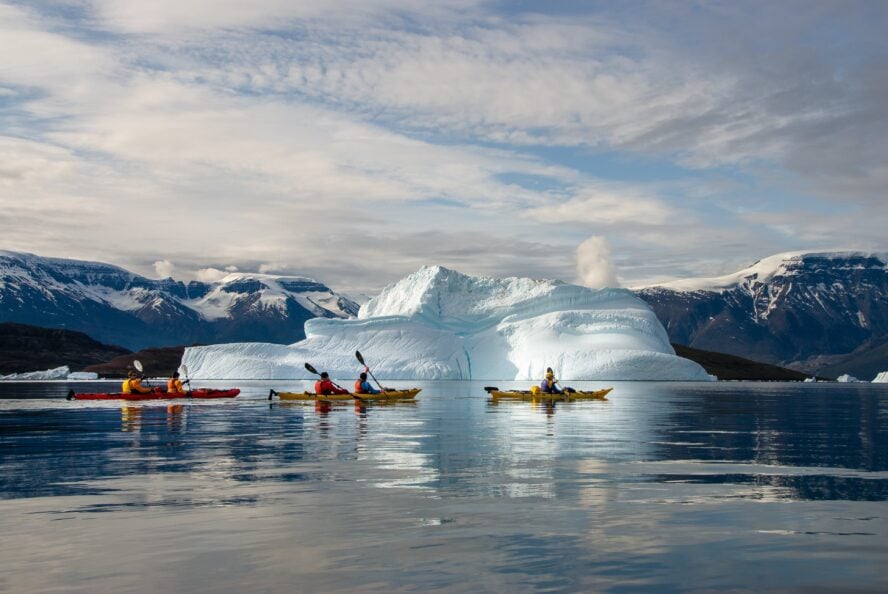
In the calmer zones, I often find myself sharing simple kayaking tips for beginners, not as formal instruction, but as small adjustments that make paddling here feel intuitive and relaxed. This is not arctic kayaking, where cold, wind, and exposure dominate the experience; here, warmth and sheltered water change the pace and priorities entirely.
What makes the Raja Ampat islands special is that different skill levels can coexist on the same trip. One group might paddle calm inner lagoons while another tackles more dynamic water. The environment allows for that flexibility, and that’s rare in a destination this remote.
That flexibility on the water carries over into how people experience the trip as a whole.
Fitness, experience, and who really thrives here

One question I get a lot is whether Raja Ampat is “too much” for people. The honest answer is no, but it does help to understand what kind of effort the place asks for.
You don’t need to be an elite athlete to enjoy this place. However, you do need to be comfortable being active for multiple days in a row, in heat and humidity. It’s consistently around 30°C (86°F), and the humidity is high. That affects everyone differently.
What matters more than strength is pacing. We always tell guests: manage your energy. If we offer four activities in a day, you don’t need to do all four. Some people paddle in the morning and relax in the afternoon. Others dive twice a day and skip kayaking. Some spend an afternoon on a quiet beach with a book.
Experience levels can vary widely. We’ve had newly certified divers on their first real trip outside a course. We’ve had people who don’t love swimming and use flotation aids to snorkel comfortably. We’ve also had free divers who can hold their breath for six minutes and disappear beneath the surface like it’s nothing.
The Raja Ampat islands work because there’s room for all of that.
Mangroves, nurseries, and hidden lakes
Central Raja Ampat is dominated by mangrove forests, and it’s one of my favorite zones to paddle. There are 35 species of mangroves here. For comparison, places like Florida have three.
Mangroves are critical ecosystems. They act as nurseries for fish, shelter for birds, and protection for the coastline. They also happen to be incredible places to explore by kayak.
One paddle I’ll never forget started along what looked like an impenetrable wall of green.
Our local guide glanced back at me, gave a little grin, and veered straight into the mangroves. We followed him into narrow channels where small sharks chased schools of fish beneath our kayaks and hornbills burst out of the canopy.
After what felt like a long, winding journey, the channels opened into a perfectly still lake surrounded by limestone cliffs. No wind. No waves. No one spoke. That quiet is something the Raja Ampat islands give you again and again.
Misool and the feeling of true exploration
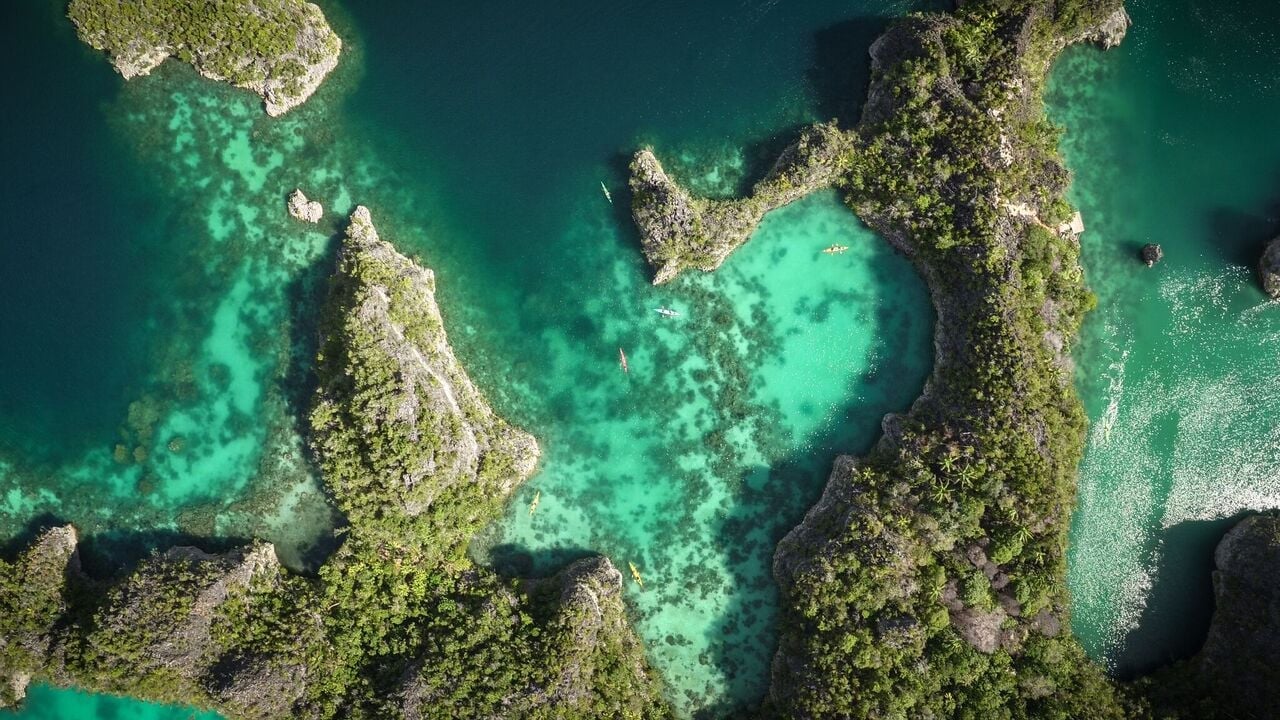
Southern Raja Ampat, especially around Misool, feels bigger, wilder, and less visited. This is where I get that old expedition feeling, the sense that there’s more to see than time will allow.
The Raja Ampat islands here are threaded with long island chains, secret passages, and bays that don’t appear on maps. We’ll spend five or six days moving slowly along a single chain, and I still feel like I’ve only scratched the surface.
On one early trip, a local paddled up to us in a dugout canoe and insisted we follow him. That led us through a long, twisting passage to a massive cave, four stories high, with a shaft of sunlight pouring through a hole in the ceiling. We explored it on paddleboards, then snorkeled out through a submerged channel on the far side.
That moment alone would’ve justified the journey.
Marine lakes and swimming with jellyfish
One of the most surreal experiences happens away from the open ocean. Scattered throughout the limestone islands are marine lakes, collapsed caverns that collect freshwater but remain connected to the sea through underground tunnels.
Each lake has its own chemistry, pH balance, and ecosystem. Some contain stingless jellyfish found nowhere else on Earth.
Swimming through a lake filled with millions of jellyfish is hard to put into words. They drift around you, gently bumping into your arms and mask. At night, they sink to the bottom. When the sun rises or when rain begins, they float back up together.
It feels less like snorkeling and more like stepping into another reality.
The underwater world that made Raja Ampat famous
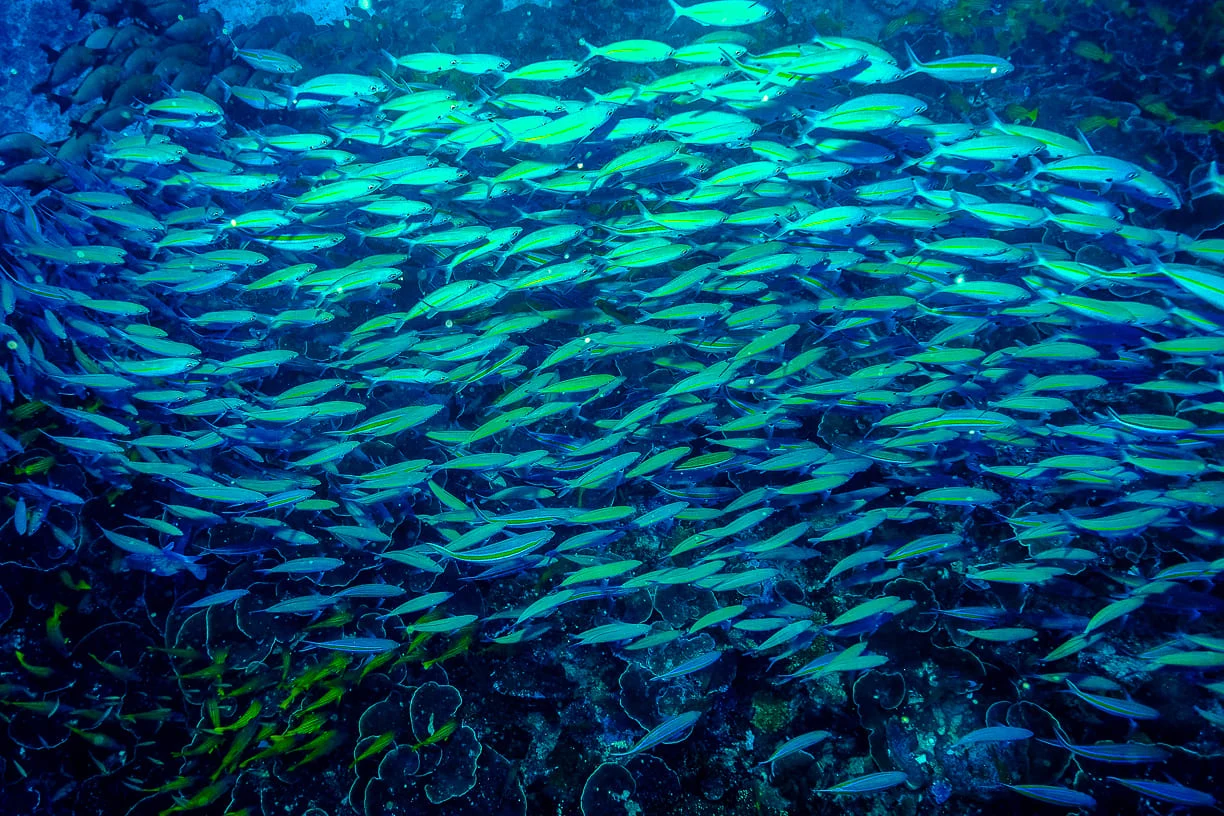
The Raja Ampat islands sit at the heart of the Coral Triangle, the most biodiverse marine region on the planet. Marine biologists are fascinated by this place, and once you’re in the water, it’s easy to see why.
There are over 1,600 fish species here. Forty are endemic, found nowhere else on Earth. Six percent of the coral species are unique to this region.
Whether you’re snorkeling in Raja Ampat or diving deeper, you don’t chase wildlife here, you hover. Schools of barracuda slide past. Reef sharks cruise the edges. Green and hawksbill turtles soar through the water. Manta rays glide by like underwater birds.
I wasn’t a diver when I first came here. After my first trip, I got certified immediately. Still, some of the most incredible encounters I’ve seen happened during Raja Ampat snorkeling, often right near the surface.
Big animals and tiny wonders
It’s easy to focus on the big stuff (manta rays, sharks, turtles) but these islands are just as famous for their tiny creatures.
Pygmy seahorses, no bigger than a pinky nail, cling to coral fans. Local dive masters spot them instantly. I never would on my own.
There’s also a small island we jokingly call “Nemo Island,” where we counted more than 400 anemones, each with its own family of clownfish. You can hover in one spot and watch an entire ecosystem unfold without moving an inch.
Birds of paradise and life above water
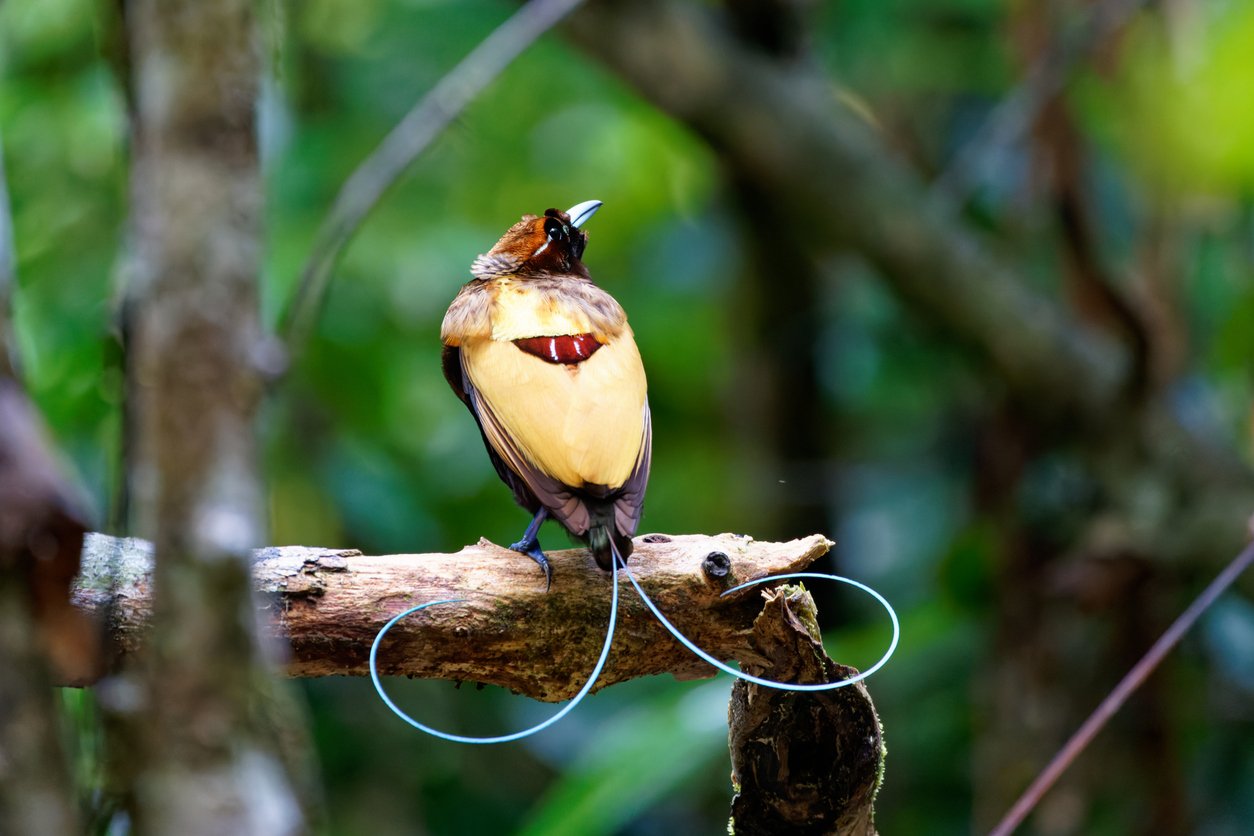
Above the waterline, the forests are alive with sound and movement. Birds of paradise live here, and they’re surprisingly reliable to see if you know when to go.
The males return to the same display sites every morning just after sunrise. They perform elaborate dances, then disappear back into the jungle. Watching a red or Wilson’s bird of paradise dance never feels ordinary.
The interior of West Papua is even more extreme, with deep valleys, equatorial glaciers, and hundreds of distinct cultures shaped by isolation. Raja Ampat is just the coastal edge of a much larger, fascinating world.
The cultural edge of the Raja Ampat islands
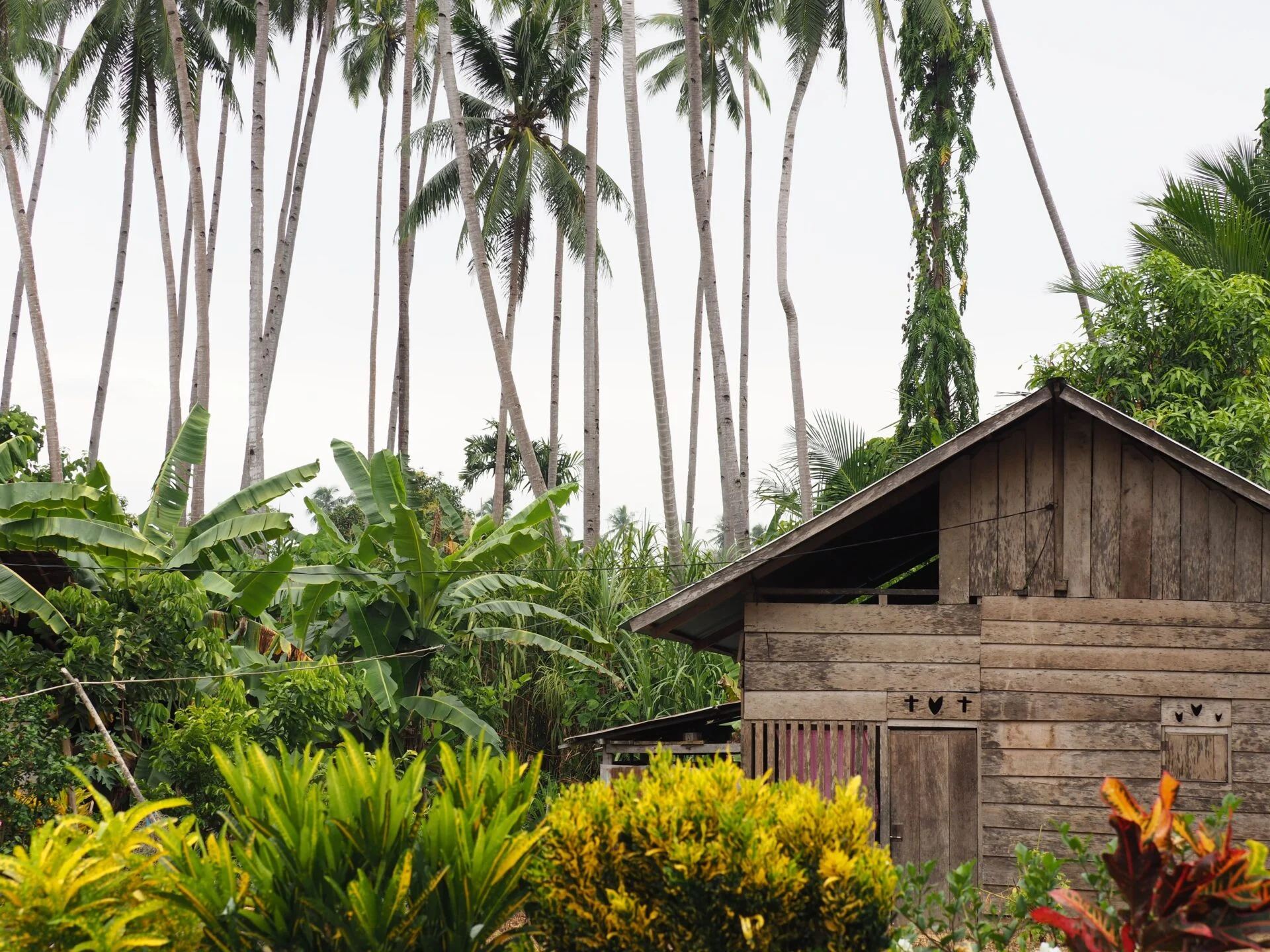
It’s easy to focus on the water in Raja Ampat, but the human history here is just as striking. West Papua was shaped by isolation long before tourism ever arrived. At one point, there were an estimated 380 tribes across the region, speaking more than 600 different languages.
The terrain made travel between valleys nearly impossible. Entire cultures developed in isolation. Some interior groups were only contacted by outsiders in the mid-20th century.
Along the coast, life is still very simple. Most communities rely on fishing. Rice is subsidized. Families maintain small gardens behind their homes. Cash income is limited, which is why homestays matter so much.
When you stay in a homestay here, you’re not getting luxury. You’re getting connection.
How to get to Raja Ampat
Getting to Raja Ampat is not quick, and that’s part of why it remains so intact. From North America, the most reliable route is flying to Taipei, then onward to Jakarta, followed by a domestic flight to Sorong.
From Australia or Europe, routing through Bali or Jakarta is common. Once you reach Sorong, you continue by boat to a homestay, dive resort, or Raja Ampat diving liveaboard. The moment you leave the harbor, these islands feel a world away.
How to get to Raja Ampat from Bali
From Bali (Denpasar), you can sometimes fly directly to Sorong, which is the simplest option when schedules line up. When direct flights aren’t available, the standard route is Denpasar to Makassar, followed by a connecting flight from Makassar to Sorong.
The journey isn’t short, but it’s generally reliable, and the connections tend to work smoothly if you allow enough buffer time.
I always recommend spending extra time in Bali or Jakarta rather than Sorong, especially if you’re arriving from a long international flight. Once you leave for Raja Ampat, you’ll want every possible day in the Raja Ampat islands, not sitting in a transit city waiting for the next boat.
Life on a liveaboard in the Raja Ampat islands

When we run trips here, the liveaboard is more than just a place to sleep, it’s a moving base camp. That flexibility is everything here, especially in a region where conditions can change quickly and distances are vast.
On a single 12-day trip, we can visit the north, central, and southern regions, adjusting constantly based on weather, visibility, and sea conditions. If something isn’t working, we move without hesitation. If something’s perfect, we slow down and stay longer. That ability to adapt is what makes liveaboards so effective in Raja Ampat.
Evenings naturally wind down. Dinner together around a shared table. Watching the sun drop from the top deck. Stars filling the sky once the light fades. It’s a simple rhythm, and after full days on the water, it’s exactly what you want.
What to pack for a Raja Ampat yacht trip
Most technical gear is provided on a liveaboard, including kayaks, paddles, PFDs, and snorkel or dive equipment, which keeps packing refreshingly simple. Unless you’re very particular about certain items, you don’t need to bring much beyond personal clothing and a few essentials.
What matters most is managing heat and sun. Raja Ampat sits on the equator, and the combination of high humidity and strong sun can drain your energy quickly if you’re not protected. Long-sleeve shirts, lightweight pants, and a wide-brimmed hat make a huge difference over the course of a long day on the water. Reef-safe sunscreen is essential, both for your skin and for protecting the fragile coral systems.
A sarong is one of the most versatile things you can pack. It works as a beach towel, shade cover, quick layer for village visits, or something to sit on during breaks. Footwear matters too: water shoes for kayaking are far more comfortable than going barefoot, and a light hiking shoe or supportive runner is useful for short jungle hikes and cave explorations.
Even in the heat, a light jacket is worth bringing. Quick tropical rainstorms can drop the temperature fast, especially when there’s wind, and having a layer to throw on keeps you comfortable and moving.
Why the Raja Ampat islands still feel untouched
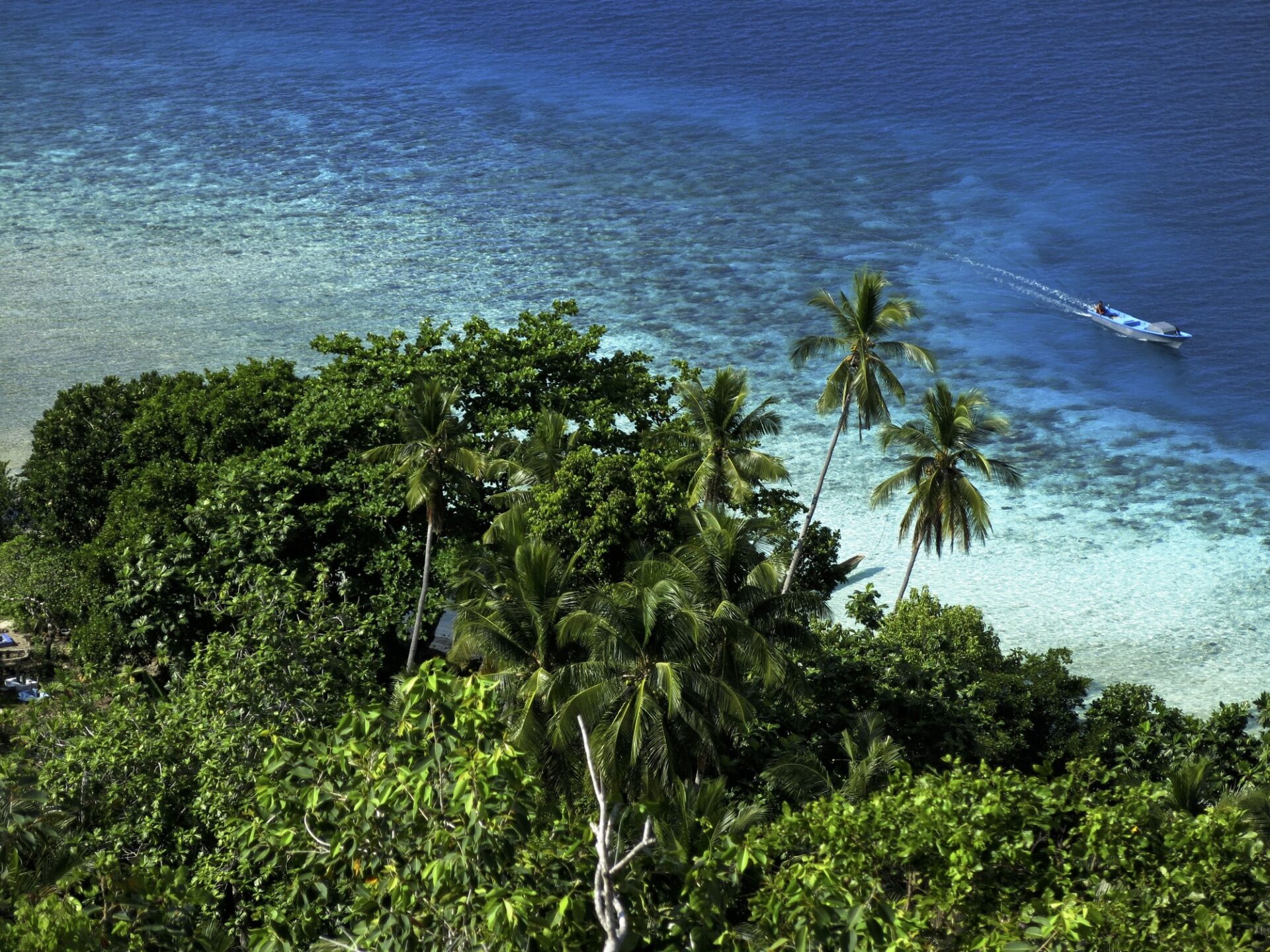
After all these years, I don’t think the Raja Ampat islands feel untouched because no one has been here before. They feel untouched because they resist convenience.
You don’t stumble into this place. You travel far. You move by boat. You adjust to tides, weather, and daylight.
That’s what slows you down. That’s what makes you pay attention.
And if you’re willing to meet the place on those terms, Raja Ampat gives something rare back: a reminder that some corners of the world are still wonderfully, defiantly wild.
If you’re drawn to Raja Ampat for the same reasons I was, I’d love to explore it together.