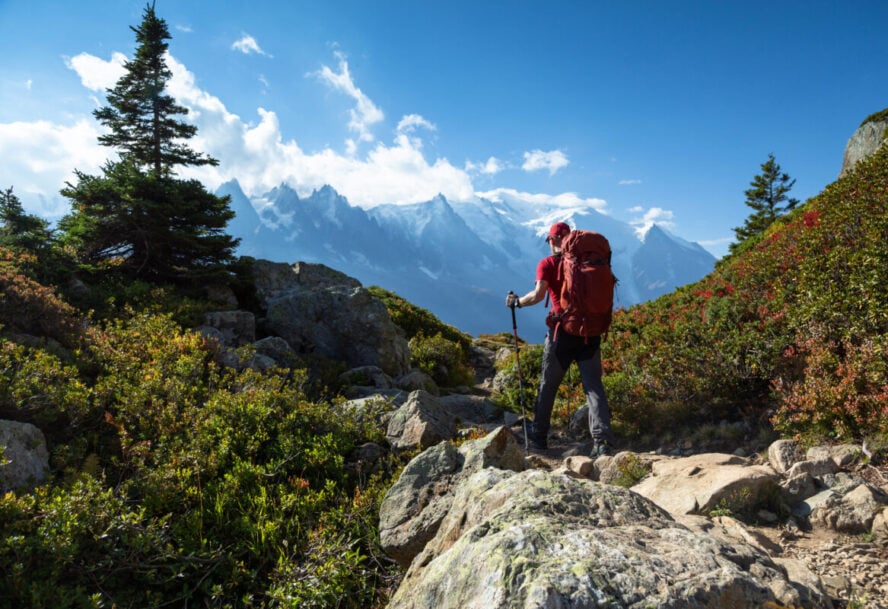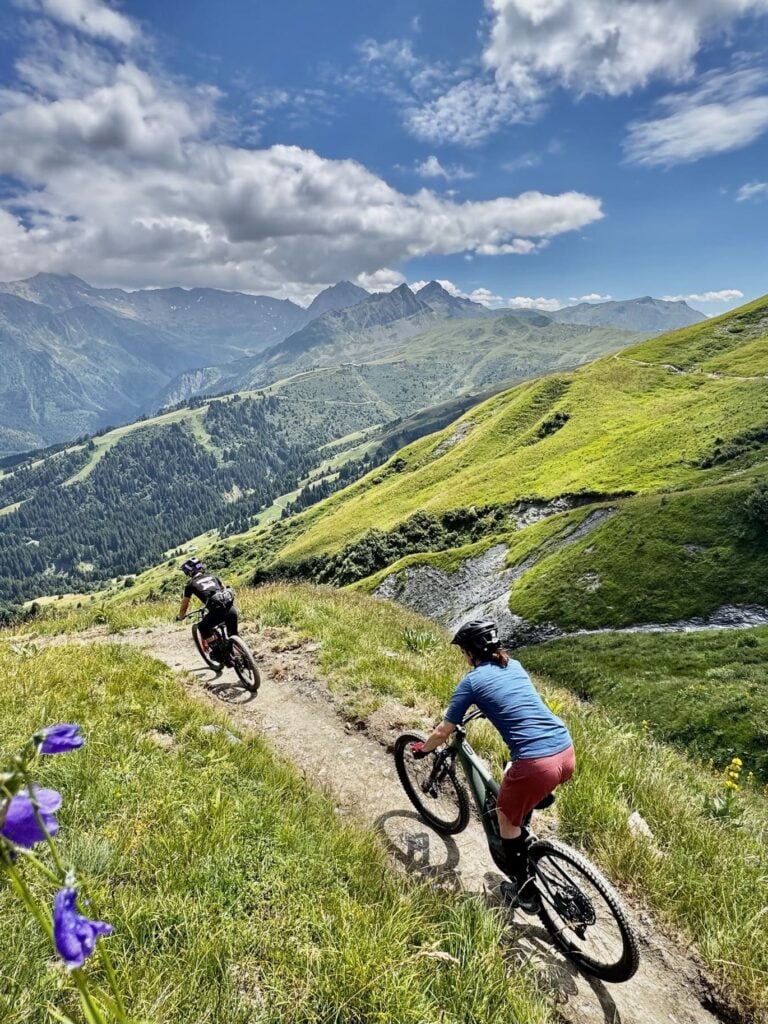

I’ve guided mountain bike trips all over the world, but there are only a handful that still give me that quiet buzz of anticipation when I clip in on day one. The tour du Mont Blanc e-mtb is one of them.
You’re riding around the highest mountain in Western Europe, crossing three countries, and moving through landscapes that change faster than you expect. One minute you’re sipping an Italian cappuccino beneath jagged glaciers, the next you’re dropping into a French valley on perfect singletrack, and a day later you’re rolling through a Swiss village that feels like it’s been there forever.
It’s big, it’s varied, and it never feels repetitive.
I’m Tom, a mountain bike guide based in the Aosta Valley in northwest Italy, and I’ve been guiding this loop for years. Every time I come back to it, I’m reminded why it works so well. Not because it’s the hardest ride in the Alps, but because of what it quietly gives you along the way.
And most riders don’t realize what that is until the very end.
The mountain everything revolves around
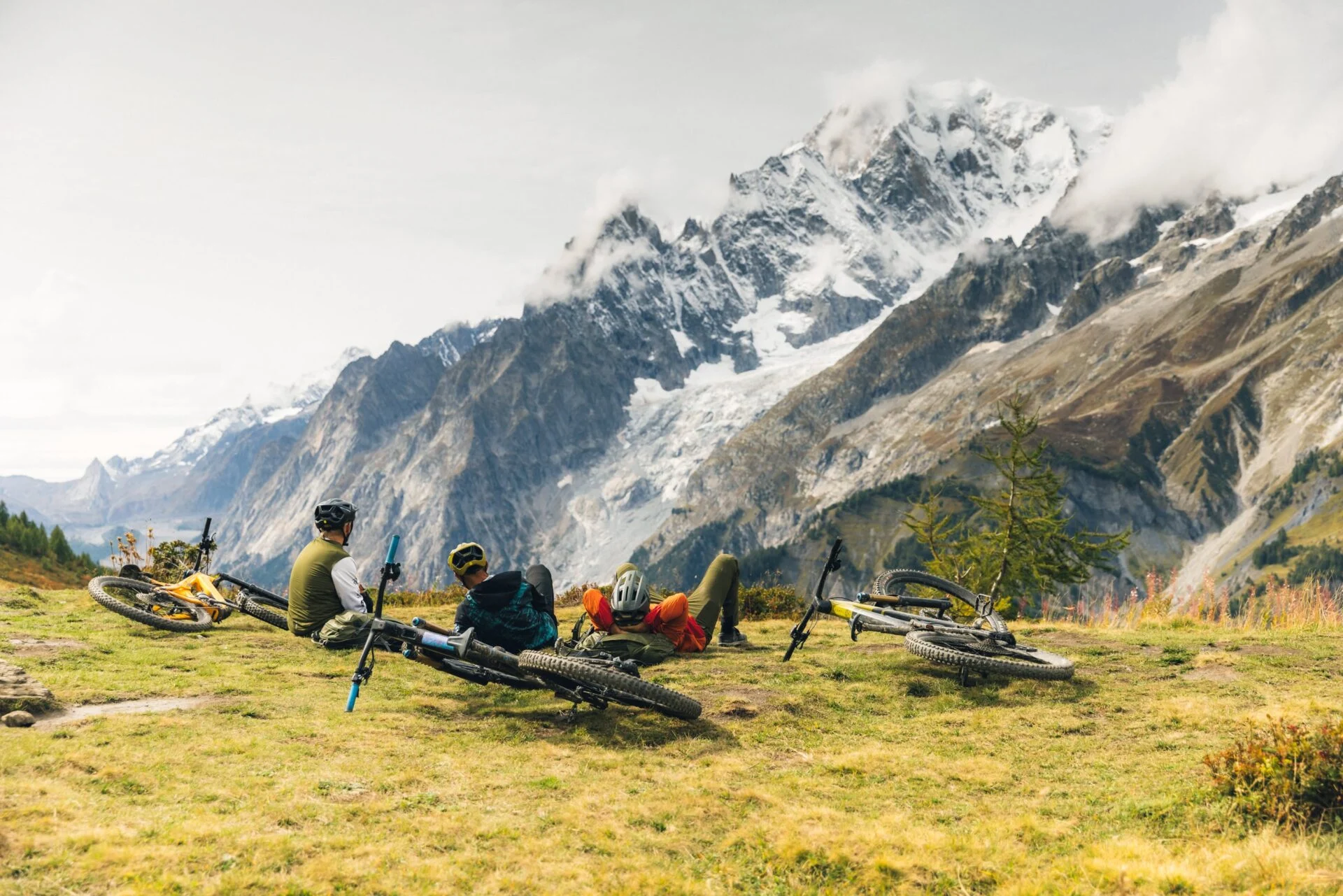
Mont Blanc, or Monte Bianco as we call it on the Italian side, isn’t just a mountain. It’s a force that shapes everything around it.
At just over 4,800 m (15,748 ft), it’s the highest peak in Western Europe, and it sits right at a turning point in the Alps where the mountain chain bends south toward the Mediterranean. Because the massif is so big, it acts like a wall that influences weather patterns, geography, and even culture.

The feel of Italy, France, and Switzerland changes as you move around it, and you really notice that when you ride the tour du Mont Blanc e-mtb.
One of my favorite facts to share on day one is that the Mont Blanc Massif is also a tri-point of countries. At Mont Dolent, Switzerland, Italy, and France meet. You ride through all three on this tour, and although they’re united by Alpine geography, culturally they’re very different.
Food, culture, and why the days feel so different
One thing that makes this loop special is how clearly each country announces itself. Italy, France, and Switzerland sit side by side, but the differences are immediate once you cross a col.
On the Italian side, things feel a bit wilder and less polished. The valleys are broader, the mountains more jagged, and the pace a little looser. Meals are simple, local, and generous, and there’s always time for a proper espresso stop.
France brings a different energy altogether, especially once you hit the Chamonix Valley. There’s a deep sense of mountain history there, but also a buzz, like everyone is on their way to something bigger, higher, steeper.
Then Switzerland does what Switzerland does. The landscape rounds out, the villages feel quieter, and life feels more lived-in rather than built around tourism. Even the architecture changes, with those classic chalet-style houses appearing as you drop into the Swiss Val Ferret.
By the time you cross back into Italy on the final day, most people are surprised by how clearly they can feel the shift again. That rhythm, that constant change, is a huge part of why I love guiding this route. Every morning feels different. Every evening feels earned.
What the route looks like on an e-MTB
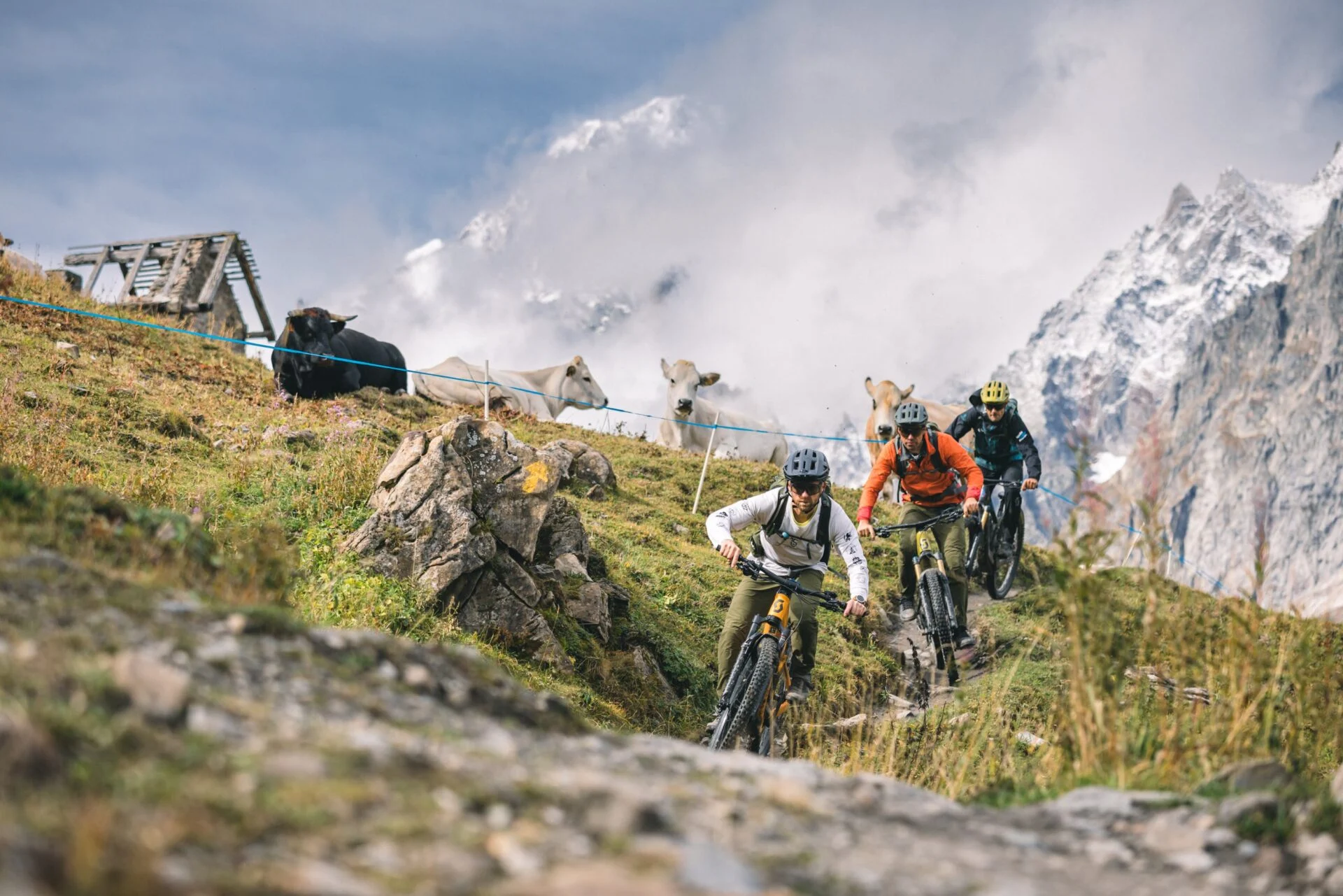
If you’ve heard of the tour du Mont Blanc before, you’ve probably heard of it as a hiking route. The classic loop is about 160 km (100 mi) with roughly 10,000 m (32,808 ft) of elevation gain. Most hikers take 10 to 14 days.
Our e-MTB version is different.
The loop we like to guide is roughly 210 km (130,5 mi) with around 8,600 m (28,215 ft) of climbing, usually done over four riding days. The key difference is how we choose the route, and that’s where the tour du Mont Blanc e-mtb really comes into its own.
Compared to a classic tour du Mont Blanc bike attempt that sticks rigidly to the hiking line, this approach opens up better riding and far more flow.
Why we don’t just ride the hiking trail
A lot of the traditional hiking trail is simply not that enjoyable on a bike. You can do it, people do, but it often involves carrying your bike or forcing yourself down awkward terrain just to say you followed the exact line.
Instead, we use the flexibility of the e-bike to link the best trails. We still cross the major cols, we still ride through the same valleys, but we prioritize flow, rideability, and fun. That approach is what defines the tour du Mont Blanc e-mtb experience, especially compared to older-school ways of approaching the loop.
Trail variety and riding style
Over four days, you’ll ride a real mix.
Quiet alpine lanes, forest roads, farm tracks, and plenty of singletrack. Some trails are wide and smooth from centuries of foot traffic. Others are narrower, more natural, and a bit technical in places.
This is proper mountain biking, but it’s not downhill racing. We ride at a sensible pace. We push on when it feels good and slow down when it makes sense. The goal is enjoyment, not survival, which is why the tour du Mont Blanc e-mtb works so well for strong intermediate riders.
Why support matters more than people think
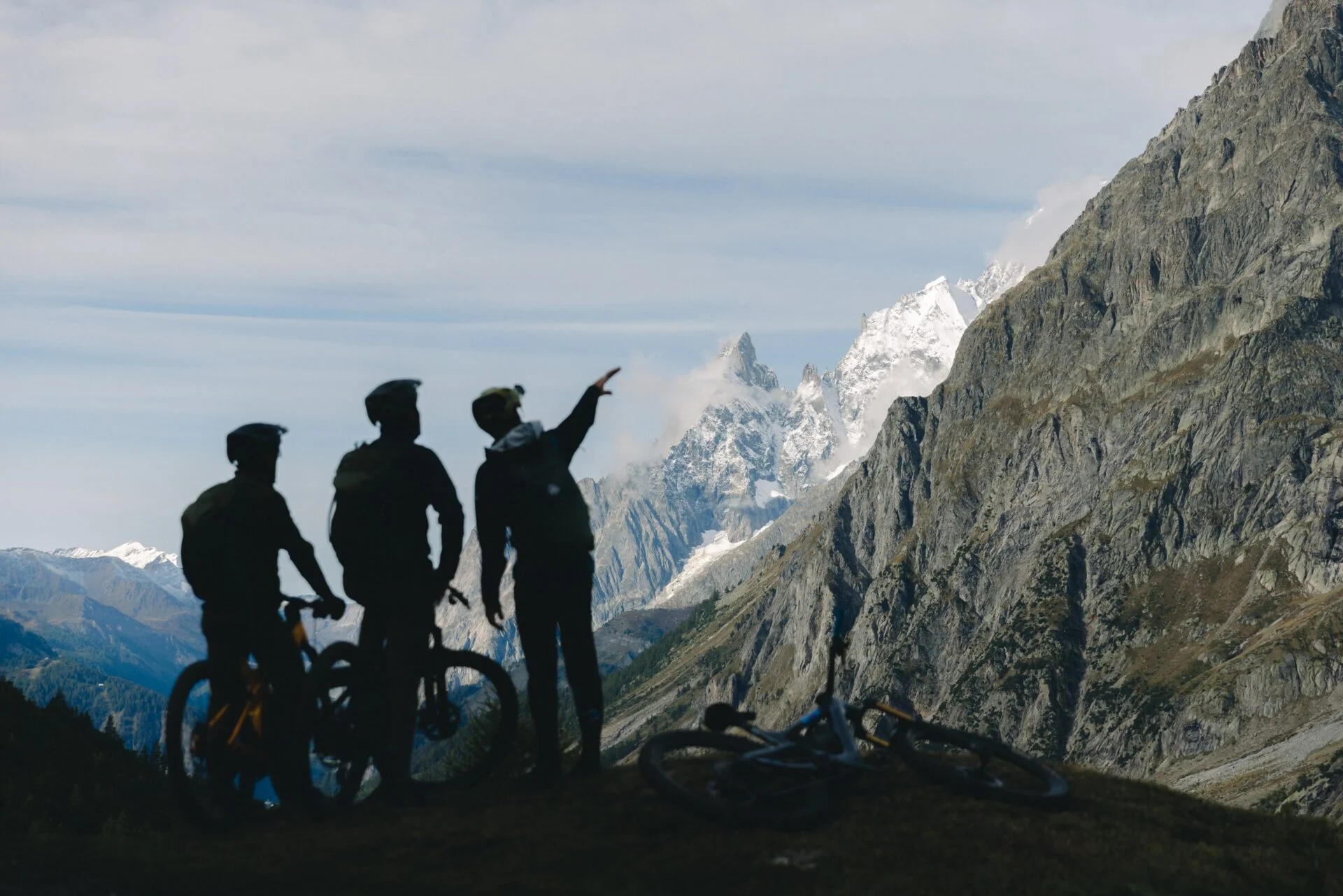
I’m a big believer that how you run a tour matters just as much as where you ride.
This is a big loop with a lot of moving parts, and trying to do it fully self-supported means carrying a heavy pack, worrying about charging, and often spending valuable energy on sections that just aren’t very rewarding on a bike.
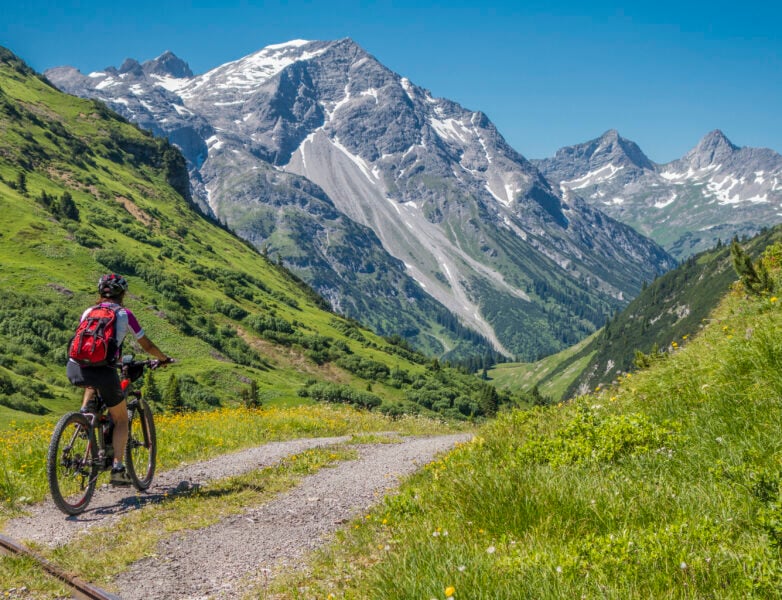
Having shuttle support completely changes the experience. We use it strategically, skipping long road climbs or busy stretches that don’t add anything to the ride. It means we can focus on the best trails and still finish each day with enough energy to enjoy the evening.
It also means your main bag becomes a base camp rather than something you drag around all day. You can have spare riding gear, warmer layers, and little comforts waiting for you at the hotel.
That might sound like a luxury, but on a four-day alpine ride, it’s the difference between feeling worn down and feeling properly immersed.
Riding through centuries, not just kilometers
One thing I always like to point out early on, usually while we’re pedaling quietly up a valley, is that this route has been used for far longer than any of us have been riding bikes.
The Aosta Valley in particular has always been one of the easiest ways through the Alps. Long before ski resorts and lift systems existed, people were moving livestock, goods, and entire lives through these mountains.
The Romans were using many of these same corridors until the fall of the Roman Empire, and while the trail surface has obviously changed, the logic of the route hasn’t. You still feel that sense of passage as you ride.
You’re not just linking trails, you’re following lines that make sense in the landscape, lines that have made sense for thousands of years. That’s one of the reasons the tour du Mont Blanc e-mtb feels so complete. It’s not arbitrary. It’s intuitive.
There are moments when you’re pedaling gently, almost absent-mindedly, and then it hits you that you’re riding through a place that has quietly watched people come and go for centuries. That perspective tends to slow everyone down in a good way.
Why we ride clockwise
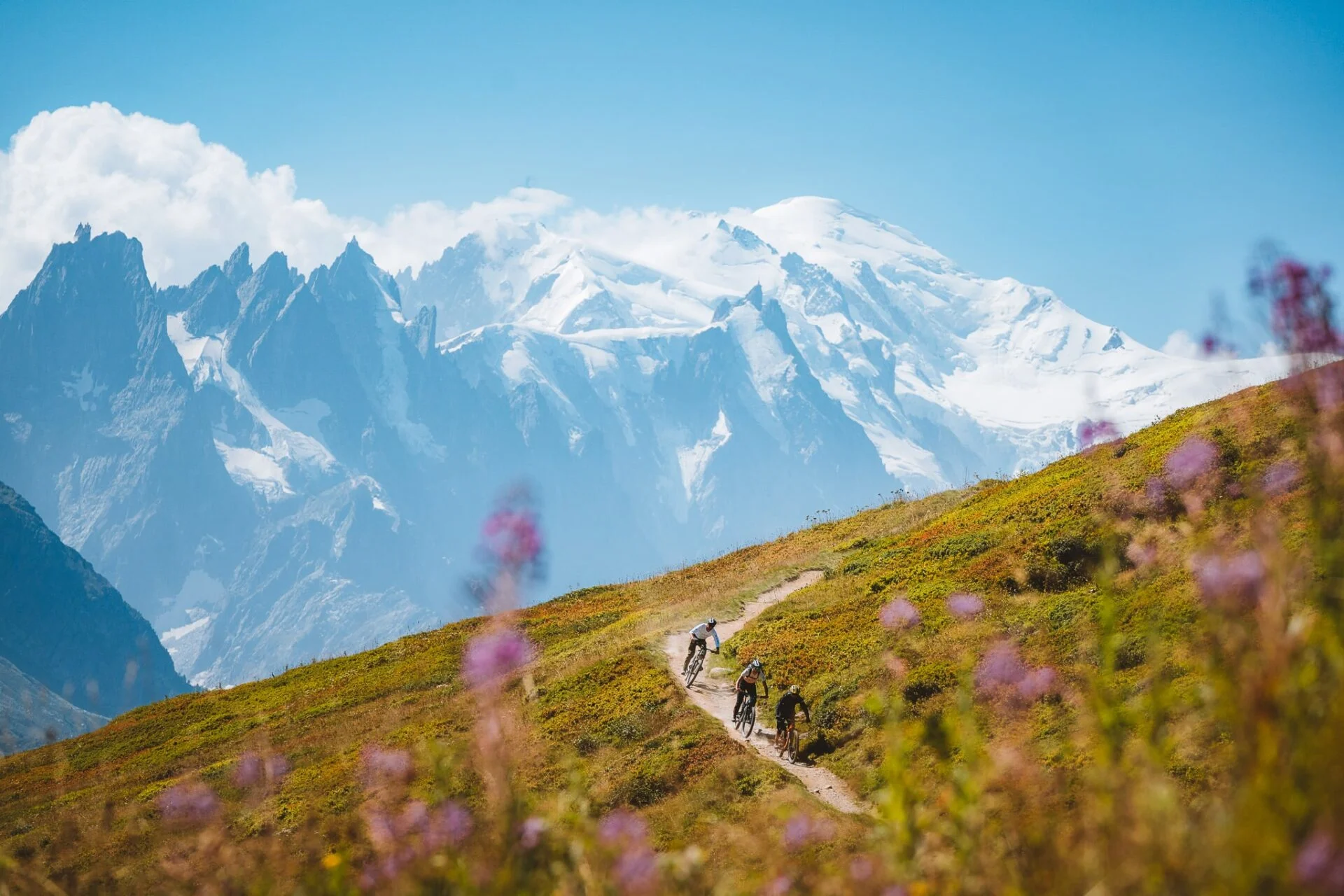
We ride the loop clockwise, and there’s a reason for that.
Most hikers go anti-clockwise. Riding clockwise means we’re more often meeting walkers face-to-face rather than coming up behind them.
It makes shared trail sections calmer and safer, especially on busier days. It also suits the natural rhythm of the tour du Mont Blanc e-mtb, with the biggest day falling early and the final day delivering some of the best riding of the entire loop.
Day 1: Italy into France, wild valleys and first big views
We start and finish in Courmayeur, a lively Italian mountain town known for skiing in winter and hiking in summer. The best part is how quickly it disappears once you start riding.
Leaving Courmayeur behind
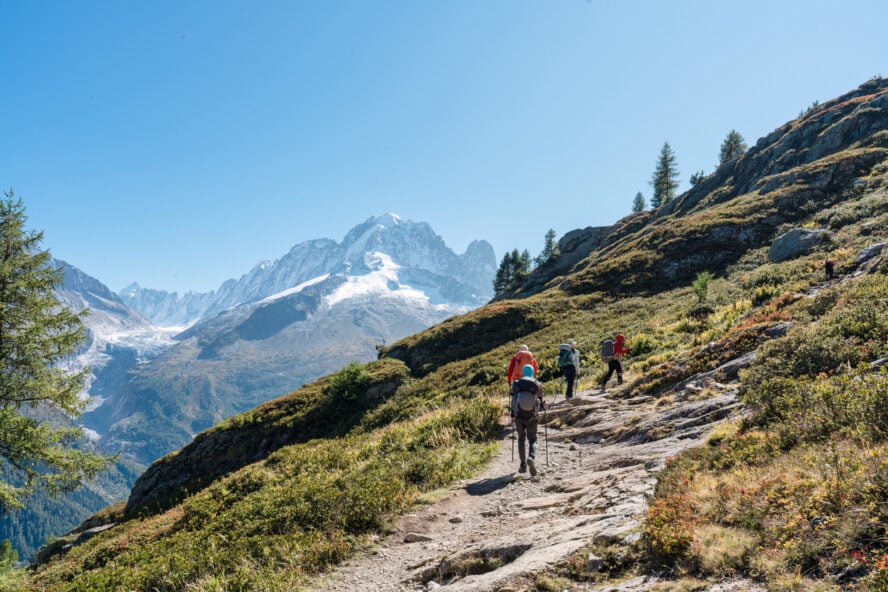
Within the first climb up Val Veny, the town noise fades and the landscape opens up. The Italian side of Mont Blanc feels jagged and wild, with long ridges dropping down from glaciers and wide valleys that make you slow your pace without realizing it.
Day one is a medium day. Around 1,400 m (4,593 ft) of climbing, roughly 30 km (18,6 mi) of riding, and enough descending to remind you why you came. It’s the perfect introduction to the tour du Mont Blanc e-mtb.
Val Veny, the Miage Glacier, and riding through history
Val Veny is one of those places I never get tired of. The route follows the river deeper into the valley, and some of these trails have been used since Roman times as one of the easier ways through the Alps.
The Miage Glacier dominates the view, and riding alongside it gives you a sense of scale that’s hard to describe. This is where the tour du Mont Blanc e-mtb starts to feel like a journey rather than just a ride.
Col de la Seigne and the first descent into France
After a final stop at Rifugio Elisabetta for an Italian cappuccino, we climb steadily to Col de la Seigne at around 2,500 m (8,202 ft). The climb is smooth and rideable, and the reward is a beautiful descent into the Vallée des Glaciers.
The singletrack here is fast, flowing, and shared with hikers, but the direction we ride usually makes it feel relaxed. It’s a classic first big descent of the tour du Mont Blanc e-mtb.
Lac de Roselend and a proper end to day one
After lunch in the valley, we use the shuttle to move over the Cormet de Roselend and finish the day at Lac de Roselend. This is where comfort meets scenery.
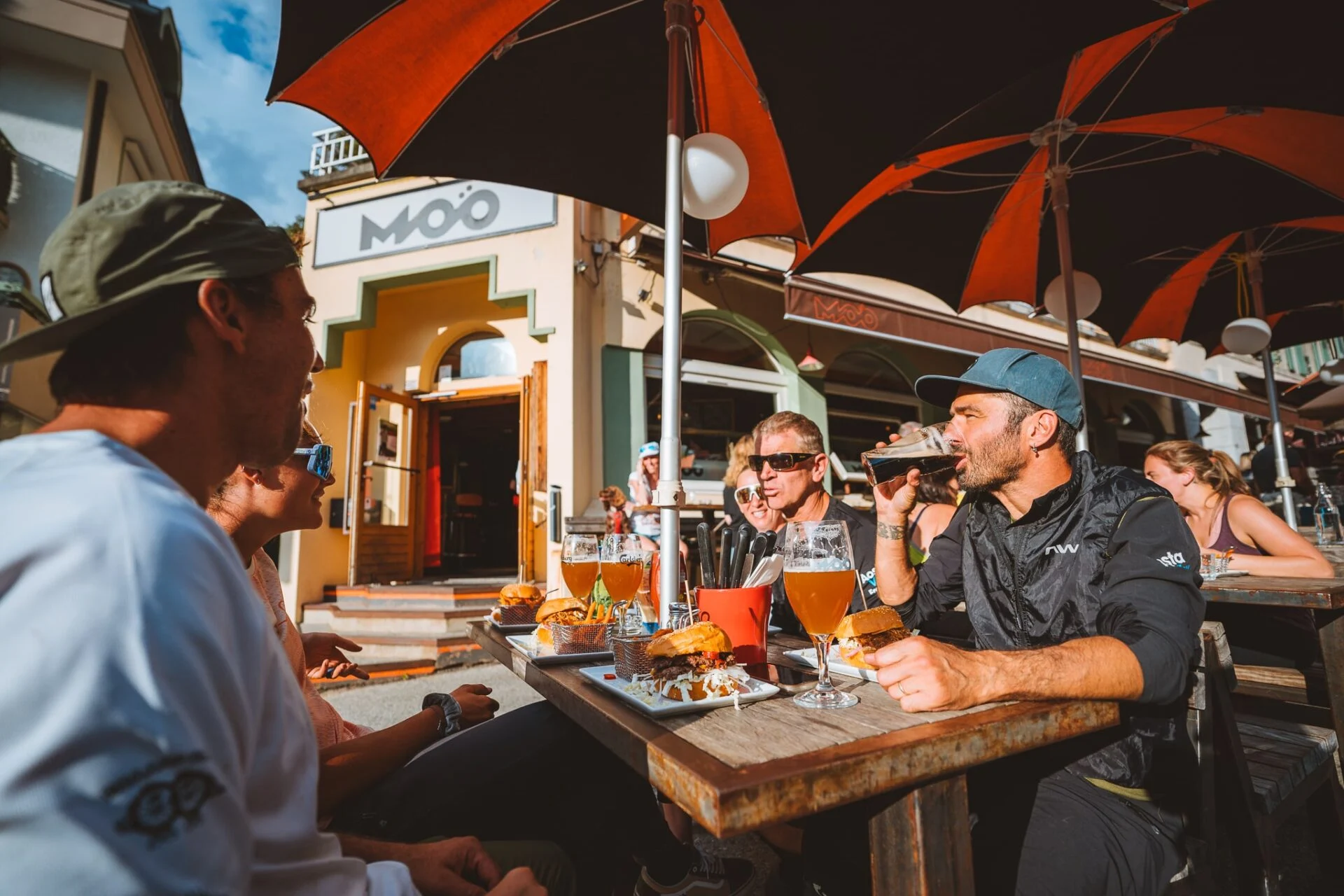
The terrace at Chalet de Roselend is one of my favorite post-ride spots anywhere. A beer, a view, and a plate of alpine comfort food sets the tone perfectly for what’s to come on the tour du Mont Blanc e-mtb.
Day 2: Switchbacks, big passes, and dropping into Chamonix
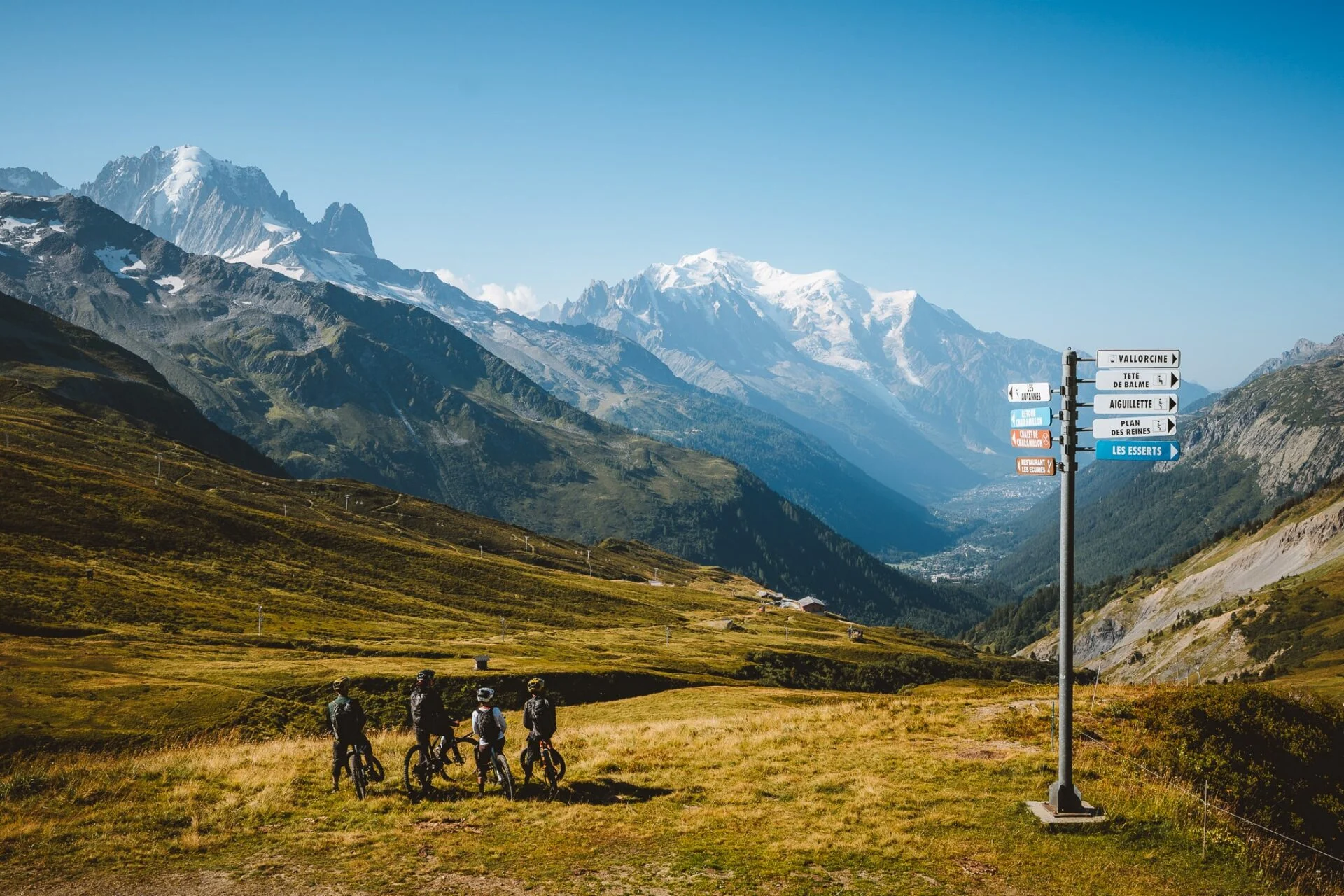
Day two is the biggest day of the tour. Your legs are warm, your confidence is up, and you’re ready for it.
The climb everyone talks about
Straight out of Lac de Roselend, we warm up before hitting a long climb with seemingly endless switchbacks. There are 20 or 30 by the time you reach the top, and you really feel how quickly you’re gaining height.
On e-bikes, this climb is all about patience. Spin, take photos, enjoy the view. Battery management matters most on this day, but ridden sensibly, the tour du Mont Blanc e-mtb never becomes a stress test.
Long descents and rolling into Chamonix
Mountain biking is truly in France’s DNA. After crossing multiple passes and stopping at hidden gems like the Auberge de Bionnassay, we reach the top of Les Houches and drop nearly 1,000 m (3,280 ft) into the Chamonix Valley.
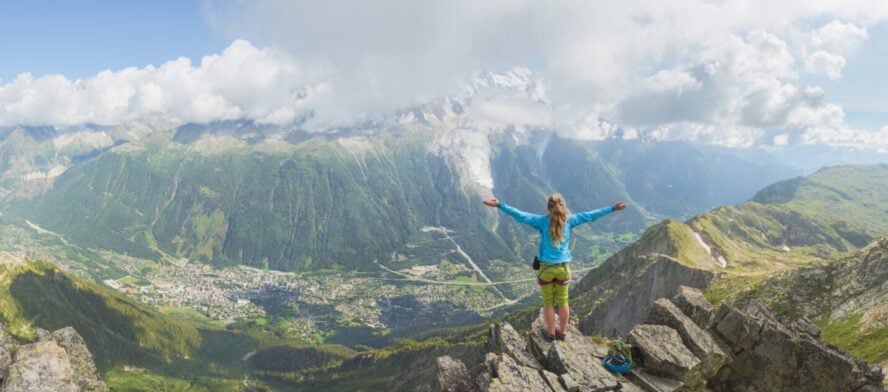
Natural trails turn into smooth bike park flow, and it’s a perfect reward after a big day. Rolling into Chamonix is always a highlight of the tour du Mont Blanc e-mtb, with Mont Blanc towering above the town.
Day 3: France into Switzerland, a change of pace
After the intensity of day two, day three eases things back slightly. We shuttle past busy roads, stop for pastries in Argentière if time allows, and ride up to Col de Balme.
As you descend into Switzerland, everything changes. The mountains round off, the villages quieten, and the pace slows. The tour du Mont Blanc e-mtb isn’t just about riding hard, it’s about feeling these transitions.
We spend the night somewhere in the Swiss Val Ferret, enjoying local food and wine that rarely leaves the country.
Day 4: Grand Col Ferret and the balcony trail back to Italy
The final day is a medium day on paper, but it’s often the one people remember most.
We climb steadily to the Grand Col Ferret, crossing back into Italy and dropping into the Italian Val Ferret on superb singletrack. After cake and cappuccino at a mountain refuge, we climb again to join the famous balcony trail.
This trail rises and falls along the mountainside, offering nonstop views and playful riding. On an e-bike, it’s pure joy. For riders curious about a true tmb e bike experience, this section usually seals the deal.
After a final lunch at Rifugio Bonatti, we roll back into Courmayeur, closing the loop.
Gelato is mandatory.
Who this tour is for
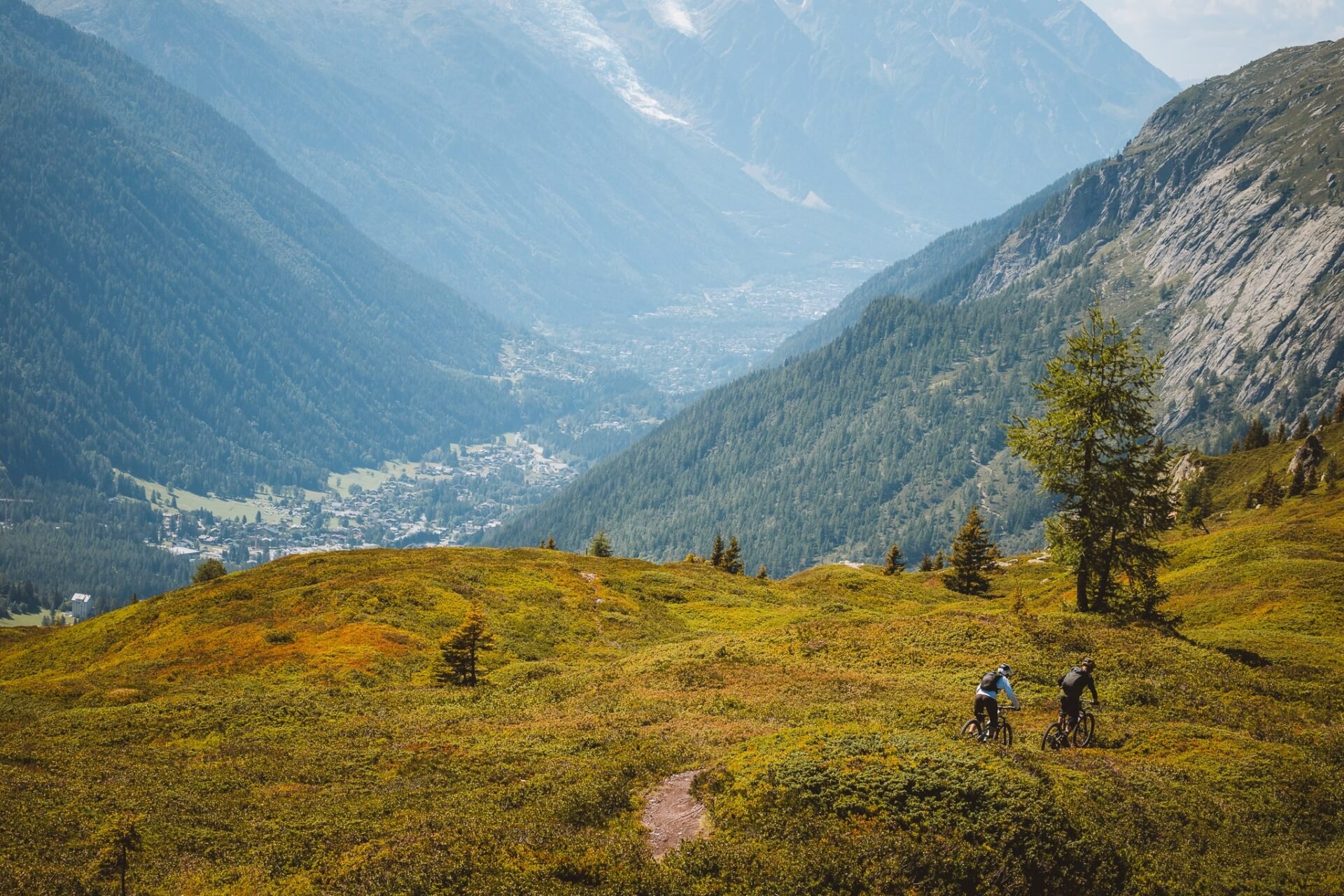
This ride is for confident, competent riders who enjoy long days on varied terrain.
You don’t need to be an elite athlete, but you do need to be comfortable riding singletrack and spending several days in a row on the bike. If you’re happy riding at a steady pace and like the idea of covering real ground in the mountains, you’ll feel at home on the tour du Mont Blanc e-mtb.
What I see most often is that solid intermediate-plus riders thrive on this tour. The trails aren’t extreme, but they are alpine, and that means rock, roots, and the occasional exposed section. Being relaxed on the bike makes a big difference to how much you enjoy the experience.
The e-bike shifts the focus away from suffering and onto riding well. It means more energy for descents, more attention for the scenery, and more enthusiasm left at the end of the day. That balance is exactly why the tour du Mont Blanc e-mtb works so well for so many riders.
When to go and how to plan it
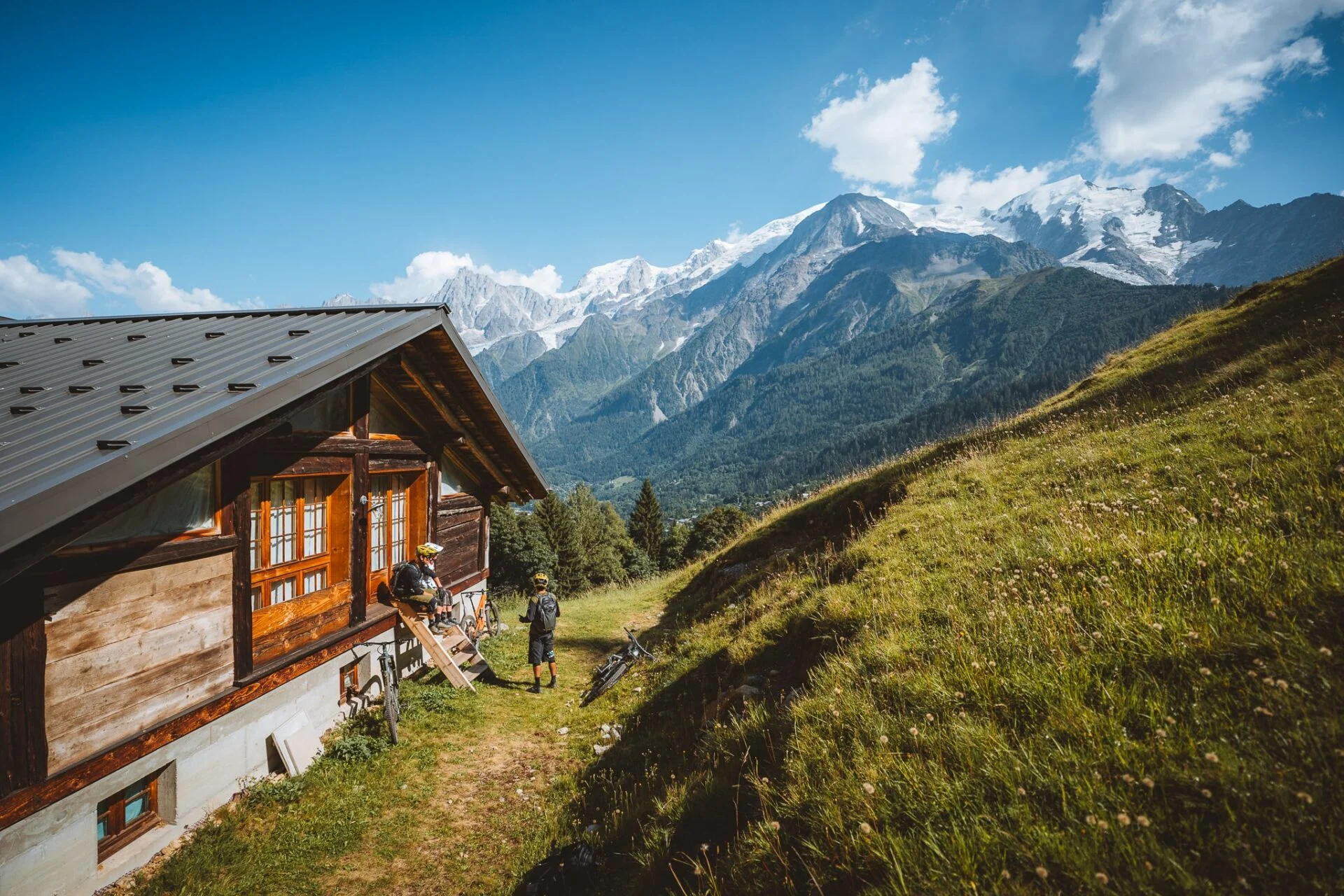
The riding season usually runs from July through late September, depending on snow. July feels like classic alpine summer, with green meadows, long days, and warmer temperatures, while September brings cooler air, softer light, and slightly quieter trails.
I always recommend arriving a day or two early if you can. It gives you time to deal with jet lag or travel delays and means you start the ride feeling settled rather than rushed. In the mountains, that calm start makes a real difference.
Courmayeur and Aosta are both worth spending time in before or after the ride. Even something as simple as a coffee in a piazza helps you ease into the rhythm of the region and sets the tone for the days ahead.
Final thoughts
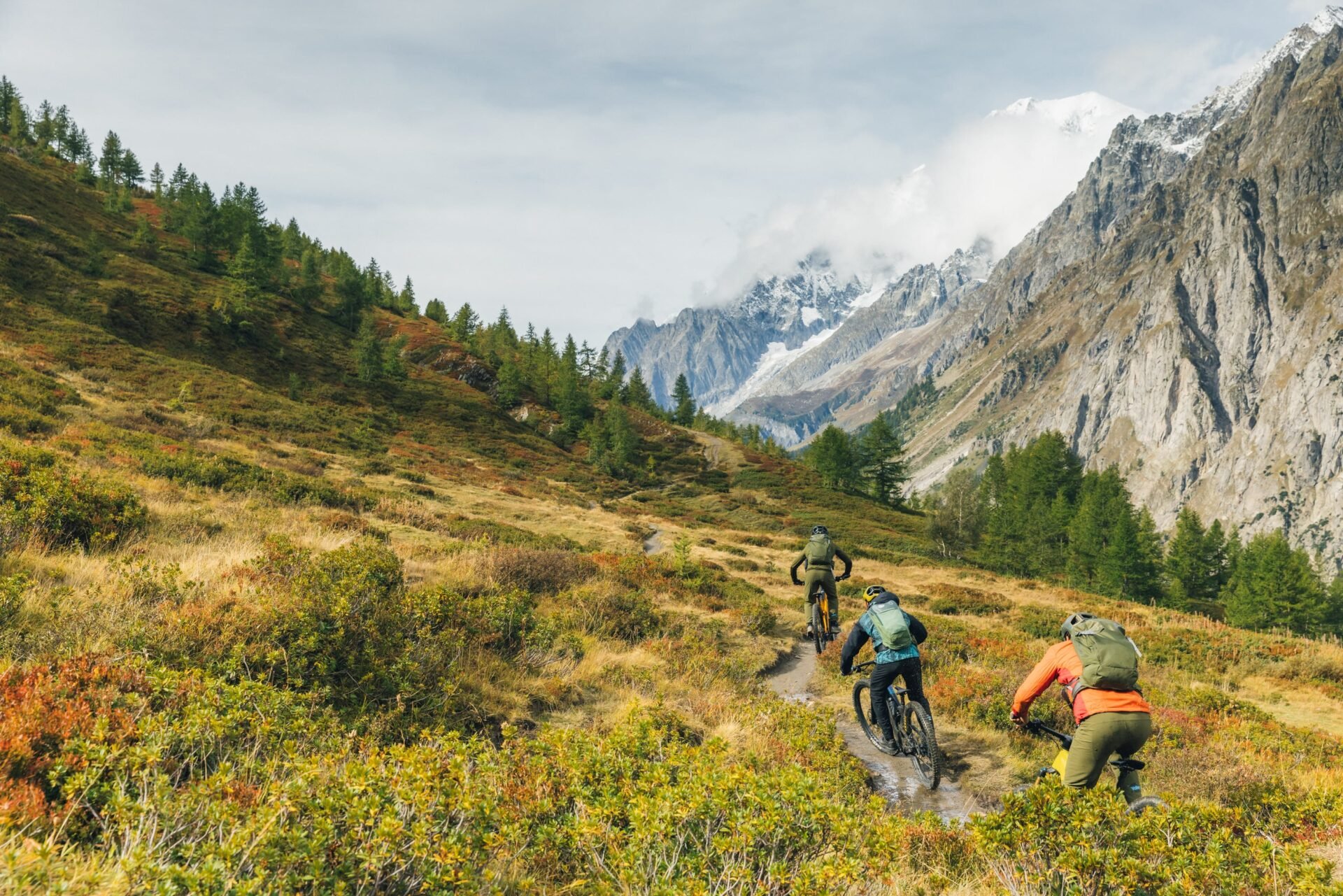
I’ve guided this loop many times, and it never really changes. What changes is how it leaves people at the end. Somewhere along the way, the noise drops out. Your days become about simple things: riding well, eating when you’re hungry, stopping when it makes sense, and moving on when you’re ready. The mountain sets the pace, and you stop arguing with it.
That’s what this tour quietly gives you. A few days of clear perspective.
By the time you roll back into Courmayeur, you’re tired in a good way, your head is calm, and it feels like the loop closed properly. If you’re looking for a mountain bike journey that’s immersive, balanced, and genuinely satisfying from start to finish, the tour du Mont Blanc e-mtb delivers exactly that.
Whenever the time feels right, you can join me on the loop and see what it gives you.