
I always say that you don’t really understand Istria while you’re on the wall. You understand it on the walk back. You step out of the forest below the crag, the light stretches across vineyards, and the hilltop towns begin to glow in that slow Mediterranean sunset. Your hands are still dusty with chalk, your body feels worked in that honest, satisfying way, and somehow the day doesn’t feel like it’s ending. It just softens.
That’s when it clicks, this place is not about rushing from route to route, it’s about staying just a little longer than you planned. And once you notice that, you start seeing the place differently.
In this Istria climbing guide, I don’t just want to tell you where to climb. I want to show you how it feels to be here, because that’s really what makes people come back, and what most people only understand after a few days.
We get around 280 days of sun every year. That kind of consistency changes everything, especially if you’re used to chasing conditions while rock climbing in Croatia or elsewhere in Europe. You don’t chase weather windows or over-plan your days. You wake up, look outside, and most of the time, you can just go climbing.
And once you settle into that rhythm, you realize that what makes this place special is not just the rock, but how it lets you experience it, and how easily the days start to flow without effort.
The spirit of Istria: Culture, landscape, and stories
What I love about the inland landscape
Istria sits in the northwest of Croatia, bordered by Slovenia and Italy, and surrounded by nearly 300 miles (500 km) of Adriatic coastline. But for me, the real character of the region is inland. Rolling hills stretch in every direction, covered in vineyards, olive trees, and small stone villages perched on top of ridges.
The light moves slowly across this landscape, especially in the evening, and it paints everything in layers of color that shift minute by minute. It’s something I never get tired of watching, no matter how many seasons I spend here.
As an Istria climbing guide, this is often the first thing I try to share with people. Before the grades, before the routes, before any technical details, you need to feel the place. There’s a sense that time moves differently here. It’s quieter than you expect, less developed than other Mediterranean destinations, and that gives it space to breathe. You don’t feel crowded or rushed.
Instead, you feel like you’ve stepped into a place that still follows its own rhythm, and that becomes part of your experience from the moment you arrive, long before you tie in.
The legends that shape the place
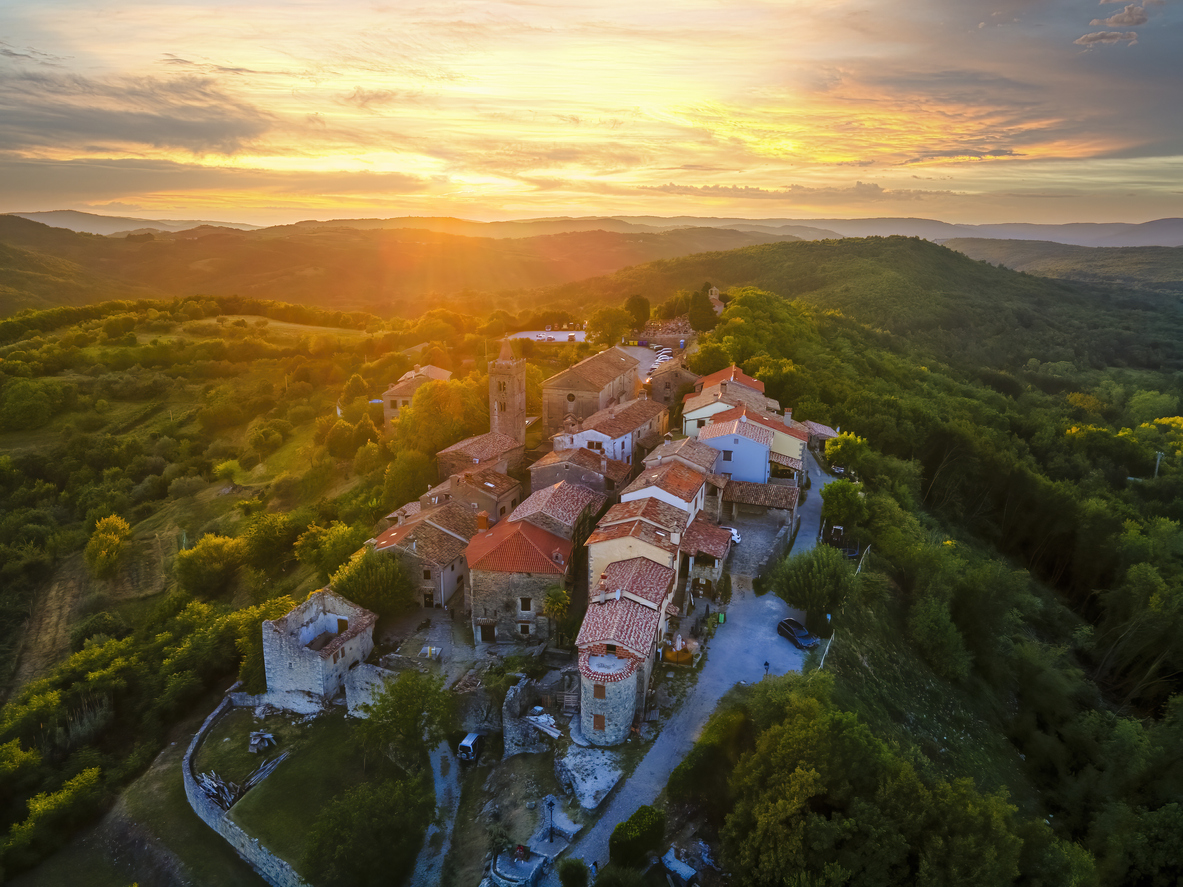
Istria is full of stories, and you start to notice them once you slow down enough. One of my favorite local legends is about giants who built the hilltop towns. According to the story, massive figures carried stones up the hills to construct places like Roč, Motovun, and Vrh. The largest of them, Dragonja, shaped the land itself, carving out what is now the Mirna river valley.
At the end of their work, with the stones that were left, they built the smallest town in the world, Hum, which still exists today. When I talk about this as an Istria climbing guide, it’s not because I expect people to believe it literally, but because it captures something true about the place.
When you walk through these towns after a day of climbing, it’s easy to feel that sense of history and imagination blending together, almost like the landscape itself has been shaped with intention.
Getting to Istria and where to stay
How to reach Istria
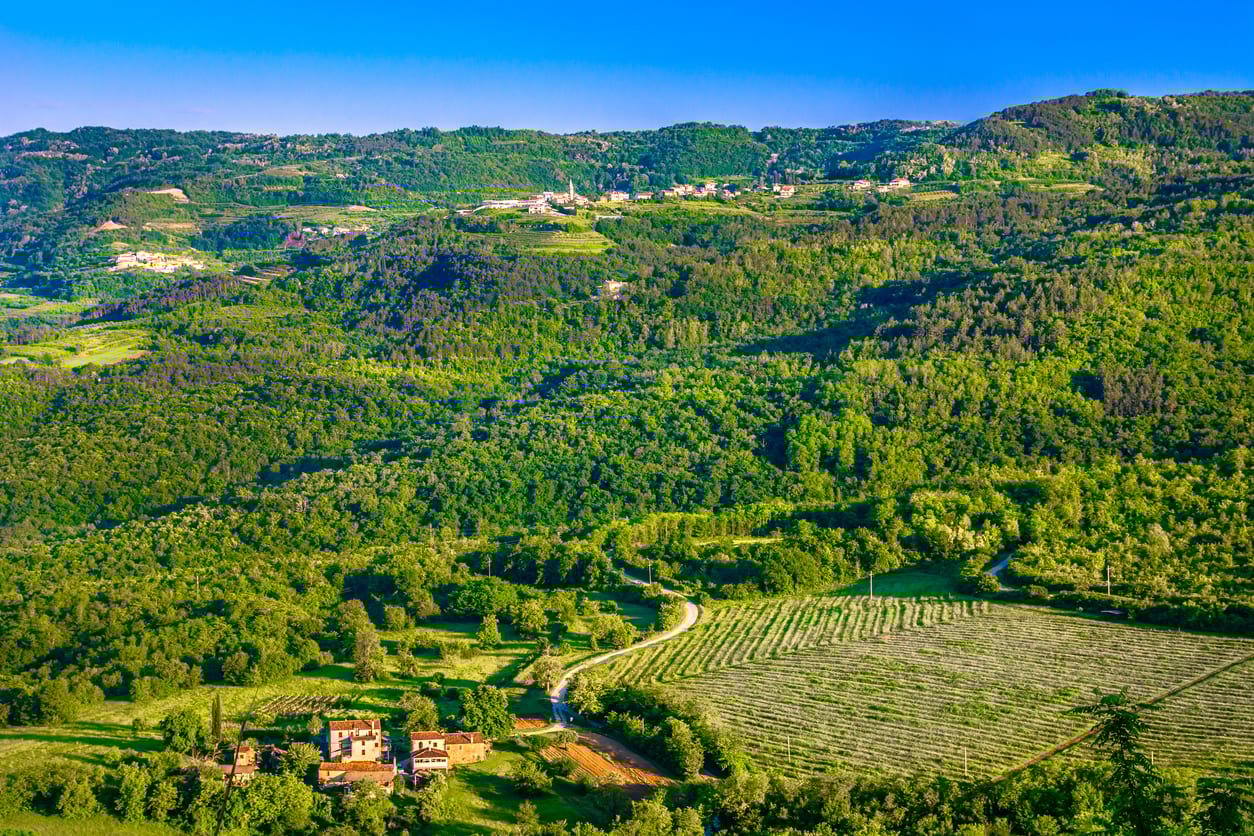
Getting to Istria is straightforward, even if it feels remote once you arrive. Most people fly into Zagreb, Ljubljana, or Venice, and then drive to the peninsula. The drive itself becomes part of the experience, especially as you leave the highways and move into smaller roads that wind through hills and villages.
Having a car is important here, not because distances are large, but because it gives you the freedom to explore different climbing areas at your own pace, and that flexibility quickly becomes one of the biggest advantages of being here.

From an Istria climbing guide perspective, this flexibility is key. Once you’re in the region around Roč and Buzet, everything becomes compact. You’re never far from a crag, a trail, or a quiet town where you can stop and reset between climbing days.
Where I like to stay and why it matters
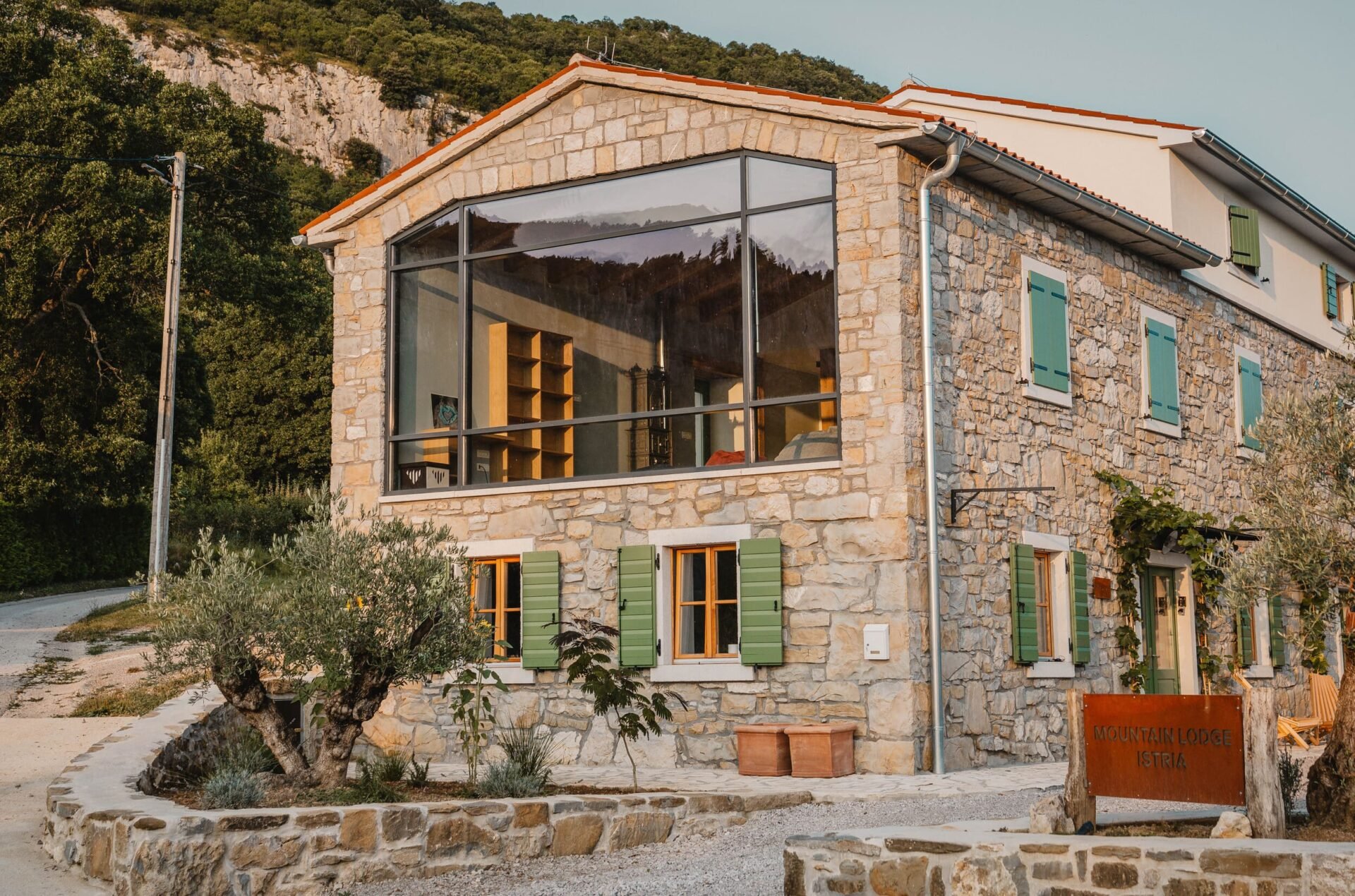
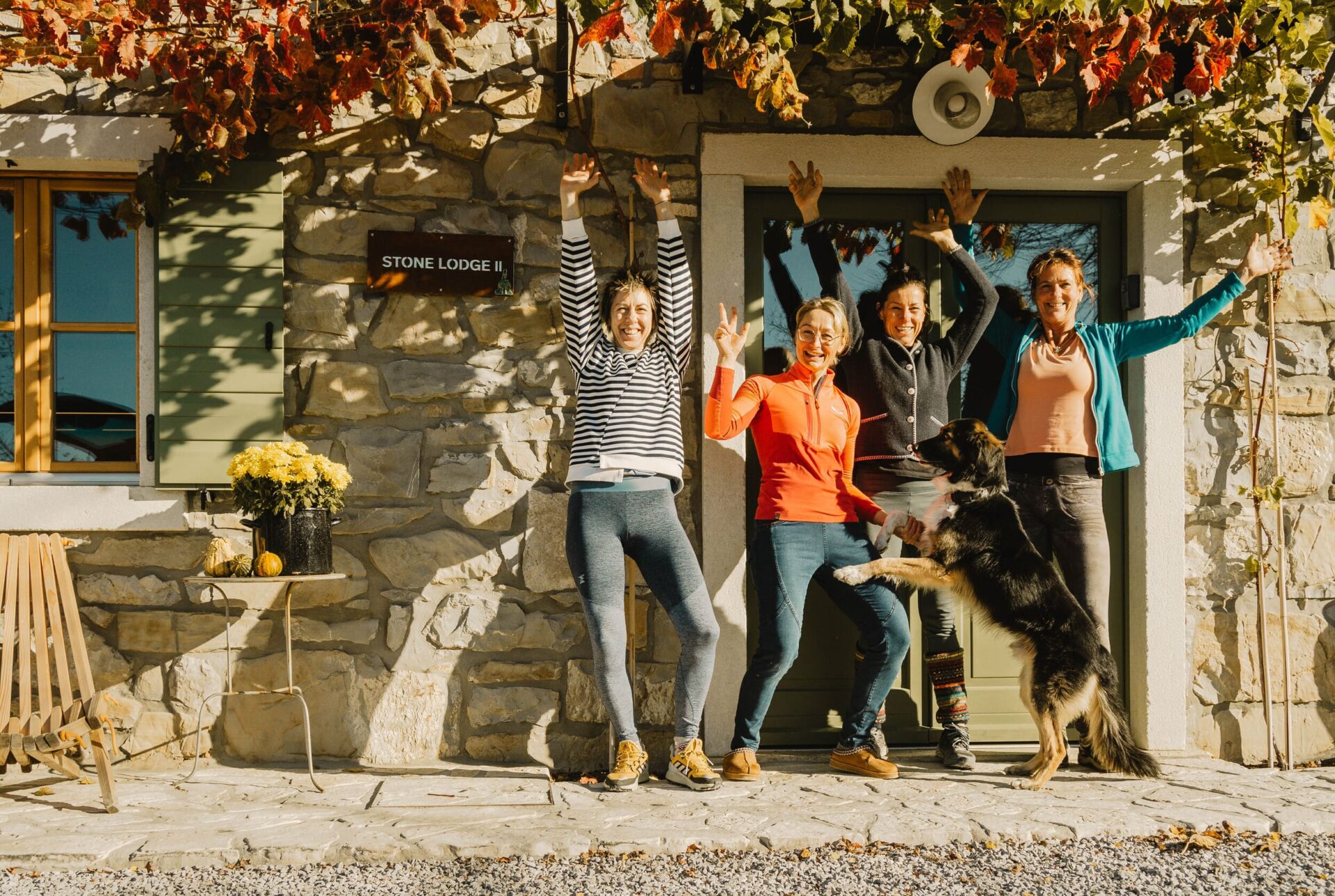
For me, having a base is essential. We built Mountain Lodge Istria from two old ruins, and in the beginning, it didn’t look promising at all. There were moments when it felt like we were just staring at broken walls, trying to imagine something that didn’t yet exist. But step by step, like on a long climb, we kept going, returning again and again, putting in the work.
Now, what matters most is not just the building itself, but what it has become. As an Istria climbing guide, this is where everything comes together. People meet, share experiences, and often come back more than once.
The locals who helped build the place became friends, and that connection gives the whole experience a different depth. It’s not just a place to stay, it’s part of the story, and you feel that immediately.
Respecting the local way of life
Climbers are welcome here, and that’s something we all need to respect. If you’re traveling in a van or with a tent, it’s important to use designated campgrounds rather than parking areas or private land. It’s a simple thing, but it keeps the relationship with the local community positive.
From the perspective of an Istria climbing guide, this respect is part of what makes the area sustainable. When you take care of the place, it continues to welcome you back, and that mutual respect is what keeps the experience intact.
Rock climbing in Istria: The real reason you come
What makes climbing here so unique
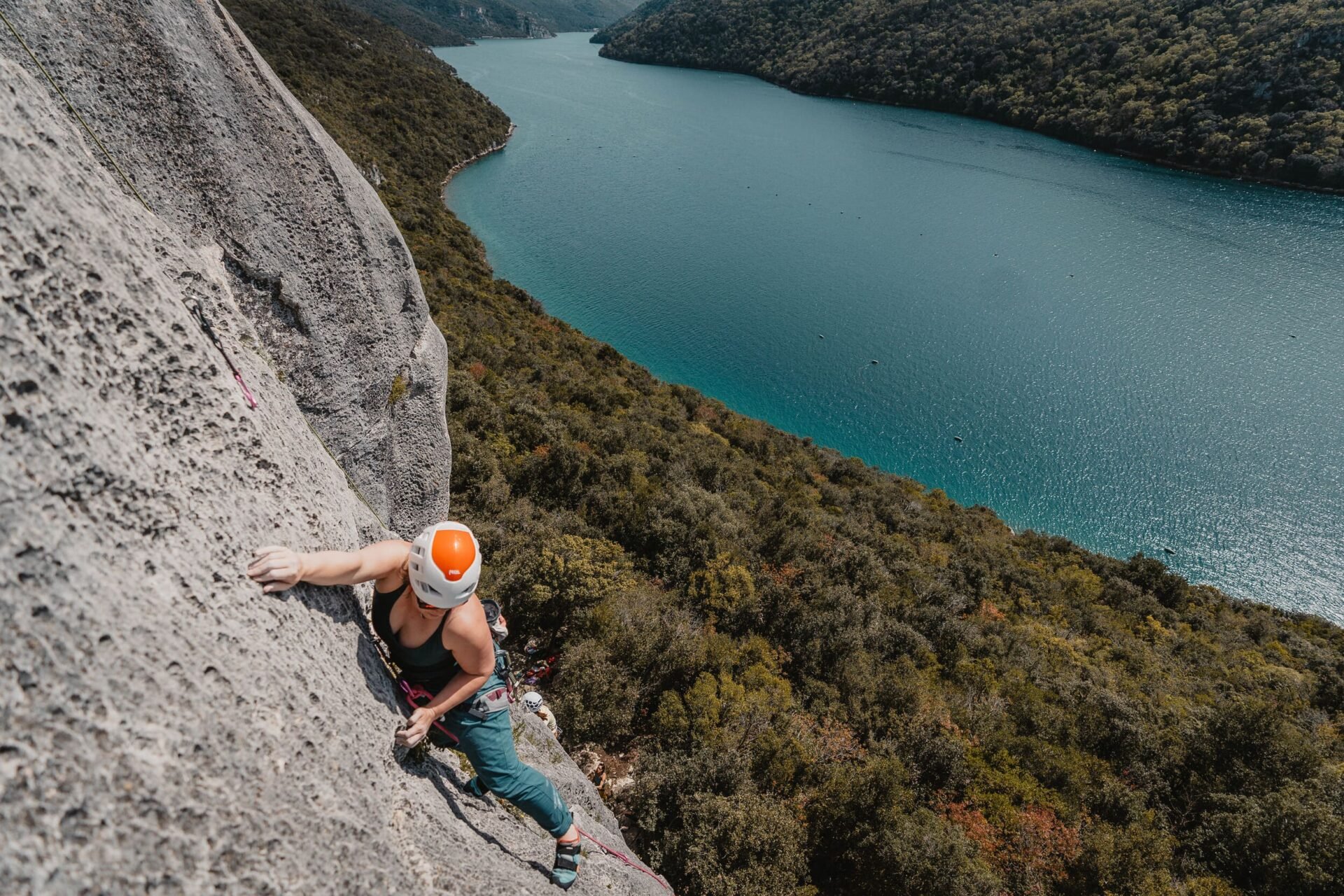
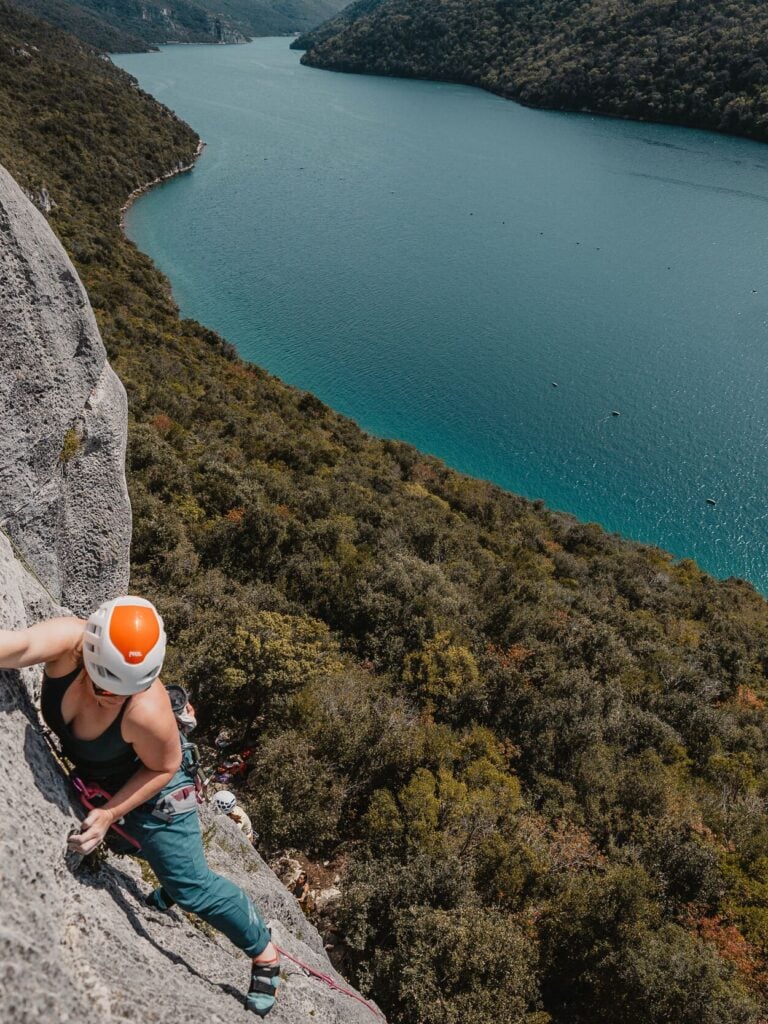
Climbing in Istria is all about limestone, but not just one kind. The variety is what makes it stand out. You might start your day on a vertical face, where precision and footwork are everything. Then you move onto steep tufas, where the climbing becomes more physical, more flowing, almost three-dimensional.
The real beauty is that you’re not locked into one style. Within a short walk or drive, you can completely change the type of climbing you’re doing, and that freedom is what makes the experience feel so open.
As an Istria climbing guide, I always suggest bringing two pairs of shoes. A stiffer pair for technical routes and a softer one for steep terrain. It might sound like a small detail, but it changes how you experience the climbing, especially once you start exploring different sectors.
A place where everyone can climb together
One of the things I appreciate most is how naturally different levels mix. At Kompanj, you can have a beginner climbing their first route while someone else is projecting something much harder right next to them. It’s not separated, it’s shared.
From an Istria climbing guide perspective, this creates a very supportive environment. People learn by watching, by trying, by being part of the same space. It removes pressure and replaces it with curiosity and progression, which often leads to faster improvement without forcing it.
Kompanj: The center of this Istria climbing guide
Why Kompanj is the perfect starting point
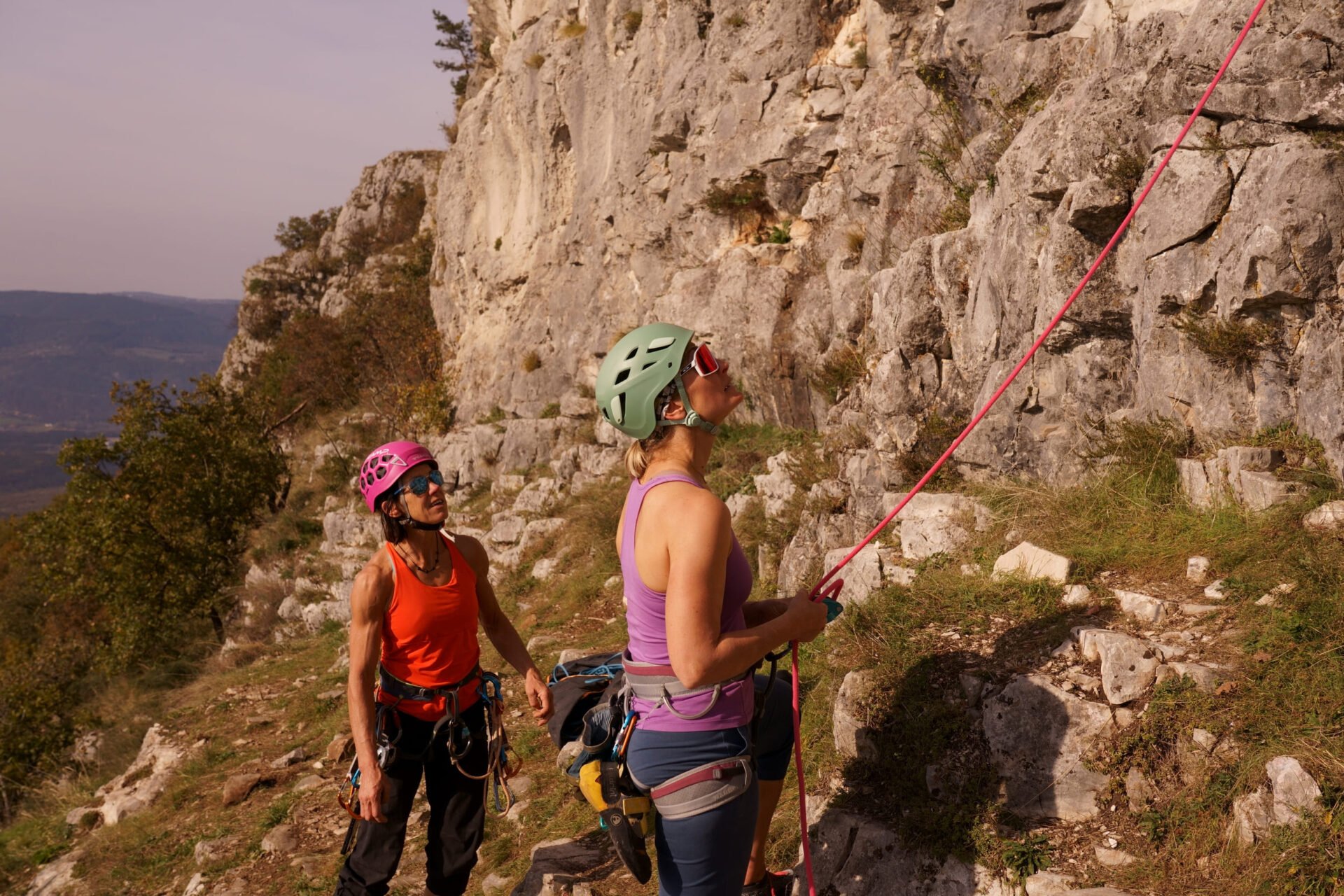
Kompanj is the largest crag in Istria and the place where most people begin. From the lodge, it’s about a 10-minute walk, roughly 0.6 miles (1 kilometer), which makes it incredibly accessible. You don’t need to plan around travel. You just go.
As an Istria climbing guide, I always start here because it gives the best overview of what the region offers. Overhangs, slabs, roofs, tufas, everything is in one place. It’s a complete playground, and one you can return to again and again without getting bored.
A crag that grows with you
What makes Kompanj special is how it works for everyone. Routes of different grades sit next to each other, which allows groups to stay together while everyone climbs at their own level. For learning, this is ideal, because you can observe, try, and improve without needing to move around constantly.
The bolting is solid, with high-quality equipment and clear anchors. That makes the experience feel safe and approachable, especially if you’re visiting for the first time, and allows you to focus fully on climbing.
Exploring the rest of Istria’s climbing
Climbing around Roč and Buzet
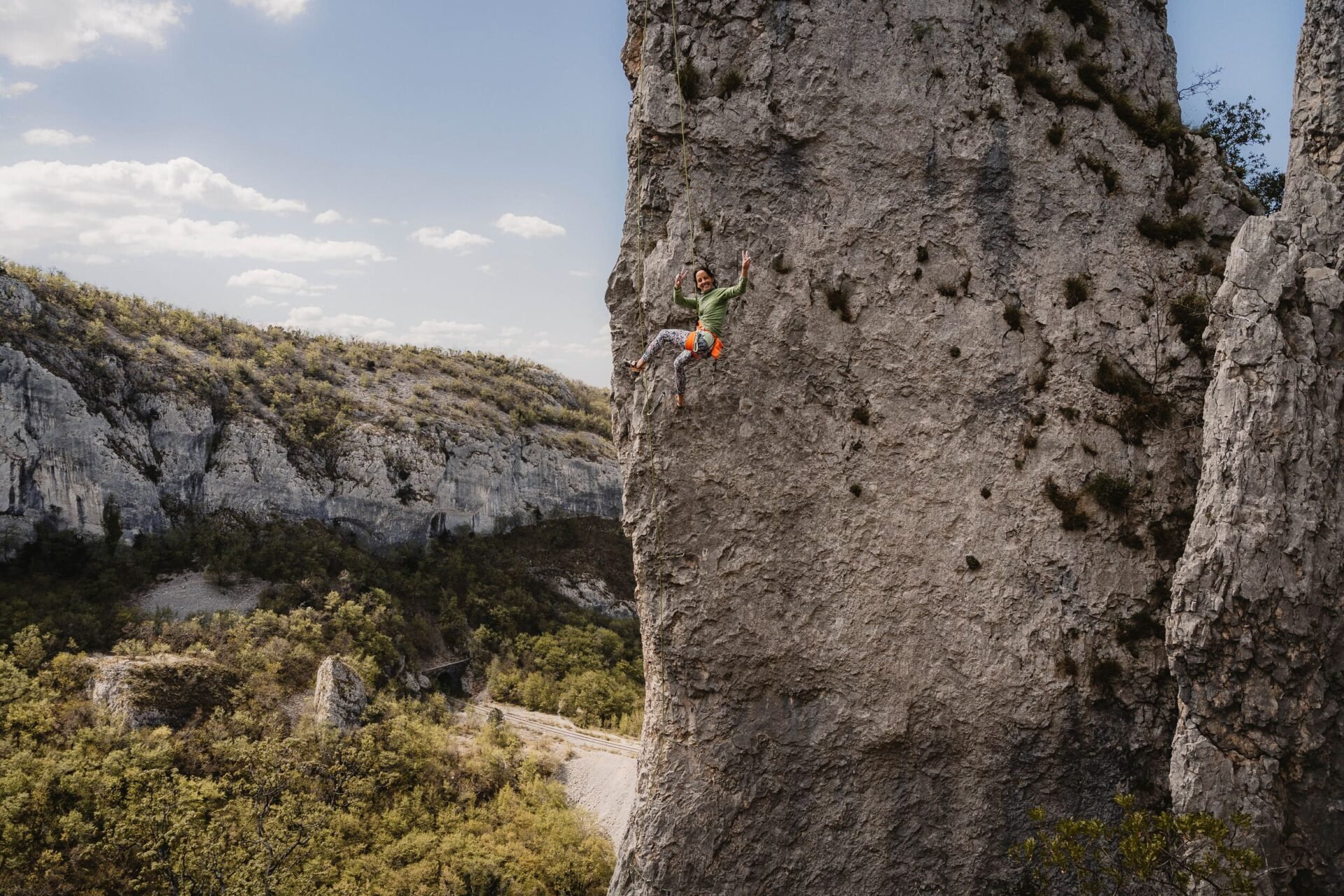
Beyond Kompanj, the climbing around Roč and Buzet opens up a much wider range of possibilities. Most crags are within a 30-minute drive, often less, which makes it easy to adapt your plans based on conditions or how you feel that day.
As an Istria climbing guide, this flexibility is something I really value. Some crags are quiet and perfect for beginners or focused practice. Others are steep and demanding, attracting climbers who want to push their limits.
From inland cliffs to sea views
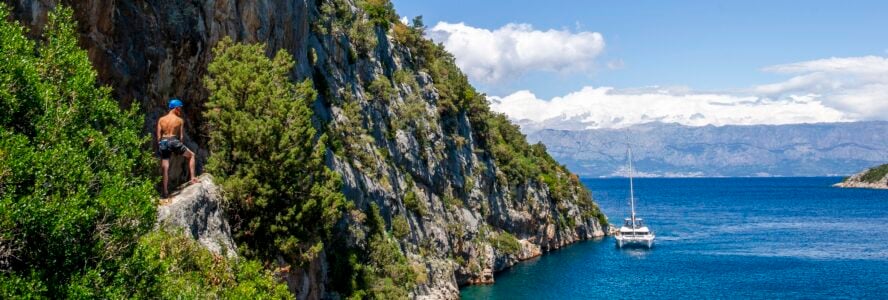
One of the most unique aspects of climbing here is the contrast between inland and coastal areas. Inland, you have hills, forests, and vineyards, with a calm and steady atmosphere. At the coast, everything opens up, and the Adriatic becomes part of the experience.
On clear days, you can even see the Julian Alps or the Dolomites in the distance. It’s a reminder of how connected this region is, and how much there is to explore beyond just the crags.
Best time to climb in Istria
Why I prefer winter climbing here
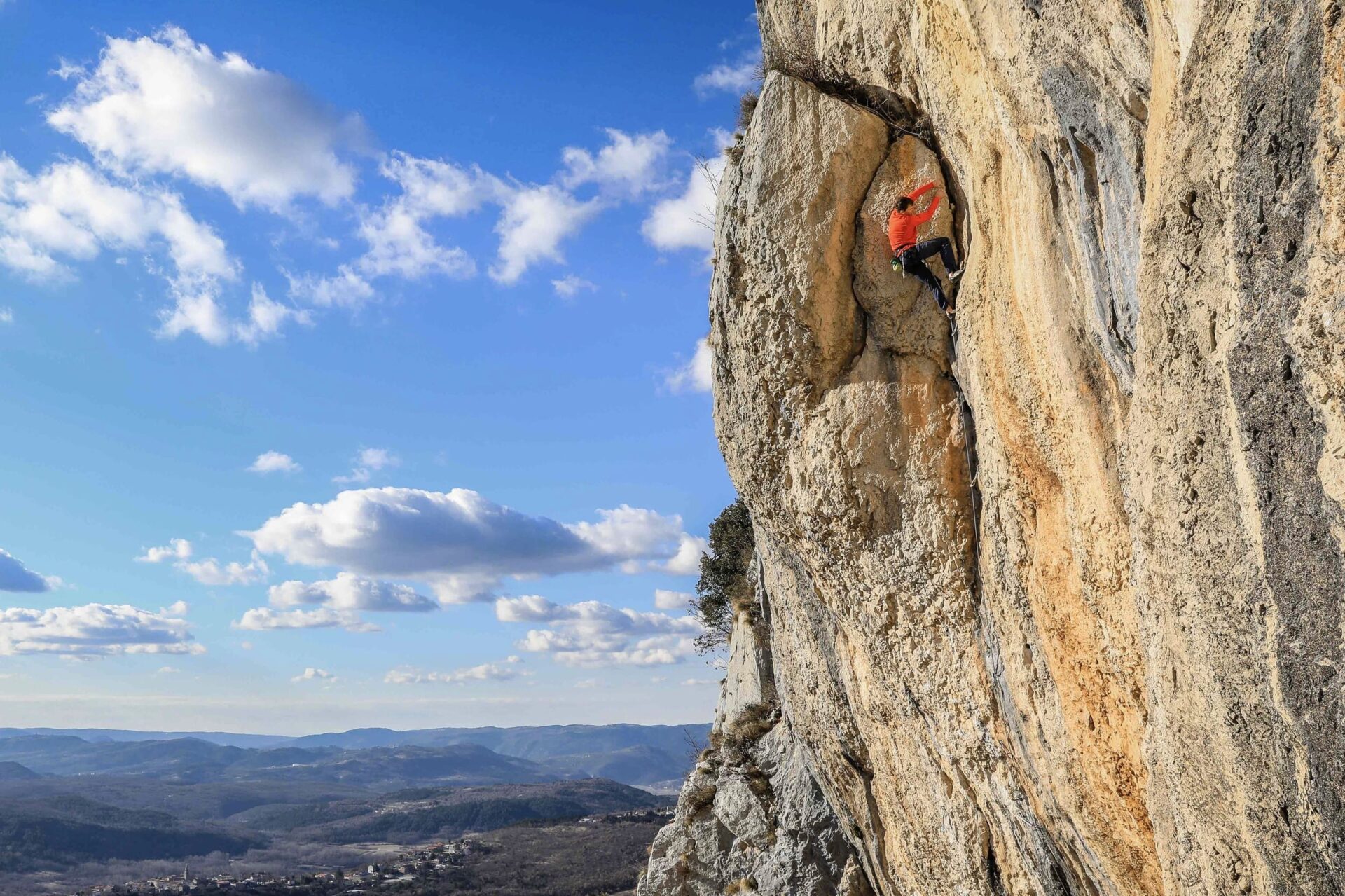
You can climb here almost all year, but winter is my favorite. The temperatures are cooler, which makes harder routes more enjoyable, especially on the many south-facing walls. At the same time, the sun keeps things comfortable.
As an Istria climbing guide, I also appreciate how quiet it becomes in winter. Fewer people, less noise, and more space to focus. The light changes as well, becoming deeper and more intense, which adds something special to the experience.
Climbing through the seasons
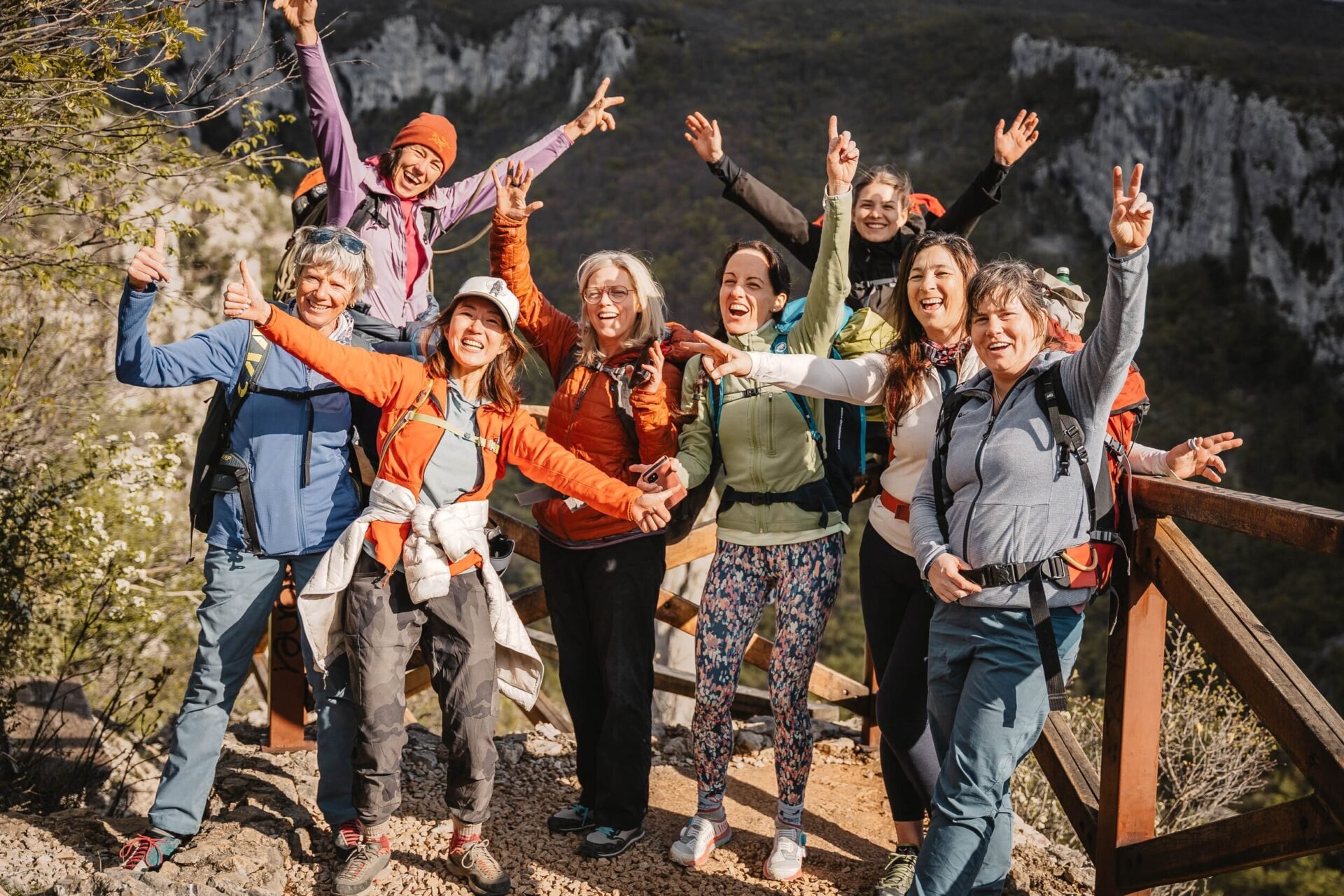
Spring and fall offer the most balanced conditions. You can climb almost everywhere and combine it with other activities like hiking or biking. Fall is especially nice because the sea is still warm.
Summer requires a bit more flexibility. You look for shade, climb at cooler times, and adjust your expectations. Even then, it still works, especially if you combine it with time by the coast.
A typical day with an Istria climbing guide
Starting slow and building into the day
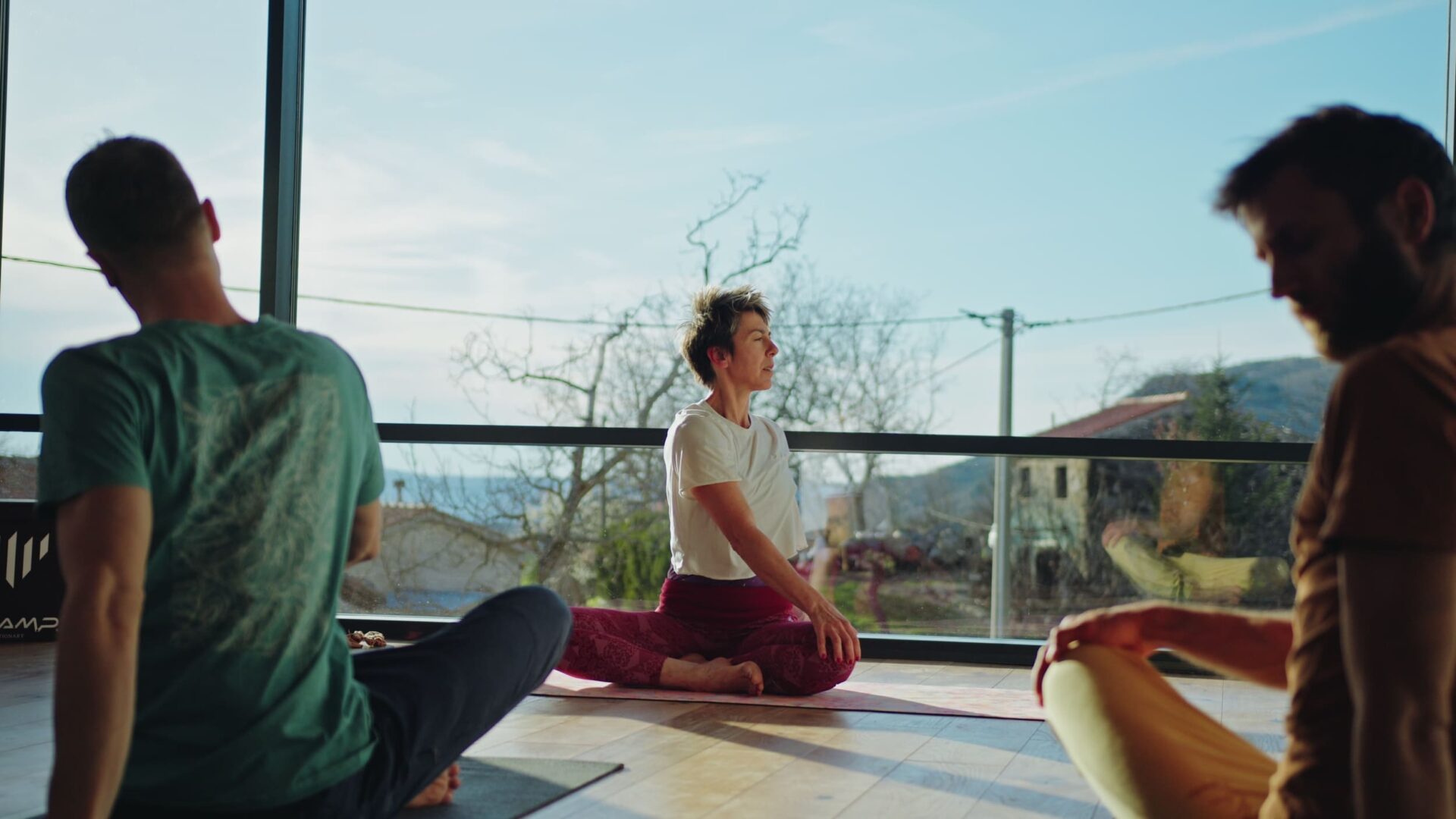
A typical day begins slowly. Often with yoga, which helps with flexibility, balance, and breathing, and has become one of the more natural ways to combine climbing with yoga in Croatia. These are small things, but they translate directly into better movement on the wall.
After breakfast, the transition to climbing is simple. A short walk through the forest, and you’re at the crag. No rush, no stress, just a natural start to the day.
Climbing, learning, and improving
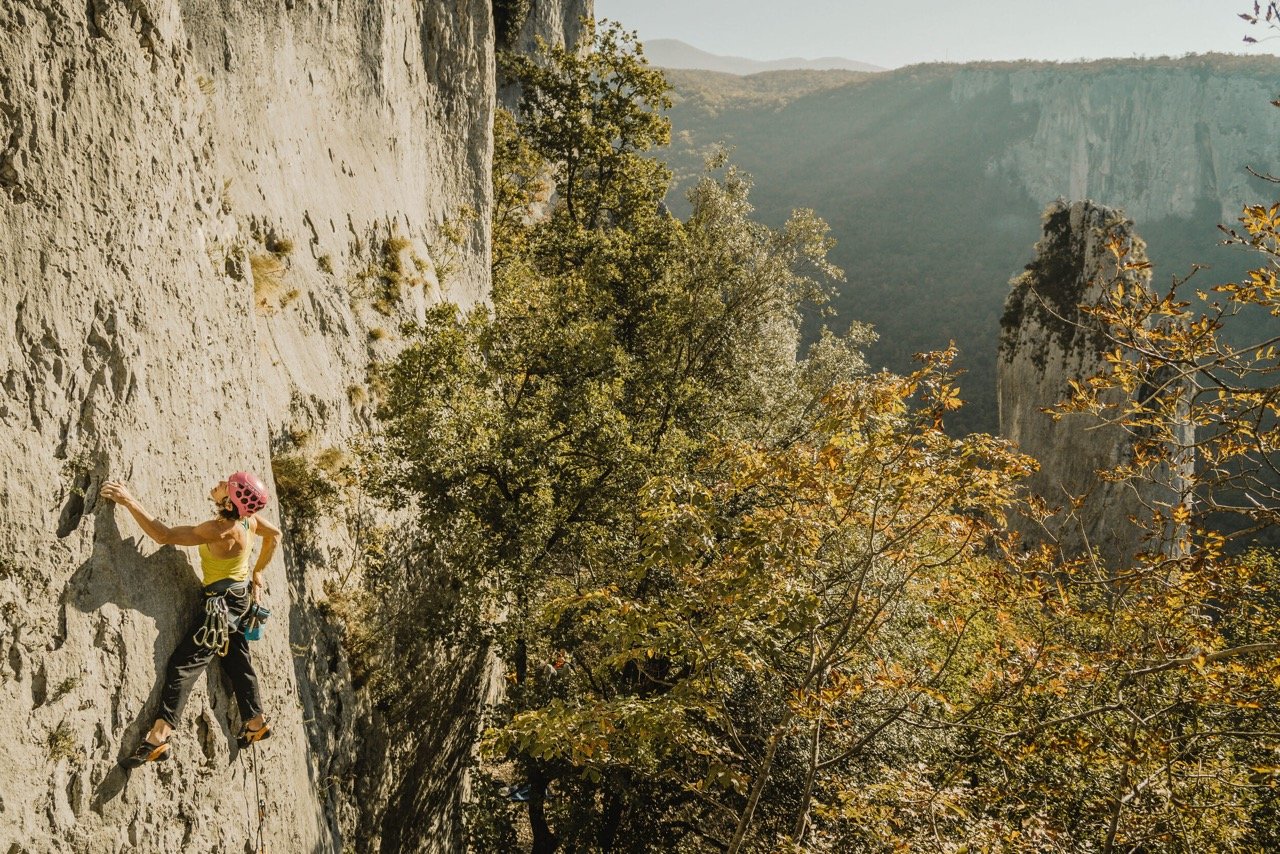
At the crag, everyone finds their rhythm. Some push themselves, others focus on technique, and some simply enjoy being there. Because of how the routes are arranged, it’s easy to support all of these approaches at the same time.
As an Istria climbing guide, I’ve seen how quickly people improve here. The combination of good rock, consistent climbing, and a relaxed environment creates the right conditions for progress.
Evenings that bring everything together
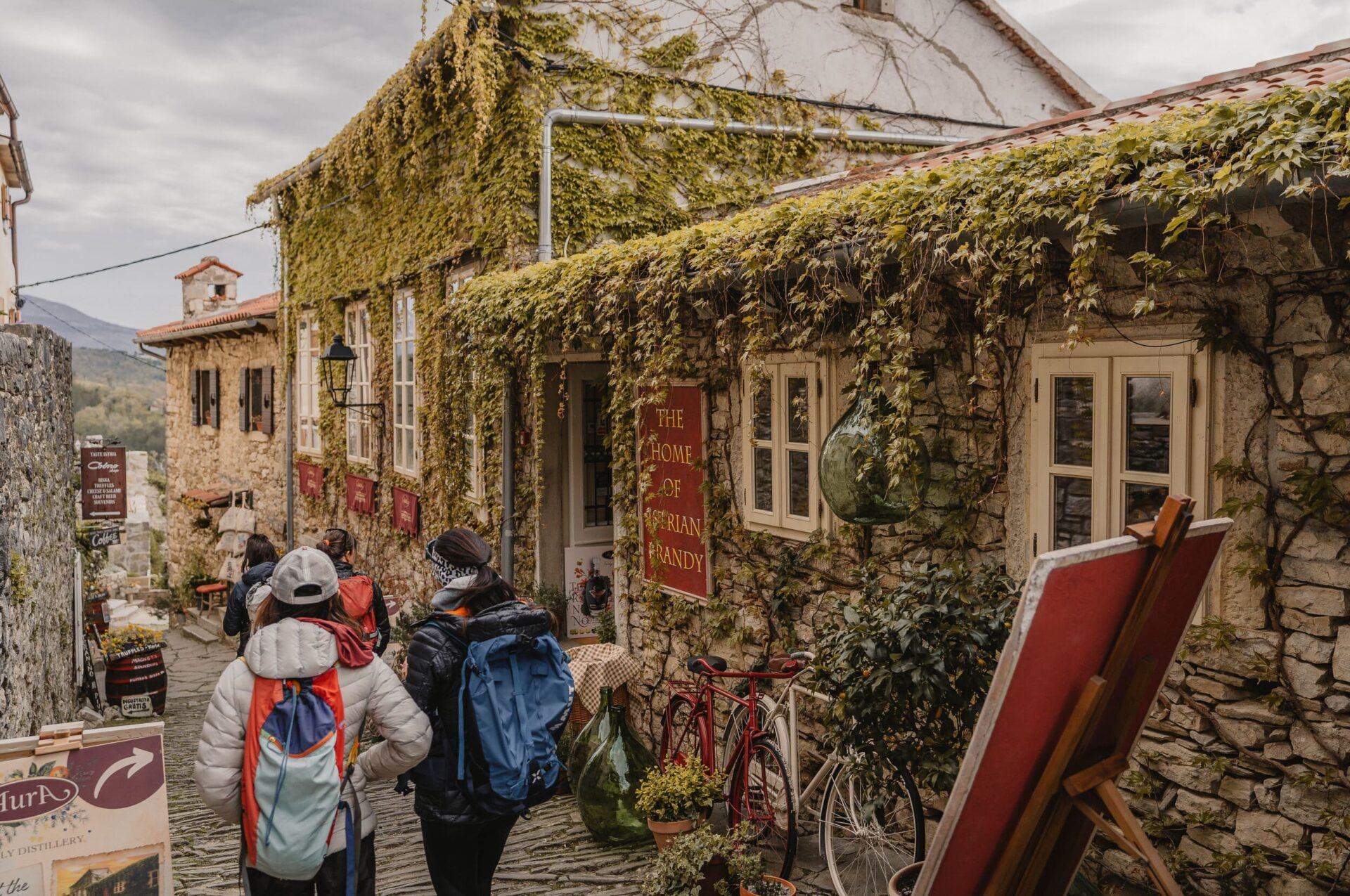
Evenings are where everything comes together. After a full day of climbing, people gather, share food, and talk. Local dishes, often with truffles in the colder months, bring a taste of the region into the experience, just like other people do on full-on food tours in Istria.
Conversations start with climbing but often move into deeper topics. Sometimes they last late into the night, sitting around a fire, sharing stories. That’s when you realize that climbing is only one part of what makes this place special.
More than climbing: Why I always come back
Active rest days and exploring beyond the crag
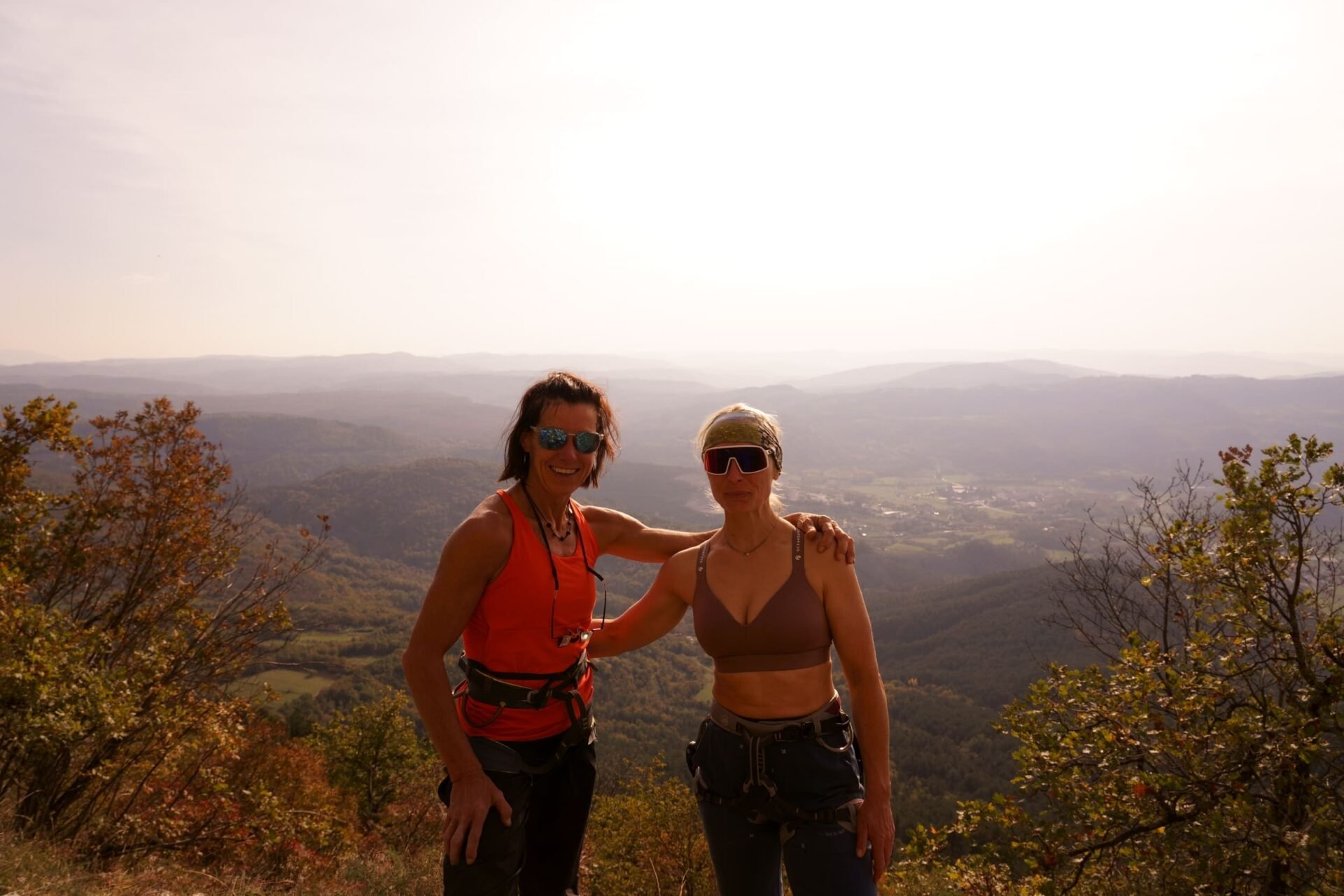
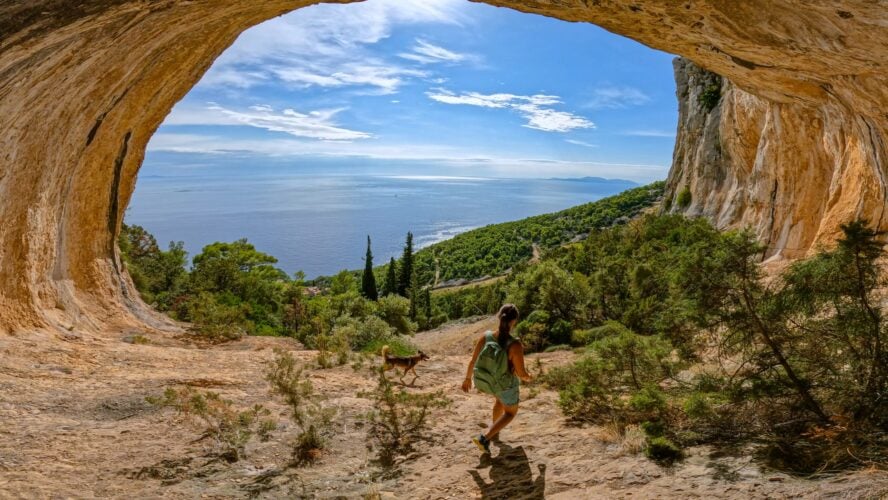
Even on rest days, there’s a lot to do. Hiking trails lead through quiet landscapes where you might not see anyone for hours. The highest peak, Učka, rises about 4,600 feet (1,400 meters) from the sea, and the views stretch far beyond what you expect.
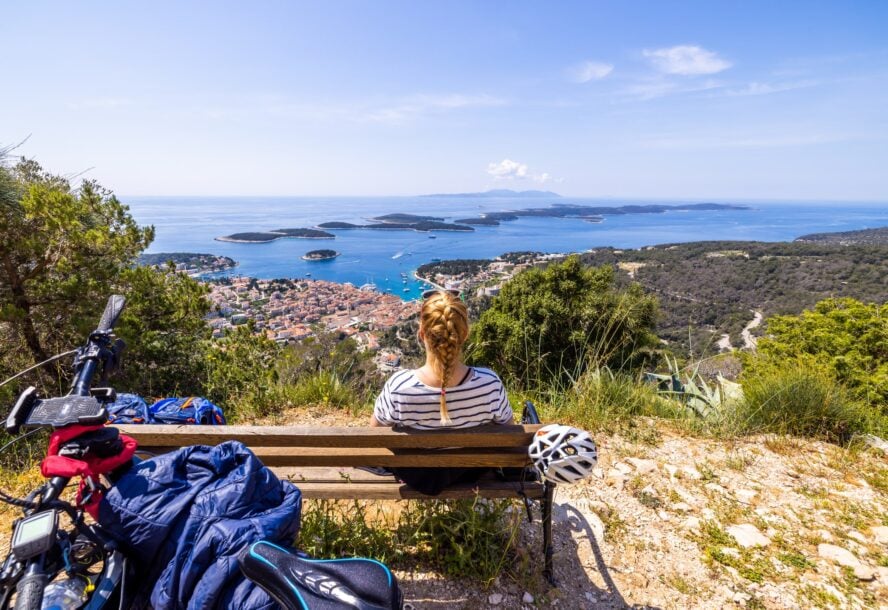
Cycling is another way to explore, with small roads and almost no traffic. It gives you a different perspective on the region. And if you want something completely different, there’s paragliding, launching from the hills and flying back down.
Why this Istria climbing guide is only the beginning
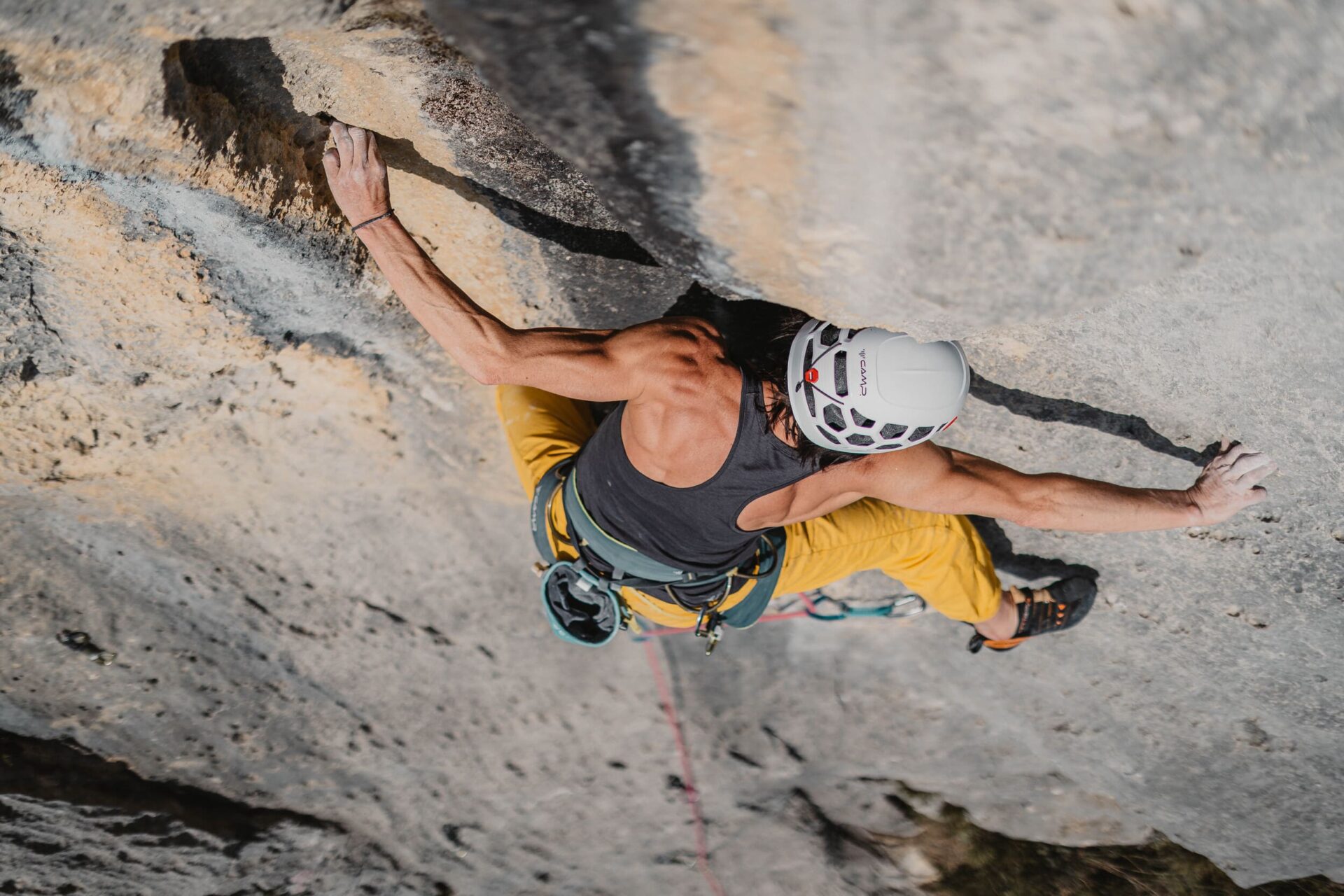
What makes Istria different, at least for me, is not just the quality of the rock, it’s the number of choices you have every single day. You wake up and you can decide how you want to climb. Technical or steep. Short approach or a drive to the sea. A quiet sector where you don’t see anyone, or a crag where the energy pushes you to try harder.
That kind of flexibility is rare. In many places, you adapt yourself to the crag. Here, the crag adapts to you.
As an Istria climbing guide, that’s the part I enjoy the most. Not just showing people the best routes, but helping them read the place and make those small decisions that shape the day. Where to go, when to go, what to climb, and when to stop. It’s the same mindset you use in the mountains, just applied to a landscape that feels much more forgiving.
And after a few days, you stop asking what the best crag is. You start asking a different question. What kind of climbing do I feel like today?
That’s when you know you’ve understood Istria.
Come spend a few days climbing here with me, and you’ll leave with more than just routes ticked.